
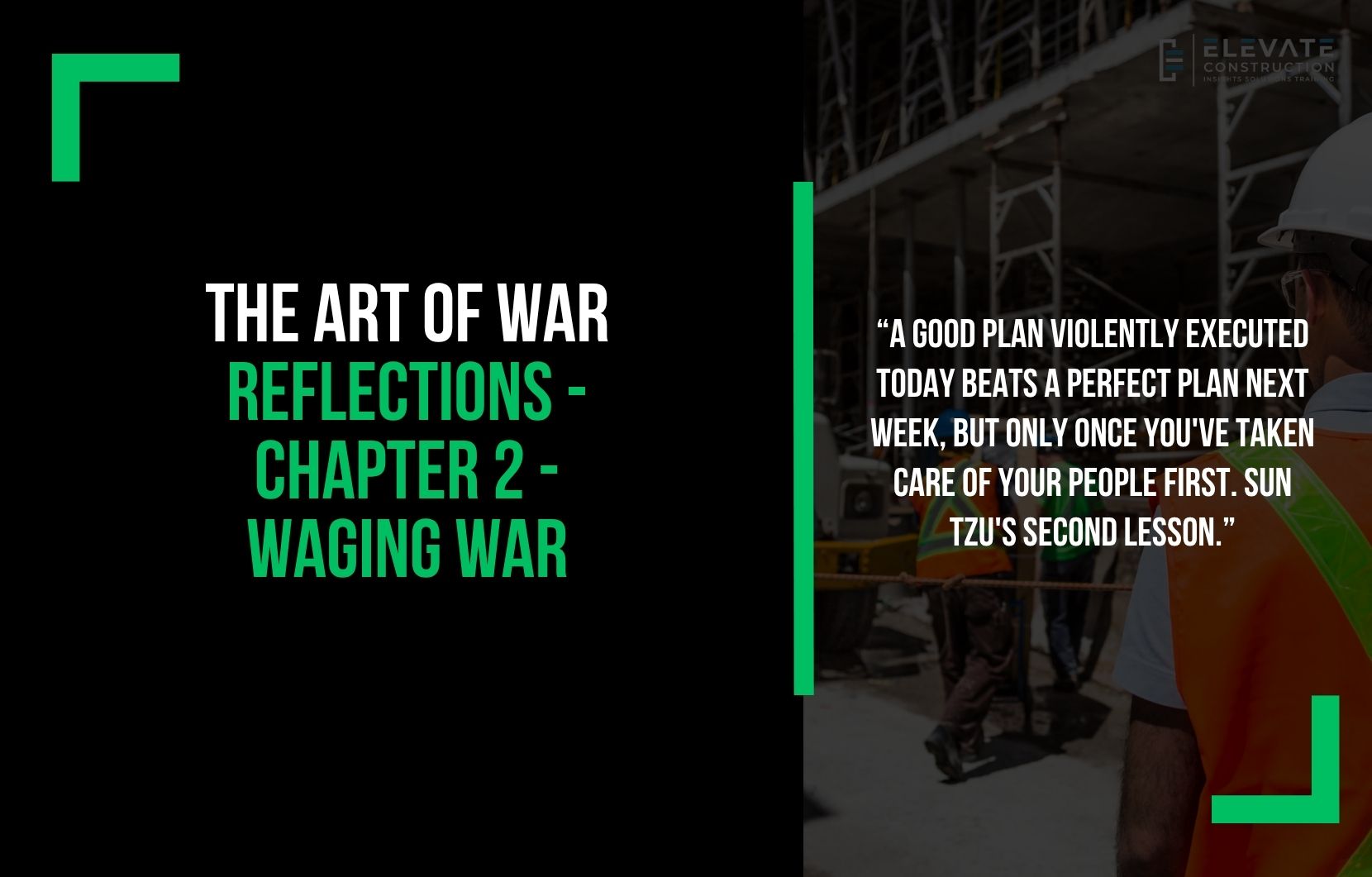
A Good Plan, Violently Executed
General Patton is famously credited with saying a good plan violently executed today is better than a perfect plan next week. That line gets misread constantly, as if it means charge forward with no real preparation at all. It says the opposite. There was still a plan. The point was that once real preparation exists, speed and decisiveness matter enormously, and waiting for perfection costs far more than it saves.
Sun Tzu makes the same point in the second chapter of The Art of War, titled Waging War. Once an army, or a construction project, has genuinely been sent into action, speed and decisiveness become essential. The waiting, the hesitation, the second-guessing, all of it costs momentum, morale, and ultimately, the outcome itself.
The Real Pain: Never Having to Send for Second Provisions
The real pain shows up whenever a project starts before everything is genuinely in place. Sun Tzu’s warning here is direct: victory depends on solid preparation ahead of time, specifically so an army never has to send for second provisions mid-campaign. In construction terms, that means having the equipment, materials, tools, people, and information genuinely ready before work begins, enough to actually complete the work in real one-piece flow.
Starting before that readiness exists forces interruptions, second trips, and breaks in momentum that compound quickly. Every one of those interruptions costs real schedule, creates real roadblocks, and pulls a team further from the flow it should have had from the start.
The Failure Pattern: Treasure Hunts Instead of Flow
The failure pattern shows up as constant, low-grade scavenger hunting throughout the day. Picture a worker arriving at a disorganized site: where are the materials, how do I get to the forklift, who is even running it, where do I stage my work, where is my lanyard, how do I access the gang box, where do we meet in the morning, where do I eat lunch, where can I wash my hands. None of these questions are dramatic on their own. Together, repeated constantly across a chaotic environment, they accumulate into a genuine burden that exhausts a limited daily reserve of mental discipline before any real work even gets done.
Sun Tzu describes this as an army weighed down by the accumulated pursuit of loot, slowing its own advance. On a jobsite, the same weight comes from clutter, disorganization, and waste, an accumulated burden that drains people long before the actual work does.
A few basic physical needs deserve real attention before speed and decisiveness can reasonably be expected, and Sun Tzu names them directly:
- Water, food, and regular breaks, treated as a genuine first priority rather than an afterthought.
- Clean, accessible facilities, including well-maintained bathrooms and a real place to eat.
- A safe, organized environment where basic questions, where do I go, what do I need, have already been clearly answered.
This Isn’t About Comfort for Its Own Sake, It’s the Foundation Everything Else Depends On
None of this is a soft, optional nicety layered on top of the real work. Sun Tzu names hunger and thirst as the very first fundamental consideration before any army can be expected to fight effectively. The same logic applies directly to construction: workers in a genuinely good physical and mental state are the actual precondition for real speed and decisiveness, not a distraction from it. Skipping this foundation does not make a project move faster, it guarantees the opposite.
“Eat Vegetables the Night Before”
Here is an honest, humbling example worth sharing directly. On one project with an otherwise genuinely strong culture, workers asked for simple electrolyte packets to add to their water during real summer heat. The response given at the time was dismissive: if you want electrolytes, eat vegetables the night before. It was a rigid, disrespectful moment, and it landed exactly as badly as it deserved to. For several days afterward, the entire project culture shifted noticeably negative, until a genuine, direct apology and a real gesture to make it right finally repaired the damage.
That moment is a direct, personal illustration of what Sun Tzu calls outrage at a perceived injustice. It rarely takes something dramatic to trigger it, sometimes it only takes dismissing a small, reasonable request. Taking that risk seriously, and correcting it quickly and sincerely when it happens, matters enormously.
Why It Matters: A Toxic Group Chat Is a Window, Not the Problem
This matters because of a real, useful reframe worth adopting directly. A project once started a group chat for daily operations that quickly turned negative, nitpicky, and frustrated. The instinct was to ask whether the chat itself should simply be shut down. The better response was recognizing that chat as a direct window into the project’s actual underlying culture, not the source of the problem, but a diagnostic tool revealing exactly what real grievances existed underneath the surface.
A leader waging real war against waste and disrespect should be genuinely grateful for that visibility, not defensive about it. Suppressing the symptom leaves the actual root cause, real outrage at real or perceived injustice, completely unaddressed and free to keep spreading quietly instead.
Teach the Framework: Take Care of People, Then Move Fast
Sun Tzu closes this chapter with a serious warning worth carrying directly into construction: real lives and real money are at stake, so recklessness is never acceptable. Pushing people into impossible situations, sometimes called hobbling the army, drains both morale and resources, leaving a team exhausted and supplies dwindling exactly when they are needed most.
The real sequence worth internalizing is this: meet basic physical and logistical needs first, eliminate the wasteful clutter and disorganization that quietly exhausts people, take real grievances seriously and address them at the root, and only then move forward with genuine speed and decisiveness. Skipping straight to speed while ignoring the first three steps is not decisiveness, it is exactly the recklessness Sun Tzu warns against.
A few practical markers show whether a project has genuinely taken care of its people before demanding real speed, and they are worth checking directly:
- Basic conditions, water, breaks, clean facilities, a real place to eat, are consistently in place before pace becomes the primary focus.
- Worker and foreman huddles surface real concerns, and those concerns get addressed at the root rather than dismissed or ignored.
- Materials, tools, and information are genuinely ready before work begins, rather than being tracked down mid-task.
Turning This Into Daily Practice
Audit the basics honestly before pushing for greater pace: is water accessible, are breaks genuinely respected, are bathrooms clean and available, is the site organized enough that people are not constantly hunting for what they need? Take feedback from worker and foreman huddles seriously as an early warning system, rather than something to manage or suppress. And when a real grievance does surface, even a small one, address it quickly and sincerely, the way a genuine apology repaired real damage after one dismissive comment about something as simple as electrolytes.
Connecting It Back to Building People, Not Just Projects
None of this happens without leaders willing to treat basic care for their people as the actual foundation speed and decisiveness depend on, rather than a soft distraction from real production. Building that discipline directly into daily leadership is exactly what allows a project to move with real, sustainable speed instead of reckless, costly urgency.
If your project needs superintendent coaching, project support, or leadership development, Elevate Construction can help your field teams build the kind of foundation, genuine care for people paired with real organization, that makes true speed and decisiveness possible.
The Challenge
So here is the challenge worth carrying onto your next project: before pushing for greater speed, honestly check whether your people’s basic physical and logistical needs have genuinely been met first. As General Patton put it, “A good plan violently executed today is better than a perfect plan next week.” On we go.
FAQ
What does “a good plan violently executed today is better than a perfect plan next week” actually mean?
It means that once genuine preparation is in place, speed and decisive action matter enormously, and waiting for a flawless plan costs more than moving forward with a solid, well-prepared one. It does not mean acting without any plan or preparation at all.
Why does Sun Tzu list hunger and thirst as the very first consideration in waging war?
Physical needs form the actual foundation for everything else an army, or a construction crew, is expected to accomplish. Without that foundation in place, no amount of urgency or discipline can produce the speed and decisiveness a real campaign, or project, requires.
How does jobsite disorganization connect to Sun Tzu’s warning about the accumulation of loot?
Just as an army weighed down by looted goods loses speed and focus, a disorganized jobsite where workers constantly have to search for basic materials, tools, and information accumulates a similar burden. That constant low-grade searching drains a limited daily reserve of mental discipline before real work even happens.
Why should a leader be grateful for a negative or complaining group chat rather than shutting it down?
A toxic or frustrated chat often reflects real, underlying grievances within a project’s culture, making it a valuable diagnostic window rather than the actual problem. Addressing the root causes revealed through that visibility matters far more than suppressing the symptom itself.
What counts as “recklessness” according to this chapter, applied to construction?
Pushing workers into impossible situations, unsafe conditions, excessive overtime, or unmet basic needs, all in pursuit of speed, drains both morale and resources exactly when a project needs them most. Real decisiveness only works once genuine care for people and real preparation are already in place.
If you want to learn more we have:
-Takt Virtual Training: (Click here)
-Check out our Youtube channel for more info: (Click here)
-Listen to the Elevate Construction podcast: (Click here)
-Check out our training programs and certifications: (Click here)
-The Takt Book: (Click here)
Discover Jason’s Expertise:
Meet Jason Schroeder, the driving force behind Elevate Construction IST. As the company’s owner and principal consultant, he’s dedicated to taking construction to new heights. With a wealth of industry experience, he’s crafted the Field Engineer Boot Camp and Superintendent Boot Camp – intensive training programs engineered to cultivate top-tier leaders capable of steering their teams towards success. Jason’s vision? To expand his training initiatives across the nation, empowering construction firms to soar to unprecedented levels of excellence.