
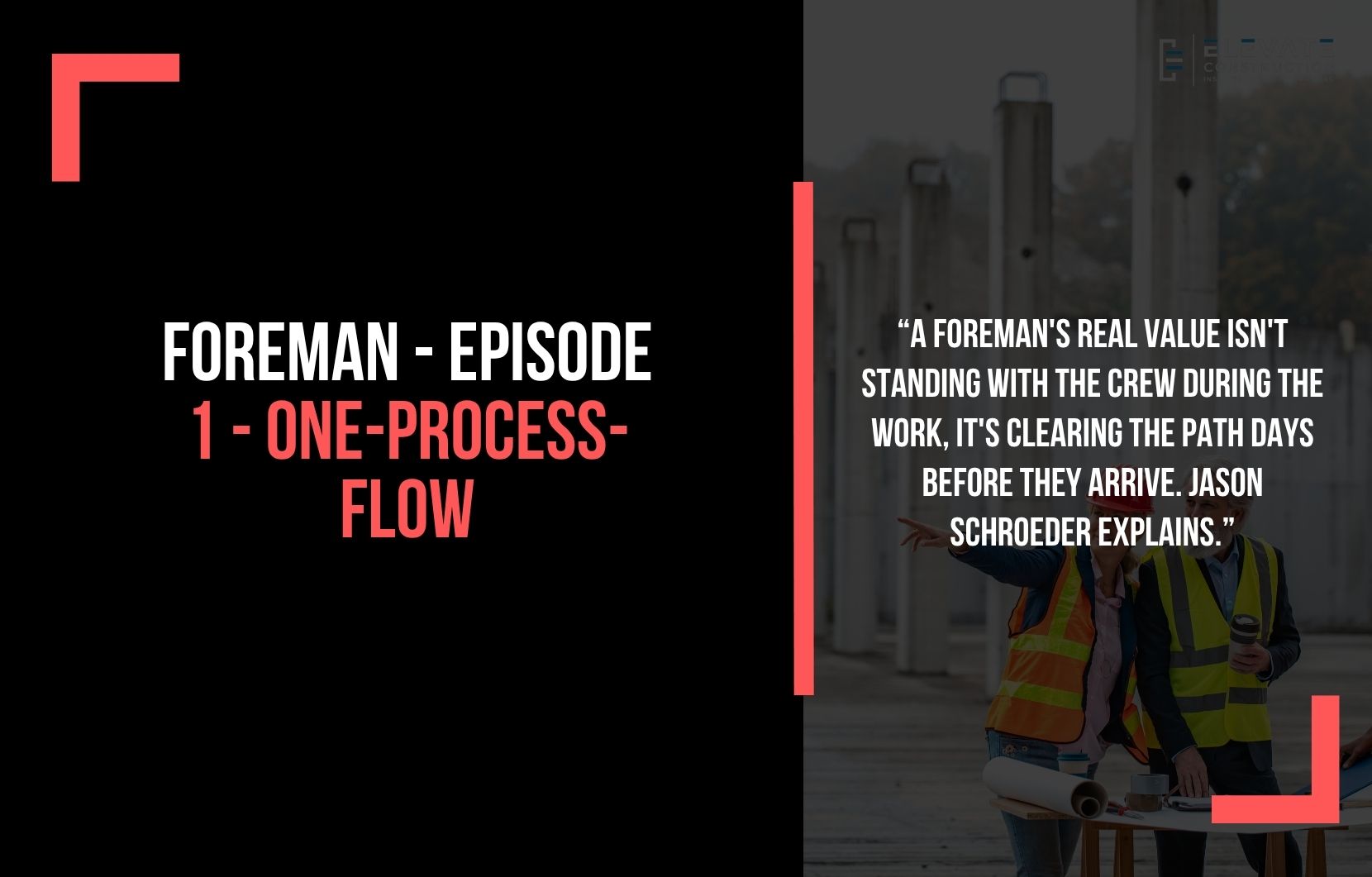
Two Rebar Foremen, Two Completely Different Outcomes
One rebar foreman spent his days out tying rebar directly alongside his crew, hands-on, working right beside them every hour of the day. His crew was always behind, always waiting on materials, always a step slower than they needed to be. Another foreman on similar work took a completely different approach: bringing materials ahead of time, craning rebar in before it was needed, handing out cut sheets and details before his crew ever asked for them.
That second foreman’s crews were consistently on time. Asked directly what the difference was, his answer was simple: the other foreman never stopped working alongside his crew long enough to actually prepare for what was coming next.
The Real Pain: A Crew That’s Ready Doesn’t Need a Foreman In the Moment
Here is a thought experiment worth sitting with. Imagine a crew with a completely clear, ready area to work in, materials on hand, layout complete, full training, clear information, everything genuinely ready to go. Given that, most crews would likely finish the work faster than standard bid rates, without a foreman standing over them at all.
So what is a foreman actually for? The honest answer is that a crew rarely needs a foreman during smooth, uninterrupted execution. They need a foreman the moment a roadblock hits, a question comes up, a piece of information is missing, or an unexpected condition appears. That single insight should completely reshape how a foreman spends their time.
The Failure Pattern: Foreman “In the Game” Instead of Ahead of It
The failure pattern is a foreman who works entirely inside the game, physically present alongside the crew during execution, and then mentally checks out the moment the work stops or a roadblock appears. Materials run out, a piece of information is missing, another trade is in the way, and the response is simply to demobilize and wait, rather than having already solved that problem days earlier.
A handful of specific things reliably kill productivity, and nearly all of them are things a well-prepared foreman can prevent well ahead of time:
- Missing information, materials, or layout that forces a crew to stop and wait once work has already started.
- Context switching and oversized team configurations that reduce focus and slow down real progress.
- Rework caused by not installing something correctly the first time, often due to unclear expectations set too late.
This Isn’t About Foremen Being Lazy, It’s About Where Their Attention Goes
None of this is a criticism of foremen who work hard alongside their crews, that instinct usually comes from genuine dedication, not laziness. The real issue is where that dedicated effort actually gets pointed. A crew’s real need for a foreman shows up specifically at the moment something is missing or something goes wrong, which means the foreman’s most valuable work happens before that moment ever arrives, not during it.
The Make-Ready Checklist Every Foreman Should Own
Real preparation means confirming, days or even weeks ahead of a crew starting a task, a specific set of things. Are the right materials ordered, delivered, and inspected? Is the layout complete and accurate? Have the drawings and specifications actually been reviewed? If a lift drawing is needed, has it been created and reviewed ahead of time? Is the crew composition and training actually right for this specific task? Is the necessary equipment ordered and in good working repair? Has all predecessor work and the substrate itself actually been accepted and confirmed ready?
Every one of these questions belongs on a foreman’s radar well before a crew ever shows up to start the work, not as something to figure out once they are already standing there, ready to go, and waiting on an answer.
Why It Matters: The Data Behind the Instinct
This matters because the data backs up the instinct directly. Even the least productive quarter of workers on a typical crew tends to outperform standard bid unit rates, and the most productive quarter performs roughly four times better than that bottom group. In other words, the workforce itself is rarely the actual bottleneck.
What genuinely kills productivity is roadblocks, missing information, unplanned starts and stops, excessive context switching, oversized or constantly shifting teams, unnecessary overtime, and rework from work installed incorrectly the first time. Every one of these is something a foreman working ahead of the crew, rather than just alongside them, can directly prevent.
Teach the Framework: Ahead of the Train, Not Standing Over the Crew
The real job description of a foreman is not standing over a crew supervising moment to moment. It is working days or weeks ahead of the actual work, removing roadblocks before the crew ever encounters them, confirming genuine readiness, and making absolutely sure the crew never has to stop and wait once they arrive at the task in front of them.
This reframes what “being a good foreman” actually looks like day to day. Less time hands-on inside the immediate task, more time actively preparing what is coming next, is not a sign of disengagement. It is exactly what allows a crew to move at their genuinely productive pace instead of constantly stalling out on preventable problems.
A few practical questions help a foreman check whether they are actually working ahead of the crew rather than just alongside them:
- What is my crew scheduled to be doing one week from now, and have I already confirmed everything they will need to do it without stopping?
- Is there a piece of missing information, material, or equipment that I already know about but haven’t resolved yet?
- Am I spending most of my time solving problems as they happen, or preventing them from happening in the first place?
Turning This Into Daily Practice
Build a habit of checking make-ready status for upcoming work days or weeks ahead of time, rather than the morning of, or worse, in the middle of the task itself. If a foreman consistently finds themselves working hands-on alongside the crew just to help them keep pace, that is usually a signal that preparation happened too late, not that more hands-on involvement is the actual fix.
Connecting It Back to Building People, Not Just Projects
None of this happens without foremen and the leaders supporting them recognizing that real value comes from working ahead of the crew, not just alongside them. Building that habit deliberately is exactly what turns a hardworking foreman into a genuinely effective one.
If your project needs superintendent coaching, project support, or leadership development, Elevate Construction can help your field teams build the kind of make-ready discipline that keeps crews moving at their real, productive pace.
The Challenge
So here is the challenge worth carrying onto your next project: look honestly at where your attention actually goes as a foreman, inside the immediate task alongside your crew, or days ahead of it, clearing the path before they ever arrive. As Jason put it plainly, “Focus outside the game, not just in the game.” On we go.
FAQ
Why would a crew be able to work faster without a foreman present, in the right conditions?
If a crew already has complete materials, layout, training, and information, most of the value a foreman would normally add during execution is not actually needed in that moment. This reveals that a foreman’s real value lies in preparing those conditions ahead of time, not in supervising smooth execution as it happens.
What does “focus outside the game, not just in the game” actually mean for a foreman?
It means spending real time and attention preparing for work that has not started yet, removing roadblocks, confirming materials and layout, reviewing drawings, rather than only being present and engaged once the crew is already actively working. The most valuable moments for a foreman to be involved are before a problem occurs, not just when it does.
What specific things should a foreman confirm before a crew starts a new task?
Materials ordered, delivered, and inspected, layout completed and accurate, drawings and specifications reviewed, any needed lift drawings prepared in advance, the right crew composition and training in place, equipment ordered and in good repair, and predecessor work or substrate conditions already accepted.
Why does research suggest the workforce itself usually isn’t the productivity bottleneck?
Data shows that even lower-performing workers on average tend to exceed standard bid unit rates, while top performers significantly outperform them, suggesting the workforce generally has real capacity for productivity. The real bottlenecks tend to be roadblocks, missing information, rework, and disruptions, which fall squarely within a foreman’s ability to prevent through better preparation.
How can a foreman tell if they’re spending too much time reacting instead of preparing?
If a foreman is frequently solving problems, missing materials, unclear information, unexpected conditions, in the middle of active work, that is a sign preparation happened too late. Regularly checking readiness for work scheduled days or weeks out, rather than the day it starts, helps shift attention from reacting to genuinely preventing problems.
If you want to learn more we have:
-Takt Virtual Training: (Click here)
-Check out our Youtube channel for more info: (Click here)
-Listen to the Elevate Construction podcast: (Click here)
-Check out our training programs and certifications: (Click here)
-The Takt Book: (Click here)
Discover Jason’s Expertise:
Meet Jason Schroeder, the driving force behind Elevate Construction IST. As the company’s owner and principal consultant, he’s dedicated to taking construction to new heights. With a wealth of industry experience, he’s crafted the Field Engineer Boot Camp and Superintendent Boot Camp – intensive training programs engineered to cultivate top-tier leaders capable of steering their teams towards success. Jason’s vision? To expand his training initiatives across the nation, empowering construction firms to soar to unprecedented levels of excellence.