
Integrated production
control system™ (IPCS™)
The Integrated Production Control System™ has three components: The First Planner System®, the Last Planner® System, and The Takt Production System®. They cover the planning of a project, the project systems for running a lean project, and scheduling/controlling a project. Each system must be understood independently, and as it relates to the other two. Only when you are operating with the Integrated Production Control System™, unifying all phases and teams, are you able to reduce variation to the point of no impact, control the flow, and predict project success.
how the system interconnects
The IPCS interconnects by linking strategy, flow, and execution into one continuous system. The First Planner System® designs the project and sets the conditions for success, the Takt Production System® converts that plan into a structured flow, and the Last Planner® System ensures the work is executed reliably in the field. Each system feeds the next, creating alignment from preconstruction all the way to daily execution.
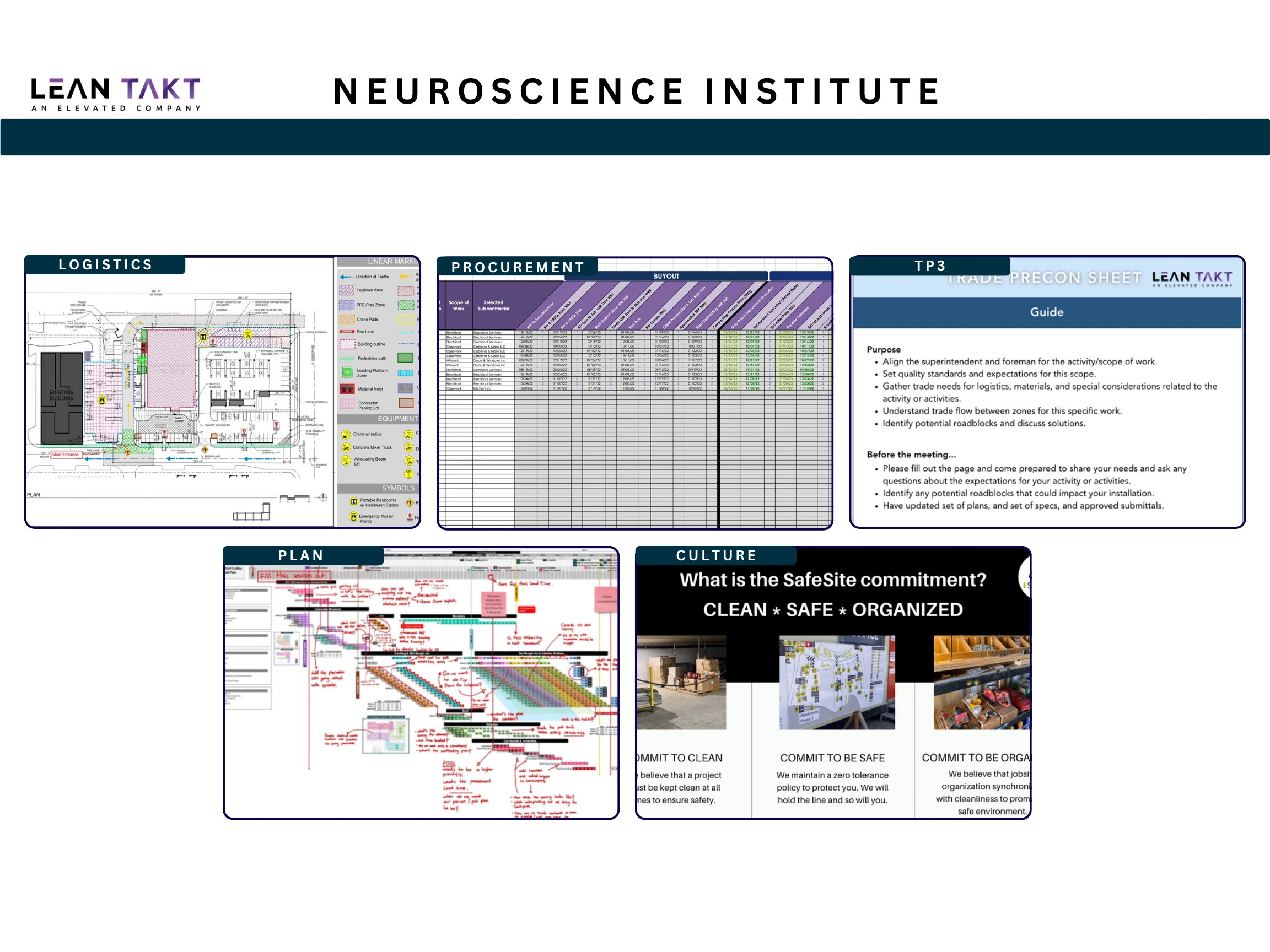
- Utilizes Lean Management Principles to facilitate effective project planning.
- Engages key stakeholders at the start of the planning cycle to ensure comprehensive pre-construction planning.
- Focuses on optimizing project processes for improved project outcomes.
- Incorporates visual management tools to enhance communication and transparency during planning stages.
- Employs continuous improvement techniques to refine planning processes based on real-time feedback.
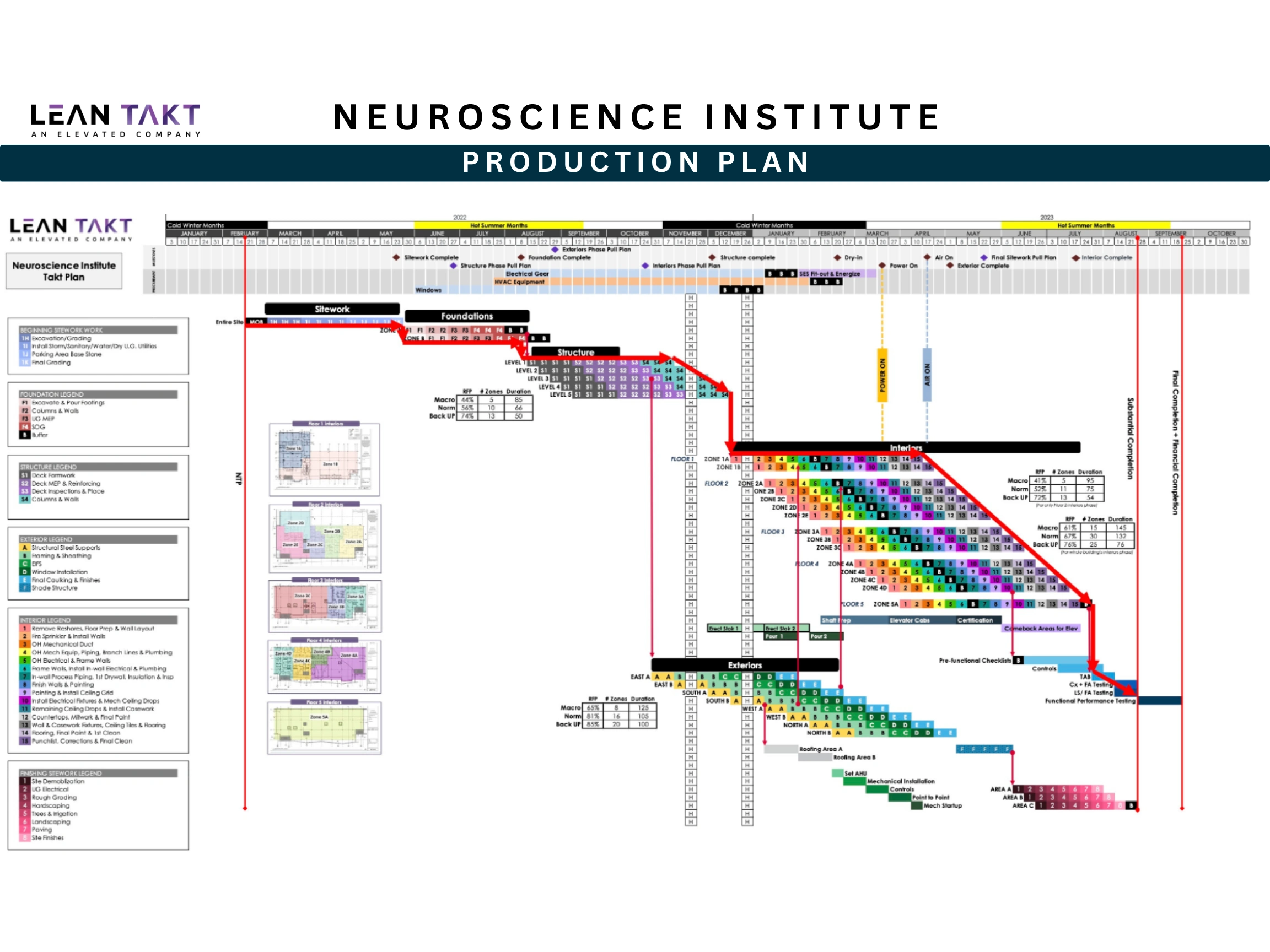
- Implements a scheduling methodology based on rhythm, continuity, and consistency.
- Maps workflow through timed cycle (Takt) to optimize production flow.
- Enhances efficiency by aligning production activities with a predetermined time beat.
- Integrates visual controls and standardized work procedures to support continuous flow production.
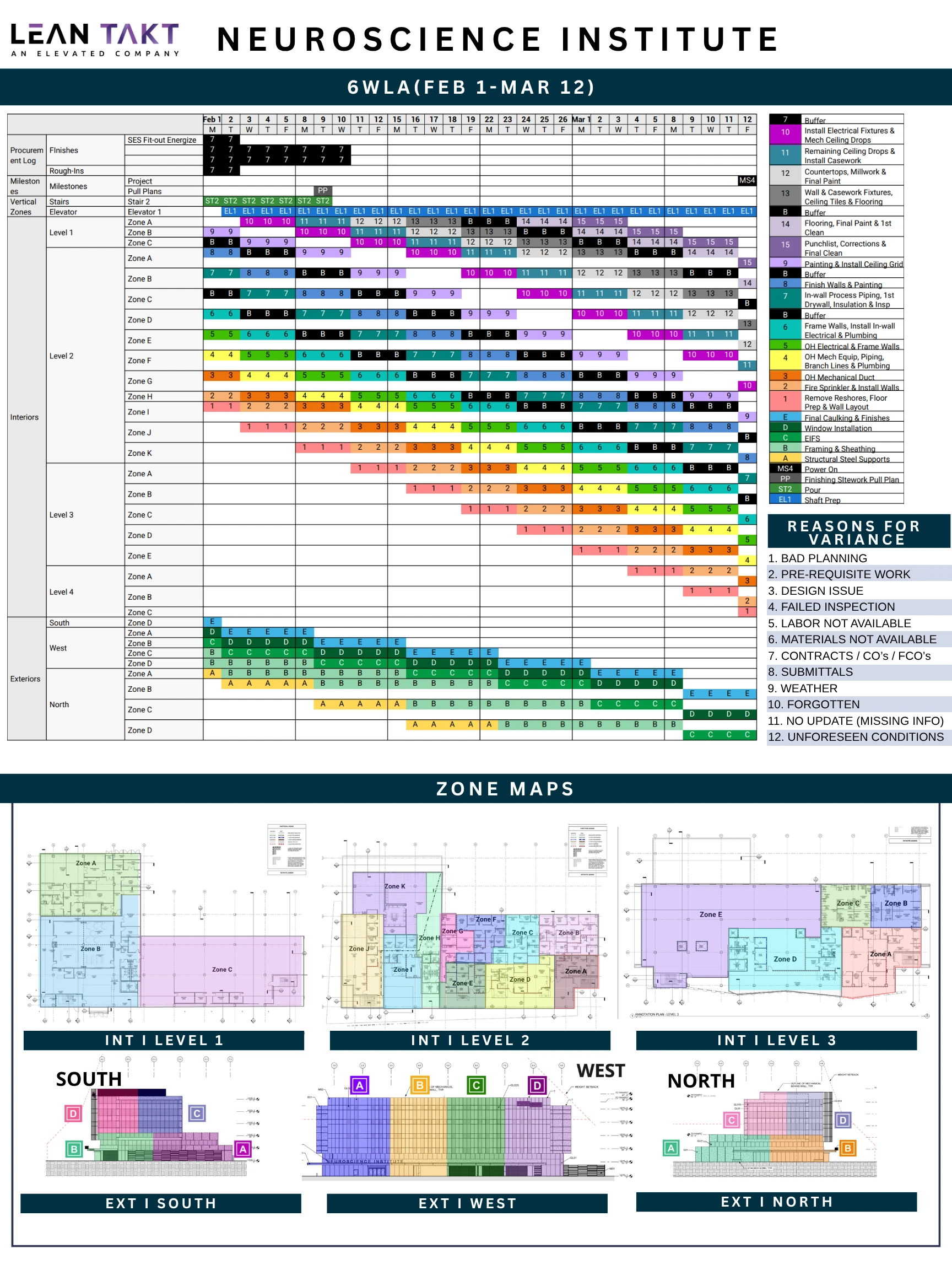
- Enhances collaboration between project managers, supervisors, and frontline workers to drive collective ownership of project goals.
- Facilitates reliable commitments planning by aligning task assignments with realistic project timelines.
- Promotes adaptive planning and problem-solving through regular coordination meetings and feedback loops.
- Supports project teams in identifying and addressing constraints to ensure project progress and success.