
Short answer: The critical path tells you which chain of activities sets the end date, but it doesn’t show trades stacking up. Critical flow, the steady movement of trades through the work areas, is what actually predicts whether you finish on time, and a Takt plan makes it visible.
Since the 1960s, construction has been contractually bound by one management system known as the Critical Path Method or CPM. Our current loss of productivity and trend of failed or crash-landed projects in the construction industry is a direct reflection of how this system and other standards are performing.
Why CPM struggles in construction
In my experience, most projects run on CPM finish late, often by weeks. This is arguably one of the root causes of a decrease in incoming labor into the industry and with construction having one of the highest suicide rates of any industry, along with high rates of substance use.
If these results in construction are even in small part due to the scheduling system and process, we should be looking into any way to change our approach, including examining whether it provides the benefits we need.
The focus on how long something can slide until it is a problem (float) and the hyper-focus on one singular path that defines the end date (Critical Path) are the main tools used in the industry. This focus is misdirected and damaging our ability to complete projects on time and protect the very people we rub shoulders with.
What does trade stacking look like?
We should be able to understand from our schedule of choice how the job is performing and project when the project will end. So what indicators show this? Float or something else? When you look at the chart below, you can see the stacking of colors (trades and scopes). This clearly shows us that we are starting with decent trade flow, but near the middle of the schedule, we lose that flow, and it begins to stack vertically. The green arrow shows where the date of the project will likely end based on the available resources. One thing you will notice is that the first red arrow on the left of the chart and the green arrow at the end are at the same angle or rate of production, meaning that when we find the flow for the phase of work or project, we can project when it will finish.
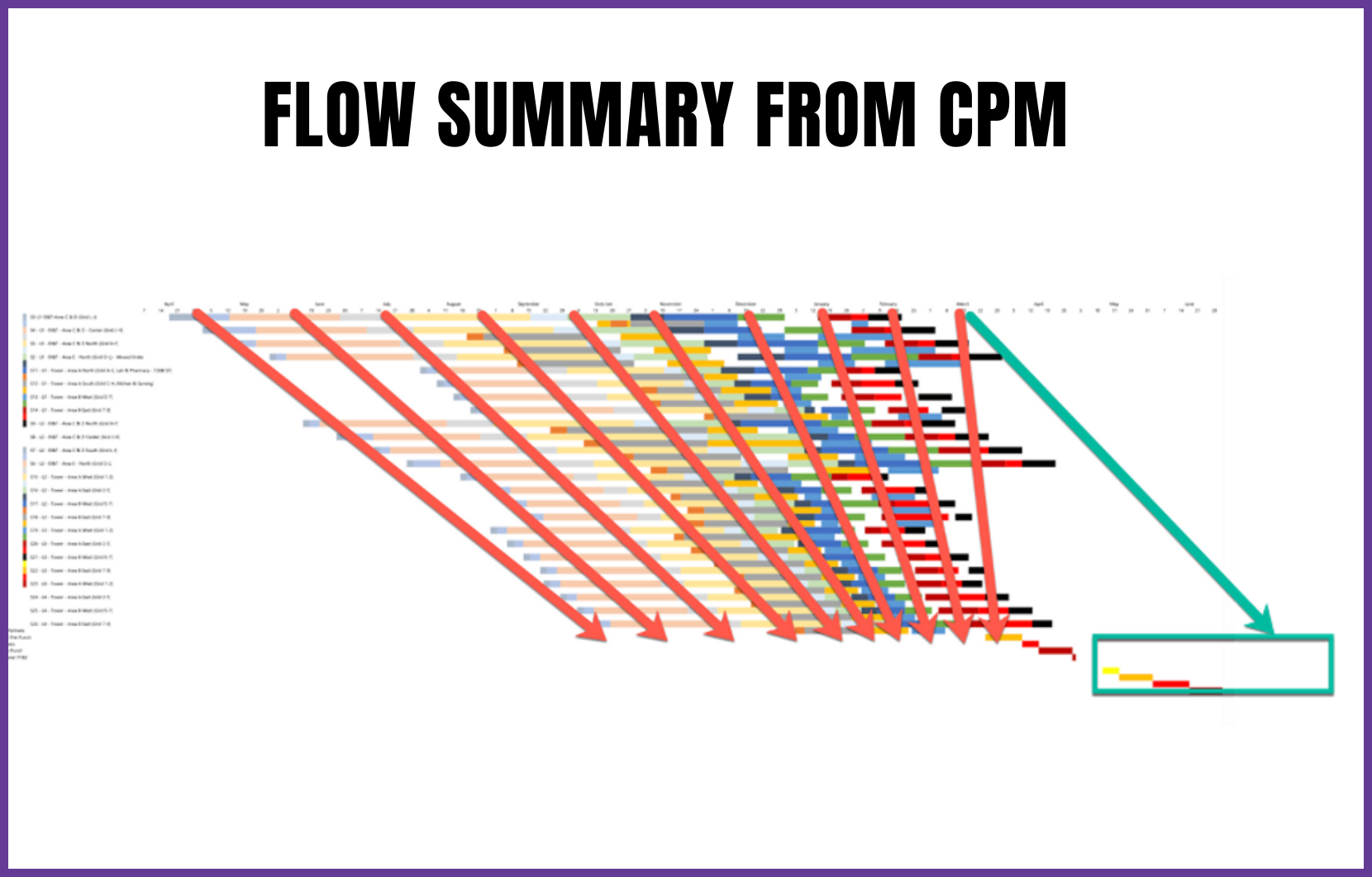
CPM schedule flow summary showing trades stacking mid-project
Take the chart below for instance, which is the same as the one above; it shows what the critical path might be, bouncing around through the project’s web of relationships and ties between the activities. Yet, as seen from the colored bars on the chart, the scopes of work are stacked at the end and there is an inevitable “Crash Landing” for this project if things do not change. The blue arrow is where the project will end if this plan is not changed. So, the critical path analysis did not help us to see the project health or project an accurate end date. The worst part is that we won’t realize this until we are experiencing the consequences of the trade stacking. We won’t see it because the CPM critical path tells the team everything is okay until activities start to drift and it becomes too late.
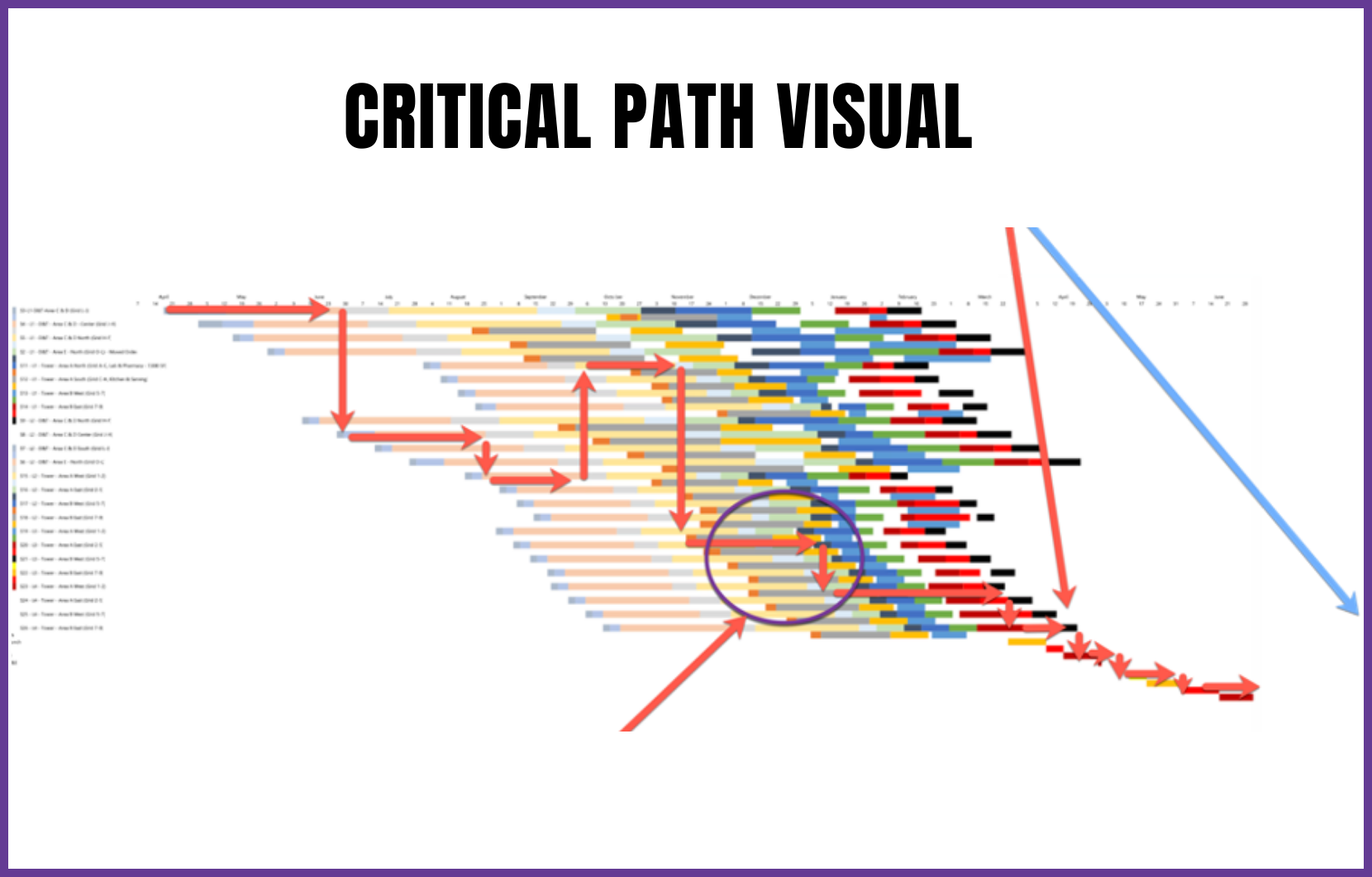
Critical path bouncing through a CPM schedule with trades stacked at the end
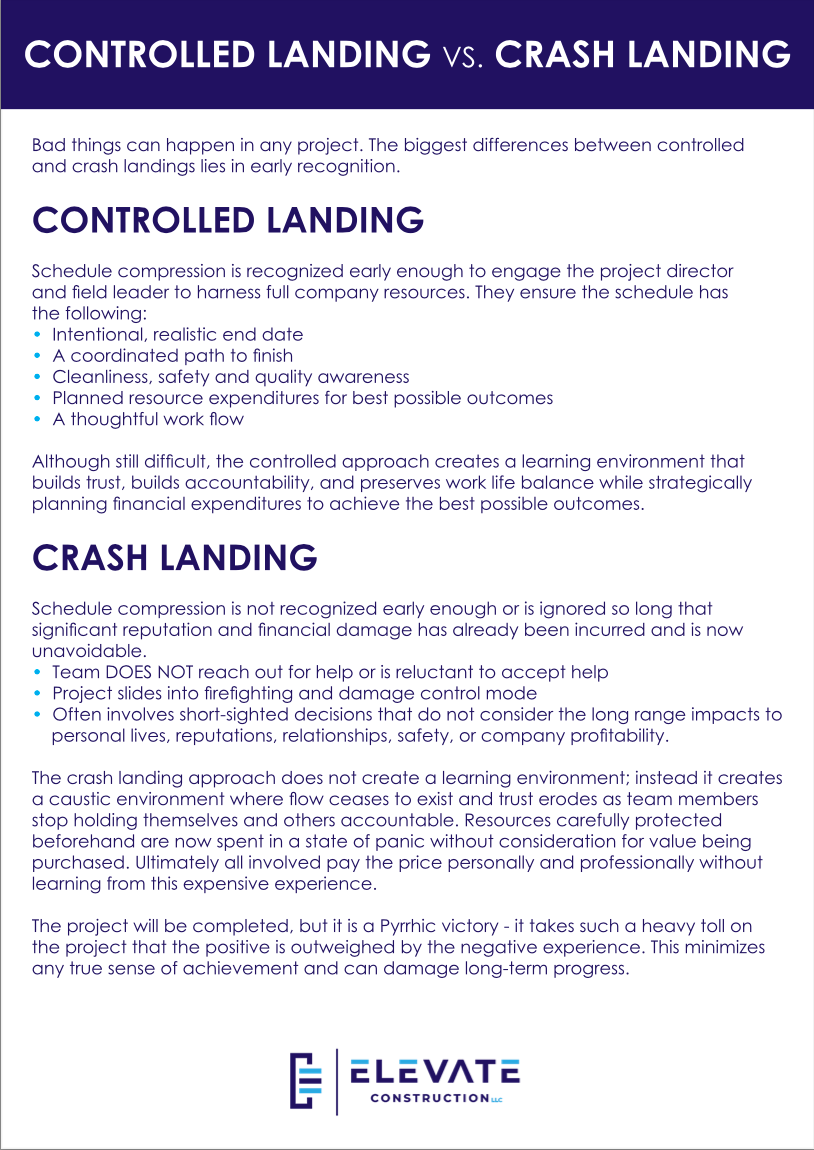
What is a crash landing?
At the very end of the project things stack up and it becomes a mad dash to finish on time. Have you ever been on a project where the end feels like a sprint, and you end up working 14-hour days and Saturdays to try and keep the end date? This is what we call a Crash Landing, and sadly, it is the norm right now in our industry.
Why Takt shows critical flow
Takt works so well in construction because its format shows us trade flow or the lack of it. Showing this allows us to better project the end date of our construction project, giving us enough time to build and correct deviations. An understanding of how trades and resources flow through the job is what brings accuracy to a construction schedule, and only Takt shows it.
We will leave you with one final thought on this. When we are able to keep crews and trades flowing through the project, both the Trade Partner and the General Contractor achieve their goals. That is where we should focus because, in construction, we do not have a critical path, we have a critical flow!
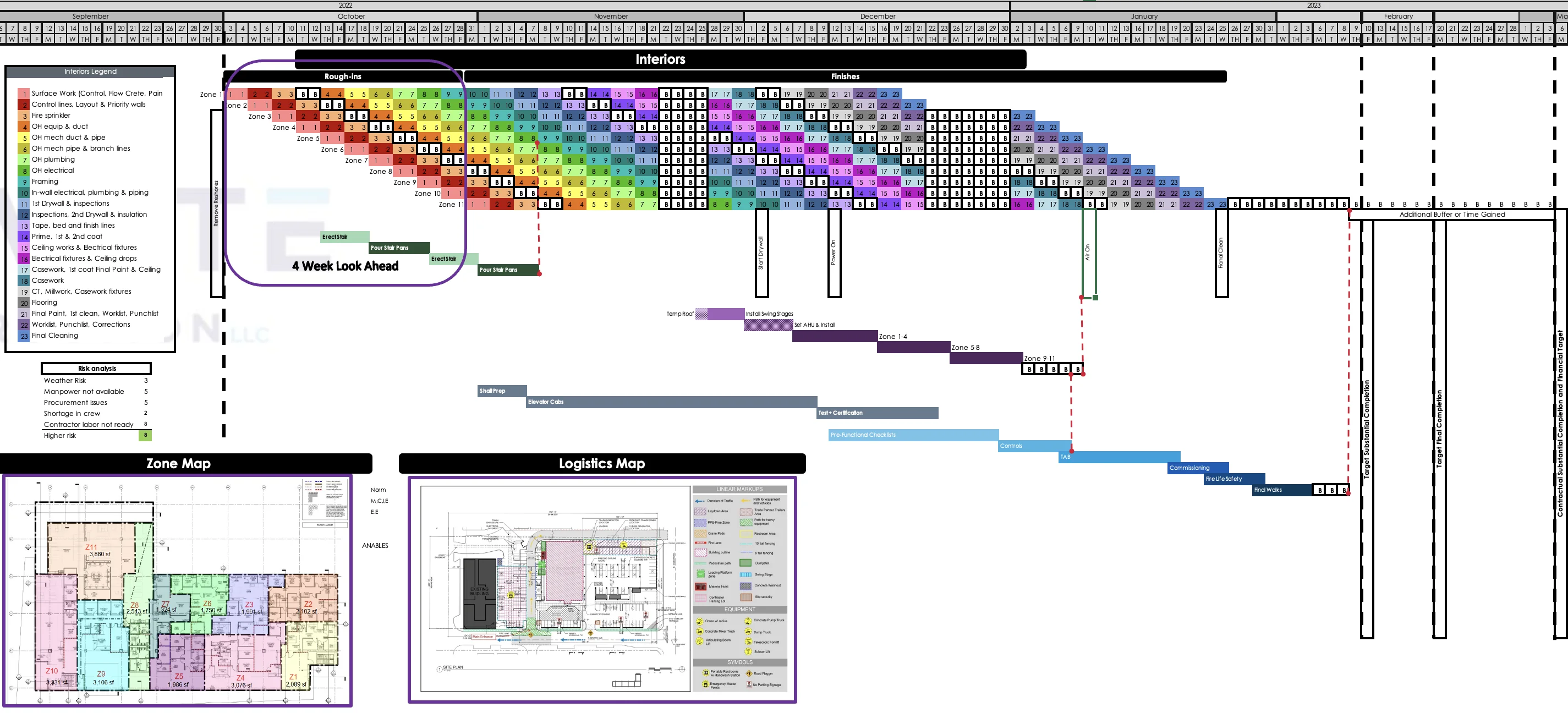
Takt schedule with steady trade flow
Tired of crash landings? Learn to schedule for flow in the Takt Production System Masterclass.
Want your team trained on this? See our Last Planner® System and Takt training.
On we go!
FAQ
What is critical flow in construction?
The steady movement of trades and crews through the work areas. When it breaks, trades stack and the end date slips, even if the critical path looks fine.
Is the critical path useless?
No, but it only shows activity logic. You also need to see trade flow, which is what a Takt plan shows.
People Also Read:
The 10 Myths of CPM: How The Critical Path Method Systematizes Disrespect for People