How I Recover a Project: A Practical Guide to Controlled, Disciplined Finishes
In this blog, I want to share something I’ve dealt with many times in my career: stepping into a project that’s slipping, unstable, or heading toward a crash landing. Recovering a project isn’t about pressure, panic, or throwing bodies at the work. It’s about stabilizing systems, creating clarity, enforcing discipline, and leading with a steady hand. Over the years, I’ve learned that the difference between a controlled landing and a crash landing comes down to how firmly we hold the controls and how quickly we eliminate chaos.
When I’m brought in to help recover a job, the first thing I do is revisit roles. Every person must own a clearly defined geographical area not just scopes. When people own areas, the team conquers space the same way an army secures terrain. Once roles are fixed, I stabilize every system: huddles, safety rules, roadblock tracking, quality standards, procurement logs. Nothing can remain loose or undefined. And then comes the step that most teams overlook but that absolutely transforms momentum: I stop everything and clean. Two full days of sweeping, organizing, removing trash, clearing access, and reducing inventory. That reset signals to the workforce that a new standard has begun.
Next, I tighten safety to zero tolerance and create one single plan to finish the project. A realistic flow-based schedule whether in CPM or Takt is the foundation for every decision moving forward. Once that plan exists, I make sure every task, every area, and every procurement item has a defined end date. I also engage the team in daily huddles where we track roadblocks fanatically. If we don’t attack constraints daily, they multiply and become unmanageable. And when trades become unresponsive, I widen the circle, escalate when necessary, and use techniques like stop-and-call or make-them-come-to-you so that no critical item drifts off track.
A controlled landing is all about consistency: maintaining conquered territory, avoiding out-of-sequence work, keeping crews tight and focused, and driving a steady flow through the building. What I refuse to do and what sinks most projects is pushing people on top of one another, abandoning the quality process, overworking the workforce, or sacrificing safety. Those behaviors create rework, burnout, and chaos. They don’t accelerate anything. History proves that disciplined flow always beats frantic activity.
Recovering a project is not about heroics. It’s about calm leadership, stable systems, and disciplined execution. It’s about knowing that overshooting the runway slightly is far better than crashing the plane. When we hold the controls steady, stay aligned, and keep the team working in flow, we finish earlier, safer, and with far greater quality than we ever would under panic.
Key Takeaway
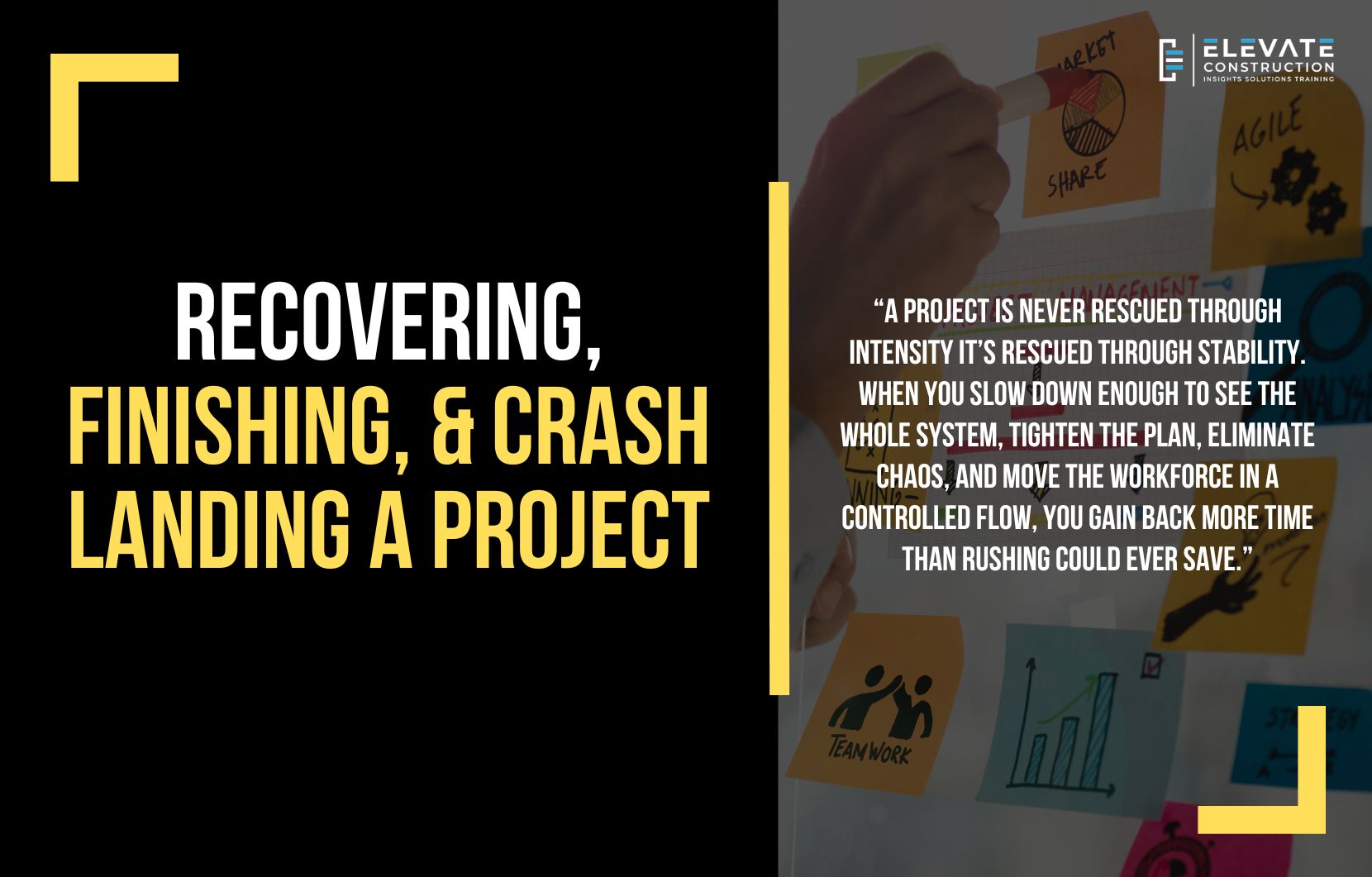
A project is never rescued through intensity it’s rescued through stability. When you slow down enough to see the whole system, tighten the plan, eliminate chaos, and move the workforce in a controlled flow, you gain back more time than rushing could ever save.
If you want to learn more we have:
-Takt Virtual Training: (Click here)
-Check out our Youtube channel for more info: (Click here)
-Listen to the Elevate Construction podcast: (Click here)
-Check out our training programs and certifications: (Click here)
-The Takt Book: (Click here)
Discover Jason’s Expertise:
Meet Jason Schroeder, the driving force behind Elevate Construction IST. As the company’s owner and principal consultant, he’s dedicated to taking construction to new heights. With a wealth of industry experience, he’s crafted the Field Engineer Boot Camp and Superintendent Boot Camp – intensive training programs engineered to cultivate top-tier leaders capable of steering their teams towards success. Jason’s vision? To expand his training initiatives across the nation, empowering construction firms to soar to unprecedented levels of excellence.
On we go