Safety Begins With Leadership, Not Paperwork
Safety is not a form, a meeting, or a checklist. It’s a mindset. I once heard a speaker say something that hit me like a freight train: If you don’t show up every day feeling responsible for every single person’s safety on site, then you don’t get it yet. That truth changed me. Too often, leaders say safety is their “number one priority,” but their jobsite conditions tell a different story. Safety has to be integrated into how we think, how we walk, how we lead, not something we get to after procurement and schedule reviews.
Your First Thought When You Arrive: Is Everyone Safe?
When I step onto a project, my first instinct is not to check emails, production targets, or financials. It’s: Is my site safe right now? That means walking the perimeter. Checking fencing. Looking at traffic control. Asking how the morning huddle went. Confirming whether there are dig permits, hot work permits, or confined space permits active that day. Making sure crews are oriented and prepared. The first 20–30 minutes should communicate clearly to your team that safety is the lens through which everything else happens.
The Restrooms Tell the Truth
One of the fastest ways to read a jobsite’s culture is to walk into the restrooms. If they are clean, stocked, and cared for, the team is thinking about people. And if the team is thinking about people, they’re thinking about safety. If the restrooms are neglected, nothing else you do will matter because the foundational message you’re sending is that workers aren’t your priority. The best superintendents I know check the restrooms every single morning.
Your Personal Daily Safety System
Every leader needs a personal safety routine a system you follow the moment you arrive. Mine includes checking JHAs, pretask plans, permits, public interface, the perimeter, traffic control, emergency response plans, and whether safety coverage is adequate. It also means asking the right questions: Are people calm? Do we have enough supervision? Does the site look stable? Is the team communicating? Safety is not about reacting to incidents it’s about creating conditions where incidents don’t have room to appear.
Would People Expect You to Ask About Safety First?
Here’s the real test of your leadership:
When you arrive on site, do people expect you to ask about safety first?
If the answer is no, then there’s a gap and that gap matters. A safety-minded leader creates predictability. Crews know what will be checked, and because they know, they build safer habits. Your presence should elevate the entire site’s behavior.
Safety Must Become Personal
At the end of the day, I believe every injury is on me. If someone overheats, that’s on me. If someone cuts themselves, that’s on me. If someone doesn’t go home to their family that night, that is absolutely on me. We can’t hide behind contracts, trade partner responsibilities, or the excuse of “construction is dangerous.” The buck truly stops with us. Safety has to live in your gut, in your instincts, in your morning thoughts. It has to matter to you at a personal level before it ever becomes a habit for your project.
Key Takeaway:
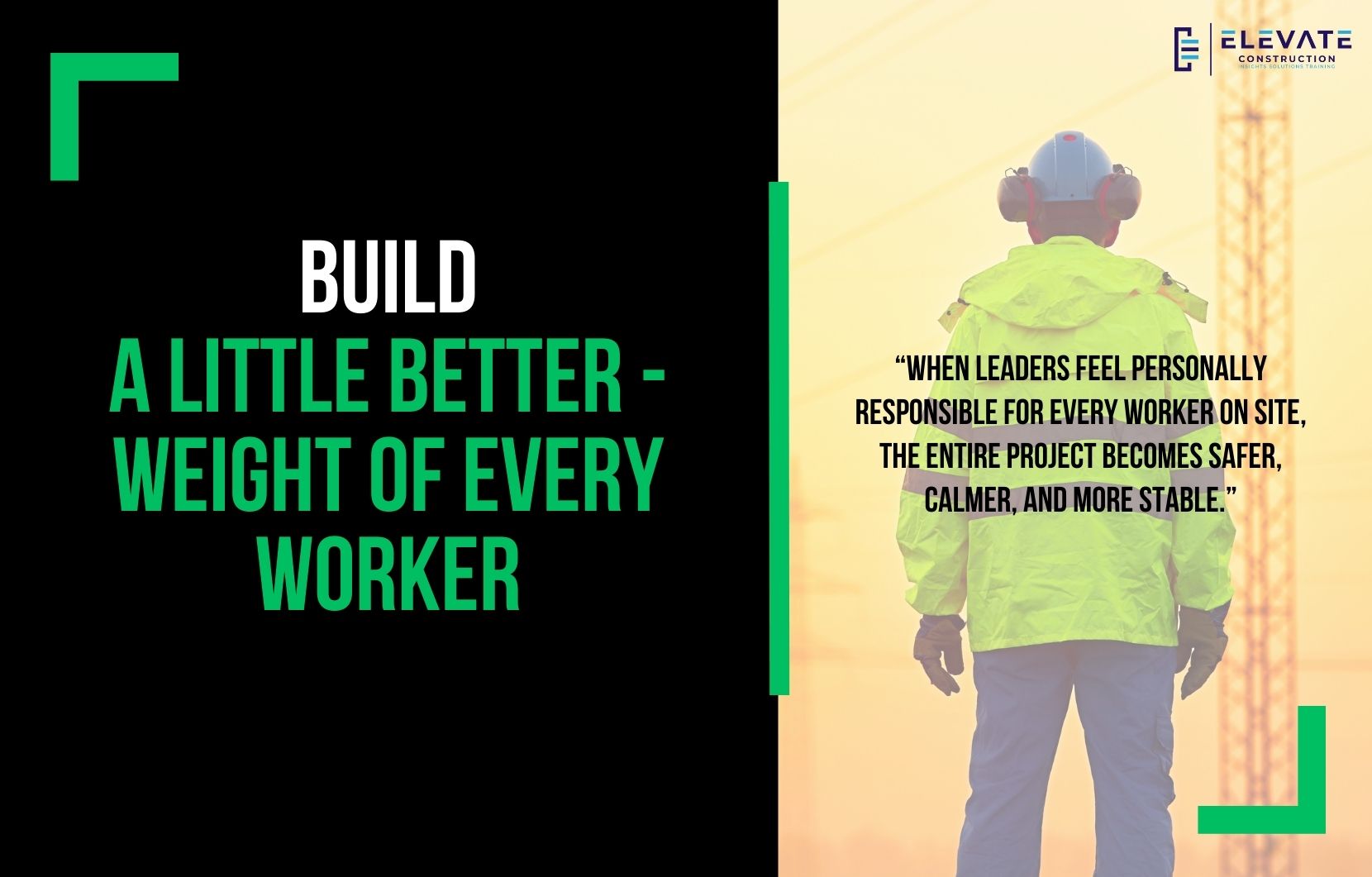
When leaders feel personally responsible for every worker on site, the entire project becomes safer, calmer, and more stable.
If you want to learn more we have:
-Takt Virtual Training: (Click here)
-Check out our Youtube channel for more info: (Click here)
-Listen to the Elevate Construction podcast: (Click here)
-Check out our training programs and certifications: (Click here)
-The Takt Book: (Click here)
Discover Jason’s Expertise:
Meet Jason Schroeder, the driving force behind Elevate Construction IST. As the company’s owner and principal consultant, he’s dedicated to taking construction to new heights. With a wealth of industry experience, he’s crafted the Field Engineer Boot Camp and Superintendent Boot Camp – intensive training programs engineered to cultivate top-tier leaders capable of steering their teams towards success. Jason’s vision? To expand his training initiatives across the nation, empowering construction firms to soar to unprecedented levels of excellence.
On we go