What Is Professional Project Management? The Standard the Industry Must Return To
Professional project management in construction has a problem. Not because people don’t care. Not because they’re lazy. But because the role has drifted so far from its original purpose that many teams no longer recognize what “professional” actually looks like.
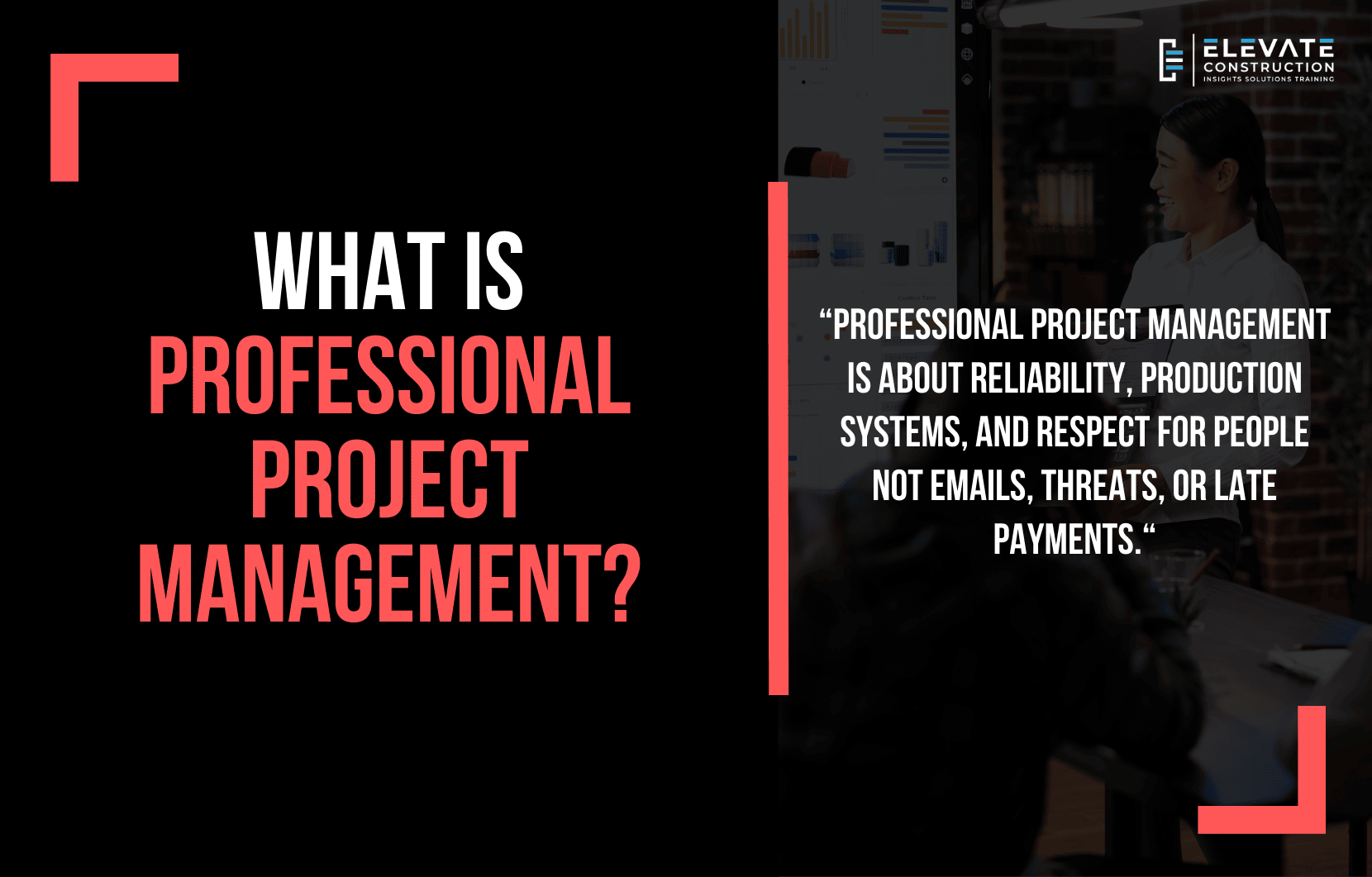
Today, project management is often reduced to emails, paperwork, negotiations, and control. That version of the role feels normal because it’s common but common does not mean correct. Professional project management is not about sitting behind a computer all day. It is about reliability, production systems, preparation, leadership, and respect for people.
The difference matters more than most teams realize.
The Reality Today: Why Project Management Has Drifted Off Track
Many project managers were taught that their value comes from administration. Emails. RFIs. Submittals. Logs. Contracts. Threats. Control. Over time, this creates an environment where activity is mistaken for effectiveness.
Projects become tense. Communication becomes transactional. Trade partners feel squeezed instead of supported. Payments are delayed. Promises are broken. And the jobsite pays the price.
This is not because people want to be unprofessional. It’s because this is how the system trained them.
What Unprofessional Project Management Looks Like in the Field
Unprofessional project management shows up in patterns. Late payments. Unclear communication. Constant rejection. Creating contention instead of clarity. Negotiating profit out of trade partners after work has already been promised.
It shows up as threats instead of conversations. Cure notices instead of collaboration. Email chains instead of real communication. Administration instead of leadership.
This behavior puts trade partners at risk, destroys trust, and creates unhealthy conflict. It also makes projects slower, not faster.
Reliability Is the First Requirement of Professionalism
Professional project managers are reliable. Reliable in communication. Reliable in commitments. Reliable in preparation. Reliable in payment.
Reliability means people know where they stand. They know what was promised. They know what to expect. And they know that when a commitment is made, it will be honored.
Late payment is not just inconvenient it is destructive. When trade partners wait months to get paid, they are put at financial risk. That is not professional. That is systemic unreliability.
Why Late Payment and Broken Promises Destroy Trust
Trust is built through consistency. When a project manager break promises, changes deal after buyout, or delays payment to improve cash position, trust collapses.
The transcript example is clear. Promising one scope, then changing it later to “make more money,” is not leadership. It teaches everyone that words mean nothing. Once trust is gone, coordination becomes defensive and adversarial.
That environment always costs more in the end.
Professional PMs Build Production Systems, Not Email Factories
Administration is not the job. It is technology that supports the job.
Professional project management builds production systems. Systems that provide a clean, safe, organized environment. Systems that create rhythm. Systems that ensure people have what they need when they need it.
The general contractor’s role is to provide environment, rhythm, integration, and resources. When that system works, production flows. When it doesn’t, no amount of email fixes it.
Preparing Work Ahead: Keeping All the Lights Green
Professional project managers prepare work ahead of crews. Their primary question is simple: What do you need?
That question is not about servitude. It is about leadership. Clearing roadblocks. Securing permissions. Ensuring labor, materials, equipment, and information are ready.
When everything is ready, the jobsite stays green. When it isn’t, crews stop and struggle. That is a system failure, not a people failure.
Lead People, Manage Systems and Environments
People must be led. Systems must be managed.
Leadership is clarity, training, and support. That definition does not change with job titles or personalities. When project managers lead people and manage systems, teams perform.
Managing people like things creates resentment. Leading people while managing environments creates alignment. Professional project managers understand the difference.
Using Metrics as Signals, Not Weapons
Metrics are not weapons. They are signals.
Professional project managers do not use numbers to threaten or control. They use them to dig in, understand reality, and help teams succeed. Metrics should trigger curiosity, not punishment.
When numbers are used as weapons, people hide problems. When used as signals, teams solve them together.
Coordination Through Respect, Precision, and Integration
True professionalism shows up in coordination. Knowing the work. Understanding constraints. Solving problems shoulder-to-shoulder instead of through contracts and threats.
Integration prevents unhealthy conflict. It keeps teams aligned. It eliminates the ninth waste: lack of alignment.
Respect is not soft. It is efficient.
Common Signs of Unprofessional Project Management
- Late or unpredictable payment
- Broken commitments after buyout
- Email used instead of conversation
- Metrics used to threaten
- Conflict instead of coordination
Habits of Truly Professional Project Management Leaders
- Reliable communication and commitments
- Early preparation and roadblock removal
- Respectful coordination with trade partners
- Metrics used as learning signals
- Focus on people, process, and quality
If your project needs superintendent coaching, project support, or leadership development, Elevate Construction can help your field teams stabilize, schedule, and flow.
The line is clear. Professional project management leads people, manages systems, prepares work, pays on time, and builds trust. Unprofessional project management creates conflict, delay, and risk. As a reminder: “Lead people. Manage things.”
FAQ
What makes project management professional in construction?
Reliability, preparation, production systems, leadership, and respect for people.
Is administration part of project management?
Yes, but it supports the job. It is not the job.
Why is paying on time so important?
Late payment puts trade partners at financial risk and destroys trust.
How should metrics be used by project managers?
As signals to investigate and support, not weapons to control.
What is the PM’s primary role on a project?
To create an environment where crews can succeed predictably and safely.
If you want to learn more we have:
-Takt Virtual Training: (Click here)
-Check out our Youtube channel for more info: (Click here)
-Listen to the Elevate Construction podcast: (Click here)
-Check out our training programs and certifications: (Click here)
-The Takt Book: (Click here)
Discover Jason’s Expertise:
Meet Jason Schroeder, the driving force behind Elevate Construction IST. As the company’s owner and principal consultant, he’s dedicated to taking construction to new heights. With a wealth of industry experience, he’s crafted the Field Engineer Boot Camp and Superintendent Boot Camp – intensive training programs engineered to cultivate top-tier leaders capable of steering their teams towards success. Jason’s vision? To expand his training initiatives across the nation, empowering construction firms to soar to unprecedented levels of excellence.
On we go