
Are You Leaving Good Decisions on the Table by Not Asking?
You know your project needs three more weeks. The duration you promised in schematic design was based on incomplete information and CPM guessing, not actual Takt planning with trade input. But you don’t ask the owner for more time because you assume they’ll say no. You know your team needs another field engineer to prevent the quality disasters piling up. But you don’t ask your company for the hire because budgets are tight and you assume they’ll reject it. You know a change order is warranted because the scope actually changed. But you don’t submit it because you assume the owner will fight it. So you eat the cost, extend your team’s hours, and watch people burn out while the project suffers. All because you assumed no without ever asking the question.
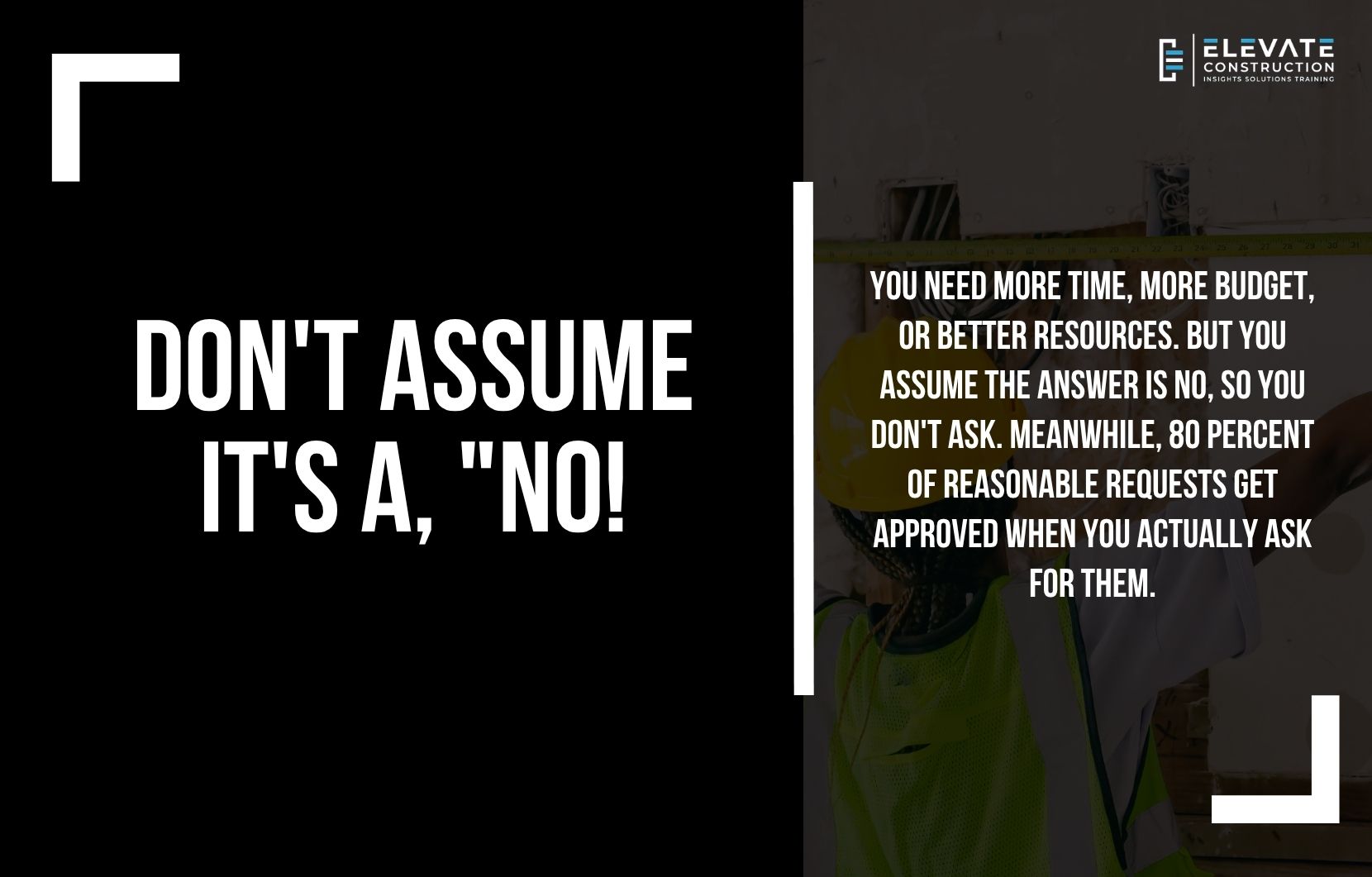
Here’s what you’re missing. Most people will say yes more than you think the first time you ask for something that’s actually needed. Studies show 80 percent approval rates for reasonable requests backed by data. Owners want their projects to succeed. Companies want their teams supported. People want to do the right thing. But they can’t say yes to requests you never make. You’re leaving good decisions on the table. Resources that would protect people. Time that would preserve quality. Budget that would prevent disasters. All available if you’d just ask. But you won’t ask because you’ve convinced yourself the answer is no before you tried.
The catch is the second yes. Most people will say yes the first time when you ask for what’s needed and show them the data. But when you come back asking again because you didn’t do your due diligence the first time, that’s when they get angry. When you tell an owner the project is 11 months in schematic design, then come back in CDs asking for 13 months because you finally did real planning, they feel manipulated. When you ask for budget, get it, then ask for more because your original estimate was sloppy, they lose trust. The first yes is easy if you’ve done your homework. The second yes is nearly impossible because it proves you didn’t.
The Real Pain: Needs That Go Unmet Because You Won’t Ask
Walk any struggling project and you’ll see the pattern. Superintendents who need help but won’t ask for it because they think asking proves weakness. Project managers who know the schedule is impossible but won’t go to the owner because they assume pushback means no. Teams that need training, resources, or support but never request them because the culture says figure it out yourself. And everyone suffers. Quality drops. Safety incidents increase. People burn out. Families pay the price. All because nobody asked for what was needed to prevent the disaster.
The pain compounds when you finally do ask but you ask wrong. You go to the owner without data. Just a request for more time or more money without showing them why. They say no because you didn’t make it visual. You didn’t show them what the is is. You just asked for more without proving you need it. Or worse, you ask after you already got a yes once. You told them 11 months. They planned around it. They made commitments. Then you come back asking for 13 months because you didn’t do Takt planning upfront and your original estimate was garbage. That second ask destroys trust even when the request is legitimate. Because it proves you didn’t do your homework the first time.
The worst part is the three types of yes you don’t recognize. Chris Voss teaches in Never Split the Difference that not all yeses are the same. There’s the counterfeit yes, where someone plans to say no but uses yes as an escape route or to get more information from you. There’s the confirmation yes, just simple affirmation with no promise of action. And there’s the commitment yes, the real deal that leads to action. Most people confuse these. They get a confirmation yes or even a counterfeit yes and think they have commitment. Then they’re shocked when nothing happens. You need commitment yes. But you won’t get it if you don’t know how to ask for it properly.
The Failure Pattern: Assuming No Without Ever Asking
Here’s what teams keep doing wrong. They assume no before they ask. They need resources. They need time. They need support. But they’ve internalized a culture that says don’t ask, just make it work. So they don’t ask. They grind. They extend hours. They burn people out. They accept quality failures. They watch projects struggle. All while the resources they need sit available, waiting for someone to request them with data that shows why they’re needed. But nobody asks. So nobody gets. And everyone suffers.
They also ask without doing their homework. When they finally do ask, they show up unprepared. No data. No visual schedule showing the constraint. No budget breakdown showing the cost. Just a request for more without proving why. And leadership or owners say no because the request looks like guessing or complaining, not legitimate need. If you’d done Takt planning in preconstruction instead of CPM estimating, you’d know the real duration. If you’d involved trades early, you’d have real pricing. If you’d made the constraint visual, you could show exactly why you need what you’re asking for. But you didn’t. So your ask looks like incompetence instead of legitimate need.
The failure deepens when they get a first yes then come back for a second. You told the owner 11 months. You got buy-in. They planned their financing, their occupancy, their commitments around that number. Then you come back asking for 13 months because you finally did real planning and discovered your original estimate was wrong. They’re furious. Not because 13 months is unreasonable. Because you wasted their first yes on bad information. You proved you didn’t do your due diligence. And now they can’t trust anything you say. The second yes is nearly impossible to get because it reveals the first yes was built on incompetence or dishonesty.
The System Failed You
Let’s be clear. When people don’t ask for what they need, it’s not because they’re weak or incompetent. It’s because the system taught them that asking is losing. The culture celebrates grinding through impossible situations instead of questioning whether the situation should be impossible in the first place. Heroes who work 80-hour weeks get praised while people who ask for support get labeled as complainers. So people stop asking. They internalize the message that real professionals figure it out themselves. And that message destroys people while leaving resources on the table that would have prevented the destruction.
The system fails because it doesn’t teach people how to ask effectively. Asking for what you need is not complaining. It’s leadership. But you have to ask right. Make it visual. Know what the is is. Show the data. Present the constraint on a schedule everyone can see. Break down the cost so leadership understands exactly what they’re approving. Use Takt planning in preconstruction so your first ask is based on real data from trades, not CPM guessing. When you ask with data, 80 percent of reasonable requests get approved. But when you ask without data, most get rejected because they look like guessing.
The system also fails because it doesn’t teach the difference between the three types of yes. Most people think yes means commitment. But Chris Voss shows that counterfeit yes and confirmation yes sound identical to commitment yes. The difference is follow-through. If someone says yes but takes no action, you got confirmation or counterfeit, not commitment. Real negotiation means getting to know first. What are the nos? What won’t work? What constraints exist? When you clarify the nos, the yes that emerges is more likely to be commitment because you’ve eliminated the counterfeit and confirmation options through clear communication about boundaries.
What Asking Right Looks Like
Picture this. A superintendent knows the project needs three more weeks. Instead of assuming no, he does his homework. He creates a Takt plan showing exactly where the constraint exists. He involves trades in validating the durations. He makes it visual so anyone looking at the plan can see why 11 months won’t work and 14 months will. Then he goes to the owner. He doesn’t ask for more time without context. He shows them the data. Here’s the constraint. Here’s what happens if we compress it. Here’s what we gain by addressing it properly. The owner looks at the visual plan, asks questions, and says yes. Because the request is backed by data, not guessing.
The team also understands the three types of yes:
- Counterfeit yes happens when someone wants to escape the conversation or gather more information without committing. They say yes but plan to say no later.
- Confirmation yes is simple affirmation with no promise of action. They’re agreeing you asked a question correctly, not committing to do something about it.
- Commitment yes is the real deal. True agreement that leads to action. This is what you want, but you only get it by clarifying the nos first so the yes that emerges is genuine.
When you understand these distinctions, you ask better questions. You don’t start with yes. You start with no. What won’t work? What constraints exist? What boundaries matter? Then when you get to yes, it’s commitment because you’ve eliminated the counterfeit and confirmation options through clear communication.
Most importantly, they protect the first yes by doing their homework upfront. They don’t tell the owner 11 months based on CPM guessing in schematic design, then come back asking for 13 months in CDs when they finally do real planning. They do Takt planning in preconstruction. They involve trades. They validate durations. They know what the is is before they ask. So when they get the first yes, it’s based on real data. And they don’t need a second yes because they got it right the first time. If your project needs superintendent coaching, project support, or leadership development, Elevate Construction can help your field teams stabilize, schedule, and flow.
Why Asking Matters
Asking for what you need protects people. When you don’t ask for the field engineer your team needs, quality suffers. When you don’t ask for the realistic schedule, people burn out trying to achieve the impossible. When you don’t ask for warranted change orders, your company eats costs that destroy profit and force layoffs. Every time you leave a good decision on the table by not asking, people pay the price. Asking is not weakness. It’s leadership. It’s protecting the humans doing the work by getting them what they need to succeed.
Asking also builds trust when you do it right. When you ask with data, make everything visual, and show people what the is is, they respect the request even if they can’t approve it. They see you did your homework. They trust your judgment. And next time you ask, they listen because you’ve proven you don’t ask frivolously. But when you ask without data or come back for a second yes because you didn’t do your homework the first time, you destroy trust. People assume future requests are equally sloppy. The quality of your ask determines whether people trust you.
Most importantly, asking gets you what you need 80 percent of the time when you ask right. Studies show reasonable requests backed by data get approved at remarkably high rates. Owners want projects to succeed. Companies want teams supported. People want to do the right thing. But they can’t say yes to requests you never make. Stop assuming no. Start asking with data. And watch how often the answer is yes when you ask for what’s actually needed to protect people and deliver quality.
How to Ask for What You Need
Start by doing your homework before you ask. Don’t go to owners or leadership with requests based on guessing. Use Takt planning in preconstruction to know real durations. Involve trades in validating estimates. Make constraints visual so everyone can see exactly what you’re asking for and why. Know what the is is. When you show data, not opinions, 80 percent of reasonable requests get approved. When you show up unprepared, most get rejected because they look like complaining instead of legitimate need.
Understand the three types of yes. Counterfeit, confirmation, and commitment. Don’t start by pushing for yes. Start by clarifying the nos. What won’t work? What constraints exist? What boundaries matter? When you eliminate what doesn’t work, the yes that emerges is more likely commitment because you’ve built it on clear communication about reality. And watch for follow-through. If someone says yes but takes no action, you got confirmation or counterfeit, not commitment. Real commitment leads to action.
Protect the first yes by getting it right. Don’t tell owners 11 months in schematic design based on CPM guessing, then come back asking for 13 months in CDs. Do real planning upfront. Involve trades. Validate durations. Know the real number before you ask. When you get the first yes, make it count. Because the second yes is nearly impossible to get. It reveals you didn’t do your homework the first time. And that destroys trust even when the second request is legitimate.
Ask for what you need to protect people and deliver quality. More time. More resources. More support. Warranted change orders. Realistic schedules. Whatever’s needed to prevent burning people out or delivering poor quality. Stop assuming the answer is no. Start asking with data. And trust that 80 percent of the time, when you ask for what’s actually needed and show people why, the answer is yes.
The Challenge
Here’s your assignment. Identify what you need right now on your project to protect people and deliver quality. More time? More resources? Support? Training? A warranted change order? Write it down. Then do your homework. Create the visual schedule showing the constraint. Build the budget breakdown showing the cost. Make it factual so anyone looking can see what the is is. Then ask. Don’t assume no. Ask with data. And watch how often the answer is yes when you ask right.
Understand the three types of yes. Counterfeit. Confirmation. Commitment. Start by clarifying the nos instead of pushing for yes. What won’t work? What constraints exist? Build the yes on clear communication about reality. And watch for follow-through. If someone says yes but takes no action, you got confirmation or counterfeit. Push for commitment by making the ask specific and action-oriented.
Protect your first yes by doing your homework upfront. Use Takt planning in preconstruction. Involve trades. Validate durations. Know the real number before you ask. Don’t waste your first yes on bad data. Because the second yes is nearly impossible to get and destroys trust even when legitimate. Get it right the first time. And stop leaving good decisions on the table by not asking.
Most people will say yes more than you think the first time. But only if you ask with data and do your homework. Stop assuming no. Start asking right.
Chris Voss said there are three kinds of yeses: counterfeit, confirmation, and commitment. Only commitment leads to action. Get commitment by clarifying the nos first, then building the yes on reality.
On we go.
FAQ
How do you know if you got a commitment yes versus confirmation or counterfeit?
Watch for follow-through. Commitment yes leads to action. Someone approves your request and then schedules the resource, adjusts the timeline, or processes the change order. Confirmation yes is just affirmation with no action. Counterfeit yes means they’re planning to say no later or gathering information. If you get yes but nothing happens, you got confirmation or counterfeit. Push for commitment by making asks specific and action-oriented with clear next steps.
What if you already wasted your first yes and need a second?
Own it. Don’t make excuses. Show them exactly what you got wrong the first time and what you did to fix it. Present data that proves the second ask is legitimate, not more guessing. Acknowledge you should have done this homework upfront. Then ask if they’ll give you another chance despite the mistake. Some will. Some won’t. But honesty gives you better odds than pretending you didn’t mess up the first ask.
How do you ask for something when company culture says don’t ask, just grind?
Change the culture by being the example. Ask with data. Make it visual. Show what the is is. When your ask gets approved and the project improves, others notice. They see that asking with data works better than grinding through impossible situations. Culture changes when better methods produce better results. Be the proof that asking right is leadership, not weakness.
What’s the best way to make requests visual so people can see what the is is?
Use Takt plans that show constraints in the flow. Use budget breakdowns that show exactly where costs come from. Use graphs that show trend data proving the problem exists. Use photos that show the physical constraint. Make it impossible for someone to look at your request and not understand exactly what you’re asking for and why. Visual data eliminates debate about whether the need is real.
How do you do your homework in preconstruction to avoid needing a second yes?
Use Takt planning instead of CPM guessing. Involve trades in validating durations and costs. Build the plan with the people who’ll execute it. Test assumptions. Make constraints visible early. Ask hard questions before you commit to owners. When you do real planning upfront with trade input, your first ask is based on data. You don’t need a second yes because you got it right the first time.
If you want to learn more we have:
-Takt Virtual Training: (Click here)
-Check out our Youtube channel for more info: (Click here)
-Listen to the Elevate Construction podcast: (Click here)
-Check out our training programs and certifications: (Click here)
-The Takt Book: (Click here)
Discover Jason’s Expertise:
Meet Jason Schroeder, the driving force behind Elevate Construction IST. As the company’s owner and principal consultant, he’s dedicated to taking construction to new heights. With a wealth of industry experience, he’s crafted the Field Engineer Boot Camp and Superintendent Boot Camp – intensive training programs engineered to cultivate top-tier leaders capable of steering their teams towards success. Jason’s vision? To expand his training initiatives across the nation, empowering construction firms to soar to unprecedented levels of excellence.