
The Loose Talk Trap: Why Casual Conversations With the Wrong People Cost You More Than Any Mistake on the Jobsite
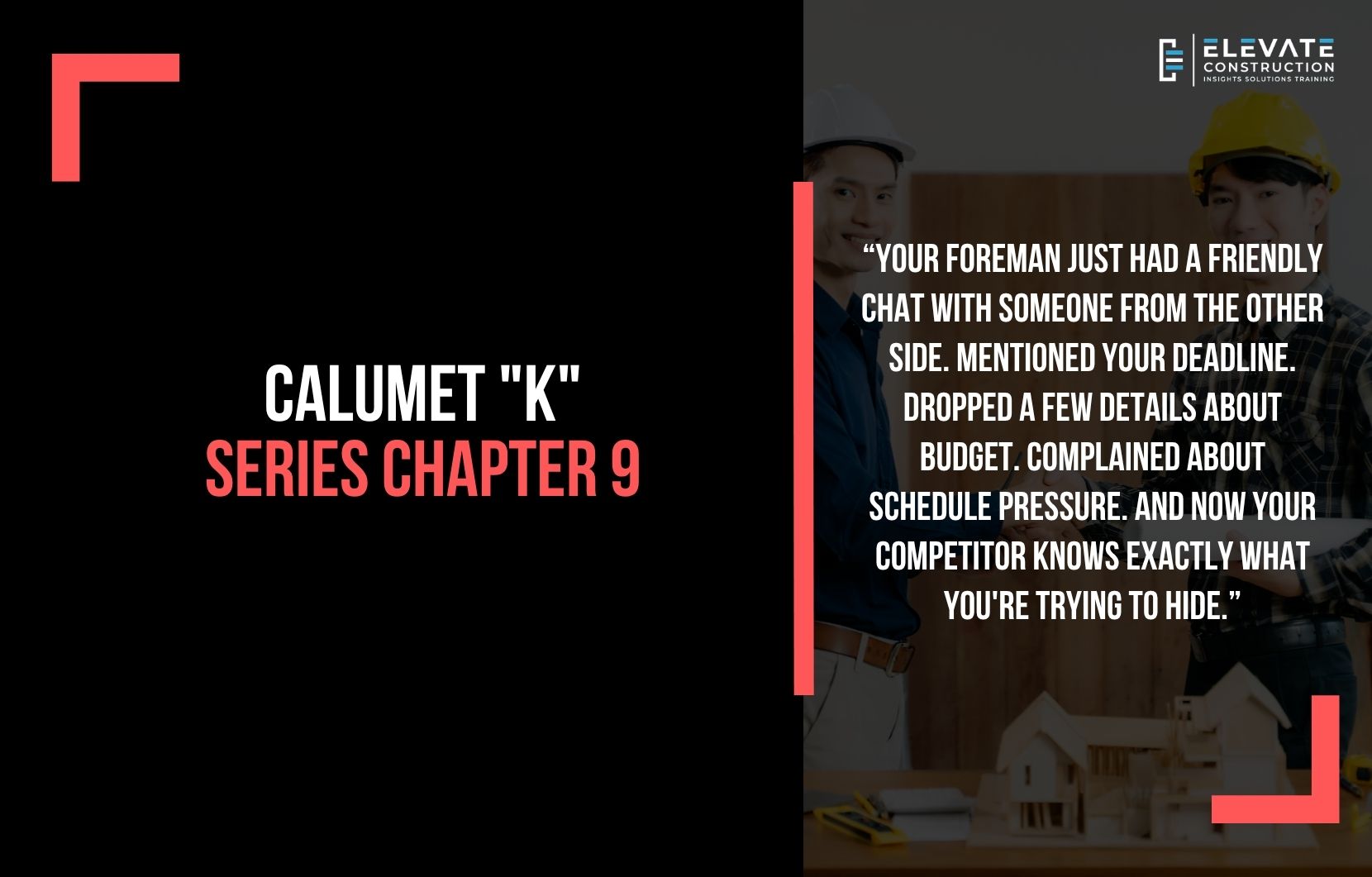
Your foreman sits on the steps after his shift, bored, waiting for the afternoon to pass before returning to work. A union delegate walks by. The same guy who tried to shut down your project last week. The same guy who’s been agitating your workers. The same guy whose interests directly conflict with yours.
They start talking. The weather. The work. How the project is coming along. Your foreman mentions you’re in a rush. Drops a comment about the deadline. Says something about budget not being a concern because the owner is in a hurry. Makes a joke about rich people wanting everything done yesterday regardless of cost. Friendly conversation. Casual chat. Nothing sensitive shared, just general complaints about the pressure everyone’s under. The kind of talk that happens every day on construction sites across the country. Harmless.
Except it’s not harmless. Your foreman just told someone with competing interests exactly what they needed to know to cause maximum damage. He revealed your deadline, which tells them exactly when to create problems for maximum leverage. He disclosed that budget isn’t constraining you, which tells them you’ll pay to avoid delays. He confirmed you’re under pressure, which tells them you’re vulnerable to threats that might slow the work.
And here’s the worst part. Your foreman knows he talked too much. He realizes it the moment the conversation ends. He feels uneasy about it all afternoon. But when he sees you that evening to hand off the shift, he says nothing. He doesn’t mention the conversation. He doesn’t warn you what information got shared. He decides to keep quiet because admitting he talked too much feels worse than letting you walk into whatever happens next without warning.
Most projects lose because of what gets built wrong on the jobsite. Some projects lose because of what gets said wrong in casual conversations with people who shouldn’t have the information. The damage from loose talk isn’t visible immediately. It shows up weeks later when competitors know exactly when to strike, when to slow you down, when to apply pressure because someone told them your vulnerabilities in a casual chat they thought didn’t matter.
The Problem Every Project Faces
Walk any construction site and listen to how freely people talk about project details. Deadlines. Budget constraints. Owner pressure. Schedule vulnerabilities. Supplier problems. Who’s difficult to work with. What keeps the superintendent up at night. Which trades are causing delays. Where the project is most fragile.
Most of this talk happens with coworkers, which is fine. But some of it happens with people whose interests don’t align with yours. Union delegates trying to find leverage for negotiations. Competitors bidding on the next phase. Suppliers positioning for better prices. Inspectors looking for violations. Anyone with reason to use project information against you rather than help you succeed.
The conversations feel harmless because they’re friendly. Nobody’s interrogating your foreman. Nobody’s asking direct questions about sensitive topics. It’s just casual chat. Complaints about the pressure. Frustration about deadlines. General talk about how construction works. The kind of conversation that happens naturally between people who work in the same industry.
But casual conversations with people whose interests conflict with yours are never harmless. Every detail you share gives them information they can use. Your deadline tells them when you’re most vulnerable to disruption. Your budget constraints tell them how much leverage they have. Your schedule pressure tells them you’ll pay to avoid delays. Your supplier problems tell them where to apply pressure for maximum impact.
The pattern shows up everywhere. Your foreman complains to a union delegate about the owner’s unrealistic deadline. The delegate now knows exactly when to threaten work stoppages for maximum leverage. Your superintendent mentions budget pressures to a supplier. The supplier now knows you can’t afford delays and raises prices accordingly. Your project manager tells a competitor you’re behind schedule. The competitor now knows when to poach your best people because you can’t afford to lose them.
Nobody thinks they’re sharing sensitive information. They’re just venting. Just making conversation. Just building relationships. Just being friendly with people in the same industry. They don’t see themselves as revealing project vulnerabilities. They see themselves as having normal workplace conversations about common frustrations.
The Failure Pattern Nobody Recognizes
This isn’t about malicious leaks or deliberate betrayal. This is about good people who don’t recognize the difference between safe conversations and dangerous ones. Who treat everyone in construction as part of the same community regardless of whether their interests align. Who share information freely because they don’t see how it could be used against them.
Construction culture values openness and straight talk. We’re builders. We solve problems by talking through them. We build relationships through honest conversation about challenges we face. These values serve us well when talking with people on our team. They create vulnerability when talking with people whose interests conflict with ours.
So foremen have friendly chats with union delegates without recognizing that the delegate’s job is finding leverage, not helping the project succeed. Superintendents complain to competitors about schedule pressure without recognizing they’re revealing vulnerabilities that could be exploited. Project managers share budget constraints with suppliers without recognizing they’re teaching suppliers exactly how much pressure they can apply before you’ll cave.
The conversations feel safe because they’re casual. Nobody’s asking pointed questions. Nobody’s obviously gathering intelligence. It’s just normal industry talk. Complaints about owners who don’t understand construction. Frustration with deadlines that don’t account for reality. General venting about the pressure everyone faces. The kind of talk that bonds people who work in the same difficult industry.
But people whose interests conflict with yours aren’t having casual conversations. They’re gathering intelligence. They’re looking for vulnerabilities. They’re identifying leverage points. They’re learning exactly when and where to apply pressure for maximum effect. Your foreman thinks he’s just venting about schedule pressure. The union delegate hears exactly when to threaten disruptions because that’s when you can’t afford delays.
Most people never connect the problems that show up later to the conversations that happened earlier. Three weeks after your foreman mentions the January 1st deadline in casual chat, the union delegate threatens a work stoppage on December 15th. You think the timing is coincidence. You don’t realize someone told him exactly when you’re most vulnerable. Two weeks after your superintendent complains about budget pressure, your supplier raises prices because delivery delays would cost more than paying their increase. You think market conditions changed. You don’t realize someone taught them exactly how much leverage they have.
A Story From the Field That Proves Information Security Matters
At a major grain elevator project, a superintendent named Bannon faced an impossible deadline. The bins had to be filled with grain by January 1st to break a corner in the December wheat market. Missing the deadline meant massive penalties. The project was already behind from delays before Bannon arrived. The schedule required working three shifts, seven days a week, with no margin for error.
This deadline information was the project’s critical vulnerability. Anyone who knew about it could cause enormous damage by creating delays at strategic moments. A union delegate could threaten work stoppages right before the deadline for maximum leverage. A competitor could poach workers at the worst possible time. A supplier could hold materials hostage knowing the project would pay anything to avoid missing the deadline.
Bannon understood this. He treated the January 1st deadline as sensitive information. He didn’t advertise it. He didn’t complain about it in casual conversations. He kept operational details restricted to people who needed to know them. When union delegates came around asking questions, he gave minimal information and turned conversations to other topics.
But Bannon’s foreman Peterson didn’t understand information security. Peterson was capable, hardworking, and loyal to the project. But he didn’t think strategically about who should know what. He didn’t recognize the difference between conversations with teammates and conversations with adversaries. He treated everyone in construction as part of the same community.
One afternoon, Peterson sat on his boarding house steps, bored and frustrated. He’d been moved to the night shift, which meant working alone without the social interactions he enjoyed during the day. He was feeling sorry for himself, disconnected from the project’s success, resentful about decisions he didn’t understand.
A union delegate named Grady walked by. The same delegate who’d tried to shut down the project the week before. The same delegate who’d agitated workers with speeches about being driven at gunpoint. The same delegate whose interests directly conflicted with the project’s success. Grady started a friendly conversation.
Peterson didn’t see danger. He saw someone to talk to. Someone who understood construction. Someone he could vent to about the pressure everyone was under. So they talked. And Peterson revealed everything that mattered. He told Grady the bins had to be full before January 1st. He mentioned the owner wouldn’t listen to reason about the schedule. He said budget didn’t matter because the owner was in such a hurry. He confirmed they were working three shifts around the clock. He painted a complete picture of the project’s vulnerabilities in casual conversation that felt harmless because it was friendly.
Grady asked almost nothing. He just listened and occasionally repeated key phrases to encourage Peterson to keep talking. “January 1st, that’s quick work.” “And he don’t care how much it costs him.” Friendly conversation. Casual chat. Nothing that felt like interrogation. Just one construction guy sympathizing with another about schedule pressure.
Peterson realized immediately he’d talked too much. The moment Grady left, Peterson felt uneasy. He knew he’d revealed information he shouldn’t have shared. He recognized he’d given someone with conflicting interests exactly what they needed to cause problems. He understood he should tell Bannon what happened so the project could prepare for whatever Grady might do with the information.
But Peterson said nothing. When he saw Bannon that evening to hand off the shift, he kept quiet about the conversation. He decided admitting he talked too much felt worse than letting Bannon walk into whatever happened next without warning. He chose silence because acknowledging the mistake required humility he couldn’t muster in the moment.
The story notes Peterson’s decision directly: “He decided thus partly because he wished to make his conversation with Bannon as short as possible, partly because he had not made up his mind what significance, if any, the incident had, and more than either of these reasons, because ever since Grady had repeated the phrase, ‘he don’t care what it costs him,’ Peterson had been uneasily aware that he had talked too much.”
Why This Matters More Than Jobsite Mistakes
When you build something wrong on the jobsite, you can fix it. When you reveal critical information to people whose interests conflict with yours, you can’t take it back. The damage is done. They know your vulnerabilities. They know when you’re most exposed. They know exactly where to apply pressure for maximum impact.
Think about what Peterson’s casual conversation cost the project. Grady now knew the January 1st deadline, which meant he knew exactly when work stoppages would cause maximum damage. He knew budget wasn’t constraining them, which meant he knew they’d pay to avoid delays. He knew they were under enormous pressure, which meant he knew they were vulnerable to threats that might slow the work.
Every piece of information Peterson shared gave Grady more leverage. The deadline told him when to strike. The budget information told him how much to demand. The schedule pressure told him they’d cave rather than fight if he threatened disruptions at strategic moments. Grady walked away from that casual conversation with everything he needed to extract maximum concessions or cause maximum damage depending on his goals.
And Peterson’s decision to stay silent about the conversation made it worse. If he’d told Bannon immediately what information got shared, the project could have prepared. They could have anticipated where Grady might apply pressure. They could have built contingency plans. They could have positioned resources to minimize damage from whatever Grady might do with the intelligence Peterson handed him.
Instead, Bannon would have no warning. Whatever Grady did next would catch them by surprise. The project would be reacting to threats rather than anticipating them. All because Peterson chose protecting his ego over protecting the project by admitting he talked too much.
The pattern repeats on every project. Someone shares deadline information casually. Competitors know exactly when to poach your best people. Someone mentions budget constraints in conversation. Suppliers know exactly how much pressure they can apply before you’ll pay their demands. Someone reveals schedule vulnerabilities to people with conflicting interests. Those people know exactly where to create problems for maximum leverage.
The damage isn’t immediate. It shows up weeks later when problems appear at suspiciously convenient times for people whose interests conflict with yours. When work stoppages happen right before critical deadlines. When suppliers suddenly have delivery problems at exactly the worst moment. When competitors make offers to your key workers precisely when losing them would hurt most. You think it’s coincidence or bad luck. You don’t connect it to casual conversations that happened weeks earlier.
Watch for These Signals That Information Security Is Compromised
Your project is vulnerable to damage from loose talk when you see these patterns appearing:
- Foremen and superintendents complain freely about project details to anyone in construction regardless of whether their interests align with yours, treating all industry professionals as teammates
- People share deadline information, budget constraints, and schedule pressure in casual conversations without recognizing these are strategic vulnerabilities that adversaries can exploit
- Workers mention owner demands, penalty clauses, and project urgency to union representatives, suppliers, or competitors who could use that information for leverage
- When people realize they’ve talked too much, they stay silent rather than warning the project what information got shared and who now has it
The Framework: Information Security Without Paranoia
The goal isn’t treating everyone as an enemy or refusing to talk about projects. It’s recognizing the difference between conversations with people whose interests align with yours and conversations with people whose interests conflict with yours. Different relationships require different information boundaries.
Identify whose interests align with yours and whose conflict. Your team, your trades working toward the same deadline, your suppliers committed to the project’s success, these people’s interests align with yours. Share information freely with them. Build relationships through honest conversation about challenges. Solve problems together by talking through details openly.
But union delegates looking for leverage, competitors bidding on future phases, suppliers positioned to exploit schedule pressure, inspectors looking for violations, these people’s interests conflict with yours at least partially. They might be friendly. They might seem supportive. But they benefit when you’re vulnerable. Restrict information with them. Keep conversations general. Don’t reveal operational details that could be used against you.
Recognize which information creates vulnerability if shared with adversaries. Deadlines are leverage points, anyone who knows when you must finish knows when to create problems. Budget constraints are negotiating positions, anyone who knows you’ll pay to avoid delays knows how much to demand. Schedule pressure is exploitable weakness, anyone who knows you’re stressed knows you’re vulnerable to threats. Supplier problems are attack vectors, anyone who knows your dependencies knows where to apply pressure.
Train your team to recognize safe conversations versus dangerous ones. It’s fine to complain about schedule pressure to teammates working toward the same goal. It’s dangerous to complain about schedule pressure to people whose interests conflict with yours. It’s fine to discuss deadline challenges with people helping you meet them. It’s dangerous to reveal deadline information to people who could use it for leverage. The difference isn’t paranoia. It’s recognizing whose interests align with yours.
Create a culture where admitting information leaks is safer than hiding them. Peterson stayed silent because admitting he talked too much felt worse than letting Bannon face consequences without warning. That calculation should never make sense. Make it explicitly safer to report loose talk immediately than to hide it and hope nothing comes of it. “If you shared something you shouldn’t have, tell me now so we can prepare. If you hide it and problems show up later, that’s when we have issues.” If your project needs superintendent coaching, project support, or leadership development, Elevate Construction can help your field teams stabilize, schedule, and flow.
The Practical Path Forward
Here’s how this works in practice. Your foreman is about to have a casual conversation with someone whose interests might conflict with yours. A union delegate. A competitor. A supplier. Someone friendly but not necessarily on your side. You need to establish what information can be shared safely and what creates vulnerability.
Before those conversations happen, establish clear boundaries about sensitive information. “Our deadline is not public information. Our budget constraints are not conversation topics. Our schedule pressure is not something to discuss with union delegates or suppliers. When someone asks about these topics, redirect the conversation. If they push, end the conversation politely. These details give people leverage against us.”
Teach your team to recognize when casual conversation crosses into intelligence gathering. “When someone asks general questions, that’s normal industry talk. When they ask specific questions about deadlines, budgets, or vulnerabilities, they’re gathering intelligence. When they repeat key phrases back to you to encourage more detail, they’re prompting you to reveal more. Notice the pattern. End the conversation when you see it.”
Make it safer to report information leaks immediately than to hide them. “If you realize you shared something you shouldn’t have, tell me within the hour. We’ll figure out what to do with it. The damage isn’t from the leak, that’s already done. The damage is from not knowing what information is out there so we can’t prepare for how it might be used against us. Report leaks immediately and we’ll handle it together.”
Distinguish between necessary information sharing and unnecessary vulnerability. “When union delegates ask about safety concerns, we answer honestly, that’s their legitimate role. When they ask about deadlines and budget, that’s intelligence gathering, not safety oversight. Share what’s required. Protect what’s strategic. Know the difference.”
Create consequences for hiding information leaks that later cause project damage. “If you talked too much and reported it immediately, we deal with the leak. If you talked too much, hid it, and we got blindsided by problems that could have been prevented with warning, we deal with both the leak and the dishonesty. Make reporting leaks the obvious choice by making hiding them clearly worse.”
Why This Protects Projects and People
We’re not just building projects. We’re protecting jobs, families, and futures that depend on project success. And casual conversations with people whose interests conflict with ours can destroy months of work in minutes if critical information gets shared with adversaries who know how to use it.
When Peterson revealed the January 1st deadline to Grady, he didn’t just share a date. He armed someone with conflicting interests with the exact information needed to cause maximum damage. If Grady used that information to threaten work stoppages in mid-December, he’d create enormous pressure because Peterson told him exactly when delays would be most costly.
Every worker on that project depended on its success. Their jobs. Their families. Their ability to keep working through winter instead of being laid off when the project failed. Peterson’s casual conversation put all of that at risk because he didn’t recognize the difference between friendly chat and intelligence gathering.
This protects families by protecting project success. Projects that fail because competitors knew exactly when to poach workers, or union delegates knew exactly when to demand concessions, or suppliers knew exactly how much leverage they had—these failures often trace back to casual conversations where someone revealed vulnerabilities to adversaries who exploited them strategically.
Projects that succeed despite pressure from competing interests protect everyone who depends on that success by restricting information that could be used for leverage. It’s not paranoia. It’s recognizing that not everyone in construction has the same goals, and people whose interests conflict with yours will use information you give them to advance their interests, not yours.
The Challenge in Front of You
You can let your team talk freely about project details with anyone in construction. You can treat everyone as part of the same industry community regardless of whether their interests align with yours. You can share deadlines, budgets, and vulnerabilities in casual conversations that feel harmless because they’re friendly. You can hope that information doesn’t get used against you. You can deal with problems when they show up without connecting them to conversations that happened weeks earlier.
Or you can teach information security. You can help your team recognize the difference between safe conversations and dangerous ones. You can establish clear boundaries about sensitive information. You can make reporting leaks safer than hiding them. You can protect project vulnerabilities by restricting details that create leverage for people whose interests conflict with yours.
The projects that succeed despite pressure from competing interests aren’t lucky. They’re led by people who understand that casual conversations with adversaries cost more than mistakes on the jobsite. Who teach teams to recognize whose interests align with theirs and whose don’t. Who establish information boundaries that protect project vulnerabilities. Who make it safer to report leaks immediately than to hide them and hope nothing happens.
Your impossible deadline makes you vulnerable to anyone who knows about it. Your budget constraints give leverage to anyone aware of them. Your schedule pressure creates opportunities for anyone who recognizes it. And casual conversations with people whose interests conflict with yours will reveal all of it if you don’t teach your team the difference between safe talk and loose talk that arms adversaries with exactly what they need to damage you.
On we go.
Frequently Asked Questions
Isn’t this just paranoia and distrust that makes construction relationships worse?
No. It’s recognizing that different relationships require different information boundaries. Share openly with teammates whose interests align with yours. Restrict strategically with people whose interests conflict. Union delegates looking for leverage, competitors positioning for future work, suppliers exploiting schedule pressure, these aren’t enemies, but their interests don’t fully align with yours. That’s not paranoia. That’s recognizing reality and protecting accordingly.
What should people say when asked direct questions about sensitive topics?
Redirect politely without creating confrontation. “We’re moving along fine. How about that weather?” If they push: “I’m not the right person to ask about schedule details. Talk to the superintendent if you need specifics.” If they keep pushing: “I need to get back to work.” You’re not required to answer every question asked. Friendly conversation doesn’t obligate you to reveal project vulnerabilities.
How do you create a culture where reporting leaks feels safer than hiding them?
Make the consequences explicit and asymmetric. “If you leak information and report it immediately, we handle the leak together. If you leak information, hide it, and we get blindsided by problems that could have been prevented, we handle both the leak and the dishonesty.” Make reporting clearly the better choice. Then follow through, reward quick reporting, punish hiding.
What if the person who talked too much doesn’t even realize they leaked sensitive information?
Train proactively what information is sensitive before leaks happen. “Our deadline is not public. Our budget constraints are not conversation topics. Our schedule pressure is not for discussion with union delegates or suppliers.” Make it explicit what creates vulnerability. Don’t assume people naturally recognize which details are strategic. Teach them.
How do you balance this with building industry relationships that require openness?
Build relationships through shared work, not shared vulnerabilities. Be open about challenges you’re solving together. Be closed about information that could be used against you. You can have strong relationships with union delegates while not revealing your deadline. You can work well with suppliers while not disclosing your budget constraints. Relationship building doesn’t require arming people with leverage against you.
If you want to learn more we have:
-Takt Virtual Training: (Click here)
-Check out our Youtube channel for more info: (Click here)
-Listen to the Elevate Construction podcast: (Click here)
-Check out our training programs and certifications: (Click here)
-The Takt Book: (Click here)
Discover Jason’s Expertise:
Meet Jason Schroeder, the driving force behind Elevate Construction IST. As the company’s owner and principal consultant, he’s dedicated to taking construction to new heights. With a wealth of industry experience, he’s crafted the Field Engineer Boot Camp and Superintendent Boot Camp – intensive training programs engineered to cultivate top-tier leaders capable of steering their teams towards success. Jason’s vision? To expand his training initiatives across the nation, empowering construction firms to soar to unprecedented levels of excellence.
On we go