Incentive vs. Survival: Building a Culture of Accountability and Safety
As we continue to explore Lean principles on job sites, one of the critical discussions I’ve had with my colleague, Jake Smaley, revolves around the concepts of incentive and survival. These two aspects are essential when it comes to motivating and holding a team accountable in construction. I want to dive into how these concepts play out on the job site and share how we use them to create a better, safer, and more efficient work environment.
The Importance of Incentives and Accountability
I’ve seen many construction projects where the focus is on incentivizing workers to do the right thing. Companies will offer gift cards, bonuses, and other rewards to encourage good performance. However, I’ve also noticed that incentives alone are often not enough. In many cases, only about 30% of the workforce really responds to these incentives, leaving the remaining 70% with a mediocre attitude that undermines the progress made by the motivated workers.
On a Lean project, where we’re striving for excellence, this is not good enough. We need everyone on the team to be engaged, and that’s where accountability comes in. It’s not enough to simply reward the workers who are already doing well every worker must be held to the same high standards. Without this accountability, the incentives we offer will fail to create lasting change.
That’s why I believe that on every job site, we need a bar for survival. Sure, Lean raises the bar for performance, but we also need to establish consequences for those who don’t follow the rules. Whether it’s safety protocols, quality standards, or general work expectations, everyone should be held to the same high standard, without exception.
Leading by Example: Equality and Respect
One of the core values I’ve always emphasized on the job site is equality. I firmly believe that every team member, regardless of their title or role, should have the same responsibilities and should be held accountable for their actions. This isn’t just about enforcing rules—it’s about creating a culture where every worker feels respected.
I often remind myself that if I can follow the rules, so can everyone else. If I’m out there on the job site with a broom in hand, cleaning up or ensuring safety standards are met, my workers will follow suit. It’s crucial for leaders to show that they’re willing to do the same work they ask of others. Whether it’s cleaning the bathrooms or sweeping the job site, these actions show workers that we all play a role in maintaining a high standard.
I’ve found that when I lead by example, it fosters an atmosphere of mutual respect and accountability. When workers see their leaders engaging in the same tasks they do, it builds a sense of unity and encourages everyone to take pride in their work.
The Zero-Tolerance Safety Culture
Safety is a non-negotiable aspect of any construction site. I’ve always believed that safety should be the first priority for every leader on site. I’ve seen too many situations where workers take shortcuts with safety equipment or protocols, and this is something I refuse to tolerate. If workers aren’t following the rules, they need to go home. It’s not about being harsh it’s about protecting lives.
We have a zero-tolerance policy when it comes to safety violations. If a worker shows up without their safety glasses or violates any other safety rule, they’re sent home for the day. Some may argue that this is too extreme, but I believe it’s the only way to ensure that everyone on the team is serious about their safety and the safety of their peers.
This approach also sends a strong message: safety is a priority for the entire team. If a worker sees someone being sent home for not following safety protocols, it reinforces the importance of adherence to the rules and the safety culture we are trying to cultivate.
Building a Culture of Respect and Trust
The culture we build on a job site directly impacts the quality of work, safety, and efficiency. One key element of our culture is respect for the craft. We make sure that workers feel like they are part of the team and that their contributions matter. This extends beyond just safety; it’s about treating everyone with respect, from the workers on the ground to the management team.
For example, I remember a time when I had to call out a foreman for not maintaining a clean job site. Some workers would have been reluctant to address the issue, but I took the opportunity to lead by example and step into the trenches. By cleaning up the mess myself and encouraging others to do the same, I showed the team that no task is beneath anyone and that we all have a responsibility to maintain the site’s cleanliness and safety.
Key Takeaways:
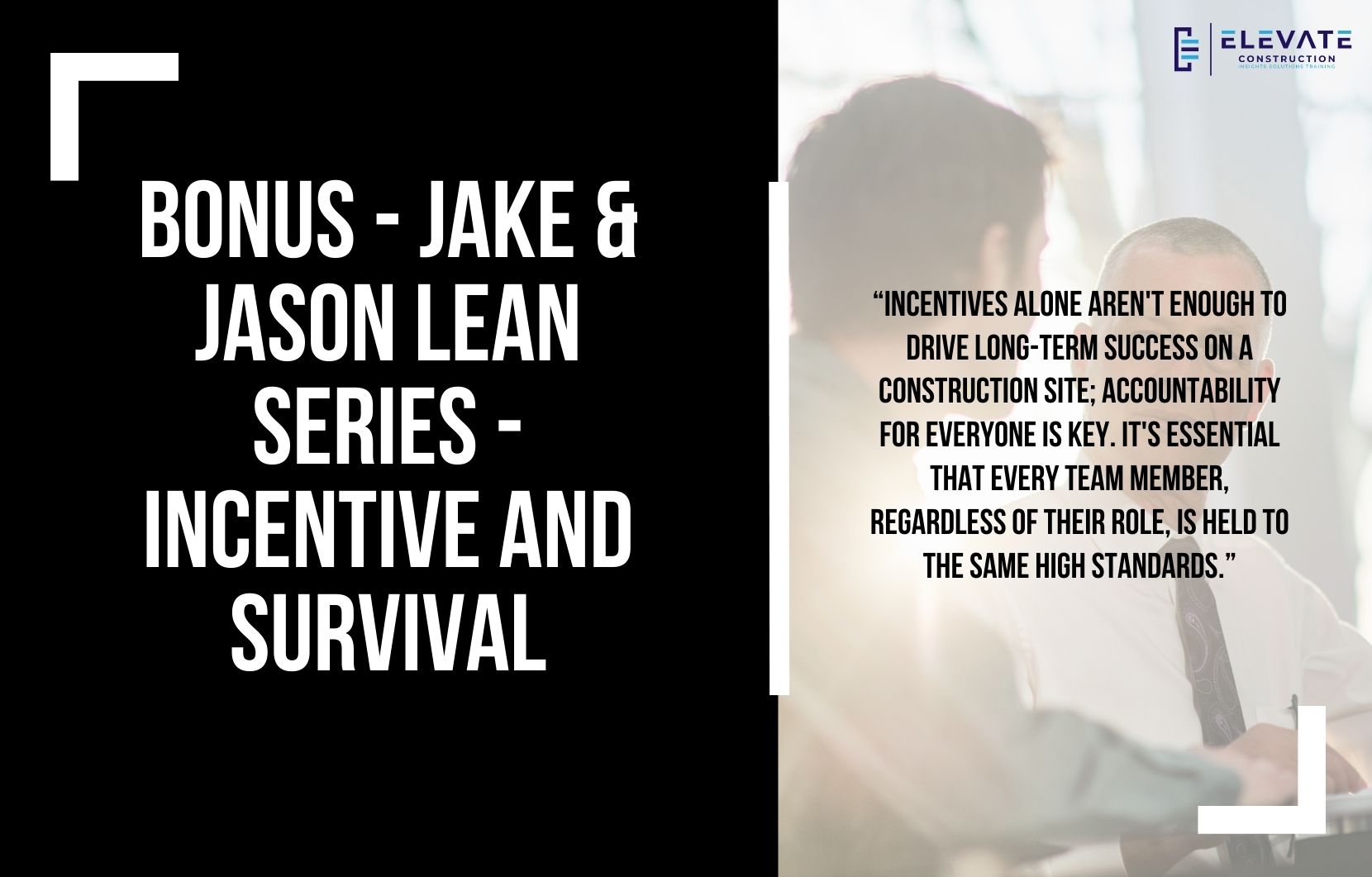
Incentives alone aren’t enough to drive long-term success on a construction site; accountability for everyone is key. It’s essential that every team member, regardless of their role, is held to the same high standards. A culture of equality, where everyone follows the same rules, fosters respect and unity among workers. Safety must always be the top priority, with zero tolerance for violations to ensure that everyone goes home safely. Leading by example whether through picking up trash, following safety protocols, or working alongside the team helps to build trust and reinforces the culture of accountability. When workers feel respected and valued, they take ownership of their work, creating a more efficient and safer project environment.
If you want to learn more we have:
-Takt Virtual Training: (Click here)
-Check out our Youtube channel for more info: (Click here)
-Listen to the Elevate Construction podcast: (Click here)
-Check out our training programs and certifications: (Click here)
-The Takt Book: (Click here)
Discover Jason’s Expertise:
Meet Jason Schroeder, the driving force behind Elevate Construction IST. As the company’s owner and principal consultant, he’s dedicated to taking construction to new heights. With a wealth of industry experience, he’s crafted the Field Engineer Boot Camp and Superintendent Boot Camp – intensive training programs engineered to cultivate top-tier leaders capable of steering their teams towards success. Jason’s vision? To expand his training initiatives across the nation, empowering construction firms to soar to unprecedented levels of excellence.
On we go