
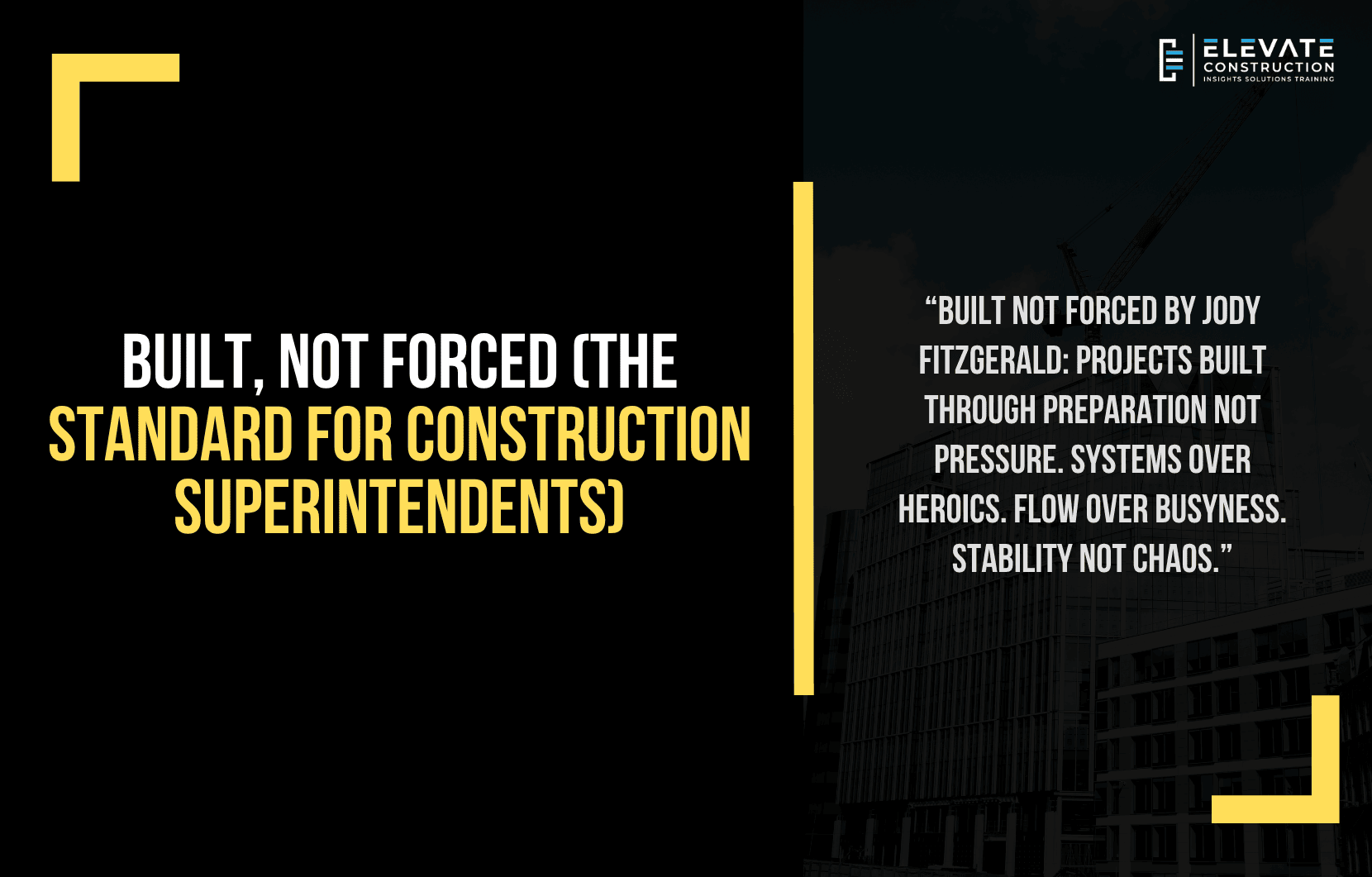
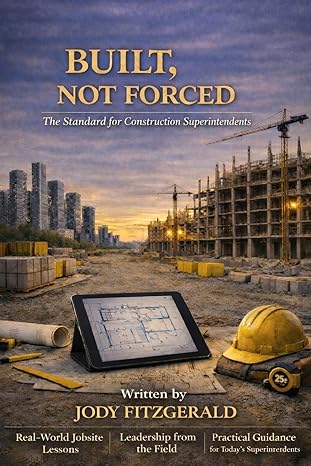
Built, Not Forced by Jody Fitzgerald (The Standard for Construction Superintendents)
Built, Not Forced: The Standard for Construction Superintendents by Jody Fitzgerald is a leadership-focused field guide that challenges traditional construction management habits and replaces them with a more intentional, people-centered, and system-driven approach. The book argues that great projects are not pushed into completion through pressure, chaos, or constant firefighting they are built through preparation, trust, standards, and flow.
The Core Message: Shifting from Force to Structure
At its core, Built, Not Forced is about shifting from a reactive, force-driven mindset to a structured, proactive, and leadership-driven system. Fitzgerald emphasizes that many construction projects fail not because people are incompetent, but because systems are broken, expectations are unclear, and leadership is inconsistent.
The title itself captures the philosophy:
Forced = rushed schedules, constant pressure, confusion, rework, burnout
Built = planned work, stable flow, clear expectations, empowered teams
A superintendent’s role is to build the environment where success becomes the natural outcome, not something achieved through stress and last-minute effort.
From Chaos to Stability: Chaos Is Not Inevitable
The book strongly critiques the industry norm of chaos being accepted as “just how construction works.” Fitzgerald argues that chaos is not inevitable it is the result of poor planning, lack of standards, and weak leadership systems. Instead, the goal is stability: predictable workflows, reliable schedules, and clear communication. When stability is achieved, productivity increases and stress decreases.
Systems Over Heroics: If Your Project Relies on Heroes, Your System Is Broken
One of the most powerful ideas in the book is that projects should not rely on “heroic effort.” In many jobsites, success depends on last-minute problem solving, individuals working overtime to fix issues, and constant firefighting. Fitzgerald rejects this model and promotes systems thinking: standard processes for planning and execution, repeatable workflows, and clear roles and responsibilities. The idea is simple: If your project only works when people go above and beyond constantly, your system is broken.
The Superintendent as a Builder of Systems
The superintendent is not just managing work they are designing the system in which work happens. This includes creating structured schedules, establishing daily and weekly planning routines, ensuring trade partners are aligned, and removing constraints before work begins. The superintendent becomes a system architect, not just a problem solver.
Clarity Creates Performance: When People Know What to Do, They Perform Better
A major cause of inefficiency on jobsites is lack of clarity. Fitzgerald emphasizes clear scopes of work, defined expectations, transparent schedules, and visual planning tools. When people know exactly what to do, when to do it, and how it connects to others, they perform better with less supervision.
Flow Over Busyness: A Well-Flowing Jobsite Looks Calm, Not Chaotic
Similar to Lean principles, the book highlights that keeping people busy is not the goal keeping work flowing is. Problems with “busy work”: trades working out of sequence, congestion on site, and increased rework. Instead, superintendents should focus on proper sequencing, balanced workloads, and smooth handoffs between trades. A well-flowing jobsite looks calm, not chaotic.
Respect for Trade Partners: Collaborators, Not Subordinates
The book places strong emphasis on treating trade partners as collaborators, not subordinates. This includes involving them in planning, listening to their expertise, and providing what they need to succeed. When trades are respected, accountability increases, quality improves, and conflicts decrease.
Discipline and Standards: Consistent Standards, Not Occasional Effort
Fitzgerald introduces the idea that success comes from consistent standards, not occasional effort. This includes daily routines (walks, check-ins, planning sessions), clean and organized sites, structured meetings, and clear documentation. Discipline creates predictability, and predictability creates success.
Leadership Through Behavior: The Team Mirrors the Superintendent
Leadership is not defined by position it is defined by actions. Superintendents must show up prepared, stay calm under pressure, communicate clearly, and follow through on commitments. The team mirrors the behavior of the superintendent. If leadership is disorganized, the project will be too.
Here are the core values from Built, Not Forced:
- Intentionality over reaction: planning replaces panic, preparation replaces reaction – Every action on jobsite should be intentional. Planning replaces panic, and preparation replaces reaction. Shift from reactive, force-driven mindset to structured, proactive, and leadership-driven system. Many construction projects fail not because people are incompetent, but because systems are broken, expectations are unclear, and leadership is inconsistent. Superintendent’s role is to build environment where success becomes natural outcome, not something achieved through stress and last-minute effort.
- Systems thinking: success built on strong systems, not individual heroic effort – Projects should not rely on “heroic effort.” In many jobsites, success depends on last-minute problem solving, individuals working overtime to fix issues, constant firefighting. Fitzgerald rejects this model and promotes systems thinking: standard processes for planning and execution, repeatable workflows, clear roles and responsibilities. If your project only works when people go above and beyond constantly, your system is broken. Superintendent not just managing work designing system in which work happens.
- Flow over busyness: proper sequencing, balanced workloads, smooth handoffs between trades – Keeping people busy is not goal keeping work flowing is. Problems with “busy work”: trades working out of sequence, congestion on site, increased rework. Instead, superintendents should focus on proper sequencing, balanced workloads, smooth handoffs between trades. Well-flowing jobsite looks calm, not chaotic. When stability achieved, productivity increases and stress decreases.
- Clarity creates performance: clear scopes, defined expectations, visual planning tools – Major cause of inefficiency on jobsites is lack of clarity. Fitzgerald emphasizes clear scopes of work, defined expectations, transparent schedules, visual planning tools. When people know exactly what to do, when to do it, how it connects to others, they perform better with less supervision. Clear communication eliminates confusion. Everyone should understand plan and their role in it.
- Respect for trade partners: involve in planning, listen to expertise, provide what they need – Strong emphasis on treating trade partners as collaborators, not subordinates. This includes involving them in planning, listening to their expertise, providing what they need to succeed. When trades are respected, accountability increases, quality improves, conflicts decrease. People perform best when they are respected, heard, and supported. Applies to every level of jobsite.
If your project needs superintendent coaching, project support, or leadership development, Elevate Construction can help your field teams stabilize, schedule, and flow.
Practical Takeaways from the Book
Some of the most actionable lessons from the book include: Plan work in detail before it reaches the field. Never allow crews to start without proper preparation. Use consistent planning rhythms (daily and weekly). Focus on removing constraints early. Keep the jobsite organized and clean. Build strong relationships with trade partners from day one. Avoid overloading the site with too many crews at once. Measure success by flow and predictability, not activity.
A Challenge for Superintendents
Here’s what I want you to do this week. Read Built, Not Forced by Jody Fitzgerald. Shift from reactive, force-driven mindset to structured, proactive, and leadership-driven system. Your role is to build environment where success becomes natural outcome, not something achieved through stress and last-minute effort.
Stop relying on heroic effort. If your project only works when people go above and beyond constantly, your system is broken. Promote systems thinking: standard processes for planning and execution, repeatable workflows, clear roles and responsibilities. You’re not just managing work you’re designing system in which work happens.
Focus on flow over busyness. Keeping people busy is not goal keeping work flowing is. Proper sequencing, balanced workloads, smooth handoffs between trades. Well-flowing jobsite looks calm, not chaotic. Create clarity. Clear scopes of work, defined expectations, transparent schedules, visual planning tools. When people know exactly what to do, when to do it, how it connects to others, they perform better with less supervision.
Treat trade partners as collaborators, not subordinates. Involve them in planning. Listen to their expertise. Provide what they need to succeed. When trades are respected, accountability increases, quality improves, conflicts decrease. Build discipline and standards. Daily routines (walks, check-ins, planning sessions). Clean and organized sites. Structured meetings. Clear documentation. Discipline creates predictability, and predictability creates success.
Remember: the team mirrors your behavior. Show up prepared. Stay calm under pressure. Communicate clearly. Follow through on commitments. If leadership is disorganized, the project will be too.
On we go.
Frequently Asked Questions
What is the main message of Built, Not Forced?
Great projects not pushed into completion through pressure, chaos, or constant firefighting built through preparation, trust, standards, and flow. Shift from reactive, force-driven mindset to structured, proactive, and leadership-driven system. Superintendent’s role is to build environment where success becomes natural outcome, not something achieved through stress and last-minute effort.
What does “systems over heroics” mean?
Projects should not rely on “heroic effort.” If your project only works when people go above and beyond constantly, your system is broken. Promote systems thinking: standard processes for planning and execution, repeatable workflows, clear roles and responsibilities. Superintendent not just managing work designing system in which work happens.
Why is flow more important than busyness?
Keeping people busy is not goal keeping work flowing is. Problems with “busy work”: trades working out of sequence, congestion on site, increased rework. Instead, focus on proper sequencing, balanced workloads, smooth handoffs between trades. Well-flowing jobsite looks calm, not chaotic.
How does clarity create performance?
Major cause of inefficiency is lack of clarity. Clear scopes of work, defined expectations, transparent schedules, visual planning tools. When people know exactly what to do, when to do it, how it connects to others, they perform better with less supervision.
How should superintendents treat trade partners?
As collaborators, not subordinates. Involve them in planning. Listen to their expertise. Provide what they need to succeed. When trades are respected, accountability increases, quality improves, conflicts decrease.
If you want to learn more we have:
-Takt Virtual Training: (Click here)
-Check out our Youtube channel for more info: (Click here)
-Listen to the Elevate Construction podcast: (Click here)
-Check out our training programs and certifications: (Click here)
-The Takt Book: (Click here)
Discover Jason’s Expertise:
Meet Jason Schroeder, the driving force behind Elevate Construction IST. As the company’s owner and principal consultant, he’s dedicated to taking construction to new heights. With a wealth of industry experience, he’s crafted the Field Engineer Boot Camp and Superintendent Boot Camp – intensive training programs engineered to cultivate top-tier leaders capable of steering their teams towards success. Jason’s vision? To expand his training initiatives across the nation, empowering construction firms to soar to unprecedented levels of excellence.
On we go