
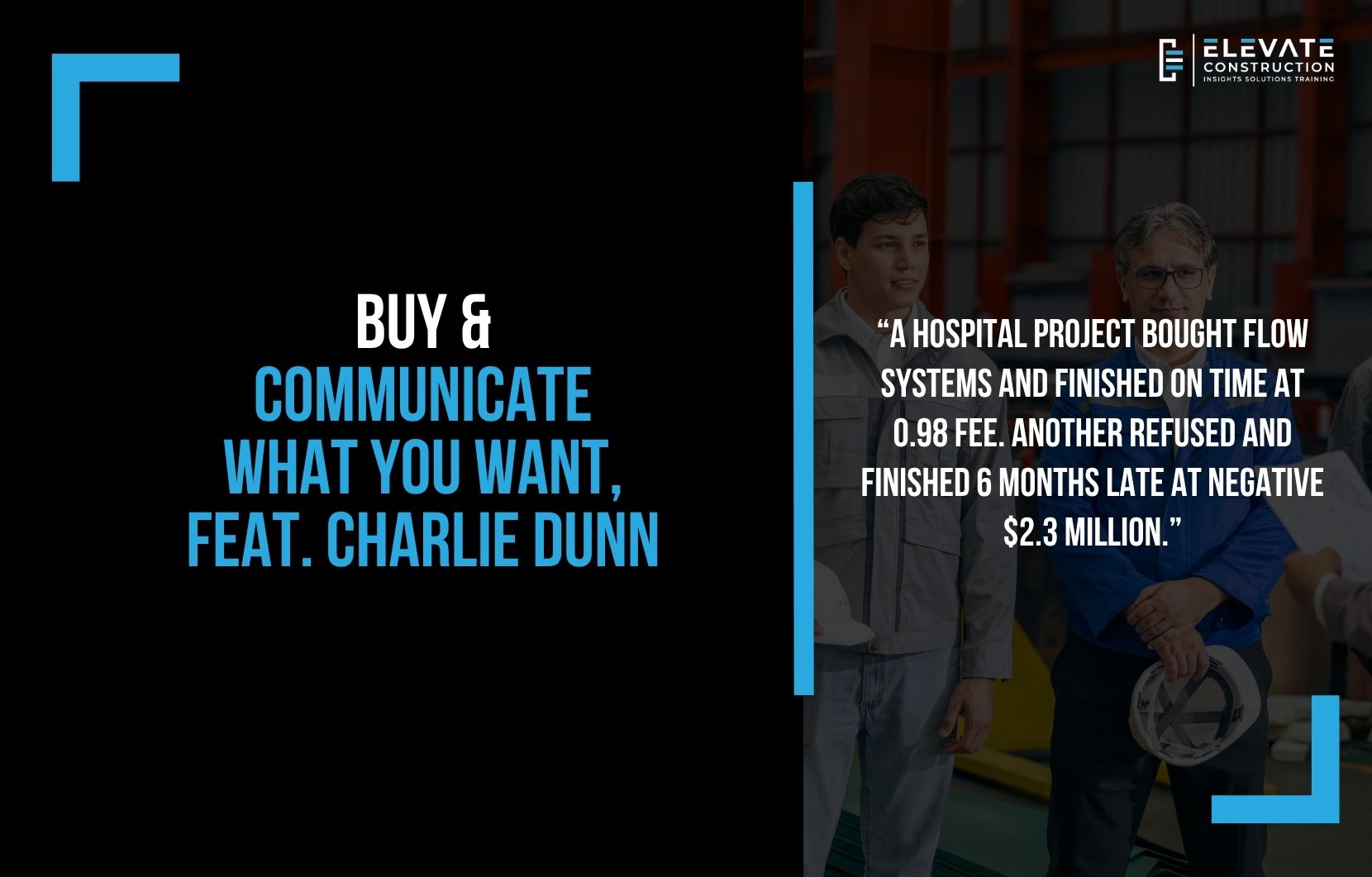
The Hospital Project That Bought Flow Systems and Finished On Time While the Other Lost $2.3 Million
There are two hospital projects. Both $150 million. Both planned using CPM schedules. Both start experiencing difficulties eight to nine months from completion. Both brought in consultants to recover. The first project team says: we will buy flow. We will create a Takt plan from the current date to the end date. We will get all trades on board. We will issue a zero-dollar change order requiring morning huddles, afternoon foreman huddles, and commitment to holding rhythm and crew counts. We will drive flow instead of chaos. The second project team says: no consultants. No new systems. No buying out meetings or flow requirements. We will push harder. Add more manpower. Work longer hours. Crash the schedule using traditional methods. And the results are catastrophic. Project One finishes on time at 0.98 fee position. 98% of original fee target achieved. Delighted owner. Profitable trades. Remarkable quality. Project Two finishes six months late at negative $2.3 million fee position. Not just zero fee. Negative $2.3 million. Devastated owner. Burned-out team. Failed trades. And the difference? One project bought what they wanted. Put flow systems in contracts. Required participation. Enforced standards. The other assumed people would magically perform without requirements. Without compensation. Without contractual commitments. And paid $2.3 million for that assumption. Because hoping trades will do lean practices for free while you give them chaos is insanity. If you want morning huddles, buy them. If you want prefabrication, buy it. If you want flow, buy it. Put it in contracts. Communicate expectations. Enforce standards. Or accept that your project will finish like Project Two. Six months late. Millions over budget. While projects that buy what they want finish on time making fee.
Here is what happens when you assume trades will do lean work without buying it. A superintendent implements Last Planner on a $45 million project. Weekly work planning with foremen. Percent plan complete tracking. Make-ready look-ahead. And it works brilliantly for three months. Then mechanical submits a $180,000 change order. For what? For the time their foremen spend in weekly planning meetings. You never told us about meetings when we bid. We are not doing this for free. You owe us for lost productivity. And the superintendent is shocked. We are helping you succeed. These meetings coordinate your work. Prevent conflicts. Improve flow. Why would you charge us? And mechanical responds: because you did not buy it. You did not put it in the contract. You did not tell us during bidding that we would spend five hours per week in planning meetings. So either pay us for that time or stop requiring attendance. And the project has no leverage. Because mechanical is right. The meetings were not in the contract. Not in the scope. Not bought out during procurement. Just assumed. And assumptions become change orders. Always. Because trades do not work for free. They work for what you buy. So if you want flow, buy flow. If you want coordination, buy coordination. If you want lean practices, buy lean practices. Put them in contracts. Specify requirements. Compensate fairly. Or accept that trades will push back. Charge change orders. And refuse participation. Because they are running businesses. Not charities. And businesses do not donate labor to superintendents who refuse to buy what they want.
The real pain is executives who fought $180,000 in meeting charges while losing $2.3 million from chaos. The hospital project that refused flow systems ended up arguing with trades anyway. Mechanical wanted more money for compressed schedules. Electrical wanted acceleration costs for overtime. Drywall wanted impacts for out-of-sequence work. And by the end, the project paid millions in change orders. Plus lost millions more in fee erosion. All while refusing to pay $180,000 for meetings that would have prevented the chaos. This is insane economics. Penny-wise and pound-foolish. Refusing to buy $180,000 in coordination that saves $2 million in chaos. And it happens constantly. Because construction culture says: trades should just do the right thing. Should just attend meetings. Should just coordinate properly. Should just prefabricate when it makes sense. Without being told. Without being paid. Without contractual requirements. And then we wonder why projects fail. Why chaos dominates. Why flow never happens. Because we refuse to buy what we want. We hope it magically appears. And when it does not, we blame trades for not volunteering uncompensated labor to fix our broken systems.
The failure pattern is superintendents who enforce standards they never bought. A project requires nothing touches the floor. Great standard. Excellent for flow, safety, and cleanliness. But when did you communicate this? During bidding? In the contract? Or after the trade mobilized when you suddenly announced: by the way, nothing touches the floor on this project. If you announced it after mobilization, you did not buy it. You imposed it. And trades will resist. Will push back. Will charge change orders. Because they bid the work assuming normal stick-building practices. Cutting studs on site. Assembling materials on the floor. Standard chaos. And now you are requiring prefabrication. Room kitting. Everything on wheels. Without compensating for the different approach. So they either refuse or charge you. Because you did not buy what you wanted. You tried stealing it through enforcement after the fact. And that never works. If your project needs superintendent coaching, project support, or leadership development, Elevate Construction can help your field teams stabilize, schedule, and flow.
What Buying What You Want Actually Means
Buying what you want means putting requirements in contracts during procurement instead of hoping trades volunteer uncompensated effort later. You want morning worker huddles? Specify them in the contract. Fifteen minutes daily. All workers attend. Stretch and flex. Safety briefing. Daily coordination. And compensate for that time. Build it into bid pricing. Make it transparent. So trades know the expectation before bidding. You want afternoon foreman huddles? Same process. Specify in contract. Thirty minutes daily. All foremen attend. Coordination review. Problem-solving. Next-day planning. Buy it during procurement. Not after mobilization. You want prefabrication? Specify in contract. All materials arrive pre-cut. Room kitting for mechanical and electrical. Everything on wheels or directly to install location. Nothing touches the floor. Buy the different approach. Compensate for shop time. Provide clarity on expectations. So trades can price properly and execute accordingly.
This is transparency. This is respect. Telling people what you expect before they bid so they can price accordingly and deliver as required. The opposite is ambush procurement. Bid the work normally. Then after mobilization announce surprise requirements. Morning huddles you did not bid. Prefabrication you did not price. Coordination meetings you did not anticipate. And wonder why trades revolt. Charge change orders. And resist participation. Because you ambushed them. Asked for work they did not bid. Required effort they did not price. And expected them to donate labor to fix your failure to communicate.
Signs You Are Not Buying What You Want
Watch for these patterns that signal you are hoping instead of buying:
- Trades submit change orders for coordination meetings or lean practices you require but never specified in contracts or communicated during bidding creating conflicts that destroy trust and relationships
- You announce standards after mobilization like “nothing touches the floor” or “everything must be prefabricated” without having specified these requirements during procurement when trades could price them properly
- You fight with trades about attending huddles or planning meetings while they argue they never agreed to this and were not compensated for coordination time beyond normal scope
- Projects finish millions over budget while you refused to buy hundreds of thousands in coordination that would have prevented the chaos causing the overruns showing penny-wise pound-foolish economics
- You assume trades will “just do the right thing” regarding flow, cleanliness, and coordination without specifying expectations, buying requirements, or enforcing standards consistently
- Different trades operate under different assumptions about what is required because you never bought clarity through contractual specifications creating chaos and conflicts throughout construction
These are not signs of trade incompetence. These are signs of procurement failure. You did not buy what you wanted. You hoped it would magically appear. And when it did not, you blamed trades for not donating uncompensated labor to fix your broken approach.
Standardize What You Can So You Can Focus On What You Can’t
The genius of buying flow systems is standardization enables focus. When you buy Takt planning, morning huddles, afternoon coordination, prefabrication requirements, and cleanliness standards, you standardize 90% of the work. Put it on rhythm. Create predictable flow. Eliminate unnecessary chaos. So when the owner issues a change order mid-project, you can focus on that 10% of inevitable chaos instead of managing 100% chaos constantly. One mega project was in Takt when a 10%+ change order hit mid-project. Normally this means tremendous stress. Months of delay. Crashed schedules. Burned-out teams. But this project absorbed the change and finished on time. How? Because 90% of the work was standardized. Running on rhythm. Flowing predictably. So they could focus all attention on integrating the 10% change without disrupting the 90% base. Could see exactly where the ripple happened in the Takt train. Could track efficiency gaps from the interruption. Could implement recovery immediately. Because visual systems showed variance from standard instantly.
Compare this to CPM chaos projects. When change orders hit, nobody knows where the impact ripples. Takes months to understand consequences. Forensic analysis after the fact trying to identify what went wrong when. By which time recovery is impossible. Because you cannot focus on 10% change when 100% of your work is chaotic. Cannot absorb disruption when nothing is standardized. Cannot see variance when you have no baseline. This is why manufacturing transformed productivity. Not by working harder. But by standardizing everything possible. So they could focus on what truly mattered. Problems. Improvements. Innovations. Instead of wasting mental bandwidth managing unnecessary chaos that standardization would eliminate.
The Ham Cutting Story: Why We Stick-Build on Site
A hostess cooks a ham for Thanksgiving. Cuts both ends off before putting it in the oven. A guest asks: why did you cut the ends off? You wasted good ham. The hostess responds: that is how you cook ham. My mom taught me. So they ask the mom. Who says: that is how my mom taught me. You just cut the ends off. So they ask grandma. Who laughs and says: I cut the ends off because I only had an eight-by-nine dish. The ham would not fit otherwise. Three generations later, people are still cutting ends off hams for no reason. Because “that is how we have always done it.” And construction does this constantly. Stick-building on site? Cutting ends off ham. Bringing materials into the building then bringing trash back out? Cutting ends off ham. Not prefabricating? Cutting ends off ham. Not pre-cutting studs? Cutting ends off ham. Doing the same broken processes our grandparents did because “that is how construction works” without asking: why? Does this make sense? Or are we cutting ends off ham for dishes we no longer use?
Would a manufacturing plant allow stick-building inside their facility? Would they let contractors bring raw materials onto the production floor, cut them to size, assemble them in place, then haul trash out? Absolutely not. Everything arrives pre-assembled. Fits into the production line at the right Takt time. Moves through at the right throughput. Nothing touches the floor. No waste generated. Because manufacturing learned: stick-building is cutting ends off ham. A legacy practice from when we had no better options. But now we have shops. We have prefabrication. We have room kitting. We have pre-cutting. We have off-site assembly. So why are we still stick-building like it is 1970? Because we refuse to stop cutting ends off ham. Refuse to question legacy practices. Refuse to buy better approaches. And wonder why manufacturing productivity increased 200% since 1970 while construction productivity declined 20%.
Integrated Control: Team Decides Then Enforce
Some people say command and control is bad. Superintendents need to let go of control. Empower trades. Stop dictating. And this sounds good in theory. But superintendents live in different reality. Where trades stack up. Where sequences fail. Where chaos dominates unless someone controls the job. So how do you merge these worlds? Integrated control. The team decides together. Trade partners collaborate on the plan. Foremen agree on standards. Everyone commits to flow. But once the plan is set, the superintendent enforces it. Does not negotiate. Does not allow individual deviation. Holds the line. BSRL project decided together as a team: prefabricate everything. Nothing touches the floor. Room kitting for all mechanical and electrical. Once the team decided, the superintendent enforced. Turned deliveries around that violated standards. Denied hoist access to materials that were not pre-cut. Shut down trades that broke cleanliness requirements. Not because he was tyrannical. But because the team agreed. And individual deviation destroys team agreements.
This is integrated control. Team decides. Superintendent enforces. And it works. Contractor grading makes it visible. How are you performing against team agreements? Are you meeting standards? Following flow? Delivering on commitments? Grade weekly. Post results. Create accountability. Not through punishment. But through transparency. Everyone sees who is winning. Who is struggling? And teams rally to help struggling trades improve. Because the goal is not blame. The goal is flow. And flow requires everyone performing to standard. So integrated control enables that. Team agreements. Superintendent enforcement. Visual accountability. And results speak for themselves. Projects that use integrated control finish on time making fee. Projects that hope for voluntary compliance finish late losing millions.
Examples of What to Buy
Morning worker huddles: fifteen minutes daily, all workers attend, stretch and flex, safety briefing, daily coordination. Buy it. Specify in contract. Compensate for time. Afternoon foreman huddles: thirty minutes daily, all foremen attend, coordination review, problem-solving, next-day planning. Buy it. Put it in contract. Prefabrication requirements: all materials arrive pre-cut, room kitting for MEP, everything on wheels or direct to install location, nothing touches the floor. Buy it. Specify approach. Compensate for shop time. Cleanliness standards: no trash on site, daily cleaning, organized layout, visual management. Buy it. Include in scope. Enforce ruthlessly. Lean training: every foreman reads specific lean literature, takes lean classes before mobilization. Buy it. Require in contract. Takt planning participation: trades commit to holding rhythm, maintaining crew counts, coordinating handoffs. Buy it. Make it contractual.
Model coordination: coordinate the model before final CD documents issued in preconstruction, resolve conflicts before construction starts. Buy it during design. Working conditions: proper bathrooms, clean lunchrooms, adequate lighting, safe access, sufficient logistics. Buy it. Provide it. Do not expect workers to suffer in chaos. Visual feature-of-work boards: for every high-risk installation, create visual boards in English and Spanish showing proper work steps. Buy creation and posting. Contractor grading: weekly performance tracking against standards, posted results, continuous improvement. Buy the system. Implement consistently. Everything to install location or on wheels: materials delivered to final location or on carts, nothing touches floor, zero double-handling. Buy it. Enforce it. These are not optional. These are requirements for flow. So buy them. Put them in contracts. Communicate expectations. Compensate fairly. Enforce consistently. And watch projects transform.
The Challenge
Walk your site tomorrow and observe conditions you know are problems. Trash on floors. Materials in wrong locations. Trades working out of sequence. Chaos in coordination. Then ask: on my next project, how do I buy what I want? How do I put meaningful action into contracts to eliminate these problems? Do I buy morning huddles to improve coordination? Do I buy prefabrication to eliminate waste? Do I buy Takt planning to create flow? Do I buy cleanliness standards to improve safety? Identify the condition you want to change. Then buy it. Put it in contracts during procurement. Communicate expectations during bidding. Compensate fairly for different approach. And enforce ruthlessly after mobilization. Because hoping trades will volunteer uncompensated effort to fix your broken systems is insanity.
As Charlie Dunn teaches: if you want it to happen, be transparent about it, put it in a contract, and make it happen. Stop cutting ends off ham because “that is how we have always done it.” Stop stick-building when prefabrication is available. Stop generating chaos when standardization creates flow. And stop hoping trades will do lean work for free when you refuse to buy what you want. Buy flow. Buy coordination. Buy standards. Buy excellence. Put it in contracts. Communicate it early. Enforce it consistently. And watch your projects finish like the $150 million hospital that bought flow: on time at 0.98 fee with delighted owners and profitable trades. Instead of finishing like the hospital that refused: six months late at negative $2.3 million with devastated stakeholders and burned teams. The choice is yours. Buy what you want. Or pay millions for refusing. On we go.
Frequently Asked Questions
Why should you buy lean practices instead of assuming trades will do them?
Trades do not work for free. If you want morning huddles, prefabrication, coordination meetings, or cleanliness standards but do not specify them in contracts during procurement, trades will either refuse participation or charge change orders because you are requiring uncompensated work they never bid.
What happened to the two $150 million hospital projects with different approaches?
One bought flow systems with Takt planning and required coordination meetings, finished on time at 0.98 fee position with delighted owners. The other refused flow systems, finished six months late at negative $2.3 million fee with devastated stakeholders and burned teams.
What does “standardize what you can so you can focus on what you can’t” mean?
When you standardize 90% of work through Takt planning, prefabrication, and flow systems, you can focus entirely on the 10% of inevitable chaos like owner change orders instead of managing 100% chaos constantly from broken processes.
What is integrated control and how does it work?
Team decides together on standards and flow requirements through collaboration. Then superintendent enforces ruthlessly without negotiating individual deviations. Team agreements create buy-in. Superintendent enforcement creates accountability. Contractor grading makes performance visible.
What are examples of things you should buy in construction contracts?
Morning worker huddles, afternoon foreman huddles, prefabrication requirements, cleanliness standards, Takt planning participation, lean training for foremen, model coordination before CDs, proper working conditions, visual work boards, contractor grading systems, everything delivered to install location or on wheels.
If you want to learn more we have:
-Takt Virtual Training: (Click here)
-Check out our Youtube channel for more info: (Click here)
-Listen to the Elevate Construction podcast: (Click here)
-Check out our training programs and certifications: (Click here)
-The Takt Book: (Click here)
Discover Jason’s Expertise:
Meet Jason Schroeder, the driving force behind Elevate Construction IST. As the company’s owner and principal consultant, he’s dedicated to taking construction to new heights. With a wealth of industry experience, he’s crafted the Field Engineer Boot Camp and Superintendent Boot Camp – intensive training programs engineered to cultivate top-tier leaders capable of steering their teams towards success. Jason’s vision? To expand his training initiatives across the nation, empowering construction firms to soar to unprecedented levels of excellence.
On we go