Stop Implementing Cookbook Lean and Start Creating Solutions
Your company sent everyone to a Last Planner workshop. You came back energized. You tried to implement what you learned. Then you hit the wall. Leadership says they support Lean but won’t fund the changes you need. They say yes to philosophy but no to practice. They want results without resources. And when you push, they tell you to figure it out within existing constraints because budgets are tight and this isn’t the right time.
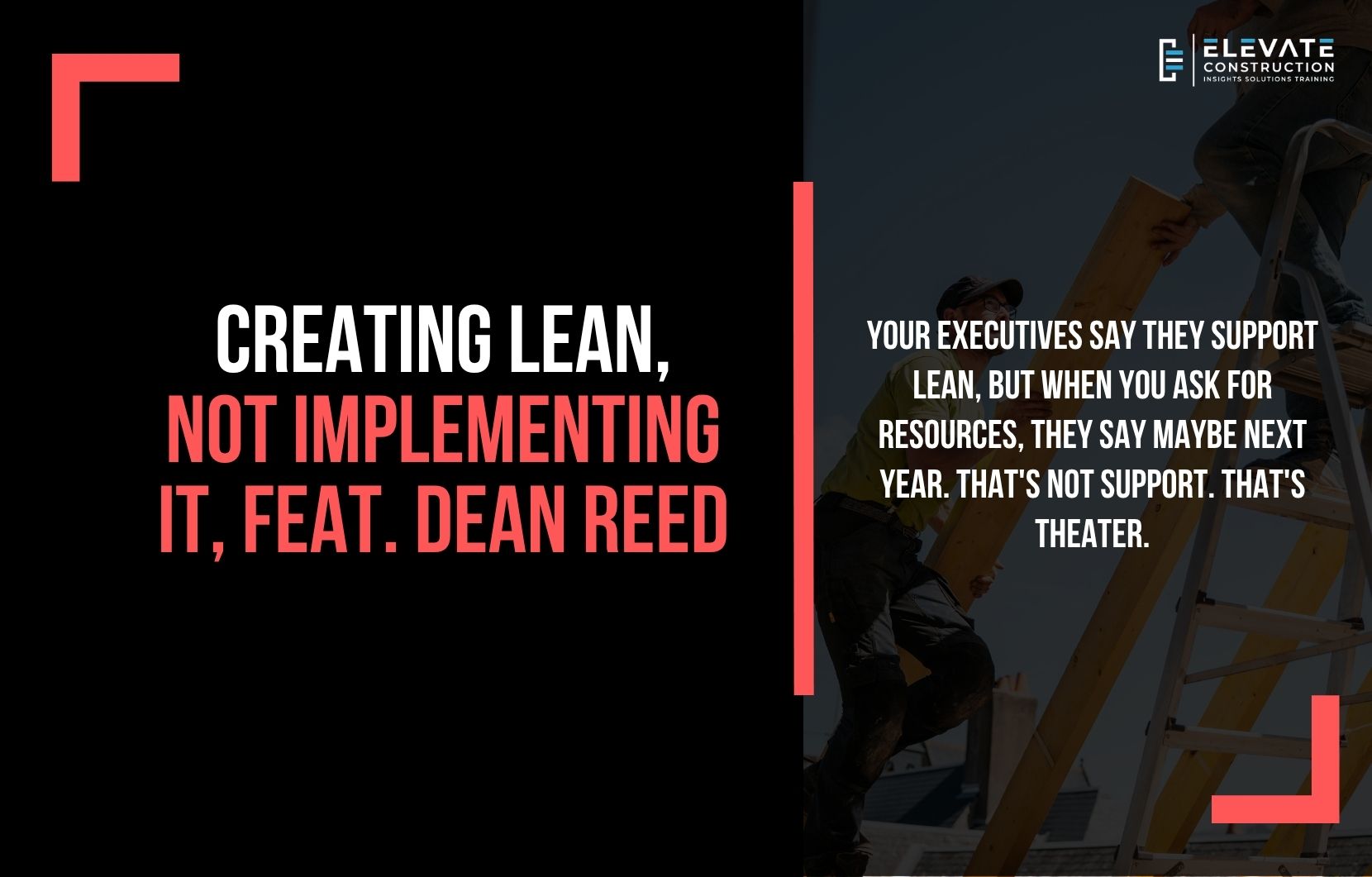
Here’s what’s actually happening. Your executives are in the “some support” category. They like the idea of Lean when it sounds good in presentations. But they’re not committed. Committed means providing resources, removing barriers, and accepting that real improvement requires investment. Supportive means nodding at concepts while blocking implementation. And most companies are stuck in some support, wondering why their Lean initiatives die six months after the consultant leaves.
The deeper problem is that you’re trying to implement cookbook Lean instead of creating solutions for your specific problems. You went to a workshop. You saw tools. You tried to copy what someone else did on a different project in a different company with different people. And it didn’t work because you’re not solving your problems. You’re implementing someone else’s solutions to problems you don’t have. Real Lean isn’t about tools. It’s about becoming world-class problem solvers who make frontline workers’ lives better. And that requires creating, not implementing.
The Real Pain: Support Without Commitment
Walk into any company attempting Lean and ask what leadership provides. They’ll tell you philosophical support. They approve training budgets. They let people attend conferences. They nod when you present ideas. But when you ask for the resources to actually implement those ideas, the answer is maybe next year. Or work within existing budgets. Or prove ROI first. That’s not commitment. That’s conditional interest that evaporates the moment it costs anything.
The pain shows up everywhere. Teams attend Last Planner training, come back excited, and try to implement daily huddles and constraint tracking. Leadership says that’s great but we can’t change the schedule format because the owner requires CPM. Teams learn about visual management and want to create boards showing flow and constraints. Leadership says that’s interesting but we don’t have budget for printing or materials so use what you have. Teams identify that the real problem is broken make-ready processes and want to hire someone to coordinate upstream work. Leadership says we’ll consider it next quarter. Then next quarter becomes next year. And next year never comes. Eventually people stop trying because support without commitment is just permission to fail.
The worst part is the cookbook implementation trap. Companies send people to workshops where they see tools that worked for someone else. Pull planning sticky notes on walls. PPC tracking spreadsheets. Visual boards with specific layouts. Morning huddle formats. Then they come back and try to copy those tools exactly, wondering why they don’t work. The tools worked somewhere else because they solved specific problems for specific people in specific contexts. But you don’t have those problems. You have different problems. And implementing someone else’s solutions to problems you don’t have creates theater, not improvement. Real Lean means understanding your problems deeply, then creating solutions that actually fix them. Not copying tools from workshops and hoping they transfer.
The Failure Pattern: Implementing Tools Instead of Solving Problems
Here’s what teams keep doing wrong. They treat Lean like a recipe. Go to workshop. Learn tools. Implement tools. Expect results. But Lean isn’t a recipe. It’s a way of thinking about problems and creating solutions. When you implement cookbook Lean, you get cookbook results. Temporary improvements that fade when the person who learned the tool leaves. No institutional capability. No problem-solving culture. Just a collection of tools that worked somewhere else but don’t fit your reality.
They also confuse support with commitment. Executives say they support Lean because it sounds good. They want the results. Better flow. Lower costs. Happier teams. But they’re not willing to invest in getting there. They want Lean to be free. Or cheap. Or something people do in addition to their real work without any additional resources. That’s not how improvement happens. Real improvement requires committed leadership that provides resources, removes barriers, and accepts short-term investment for long-term gain. Support without commitment is permission to struggle, not permission to succeed.
The failure deepens when teams don’t understand that Lean is about respect for people, not efficiency. Most executives want Lean because they think it means working faster. Doing more with less. Speeding up production. But that’s wrong. Toyota doesn’t focus on speeding up work. They focus on making workers’ lives better by solving the problems that make work hard. When you remove waste and create flow, speed happens as a byproduct. But if you chase speed instead of solving problems, you just create burnout. And people resist because they know you’re using Lean to squeeze more out of them instead of making their lives better.
The System Failed You
Let’s be clear. When Lean initiatives fail, it’s not because frontline people resisted or middle managers didn’t try hard enough. It’s because executives gave support without commitment. They wanted results without investment. They approved training but blocked implementation. They said yes to philosophy but no to practice. And that guaranteed failure before anyone tried because you can’t improve without resources, time, and leadership commitment to remove barriers.
The system fails because Western thinking treats Lean like a tool instead of a way of thinking. We want cookbook recipes. Do this, get that. Five steps to success. But Eastern thinking, the foundation of Toyota’s approach, is holistic. It’s about understanding problems deeply before jumping to solutions. It’s about spending nine tenths of your time at the top of the funnel, understanding what’s actually wrong, before narrowing down to solutions. Western thinkers want to jump straight to solutions. We think we’re good problem solvers because we solve problems every day. But we often solve the wrong problems because we never took time to understand what was actually broken.
The system also fails because companies don’t listen to frontline workers. The people doing the work are closest to the problems. They’re in the problem. They’re part of the problem. And they have the insights that matter. But executives make decisions from offices without asking the people in the field what’s actually broken. Then they wonder why their solutions don’t work. Real problem solving starts with Gemba walks. Going to where the work happens. Watching. Listening. Understanding. Not theorizing from conference rooms about what might be wrong. If you don’t start with frontline reality, you solve the wrong problems with the wrong solutions.
What Creating Lean Looks Like
Picture this. A company commits to Lean. Not supports it. Commits to it. The CEO allocates budget for improvement. Not someday. Now. Leadership removes barriers when teams identify problems that need solving. They don’t say work within existing constraints. They say what do you need to fix this and how do we get it. Frontline workers get asked what makes their lives hard. Not in surveys. In real conversations. Leaders walk the Gemba, watch work happen, and listen to the people doing it. Then teams identify the most pressing problems. The ones that make the biggest difference to frontline workers’ lives. And they spend time understanding those problems before jumping to solutions.
They don’t implement cookbook tools from workshops. They create solutions for their specific problems. Maybe that includes pull planning. Maybe it doesn’t. Maybe visual boards help. Maybe a different format works better. The tools emerge from understanding problems, not from copying what worked somewhere else. And when they create solutions, they measure whether those solutions actually make frontline workers’ lives better. Not just whether they improve efficiency metrics. Because Lean is about respect for people, not squeezing more productivity. When you make work easier, better, safer, and more predictable, productivity improves as a byproduct. But if you chase productivity without making work better, people resist because they know you’re using Lean to exploit them.
This company also becomes world-class at problem solving. They train people on how to actually solve problems, not just how to work faster. They teach teams to spend time understanding problems before proposing solutions. They create a culture where solving the right problem matters more than solving problems quickly. And they measure success by whether frontline workers say their lives got better, not just whether metrics improved. If your project needs superintendent coaching, project support, or leadership development, Elevate Construction can help your field teams stabilize, schedule, and flow. Real Lean creates environments where continuous improvement becomes the way people live, not a program leadership imposed.
Why Creating Matters More Than Implementing
Creating Lean instead of implementing it builds institutional capability. When you teach people to solve problems instead of copy tools, they can solve new problems as they emerge. When the consultant leaves, improvement continues because the capability stayed. When people move to new projects, they bring problem-solving thinking instead of specific tools that might not transfer. You build a culture of improvement instead of a collection of temporary fixes.
Creating also ensures solutions actually fit your problems. Cookbook Lean fails because your problems aren’t the same as the workshop presenter’s problems. Your constraints are different. Your people are different. Your customers are different. Solutions that worked there won’t work here unless you adapt them to your reality. And the only way to adapt is to understand your problems first, then create solutions that fit. Implementing tools without understanding problems is guesswork. Creating solutions from deep problem understanding is engineering.
Most importantly, creating Lean instead of implementing it changes what leadership provides. Support without commitment kills initiatives. Commitment means resources, barrier removal, and acceptance that improvement requires investment. When executives commit instead of just support, they allocate budget for change. They remove obstacles when teams identify problems worth solving. They give frontline workers voice in what gets fixed. And they measure success by whether work got better for the people doing it, not just whether costs dropped. That’s the difference between theater and transformation.
How to Create Instead of Implement
Start by getting real commitment from leadership, not just support. Ask executives directly whether they’ll provide resources, remove barriers, and invest in improvement or whether they’re just philosophically interested. If they’re in the some support category, be honest about what that means. You can still improve within your team even without executive commitment. But don’t pretend you’re transforming the company when leadership only gave permission to struggle. Acknowledge reality and work within it.
Become world-class problem solvers. Train your team on how to actually solve problems. Spend nine tenths of your time at the top of the funnel understanding what’s broken before narrowing to solutions. Read books like Gemba Walks by Jim Womack. Learn to go where work happens, watch, listen, and understand before theorizing. Ask frontline workers what makes their lives hard. Don’t survey them. Talk to them. Watch them work. See what’s broken through their eyes. Then identify the most pressing problems. The ones worth the effort. The ones that will make the biggest difference to the people doing the work.
Create solutions for your specific problems instead of implementing cookbook tools from workshops. Maybe visual boards help. Maybe they don’t. Maybe pull planning fits your workflow. Maybe a different approach works better. Let solutions emerge from understanding your problems, not from copying what worked somewhere else. Measure whether solutions make frontline workers’ lives better, not just whether they improve efficiency. Lean is about respect for people. If your solutions don’t make work easier, safer, more predictable, and more enjoyable, you’re doing it wrong. When work gets better, productivity improves as a byproduct. Chase productivity directly and people resist because they know you’re squeezing them.
The Challenge
Here’s your assignment. Stop implementing cookbook Lean. Start creating solutions for your specific problems. Identify one pressing problem that makes frontline workers’ lives hard. Spend time understanding that problem deeply before proposing solutions. Talk to the people in the problem. Watch work happen. Ask what’s broken. Then create a solution that actually fits your reality instead of copying what worked somewhere else.
If you’re in leadership, decide whether you’re committed or just supportive. Committed means providing resources, removing barriers, and investing in improvement. Supportive means nodding at philosophy while blocking practice. If you’re only supportive, be honest. Let people know what that means so they can work within reality instead of expecting transformation you won’t fund. And if you’re frontline, improve your team’s work even if executives aren’t committed. Become great problem solvers. Make your teammates’ lives better. Prove what’s possible. Culture changes when people see results.
Lean isn’t a recipe. It’s a way of thinking. Stop implementing tools. Start solving problems. Create instead of copy. And make work better for the people doing it.
Dean Reed said respect for people isn’t a concept Toyota thinks about. It’s so fundamental to their thinking they don’t have to articulate it. It’s just how they see the world. Make that your foundation. Not efficiency. Not productivity. Respect for people. And let everything else follow.
On we go.
FAQ
How do you get executive commitment instead of just support?
Ask directly whether they’ll provide resources and remove barriers or just approve training. If they hesitate, they’re in some support, not commitment. Work within that reality. You can still improve your team even without executive commitment. Be honest about what’s possible without resources.
What if you don’t know how to solve problems properly?
Train yourself. Read Gemba Walks by Jim Womack. Learn to spend time understanding problems before jumping to solutions. Go where work happens. Watch. Listen. Ask frontline workers what’s broken. Spend nine tenths of your time at the top of the funnel understanding the problem, not rushing to solutions.
How do you know if you’re implementing cookbook Lean or creating solutions?
Ask whether you’re copying tools from workshops or solving your specific problems. If you’re implementing pull planning because you saw it work somewhere else, that’s cookbook. If you identified a specific coordination problem and created a solution that fits your workflow, that’s creating.
What if frontline workers don’t know what problems to solve?
They know what makes their work hard. Ask them. Watch them work. The problems are visible when you go to the Gemba. They might not articulate it as waste or flow issues, but they know what’s frustrating, inefficient, or unsafe. Your job is translating their reality into solvable problems.
Can you improve without executive commitment?
Yes. Make your team’s work better. Solve problems within your control. Build capability. Prove results. Culture changes when people see what’s possible. But be realistic about scale. You can transform your team without executive commitment. You can’t transform the company.
If you want to learn more we have:
-Takt Virtual Training: (Click here)
-Check out our Youtube channel for more info: (Click here)
-Listen to the Elevate Construction podcast: (Click here)
-Check out our training programs and certifications: (Click here)
-The Takt Book: (Click here)
Discover Jason’s Expertise:
Meet Jason Schroeder, the driving force behind Elevate Construction IST. As the company’s owner and principal consultant, he’s dedicated to taking construction to new heights. With a wealth of industry experience, he’s crafted the Field Engineer Boot Camp and Superintendent Boot Camp – intensive training programs engineered to cultivate top-tier leaders capable of steering their teams towards success. Jason’s vision? To expand his training initiatives across the nation, empowering construction firms to soar to unprecedented levels of excellence.