Dragon Cities: How Control, Fear, and Secrecy Break Construction Projects
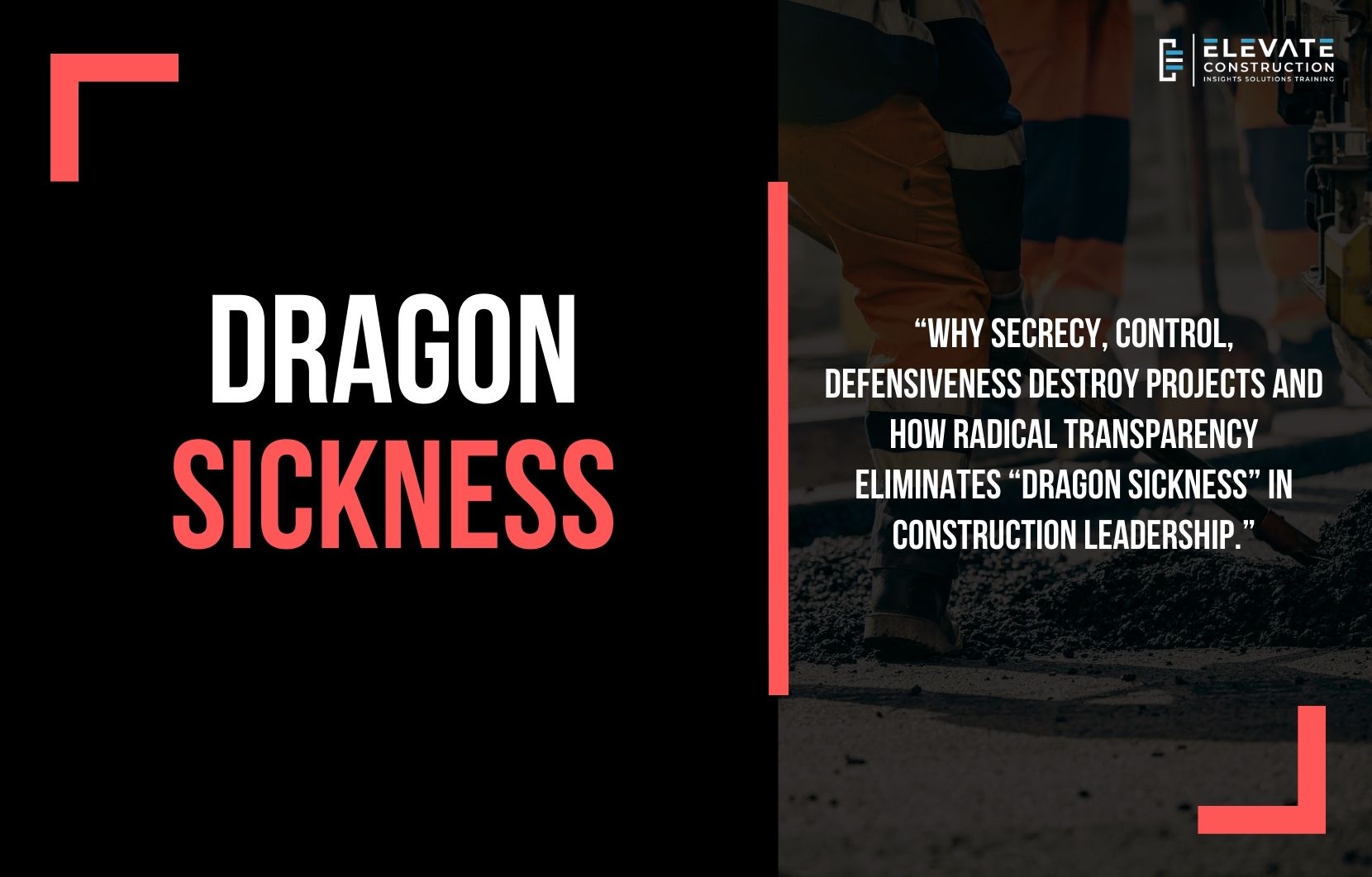
There is a moment every superintendent reaches, usually quietly, where the job starts to feel personal. The schedule feels like yours. The drawings feel like yours. The problems feel like yours. And before you realize it, you are guarding information, controlling access, and keeping people out, not because you are malicious, but because you are afraid of losing control. That moment is dangerous. It is the moment where good builders turn into lone wolves. Where transparency disappears. Where teams fragment. And where projects quietly begin to fail under the weight of secrecy. I call this condition dragon sickness, and if we are honest, it shows up far more often in construction than we like to admit.
The Pain: Fear-Based Control Masquerading as Leadership
Dragon sickness does not look evil at first. It looks like pride. It looks like ownership. It looks like “I’ve got this handled.” But underneath it is fear. Fear of criticism. Fear of exposure. Fear of being seen as imperfect. Superintendents feel this acutely because they are often the “king under the mountain.” They run the site. They hold the keys. They see the problems first. And when pressure mounts, the instinct is to close ranks, control information, and avoid letting others into the mess. But leadership is not about protecting the image of control. Leadership is about creating safety for truth.
The Failure Pattern: Closed Doors Create Bad Outcomes
Ray Dalio said something that should stop every construction leader in their tracks: radical things are more likely to take place behind closed doors. That truth applies directly to projects. When information is hidden, problems grow. When people are afraid to speak, mistakes multiply. When leaders hoard data, schedules, safety concerns, or bad news, the team loses leverage and the burden lands on one person’s shoulders. Closed systems always fail eventually. Open systems self-correct.
A Story from the Field: Learning Transparency the Hard Way
Early in my career, I came from a culture where safety was paperwork and transparency was optional. You took care of your project. You did not air dirty laundry. What happened on the job stayed on the job. Then I transitioned to a different company, and everything changed. The project manager copied everyone’s emails. The project executive knew everything. Safety leaders expected action, not excuses. At first, I hated it. I felt exposed. I felt criticized. I felt like I was losing control. Then one meeting changed everything. I ignored a safety request. It came back again. I resisted again. Then the safety director and general superintendent sat me down and made it clear: change or leave. That was the fork in the road. I chose transparency. I started reporting issues quickly. I welcomed inspections. I shared schedules. I looped leadership early. And something remarkable happened. The stress lifted. Problems got solved faster. Trust increased. The project became lighter, not heavier. That was the moment I realized control was never strength. Transparency was.
The Emotional Insight: The Goal Is Not to Look Good
Dragon sickness thrives on one false belief: that leadership means looking competent at all times. The truth is harsher and more freeing. Every project has problems. Pretending otherwise helps no one. The goal is not to look good. The goal is to do the right thing. Once I accepted that problems belonged to the team not to me alone everything changed. I stopped carrying the burden myself. I widened the circle. I used the wisdom of others. And instead of weakening my authority, it strengthened it.
Dragon Sickness Explained: Why Good Leaders Turn Inward
If you have seen The Hobbit, you understand the metaphor. Thorin regains his kingdom and treasure, then becomes fearful, suspicious, and cruel. Possession turns into obsession. Protection turns into isolation.
Construction leaders experience the same thing.
Dragon sickness shows up when leaders:
- Guard schedules like secrets
- Get defensive about safety or quality feedback
- Avoid oversight or fresh eyes
- Say “I know” instead of listening
- Resist accountability under the banner of autonomy
This is not strength. It is insecurity wearing a hard hat.
Radical Transparency: The Antidote
Radical transparency is not recklessness. It is disciplined openness. It means sharing information early, inviting feedback, and solving problems together before they metastasize.
When I practiced it consistently, I learned three things quickly:
- Problems shrink when shared early
- Trust grows faster than control ever could
- Owners respect honesty more than perfection
Radical transparency creates alignment, reduces fear, and accelerates problem solving.
What Transparency Looks Like on Real Projects
Transparency does not require grand gestures. It requires consistent behavior.
Here are examples of what changed when transparency became the norm:
- Safety issues were reported immediately, without fear
- Leadership was notified early about incidents or risks
- Schedules were open and discussed collaboratively
- Neighbors and owners were proactively informed
- Trade partners raised issues instead of hiding them
None of this made the team weaker. It made the team unstoppable.
Why Superintendents Must Network, Not Isolate
Superintendents cannot afford to be lone wolves. Wolves survive in packs for a reason. The strongest superintendents I know regularly walk other projects, invite peers onto their sites, and ask for advice. They do not fear looking imperfect. They fear missing something critical. Companies that encourage superintendent networking outperform those that isolate leaders. Fresh eyes catch blind spots. Shared wisdom multiplies capability.
The Leadership Trap: Defensiveness Is a Dead Giveaway
There is a simple diagnostic for dragon sickness. Listen to the language. If someone constantly says “I know,” they do not know. If someone blames circumstances, they feel threatened. If someone avoids accountability, they are hiding fear. Leadership maturity shows up as curiosity, not defensiveness. Openness, not control.
How Elevate Construction Helps Teams Break This Cycle
At Elevate Construction, we coach leaders to replace fear with clarity, control with trust, and secrecy with systems. Through superintendent coaching, LeanTakt systems, and leadership development, we help teams create environments where transparency is safe and expected.
If your project needs superintendent coaching, project support, or leadership development, Elevate Construction can help your field teams stabilize, schedule, and flow. Transparency is not a personality trait. It is a trained behavior.
The Challenge: Kill the Dragon Before It Kills the Project
Here is the challenge. Look honestly at yourself. Notice when defensiveness shows up. Notice when you resist oversight. Notice when you want to protect instead of share. Then do the harder thing. Open the door. Invite help. Share the burden. As Lean thinking teaches us, problems are not the enemy. Hidden problems are. I will leave you with this truth, echoed by leaders from Toyota to Stoic philosophy: what is exposed can be improved. What is hidden will eventually fail. Choose transparency. Kill the dragon.
FAQs
What is dragon sickness in construction leadership?
It is a fear-based tendency to hoard information, resist transparency, and isolate decision-making, especially under pressure.
Is radical transparency risky on projects?
No. When practiced responsibly, it reduces risk by exposing problems early and enabling faster solutions.
How do owners respond to transparency?
Most owners trust teams more when they are informed early and honestly, even when issues arise.
Does transparency reduce authority?
It does the opposite. Leaders who are open and accountable earn more trust and influence over time.
How does LeanTakt support transparency?
LeanTakt makes plans, constraints, and flow visible, enabling teams to solve problems collaboratively instead of hiding them.
If you want to learn more we have:
-Takt Virtual Training: (Click here)
-Check out our Youtube channel for more info: (Click here)
-Listen to the Elevate Construction podcast: (Click here)
-Check out our training programs and certifications: (Click here)
-The Takt Book: (Click here)
Discover Jason’s Expertise:
Meet Jason Schroeder, the driving force behind Elevate Construction IST. As the company’s owner and principal consultant, he’s dedicated to taking construction to new heights. With a wealth of industry experience, he’s crafted the Field Engineer Boot Camp and Superintendent Boot Camp – intensive training programs engineered to cultivate top-tier leaders capable of steering their teams towards success. Jason’s vision? To expand his training initiatives across the nation, empowering construction firms to soar to unprecedented levels of excellence.
On we go