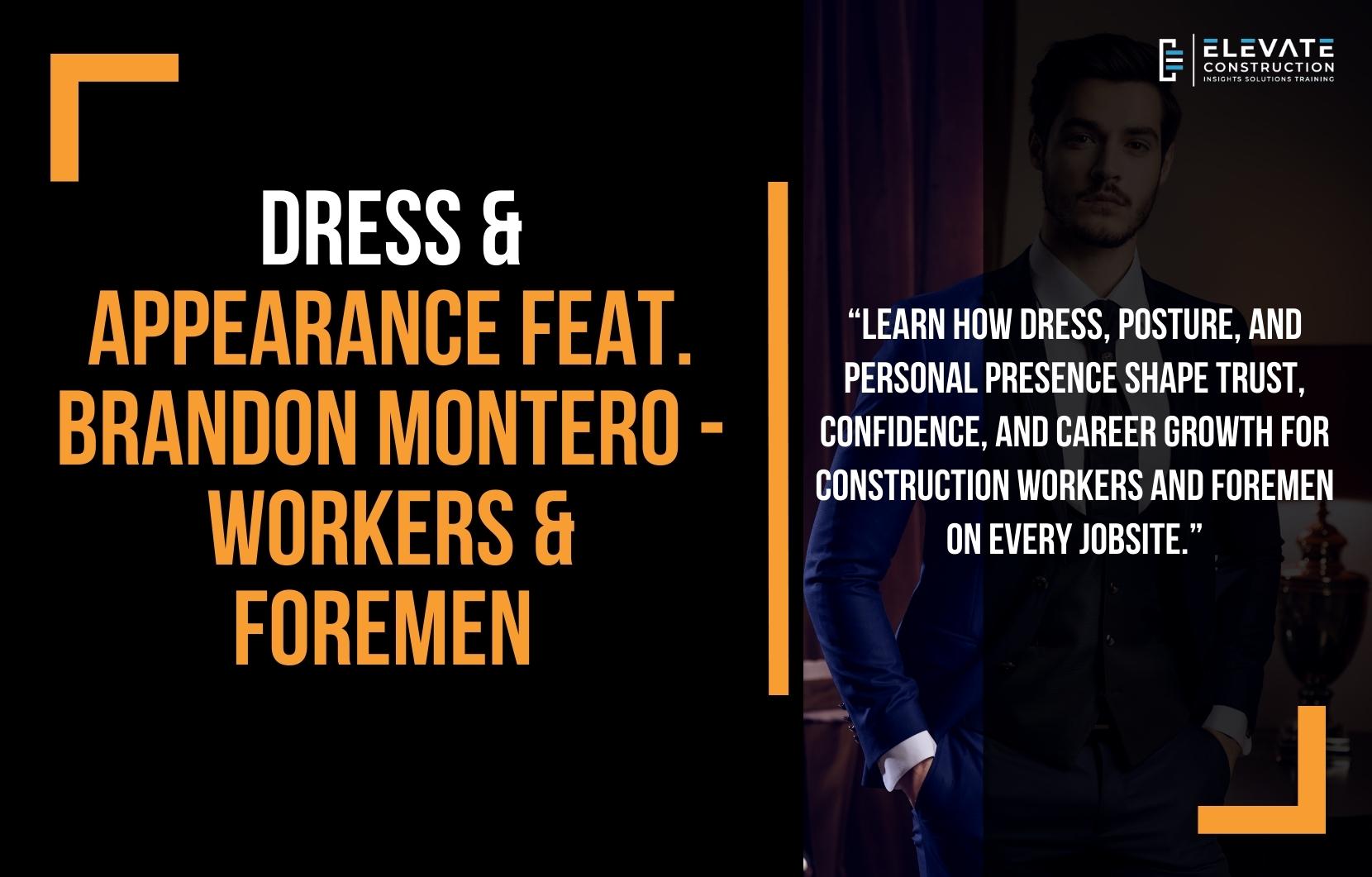
Dress, Appearance, and Presence: How Construction Professionals Earn Trust and Opportunity
There is a moment that happens before you ever say a word. You step onto a jobsite, into a meeting, or up to someone you’ve never met, and a decision is already being formed. It’s not fair. It’s not always accurate. But it is real. In construction, where trust is currency and credibility determines opportunity, how you show up matters more than most people want to admit.
This is not about vanity. It’s not about fashion. It’s about presence. It’s about whether people feel confidence when you arrive, or uncertainty. Whether they sense leadership, or hesitation. Whether they believe you can be trusted with responsibility before you’ve had a chance to prove it. For workers and foremen especially, this matters. Careers in construction are built long before titles change. They are built in moments of impression, consistency, and trust.
The Hidden Pain: Skilled People Being Overlooked
One of the quiet pains in our industry is watching talented, hardworking people get passed over. They show up early. They care. They produce quality work. But they don’t advance at the rate they could. Often, the reason has nothing to do with skill. It has to do with presentation.
Leaders make hundreds of micro-judgments every day. Who looks ready. Who feels steady. Who seems confident under pressure. These judgments are rarely malicious, but they are human. And when someone presents themselves in a way that signals uncertainty, disorganization, or disengagement, it creates friction between their ability and the opportunity in front of them. This isn’t about blaming people. It’s about understanding the system we’re operating in and learning how to navigate it with intention.
The Failure Pattern: Confusing Hard Work With Presence
Many people believe that if they work hard enough, everything else will take care of itself. Hard work matters. It always will. But hard work alone does not communicate readiness for leadership. Presence does. Presence is the combination of posture, confidence, grooming, communication, and energy. It’s how you carry yourself. It’s whether people feel calm or tense when you approach. It’s whether you look like someone who owns their space or avoids it. When leaders confuse effort with presence, they miss an opportunity to develop themselves fully. And when organizations fail to teach this, people are left guessing.
Confidence Is a Signal of Trust, Not Ego
Confidence is often misunderstood. It’s not arrogance. It’s not volume. It’s not bravado. Confidence is quiet. It’s steady. It’s the belief that you belong where you are and that you can handle what’s coming next. In construction, confidence builds trust. Teams trust leaders who appear grounded. Clients trust professionals who seem sure of themselves. Confidence reassures people that decisions are intentional, not reactive. This kind of confidence starts internally, but it’s communicated externally through posture, eye contact, tone, and demeanor. People feel it before they hear it.
Posture, Eye Contact, and the Psychology of Presence
Posture changes everything. Rounded shoulders pull your gaze down. Your head drops. Eye contact weakens. You appear smaller, even if you’re not. And whether we like it or not, people respond to that. When shoulders are back and your head is up, you meet people where they are. Eye contact becomes natural. Connection forms faster. Your body signals openness, readiness, and engagement. Eye contact, in particular, does heavy lifting. It tells people you’re listening. It builds rapport. It creates trust faster than words ever could. Combined with a firm handshake, a genuine smile, and a calm tone, it becomes a powerful leadership tool.
Why People Judge Quickly and Why That Reality Matters
We all judge. Even when we don’t want to. These judgments come from upbringing, culture, experience, and personal bias. Pretending this doesn’t happen doesn’t make it go away. What matters is understanding that first impressions are gateways. If the gateway is blocked by distraction or discomfort, people never get to see who you really are. If the gateway is open, authenticity shines through quickly. Confidence, energy, and presence often override surface judgments. When someone shows up engaged, respectful, and confident, details like style choices or personal expression fade into the background.
Signals People Notice Before You Say a Word
- Posture and body language
- Eye contact and facial expression
- Grooming and cleanliness
- Clothing condition and fit
- Energy and openness
These signals are read instantly. They shape the conversation before it begins.
Tattoos, Style, and Balancing Authenticity With Professionalism
Personal style matters. Authenticity matters. And so does professionalism. These are not opposites. They are variables that must be balanced intentionally. Tattoos, piercings, hairstyles, and personal expression are more accepted today than ever. Still, people bring their own perceptions to the table. A wise professional understands this and plans accordingly.
One effective approach is to lead with professionalism first. Allow people to understand your competence, reliability, and presence before introducing the full range of personal expression. Once trust is built, appearance becomes far less important than connection. This is not about hiding who you are. It’s about sequencing how people get to know you.
Dressing for the Role You Want
A simple principle goes a long way. Dress for the role you want, not just the role you have. This doesn’t mean expensive clothing. It means clean, well-kept, appropriate attire that signals pride and readiness. Shoes tied. Clothing intact. Clean shirts. Groomed appearance. These details communicate care. They tell others that you respect the work, the environment, and yourself. When someone takes pride in their appearance, people assume they take pride in their work. That assumption opens doors.
Pride in Appearance Reflects Pride in Craft
We often say someone “takes pride in their work.” Picture that person. They care about details. They fix small issues. They leave things better than they found them. Now picture how that person likely presents themselves. Pride is consistent. It shows up in craft, communication, and appearance. When someone is sloppy in one area, people assume it shows up elsewhere. Fair or not, that’s the pattern. Leaders who understand this help younger workers connect these dots early, saving them years of frustration.
Human Connection Always Wins
Here’s the truth. When someone shows up confident, enthusiastic, and genuinely interested in others, surface judgments disappear quickly. Human connection overrides bias. When you look someone in the eye, shake their hand, smile, and listen, you create trust. That trust makes appearance details secondary. People remember how you made them feel, not what you wore. Presence is relational before it’s visual.
Practical Ways to Present Professionally Without Losing Yourself
- Lead with professionalism before personal expression
- Keep clothing clean, safe, and well-maintained
- Use posture and eye contact to project confidence
- Be pleasant, open, and respectful
- Let your work and attitude reinforce your appearance
These practices don’t change who you are. They amplify it.
Modeling Presence as a Foreman or Leader
Foremen set the tone. When leaders show up with confidence, professionalism, and care, crews follow. When leaders are disengaged or sloppy, standards drop. Presence is contagious. Teams mirror what they see. Leaders who model pride in appearance, communication, and posture create environments where professionalism becomes normal, not forced. This is how culture forms without speeches.
Support, Coaching, and Elevate Construction
If your project needs superintendent coaching, project support, or leadership development, Elevate Construction can help your field teams stabilize, schedule, and flow. Presence, professionalism, and confidence are leadership skills that can be taught, practiced, and reinforced with the right support.
Connecting to the Mission
At Elevate Construction, the mission is to respect people and create flow. Helping workers and foremen present themselves confidently is an act of respect. It removes unnecessary barriers. It opens opportunity. It allows people’s true ability to be seen and valued. Presence is not superficial. It’s foundational.
Design Who You Are Becoming
How you show up is how you advertise the quality of work you’re about to provide. That advertisement happens every day, whether you intend it or not. The question is whether you’re designing it on purpose. Stand tall. Make eye contact. Dress with intention. Be confident without arrogance. Be professional without losing yourself. As the saying goes, confidence is not arrogance; it is belief in yourself. Design who you are becoming and show up that way. On we go.
FAQ
Why does appearance matter so much in construction?
Because first impressions shape trust, credibility, and opportunity long before skills are fully visible.
Is confidence the same as arrogance?
No. Confidence is quiet belief in yourself. Arrogance is insecurity disguised as volume.
How should workers with tattoos approach professionalism?
Lead with professionalism first, then allow personal expression to be seen once trust is established.
What is the easiest way to improve presence immediately?
Posture and eye contact. They change how people perceive you instantly.
Can appearance really affect promotions and opportunity?
Yes. Leaders often promote people who appear ready, steady, and trustworthy before anything else.
If you want to learn more we have:
-Takt Virtual Training: (Click here)
-Check out our Youtube channel for more info: (Click here)
-Listen to the Elevate Construction podcast: (Click here)
-Check out our training programs and certifications: (Click here)
-The Takt Book: (Click here)
Discover Jason’s Expertise:
Meet Jason Schroeder, the driving force behind Elevate Construction IST. As the company’s owner and principal consultant, he’s dedicated to taking construction to new heights. With a wealth of industry experience, he’s crafted the Field Engineer Boot Camp and Superintendent Boot Camp – intensive training programs engineered to cultivate top-tier leaders capable of steering their teams towards success. Jason’s vision? To expand his training initiatives across the nation, empowering construction firms to soar to unprecedented levels of excellence.
On we go