Success Without Fulfillment Is the Ultimate Failure
Here’s the question that reveals whether you’re living or just performing: Are you being yourself, or are you being what other people expect? Most construction leaders spend years watering themselves down to fit predetermined templates. You act the way successful people are supposed to act. You look the way professionals are supposed to look. You say what leaders are supposed to say. And somewhere in all that performance, you lose who you actually are. You meet everyone’s expectations, earn smiles and approval, but nobody actually knows you. And you feel empty despite doing everything “right.”
That emptiness is the signal that you’re achieving success without fulfillment. You’re checking boxes that society created. You’re climbing ladders that lead nowhere meaningful. And at the end of the day, even when you win, you feel like you’re losing because you’re not being you. Tony Robbins puts it perfectly: success without fulfillment is the ultimate failure. And construction is full of people who are successful by every external measure while dying inside because they abandoned who they were designed to be in favor of who they were expected to become.
Brandon Montero describes this perfectly. Growing up, he wasn’t allowed to grow his sideburns lower than the top of his earlobe. That tiny snapshot represents bigger templates placed on him about what kind of person he should be—templates that didn’t reflect his values at all. Just standard preset expectations people had been propagating for years without questioning. He learned to fulfill those templates perfectly. He put on the good face. He became what was required and anticipated. And he was miserable because he was being something way below who he actually was.
The Pain of Performing Instead of Being
You’ve experienced this exhaustion. You show up every day playing the role of the person you think you’re supposed to be. The tough superintendent. The professional project manager. The serious executive. Whatever template you’ve accepted as the right way to be successful. And you do it well enough that people accept the performance. They smile. They approve. They promote you. But underneath that success, you’re numb because nobody actually knows who you are. You’re not sharing yourself with anyone. The possibility for genuine connection doesn’t exist because you’re too busy maintaining the performance.
That’s what happens when you water yourself down to meet others’ expectations. You might achieve external success, but you’ll never achieve fulfillment because fulfillment requires being yourself. Not some sanitized, templated version that fits corporate norms. Your actual self with your actual energy and perspective and quirks and strengths. The person you were designed to be before society told you that wasn’t acceptable.
Think about how much energy this costs. Maintaining a performance all day is exhausting. Remembering what you’re supposed to say and how you’re supposed to act and who you’re supposed to be takes constant mental effort. It drains you. And ironically, that drain makes you less effective at the very things you’re performing to achieve. Because genuine energy, the kind that transforms teams and inspires people, doesn’t come from performance. It comes from authenticity.
When someone asks how you get people as excited as you are and be a wonderful role model, they’re asking the wrong question. You don’t get people excited by performing enthusiasm. You get people excited by being authentically yourself with genuine purpose and letting that energy flow naturally. You don’t become a role model by fitting templates. You become a role model by finding what you were put on earth to do and actually delivering that with everything you have.
The System Rewards Performance Over Authenticity
Here’s what I want you to understand. The construction industry systematically rewards people who perform well according to predetermined templates. We promote those who look and sound like previous successful people. We value conformity to professional norms over authenticity and unique strengths. And we create cultures where being yourself feels risky or unprofessional if yourself doesn’t match the standard template.
But that’s backwards. The leaders who actually transform organizations and inspire teams aren’t the ones performing according to templates. They’re the ones who found who they really are, developed that authentically, and brought their genuine energy to their work. They’re not watered-down versions trying to meet everyone’s expectations. They’re concentrated versions of themselves operating at full strength.
Spencer Easton talks about this when he says he does what he does for himself, not for anyone else’s approval. He’s living his life, teaching and mentoring and guiding, being an operations leader—because that’s who he is. Not because someone told him that’s what success looks like. That authenticity is what creates the energy and effectiveness that makes him valuable. If he was just performing what he thought successful people should do, he’d achieve success without fulfillment. The ultimate failure.
The breakthrough comes when you realize that being yourself isn’t selfish or unprofessional. It’s the only way to create sustainable excellence. Because performance is exhausting and temporary. But being yourself is energizing and permanent. Performance requires constant maintenance. Being yourself just requires courage to stop hiding who you actually are.
Brandon describes this transformation. He spent years fulfilling templates and meeting expectations, and even though everyone smiled at him, nobody knew him. He felt emotionally unfulfilled because he wasn’t sharing himself with anyone. Then he started becoming his own person—mentally, emotionally, not just with different grooming choices. He started crafting himself into not just who he was but who he wanted to become. That’s a lifelong task that requires courage, but it’s the only path to both success and fulfillment.
Finding Who You Were Designed to Be
Let me walk you through how you discover and develop your authentic self instead of performing someone else’s template. First, you have to identify the templates you’ve been following. What expectations have been placed on you about how successful people should act? What behaviors are you performing because you think you’re supposed to, not because they’re actually you? Where are you watering yourself down to fit someone else’s predetermined mold?
This requires brutal honesty. Because most of us have been performing so long we don’t even recognize we’re doing it. The templates feel natural because we’ve practiced them for years. But somewhere underneath, there’s a version of you that knows this isn’t quite right. That feels the exhaustion of maintaining the performance. That senses the emptiness of success without fulfillment. Listen to that version.
Second, you have to give yourself permission to be different from the template. This is where courage becomes essential. Because being yourself might mean not looking or acting or sounding like previous successful people. It might mean bringing energy or perspective or style that doesn’t match corporate norms. And that feels risky when you’ve spent years learning that fitting templates gets rewarded and standing out gets punished.
But here’s the truth: the risk of being yourself is smaller than the guaranteed failure of performing forever. Because even if being authentic creates some friction initially, it’s the only path to fulfillment. And people respond to authenticity in ways they never respond to performance. Genuine energy is magnetic. Authentic purpose is inspiring. Real connection creates loyalty that performing could never build.
Third, you have to find what you were put on earth to do. Not what career ladder exists or what promotion path your company offers. What unique combination of talents and perspectives and passions do you have that only you can deliver? What problems do you solve in ways nobody else solves them? What energy do you bring that transforms spaces when you’re authentically yourself?
This isn’t about discovering some magical perfect calling. It’s about recognizing what you’re already good at when you’re being yourself and developing that intentionally. Spencer does what he does for himself while giving to humanity. Brandon crafts himself into who he wants to become while bringing his authentic strengths. Neither is performing a predetermined template. Both are developing their genuine selves toward fulfillment.
Here’s what authentic development looks like in practice:
- Identify where you’re performing according to templates instead of being yourself
- Give yourself permission to bring your actual energy and perspective instead of sanitized versions
- Find the unique combination of strengths and passions that only you can deliver
- Develop yourself intentionally toward who you want to become, not who you think you should be
- Create environments with meaningful purpose and mission that let others be authentic too
These aren’t self-indulgent exercises. These are the foundations that create both excellence and fulfillment instead of just one or the other.
Why Authentic Energy Transforms Everything
If your project needs superintendent coaching, project support, or leadership development, Elevate Construction can help your field teams stabilize, schedule, and flow. We work with builders who understand that authentic leadership creates sustainable excellence while performing according to templates creates exhaustion and eventual burnout regardless of external success.
Think about how people respond to authentic versus performed energy. When someone’s genuinely excited about their work because they’re being themselves and doing what they were designed to do, that energy spreads naturally. People want to be around it. They get energized by it. They start believing that fulfillment is actually possible instead of just something to sacrifice for success.
But when someone’s performing enthusiasm according to templates, people sense it immediately. The energy feels hollow. The inspiration feels forced. And instead of being energized, people become cynical because they recognize the performance and know they’re expected to perform too. That’s how organizations full of individually successful people collectively create cultures of quiet desperation.
The answer to “how do you get people as excited as you are and be a wonderful role model” is this: give them something meaningful to work for. Create wonderful teams and environments with clear purpose and mission. Then find what energy each person brings forward naturally when they’re being themselves. Help them develop that authentically. Let them operate outside their comfort zones while staying true to who they are. And watch what happens when people stop performing and start being.
You don’t become a role model by fitting templates perfectly. You become a role model by finding what you were put on earth to give—your unique talents and perspectives—and actually delivering that with everything you have. That’s when life gets remarkable. Not when you achieve success by external measures, but when you achieve success while being fulfilled because you’re being yourself.
The Challenge: Stop Performing This Week
So here’s my challenge to you. This week, identify one area where you’re performing according to templates instead of being yourself. Maybe it’s how you run meetings. Maybe it’s how you interact with trades. Maybe it’s how you present yourself to executives. Wherever you’re watering yourself down to meet expectations that aren’t actually you, experiment with being more authentic.
This doesn’t mean being unprofessional or inappropriate. It means bringing your actual energy and perspective instead of the sanitized version you think people expect. It means saying what you actually think in ways that serve the team. It means leading with your genuine strengths instead of compensating for not matching someone else’s template.
Watch what happens. You might discover that the performance was more exhausting than necessary. That people respond better to authenticity than to templates. That the risk of being yourself is smaller than the guaranteed emptiness of performing forever. And most importantly, that success with fulfillment is infinitely better than success without it.
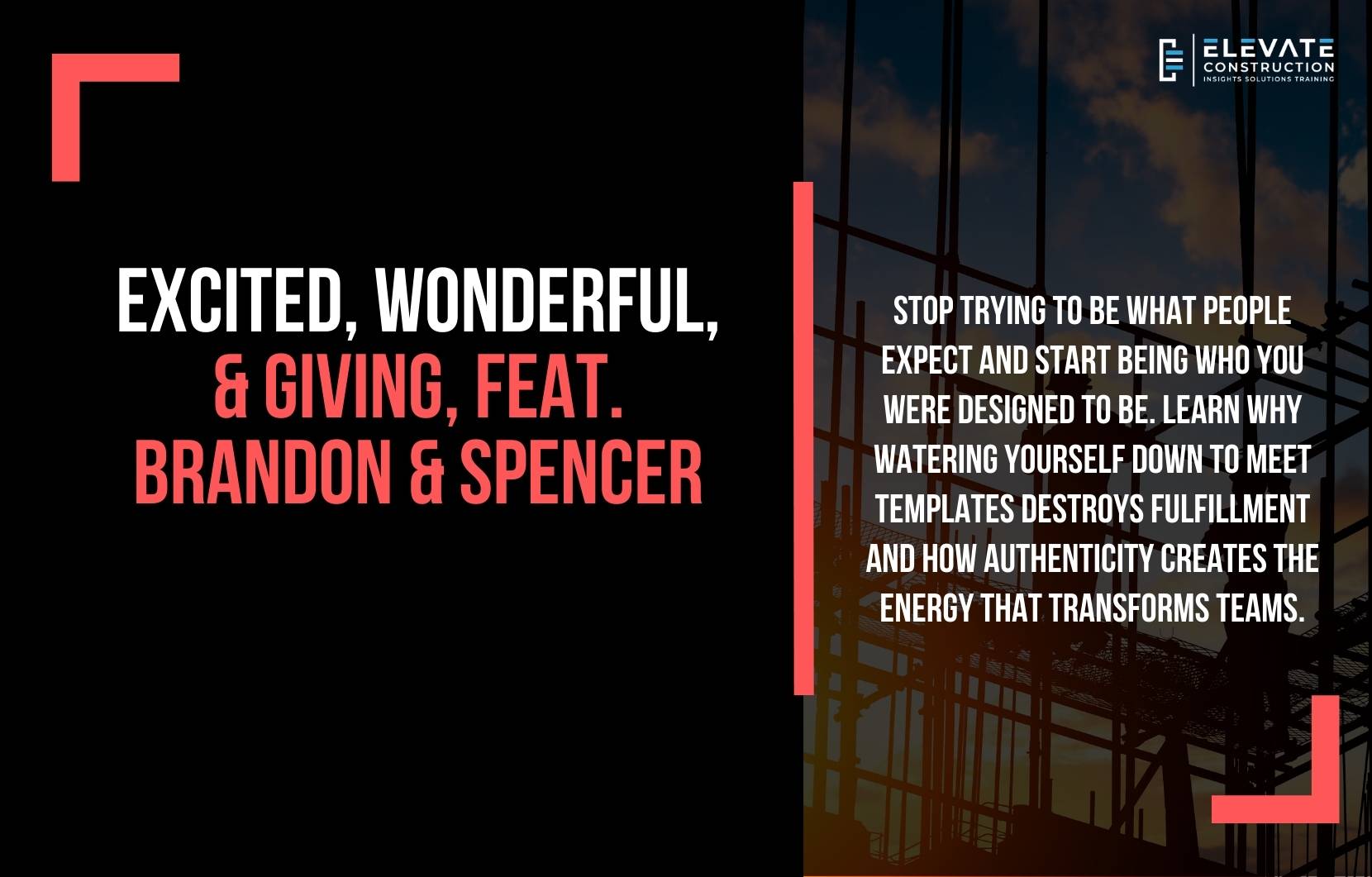
Stop trying to be what people expect. Start being who you were designed to be. Find what you were put on earth to do and deliver it authentically. Because the ultimate failure isn’t missing external success. It’s achieving it while losing yourself in the process.
As Oscar Wilde wrote, “Be yourself; everyone else is already taken.” That’s not just clever wordplay. That’s the foundational truth about creating both excellence and fulfillment. Stop performing other people’s templates. Start being yourself with everything you have.
On we go.
Frequently Asked Questions
Won’t being myself hurt my career if my authentic self doesn’t match corporate expectations?
Short-term friction is possible. Long-term burnout from performing forever is guaranteed. The question isn’t whether being authentic has risks. The question is whether achieving success while losing yourself is worth avoiding those risks. Most people who choose authenticity discover the risks were smaller than they feared and the fulfillment was greater than they imagined.
How do I know if I’m being authentic or just being difficult and calling it authenticity?
Authenticity serves others while being true to yourself. Being difficult serves neither. If your authentic self creates value for teams while feeling genuine to you, that’s authenticity. If you’re just refusing to adapt or grow while claiming it’s being yourself, that’s stubbornness dressed up as authenticity.
What if I’ve been performing so long I don’t even know who my authentic self is anymore?
Start by noticing where you feel energized versus drained. Where do you have to maintain effort to keep up a performance versus where you just flow naturally? What did you love before someone told you it wasn’t professional or appropriate? The authentic self is still there underneath the templates. It just needs permission to emerge.
Can I be authentic while still meeting professional standards and expectations?
Absolutely. Authenticity doesn’t mean ignoring all standards. It means bringing your genuine strengths and perspectives while operating within appropriate boundaries. You can be professionally effective while being genuinely yourself. The templates say there’s only one way to be successful. Reality shows many authentic paths to excellence.
What if my authentic self isn’t as capable or impressive as the template I’ve been performing?
That’s fear talking, not reality. Your authentic self operating at full strength will always be more effective than a watered-down version performing someone else’s template. The energy you waste maintaining performances could be invested in developing your genuine strengths. Authenticity with growth beats performance without fulfillment every time.
If you want to learn more we have:
-Takt Virtual Training: (Click here)
-Check out our Youtube channel for more info: (Click here)
-Listen to the Elevate Construction podcast: (Click here)
-Check out our training programs and certifications: (Click here)
-The Takt Book: (Click here)
Discover Jason’s Expertise:
Meet Jason Schroeder, the driving force behind Elevate Construction IST. As the company’s owner and principal consultant, he’s dedicated to taking construction to new heights. With a wealth of industry experience, he’s crafted the Field Engineer Boot Camp and Superintendent Boot Camp – intensive training programs engineered to cultivate top-tier leaders capable of steering their teams towards success. Jason’s vision? To expand his training initiatives across the nation, empowering construction firms to soar to unprecedented levels of excellence.