Families in Construction: How to Protect Your Marriage and Kids When the Job Demands More Than It Should
There’s a part of construction no one puts in the brochure. Nobody tells you at the career fair that the schedule can eat your evenings, your weekends, and your emotional bandwidth. Nobody explains that you can “win” at work and still lose at home. And nobody trains you for the moment you walk through the door after a brutal day and realize your family needs you to be a different kind of leader than you were on the jobsite.
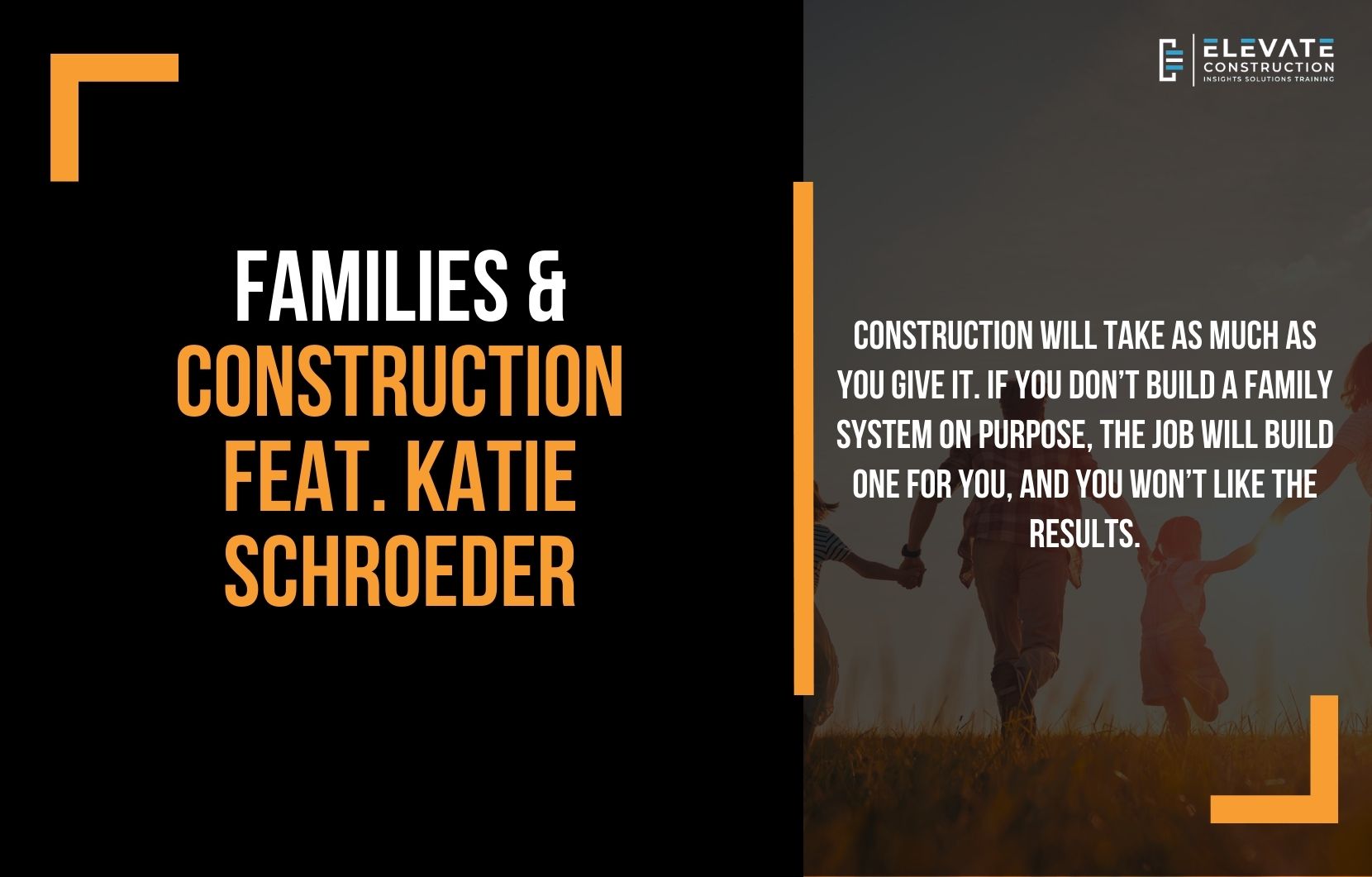
Jason Schroeder and Katie talk about that reality with honesty. Not as a motivational speech, but as a real conversation from a real marriage. They describe what it feels like when construction becomes the third person in the relationship. They name the strain, the growth, the mistakes, and the habits that actually protect families over time.
The pain is simple and heavy. The job is intense. You come home tired. The house has been running without you all day. The kids have needs. The spouse has carried the load. And if you show up with the same edge you used to “get things done” at work, you can quietly damage the place you claim you’re working for.
The failure pattern is also predictable. We don’t set expectations. We don’t build a home operating system. We don’t agree on parameters for travel, hours, and career choices. Then we act surprised when stress erupts. We take the job home emotionally. We criticize the house. We try to control what we haven’t helped build. We treat our family like they’re another subcontractor who should comply.
The system failed them; they didn’t fail the system. Most people are never taught how to build a relationship system under high workload. They’re told to “provide,” and they assume love will automatically survive the pressure. It won’t. It has to be designed.
Field story first. Katie shares that she grew up with a dad who worked far away and was home only on weekends, and she saw what that did to the rhythm of family life. Later, she and Jason live their own version of that distance. Jason talks about coming home and feeling like he didn’t fit because Katie had built the daily system with the kids while he was gone. That discomfort can turn into criticism if you don’t recognize what’s really happening: the house has a flow, and you’re re-entering it, not running it.
And then there’s the winter storm story. Katie describes a situation where the heater went out in brutal cold, and she set up one room to keep the kids warm and safe. It’s a picture of what spouses do in construction families: they solve problems quietly, often alone, because the situation demands it. The lesson isn’t guilt. The lesson is respect, partnership, and building a system that doesn’t depend on heroics.
Construction Is Hard: The Family Cost Nobody Warns You About
Construction is an industry where the job doesn’t end when the shift ends. There’s always something coming: the next pour, the next inspection, the next crisis, the next “we need it tomorrow.” That pressure can trick leaders into believing their family will understand indefinitely, as long as they’re doing it “for them.”
But families don’t need a martyr. They need presence, kindness, and predictability. When you’re absent physically or emotionally, the home adapts. It creates a new normal. And if you keep ignoring that, you don’t just lose time. You lose connection. This is why Jason’s language about protecting people and families matters. If the plan requires burnout, the plan is broken. That’s true at work. It’s true at home.
The Deal You Make: Expectations and Parameters Before the Chaos Hits
One of the biggest themes in this conversation is that couples need a “deal” clear expectations and parameters before the chaos hits. That means talking about what travel looks like. What weekends look like. What boundaries exist around late nights. What roles each person will own. What support systems will be built. It also means revisiting the deal as life changes new kids, promotions, relocations, new projects.
If you don’t set parameters, the job will set them. And the job will always choose itself. This is where a system-first mindset helps. You don’t rely on emotions. You design agreements. You create clarity. You protect your relationship with structure.
The Spouse at Home Builds the System (So Don’t Come Home and Wreck It)
Katie makes a key point: when one spouse is gone a lot, the spouse at home builds the daily operating system. They create the routines. They manage the meals. They manage the school. They manage the bedtime flow. They manage the emotional tone. When the traveling spouse returns and feels out of place, the wrong response is to criticize the system. The right response is to respect it, learn it, and support it.
Jason describes coming home and feeling like he didn’t fit, and that experience is common for traveling superintendents and project managers. The home has flow, and you are re-entering it. Your job is not to disrupt it. Your job is to be a rejuvenating influence.
Don’t Bring the Job Home: “No Excuse to Take It Out on Your Family”
Jason and Katie are clear: there’s no excuse to take job stress out on your family.That doesn’t mean you pretend you’re fine. It means you don’t weaponize your exhaustion. You don’t come home sharp, critical, and impatient. You don’t unload your frustration onto the people who love you.This is one of the simplest leadership standards a construction professional can adopt: the job can be brutal, but your family should not feel punished for it.If you need a decompression ritual, build one. If you need a transition time, take it. If you need help, ask for it. But don’t bring the job home and call it normal.
Why Dads Matter: Kindness, Approachability, and the Mood of the Home
Katie talks about the importance of dads being kind and approachable. Kids don’t need perfection. They need safety and connection. They need a parent they can approach without fear of being snapped at.That’s not “soft.” That’s strength. A leader who can regulate their mood at home is a leader who is building a legacy. The mood of the home becomes the emotional setpoint for the kids.If a parent walks in and the whole house tightens up, that’s a signal. Not a shame signal. A system signal. Something needs to change.
Moving, Travel, and Career Growth: Make the Decision Together and Own the Consequences
Construction often requires moves and travel. Promotions can come with relocations. Projects can come with extended time away.
The principle here is not “never travel.” The principle is “decide together.” Talk through the real consequences, not just the paycheck. If the move is right, own it as a team. If it isn’t, say no as a team. When one person makes the decision unilaterally, resentment grows. When the decision is shared, sacrifice becomes partnership.
Signals the Job Is Bleeding Into Your Home
- You come home grumpy and the family braces for your mood.
- You criticize how the house is run even though you weren’t there carrying the day.
- You “check out” emotionally because you’re drained, and connection fades.
- You don’t have clear agreements about travel, hours, and boundaries, so everything becomes reactive.
- One spouse is carrying the entire system, and you unintentionally undermine it when you return.
Stop Trying to Control the House: Support, Help, and Be a Rejuvenating Influence
Jason describes the shift that has to happen for construction leaders: stop trying to control the house and start supporting it.That might mean taking on small tasks that create relief. It might mean listening instead of correcting. It might mean entering the home with calm energy, not authority energy. It might mean asking, “How can I help?” and meaning it.The spouse at home doesn’t need another supervisor. They need a partner. The kids don’t need another inspector. They need a parent who can be present.This is respect for people, applied at home.
When It’s Brutal: The Cold-Storm Story and What Real Partnership Looks Like
The winter storm story is a perfect example of why spouses in construction need recognition and support. When the heater went out, Katie created a one-room safe zone and handled the moment. That’s what partnership looks like when the industry is demanding: one person steps up because the situation requires it.But the long-term goal is not heroics. The long-term goal is stability. Stability comes from planning, systems, and shared responsibility.If your family system relies on one person being a hero constantly, it will eventually break.
Home System Moves That Protect the Family
- Create a “transition ritual” so you don’t walk in carrying job stress like a weapon.
- Agree on parameters for travel, late nights, and weekends, and revisit them as life changes.
- Support the home routine that exists; don’t criticize the system you didn’t build that day.
- Build a weekly presence plan: specific time blocks where you are fully there, not half there.
- Set a kindness standard: your spouse and kids should get your best, not your leftovers.
It Gets Better: Progress, Repentance, and Building a Life Over Time
Jason and Katie also talk about growth. People learn. People change. Couples can get better at this. You can build a life over time, even after mistakes.That requires humility. It requires repentance when you’ve been sharp. It requires rebuilding trust when you’ve been absent. It requires consistent small actions, not one big apology.The good news is that systems can be built. Habits can be changed. The home can become stable again.
Builders Build People: Why Healthy Families Create Better Builders
The final point connects everything back to purpose. Construction isn’t just about buildings. It’s about people.Jason’s quote fits here: “We build people who build buildings.” If you sacrifice your family to build a project, you didn’t win. You just traded the most important thing for the loudest thing.
Healthy families create better builders. Calm homes create clearer leaders. And clear leaders build safer, higher-quality projects with better flow.If your project needs superintendent coaching, project support, or leadership development, Elevate Construction can help your field teams stabilize, schedule, and flow.
Conclusion
If you’re in construction, don’t wait until your marriage is strained or your kids are distant to build a system. Make the deal. Set the parameters. Respect the spouse who runs the home daily. Create a transition ritual. Show up kind. Show up present. Protect your family like you protect your schedule because the family is the real schedule. And remember the purpose: “We build people who build buildings.” +
Build them at home first.
FAQ
How do construction professionals avoid bringing job stress home?
Build a transition ritual that helps you decompress before entering the house. Then commit to a kindness standard at home: you can be honest about stress without taking it out on your spouse or kids.
What should couples discuss before accepting travel-heavy roles?
Talk through parameters: how many nights away, weekend expectations, how communication will work, what support will exist at home, and what the family’s non-negotiables are. Decide together and revisit as conditions change.
How can a traveling superintendent re-enter the home without conflict?
Recognize that the spouse at home built the daily system. Re-enter with humility and support. Ask how to help, learn the routine, and avoid criticizing the system you weren’t running that day.
Why is presence more important than “providing”?
Providing matters, but kids and spouses need emotional safety and connection. Presence builds trust and stability. Without presence, families adapt in ways that reduce closeness over time.
How does this connect to LeanTakt and Takt?
Flow requires stability. Your home is a system too. When you design your home rhythm intentionally agreements, routines, and calm re-entry you reduce variation and protect the people you’re building all this for.
If you want to learn more we have:
-Takt Virtual Training: (Click here)
-Check out our Youtube channel for more info: (Click here)
-Listen to the Elevate Construction podcast: (Click here)
-Check out our training programs and certifications: (Click here)
-The Takt Book: (Click here)
Discover Jason’s Expertise:
Meet Jason Schroeder, the driving force behind Elevate Construction IST. As the company’s owner and principal consultant, he’s dedicated to taking construction to new heights. With a wealth of industry experience, he’s crafted the Field Engineer Boot Camp and Superintendent Boot Camp – intensive training programs engineered to cultivate top-tier leaders capable of steering their teams towards success. Jason’s vision? To expand his training initiatives across the nation, empowering construction firms to soar to unprecedented levels of excellence.