You’re Not Listening (And Your Team Knows It)
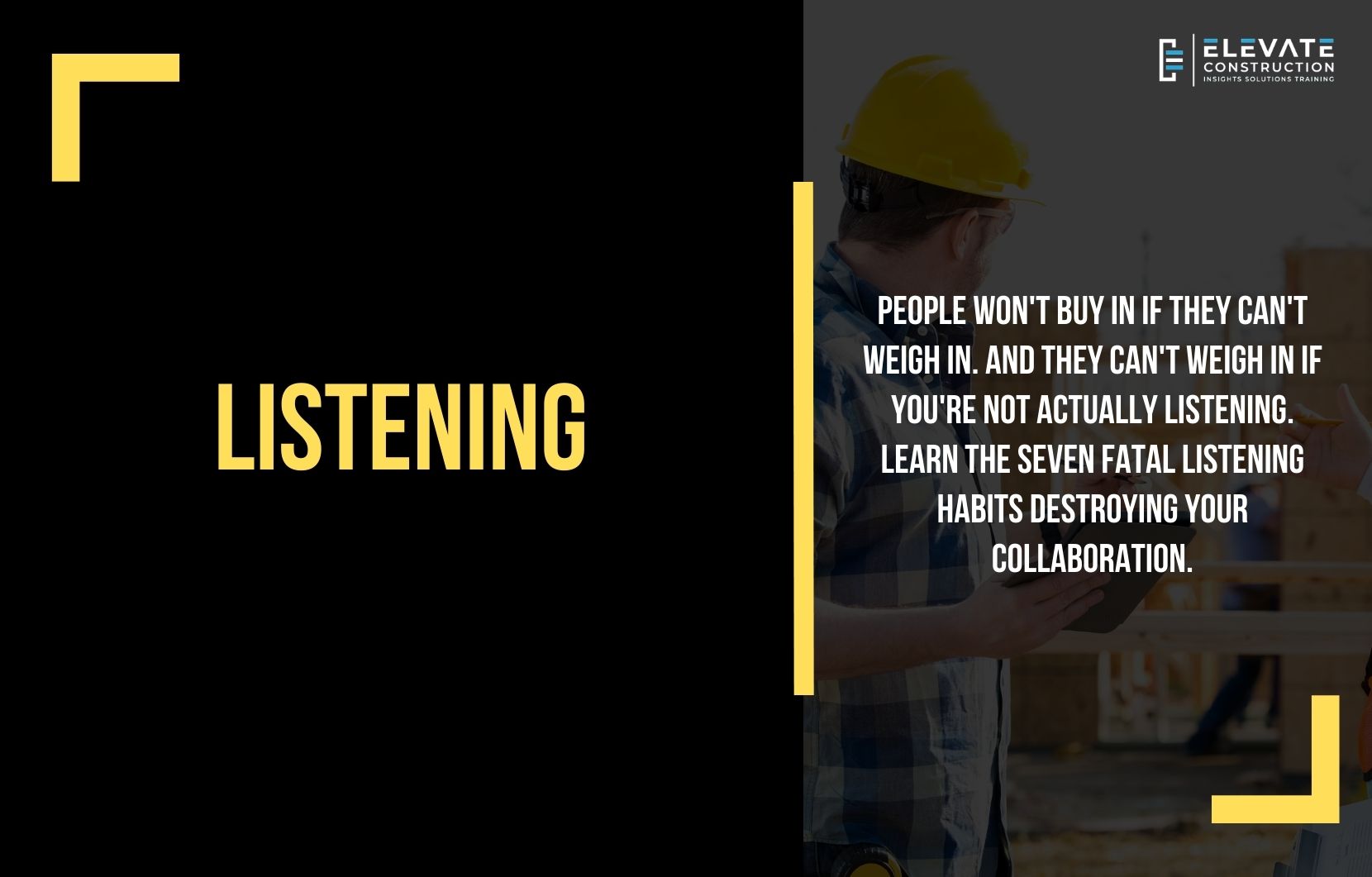
Here’s the uncomfortable truth about why your collaboration isn’t working. Your team isn’t buying in because they’re not weighing in. And they’re not weighing in because you’re not actually listening. You’re waiting to speak. You’re rehearsing your response. You’re interrupting to make your point. And everyone knows it. They can see you’re not paying attention. They feel dismissed. And when people don’t feel heard, they stop contributing. They stop caring. And your project loses the collective intelligence you need to succeed.
Listening isn’t a soft skill you add when you have time. It’s the foundation of collaboration. Without it, Last Planner sessions become theater where people say what they think you want to hear. Phase planning becomes a checkbox exercise where nobody shares real concerns. Team meetings become one-way broadcasts where you talk and others comply without commitment. Because if people know you’re not listening, they won’t weigh in. And if they can’t weigh in, they’ll never buy in. That’s not collaboration. That’s compliance masquerading as teamwork.
I learned this the hard way. Before I attended Power Communication with Rapport training, people told me constantly: “Jason, you’re not paying attention.” “Jason, you’re not listening.” “You could do better at understanding my point.” That feedback hurt because I knew it was true. I knew it was a deficit in my leadership. I was doing all the things ineffective listeners do—rehearsing my response, interrupting, hearing what I expected instead of what was actually said. And it was destroying my ability to build integrated teams that worked together effectively.
The Pain of Teams That Don’t Feel Heard
You’ve experienced this frustration. You run a collaborative planning session. You ask for input. A few people speak up hesitantly. Most stay silent. And you walk away thinking the session went fine when actually nobody shared their real concerns because they’ve learned you don’t actually listen. You’re just collecting information to validate decisions you’ve already made. So they comply quietly and wait for problems to emerge later when it’s too expensive to fix them.
That’s what happens when listening breaks down. People stop sharing problems early. They stop offering innovative solutions. They stop challenging assumptions that need to be challenged. Not because they don’t have valuable input, but because they’ve learned that sharing it doesn’t matter. You’re not actually listening. You’re just waiting for them to finish so you can say what you were going to say anyway.
Think about what this costs. Every problem that doesn’t get surfaced early becomes a crisis later. Every innovative solution that doesn’t get shared is an opportunity wasted. Every assumption that doesn’t get challenged becomes a mistake that could have been prevented. The cost of not listening compounds over time until you’re constantly firefighting problems that could have been avoided if you’d actually heard what people were trying to tell you weeks ago.
Stephen Covey said that not being listened to is like having the oxygen sucked out of the room. If someone removed the oxygen from a room and then said “pay attention to me” or “let’s do this task,” people would ignore them and run for the door. They need oxygen more than they need to comply with requests. Similarly, people need to be heard before they can engage with anything else you’re asking them to do. Not being listened to creates the same desperate need to escape that oxygen deprivation creates.
The System Creates Non-Listeners Who Think They’re Collaborating
Here’s what I want you to understand. The construction industry systematically creates leaders who think they’re good listeners because they ask for input, but who actually practice seven fatal listening habits that destroy real collaboration. We confuse talking less with listening more. We think nodding along while someone speaks means we’re engaged. And we miss that effective listening requires specific skills most people never develop.
Let me walk you through the seven ineffective listening habits that kill collaboration even when you think you’re doing it right. First is simply not paying attention—ignoring the speaker while you watch your phone, check your computer, listen to others nearby, or drift into your own thoughts. You’re physically present but mentally absent, and everyone knows it.
Second is false listening—pretending to listen by nodding and saying “uh-huh” without actually knowing or understanding what’s being said. You’re performing the appearance of listening while your mind is completely elsewhere. Third is rehearsing—the internal chatter where you’re planning what you’ll say next instead of hearing what’s being said now. Some people think listening means waiting to speak. That’s not listening. That’s just polite interrupting.
Fourth is actually interrupting—continually cutting into the middle of someone’s sentence because you feel what you have to say is more important than what they’re sharing. People who interrupt talk about themselves instead of giving attention to speakers. I’m ashamed to admit I still accidentally do this to my wife sometimes, thinking I’m actively listening when really I’m just interrupting.
Fifth is hearing what you expect—assuming what the speaker has in mind, passing premature judgment, drawing conclusions before they finish, even finishing their sentences for them. Sixth is feeling defensive—when someone gives you feedback for improvement, you defend your position instead of listening to understand what they’re trying to tell you. And seventh is listening for points of disagreement—waiting just long enough to find the right moment to jump in and voice your objection instead of actually hearing the full message.
These habits destroy collaboration because they signal to everyone that you’re not actually interested in what they have to say. You’re just going through motions of asking for input while remaining closed to actually receiving it. And once people recognize that pattern, they stop offering real input. They give you safe answers that won’t require real listening from you. And you lose access to the collective intelligence that makes integrated teams work.
The Four Skills That Create Real Listening
Let me walk you through the four practices that transformed my listening from a deficit into a strength. These aren’t complicated. But they require intentional practice because they counter the natural habits most of us developed. First is focus—effective listening requires actually paying attention to the speaker even when topics are dull or uninteresting. Focus on the speaker’s message, their body language, their voice inflection. Observe nonverbal cues like eye contact, head nods, and smiles. Let the speaker know they’re being listened to through your full attention.
This sounds obvious but it’s incredibly difficult in practice. Your mind wants to wander. Your phone wants your attention. Other conversations nearby pull your focus. And staying concentrated on what someone is saying—especially when they’re taking time to find the right words or explaining something you already understand—requires discipline. But without that focus, everything else fails.
Second is establishing rapport—consciously match and mirror the behavior of the person you’re communicating with. Mirror their body language, rhythm of movements, voice tone, pace, and inflection. Listen for key words and predicates they use. This isn’t manipulation. This is making the person feel comfortable by showing you’re on their wavelength. When someone feels that comfort, they share more openly and honestly.
Third is paraphrasing what you heard—summarize the sender’s message to ensure complete understanding. Listening to understand requires the ability to give back the speaker’s words, summarize the facts and feelings in the message being conveyed. Obviously, do this after they’re done speaking, not by interrupting to paraphrase mid-sentence. But the practice of restating what you heard embeds it in your mind and shows the speaker you actually received their message.
Fourth is listening for the whole message—look for meanings and consistency in both verbal and nonverbal messages. Listen for ideas, feelings, and intentions as well as facts. Listen for positives as well as things that are unpleasant. Don’t just hear the parts that confirm what you already believed or the parts you want to address. Hear everything they’re actually communicating, including the messages beneath the words.
Here’s what real listening looks like in practice when these four skills work together:
Someone starts explaining a problem on your project. Instead of rehearsing your response, you focus completely on understanding their perspective. You mirror their concern in your body language and tone. When they finish, you paraphrase what you heard to confirm you understood correctly. And you listen for the whole message—not just the facts they stated but the frustration or worry underneath those facts. That person feels heard. They’ve weighed in. Now they can buy in to whatever solution the team develops together.
This is critical for integrated control systems that replace command and control. The old model was you decide and people comply. The integrated model is the team decides together, everyone weighs in and buys in, and you maintain control by ensuring the process works well. But integrated control requires real listening. Without it, you’re just doing command and control with the appearance of collaboration.
Why Listening Creates the Teams That Win
If your project needs superintendent coaching, project support, or leadership development, Elevate Construction can help your field teams stabilize, schedule, and flow. We work with builders who understand that listening isn’t optional for collaboration—it’s the oxygen that makes every other team practice actually work.
The current condition is we don’t listen to each other. We’re not hearing what people actually say. And somebody needs to be listened to before they can weigh in and buy in. Not being listened to removes the oxygen from the room. People won’t engage with your requests or your leadership until that fundamental need is met. You can have the best Last Planner process, the most detailed phase plans, the most structured meetings. But if you’re not actually listening during those sessions, you’re just performing collaboration while missing all the benefits.
Once I figured out how to listen and started practicing intentionally, the feedback I received changed completely. Instead of “you’re not paying attention,” I started hearing “thank you for caring” and “thank you for actually hearing me.” The only problem now is that when I’m really listening, I sometimes forget what I wanted to say. But that’s proof I’m actually paying attention instead of just rehearsing my response.
Great listeners are great leaders. Not because listening is a leadership technique, but because leadership requires accessing collective intelligence that only emerges when people feel heard. When you master the four skills of effective listening, you’ll form great teams. You’ll create truly integrated collaboration where the team decides together. People will weigh in honestly. They’ll buy in completely. And you’ll lead through enabling others instead of just directing them.
The Challenge: Practice One Listening Skill This Week
So here’s my challenge to you. This week, practice one of the four effective listening skills intentionally. Choose focus, rapport, paraphrasing, or listening for whole messages. Write yourself a cue card if needed. Make it a conscious practice in every conversation and meeting. Notice what happens when you actually listen instead of just waiting to speak.
Pay attention to the seven ineffective habits—not paying attention, false listening, rehearsing, interrupting, hearing what’s expected, feeling defensive, and listening for disagreement. When you catch yourself doing any of these, stop and refocus on actually hearing what’s being said. This takes discipline because these habits are deeply ingrained. But the transformation in your collaboration will be immediate.
Remember that listening is like oxygen for engagement. People need to be heard before they can contribute fully. When you remove listening from the room, you remove the oxygen that makes collaboration possible. Everything else—your processes, your tools, your meeting structures—depends on this foundation. Master listening and everything else works better. Neglect it and nothing else matters because people have already checked out.
As Ralph G. Nichols wrote, “The most basic of all human needs is the need to understand and be understood. The best way to understand people is to listen to them.” Stop rehearsing your response. Stop waiting to speak. Start actually listening. That’s when integrated teams become possible.
On we go.
Frequently Asked Questions
How do I stay focused on listening when topics are boring or I already know what they’re going to say?
That’s exactly when listening discipline matters most. The topic might be boring to you but it’s important to them or they wouldn’t be sharing. And you don’t actually know what they’re going to say—that assumption is one of the seven ineffective habits. Focus on understanding their perspective fully, not just hearing familiar information.
Won’t mirroring and matching feel fake or manipulative to the speaker?
Done consciously at first, it might feel awkward to you. But speakers don’t notice it as manipulation—they experience it as comfort and connection. You’re not mimicking exaggeratedly. You’re subtly aligning your communication style with theirs so the conversation flows naturally. That’s respect, not manipulation.
What if paraphrasing makes meetings take too long when we’re already over time?
Paraphrasing actually saves time by preventing misunderstandings that require multiple follow-up conversations. Spending thirty seconds confirming you understood correctly prevents thirty minutes of fixing problems that emerged from miscommunication. The time investment in listening always has positive return.
How do I listen effectively when I genuinely disagree with what someone is saying?
Listen to understand their perspective fully before deciding whether to disagree. Often what seems like disagreement is actually misunderstanding their position. Once you’ve truly heard them through paraphrasing and listening for the whole message, you can engage with their actual point rather than arguing against what you assumed they meant.
What’s the biggest mistake people make when trying to improve their listening?
Thinking they can listen while also doing something else like checking phones or planning responses. Effective listening requires full attention. You can’t multitask your way to being a good listener. Choose to either listen completely or be honest that you can’t give full attention right now and schedule time when you can.
If you want to learn more we have:
-Takt Virtual Training: (Click here)
-Check out our Youtube channel for more info: (Click here)
-Listen to the Elevate Construction podcast: (Click here)
-Check out our training programs and certifications: (Click here)
-The Takt Book: (Click here)
Discover Jason’s Expertise:
Meet Jason Schroeder, the driving force behind Elevate Construction IST. As the company’s owner and principal consultant, he’s dedicated to taking construction to new heights. With a wealth of industry experience, he’s crafted the Field Engineer Boot Camp and Superintendent Boot Camp – intensive training programs engineered to cultivate top-tier leaders capable of steering their teams towards success. Jason’s vision? To expand his training initiatives across the nation, empowering construction firms to soar to unprecedented levels of excellence.