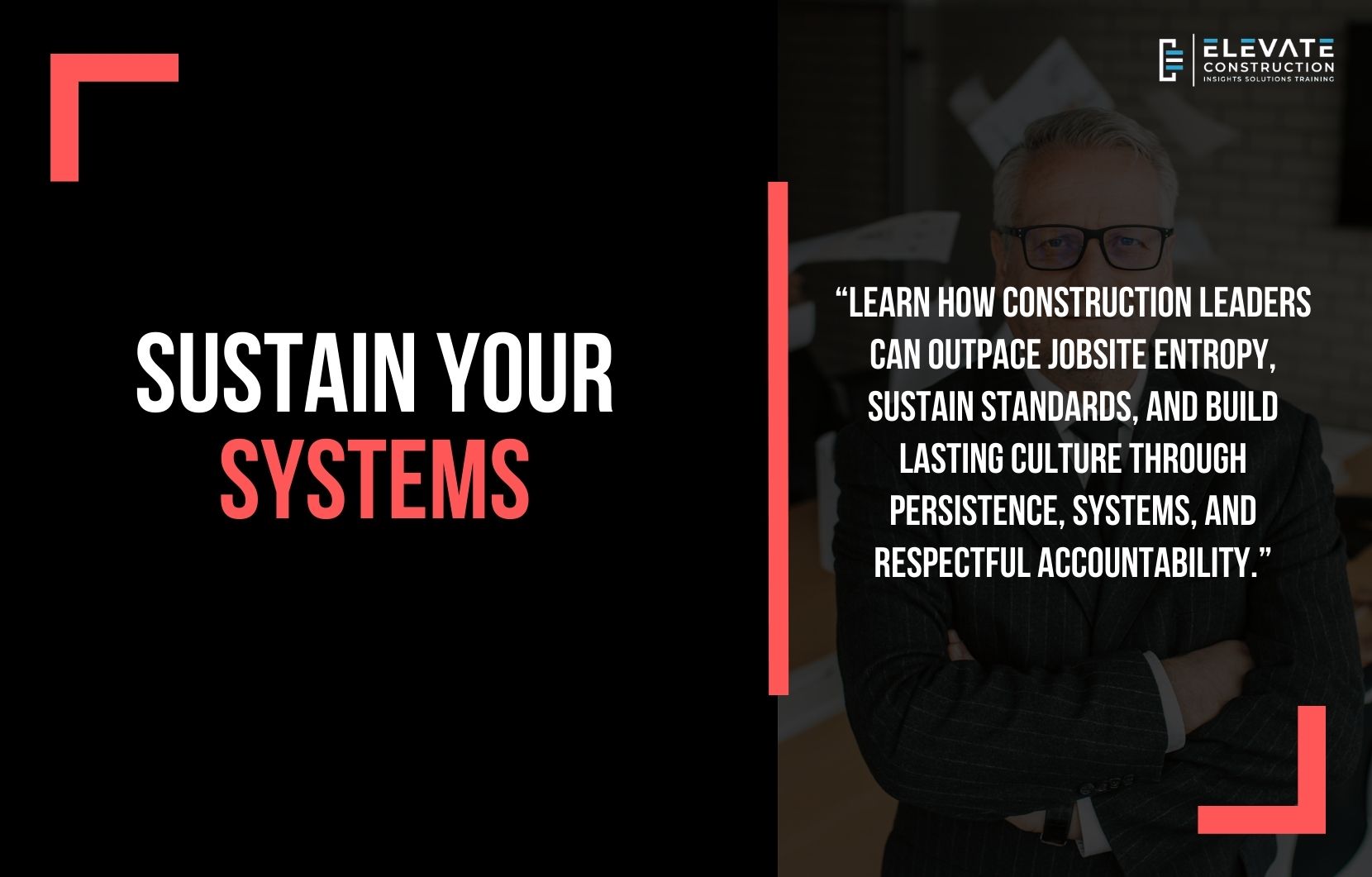
How to Build a Jobsite Culture That Outlasts Entropy
Every construction project starts with good intentions. The site is clean. Safety is sharp. Meetings are on time. Standards are clear. For a brief moment, everything feels aligned. Then the project gets busy. More trades arrive. Pressure increases. Schedules tighten. And slowly, almost quietly, the site begins to slide backward.
Trash shows up where it should not. Meetings start late. Safety slips turn into habits. Systems that once worked fade into reminders instead of realities. This is not because people stopped caring. It happens because every project is subject to entropy, the natural pull toward disorder. If leaders do not actively counter it, entropy always wins. This is one of the most important lessons I have learned in my career, and it is why sustaining culture matters more than launching it.
The Pain of Watching Standards Slip
If you have ever implemented cleanliness, organization, or zero tolerance safety and then watched it slowly disappear, you are not alone. Most superintendents and project leaders experience this at some point. You train the trades. You explain expectations. You set the rules. And yet, weeks later, you are asking yourself why things are no longer working.
The frustration is real. Leaders begin to wonder if people are listening or if these concepts even work in construction. The truth is much simpler and much harder to accept. Culture does not sustain itself. It must be defended every day.
The Failure Pattern Leaders Fall Into
The most common failure pattern is believing that communication equals implementation. Leaders tell people the standard and assume it will stick. They correct an issue once and expect it to stay corrected. They announce rules and hope the project carries them forward.
But construction is dynamic. New people arrive. Conditions change. Fatigue sets in. Without consistent reinforcement, even the best systems decay. This is not a people problem. It is a leadership and system problem.
Why Empathy Matters in Enforcement
Most workers want to do the right thing. Trades want productive environments. Foremen want clear expectations. Craft workers want respect. When standards slip, it is rarely defiance. It is usually confusion, overload, or lack of a clear path.
Understanding this changes how leaders respond. Enforcement is not punishment. It is protection. It is how we create fairness, safety, and dignity on site.
A Field Lesson From Early Lean Experiments
Early in my career, after studying Lean principles, Two Second Lean, and production planning, I was determined to apply these concepts in construction. I believed that once systems were set up, the project would naturally stay organized. I was wrong.
What I discovered was sobering. Even strong systems required constant reminding and correction. Cleanliness needed daily reinforcement. Safety required visible leadership. Organization demanded follow up. Without it, everything slid backward. That realization shaped my approach to leadership forever.
Understanding Entropy on the Jobsite
Entropy is the gradual decline into disorder. It affects everything on a project. Safety systems. Quality standards. Logistics. Culture. Even morale. Entropy is not a failure. It is a force. And leaders must outpace it.
To sustain culture, you must be more determined, more persistent, and more consistent than the project’s natural decay. That is not a slogan. It is a requirement.
The Role of Example in Sustaining Culture
One of the clearest indicators of leadership is what a superintendent does when no one is watching. If trash is on the floor, do they step over it or pick it up? That small act sends a signal that standards matter.
People follow what leaders do, not what they say. Over time, crews adopt those behaviors. Culture forms not through policy but through repeated example.
Chief Reminding Officers at Work
In construction, leaders are Chief Reminding Officers. Reminding is not weakness. It is leadership. Standards must be reinforced repeatedly until they become habits.
This applies to cleanliness, safety, meeting structures, delivery rules, and quality expectations. If leaders stop reminding, entropy accelerates.
Making Systems Addictive and Accessible
For systems to work, they must fit how people already operate. If a process is slow, hidden, or overly complex, it will fail under pressure. That is why tools matter.
Effective systems must be quick, visible, and engaging. They must clear the path so people can succeed without friction. This principle aligns deeply with LeanTakt and the idea of enabling flow instead of creating obstacles.
Using Simple Technology to Sustain Standards
One of the most effective ways I have seen to sustain culture is through real time communication. Quick photo based assignments shared through simple messaging platforms create visibility and accountability without bureaucracy.
A leader walks the site, documents what they see, assigns responsibility, and follows up. The system reinforces standards daily and makes progress visible to everyone.
When people receive immediate feedback, especially positive feedback, behavior changes faster than any policy ever could.
Why Praise and Accountability Must Coexist
People respond to appreciation. When leaders acknowledge good work quickly, it reinforces the behaviors they want to see. At the same time, accountability ensures fairness. Standards only work when they apply to everyone.
Respect is built when leaders are consistent. Crews want leaders who stand firm, not leaders who change expectations based on convenience.
Holding the Line Builds Trust
Many leaders fear that enforcing standards will damage relationships. In reality, the opposite is true. Most trade partners want leaders to stand strong. They want predictability. They want fairness.
When leaders consistently hold the line, trades learn where expectations are. Over time, respect replaces resistance. Culture becomes self reinforcing.
Sustaining Culture Takes Time
Habits do not form overnight. It takes months of consistent reinforcement for culture to take hold. During that time, leaders must be patient and persistent.
Eventually, something powerful happens. New crews are onboarded by existing crews. Standards are defended by the group. Culture becomes real.
The Role of Training and Support
Sustaining culture requires more than willpower. Leaders need training, coaching, and systems that support consistency. That is where structured approaches and outside support matter.
If your project needs superintendent coaching, project support, or leadership development, Elevate Construction can help your field teams stabilize, schedule, and flow.
What Remarkable Jobsites Look Like
When culture is sustained, the difference is obvious. Sites are clean. Staging is organized. Safety systems work. Pride replaces frustration. Workers walk into environments that respect them. These projects are not accidents. They are the result of leaders who refuse to let entropy win.
Conclusion: Outpace Entropy Every Day
Dirty, unsafe, chaotic jobsites are beneath us. We can do better. Sustaining culture is not about being harsh. It is about caring enough to be consistent.
As I often say, leadership is not about control. It is about creating environments where people can succeed. Or as Deming taught us, a system produces exactly what it is designed to produce. Design your system to win.
Frequently Asked Questions
Why do jobsite standards decline over time?
Because entropy naturally pulls systems toward disorder unless leaders actively counter it.
Is enforcing standards being too strict?
No. Consistent standards create fairness, safety, and respect for everyone on site.
How long does it take to build culture?
Typically several months of consistent reinforcement before habits form and culture sustains itself.
Do simple communication tools really work?
Yes. Fast, visible systems align with how people already operate and improve accountability.
How does Elevate Construction support culture building?
Through superintendent coaching, LeanTakt systems, and leadership development that create stability and flow.
If you want to learn more we have:
-Takt Virtual Training: (Click here)
-Check out our Youtube channel for more info: (Click here)
-Listen to the Elevate Construction podcast: (Click here)
-Check out our training programs and certifications: (Click here)
-The Takt Book: (Click here)
Discover Jason’s Expertise:
Meet Jason Schroeder, the driving force behind Elevate Construction IST. As the company’s owner and principal consultant, he’s dedicated to taking construction to new heights. With a wealth of industry experience, he’s crafted the Field Engineer Boot Camp and Superintendent Boot Camp – intensive training programs engineered to cultivate top-tier leaders capable of steering their teams towards success. Jason’s vision? To expand his training initiatives across the nation, empowering construction firms to soar to unprecedented levels of excellence.
On we go