
At a Glance: The health and well-being of your construction team directly influences every metric that matters to your project. When team members struggle with physical health, mental wellness, or burnout, your schedule suffers, safety incidents increase, and productivity drops. Investing in team wellness creates a supportive environment where workers can perform at their best, ultimately protecting your project timeline and your bottom line.
Construction leadership often focuses on schedules, budgets, and logistics while overlooking the human element that makes everything else possible. The trades workers, foremen, and supervisors who show up to your job site each day bring more than their skills; they bring their energy levels, their stress, their sleep quality, and their overall state of mind. How they feel in daily life shapes how they perform on your project. Understanding this connection gives you a powerful lever to improve outcomes across the board.
Why Team Wellness Matters
Construction has long been one of the most physically demanding industries, but the toll extends beyond sore muscles and tired bodies. Mental health challenges, substance abuse, and chronic stress affect construction workers at alarming rates. These issues rarely stay separate from work; they show up as missed days, on-site incidents, communication breakdowns, and declining productivity.
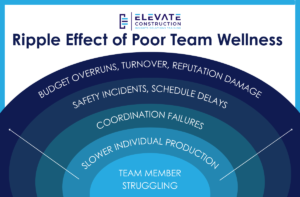
Even beyond construction, when team members operate below optimal health in any field, the effects ripple through every aspect of a project:
- Slower production rates that push your schedule further behind
- Higher rates of rework due to mistakes and lapses in concentration
- Increased safety incidents that shut down operations
- Poor communication between trades, creating coordination failures
- Higher turnover as burned-out workers leave for other opportunities
The construction industry already faces workforce shortages. Losing trained workers to burnout or preventable health issues compounds an existing problem while disrupting project continuity. Every time a skilled worker leaves, you lose institutional knowledge and must invest time in bringing someone new up to speed.
The Physical Health Connection
Physical health affects everything a construction worker does. The demanding nature of the work means that nutrition, sleep quality, and fitness levels directly impact a person’s ability to perform safely and productively. A team member running on poor sleep and inadequate nutrition lacks the focus and energy needed for precise work.
Consider how physical health challenges manifest on your project. Workers dealing with chronic pain may slow down or avoid certain tasks. Those managing untreated conditions might take frequent breaks or call in sick more often. Fatigue from poor sleep leads to mistakes that require rework or, worse, cause injuries.
Creating a supportive environment for physical health looks different for every team, but it often includes:
- Encouraging proper nutrition and hydration on site
- Building reasonable schedules that allow for adequate rest
- Providing access to resources like chiropractic care for musculoskeletal issues
- Supporting team members who need to address health care concerns
When your team members feel physically capable, they bring more energy and focus to their work. This translates directly into better quality and faster completion.
Mental Wellness and Project Performance
Mental wellness has gained overdue attention in construction circles, and for good reason. The industry experiences some of the highest rates of suicide and mental illness of any sector. The pressures of tight deadlines, job instability, time away from family, and demanding conditions create a perfect storm for anxiety, depression, and other challenges.
A team member struggling with mental health cannot perform at their best, regardless of their skill level. They may withdraw from collaboration, make uncharacteristic errors, or struggle with the focus needed for complex tasks. In leadership roles, mental health struggles can derail an entire project as communication breaks down and decisions get delayed.
The stigma around mental health keeps many workers silent about their struggles. Creating an environment where team members feel comfortable seeking help requires intentional effort from leadership. This might mean:
- Normalizing conversations about mental wellness and self care
- Connecting team members with professional counselor resources
- Recognizing warning signs and responding with support rather than judgment
- Building project schedules that account for human limitations
When mental wellness becomes part of your project culture, you create a team that communicates better, collaborates more effectively, and stays engaged through challenging phases.
Substance Abuse: The Hidden Project Risk
Substance abuse affects construction at rates higher than most industries. The physical demands of the work, combined with workplace cultures that sometimes normalize alcohol use, create conditions where problems can develop and go unaddressed. Pain management after injuries often leads workers toward dependence on prescription medications.
On your project, substance abuse shows up as erratic behavior, inconsistent quality, safety near-misses, and eventually serious incidents. A single impaired worker can cause an accident that affects the entire team and halts progress for days or weeks.
Addressing substance abuse requires moving beyond punitive approaches toward a wellness initiative that helps workers get support. Many workers would seek help if they knew it was available without career-ending consequences. A diversion program that offers treatment as an alternative to termination can save skilled workers while reducing risk on your project.
Stress Management and Schedule Reliability
Stress accumulates throughout a construction project. As deadlines approach and pressure mounts, the entire team operates in a heightened state that affects decision-making, communication, and physical health. Chronic stress leads to burnout, which manifests as disengagement, errors, and eventually, people walking off the job.
Teams with strong stress management practices weather the inevitable challenges of construction without falling apart. They communicate problems earlier, collaborate on solutions, and maintain the positive energy needed to push through difficult phases.
Building stress resilience into your team happens through intentional activities that break the cycle of constant pressure. This might include regular check-ins about workload, recognition of effort and progress, and creating space for social connections among team members. When workers feel supported by their team and leadership, they handle stress more effectively.
The Financial Case for Team Wellness
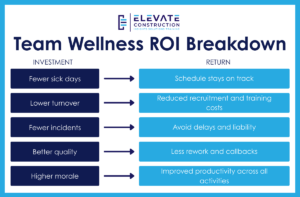
Investing in team wellness delivers measurable returns. Projects staffed by healthy, engaged workers complete faster, experience fewer incidents, and produce higher quality results. The math works in your favor:
- Fewer sick day requests and absences keep your schedule on track
- Lower turnover reduces recruitment and training costs
- Fewer safety incidents avoid expensive delays and liability
- Better quality means less rework hours and fewer callbacks
- Higher morale improves productivity across all activities
Projects that neglect team wellness pay the price through missed milestones, reactive management, and the chaos that comes from a struggling team. The costs hide in schedule delays and budget overruns rather than appearing as line items, but they are real and substantial.
Building a Wellness Culture on Your Project
Creating a culture that supports wellness requires commitment from leadership and systems that make it sustainable. It starts with recognizing that your team members are whole people whose well-being directly affects their work.
Practical steps for building wellness into your project include:
- Starting each day with a brief check-in that goes beyond task assignments
- Training supervisors to recognize signs of struggle in their teams
- Providing information about available mental health services and resources
- Building schedules that allow for adequate rest and recovery
- Creating opportunities for social connection among team members
- Celebrating milestones and recognizing contributions
- Modeling healthy behaviors from leadership positions
These practices require investment but pay dividends in team performance, retention, and project outcomes.
What Happens When Wellness Gets Neglected
Projects that ignore team wellness eventually face consequences. The slow accumulation of fatigue, stress, and disengagement reaches a tipping point where performance collapses. You’ll see it in the metrics: declining productivity, rising incident rates, quality issues, and schedule slippage that seems to come from nowhere.
By the time these problems become visible, they’re already embedded in your project. Recovering from a wellness crisis takes far more effort than preventing one. The workers who haven’t already left are demoralized and exhausted. The trades you depend on start avoiding your project. The reputation damage follows your team to future work.
Preventing this outcome requires treating wellness as a project management priority rather than an afterthought. The earlier you establish a supportive environment, the more resilient your team becomes when challenges arise.

Take the Next Step with LeanWellness
Elevate Construction understands that remarkable projects require healthy, engaged teams. That’s why we developed LeanWellness, a group wellness class designed specifically for construction professionals. LeanWellness involves adopting healthy habits and behaviors throught wellness activities that promote overall well-being, including nutrition, exercise, stress management, sleep quality, and social connections. Achieving wellness leads to a balanced and fulfilling life for your team members while delivering the productivity and reliability your projects demand.
If you’re ready to build healthier teams and better projects, explore how LeanWellness can transform your operation. Contact Elevate Construction to learn more about bringing this wellness initiative to your team.