The Superintendent Drowning in Technology That Does Not Work
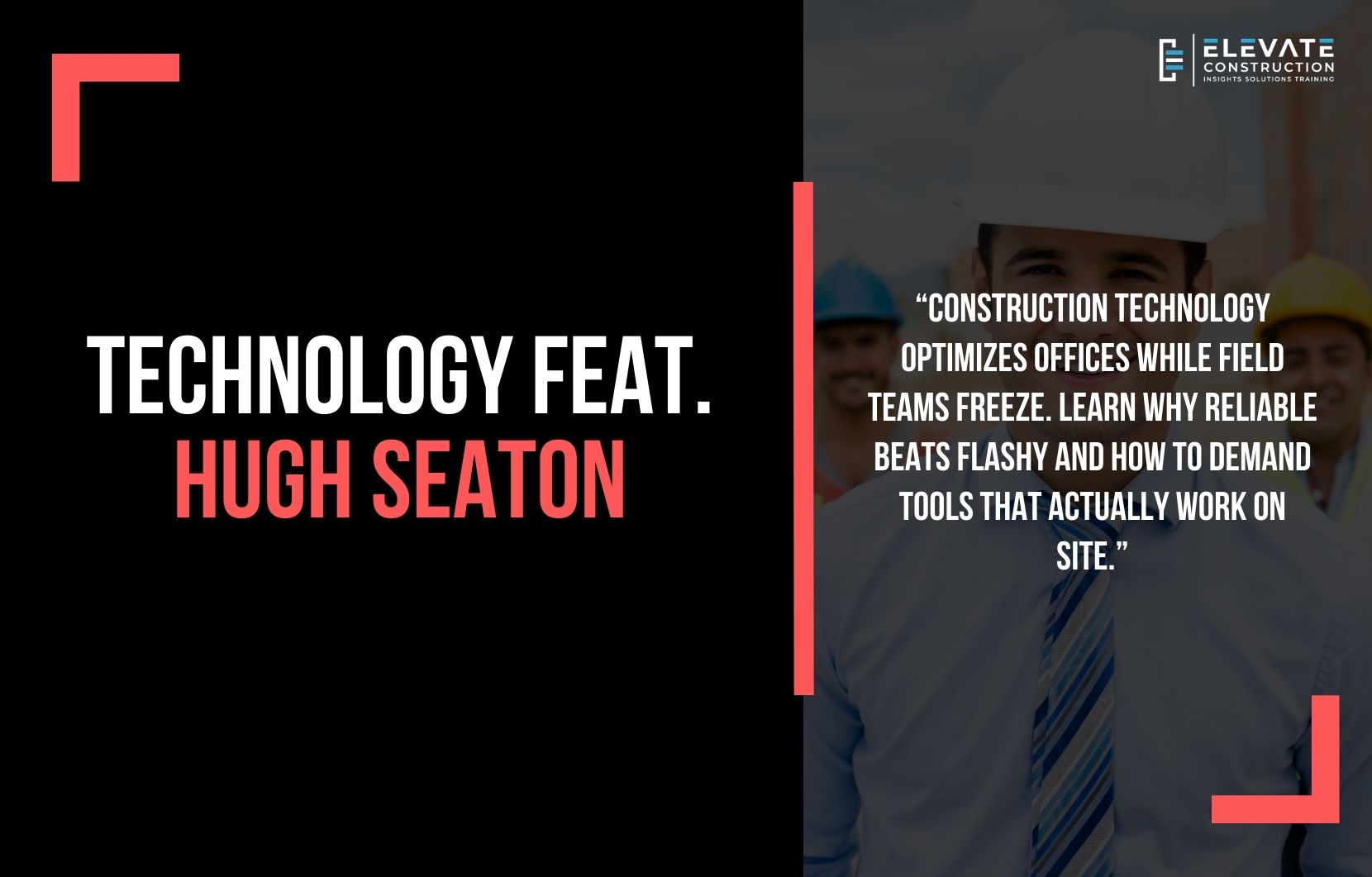
There is a superintendent who has six different apps on his phone. One for daily reports. One for safety observations. One for drawings. One for RFIs. One for schedules. One for photos. And every single one of them requires 23 clicks to do something that should take three. Every single one of them was designed by someone who has never stood in the wind at 6 AM trying to type with frozen fingers. Every single one of them optimizes the office while the field suffers. And the superintendent is drowning. Not because technology is bad. But because the technology was built for the wrong people. It was built for executives who see dollar signs. It was built for IT departments who want centralized control. But it was not built for the people who actually make the money. The workers screwing in drywall. The foreman coordinating trades. The superintendent managing flow. And those are the only people who matter.
Here is what happens when technology ignores the field. A software company launches a new daily reporting tool. They demo it to the executives. Everyone loves it. The interface is beautiful. The dashboards are impressive. The data integration is seamless. So the company buys it. They roll it out to the projects. And within two weeks, the field teams hate it. Because it takes ten minutes to complete a report that used to take two. Because it crashes when you lose cell signal. Because it requires you to type long narratives instead of taking photos of handwritten notes. And because nobody asked the field what they actually needed before building the tool. The executives see adoption metrics and think it is working. But the field is suffering. And the project is paying the price in wasted time and frustration.
The real pain is the disconnect. Office-based technology has been optimized for years. Project management software works beautifully for PMs sitting at desks. Accounting systems are efficient for finance teams. Document control is seamless for administrators. But field technology is still clunky. Still slow. Still designed by people who do not understand what it is like to work in the wind and the cold with gloves on and limited time. And the result is field teams’ waste hours every week fighting technology instead of using it. They fill out the same information three times in three different systems. They lose connectivity and lose data. They spend more time managing the tools than managing the work. And everyone wonders why productivity has not improved despite billions of dollars invested in construction technology.
The failure pattern is predictable. A software company builds a tool without talking to the field. They optimize it for office use because that is where the decision makers sit. They launch it. The field hates it. But the contracts are signed and the money is spent so everyone has to use it anyway. And nothing changes because nobody created a feedback loop between the people building the technology and the people using it in the dirt. The system failed them by prioritizing flashy features over reliable functionality. By optimizing for executives instead of workers. And by treating technology adoption as a top-down mandate instead of a bottom-up collaboration.
But things are changing. Software developers are finally starting to listen. Companies like Procore and Autodesk and others are reaching out to field teams asking what you actually need. How can we make this easier for you? What features matter and what features are just noise. And that shift is creating an opportunity. An opportunity for field teams to speak up and demand technology that actually serves them. Technology that is reliable. That works when you need it. That makes your life easier instead of harder. And that focuses on the people who actually make the money instead of the people who sit in offices.
Hugh Seaton wrote the Construction Technology Handbook to help bridge this gap. To give field professionals the language and confidence to engage with technology companies. To help them understand what software is, what it can do, and what it cannot do. And to empower them to be smart consumers who can say this tool works and this tool does not and here is why. Because the best technology decisions happen when the people using the tools have a voice in building them. And right now, software companies are dying to hear from the field. They want feedback. They want collaboration. They want to know what is working and what is not. But field teams have to speak up. And they have to demand better.
What Reliable Technology Actually Looks Like
Forget addiction. Forget flashy interfaces. What construction needs is reliability. You need technology that works like a tool you trust. A drill that starts every time. A level that never lies. A tape measure that does not stretch. That is what software should be. Something you reach for because you know it will work. Not something you dread because it wastes your time. Reliability means it does not crash when you lose signal. It does not require 23 clicks to do something simple. It does not force you to enter the same information multiple times. And it does not optimize the office at the expense of the field.
The key insight is this. Every time you pull out your phone to use a construction app, ask yourself does this make my life easier or harder. If it makes your life harder, that is a signal the technology is broken. And you need to tell the people who built it. Because they want to know. They are listening. But they cannot fix problems they do not know exist. So when daily reports take too long, tell them. When safety observations require too many steps, tell them. When drawing markup tools are clunky, tell them. The companies that listen will improve. And the companies that do not will lose market share to competitors who build better tools.
Data is another critical piece. A lot of companies say they want more data. But data without standardization is useless. If every project manager enters information differently, you cannot analyze trends. You cannot make better decisions. You cannot improve. So before you collect data, standardize how it gets entered. Make sure everyone logs hours the same way. Make sure everyone tracks progress the same way. Make sure everyone describes issues the same way. This takes time. It might take 18 months to get everyone aligned. But once you do, the data becomes powerful. You can compare projects. You can predict problems. You can allocate resources smarter. And you can make decisions based on facts instead of guesses. If your project needs superintendent coaching, project support, or leadership development, Elevate Construction can help your field teams stabilize, schedule, and flow.
The other truth is technology will never replace human intuition. Software is smart. But it is not human. It cannot read a room. It cannot sense when something feels wrong. It cannot draw on 20 years of experience to solve a new problem. So the goal of technology is not to replace people. The goal is to handle the repetitive tasks so people can focus on the things that require judgment. Let software track tools. Let software manage schedules. Let software coordinate submittals. And let people focus on problem-solving, relationship-building, and keeping workers safe. That is the division of labor that wins. Humans doing what humans do best. And technology doing what technology does best.
Signs Your Technology Is Not Serving the Field
Watch for these signals that your software prioritizes the office over the people doing the actual work:
- Field teams complain that entering data takes longer than the work itself
- Apps crash or lose functionality when cell signal drops or workers move between areas
- The same information has to be entered into three different systems because nothing talks to each other
- Training focuses on office workflows but ignores how field teams actually use the tools in real conditions
- Workers avoid using the technology and revert to paper because it is faster and more reliable
- Executives see beautiful dashboards while superintendents waste hours fighting broken interfaces
These are not user errors. These are design failures. And they cost projects time, money, and morale every single day.
The Prefabrication Connection
Technology also enables better working conditions through prefabrication. Think about where you would rather have workers assembling components. Stick-building 150 feet up the side of a building in the wind? Or in a climate-controlled shop with proper lighting, ergonomic workstations, good restrooms, and comfortable break rooms? The answer is obvious. Prefabrication moves work from unpredictable chaotic environments into stable controlled ones. And technology makes that possible. Building Information Modeling coordinates components before they reach the site. Digital fabrication tools print wall panels and structural elements with precision. Logistics software tracks assemblies from shop to field. And installation becomes faster, safer, and more predictable because the hard work happened in a better environment.
This is not just about efficiency. This is about dignity. Workers deserve stable environments. They deserve predictable schedules. They deserve to go home on time instead of working 60-hour weeks because the project is chaotic. And technology that enables prefabrication makes that possible. So when you evaluate new tools, ask how does this support prefabrication? How does this help us move work from the field into the shop. How does this create better conditions for the people building our projects? Because technology that optimizes worker conditions is technology worth adopting.
What Software Developers Need to Hear From You
Most developers are dying for feedback from field teams but they do not know how to reach you. So here is what they need to hear:
- Daily reports should allow voice recording or photo capture instead of forcing typed narratives
- Safety observations need to work offline and sync automatically when signal returns
- Drawing markup tools must be fast and intuitive with gloves on in cold weather
- Every app should require three clicks maximum to complete common tasks or it is too slow
- Integration between tools is not optional anymore, everything must talk to everything
- Field workflows are different from office workflows and both need equal optimization
If you see a tool that could be better, reach out. Comment on LinkedIn. Request a demo and give feedback. Join user groups. Participate in beta testing. Because the companies that listen will build tools you actually want to use. And the companies that do not will fail.
The Real Value Creators
Here is a truth that gets forgotten. The only person in construction who actually makes money is the worker installing that piece of drywall or bolting that steel beam. Everything else is necessary scaffolding. Project managers coordinate. Superintendents schedule. Engineers design. Accountants track costs. But none of that generates revenue until a worker puts something in place. So technology should optimize the worker’s environment first. Not the office. Not the executives. The field. Because that is where the value gets created. And if technology makes the field more efficient, the whole project benefits. But if technology only optimizes the office, you have just made paperwork faster while workers still suffer.
So here is the challenge. Walk into your next technology meeting armed with questions. Does this make the field’s life easier? Does this work in the wind and the cold? Does this require fewer clicks than what we use now? Can workers use this with gloves on? Does this respect the people who actually make our money? And if the answer to any of those questions is no, push back. Demand better. Because reliable beats flashy every single time. And field teams deserve tools that work as hard as they do. As Hugh Seaton said, “Technology should be there like any other tool. A drill doesn’t run itself. Someone has to be there making decisions.” Technology is a tool. Not a replacement for people. And the best tools are the ones that make good people even better. On we go.
Frequently Asked Questions
What is the biggest problem with construction technology today?
Most software optimizes office workflows while ignoring field needs, forcing workers to waste time on clunky interfaces designed by people who have never worked on site.
How can field teams influence software development?
Request demos, give honest feedback, join user groups, participate in beta testing, and reach out to companies directly, developers are desperate to hear from the field.
Why does data collection often fail to produce useful insights?
Because teams enter information inconsistently. Standardizing how data gets logged across all projects is essential before analysis can produce actionable insights.
What should construction teams prioritize when evaluating new technology?
Reliability over flashiness. Ask if it works offline, requires minimal clicks, functions with gloves on, and makes field teams’ lives easier instead of harder.
How does technology enable better working conditions?
By supporting prefabrication, which moves work from chaotic field environments into stable climate-controlled shops with proper facilities, better schedules, and safer conditions.
If you want to learn more we have:
-Takt Virtual Training: (Click here)
-Check out our Youtube channel for more info: (Click here)
-Listen to the Elevate Construction podcast: (Click here)
-Check out our training programs and certifications: (Click here)
-The Takt Book: (Click here)
Discover Jason’s Expertise:
Meet Jason Schroeder, the driving force behind Elevate Construction IST. As the company’s owner and principal consultant, he’s dedicated to taking construction to new heights. With a wealth of industry experience, he’s crafted the Field Engineer Boot Camp and Superintendent Boot Camp – intensive training programs engineered to cultivate top-tier leaders capable of steering their teams towards success. Jason’s vision? To expand his training initiatives across the nation, empowering construction firms to soar to unprecedented levels of excellence.
On we go