A Problem Is Actually a Problem (When Positivity Masks Urgency)
I heard this concept in Japan: a problem is actually a problem. Let me set this up here just for a little bit though.
The Positive Framing: Problems Are Just Opportunities
I remember back at Hensel Phelps and this person didn’t do anything wrong, but he said, “Oh, problems are just opportunities.” And he would always say, “Hey, we have an opportunity. We have an opportunity.” And I thought that was really neat because it was positive and it really got us to thinking about, “Hey, we can lean in here and make things better.” And so I adopted it for a long time.
The Japan Perspective: No, a Problem Is Actually a Problem
And then I heard in Japan that no, a problem is actually a problem. And I changed my mind a little bit and I’m actually fine with both. But what we have to do is make sure a person understands it and the folks that we’re mentoring understand the concept.
The person that said a long time ago, “A problem is an opportunity” is saying that a problem isn’t necessarily something that’s bad and we can dig in and fix it together and make it better. That’s a really great message. And it’s really great because it also says, “Don’t be afraid of problems.”
But then the other message, which I’m fine to embrace as well, and then everybody learn wherever you want, obviously, is that, “Hey, a problem is actually a problem, though.” And it is also urgent. And we should have some urgency with how we deal with it. And we should also understand the risk.
The Danger: Victim Mentality Masks the Real Impact
There are instances where folks will just get into a victim, “This is the best we can do” mentality in construction, and then they fail to actually understand the need that we have to solve it and be aggressive with it. So we also need to understand that no, a problem is an actual problem. It does impact people. It especially impacts the trade partners. And if we don’t understand that we are going to be in big, big trouble. And we must tackle this with urgency.
And yes, problems are not a problem if we identify, discuss and solve them before it impacts work. However, a problem is actually a problem. And we must be very, very aggressive with it.
The Stakes: Trade Partner Finances and People’s Lives
And also, especially if you’re a general contractor, understand that the finances of the trade partner, and their success and the lives and well-being of our people depend on us solving these problems. And that the best project teams ever are fanatical about identifying, discussing and solving roadblocks, and are fanatical about the concept that Taiichi Ono talked about where problems are not a problem. Thinking that we don’t have problems is the only problem.
The Key Distinction: Before or After It Impacts Work
So I do accept that problems are an opportunity. I also know that problems are actually a problem. And here’s actually where it will get remarkable where you’re like, “Jason, you’re talking semantics.”
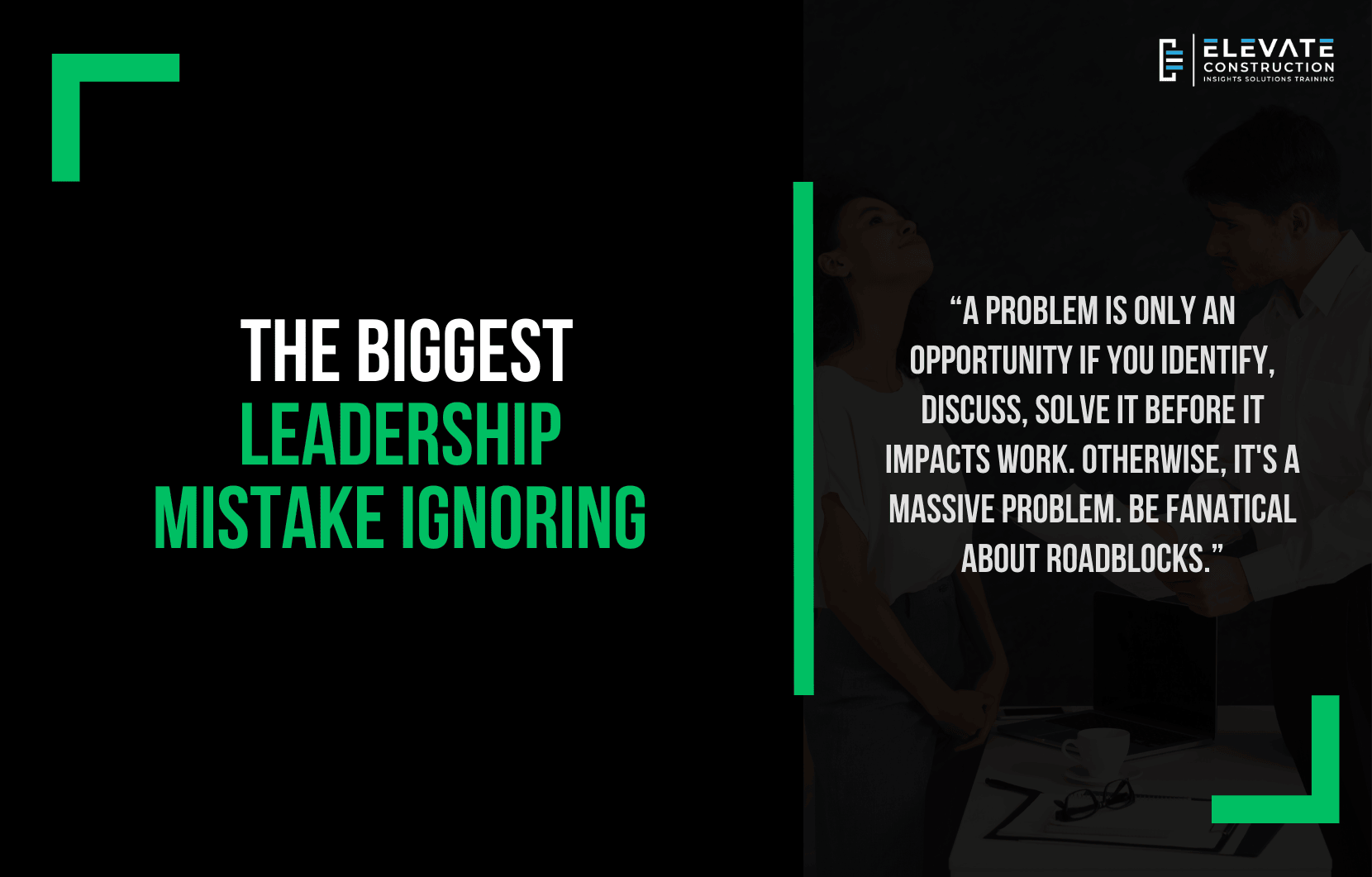
A problem is only an opportunity if you identify, discuss and solve it before it impacts work. A problem is a massive problem if you are not identifying, discussing and solving it before it impacts work. That is the difference.
And so problems are not a problem if we have a culture of bringing them to the surface and solving them aggressively. Problems are a massive problem if we fear problems, think we don’t have problems and don’t go looking for problems and are trying to hide problems, because they will affect us and hurt the people we are here to protect.
Here’s the key distinction on problems:
- Problem is only an opportunity if you identify, discuss, solve it BEFORE it impacts work: “Problems are opportunities” message is positive and says don’t be afraid of problems, we can lean in and make things better. This works only if you have culture of bringing problems to surface and solving them aggressively before work gets impacted.
- Problem is a massive problem if you don’t identify, discuss, solve it BEFORE it impacts work: Some folks get into victim “this is the best we can do” mentality and fail to understand the need to solve it aggressively. A problem is actually a problem. It does impact people, especially trade partners. We must tackle this with urgency.
- Best project teams are fanatical about roadblocks: Finances of trade partner, their success, lives and well-being of our people depend on us solving these problems. Best project teams ever are fanatical about identifying, discussing and solving roadblocks. Taiichi Ono: thinking we don’t have problems is the only problem.
- Problems hurt people when we hide them: Problems are not a problem if we have culture of bringing them to surface and solving them aggressively. Problems are massive problem if we fear problems, think we don’t have problems, don’t go looking for problems, try to hide problems. They will affect us and hurt the people we are here to protect.
If your project needs superintendent coaching, project support, or leadership development, Elevate Construction can help your field teams stabilize, schedule, and flow.
A Challenge for Construction Leaders
Here’s what I want you to do this week. Stop saying “We have an opportunity” when you mean “We have a problem that needs urgent attention.” Be fanatical about identifying, discussing and solving roadblocks before they impact work. That’s when a problem is an opportunity. After it impacts work, it’s a massive problem.
Understand that the finances of the trade partner, their success, and the lives and well-being of our people depend on us solving these problems. Don’t get into victim “this is the best we can do” mentality. Tackle problems with urgency. Bring them to the surface. Solve them aggressively. Don’t fear problems. Don’t think we don’t have problems. Don’t hide problems.
As Taiichi Ono said: thinking we don’t have problems is the only problem. So go looking for problems. Identify them. Discuss them. Solve them before they impact work. That’s when problems become opportunities. That’s when problems are not a problem. As we say at Elevate, a problem is only an opportunity if you identify, discuss, solve it before it impacts work. Otherwise, it’s a massive problem. Be fanatical about roadblocks.
On we go.
Frequently Asked Questions
What’s the difference between “problems are opportunities” and “a problem is actually a problem”?
A problem is only an opportunity if you identify, discuss, and solve it before it impacts work. A problem is a massive problem if you are not identifying, discussing, and solving it before it impacts work. That is the difference.
Why is the “problems are opportunities” mindset dangerous?
Because some folks get into victim “this is the best we can do” mentality and fail to understand the need to solve it aggressively. A problem is actually a problem. It impacts people, especially trade partners. We must tackle with urgency.
What did Taiichi Ono say about problems?
Taiichi Ono talked about where problems are not a problem. Thinking that we don’t have problems is the only problem. Best project teams are fanatical about identifying, discussing and solving roadblocks.
Why must general contractors understand that problems are actually problems?
Because the finances of the trade partner, their success, and the lives and well-being of our people depend on us solving these problems. If we don’t understand this, we’re in big trouble.
When are problems not a problem?
Problems are not a problem if we have a culture of bringing them to the surface and solving them aggressively before they impact work. Problems are massive problem if we fear, hide, or ignore them.
If you want to learn more we have:
-Takt Virtual Training: (Click here)
-Check out our Youtube channel for more info: (Click here)
-Listen to the Elevate Construction podcast: (Click here)
-Check out our training programs and certifications: (Click here)
-The Takt Book: (Click here)
Discover Jason’s Expertise:
Meet Jason Schroeder, the driving force behind Elevate Construction IST. As the company’s owner and principal consultant, he’s dedicated to taking construction to new heights. With a wealth of industry experience, he’s crafted the Field Engineer Boot Camp and Superintendent Boot Camp – intensive training programs engineered to cultivate top-tier leaders capable of steering their teams towards success. Jason’s vision? To expand his training initiatives across the nation, empowering construction firms to soar to unprecedented levels of excellence.
On we go