Your Customer Is the Hero (Not You)
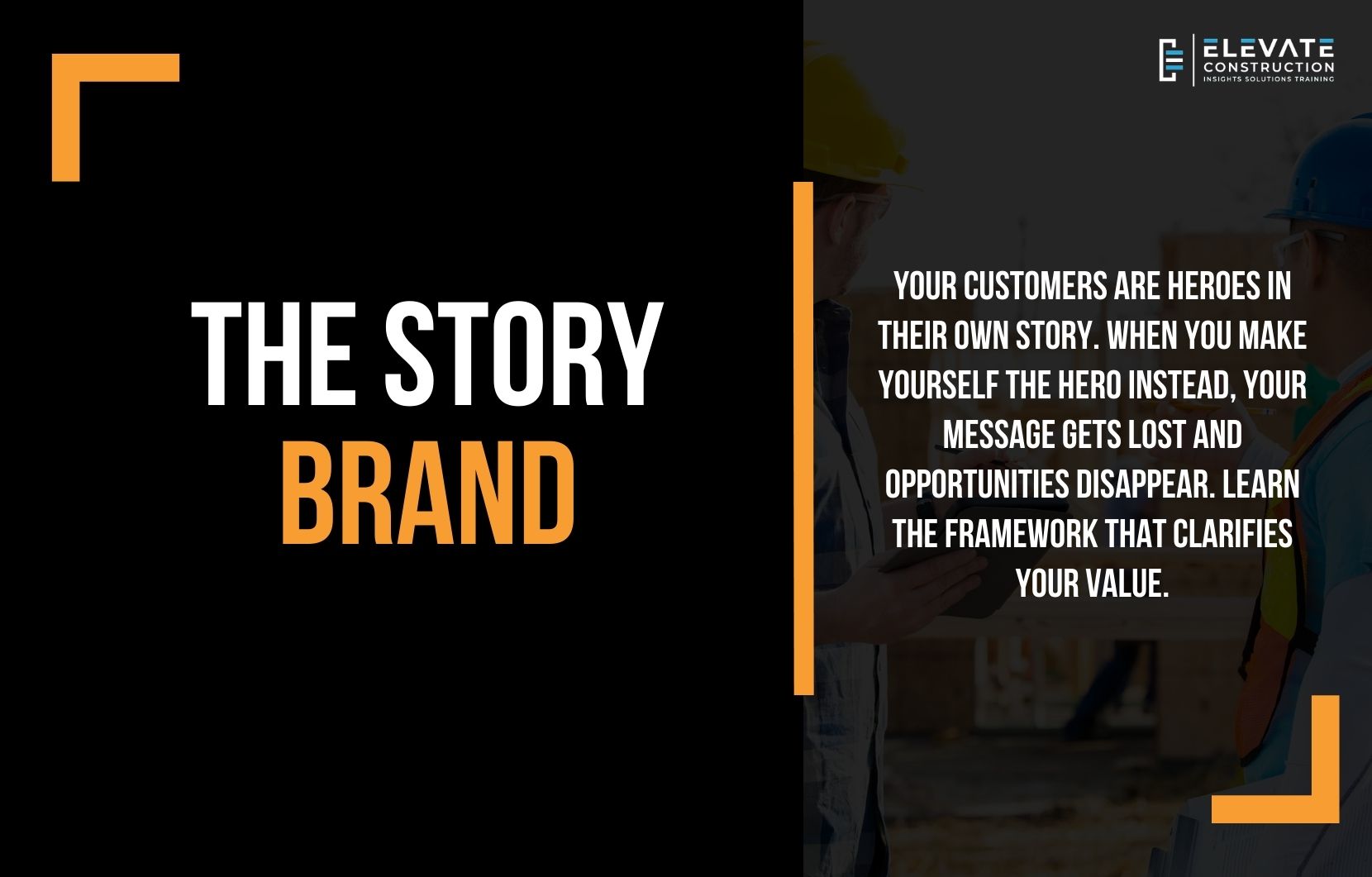
Here’s the mistake that’s costing you clients and clarity. You’re telling stories where you’re the hero. Your proposals talk about your company, your capabilities, your track record, your systems. Your presentations showcase your accomplishments. Your marketing highlights what makes you great. And while you’re busy being impressive, your customer is wondering what any of this has to do with them and the problems they’re trying to solve.
The truth is that every customer sees themselves as the hero of their own story. They have a mountain to climb, obstacles to overcome, and goals they’re trying to reach. And when you position yourself as the hero, you’re competing with them for the main character role in a story that was never yours to begin with. You’ve confused your role. You’re not the hero. You’re the guide. And until you understand that distinction, your message will continue to get lost.
I learned this from a book called “Building a StoryBrand” by Donald Miller. It completely changed how I think about communication, proposals, training, and every interaction where I’m trying to help someone understand what I offer and why it matters. The framework is simple. The application is profound. And the mistake of ignoring it costs more than most people realize.
The Pain of Confused Messaging
You’ve experienced this from the customer side. Someone pitches you their services, and you sit through thirty minutes of them talking about themselves. How long they’ve been in business. How many projects they’ve completed. How sophisticated their systems are. How impressive their team is. And somewhere around minute twenty, you start wondering when they’re going to talk about you and your actual problems.
That’s what happens when we make ourselves the hero. We talk about our journey, our challenges, our victories. We showcase our credentials and capabilities. And we completely miss the fact that the customer doesn’t care about our story unless it connects directly to theirs. They’re not looking for a hero. They already are the hero. They’re looking for a guide who can help them succeed in their story.
I’ve done this badly countless times. Early in my career, I’d walk into proposals talking about Elevate Construction and what we do and how great our systems are. I’d present our credentials and case studies and methodologies. And I’d watch eyes glaze over because I was making it about me instead of about them. The shift happened when I started positioning the customer as the hero and myself as the guide who helps heroes succeed.
The System Doesn’t Teach Story Structure
Here’s what I want you to understand. Most of us never learned how to communicate using story structure. We learned how to present facts and features and capabilities. We learned how to showcase our qualifications. We learned how to describe what we do. But we never learned how human brains actually process information and make decisions.
Humans are wired for story. Every movie you’ve ever watched, every book you’ve ever read, every compelling message you’ve ever heard follows the same basic structure. There’s a hero who wants something. There’s a problem preventing them from getting it. There’s a guide who shows them the path. There’s a plan that gives them confidence. There’s a call to action that moves them forward. And there’s either success or failure at the end depending on whether they take action.
That structure isn’t arbitrary. It’s how our brains organize information and make sense of the world. And when you communicate using that structure, with the customer positioned correctly as the hero, your message becomes instantly clearer and more compelling. But when you violate that structure by making yourself the hero, you create confusion and your message gets lost.
The construction industry doesn’t teach this. We teach technical skills and project management and safety. But we don’t teach people how to clarify their message so customers understand exactly what you’re offering and why it matters to their specific situation. And that’s the system failure that’s costing opportunities every single day.
The StoryBrand Framework That Clarifies Everything
Let me walk you through the framework that changed how I communicate. It comes from Donald Miller’s book “Building a StoryBrand,” and it’s built on seven core principles that align with how stories actually work and how human brains process information.
First, a character wants something. Your customer is the character. They want to solve a problem, achieve a goal, reach a destination. Maybe they want to deliver a project on time without burning out their team. Maybe they want to develop field leaders who can run jobs independently. Maybe they want to eliminate rework and create predictable flow. The point is to get crystal clear on what your specific customer wants, not what you think customers in general might want.
Second, encounters a problem. Every hero has a villain. The villain doesn’t have to be a person, but it should have personified characteristics. It should be a root source, relatable, singular, and real. For Elevate Construction, the villain is waste and variation and ignorance. Anything that disrespects people and hurts families. Anything that creates chaos instead of flow. I’m not fighting against superintendents or companies. I’m fighting against the systems and patterns that destroy projects and people. That’s the villain in my customers’ stories.
Third, meets a guide. This is where you come in. You’re not the hero. You’re the guide who helps the hero succeed. Think about every story you know. Luke Skywalker had Yoda. Frodo had Gandalf. Every hero needs a guide who’s been where they’re going and knows the path. That’s your role. Position yourself as the experienced guide who understands the hero’s problem and has a plan to solve it.
Fourth, who gives them a plan. Customers trust a guide who has a plan. Not vague promises. Not generic capabilities. A specific, simple, implementable plan that shows them exactly how you’ll help them succeed. This might be a process plan that describes the steps they need to take to work with you. Or a post-purchase plan that shows them how they’ll use what you provide after they buy it. The key is making it tangible and tailored to their specific situation, their culture, their capacity.
Fifth, calls them to action. People will not take action unless they’re challenged to do so. This is critical. You can’t just present your services and hope people figure out the next step. You have to clearly call them to action. Schedule a discovery call. Attend a bootcamp. Implement this system. The call needs to be specific and direct. Think about every movie where the mentor pushes the hero to take the next step. That’s your job.
Sixth, that helps them avoid failure. People are more motivated to avoid loss than to pursue gain. You need to clearly show what failure looks like if they don’t take action. What happens to their project if they continue with current patterns? What happens to their people if they don’t develop better systems? What cost do they pay by staying stuck? This isn’t fear-mongering. This is honest clarity about stakes that matter.
Seventh, and results in success. Every story needs a clear, measurable win at the end. Your customer needs to see what success looks like when they work with you. Not vague improvement. Specific, tangible outcomes they can measure and celebrate. Projects delivered on time without burnout. Field leaders who can run jobs independently. Teams that flow instead of firefight. Make the win crystal clear.
Here’s what this looks like when applied to your work:
- Proposals that position the customer as the hero solving their specific problem with you as the experienced guide • Presentations that focus on the customer’s journey and challenges rather than your credentials and capabilities
• Training that treats participants as heroes developing skills to overcome real villains in their work • Marketing that clarifies exactly what problem you solve and what success looks like for people who work with you
This isn’t manipulative storytelling. This is clarifying communication that aligns with how human brains actually process information and make decisions.
Why This Framework Transforms Everything
The day we stop losing sleep over the success of our business and start losing sleep over the success of our customers is the day our business will start growing again. That’s the mindset shift this framework creates. It forces you to get intimately involved in your customer’s success instead of just promoting your own capabilities.
Think about Field Engineer Bootcamp as an example. The field engineer is the hero. Their families and careers are what’s at stake. Wasted time and ignorance and ineffective systems are the villains. We position ourselves as guides who’ve been where they’re going. We give them a clear plan: three sets of survey points and drawings to build two footings in four days. We call them to action repeatedly throughout the experience. We help them avoid the failure of remaining technically unprepared for leadership. And we create a clear, measurable success: they complete the challenge and become different people.
Every day is themed. They know they’re the hero. They have guides helping them succeed. Everything fits into a story structure that makes sense to their brains and creates transformation. That’s not accidental. That’s intentional application of story principles to create clarity and motivation.
If your project needs superintendent coaching, project support, or leadership development, Elevate Construction can help your field teams stabilize, schedule, and flow. We work with builders who understand that you’re the hero of your story, and we’re here as experienced guides to help you succeed in ways that protect your people and deliver exceptional results.
I use this framework in proposals, presentations, podcasts, trainings, and every situation where I need people to understand what I offer and why it matters to them specifically. Not because I’m trying to manipulate them but because I genuinely care about their success as the heroes of their own stories. And when you actually, emotionally and intellectually and physically care about what the hero is trying to accomplish, this framework helps you communicate that care with clarity.
The Challenge: Make Your Customer the Hero
So here’s my challenge to you. Read “Building a StoryBrand” by Donald Miller. Download the free resources and worksheets. Apply the framework to one proposal or presentation this week. Position your customer as the hero. Identify their specific villain. Offer yourself as the guide. Give them a clear plan. Call them to action. Show them what failure and success look like.
And most importantly, actually care about their story. Don’t just use this framework as a technique. Use it as a tool to clarify how much you genuinely want them to succeed. Because the best guides aren’t the ones with the cleverest messaging. They’re the ones who lose sleep over whether their heroes are going to make it.
We are all designed for and deserve to live remarkable lives. Putting our services and processes into story structure shows customers how they can be the heroes who ultimately win. And when you help enough heroes succeed, you build something that matters far more than impressive credentials or sophisticated systems. You build trust, loyalty, and transformation.
As Antoine de Saint-Exupéry wrote, “If you want to build a ship, don’t drum up people to collect wood and don’t assign them tasks and work, but rather teach them to long for the endless immensity of the sea.” Don’t just tell customers what you do. Help them see themselves as heroes accomplishing something meaningful, and position yourself as the guide who helps them get there.
On we go.
Frequently Asked Questions
How is making customers the hero different from just good customer service?
Customer service responds to needs. Making customers the hero means understanding their entire story: what they want, what’s blocking them, what success looks like, what failure costs. It’s about positioning everything you offer as tools and guidance that help them succeed in their journey, not just responding when they ask for something.
What if my services or products are genuinely better than competitors?
That’s great, but customers don’t care about your superiority until they understand how it helps them specifically. Lead with their problem and their desired outcome. Then show how your superior capabilities make you the best guide to help them achieve that outcome. Features matter only when connected to their story.
How do I identify the villain in my customer’s story?
Look for the root source of their frustration. It’s not just schedule delays. It’s the waste and chaos that create delays and destroy families. It’s not just poor quality. It’s the rework and blame that disrespect people and damage reputations. The villain should be relatable, singular, and something they genuinely want to defeat.
Can I use this framework for internal communication and training?
Absolutely. Treat your team members as heroes developing skills to overcome real obstacles. Position yourself as a guide with experience and a plan. Call them to action clearly. Show them what success looks like. Story structure works for any communication where you need people to understand something and take action.
What if I’m uncomfortable positioning myself as a guide because I don’t feel expert enough?
Being a guide doesn’t mean being perfect. It means having experience with the journey your customer is starting. You’ve encountered their obstacles before. You’ve learned from mistakes. You have a plan that works. That’s enough to guide someone who hasn’t been where you’ve been, even if you’re still learning yourself.
If you want to learn more we have:
-Takt Virtual Training: (Click here)
-Check out our Youtube channel for more info: (Click here)
-Listen to the Elevate Construction podcast: (Click here)
-Check out our training programs and certifications: (Click here)
-The Takt Book: (Click here)
Discover Jason’s Expertise:
Meet Jason Schroeder, the driving force behind Elevate Construction IST. As the company’s owner and principal consultant, he’s dedicated to taking construction to new heights. With a wealth of industry experience, he’s crafted the Field Engineer Boot Camp and Superintendent Boot Camp – intensive training programs engineered to cultivate top-tier leaders capable of steering their teams towards success. Jason’s vision? To expand his training initiatives across the nation, empowering construction firms to soar to unprecedented levels of excellence.