
Lean as a Human Development Strategy: The Leadership Shift That Changes Everything
There is a framing of Lean that has been gaining ground among the practitioners who have been at it the longest and seen the most implementations succeed and fail. Lean is a human resources development strategy that masquerades as an operations strategy. The operations improvements, better flow, less waste, more reliable commitments, faster handoffs are real and important. But they are the output of something more fundamental: a culture in which people are engaged in making their work better for themselves, for each other, for the customer, and for the organization. When leaders put people at the center of their attention, the operations improvements follow naturally. When leaders pursue the operations improvements without putting people at the center, the improvements are temporary.
This blog is about what Lean leadership looks like when it starts from that premise.
The Learning Cycle Starts with Study
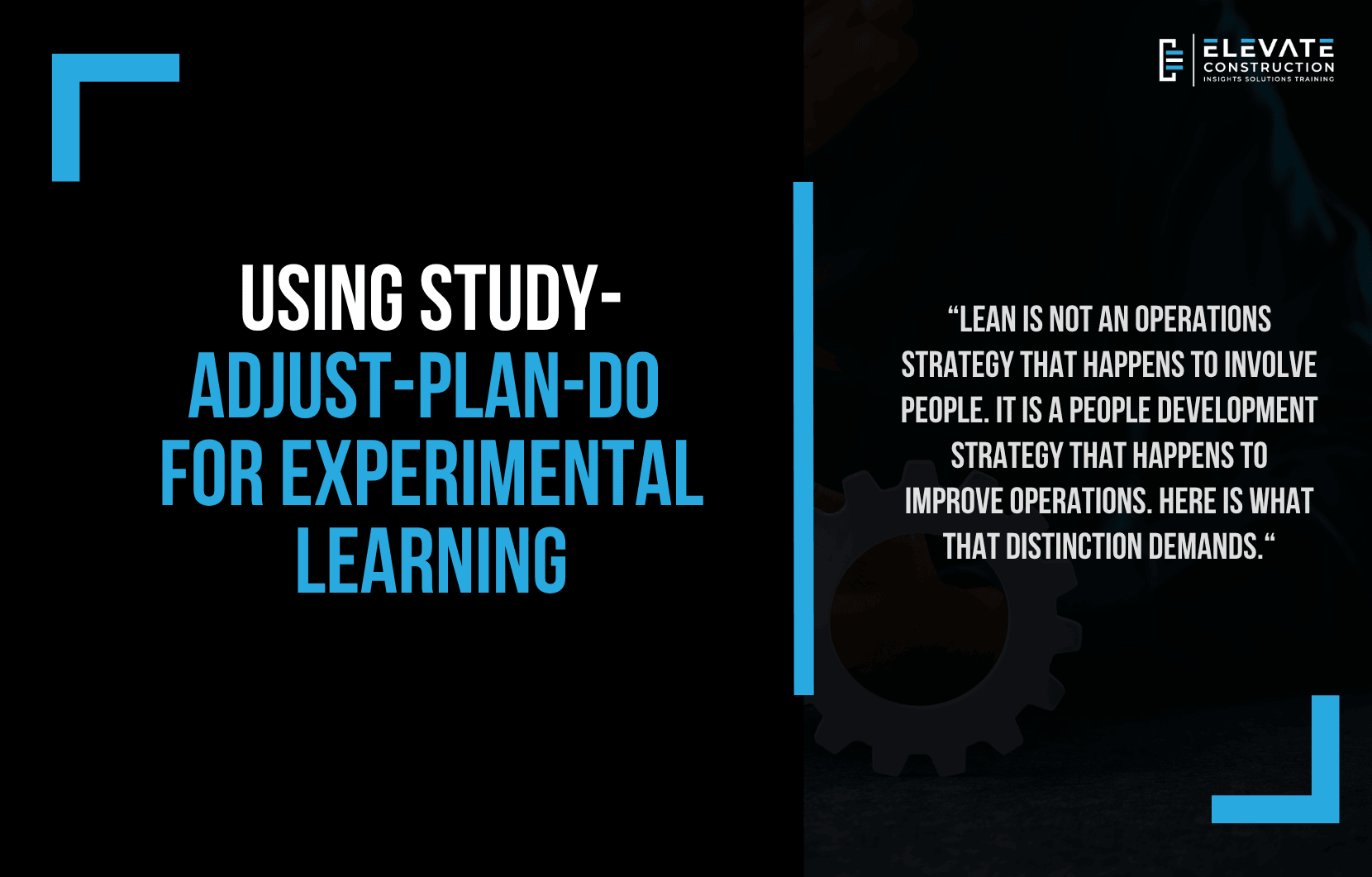
The standard framing of PDCA places Plan at the beginning of the cycle. The premise is that the practitioner knows enough at the outset to choose a good experiment. In most real situations, that premise does not hold. Beginning with Study SAPD rather than PDCA is more honest about the actual conditions at the start of any improvement effort.
Study starts by examining the gap between the current condition and the next target condition. What is the standard work? How well is the current approach performing? What difficulties appear? What variation is being encountered? This examination grounds the improvement effort in reality rather than in assumption, and it makes the subsequent Plan more honest about what an experiment can actually test.
From that study, a target condition is set not the final destination, but the next step. An ambitious long-term goal is useful for direction. The experiment needs a target that is achievable enough to be tested in a reasonable time frame. Between where the team is now and where it ultimately wants to be, there is a next step. That next step is the target condition for the current experiment.
The Plan phase then establishes a hypothesis: where are we now, what specific change will we take, why do we think that action will be a step forward, and what do we expect to learn? These four questions turn the plan into a genuine scientific experiment rather than a confident guess. And because the hypothesis makes the expectation explicit, the Study phase after the experiment can compare what was expected against what actually happened and extract genuine learning from the gap.
One common trap in the Plan phase is trying to plan a series of actions rather than a single next experiment. The attempt to figure out in advance which sequence of actions will work most efficiently is usually a form of avoidance staying in the planning space rather than entering the learning space. The learning happens in the Do phase. The most productive thing a team can do is get into action quickly rather than trying to think their way to a solution.
Listening as a Leadership Skill
The Lean leader’s contribution to an experimental learning culture is not primarily methodological. It is relational. Three skills matter most: listening, engaging others’ thinking and action, and coaching.
Listening is the master skill. It requires deliberate, concerted practice not because listening is technically complex, but because the instinctive mode of leadership is to advocate for positions, provide direction, and give advice. Listening requires temporarily setting that instinct aside. The listening leader uses inquiry rather than advocacy, asking questions that help people express their concerns and articulate the possibilities they see. The leader’s advocacy, when it comes, encourages advocacy from the people being supported, it creates space for honest input rather than filling that space with the leader’s own conclusions.
What leaders listen for matters. Information is often the least useful thing in a conversation. More important is the mood of the people whether what they are expressing sounds like aspiration or resignation, confidence or fear, energy or depletion. A person who is exhausted or discouraged will not experiment effectively regardless of how good the methodology is. A leader who attends to mood has early information about what the team needs that a leader listening only for content will miss entirely.
Engaging people requires patience and persistence, especially with those who hold back. Some people are introverted. Some are carrying something outside of work that is consuming their attention. Some have been in environments where speaking up led to bad outcomes, and they need time to trust that this environment is different. The Lean leader who shows up as help rather than as authority who focuses on what is already important to the person, not on what the leader needs from them creates the conditions under which engagement eventually develops.
Coaching Over Advising
Coaching has become increasingly recognized as a critical leadership skill, but the most common misunderstanding of coaching is that it is sophisticated advice-giving. It is not. Coaching is the practice of asking questions that help the person being coached think through their own situation, identify their own next step, and commit to their own action rather than receiving the leader’s solution to their problem.
Michael Bungay Stanier’s seven questions from The Coaching Habit provide an accessible and immediately practical framework:
What’s on your mind? And what else? What’s the real challenge here for you? What do you want? How can I help? If you’re saying yes to this, what are you saying no to? What was most useful for you?
These questions work because they move the conversation from the leader’s analysis of the situation to the person’s own. They surface what is actually on the person’s mind rather than what the leader assumes is there. They get to the real challenge rather than the presenting symptom. And they make the help the leader can provide responsive to what the person actually needs rather than to what the leader would do in their position.
One important note: coaching is not giving advice. That misunderstanding is common enough that Stanier wrote an entire follow-up book, The Advice Trap specifically to address it. The impulse to give advice feels helpful. It often prevents the person being coached from developing the capacity to solve the problem themselves which is the actual point of the coaching relationship.
Here are the signals that a leader is coaching effectively rather than advising:
- The person being coached leaves the conversation with their own next step, not the leader’s recommendation.
- The leader asks more questions than they make statements during the conversation.
- The person being coached does most of the talking.
- The conversation ends with the person more clear about their situation than when it started.
- The leader resists the urge to share what they would do even when asked directly, instead turning the question back.
What Lean Leadership Actually Produces
When leaders practice experimental learning, deep listening, and genuine coaching rather than directing, something shifts in the people around them. They start engaging with their work differently. They surface problems rather than hiding them. They generate improvement ideas rather than waiting to be told what to change. They develop the skills of problem-finding, problem-solving, and making effective change skills that the organization accumulates as they develop.
This is the leverage point of Lean leadership. Individual productivity improvements are important. They are also finite and temporary if they exist only in the system design. But people who have learned to find problems, solve them, and make change that holds those people improve every system they encounter, project after project, year after year. The investment in their development compounds in a way that no single process improvement ever could.
This is why Lean, properly understood, is a human development strategy. The operations improvements are real. They are the evidence that the human development is working. When leaders put people at the center of their attention, firms resolve their engagement problem, their inclusivity problem, and create a workplace that is genuinely more worthwhile for the people doing the work, not as a side effect, but as the primary purpose.
At Elevate Construction, everything, the boot camps, the field implementation support, the free content, the coaching engagements exists in service of that purpose. Build remarkable people. The remarkable things follow. If your project needs superintendent coaching, project support, or leadership development, Elevate Construction can help your field teams stabilize, schedule, and flow.
Embrace Lean as what it actually is: a people development strategy that, as a natural consequence, produces better operations.
On we go.
Frequently Asked Questions
Why start the improvement cycle with Study rather than Plan?
Because it is naive to assume we know enough at the outset to choose a good experiment. Starting with Study grounds the improvement effort in the actual current conditions rather than in assumptions, which makes the subsequent Plan more honest and the experiment more likely to generate genuine learning.
What is the difference between listening for information and listening for mood?
Information is what is said. Mood is how the person is oriented whether they are expressing aspiration or resignation, confidence or fear, energy or depletion. Mood tells the leader what the person needs from the environment to be able to engage effectively with the work, which is often more important than the content of what is being communicated.
Why is giving advice the wrong response in a coaching conversation?
Because advice substitutes the leader’s solution for the person’s own thinking. It may solve the immediate problem while preventing the person from developing the capacity to solve similar problems themselves. Coaching builds that capacity. Advice bypasses it.
What does “Lean is a human development strategy” mean in practice?
It means that the primary investment of Lean leadership is in developing people’s capacity to find problems, solve them, and make effective change and that the operations improvements follow from that investment rather than being pursued directly. When people develop those capacities, every system they touch improves continuously.
How does coaching differ from mentoring or managing?
Managing directs performance against defined expectations. Mentoring shares the mentor’s experience and knowledge. Coaching asks questions that help the person being coached think through their own situation and identify their own next step. All three have value coaching is specifically designed to develop the person’s own thinking and problem-solving capacity rather than transferring the leader’s.
If you want to learn more we have:
-Takt Virtual Training: (Click here)
-Check out our Youtube channel for more info: (Click here)
-Listen to the Elevate Construction podcast: (Click here)
-Check out our training programs and certifications: (Click here)
-The Takt Book: (Click here)
Discover Jason’s Expertise:
Meet Jason Schroeder, the driving force behind Elevate Construction IST. As the company’s owner and principal consultant, he’s dedicated to taking construction to new heights. With a wealth of industry experience, he’s crafted the Field Engineer Boot Camp and Superintendent Boot Camp – intensive training programs engineered to cultivate top-tier leaders capable of steering their teams towards success. Jason’s vision? To expand his training initiatives across the nation, empowering construction firms to soar to unprecedented levels of excellence.
On we go