Mottainai: Eliminating Waste the Japanese Way
I love writing about mindset, and this blog is one of my favorites because the concept of mottainai, meaning “what a waste” or “it’s a shame to waste,” has genuinely changed the way I live and work. This isn’t something I learned in theory. It’s a lesson that came from real experience and a personal shift in how I view value, resources, and responsibility.
My Wake-Up Call With Waste
Years ago, when I was working for a general contractor as a director, we made massive improvements. We created field engineer bootcamps, superintendent and PM bootcamps, strengthened scheduling, improved survey operations, and elevated field systems across the board. It was meaningful work and we invested heavily in doing things right.
The CFO once told me he knew my salary was expensive, but he didn’t expect me to spend a million dollars on top of that. And he wasn’t wrong. If we needed supplies, I bought them. If we ran a bootcamp, I went all out. It grew the business but also created waste. A lot of waste.
At home, I had the exact same habit for more than a decade. I would rather replace something completely than maintain or preserve it. But now, for the first time in 10 to 15 years, I’m changing that mindset. I’m repainting instead of rebuilding, repairing instead of replacing, preserving instead of discarding. I’m packing straps so they last longer, fixing trailer floorboards, maintaining the boat upholstery rather than buying new. It sounds simple, but for me, it’s a major shift.
Living a lean life instead of simply talking about it has helped me embrace mottainai in a meaningful way.
What Japan Taught Me About Preservation
My trip to Japan transformed the way I think about waste. Japan is the cleanest and most considerate country I have ever visited. Everything feels intentional. Everything feels cared for. Old buildings are preserved with pride. Stone exteriors allow moss to grow in elegant patterns. Wooden structures are repaired and refinished, not demolished and replaced.
In the United States, we often tear things down because they are not pristine or new. Japan keeps things alive by maintaining them continuously. Clean sidewalks, restored bridges, refinished woodwork, and preserved architecture all reflect a cultural mindset of respect and care.
Even their daily habits show it. Smaller meals. Eating to 80 percent full. Finishing what is on their plate. And remarkably, almost no visible trash despite almost no public trash cans. Instead of managing large amounts of waste, they focus on not producing waste in the first place.
This is mottainai in action, and it is powerful.
Bringing Mottainai Into Construction
Construction is one of the most waste-heavy industries in the world. Materials come into the building, get cut and modified, and a significant percentage leaves as trash headed for landfills.
I remember finishing a project in Victorville, California. My dad built an entire barn, a massive one, using leftover siding and structural components that the project planned to throw away. Those materials were considered trash. He turned them into a fully functioning structure.
If we embraced mottainai on our projects, everything would change. We would prefab more. We would pre-kit more. We would pre-cut and preassemble more. We would reuse packaging materials instead of discarding them. We would recycle reinforcing instead of tossing it. We would create less food waste. And we would use materials responsibly, not carelessly.
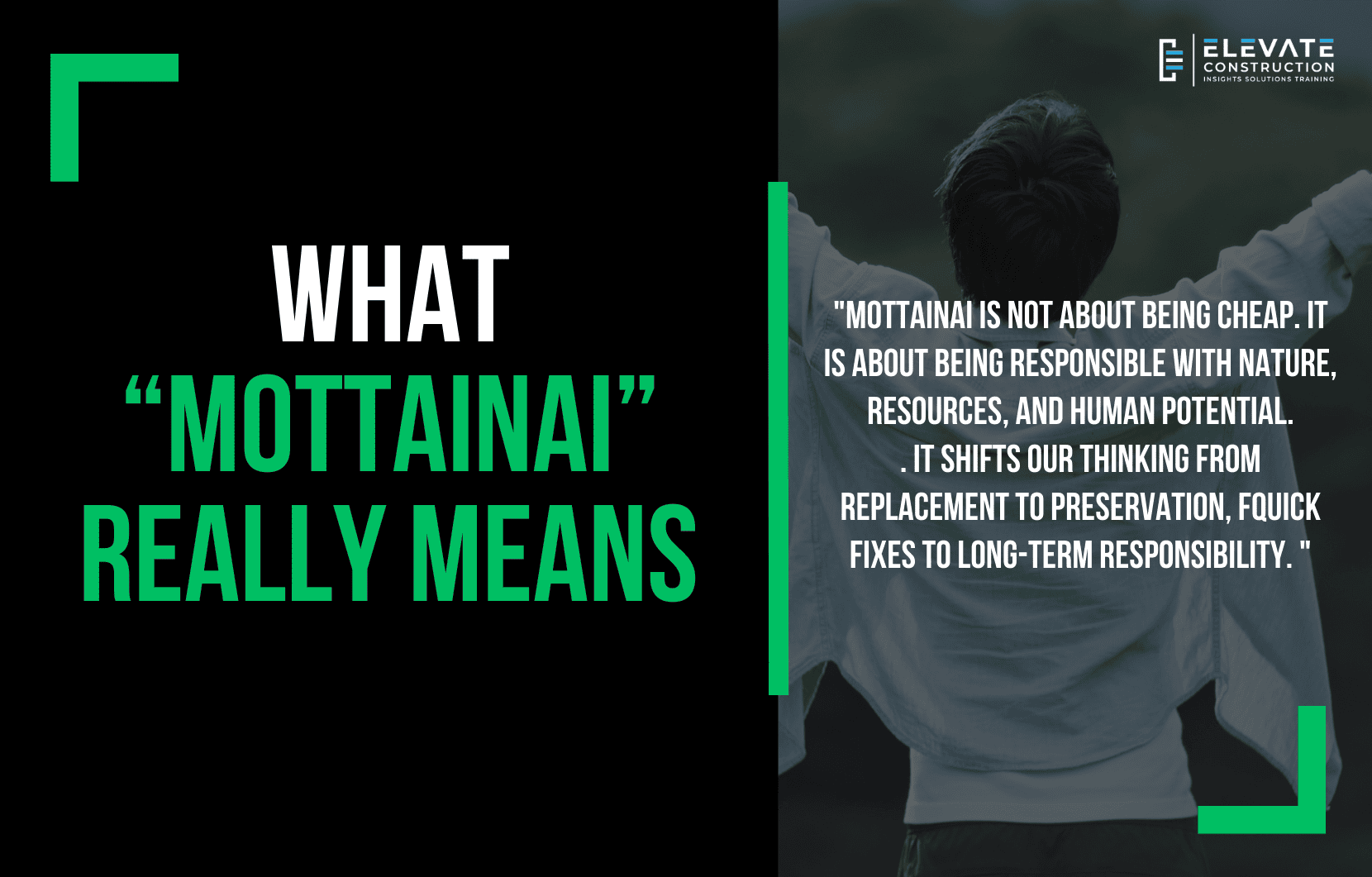
Mottainai is not about being cheap. It is about being responsible with nature, resources, and human potential.
A Mindset Worth Teaching
Imagine sharing this mindset during daily worker huddles. Imagine crews viewing waste as something unacceptable, something to avoid, something that deserves attention rather than indifference. Imagine them treating every material, every resource, and every hour of labor as valuable.
That is the power of mottainai. It shifts our thinking from replacement to preservation, from consumption to stewardship, from quick fixes to long-term responsibility.
I am sharing this blog because this concept has the power to transform individuals, teams, and entire project cultures. I invite you to learn more about mottainai and consider how it can shape the way you lead, build, and live.
If you want to learn more we have:
-Takt Virtual Training: (Click here)
-Check out our Youtube channel for more info: (Click here)
-Listen to the Elevate Construction podcast: (Click here)
-Check out our training programs and certifications: (Click here)
-The Takt Book: (Click here)
Discover Jason’s Expertise:
Meet Jason Schroeder, the driving force behind Elevate Construction IST. As the company’s owner and principal consultant, he’s dedicated to taking construction to new heights. With a wealth of industry experience, he’s crafted the Field Engineer Boot Camp and Superintendent Boot Camp – intensive training programs engineered to cultivate top-tier leaders capable of steering their teams towards success. Jason’s vision? To expand his training initiatives across the nation, empowering construction firms to soar to unprecedented levels of excellence.
On we go