The Superintendent Who Hesitated for Four Seconds
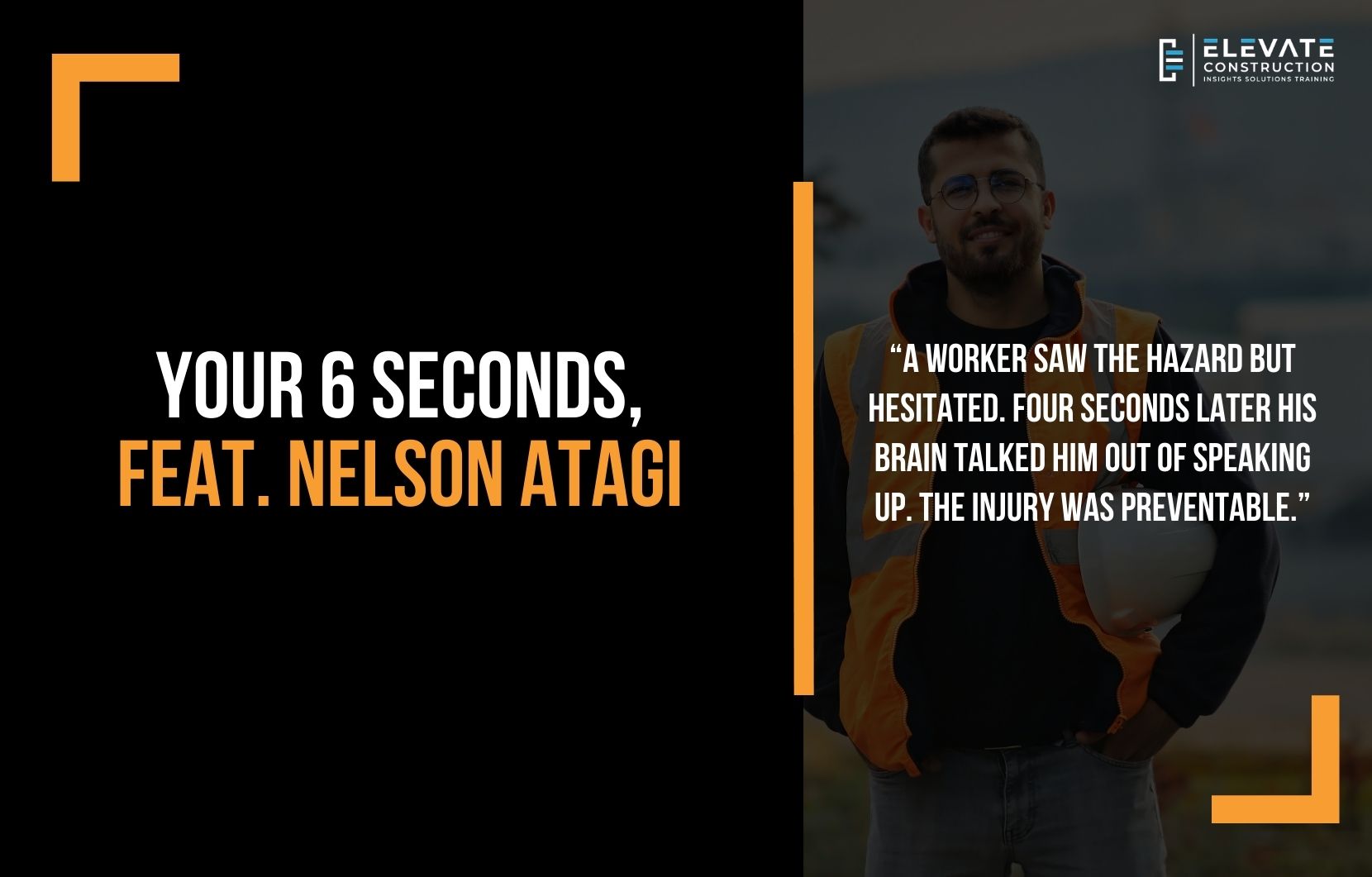
There is a superintendent who sees a worker step onto scaffolding that looks unstable. Something is wrong. The planks are not secured properly. The guardrails are incomplete. And the worker is about to climb three stories up. The superintendent knows he should say something. He starts to open his mouth. But then his brain kicks in. I am too busy. I do not want to upset the foreman. It is probably fine. Someone else will catch it. Four seconds pass. The superintendent walks away. And thirty minutes later the scaffolding collapses. The worker falls. Broken bones. Concussion. Weeks in the hospital. Months of recovery. And a family that almost lost a husband and father. The superintendent replays that moment over and over. He saw the hazard. He knew what to do. But he hesitated for four seconds. And four seconds was enough time for his brain to talk him out of doing the right thing. The injury was completely preventable. All it would have taken was six seconds to speak up.
Here is what happens when people hesitate instead of act. A foreman sees a coworker struggling. Depression. Exhaustion. Signs of burnout. And he thinks I should check on him. But then the brain starts. He probably does not want to talk. I do not know what to say. I have too much on my plate. Four seconds pass. And the foreman moves on. Days later that coworker quits. Or worse, has a breakdown. Or goes home and takes his frustration out on his family. And the foreman wonders why he did not just take six seconds to say how are you doing and actually listen to the answer. A project manager sees his kid dancing in the living room. He thinks I should join her. But then the brain intervenes. I am tired. I have emails to answer. She will be fine playing by herself. Four seconds pass. And he walks to his office. Years later his daughter is grown and he realizes he missed thousands of six-second moments because he let his brain talk him out of being present.
The real pain is the compounding loss. Every time you see someone who needs help and walk away, you lose an opportunity to make a difference. Every time you notice a hazard and stay silent, you risk someone getting hurt. Every time your spouse reaches out and you are too busy, you damage your marriage. Every time your kid wants attention and you choose work instead, you miss a moment you can never get back. These are not dramatic failures. These are quiet tragedies. Six seconds to call someone. Six seconds to say hello and mean it. Six seconds to speak up about safety. Six seconds to hug your kid. Six seconds to tell your spouse you love them. Six seconds to check on a coworker. But your brain will talk you out of all of it in four seconds if you let it. And the cumulative effect of letting those six-second opportunities pass is a life filled with regret and relationships that never reached their potential.
The failure pattern is predictable. Someone sees an opportunity to do the right thing. Their gut tells them to act. But then the rational brain kicks in with excuses. I am too busy. It is not my responsibility. Someone else will handle it. I do not have time. They probably do not want help. Four seconds pass. And the moment is gone. This happens dozens of times every day. Opportunities to serve others. Opportunities to prevent harm. Opportunities to build relationships. All lost because people hesitate long enough for their brain to talk them out of action. The system failed them by never teaching that the decision must be made before the moment arrives. Because if you wait until the moment to decide, your brain will always find a reason not to act.
Nelson Otagi tells a story about two Marines who understood this principle completely. In Ramadi in 2008, two Marines named Jonathan Yale and Jordan Herder were guarding a gate. Behind them slept one hundred Iraqi soldiers and fifty U.S. Marines. A truck appeared at the end of the alley and started barreling toward the gate. The Marines knew immediately what was happening. They did not hesitate. They did not debate. They raised their weapons and started firing. The Iraqi soldiers fired for two seconds and then ran. But Yale and Herder stood their ground. They kept firing. Alone. For six seconds total from the moment the truck appeared until it exploded. Those six seconds saved one hundred fifty lives. But it cost them theirs. General Kelly analyzed the footage frame by frame. First second: they raised weapons and fired. Seconds two and three: they continued firing while Iraqi soldiers fled. Seconds four and five: they stood alone still firing. Sixth second: explosion. They did not think. They did not debate. They acted. Because their decision was already made before the truck appeared.
This matters because construction needs people who act in six seconds instead of hesitating for four. Workers need leaders who speak up about hazards immediately instead of walking away. Families need parents who choose presence over distraction. Teams need coworkers who check on each other instead of assuming someone else will. And all of it requires pre-deciding. The Marines who saved one hundred fifty lives did not make their decision in the moment. They made it during training. They made it when they took the oath. They made it every day they put on the uniform. So when the truck appeared, there was no debate. There was only action. That is what construction leaders must do. Pre-decide that you will speak up about safety. Pre-decide that you will check on struggling coworkers. Pre-decide that you will be present with your family. Because if you wait until the moment to decide, your brain will talk you out of it in four seconds. But if you decide now, you can act in six seconds and change someone’s life.
Signs You Are Letting Six Seconds Pass
Watch for these patterns that signal you are hesitating when you should be acting:
- You see safety hazards but walk away because speaking up feels uncomfortable or you assume someone else will handle it
- Coworkers show signs of burnout or struggle but you do not check on them because you do not know what to say
- Your spouse tries to connect but you choose screens or work because you are tired and tell yourself later will be fine
- Your kids want attention but you defer because you have important tasks that seem more urgent than play
- You notice quality problems but stay silent because you do not want to slow down the schedule or upset the team
- You think about calling someone but talk yourself out of it because they are probably busy or do not want to be bothered
These are not character flaws. These are decision gaps. And they get fixed by pre-deciding instead of deciding in the moment.
What Pre-Deciding Actually Looks Like
The Marines who stood their ground for six seconds did not make a heroic decision in the moment. They made it during training. Every drill. Every exercise. Every briefing reinforced one message: your duty is to protect the people behind you regardless of cost. So when the truck appeared, their bodies acted before their brains could intervene. This is what construction leaders must learn. You cannot rely on willpower in the moment. You must pre-decide how you will act before the moment arrives. Then when your kid is dancing, your body moves before your brain can say you are too tired. When you see a hazard, your mouth opens before your brain can say it is not your problem. When a coworker is struggling, you walk over before your brain can say you do not know what to say.
Pre-deciding starts with identifying the six-second opportunities that matter most. What are the things you know you should do but consistently fail to do because your brain talks you out of them? Speaking up about safety? Checking on coworkers? Being present with family? Calling friends? Once you identify the opportunities, make the decision now. I will always speak up about hazards within six seconds of seeing them. I will always check on coworkers who seem off within six seconds of noticing. I will always stop what I am doing when my kid asks for attention within six seconds of being asked. Write it down. Say it out loud. Commit to it. Because pre-deciding removes the debate. If your project needs superintendent coaching, project support, or leadership development, Elevate Construction can help your field teams stabilize, schedule, and flow.
Then practice. The Marines train constantly so their bodies know what to do when their brains do not have time to think. Construction leaders need the same muscle memory. When you see a hazard, speak up immediately. When you think about calling someone, do it within six seconds before your brain intervenes. When your spouse reaches out, respond within six seconds. The first few times will feel awkward. Your brain will scream that you are too busy or it is not important. But if you act anyway, the muscle memory builds. And eventually six-second action becomes automatic. You see the opportunity. You act. No debate. Just like the Marines who saved one hundred fifty lives by doing what they were trained to do.
Six-Second Opportunities Happening Right Now
Every single day you encounter dozens of six-second opportunities to make someone’s life better. Here are the ones construction leaders miss most often:
- Seeing a safety hazard and speaking up immediately instead of walking away and assuming someone else will notice
- Noticing a coworker seems off and asking how are you doing and actually listening instead of assuming they are fine
- Your kid asking you to play and stopping what you are doing to engage instead of saying later and never following through
- Your spouse trying to connect and putting down your phone to be present instead of half-listening while scrolling
- Thinking about calling a friend and doing it immediately instead of adding it to your mental to-do list where it dies
- Seeing excellent work and acknowledging it within six seconds instead of taking it for granted and moving on
None of these require planning. None require resources. They just require six seconds and a pre-decided commitment to act before your brain talks you out of it.
The Four-Second Problem
Here is the science behind hesitation. Your brain will talk you out of action in approximately four seconds. You see something that needs to be done. Your gut says act. But then the rational brain kicks in. It starts generating excuses. Reasons why acting is inconvenient or uncomfortable or unnecessary. And if you let that process run for four seconds, you will talk yourself out of doing the right thing. This is why good intentions fail. People genuinely want to be better spouses, parents, coworkers, and leaders. But they wait until the moment to decide. And in that moment, their brain generates four seconds worth of excuses. And the opportunity passes.
The solution is not trying harder. The solution is eliminating the decision point. The Marines did not debate whether to stand their ground. They stood their ground because that was what Marines do. Construction leaders must adopt the same mindset. You do not debate whether to speak up about hazards. You speak up because that is what leaders do. You do not debate whether to check on struggling coworkers. You check because that is who you are. You do not debate whether to be present with family. You are present because you pre-decided that family comes first. When you eliminate the decision point, you eliminate the four seconds where your brain talks you out of action. And you free yourself to act in six seconds and change lives.
The Challenge
There is no reason to not live a remarkable life. And there is no reason not to use every six seconds you have to serve others. Jonathan Yale and Jordan Herder had six seconds. They used them to save one hundred fifty lives. You have six seconds dozens of times every day. The question is whether you will use them or let them pass. Will you speak up about the hazard or walk away? Will you check on the coworker or assume they are fine? Will you dance with your kid or choose email? Will you be present with your spouse or scroll your phone? Your brain will give you excuses. It will talk you out of action in four seconds if you let it. So do not let it. Pre-decide now who you want to be and how you want to act. Then when the moment comes, act in six seconds before your brain intervenes.
The buildings you build mean nothing if you do not take care of the people you work with and the people you love. So take the six seconds. Make the phone call. Say hello and mean it. Speak up about safety. Check on your coworker. Hug your kid. Tell your spouse you love them. Because six seconds is not a long time. But it is long enough to change everything. For you. For the people around you. And for the families who depend on you coming home whole. As Jason Schroeder said, “There’s no reason to not live a remarkable life.” So live it. Six seconds at a time. On we go.
Frequently Asked Questions
Why does the brain talk people out of action in four seconds?
The rational brain generates excuses and reasons why acting is inconvenient or uncomfortable, and if you let that process run, it overrides your gut instinct to do the right thing.
What does it mean to pre-decide instead of deciding in the moment?
Pre-deciding means committing now to how you will act in future situations, eliminating the decision point so your body acts automatically before your brain can generate excuses.
How did the two Marines save 150 lives in six seconds?
Jonathan Yale and Jordan Herder stood their ground firing at a truck bomb for six seconds while Iraqi soldiers fled, stopping the truck before it reached the sleeping soldiers behind them.
What are common six-second opportunities people miss?
Speaking up about safety hazards, checking on struggling coworkers, being present when family reaches out, calling friends, and acknowledging good work all take six seconds but get skipped due to hesitation.
How do you build six-second action into muscle memory?
Practice acting immediately when you see opportunities—speak up about hazards, respond to family, check on coworkers—until the action becomes automatic before your brain can intervene with excuses.
If you want to learn more we have:
-Takt Virtual Training: (Click here)
-Check out our Youtube channel for more info: (Click here)
-Listen to the Elevate Construction podcast: (Click here)
-Check out our training programs and certifications: (Click here)
-The Takt Book: (Click here)
Discover Jason’s Expertise:
Meet Jason Schroeder, the driving force behind Elevate Construction IST. As the company’s owner and principal consultant, he’s dedicated to taking construction to new heights. With a wealth of industry experience, he’s crafted the Field Engineer Boot Camp and Superintendent Boot Camp – intensive training programs engineered to cultivate top-tier leaders capable of steering their teams towards success. Jason’s vision? To expand his training initiatives across the nation, empowering construction firms to soar to unprecedented levels of excellence.
On we go