Stay with It! I Promise It Is Worth It!

Read 24 min

It Is Worth It: A Letter to Every Construction Leader Fighting Through the Hard Years

There was no energetic introduction on this episode. No framework to introduce. No production principle to teach. Just Jason Schroeder sitting in Houston, a little sick, a little tired, and a little overwhelmed by the beauty of an ordinary Saturday that turned out to be anything but ordinary. He had just posted two pictures on LinkedIn: one of himself in full superintendent gear, hard hat and safety vest and glasses, looking like he was conquering the world. The other of himself holding a sleeping baby on his chest on the couch, too tired to stay awake. And the response from the construction community told him something he already knew but needed to say out loud: a lot of people out there are right in the middle of those hard years, and they need someone to tell them it is worth it.

The Pain That Nobody Talks About at Work

The years between twenty and forty in construction can be genuinely brutal. The industry demands everything during the exact same window of life when a marriage is being built, children are being raised, school is being finished, a career is being established, and a family is trying to figure out what it is going to be. On any given week, a superintendent might be managing three hundred workers on a complex project during the day and coming home to a two-year-old who needs baths and bedtime stories and a spouse who needed a conversation that never happened because the phone kept ringing. The fires on both ends burn at the same temperature. And there are not enough hours.

The LinkedIn post Jason shared was simple and direct: for all of you struggling through these years, having little ones, changing diapers, staying up late, coaching and watching endless games, finishing school and establishing a life, I see you. I am cheering for you and your family. Do what you can to stay with it and the rewards will be priceless. The responses came from fathers and mothers who recognized themselves in those two photographs: the person trying to be a superhero at work and at home simultaneously, wondering sometimes if they are doing either one well enough.

The System That Never Accounts for the Full Person

Construction has always been better at measuring production than at seeing the human being producing it. The daily report tracks units installed and labor hours spent. It does not track the superintendent who has been sick for eight days and is still showing up. It does not track the project manager who took a red-eye flight to make a client meeting and missed their kid’s first soccer game. It does not track the foreman who is carrying something heavy at home and is still leading their crew with dignity and patience every morning. The system was designed to measure what can be measured, and the things that most determine whether a person can sustain the work over a full career are the things the system leaves out entirely.

That is not anyone’s fault. It is a design limitation. But naming it matters, because the leaders who understand that their people are carrying the full weight of a life, not just a job description, are the leaders who create environments where people can actually stay in this industry long enough to become excellent at it.

The Morning That Reminded Him What It Is For

On the Saturday of this episode, Jason woke up sick and tired and not feeling like himself. Katie suggested he wake the kids up and take them to Walmart to buy Nerf guns, then to the church building for a war. He loaded everyone into the beat-up fifteen-passenger van, the one with the broken air conditioning knobs and the door that does not quite work and the passenger seat that will not fully recline. The kids did not notice anything different about the van. They just piled in, giggling.

They pushed the cart through Walmart with their chore money, got yogurt and snacks and breakfast burritos from Del Taco, and then went to the church building where Jason set up chairs and tables and bases and loaded his gun. The kids fought over which team dad would be on. He kept rotating between them. The youngest had a meltdown eventually, as little kids do, and they packed up and went home. That was the whole thing. A Nerf gun war in a church gymnasium with a bunch of children and a father who was not feeling well. He calls moments like that the molecules that make up eternity.

What the Hard Years Are Actually Building

Here is what nobody tells you when you are in the middle of the hard years, working the grueling schedule, managing the project and the family and the health and the finances and the relationship all at the same time:

  • The moments you show up for anyway, when you are tired and sick and would rather not, are the ones your children remember most clearly
  • The marriage that survives the hard years does not just survive. It becomes something neither person could have imagined at the beginning, because the difficulty builds a depth that easy seasons cannot produce
  • The career that is built during the years when the cost is highest is the one that generates the most meaningful return, because it was earned rather than given
  • The identity that forms through the struggle is more durable than the one that forms through comfort, because it has been tested in conditions that revealed what it is actually made of
  • The friendships that form between people who have been through something genuinely hard together carry a quality of trust that no other kind of relationship produces

Jason sat in front of his house that morning, under a tree that was blossoming, with birds actually chirping, doing business meetings while the kids got ready. Not because the life was perfect. Because it was full. There is a difference between those two things, and learning to see it is one of the gifts the hard years eventually give.

The Person You Married Is Becoming Someone New

One of the most quietly remarkable things in this episode is what Jason says about Katie. He was watching a movie with her the night before and looked over and thought, I do not know you. Not as a sad thing. As an astonished thing. She was someone he had married, built a family with, struggled alongside through the launching of a business and the raising of eleven children, and she was still becoming. Still surprising him. Still revealing new dimensions of who she was.

He texted her that day: you are so much more interesting and knowledgeable. There is so much life and feistiness in you. There is something there that wasn’t there before. I do not know you but you are so interesting and beautiful. I look forward to loving you.

That is what the hard years build inside the people who stay with them. Not just in the career. In the person. In the marriage. In the family. The version of yourself that exists on the other side of those years is not the person who started them, and neither is the person you love. You are both becoming, continuously, and the becoming is the whole point.

The Fall Protection That Holds When the Scaffolding Drops

Jason closes with a construction analogy that earns its place here. He describes workers on scaffolding, some with fall protection and some without, and the scaffolding gives way. The ones without it suffer the worst injuries because they have nothing to hold on to. The ones with it survive because they are anchored to something that holds even when the platform beneath them fails.

The fall protection in a life is not a single thing. It is a category of things: the family relationships that remain when everything else is uncertain, the faith community that provides a framework of meaning when meaning is hard to find, the friendships that show up in the difficult seasons, the sacred practices that keep a person grounded when the ground beneath them is shifting, the places and people and commitments that represent something stable enough to grip when the scaffolding of normal life comes out from underneath. Nobody gets to choose whether the scaffolding falls. Everyone gets to choose what they are anchored to before it does.

The construction leader who understands this about their own life understands it about the people around them as well. The foreman who is hanging on to something right now needs a leader who can see that and respond to it with the kind of basic human presence that no production system can provide. If your project needs superintendent coaching, project support, or leadership development, Elevate Construction can help your field teams stabilize, schedule, and flow.

Hold On. The Other End of the Bridge Is Visible.

The LinkedIn post and the Nerf gun war and the packed bag and the text message to Katie and the kids squeezing hard enough to hurt: none of that is the product of a perfect life. It is the product of a life that stayed. That held on through the fights and the financial stress and the tired seasons and the impossible weeks when everything was demanding everything at once. And the paydays, as Jason puts it, are worth a million fold of any of the worst days.

To anyone in the middle of the hard years right now: you are being seen. The work you are doing at the jobsite and the work you are doing at home and the work you are doing on yourself are all the same work, and none of it is wasted, and the version of your life that is being built through the difficulty is worth every single thing it is costing. As Jason says at the end of every episode, meaning it each time: we can look forward to better days ahead. Tomorrow will be a little brighter. We can love a little more, forgive a little easier, be a little kinder, and appreciate a little bit more. That is not a small thing. That is everything.

On we go.

FAQ

Why does Jason Schroeder share personal stories like this one on a construction podcast?

Because the people who listen are not just construction professionals. They are human beings who are trying to build a career and a family and a life at the same time, and the thing they most need to hear is not always a production framework. Sometimes it is the honest acknowledgment that the hard years are hard, that other people are in them too, and that the payoff for staying with it is real. Jason’s willingness to be transparent about his own struggles is one of the things that makes the podcast feel like a conversation rather than a lecture.

What does the scaffolding analogy teach about building resilience?

The analogy teaches that resilience is not something you develop after the fall. It is something you build before it, by establishing the anchors that will hold you when the platform beneath you gives way. Family, faith, friendship, community, and sacred practice are not luxuries that make life more comfortable. They are structural elements that make recovery possible when ordinary life fails. The time to put on the fall protection is not when the scaffolding is already falling.

How do the hard years between twenty and forty apply to a construction leader’s professional development?

The same years that are hardest personally are often the years when the most important professional development happens, because the difficulty of the season forces a kind of focused prioritization that comfort does not require. The superintendent who figures out how to lead a complex project while also being present for a family is developing a capacity for managing multiple demanding systems simultaneously that becomes one of their most valuable leadership assets. The difficulty is not separate from the development. It is the mechanism of it.

What is the relationship between personal life and project culture for a construction leader?

A leader’s experience of being seen, supported, and valued at home shapes their capacity to see, support, and value the people around them at work. Conversely, a leader who is carrying enormous personal weight without adequate support will eventually express that weight in the way they lead: with less patience, less presence, and less ability to notice what the people around them are carrying. Taking care of the person produces a better leader. The project team benefits from the leader’s personal health in ways that no management framework can replace.

What is the most important takeaway from this episode for someone who is struggling right now?

Hold on. Not as a passive instruction to endure without hope, but as an active commitment to stay anchored to the things that matter while the difficult season passes. Jason’s testimony, drawn from his own experience of gut-wrenchingly hard things, is that the paydays are worth a million fold of the worst days, and that the version of life that exists on the other side of the hard years is richer and more beautiful than anything that could have been reached without going through them. The bridge has another end, and it is visible from where you are standing. Keep going.

If you want to learn more we have:

-Takt Virtual Training: (Click here)
-Check out our Youtube channel for more info: (Click here) 
-Listen to the Elevate Construction podcast: (Click here) 
-Check out our training programs and certifications: (Click here)
-The Takt Book: (Click here)

Discover Jason’s Expertise:

Meet Jason Schroeder, the driving force behind Elevate Construction IST. As the company’s owner and principal consultant, he’s dedicated to taking construction to new heights. With a wealth of industry experience, he’s crafted the Field Engineer Boot Camp and Superintendent Boot Camp – intensive training programs engineered to cultivate top-tier leaders capable of steering their teams towards success. Jason’s vision? To expand his training initiatives across the nation, empowering construction firms to soar to unprecedented levels of excellence.
Live Life to the Fullest, Feat. John Coffman

Read 25 min

Live Every Day to the Fullest: What a 23-Year Cancer Battle Teaches Construction Leaders About Life

There are podcasts about production systems, about Takt planning, about procurement and schedules and quality. And then there are conversations that make all of that feel small, not because the work does not matter, but because something larger is sitting in the room. Podcast 526 is one of those conversations. John Kaufman, a lifelong builder, Purdue-trained engineer, and one of the finest humans Jason Schroeder has known in construction, joined the show to talk about something he has been living for twenty-three years: what it means to face your own mortality and choose, every single day, to keep living. His most recent visit to MD Anderson Cancer Center in Houston ended with the news that treatment is no longer an option. And yet he got on his bicycle two days later and rode sixty-three miles. That is the kind of man he is. And what he says about life is worth stopping everything to hear.

The Problem That Shows Up Long Before the Diagnosis

Most construction professionals are excellent at managing risk on paper. They track schedule float, monitor procurement lead times, and identify quality risks before they compound. And then they go home and spend years of their actual life managing personal risk with paralysis: deferring the career move that feels too uncertain, skipping the family trip that costs more than the budget allows, declining the investment in their own development because it does not have a guaranteed return, avoiding the conversation that needs to happen because it feels too exposing to start. They are waiting to see whether the wave comes before they will agree to walk on the beach. The wave may never come. And while they wait, the sunset is happening without them.

John Kaufman has talked with people battling cancer, Parkinson’s, ALS, MS, and cardiac disease. He has designed wheelchair ramps through the Texas Ramp Project for people trapped in their homes by a four-inch step at the front door. He has sat with the sick, the grieving, and the afraid for more than two decades. And the single most consistent thing he has observed is that difficulty does not determine outcome. The response to difficulty does. Some people choose to spend the rest of their life dying. Others choose to spend the rest of their life living. Both groups have the same diagnosis. Only the choice is different.

The System That Keeps People on the Sand

This is not a personal failure. The culture that most people operate inside creates strong pressure toward safety, toward waiting for certainty before committing, toward managing the downside before pursuing the upside. That culture shows up on construction projects when teams wait for perfect conditions before starting a phase that needs to begin now. It shows up in companies when leaders defer the training investment because the budget line is tight and the return is not immediate. And it shows up in personal life when people stand at the edge of the water, watching the waves, unwilling to walk in because they cannot guarantee they will not get knocked down.

John’s gift to every person who hears this episode is a different frame entirely: the wave is coming whether you walk in or not. You do not get to choose whether the waves come. You only get to choose whether you spend the time between them afraid.

The Man on the Beach in Maui

John was in Maui early one morning, standing on the beach in the dark before sunrise, waiting for the light. A man was standing nearby. As it grew lighter John said something about what a beautiful sunrise it was going to be. The man said he wished he felt better so he could enjoy it. Something was weighing on him. When John asked, the man said he had just received a cancer diagnosis. The doctors had a protocol with a good success rate, but if it did not work, he might have two years. His doctor had told him to go ahead with the vacation and try to put it out of his mind.

John told him directly: you cannot put it out of your mind, and you should not try. But he offered something better than denial. He offered a reframe. You have been given a blessing, he said. You know you may have two years. Do you know how many people will drop over dead in those two years who were never told they had two years? Heart attacks, strokes, accidents, ordinary Tuesdays that turned out to be the last one. If someone had told them they had two years left, would they have done something different? You have been given that chance right now. You are in possibly the most beautiful place you have ever been, celebrating an anniversary with the love of your life. Do not put it out of your mind. Make memories. Do something differently. That is the gift.

Walking Between the Waves

The metaphor most people reach for when describing a serious illness is a roller coaster: ups and downs, highs and lows. John rejected that metaphor years ago. What it actually feels like, he says, is walking from a beach out into the ocean through waves. The first one hits you at the knees and knocks you around. You walk further and the next is bigger. You see it coming and turn sideways so it does not hit as hard. Sometimes a wave picks you up and shuffles you back. A big one knocks you down. In Hawaii, the shore break waves will wash you fifty feet up the beach and you just hope the water leaves you there rather than dragging you back out.

The waves can be physical, emotional, mental, or spiritual. Sometimes they are all four at once. The physical ones you can see coming. The emotional ones arrive out of a clear sky without warning and knock you flat to your knees. And then the wave washes away, and you realize you feel all right. You can stand back up. You walk on. The challenge, the one John has worked at for twenty-three years, is to walk between the waves without spending every moment afraid of the next one. Because the distance between the waves is life. Spending it in dread is giving the waves more of your time than they are entitled to take.

What Living Fully Actually Requires

John’s approach to his illness, and his challenge to every person listening, can be understood through the things he has committed to that fear would have taken away:

  • Riding his bicycle even when the news is devastating, because nothing changed between Tuesday when he could ride and Thursday when he still could
  • Walking out to watch the sunrise even when the body is not feeling its best, because the sunrise does not reschedule
  • Saying yes to conversations with strangers on beaches in Maui, because those conversations sometimes turn out to matter more than anything else on the trip
  • Designing ramps for people who cannot get out of their own homes, because usefulness does not require perfect health
  • Calling people back, showing up for others who are struggling, being present in the community that holds everyone together when the waves come

None of those things require a terminal diagnosis. They require a decision that today is worth living fully, made before the wave arrives, not after.

You Do Not Have to Be Dying to Live Like This

This is the turn in the episode that makes it relevant to every construction leader who has ever deferred something important because the conditions were not quite right. Jason reflects on this directly. He and Katie cashed in his entire Hensel Phelps retirement account to start Elevate Construction. With eleven children and a few thousand dollars in savings, they are building something that requires them to walk into the water every single day. There are business investments that need to be made that are gut-wrenchingly scary. The budget does not always cover what the next step requires.

And listening to John, the clarity arrives: they are doing the right thing. Not irresponsibly. Not recklessly. But fully. Walking into the water instead of sitting on the sand hoping the waves never come. The people who live that way are not foolish. They are the ones who, when they reach the end, can look back on a trail of accomplishment rather than a list of things they were going to do when the conditions improved.

What the Construction Industry Needs From Its Leaders

The same principle that John describes in living, committing to the day in front of you rather than retreating from it in fear, is the principle behind every lean system Elevate Construction teaches on projects. Here is where that parallel becomes most visible:

  • Takt planning requires committing to a production rhythm even when the outcome is uncertain, trusting the system rather than waiting for perfect conditions
  • Psychological safety requires leaders to remain present and engaged even when the project is difficult, modeling the behavior they want to see in their teams
  • The morning worker huddle requires someone to stand up and lead even when the day ahead is hard, because the team draws energy from the leader’s posture
  • Roadblock removal requires addressing problems before they become crises, which means walking toward the difficult thing rather than hoping it resolves on its own
  • Crew preparation requires planning for tomorrow before today is finished, because tomorrow’s success is built in the hours before it arrives

All of that is walking between the waves. All of it is choosing to live the day fully rather than managing it from a safe distance. If your project needs superintendent coaching, project support, or leadership development, Elevate Construction can help your field teams stabilize, schedule, and flow.

We Are in It Together

John received a call two weeks before this recording from a contractor friend he had not spoken to in two years. The man had heard what was happening and called not knowing what to say. John told him: what you say matters, but what matters most is that you said something. That you showed up. That we are in it together. The wave that knocks you down is survivable when someone is there to help you stand back up and walk on.

That is the deepest thing John carries from twenty-three years of illness and community. We are not meant to walk between the waves alone. The calls matter. The showing up matters. The friend who drove to Houston and sat in the waiting room matters. The contractor who called after two years of silence matters. And the leader who notices when a foreman is struggling, who stops the meeting to check in, who sends the note that nobody required them to send, is practicing the same thing John practices on the beach: being present for someone who needs a hand getting back up.

Faith, Attitude, and the Bicycle

John’s cycling partner told him that cycling, attitude, and faith were what kept him going. John corrected the order: faith, attitude, and cycling. His doctors have noted that his fitness level has contributed to his ability to survive this long. So he keeps riding. He keeps walking into the water. He keeps facing the waves. Not because he is not afraid, but because he has decided that the beach is where he lives, and the only direction worth walking is forward. As he put it with the simplicity that only someone who has genuinely lived it can offer: do not spend the rest of your life dying. Spend it living. Make that choice.

On we go.

FAQ

What is the central lesson from John Kaufman’s story for construction leaders?

The choice to live fully is available to everyone, not just to people facing terminal illness. Most people are deferring that choice out of fear of waves that may or may not be coming, and John’s twenty-three years of living with cancer while riding his bicycle and designing ramps and watching sunrises is proof that the choice to live fully is made before the conditions are perfect, not after.

What does the wave analogy mean and how does it apply to everyday life?

Serious difficulty arrives like ocean waves rather than a roller coaster. Some you see coming and can brace for, others arrive without warning and knock you flat. The discipline is to walk between the waves without spending the distance between them in fear of the next one, because that fear gives the waves more of your life than they are entitled to take. The wave is coming whether you walk in or not. The only question is what you do with the time before it arrives.

What did John tell the man on the beach in Maui and why does it matter?

He told him that receiving a time horizon is a gift because it creates the opportunity to decide now whether to do something differently, rather than living as if time is unlimited. He encouraged him not to deny the diagnosis but to reframe it: he was in a beautiful place, celebrating something important with someone he loved, and the right response was to make memories and walk forward. The reframe is available to everyone facing difficulty, not just those with a medical diagnosis.

How does the principle of walking between the waves connect to what Elevate Construction teaches about project leadership?

Committing to a production rhythm in Takt planning, maintaining presence and energy when a project is struggling, running toward the hard thing rather than managing it from a distance: all of that is walking between the waves. The construction leader who chooses to engage fully with the difficulty in front of them rather than deferring it or minimizing it is practicing the same discipline John practices on the beach every morning.

What role does community play in John’s approach to facing difficulty?

Community is what makes getting back up after the waves possible. The contractor who called after two years of silence did not know what to say, and John told him it did not matter: what mattered was that he called, that he showed up, that they were in it together. On construction projects and in life, the decision to show up for someone who is struggling is what makes the distance between the waves walkable for both of them.

If you want to learn more we have:

-Takt Virtual Training: (Click here)
-Check out our Youtube channel for more info: (Click here) 
-Listen to the Elevate Construction podcast: (Click here) 
-Check out our training programs and certifications: (Click here)
-The Takt Book: (Click here)

Discover Jason’s Expertise:

Meet Jason Schroeder, the driving force behind Elevate Construction IST. As the company’s owner and principal consultant, he’s dedicated to taking construction to new heights. With a wealth of industry experience, he’s crafted the Field Engineer Boot Camp and Superintendent Boot Camp – intensive training programs engineered to cultivate top-tier leaders capable of steering their teams towards success. Jason’s vision? To expand his training initiatives across the nation, empowering construction firms to soar to unprecedented levels of excellence.
What Are Standing Tactical Orders in Construction? (Field Leadership Guide)

Read 17 min

What Are Standing Tactical Orders in Construction Leadership?

There is a question worth asking about every project, every company, every team: what happens when the leader is not there? Not what is supposed to happen. What actually happens based on what the team already knows, already believes, and already does by default.

If the answer is unclear, the team does not have standing tactical orders. And the absence of standing tactical orders is the absence of a culture that can sustain itself without the leader in the room.

Where the Concept Comes From

General Patton is one of the most studied military commanders in American history and one of the most controversial. But from a tactical standpoint, his results are difficult to argue with. His army moved faster and was more effective than any comparable force of the era. A significant reason for that performance was written standing tactical orders a clear, documented set of principles that every officer and soldier knew, that governed decisions at every level, and that allowed the organization to move with speed and consistency even without direct command in the moment.

Patton wrote his orders down. Everybody knew them. Communication moved faster because the culture had internalized what the commander wanted before the commander had to ask for it.

That model does not belong only to military history. It belongs on every construction project.

What Standing Tactical Orders Are

Standing tactical orders are the documented principles that govern how a leader’s team operates what they prioritize, how they make decisions, what the default behavior is when circumstances are unclear or the leader is unavailable. They are not a policy manual. They are not a list of rules. They are the philosophy of leadership expressed as operational commitments that the team has internalized deeply enough to act on without being prompted.

Every leader who takes this seriously will have their own version. The specifics will differ based on project type, company culture, team composition, and the leader’s own experience and values. What will not differ is the function: standing tactical orders tell the team what right looks like, in enough detail and with enough clarity that they can reproduce it without waiting for instruction.

Here is what one superintendent’s first draft of standing tactical orders looked like imperfect, duplicative in places, and entirely honest:

  1. Build the team first: Before the production plan, before the schedule, before the procurement log build the team. Connect the people. Make sure every person on the project knows who they are working alongside and what they are collectively trying to accomplish. Without the team, everything else is coordination, not production.
  2. Break teams into smaller, nimble units: Large, lumbering project structures move slowly and respond poorly. Smaller functional units each with their own assistant superintendent, their own meeting cadence, their own accountability structure can pivot, respond, and improve faster than a single monolithic team. Napoleon’s tactical genius was not in the size of his armies but in how he structured them for speed.
  3. Win the war before going to battle: Sun Tzu made this clear: amateur generals go to battle and then seek to win. Great generals win before the battle begins. In construction, this means pre-planning, pre-planning, pre-planning. The project that starts with a macro-level Takt plan, a pull-planned phase sequence, pre-construction meetings done, and the supply chain aligned that project has already won most of its battles before the first crew mobilizes.
  4. Keep stability in the field: Perfect cleanliness, safety, and organization held as the number one priority, not something to achieve when things calm down. A clean, safe, organized site is not the output of a well-run project. It is the prerequisite.


  1. Root out bad attitudes and behaviors: In any organization, roughly a third of people are fully bought in, a third are neutral, and a small percentage five to fifteen percent will actively work against the culture. Not because they are bad people, but because of bad behavior or circumstances that have shaped them to respond that way. Hurt people hurt people. Those behaviors do not belong on the project. Address them without punishment but without tolerance because the culture of the whole depends on protecting it from the behaviors that erode it.
  2. Fanatically remove roadblocks and clear the way out ahead: This is the production discipline that keeps the Takt plan alive. Not reactive roadblock management proactive, upstream, fanatical clearing of the path before the train arrives. Every day.
  3. Lead with communication and transparency: The team cannot see the plan unless the plan is communicated. The team cannot trust the system unless the system is transparent. Leadership is not authority it is clarity, delivered consistently and honestly, until the team can see as a group, know as a group, and act as a group.

Why Standing Tactical Orders Enable Decentralized Command

One of the most powerful outcomes of standing tactical orders is that they enable decentralized command the fourth law of the builder’s planning method. When the team knows the standing tactical orders deeply enough to act on them independently, they do not need the leader in the room for every decision. The superintendent walking a different part of the site, the project manager in a meeting, the general superintendent on another project none of that creates a leadership vacuum if the team has internalized the orders.

The question to test this is simple: does everyone on the project site know the standing tactical orders and what to do as a default when the leader is not there? If the answer is yes, the culture is self-sustaining. If the answer is no, the project is dependent on the leader’s physical presence in a way that creates fragility because leaders cannot be everywhere at once, and projects do not stop moving when the leader steps away.

How to Create Standing Tactical Orders

This is the part where the work is personal. The principles above are examples a starting point from a superintendent’s first draft, not a template to be copied exactly. Standing tactical orders that work are the ones the leader has actually thought through, believes in deeply enough to defend, and has communicated clearly enough that the team can repeat them without looking them up.

Here are the questions that shape effective standing tactical orders:

What does this team do first, always, before anything else? What is the non-negotiable standard that governs the environment cleanliness, safety, organization? What does the team prioritize when two important things are competing for attention? How does the team make decisions when the leader is absent? What behaviors are absolutely not tolerated, and what happens when they surface? How does the team communicate with what frequency, in what format, to whom?

The answers to those questions are the standing tactical orders. They do not have to be perfect on the first draft. The superintendent’s first draft had duplications and was slightly out of order. That draft still governed a project team that operated with clarity and consistency because the leader believed in what was written and communicated it until the team internalized it.

If your project needs superintendent coaching, project support, or leadership development, Elevate Construction can help your field teams stabilize, schedule, and flow.

The Challenge

Write the standing tactical orders for your project, your team, or your company this week. Not a mission statement operational principles that the team can act on as a default. Publish them. Communicate them in the morning worker huddle. Post them in the trailer. Ask team members to recite them. And then watch what happens to the project’s capacity to sustain itself, solve problems, and protect its culture even when the leader is somewhere else.

The best commanders do not win through their constant presence. They win by building teams that carry the standards forward without being asked. That is what standing tactical orders make possible.

As Taiichi Ohno says, “Without standards, there can be no improvement.”

On we go.

Frequently Asked Questions

What is the difference between standing tactical orders and a company policy document?
Policy documents govern compliance. Standing tactical orders govern culture. A policy tells people what they are not allowed to do. Standing tactical orders tell people what the leader expects them to do by default how to make decisions, what to prioritize, what the standard looks like so that the team functions with clarity and consistency without requiring constant direction.

How detailed should standing tactical orders be?
Detailed enough to be actionable, concise enough to be memorable. A list of seven to ten principles that every team member can recall and apply is more valuable than a comprehensive document that no one reads. The test is whether someone new to the team could read the orders and immediately understand how this leader runs a project.

How do standing tactical orders connect to decentralized command?
They are the enabling mechanism. Decentralized command only works when every member of the team understands the mission and the standards well enough to make good decisions in their sphere independently. Standing tactical orders communicate those standards explicitly and repeatedly until they are internalized at which point the team can act without waiting for permission, and the leader can trust that the culture holds even when they are not in the room.

If you want to learn more we have:

-Takt Virtual Training: (Click here)
-Check out our Youtube channel for more info: (Click here) 
-Listen to the Elevate Construction podcast: (Click here) 
-Check out our training programs and certifications: (Click here)
-The Takt Book: (Click here)

Discover Jason’s Expertise:

Meet Jason Schroeder, the driving force behind Elevate Construction IST. As the company’s owner and principal consultant, he’s dedicated to taking construction to new heights. With a wealth of industry experience, he’s crafted the Field Engineer Boot Camp and Superintendent Boot Camp – intensive training programs engineered to cultivate top-tier leaders capable of steering their teams towards success. Jason’s vision? To expand his training initiatives across the nation, empowering construction firms to soar to unprecedented levels of excellence.
5 External Factors That Determine Construction Project Success

Read 18 min

What Happens When Key Components of Your Production System Are Missing

There is a pattern that shows up on struggling projects so consistently that it can be predicted. Not guessed predicted. Given the components that are missing from a project’s production system, the symptoms and consequences that follow are almost entirely foreseeable.

That is not a pessimistic statement. It is a liberating one. Because if the consequences are predictable, so are the solutions.

The Framework Behind the Prediction

The Integrated Production Control System IPCS is the operating system that governs how a Lean project runs. It connects three interlocking systems: the First Planner System, the Takt Production System, and the Last Planner System. Each has a distinct role. The First Planner System designs the production environment before boots hit the deck. The Takt Production System creates the rhythm and flow that trades execute against. The Last Planner System manages short-interval commitments at the foreman level. When all three are functioning and integrated, variation drops, visibility goes up, and the field can execute without chaos.

But IPCS does not exist in a vacuum. Before those three systems can function, something else has to be in place the external conditions that either support or undermine everything a well-intentioned project team is trying to build. These are called external factors. And when any of them are missing, the consequences are just as predictable as missing a pull plan or skipping pre-construction meetings.

External Factor One: Paradigm

The first external factor is paradigm the fundamental worldview the owner, developer, or initiator brings to the project. Not their contract language. Not their milestone schedule. Their actual belief about what construction is for and how it should be done.

If the owner’s paradigm is aligned if they genuinely want to do the project right for the sake of people, process, and quality the project team has the conditions to implement Lean properly. If the owner’s paradigm is turn-and-burn, the consequences follow immediately. The owner will force CPM. The owner will move up milestones without adjusting scope or logic. The owner will push for rushing, panic, and overtime. And a well-intentioned contractor no matter how strong their systems or how capable their team will be forced into classical business management behaviors that are directly anti-Lean. Not because they chose it. Because the external paradigm dictated it.

This is important to name clearly: when the owner’s paradigm is misaligned, a great project team can still run a clean, safe, organized site and follow every internal process and still fail to hit the Lean outcomes the system is designed to produce. That is not the team’s fault. That is the system working exactly as designed producing the outcomes the paradigm demanded.

External Factor Two: Mindsets

Paradigm is the overarching worldview. Mindset is how that worldview gets expressed by every individual stakeholder in the system. The owner, the architect, the designers, the subcontractors, the internal corporate leadership all of them must have a mindset that allows the project to be run with respect and stability.

When they do not, the consequences are specific and predictable. An architect without the right mindset becomes adversarial slow-walking RFI responses, withholding submittal approvals, dragging out punch list sign-off. Facilities management without the right mindset withholds coordination for MEP, delays air handler sign-offs, and slows commissioning to a crawl. Internal corporate leadership without the right mindset demands overtime and push behaviors, applies classical business management pressure from above, and makes a strong field leader’s life a living nightmare even when that leader is doing everything right.

The minimum consequence of misaligned mindsets is a difficult working environment. The common consequence is being forced into behaviors that directly contradict the production system being run on the ground.

External Factor Three: Goal of the System

Every project has a stated goal: finish on time, on budget, with quality. But beneath the stated goal, there is often a different goal one that is actually driving behavior. And the system will always achieve the goal that is actually in place, not the one written in the contract.

A superintendent who wants to keep everything in their head rather than build a visible system the actual goal is individual control, and the project will run as a one-person show with firefighting at its center. An owner’s representative who wants to make a name for themselves by scrutinizing the contractor the actual goal is self-promotion, and the project will be buried in bureaucracy and adversarial documentation from start to finish.

When the goal of the system is not honest, clear, and aligned around finishing well with people and quality, the project will achieve the misaligned goal instead despite the best efforts of everyone involved. Goal misalignment does not yield a partial failure. It yields a project organized around the wrong outcome from the first day.

External Factor Four: Structure of the System

Structure is the framework inside which the project must operate contracts, legal agreements, city and jurisdiction requirements, division one specifications, prime agreements, and the composition of the project team itself. When the structure is wrong, it becomes a hard ceiling on performance.

The wrong contract structure creates adversarial incentives. The wrong legal framework means every conflict becomes a claim instead of a conversation. Missing or restrictive division one specs prevent Lean practices from being formalized. A team assembled without the right people in the right roles means the system cannot function as designed. Any one of these structural failures limits what is achievable extending timelines, hurting quality, and undermining production regardless of how capable the field team is.

Here are the structural conditions that most commonly undermine an otherwise well-run project:

  • Contract language that incentivizes adversarial behavior over collaboration
  • Division one specs that mandate CPM use, monthly reporting formats, and push-based controls
  • Prime agreements that restrict the contractor’s ability to build and lead the right team
  • Jurisdictional or city requirements that slow approvals, permits, and inspections outside the project’s control

When these structures are in place, the project team is swimming upstream. Good leaders can still produce good results. But they will work significantly harder for results that a better structure would have made achievable at normal effort.

External Factor Five: Rules of the System

The rules are the operational protocols that govern how the project runs formally through specs and agreements, and informally through culture and habit. Government projects make this especially visible. When the contract mandates CPM, requires float trend reporting, demands monthly narrative reports reviewed by an outside consultant, and prohibits the project team from running a production system on its own terms, the project team will spend significant energy managing compliance with a system that contradicts every Lean principle they are trying to implement.

The consequence is not just inefficiency. It is constant tension between what the rules demand and what the production system requires. And eventually, concessions get made not because the team gave up, but because the rules won.

If your project needs superintendent coaching, project support, or leadership development, Elevate Construction can help your field teams stabilize, schedule, and flow.

Why This Matters for Mental Health

One of the most important reasons to name these external factors clearly is this: when a project fails despite a well-run team following every right process, the people on that team should not go home blaming themselves. They should not pin their identity on the outcome of a system that was designed by paradigm, mindset, goal, structure, or rules to produce a different result.

Running a clean, safe, organized site while following every correct process and still watching the project struggle is not a personal failure. It is the external system exerting exactly the pressure it was built to exert. Knowing that in advance does not make the project easy. But it protects the people inside it from carrying shame that belongs to the system, not to them.

That matters. In an industry already facing a mental health crisis one that CPM itself is a documented root cause of naming what is actually within a project team’s control and what is not is an act of leadership and care.

The Takeaway

Grade your project’s IPCS components every month. Not as a performance review as a diagnostic. If key components are missing, the consequences are predictable. Naming them early means the team can respond with the right action rather than the wrong blame. When the external factors are favorable, run the system with full discipline and protect everything it produces. When the external factors are working against the team, document it, do the right things anyway, and protect the mental health of the people doing the work.

The system either supports flow or it undermines it. The job of leadership is to know which situation they are in and respond accordingly.

As W. Edwards Deming says, “The system that people work in and the interaction with people may account for 90 or 95 percent of performance.”

On we go.

Frequently Asked Questions

What is the Integrated Production Control System?
IPCS is the operating system that connects the First Planner System, the Takt Production System, and the Last Planner System into one integrated framework. When all three are functioning together, production becomes predictable, visible, and controllable. When components are missing, consequences follow in a predictable pattern.

If my project has bad external factors, is it hopeless?
No. A strong team following the right processes can still produce a clean, safe, organized project with good outcomes even against difficult external conditions. What changes is the degree of difficulty and the ceiling on results. Naming the external factors clearly helps the team respond appropriately and protects people from carrying blame that belongs to the system.

How often should a project grade its IPCS components?
Monthly at minimum. The goal is early identification of missing components so consequences can be anticipated and mitigated before they become production failures. The IPCS Guidebook provides a ready-made framework for this assessment.

If you want to learn more we have:

-Takt Virtual Training: (Click here)
-Check out our Youtube channel for more info: (Click here) 
-Listen to the Elevate Construction podcast: (Click here) 
-Check out our training programs and certifications: (Click here)
-The Takt Book: (Click here)

Discover Jason’s Expertise:

Meet Jason Schroeder, the driving force behind Elevate Construction IST. As the company’s owner and principal consultant, he’s dedicated to taking construction to new heights. With a wealth of industry experience, he’s crafted the Field Engineer Boot Camp and Superintendent Boot Camp – intensive training programs engineered to cultivate top-tier leaders capable of steering their teams towards success. Jason’s vision? To expand his training initiatives across the nation, empowering construction firms to soar to unprecedented levels of excellence.
Takt vs CPM Scheduling: Can You Use Both?

Read 16 min

Can Takt and CPM Actually Coexist?

This is one of the most common questions in construction scheduling right now and it deserves a straight answer, not a diplomatic one. Teams are being told to use Takt while their contracts still demand CPM deliverables. Schedulers are trying to run both systems in parallel. And somewhere in the middle, the project is suffering because no one has made a clean decision about which system is actually governing the work.

Let’s get clear on definitions. Because the answer depends entirely on what version of CPM you are talking about.

What Classical CPM Actually Is

Traditional CPM the way it was invented and the way it is most commonly used today has a specific set of characteristics. It is organized by deliverable, not by location, which means it cannot show where work is happening on the building or whether trades are stacking. The logic is hidden inside software that most people in the field cannot read or interpret. It is typically built by one person in a silo statistically one of the primary reasons large, complex projects fail. Its forward and backward pass algorithm removes total project flow and any intentional buffers from the plan. It causes trade stacking too many trades in one area and trade burdening one trade spread across too many areas at once.

The cultural consequences are just as damaging as the technical ones. CPM contracts are written in a way that is adversarial to trade partners. The system puts them in positions they cannot plan to or execute against, then holds them accountable for the results. It has a 15 to 23 percent on-time success rate. That is not a scheduling software problem. That is a production system failure masquerading as a scheduling format. And it is a documented root cause of the mental health crisis in construction because when the system is designed to produce panic, panic is what people experience every day.

Every aspect of classical CPM is worth examining honestly. When it has been compared against every Lean principle all 345 of them it fails every single one. That is not a bias. That is an analysis.

What Takt Actually Is

Takt is a time-by-location production system. It creates a visible rhythm that trades can follow, adjust, and protect. It shows where work is happening, when it is happening, how trades are sequenced through zones, and whether the pace is realistic relative to capacity. It integrates with pull planning, the Last Planner System, advanced work packaging, Kanban, and scrum. It builds buffers intentionally into phases, sequences, and the project end. It makes the plan honest.

Done imperfectly, Takt still works. That is not a case for doing it imperfectly it is a reflection of how much better the underlying production logic is than the system it replaces. A Takt plan built at the macro level, pulled into phase plans with buffers, expanded into a six-week look-ahead, filtered into a weekly work plan and a day plan that stack gives the field something it can actually use. Something it can see. Something that tells a crew not just what to do, but where to do it and when to hand off.

When Takt and CPM are compared directly against the definition of Lean respect for people and resources, stability and standardization, one-piece flow, flowing together on a Takt time, visual systems for total participation, and quality through continuous improvement CPM fails every pillar. Takt complies with all of them. This is not theoretical. The analysis exists, documented in full in 10 Myths of CPM.

The Coexistence Question

So back to the original question: can they coexist?

The philosophies cannot. Takt is a flow-based, people-centered, location-driven production system. CPM is a deliverable-based, date-driven, push-oriented reporting tool. Their underlying assumptions about how work should be managed are directly contradictory. Running both as governing systems on the same project creates a split the Takt plan tells the field one thing, the CPM tells the contract something else, and the team spends energy managing the gap between them instead of building.

What can coexist is this: build and run the project with Takt. Export to CPM for contractual reporting. That is a legitimate use of CPM software as a reporting output from a Takt-governed production system, not as the operating system the field lives by. Intact software does this with a button click. The project runs on Takt. The CPM report gets generated for whoever needs to see it. The field never touches the CPM because the field does not need it.

Here are the conditions under which CPM actually belongs on a project:

  • As a contractual deliverable generated from a Takt-governed production plan
  • As a simplified waterfall reference for milestone-level owner reporting
  • As a historical record after the fact not as a steering tool during production

That is the extent of CPM’s legitimate role. Anything beyond that using it to govern sequencing, manage trade flow, track production, or recover schedule is asking it to do something it was never designed to do and cannot do well.

Why CPM’s Recovery Methods Make Things Worse

When a CPM schedule shows the project is behind, there is exactly one solution it can offer: crash the critical path. Add resources. Work overtime. Rush, push, and panic. Financially incentivize the contractor. Bring out too many materials and flood the field with congestion.

Every one of those responses is the exact opposite of what a Lean production system would do. Every one of them hurts construction. Adding resources into an already congested site creates more trade stacking and more conflict. Overtime burns out the workforce, drops quality, and increases safety risk. Rushing means defects get built in rather than caught. Financial incentives without system fixes just buy you faster chaos.

There is not a single thing in the CPM system or its philosophy that helps a project recover production. It can tell you that you are late. It cannot tell you how to get back without hurting flow, people, and outcomes. That gap is not a minor limitation. It is the reason Takt exists.

What a CPM 2.0 Would Require

Could someone build a version of CPM that incorporated flow logic, location-based sequencing, capacity alignment, buffers, and crew-level planning? In theory, yes. But by the time all of those elements are incorporated, it is no longer CPM. It is Takt. The industry would spend years retrofitting a fundamentally broken philosophy when the replacement system already exists, already works, and already integrates with every collaborative planning tool in the industry.

The path forward is not a better version of the old system. It is accepting that the old system was never a production system to begin with and building on the one that is.

If your project needs superintendent coaching, project support, or leadership development, Elevate Construction can help your field teams stabilize, schedule, and flow.

The Question Worth Asking

The better question is not “can Takt and CPM coexist?” The better question is: what is actually governing your project? What does the field use to make daily decisions? What tells a foreman where to go and when to hand off? What surfaces bottlenecks before they become schedule emergencies? What gives trade partners a rhythm they can commit to?

If the answer to those questions is CPM, the project is being run reactively. If the answer is Takt, the project has a production system. And the sooner that distinction is made clearly by the leadership team, by the contract, by the culture the sooner the project can stop managing the gap between two incompatible systems and start actually building.

As Taiichi Ohno says, “Where there is no standard, there can be no improvement.”

On we go.

Frequently Asked Questions

Do I have to choose between Takt and CPM on my project?
You have to choose which system governs the field. Build and run the project with Takt. If contractual obligations require a CPM deliverable, export it from your Takt plan. The field should never be trying to execute from a CPM schedule while a Takt plan exists the conflict between the two creates more confusion than either system resolves.

Why does CPM have such a low success rate?
Because CPM is not a production system. It does not account for trade flow, zone capacity, buffers, or location-based sequencing. It is built in a silo by one person, in a format that field teams cannot read or execute from. Projects that live by CPM are reacting to a document that never reflected production reality in the first place.

What does Takt integrate with besides itself?
Takt integrates cleanly with pull planning, the Last Planner System, advanced work packaging, Kanban, and scrum. Each of these systems functions better when paired with Takt than when paired with CPM, because Takt provides the flow logic, location structure, and buffers that make collaborative planning tools work the way they were designed to.

If you want to learn more we have:

-Takt Virtual Training: (Click here)
-Check out our Youtube channel for more info: (Click here) 
-Listen to the Elevate Construction podcast: (Click here) 
-Check out our training programs and certifications: (Click here)
-The Takt Book: (Click here)

Discover Jason’s Expertise:

Meet Jason Schroeder, the driving force behind Elevate Construction IST. As the company’s owner and principal consultant, he’s dedicated to taking construction to new heights. With a wealth of industry experience, he’s crafted the Field Engineer Boot Camp and Superintendent Boot Camp – intensive training programs engineered to cultivate top-tier leaders capable of steering their teams towards success. Jason’s vision? To expand his training initiatives across the nation, empowering construction firms to soar to unprecedented levels of excellence.
Survey Invert Calc Sheet

Read 19 min

The Best Systems Don’t Just Catch Mistakes. They Protect the People Who Would Otherwise Be Blamed for Them.

Here’s the deal: when something goes wrong with pipe inverts on a construction project, the conversation almost always starts in the same place the foreman. Who ran the shots? Who set the grade? Who was responsible for this? And nine times out of ten, the answer points to a person before it points to a process. That’s not accountability. That’s scapegoating a skilled professional for a system failure that never gave them a structured way to document what they did, verify what they found, and catch an error before it became a costly problem in the ground.

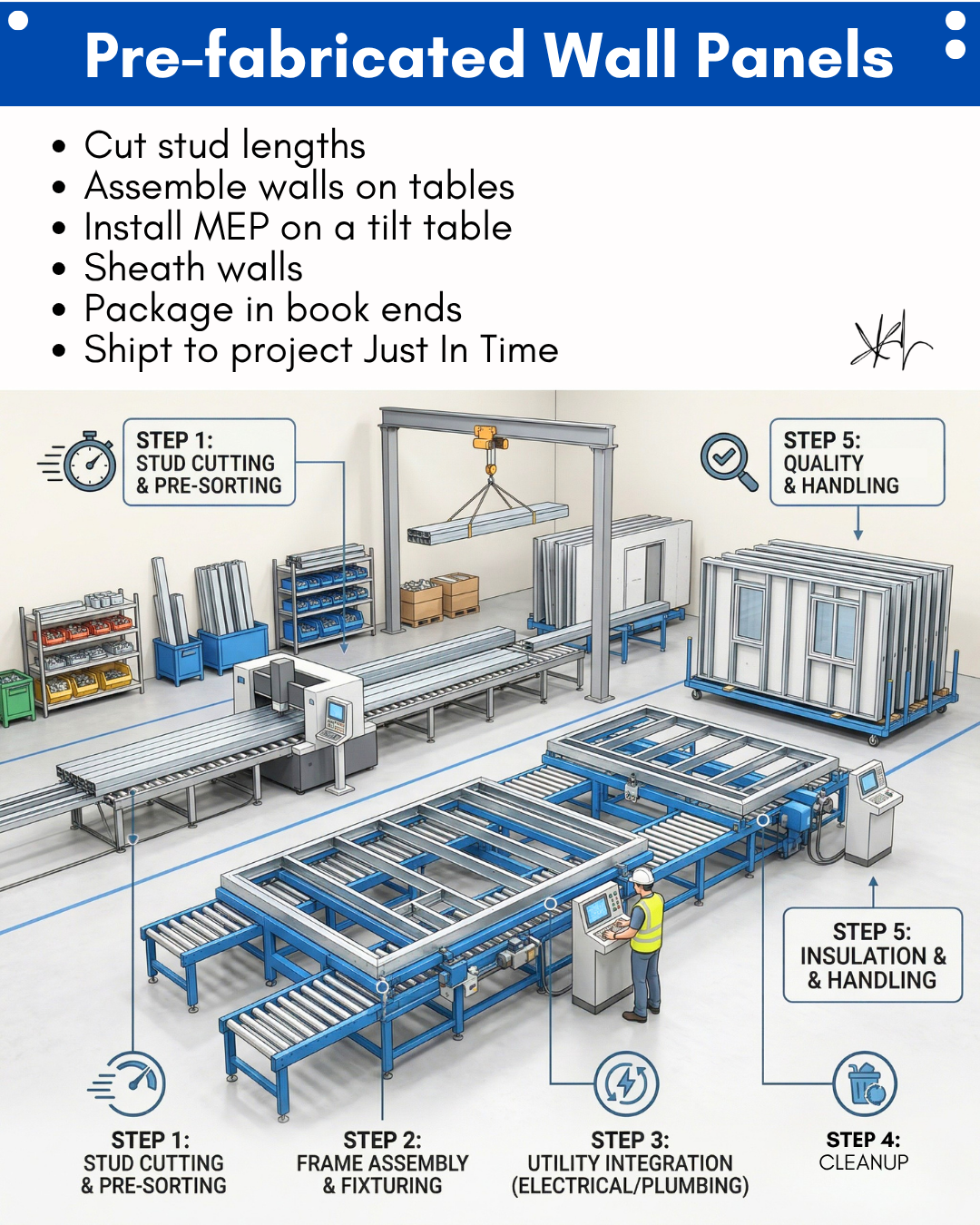
The Survey Invert Calc Sheet is not a compliance form. It’s a protection system. It’s standard work designed to verify every elevation is correct before the pipe goes in the trench and to provide the documented evidence that tells the team exactly what happened when something doesn’t go right. It protects the foreman, protects the project, and protects the crews who are out there grinding every day without the documentation that would defend them if anything ever came into question.

What Happens Without Standard Work for Survey Operations

Most pipe crews run invert shots with a level of skill that comes from years of field experience. The instrument tech sets up, takes a backsight, records the height of instrument, takes the sideshots, and moves on. The process is known. The problem is that “known” is not the same as “documented.” When the shots are being taken correctly, everything is fine and nobody notices the absence of a formal process. When something goes wrong an error in the benchmark elevation, a compensator that wasn’t tapped, a delta on 3-wire leveling that was outside tolerance but nobody wrote it down the absence of documentation becomes a serious problem.

The investigation that follows has no data to work with. Nobody knows whether the setup was checked. Nobody knows whether the benchmark was verified before work started. Nobody knows if the check-in shot to a known elevation confirmed the setup before sideshots were taken. The foreman remembers what they did, but memory in a legal or contractual dispute is not documentation. The investigation cannot find the root cause because the root cause was never recorded. So the default answer is the person standing closest to the problem the foreman who ran the shots and the system that failed to provide them proper standard work gets no scrutiny at all.

The system failed them. They didn’t fail the system.

A Story About What Documentation Changes

I was on a large civil project years ago where we had a significant invert discrepancy discovered during final inspection on a section of force main. The pipe was in. The grade was off. The cost to investigate, expose, and correct was significant, and the first conversation was about who was responsible. The pipe foreman was one of the best I had worked with meticulous, experienced, and genuinely invested in the quality of the work. But when the question came about what documentation existed for the shots that established grade on that section, there was nothing formal. No recorded backsight check. No benchmark verification at the start of the day. No check-out shot confirming the setup held through the shift.

The problem was eventually traced to a benchmark that had been disturbed by equipment traffic and was no longer at its originally surveyed elevation. The foreman had done everything right relative to the information they had. But without a documented check-in shot to an independent known elevation, there was no way to prove when the benchmark discrepancy began. The foreman absorbed accountability for a system problem. Standard work would have caught the elevation error before a single joint was made and would have protected the foreman from a consequence they didn’t deserve.

What the Survey Invert Calc Sheet Is Built Around

The calc sheet is standard work a defined, documented process that every instrument tech follows for every invert shot, every time. Standard work is the foundation that allows continuous improvement to compound without the system constantly resetting. When the process is standardized, variation becomes visible. When variation is visible, root cause analysis becomes possible. And when root cause is possible, the system improves instead of repeating the same failure in the next zone.

The header section establishes scope before the shot begins job name, task name, section of pipe, instrument tech, date, and sheet number. This is not administrative overhead. This is chain of custody for field data. When a question comes up weeks later about which shots were taken when, and by whom, the header tells the story without requiring anyone’s memory.

The pre-flight checklist level pegged monthly, tripod legs stepped in, compensator tapped, benchmark in good condition, instrument is level, turn 90 and re-check runs before any elevation is taken. These are the conditions that make the shot valid. A compensator that wasn’t tapped introduces systematic error that affects every foresight reading taken from that setup. Tripod legs that weren’t properly stepped in on soft ground can shift during the session. The checklist catches these conditions before the data is compromised not after.

Watch for these signals that invert survey work on your project lacks adequate standard work:

  • Invert discrepancies that cannot be traced to a specific cause because no setup data was recorded
  • Benchmark verification happening verbally rather than as a documented step before shots begin
  • No check-in shot to a known elevation at the start of each setup to confirm instrument configuration
  • Delta checks on 3-wire leveling not being recorded, leaving no way to verify rod reading accuracy
  • No check-out shot at the end of the day to confirm the setup held through the session

The Three-Wire Method and the Delta Check

The 3-wire leveling section of the calc sheet is where precision is verified through mathematics rather than assumption. The instrument tech reads the top, middle, and bottom crosshairs on the rod, records all three, and averages the top and bottom to confirm it matches the middle reading within a defined tolerance. The delta check confirming the difference between top and middle matches the difference between middle and bottom within 0.003 feet is the quality gate that confirms the rod reading is correct before the height of instrument is calculated.

This is Poka-Yoke applied to field survey work. The delta check cannot pass on a misread. If the rod was read incorrectly if the wrong graduation was observed the math will not close. The error is caught at the source, before it propagates into the height of instrument calculation and then into every foresight reading taken from that setup. A delta failure at this step costs sixty seconds to re-level and re-read. The same error discovered in the ground after pipe installation costs days and significant money.

The check-in shot to a known elevation before sideshots begin, and the check-out shot to the same known elevation at the end of the day, bookend the session with independent verification. If the setup was correct at check-in and confirmed at check-out, every reading taken in between has a verified bracket around it. If the check-out doesn’t match, the team knows immediately that something changed during the session and exactly which shots need to be reviewed.

Why This Is a Foreman Protection Question, Not a Paperwork Question

Jason Schroeder teaches that the foreman is the most important leadership role in construction the last planner closest to the work, the primary production leader, the person the entire system is designed to support. When foremen are forced into daily firefighting because the system failed to give them what they need, the system is failing them. And when something goes wrong and the foreman is the default answer because there is no documented system that protected them, the organization has compounded that failure with an injustice.

The Survey Invert Calc Sheet is how the system shows up for the foreman before the shot begins. It says: we designed a process that documents your setup, verifies your benchmark, confirms your accuracy, and creates a record that tells the real story if anything ever needs to be investigated. That is not micromanagement. That is what leader standard work looks like in the field. It gives the foreman the tools to back up their work and the checks to catch a problem before it costs the project or costs them professionally.

If your project needs superintendent coaching, project support, or leadership development, Elevate Construction can help your field teams stabilize, schedule, and flow. Standard work at the crew level including field survey standard work is part of the foundation that makes flow possible and people protectable.

Build the Standard Before the Pipe Goes in the Ground

Here is the challenge. Look at the invert survey process on your current project and ask: is there documented standard work that every instrument tech follows for every setup? Is the benchmark being verified to an independent check point before shots begin? Is a delta check being run on every 3-wire reading? Are check-in and check-out shots being recorded for every session?

If the answer to any of those questions is no, the process is relying on individual skill and memory to protect the project and the people doing the work. Standard work doesn’t replace skill. It documents it. It makes the skilled person’s good work visible, verifiable, and defensible when the question ever gets asked. Build the standard. Train to it. And protect the foremen who are out there grinding every day with a system worthy of the work they do.

As Jason Schroeder teaches: “If work is not standardized, reliability becomes luck.” The invert shot is not where we want to be lucky.

On we go.

Frequently Asked Questions

What is the Survey Invert Calc Sheet and what does it standardize?
It’s standard work documentation for pipe crew invert shots covering pre-flight instrument checks, 3-wire leveling with delta verification, benchmark recording, check-in and check-out shots, and a complete foresight log for every sideshot taken during the session.

What is a delta check and why does it matter for accuracy?
The delta check confirms that the rod readings from the top, middle, and bottom crosshairs are mathematically consistent within 0.003 feet. A delta failure reveals a misread before it affects the height of instrument calculation and every subsequent foresight taken from that setup.

How does standard work protect the foreman when something goes wrong?
Documented standard work creates an evidentiary record of what was done, when, and under what verified conditions. When a discrepancy is investigated, the data points to the actual root cause benchmark issue, equipment problem, or field condition change rather than defaulting to the person who ran the shots.

If you want to learn more we have:

-Takt Virtual Training: (Click here)
-Check out our Youtube channel for more info: (Click here) 
-Listen to the Elevate Construction podcast: (Click here) 
-Check out our training programs and certifications: (Click here)
-The Takt Book: (Click here)

Discover Jason’s Expertise:

Meet Jason Schroeder, the driving force behind Elevate Construction IST. As the company’s owner and principal consultant, he’s dedicated to taking construction to new heights. With a wealth of industry experience, he’s crafted the Field Engineer Boot Camp and Superintendent Boot Camp – intensive training programs engineered to cultivate top-tier leaders capable of steering their teams towards success. Jason’s vision? To expand his training initiatives across the nation, empowering construction firms to soar to unprecedented levels of excellence.
Pre-fabricated Wall Panels

Read 19 min

Most People See a Wall. High-Performing Project Teams See a Five-Step Manufacturing Process.

Here’s the deal: every wall on a construction project is manufactured somewhere. The question is not whether it gets built it’s whether it gets built in a controlled environment designed for precision and speed, or in a field environment designed for everything but that. On most projects, the answer is the field. Studs are cut on a chop saw in the corridor. Frames are assembled on an uneven concrete deck. MEP rough-in happens in conditions that no manufacturing engineer would design for. And the variation that results from field measurement tolerances, weather exposure, crew interruption, and ergonomic compromise gets absorbed as rework, coordination failures, and schedule loss that nobody planned for.

The teams building the fastest, highest-quality projects in construction today are asking a different question: what if the wall wasn’t built in the field at all?

What the Field Manufacturing Assumption Actually Costs

Framing is one of those scopes that looks fast on the schedule until it’s actually happening. The cut lists get generated. The studs get delivered in full-length bundles. The layout crew marks the deck and ceiling track. The framers cut, set, and fasten one stud at a time, in ambient conditions, with weather, concrete dust, and trade traffic as constant variables. And the MEP rough-in that follows happens after the frame is standing, in whatever clearance the frame allows, often in positions that no ergonomics study would recommend.

Now add the variation. A stud cut two inches short on a busy deck. A header framed at the wrong height because the dimension on the shop drawing didn’t match the field condition. A plumbing rough-in that conflicts with electrical because the two trades never looked at each other’s work in the same room before installation began. Each of those variation events costs more to fix in the field than it would have cost to prevent in a controlled shop environment. The field manufacturing assumption is not just slow it’s variable. And variability is what destroys production rhythms and compresses the schedules that Lean teams work hard to protect.

A Story That Changed How I Think About This

I was part of a team on a large multifamily project years ago where we were running interior framing and MEP rough-in sequentially, floor by floor, exactly the way it had always been done. The framing pace was reasonable. The MEP rough-in that followed was not. The electrical and plumbing trades were constantly working in framing that was inconsistently built studs at varying heights, headers that required shimming, track that had walked during the frame because nobody had designed a better system for holding it during assembly. Every inconsistency cost the MEP trades time. The inspection failure rate on rough-in was higher than expected, and the rework drove compression into the schedule that took weeks to recover.

When I talked to the framing foreman about it later, his comment stuck with me: “If I could build this wall on a table instead of a deck, it would take half the time and look twice as good.” He wasn’t wrong. The problem wasn’t the crew. The problem was that nobody had ever designed the work environment to match what the scope actually required. The system failed them. They didn’t fail the system.

What the Pre-Fabricated Wall Panel System Is Built Around

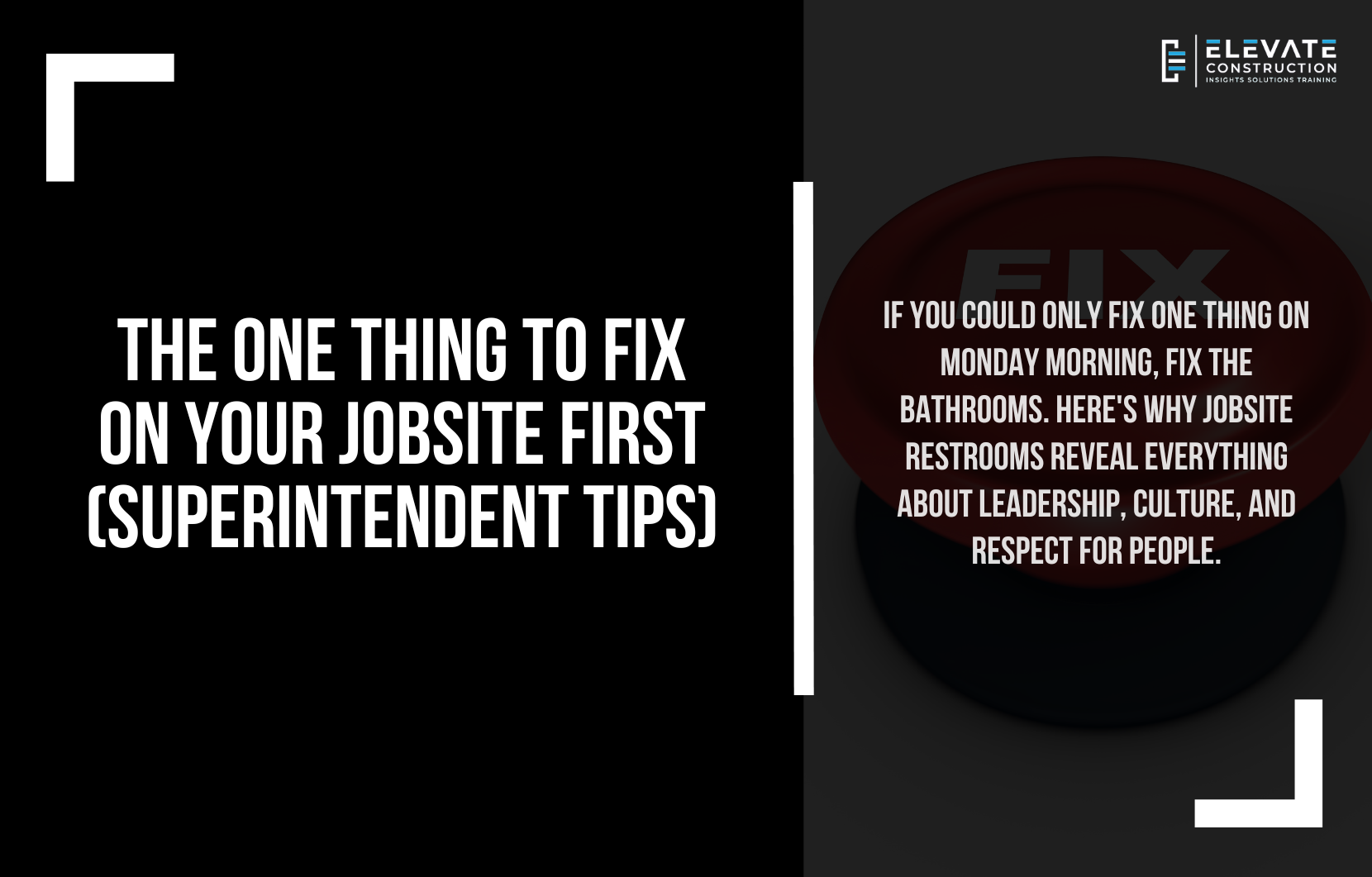
The image in this post shows a five-step manufacturing process that takes everything uncomfortable about field framing and moves it into a controlled factory environment where precision is designed in and variation is designed out.

Step one is stud cutting and pre-sorting. Automated cutting equipment processes studs to exact specified lengths based on the wall panel design. There is no tape measure in this step. No chop saw on an uneven deck. No journeyman deciding whether a piece that’s a quarter-inch short is close enough. The cut is set by the machine. Every stud for every panel comes out at the exact dimension the panel requires. Pre-sorting organizes cut members by panel assignment so the assembly step never has to search for the right piece.

Step two is frame assembly and fixturing. Frames are assembled on dedicated flat assembly tables with fixtures that hold track, studs, and headers in position while fastening happens. The fixturing does what field conditions cannot it holds the geometry true during assembly so every panel that comes off the table is square, plumb, and dimensionally consistent with every other panel. This is Poka-Yoke applied to framing: the fixture makes the wrong position physically difficult. The right position is the easy position.

Watch for these signals that field framing is producing schedule and quality problems on your project:

  • MEP rough-in is repeatedly discovering framing that doesn’t match the shop drawings
  • Inspection failure rates on rough-in are higher than expected because of field coordination issues between framing and MEP
  • Field framing crews are spending significant time on layout and measurement rather than assembly
  • Weather conditions are affecting framing quality or safety on exposed floors
  • MEP tradespeople are working in awkward positions because rough-in access wasn’t designed into the panel before framing

Steps Three Through Five: MEP Integration, Quality, and Just-in-Time Delivery

Step three is utility integration electrical and plumbing rough-in installed on the panel while it is horizontal on a tilt table. This is the step that changes the entire MEP rough-in equation. Instead of an electrician working overhead in a standing frame, the panel is flat. The tilt table brings the work to an ergonomic height and angle. The electrician installs at a comfortable position, with unobstructed access to every conduit path, every box location, and every penetration. The quality of that work the precision of box placement, the consistency of conduit runs, the cleanliness of the installation is demonstrably better when the worker is not fighting gravity and access simultaneously. And the coordination conflict that would have surfaced in the field between electrical and plumbing? Resolved at the design stage, before a single piece of material is cut.

Step four is sheathing the wall, followed by the QC and handling step. Each panel is inspected before it leaves the fabrication yard dimensional check, MEP rough-in verification, sheathing alignment, fastener quality. Defects caught in the yard cost minutes. The same defect caught in the field after the panel is installed costs hours. The panels that pass QC are packaged in book ends for transport, protecting panel geometry and preventing damage during shipping. The book end packaging is the same principle as the dunnage in the staging yard every detail of storage and transport is designed to preserve the quality that the manufacturing process created.

Shipping to the project just in time completes the system. Panels arrive at the site when the zone is ready to receive them not staged in the corridor for two weeks creating a logistics obstacle for every other trade. The truck pulls up, the panels come off, and installation begins. The job site becomes an assembly site rather than a manufacturing site, and the math on speed, safety, and quality immediately starts working in the project’s favor.

Why This Is a Lean Question, Not Just a Framing Question

Jason Schroeder teaches that leveraging prefabrication and modularization designing to the work package is one of the two major ways to accelerate a project schedule. Teams that have implemented prefabrication properly have gained five to twenty percent on overall project schedule, while trade partners have gained margin through reduced rework and faster cycle times. Those numbers are not theoretical. They are the documented outcome of moving manufacturing from the field to a controlled environment that was designed to do it well.

The Takt Production System moves trades through zones on a defined rhythm. Prefabricated panels support that rhythm because the installation step setting a completed panel rather than building a wall from raw materials is faster, more consistent, and more predictable than field framing. When each zone’s wall panel installation takes a known, consistent duration that the Takt planning can count on, the train of trades flows. When field framing varies by twenty percent zone to zone because of field conditions, the train stalls. The prefabrication decision is not just an efficiency decision. It is a production rhythm decision that affects every trade behind framing in the sequence.

If your project needs superintendent coaching, project support, or leadership development, Elevate Construction can help your field teams stabilize, schedule, and flow. Prefabrication is part of the supply chain work that feeds the production plan and it starts in preconstruction, before the schedule is built around assumptions that don’t have to be true.

Design the Wall Before You Build the Wall

Here is the challenge. On your next project with significant interior framing scope, bring the prefabricated wall panel conversation into the preconstruction process before the production plan is locked. Ask the fabricator what lead time looks like, what the panel design workflow requires from the architect and MEP engineers, and what the comparison looks like between prefabricated and field-built when all costs are fully accounted for including field rework, MEP coordination failures, inspection losses, and schedule compression.

The answer will almost always reveal that the field manufacturing assumption was not the most efficient or most reliable path. Plan it first. Build it in the yard. Deliver it just in time. And let the installation crew do what they should be doing: assembling a completed product, not manufacturing raw materials in the field.

As Jason Schroeder teaches: “What would it mean if we had the design, the prefab, the installation instructions, and all the preparation needed clearly articulated in a package for every crew so they could hit better durations all together collectively?” That’s the wall panel. That’s the question. Answer it in preconstruction.

On we go.

Frequently Asked Questions

What is a pre-fabricated wall panel and how is it different from field framing?
It’s a complete wall assembly framed, MEP-roughed, and sheathed built in a controlled factory environment and delivered to the site ready to install. Field framing builds the same wall from raw materials in ambient site conditions, which introduces more variation and takes longer.

How does MEP rough-in on a tilt table improve quality over field installation?
The tilt table positions the horizontal panel at an ergonomic working height, giving MEP tradespeople full access to every box location and conduit path without working overhead or around standing frame constraints. Quality and installation speed both improve significantly.

How does just-in-time delivery of panels support site logistics?
Panels arrive when the zone is ready to receive them not weeks early creating staging obstacles. This keeps corridors and staging areas clear, protects panel quality during storage, and keeps the logistics system aligned with the production plan.

If you want to learn more we have:

-Takt Virtual Training: (Click here)
-Check out our Youtube channel for more info: (Click here) 
-Listen to the Elevate Construction podcast: (Click here) 
-Check out our training programs and certifications: (Click here)
-The Takt Book: (Click here)

Discover Jason’s Expertise:

Meet Jason Schroeder, the driving force behind Elevate Construction IST. As the company’s owner and principal consultant, he’s dedicated to taking construction to new heights. With a wealth of industry experience, he’s crafted the Field Engineer Boot Camp and Superintendent Boot Camp – intensive training programs engineered to cultivate top-tier leaders capable of steering their teams towards success. Jason’s vision? To expand his training initiatives across the nation, empowering construction firms to soar to unprecedented levels of excellence.
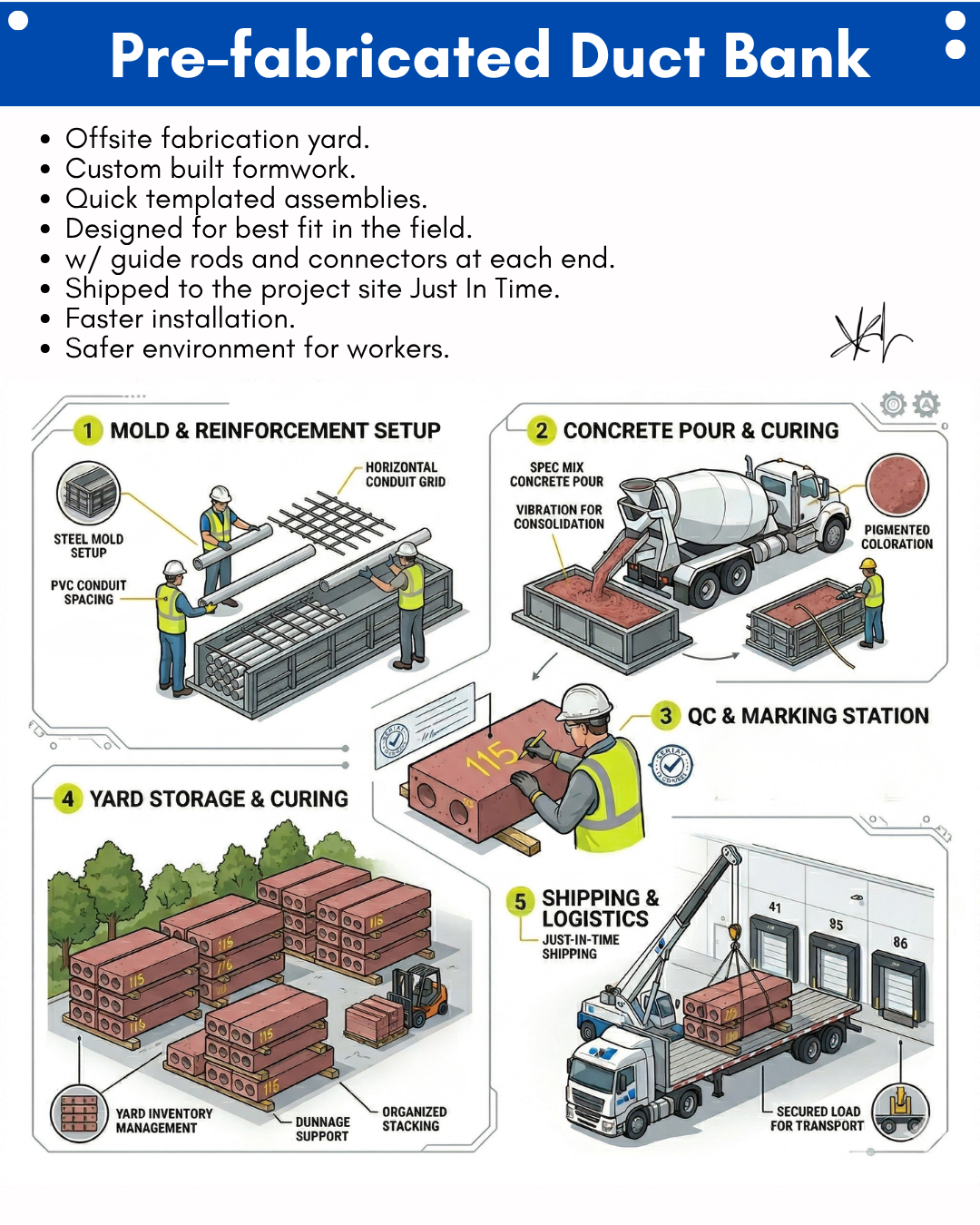
The One Thing to Fix on Your Jobsite First (Superintendent Tips)

Read 16 min

The First Thing to Fix on Monday Morning

If someone said you could only fix one thing on your jobsite Monday morning one thing the answer might surprise you. Not the schedule. Not the pull plan. Not the weekly work plan meeting.

The bathrooms.

That is not a joke. It is not a quirky leadership metaphor. It is the most honest answer to where real Lean transformation begins and it comes from Paul Akers, who built one of the most celebrated Lean companies in the country. He said if you want to start with Lean, start in the bathroom. That advice was taken seriously. And the projects that applied it proved the principle true.

What the Bathroom Actually Reveals

How a project team treats the humans who build the building the environment it gives them, the dignity it affords them is the most accurate indicator of the level of care across every other part of the project.

If the bathrooms are dirty, poorly stocked, unventilated, and degrading, the message to every worker on that site is clear: you are not important enough to be taken care of. That message does not stay in the bathroom. It travels into every zone, every morning huddle, every interaction between the crew and leadership. Workers read the environment the way a project manager reads a schedule. They know exactly what the project thinks of them by the conditions they are given.

Graffiti on bathroom walls is not random vandalism. It is a cultural output. Pee bottles are not a workforce problem. They are a leadership signal. When workers feel disrespected, they respond in kind not because they are bad people, but because the system communicated that no one cared, so why should they. The first step on every project is to win over the workforce. And the bathroom is the first opportunity to do it or the first opportunity to fail.

What a Remarkable Restroom Actually Looks Like

Before running a first project as superintendent, a decision was made: read Paul Akers’ Two Second Lean twice and actually do it. The bathroom project that followed became one of the defining experiences of the career.

The team needed a three-wide trailer. What was negotiated instead was an eight-wide. Half became a lunchroom. The other half was fully built out holes drilled in the trailer floor, vents run up through the roof, custom stalls built for both male and female facilities. Real wall-hung toilets. Epoxy white walls. Plungers in every stall. Replenishable supplies. Sinks, trash cans, urinals, signage. A place to hang a hard hat. A sound bar installed by a worker who knew car audio, so music played and privacy was protected. Automatic air fresheners. Sealed insulation so there were no smells. Chuck Norris jokes on the walls.

Every worker on that project had access to a clean, dignified, functional restroom the same standard as the project management team. Because that is the standard. If the facilities are not good enough for the project management team’s grandmother, they are not good enough for the workforce.

The result? No graffiti. Not in the bathroom. Not in the lunchroom. Not anywhere on the jobsite. No pee bottles. No vandalism. Total participation from the workforce because the workforce had been shown, from day one, that they were valued.

The Algorithm Behind the Principle

There is a simple formula that governs how projects perform. It is not complicated. How the workers are treated is how they will treat the building. How they treat the building is how the building will treat the client. How the building treats the client is the project team’s overall reputation.

That chain of cause and effect starts at the bathroom door. It does not start in the schedule review. It does not start in the milestone meeting. It starts in the first environment workers walk into every day the one that tells them whether this project sees them as craftspeople worthy of care or as production units to be managed and extracted from.

The teams that understand this build remarkable projects. The teams that skip it spend the rest of the project fighting a workforce that never fully bought in because leadership never gave them a reason to.

Here are the conditions that a well-maintained, dignified worker facility produces on a jobsite:

  • Workers arrive to a clean, respectful environment and bring that standard with them into their work
  • No graffiti, vandalism, or disrespect because the project modeled respect first
  • Total participation in cleanliness and site standards because the team feels ownership, not resentment
  • A culture signal that travels from the bathroom into every other system on the project

This Is a Leadership Investment, Not a Budget Line

The most common pushback is simple: the PM did not budget for it. And the response to that is equally simple: it does not matter. How the workers are treated and how they are built up as human beings first that is how the rest of the jobsite will go. No budget constraint justifies sending people to degrading facilities for months at a time. And practically speaking, the cost of decent restrooms is trivial compared to the cost of a disengaged workforce, vandalism, turnover, and a project site that never achieves total participation.

The investment is not in bathroom fixtures. It is in the workforce. It is in the signal that goes out to every trade partner, every crew member, every foreman from the moment the trailer is set up: this project respects people. This project takes care of the humans who build it. This project earns trust by demonstrating it not by demanding it.

That investment pays back in the only currency that matters on a project: people who show up committed, who take ownership of the work, who treat the building the way they were treated.

If your project needs superintendent coaching, project support, or leadership development, Elevate Construction can help your field teams stabilize, schedule, and flow.

Where Lean Actually Starts

There is a sequence to Lean implementation that cannot be skipped. Respect for people and resources must come first. Stability a clean, safe, organized environment must be established before any other Lean system can function. Total participation follows because people who feel respected are willing to participate. Visual systems work because a clean environment is a visible one. Quality and continuous improvement emerge because the foundation is solid enough to build on.

Pull the sequence apart and the whole system collapses. You cannot have total participation without respect. You cannot have stability without cleanliness. You cannot have cleanliness without leadership that takes it seriously enough to go first to model the standard, enforce it, resource it, and live by it alongside the workforce.

That is why the bathroom matters. Not because bathrooms are the most complex Lean challenge. Because they are the most honest one. They strip away all the project management language and the Lean vocabulary and the scheduling systems and ask the most basic question: do you actually care about the people who build your buildings?

The answer is visible from the bathroom door.

This week, walk your project facilities. Not to inspect them for compliance to experience them the way a worker experiences them. Ask whether what you find there reflects the standard of care you want applied to everything else on the project. If the answer is no, that is Monday’s first priority.

As Jason Schroeder says, “We’re building people who build things.”

On we go.

Frequently Asked Questions

Why does bathroom quality matter so much on a construction project?
Because it is the most direct signal of how leadership values the workforce. Workers read the environment they are given. Clean, dignified facilities communicate respect and set the standard for how workers treat the building. Neglected facilities communicate indifference and the project culture reflects that back immediately.

What if the PM did not budget for better restrooms?
The budget objection does not hold up against the cost of a disengaged workforce. The investment in decent facilities is small compared to the cost of vandalism, low morale, disengagement, and a site that never achieves total participation. This is a leadership decision, not a budget decision.

How does this connect to Lean implementation?
Lean begins with respect for people. Without it, no Lean tool, system, or methodology will take root. The bathroom is the most immediate, visible test of whether that respect is real or theoretical. Paul Akers taught that if you want to start with Lean, start in the bathroom and every project that has taken that seriously has proven him right.

If you want to learn more we have:

-Takt Virtual Training: (Click here)
-Check out our Youtube channel for more info: (Click here) 
-Listen to the Elevate Construction podcast: (Click here) 
-Check out our training programs and certifications: (Click here)
-The Takt Book: (Click here)

Discover Jason’s Expertise:

Meet Jason Schroeder, the driving force behind Elevate Construction IST. As the company’s owner and principal consultant, he’s dedicated to taking construction to new heights. With a wealth of industry experience, he’s crafted the Field Engineer Boot Camp and Superintendent Boot Camp – intensive training programs engineered to cultivate top-tier leaders capable of steering their teams towards success. Jason’s vision? To expand his training initiatives across the nation, empowering construction firms to soar to unprecedented levels of excellence.
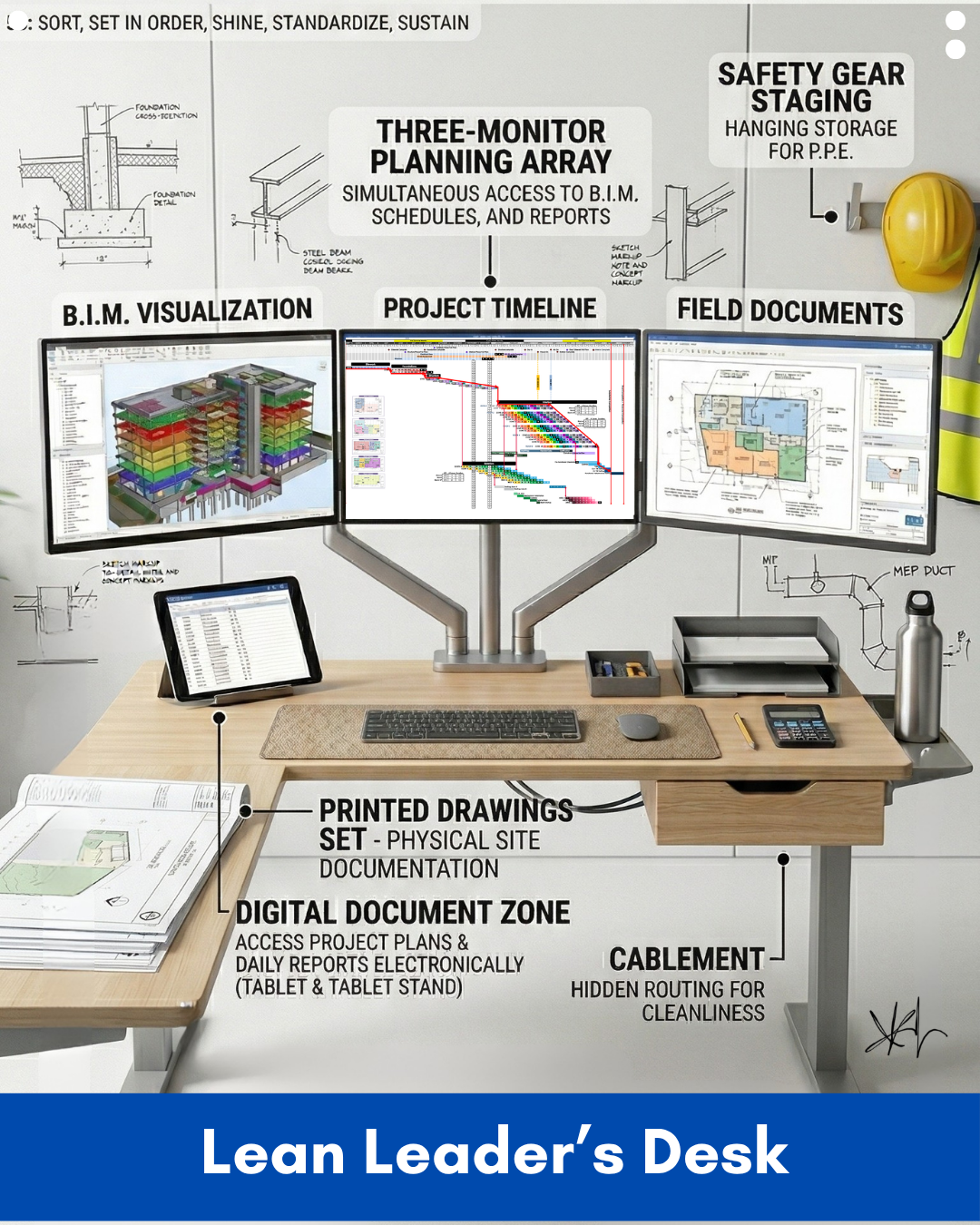
Pre-fabricated Duct Bank

Read 18 min

If Duct Bank Keeps Showing Up on the Critical Path, the System Needs a New Approach

Here’s the deal: cast-in-place duct bank is one of those scopes that looks manageable on the schedule until you’re actually running it. The form work. The rebar. The conduit spacing. The concrete placement. The curing time. The stripping. And then the wait because nothing else can happen in that zone until the curing is done, and curing does not negotiate with your Takt time. The duct bank sits there, controlling the sequence around it, holding up the train while the schedule absorbs the hit and the team figures out what to do next.

Most project teams treat it as a fixed constraint. It takes what it takes. You plan around it, buffer it, and hope the curing schedule holds. The best teams ask a different question: does this have to happen on site at all?

What the On-Site Process Is Actually Costing

Cast-in-place duct bank on a construction site is an eleven-step field operation happening in an environment that was not designed for controlled manufacturing. The formwork setup requires precision in conditions that are anything but controlled. Concrete placement and vibration happen alongside active construction traffic. Curing requires time that the production plan cannot shrink regardless of how much schedule pressure exists. And throughout the entire sequence, the crew executing it is consuming critical path time that could have been spent on installation rather than manufacturing.

Add up the crew hours in formwork, rebar, conduit spacing, concrete placement, curing management, and form stripping. Then add the site real estate the operation consumes during the process. Then add the quality variation that comes from field pours compared to controlled yard conditions vibration from nearby construction, inconsistent curing in varying weather, formwork that’s been repaired three times. The on-site duct bank process is not just slow. It’s variable. And variability is what breaks production rhythms.

Jason Schroeder teaches that procurement feeds production and the supply chain must be zoned to match the production plan. When a manufacturing process that can be controlled offsite is instead happening in the zone consuming space, crew capacity, and schedule it is waste embedded in the critical path. The system was designed that way by default. It doesn’t have to stay that way.

A Story About What a Schedule Bottleneck Actually Costs

I was part of a team on a large data center project where duct bank was running through a critical sequence of the civil scope. The cast-in-place approach was what had always been used on similar projects, so nobody questioned it going in. Within the first three weeks, it was clear the curing windows were compressing the sequence downstream. Two trades were delayed waiting for zones to clear. The buffer we had built into that phase was consumed entirely by the duct bank sequence. By week five, the team was in recovery mode on a scope that should have been straightforward.

What we needed was a manufactured product that showed up ready to install. What we had was a field manufacturing operation on the critical path. The design of the supply chain had failed the production plan not because anyone made a bad decision, but because nobody had asked whether there was a better system.

What Pre-Fabricated Duct Bank Actually Is

Pre-fabricated duct bank is exactly what it sounds like: duct bank sections manufactured in a controlled offsite fabrication yard using steel molds, spec mix concrete, and precision conduit spacing and then delivered to the project site just in time for installation. The image in this post shows the five-step process clearly.

Step one is mold and reinforcement setup at the fabrication yard. Steel mold forms hold the PVC conduit spacing in a horizontal conduit grid, creating a consistent geometry that is repeated precisely across every section. The mold controls the tolerances. The conduit spacing is set by template, not by field measurement. Every section that comes out of this mold is identical to the one before it. This is Poka-Yoke applied to concrete manufacturing the form physically prevents the wrong conduit spacing from being cast in, so variation is designed out before the pour happens.

Step two is the concrete pour and curing. Spec mix concrete is placed under controlled conditions, vibrated for consolidation, and pigment-colored for identification. The curing happens in the yard not in the zone, not on the critical path, not consuming field crew time and site real estate. The concrete cures while the project’s production work continues uninterrupted. That parallel activity is the core schedule advantage of prefabrication: the manufacturing time does not consume installation time.

Watch for these signals that duct bank is functioning as a production bottleneck on your project:

  • Duct bank curing windows are holding up trades in adjacent or downstream zones
  • The field crew executing duct bank could otherwise be advancing critical installation scope
  • Site real estate consumed by duct bank forms and curing areas is limiting logistics flow
  • Quality variation between sections is requiring remediation before the next scope can proceed
  • Schedule compression is forcing curing times shorter than specification requires

Step Three Through Five: Quality Control, Storage, and Just-In-Time Delivery

The QC and marking station in the yard is where each section is inspected and numbered before it leaves the facility. This is quality verification at the point of manufacture not at the point of installation where fixing a defect requires a field repair in an active construction zone. Every section that passes QC is marked with its sequence number so installation sequencing in the field is unambiguous. The crew setting sections doesn’t make decisions about what goes where. The marking communicates it.

Yard storage and curing uses organized stacking with dunnage support and yard inventory management to maintain section integrity during storage. Sections are ready when the production plan requires them not staged on site weeks early consuming staging area and creating coordination obstacles for other trades. Just-in-time delivery means the truck arrives at the site when the zone is ready to receive, not before and not after. The sections come off the truck, go into position, and installation begins.

The guide rods and connectors at each end of every section make field alignment fast and precise. Two sections brought together reference the guide rod geometry rather than requiring field measurement and adjustment. The alignment is built into the product. The installation crew spends their time setting sections, not solving geometry problems on the jobsite. This is what designing to the work package looks like in practice the manufacturing decision was made upstream to make the installation work easier and faster downstream.

Why This Is a Lean Question, Not Just a Concrete Question

Jason Schroeder teaches that leveraging prefabrication and modularization is one of the two major ways to speed up a project the other being proper zoning. When scope that can be manufactured in a controlled environment is instead manufactured in the field, the project absorbs all the variation that field manufacturing produces weather, congestion, crew interruption, quality variability as schedule loss that compounding affects every trade behind it in the Takt sequence.

The pre-fabricated duct bank eliminates that variation at the source. The product is manufactured to consistent tolerances in a controlled yard. It arrives in a condition verified by a QC station that has better inspection conditions than any active construction site. And it installs in a fraction of the time of the cast-in-place approach because the manufacturing work is already done. Less waiting. Less rework. Less congestion. The critical path shortens not because the team pushed harder, but because the work was designed better upstream.

If your project needs superintendent coaching, project support, or leadership development, Elevate Construction can help your field teams stabilize, schedule, and flow. Prefabrication is one of the most practical tools available to shorten schedule duration, and the conversation starts in preconstruction before the critical path is already locked.

Ask the Question Before the Scope Is Locked

Here is the challenge. On your next civil or MEP project with significant duct bank scope, bring pre-fabricated duct bank into the preconstruction conversation before the schedule is built around the cast-in-place assumption. Ask the fabricator what lead time looks like, what the delivery schedule requires, and what the cost comparison is when you factor in crew hours, site congestion, curing time, and quality management on the cast-in-place approach.

The answer will almost always reveal that the on-site manufacturing cost, when fully accounted for, is not far from the prefabricated cost and the schedule advantage of pulling that work offsite is significant. Design to the work package. Move the manufacturing out of the zone. Let the production plan run without a concrete curing window on the critical path.

Taiichi Ohno taught that the most dangerous waste is the waste you cannot see. The cast-in-place duct bank bottleneck is hiding in plain sight on every project schedule that treats it as a fixed constraint. It doesn’t have to be fixed. It can be solved in the fab yard, before the project even starts.

On we go.

Frequently Asked Questions

What is pre-fabricated duct bank and how is it different from cast-in-place?
It’s duct bank manufactured offsite in a controlled fabrication yard using steel molds and spec mix concrete, then delivered just in time for installation. Cast-in-place happens in the field and consumes critical path time for forming, pouring, and curing.

How does prefabrication eliminate schedule bottlenecks caused by duct bank?
Curing happens in the yard while field production continues. The manufacturing time does not consume installation time the two activities run in parallel rather than in sequence, which is the direct source of the schedule advantage.

What does the QC and marking station in the yard accomplish?
It verifies each section before it leaves the facility and marks sequence numbers for field installation. Quality defects are caught in a controlled environment rather than discovered at the point of install where correction is far more expensive.

If you want to learn more we have:

-Takt Virtual Training: (Click here)
-Check out our Youtube channel for more info: (Click here) 
-Listen to the Elevate Construction podcast: (Click here) 
-Check out our training programs and certifications: (Click here)
-The Takt Book: (Click here)

Discover Jason’s Expertise:

Meet Jason Schroeder, the driving force behind Elevate Construction IST. As the company’s owner and principal consultant, he’s dedicated to taking construction to new heights. With a wealth of industry experience, he’s crafted the Field Engineer Boot Camp and Superintendent Boot Camp – intensive training programs engineered to cultivate top-tier leaders capable of steering their teams towards success. Jason’s vision? To expand his training initiatives across the nation, empowering construction firms to soar to unprecedented levels of excellence.

Lean Leader’s Desk

Read 19 min

Your Workspace Is Either Working for You or Working Against You

Here’s the deal: I have worked in chaotic job site trailers and purpose-built Lean workstations, and the difference in what comes out of each one is not even close. The chaotic trailer produces reactive leadership. Papers get lost. Screens are too few to hold the whole picture at once. The desk is covered in layers of things that should have been filed, discarded, or acted on three days ago. And the leader sitting in it is spending energy managing the clutter before they can manage the project.

The Lean workstation produces something different. The leader who walks in, sits down, and has immediate access to the BIM model, the schedule, the field documents, the printed plan set, and the whiteboard where the day’s critical thinking is already mapped out that leader starts working in seconds. No context switching. No searching. No excuse not to be ready for every conversation that walks through the door. The workspace does not make the leader. But it either multiplies their capacity or diminishes it from the moment they arrive.

What the Chaotic Trailer Actually Produces

Jason Schroeder teaches something that is uncomfortable to sit with the first time you hear it: you cannot take a superintendent with a dirty desk, a disorganized truck, and a cluttered workspace and expect them to run a clean, safe, organized project with hundreds of workers, multiple trade partners, and a tight schedule. Whatever you have in the mind will be physically manifest on the project. The desk and the project are mirrors of each other.

This is not a character judgment. It is a system diagnosis. A superintendent who has never been given a standard for their workspace has never had the opportunity to build the mental clarity that a 5S’d environment creates. They are not failing the system never set them up to succeed. And when the workspace reflects chaos, the project team that walks into that trailer absorbs the chaos before a single decision is made. The tone is set by the environment before anyone opens their mouth.

I remember walking into a project trailer on a large healthcare project where the lead superintendent’s desk had three layers of unsorted submittals, two monitors showing the same thing, plans spread across the full table surface with no organized system, and a whiteboard so covered with outdated notes it hadn’t been updated in two weeks. The superintendent was sharp and experienced. But every conversation in that trailer started with someone searching for something. Every decision got made in the gaps between finding the information needed to make it. The trailer was costing the team time before the workday even reached the field.

What the Lean Leader’s Desk Is Built Around

The image in this post shows what a workspace looks like when it’s designed with the same intention applied to the gang box, the staging yard, and the morning huddle intentionally, visually, and with the work it enables firmly in mind.

The three-monitor planning array is the operational center. One screen carries the BIM model for spatial visualization and coordination review. The center screen holds the project timeline schedule, Takt plan, or look-ahead for real-time production reference. The third screen holds field documents: submittals, RFIs, daily reports, and inspection records. All three are visible simultaneously. This is not a luxury. It is a seeing system. Jason Schroeder teaches that every good tool used to manage a project is a seeing system. Multiple screens mean the leader can see the whole picture at once rather than toggling between windows and losing context with every switch.

The printed drawings set on the left side of the desk is physical documentation that stays current. When a subcontractor foreman walks into the trailer with a coordination question, the super is not fumbling to find the right drawing or waiting for a file to load. The set is organized, accessible, and within arm’s reach. That five-second difference having the plan in hand before the conversation starts rather than after changes the quality of the conversation and the confidence with which the decision gets made.

Watch for these signals that a project leader’s workspace is costing the project rather than supporting it:

  • Leaders arriving at the desk and spending the first fifteen minutes locating documents needed for the morning meeting
  • Submittals, RFIs, and daily reports spread across the desk surface with no organized filing system
  • A single monitor requiring constant toggling between the BIM model, schedule, and field documents
  • No whiteboard or designated visual thinking space, meaning planning stays in email and conversation rather than becoming visible
  • PPE not staged at the workstation, requiring the leader to locate gear before every field walk

The Digital Document Zone and Cable Management

The tablet and tablet stand create a dedicated digital document zone a designated spot for accessing project plans and daily reports electronically that is always in the same place and always ready to use. This is Set in Order applied to the desk: every tool has a home, every tool is accessible without searching, and the desk surface itself is clear enough to work on.

Cable management is routed hidden through the desk structure, keeping the surface clean and organized. This is not an aesthetic preference. Cord clutter on a desk creates the same friction as cord clutter on the floor it signals disorder, slows access to equipment, and adds visual noise that competes with the information the leader is trying to process. A clean desk surface is a clean thinking surface. The physical environment shapes the mental environment, and the mental environment shapes every decision that comes out of it.

Safety gear staging hardhat and vest hung at the workstation means the leader is never fumbling for PPE before a field walk. The gear is in the same place every time. The transition from desk to field takes seconds rather than the low-level searching that compounds across every site visit over a six-month project.

The Sit-Stand Desk and What It Signals

The sit-stand desk is a non-negotiable on long project days. A superintendent or project manager who sits for ten straight hours does not arrive at the afternoon coordinator meeting with the same clarity they had at the morning huddle. Physical position directly affects cognitive performance, and construction leaders are making decisions that affect schedules, budgets, safety, and people’s livelihoods every hour of every day. A desk that supports movement is not a wellness choice disconnected from production it is a tool for sustained cognitive performance in a role that demands it from mobilization to closeout.

The whiteboards on the wall complete the system. Ideas should not live in someone’s head or buried in an email thread. They should be visible, sketchable, revisable, and shared. A whiteboard is where a coordination conflict gets mapped. Where a zone transition gets sequenced. Where the afternoon foreman huddle agenda gets built. A blank wall is the cheapest collaboration tool a leader can install, and it produces more useful planning output than any software subscription on the market when the person standing at it knows what they’re solving for.

Why This Is a Lean Question, Not a Comfort Question

The Lean Leader’s Desk is not about making the trailer nicer. It is about applying the same discipline to the leader’s workspace that the leader is responsible for applying everywhere else on the project. 5S the desk the same way you 5S the field. If you are holding foremen to a gang box standard with shadow boards and labeled bins, your own desk should be held to the same standard. If you are requiring trade partners to maintain organized staging areas with designated zones and clear access paths, your own workspace should meet that standard too.

Culture is shaped by the worst behavior the leader is willing to tolerate and the leader’s own behavior is the most visible example on the project. When the superintendent’s desk is organized, current, and fully equipped, it communicates the same thing that a clean gang box communicates to the crew: we take this seriously, and that standard applies everywhere, starting with us. If your project needs superintendent coaching, project support, or leadership development, Elevate Construction can help your field teams stabilize, schedule, and flow. That starts with the leaders who run the work and the workspace they use to run it from.

5S the Desk Before the Project Starts

Here is the challenge. Before the next project mobilizes or this week if the project is already running walk into the job site trailer and apply 5S to the leadership workspace. Sort: remove everything that doesn’t belong. Set in Order: give every document, every tool, every piece of PPE a labeled home. Shine: clean the surface and commit to ending every day with it returned to the standard. Standardize: decide what the desk should look like and hold to it. Sustain: make it a daily habit the same way crews do morning 5S in their zones.

Then add the three-monitor array. Mount the whiteboard. Set up the tablet stand. Route the cables. Stage the PPE. Organize the printed plan set on the left side.

Do that before the first trade mobilizes and see how different the conversations in that trailer feel from day one.

As Jason Schroeder teaches: “A clean, controlled environment reveals problems early and prevents hidden waste from compounding.” Build the workspace that makes you the leader your project needs from the first morning huddle to the final punch walk.

On we go.

Frequently Asked Questions

How does the sit-stand desk connect to project performance?
Physical position directly affects cognitive clarity over a long day. A leader who can shift position stays sharper through the full range of morning meetings, coordination calls, and afternoon field walks.

Why is the printed plan set on the left side non-negotiable?
Because when a foreman or trade walks in with a question, the super needs to respond with the plan in hand in seconds not waiting for a file to load. Physical access to current drawings is a decision-making tool, not a backup.

How does a Lean desk workspace connect to project culture?
If leadership holds the field to a 5S standard but operates from a chaotic desk, the standard is visibly hollow. A 5S’d workspace communicates that the discipline starts with the leader which is the only place it ever credibly starts.

If you want to learn more we have:

-Takt Virtual Training: (Click here)
-Check out our Youtube channel for more info: (Click here) 
-Listen to the Elevate Construction podcast: (Click here) 
-Check out our training programs and certifications: (Click here)
-The Takt Book: (Click here)

Discover Jason’s Expertise:

Meet Jason Schroeder, the driving force behind Elevate Construction IST. As the company’s owner and principal consultant, he’s dedicated to taking construction to new heights. With a wealth of industry experience, he’s crafted the Field Engineer Boot Camp and Superintendent Boot Camp – intensive training programs engineered to cultivate top-tier leaders capable of steering their teams towards success. Jason’s vision? To expand his training initiatives across the nation, empowering construction firms to soar to unprecedented levels of excellence.

    Scam Alert

    Important Scam Alert: Fake Elevate Construction Job Emails

    We have been made aware that scammers are impersonating Kate Schroeder and Elevate Construction and advertising a fake Regional Sales Manager position.
    These emails are not from our team. Elevate Construction will never ask job applicants to download software or install an application to schedule an interview.
    Please do not click any links, download anything, or share personal information. Report the email as phishing and verify any job opportunity directly through our official website or social media channels.
    Please share this notice to help protect others.

    Related Books

    The First Planner System: The Project Planning System for Executives, Project Managers, and Superintendents in Pre-construction - Book 2
    Pull Planning For Builders: How to Pull Plan Right, Respect People, and Gain Time (The Art of the Builder)
    The Ten Improvements to Production Planning: What Lean Builders Can Do To Improve Short Interval Planning (The Art of the Builder)

    Related Books

    The First Planner System: The Project Planning System for Executives, Project Managers, and Superintendents in Pre-construction - Book 2
    Built to Fail: Why Construction Projects Take So Long, Cost Too Much, And How to Fix It

    Related Books

    The First Planner System: The Project Planning System for Executives, Project Managers, and Superintendents in Pre-construction - Book 2
    The 10 Myths of CPM: How The Critical Path Method Systematizes Disrespect for People
    Calumet "K"

    faq

    General Training Overview

    What construction leadership training programs does LeanTakt offer?
    LeanTakt offers Superintendent/PM Boot Camps, Virtual Takt Production System® Training, Onsite Takt Simulations, and Foreman & Field Engineer Training. Each program is tailored to different leadership levels in construction.
    Who should attend LeanTakt’s training programs?
    Superintendents, Project Managers, Foremen, Field Engineers, and trade partners who want to improve planning, communication, and execution on projects.
    How do these training programs improve project performance?
    They provide proven Lean and Takt systems that reduce chaos, improve reliability, strengthen collaboration, and accelerate project delivery.
    What makes LeanTakt’s training different from other construction courses?
    Our programs are hands-on, field-tested, and focused on practical application—not just classroom theory.
    Do I need prior Lean or takt planning experience to attend?
    No. Our programs cover foundational principles before moving into advanced applications.
    How quickly can I apply what I learn on real projects?
    Most participants begin applying new skills immediately, often the same week they complete the program.
    Are these trainings designed for both office and field leaders?
    Yes. We equip both project managers and superintendents with tools that connect field and office operations.
    What industries benefit most from LeanTakt training?
    Commercial, multifamily, residential, industrial, and infrastructure projects all benefit from flow-based planning.
    Do participants receive certificates after completing training?
    Yes. Every participant receives a LeanTakt Certificate of Completion.
    Is LeanTakt training recognized in the construction industry?
    Yes. Our programs are widely respected among leading GCs, subcontractors, and construction professionals.

    Superintendent / PM Boot Camp

    What is the Superintendent & Project Manager Boot Camp?
    It’s a 5-day immersive training for superintendents and PMs to master Lean leadership, takt planning, and project flow.
    How long does the Superintendent/PM Boot Camp last?
    Five full days of hands-on training.
    What topics are covered in the Boot Camp curriculum?
    Lean leadership, Takt Planning, logistics, daily planning, field-office communication, and team health.
    How does the Boot Camp improve leadership and scheduling skills?
    Yes. You’ll learn how to run day huddles, team meetings, worker huddles, and Lean coordination processes.
    Who is the Boot Camp best suited for?
    Construction leaders responsible for delivering projects, including Superintendents, PMs, and Field Leaders.
    What real-world challenges are simulated during the Boot Camp?
    Schedule breakdowns, trade conflicts, logistics issues, and communication gaps.
    Will I learn Takt Planning at the Boot Camp?
    Yes. Takt Planning is a core focus of the Boot Camp.
    How does this Boot Camp compare to traditional PM certification?
    It’s practical and execution-based rather than exam-based. You learn by doing, not just studying theory.
    Can my entire project team attend the Boot Camp together?
    Yes. Teams attending together often see the greatest results.
    What kind of real-world challenges do we simulate?
    Improved project flow, fewer delays, better team communication, and stronger leadership confidence.

    Takt Production System® Virtual Training

    What is the Virtual Takt Production System® Training?
    It’s an expert-led online program that teaches Lean construction teams how to implement takt planning.
    How does virtual takt training work?
    Delivered online via live sessions, interactive discussions, and digital tools.
    What are the benefits of online takt planning training?
    Convenience, global accessibility, real-time learning, and immediate application.
    Can I access the virtual training from anywhere?
    Yes. It’s fully web-based and accessible worldwide.
    Can I access the virtual training from anywhere?
    Yes. It’s fully web-based and accessible worldwide.
    What skills will I gain from the Virtual TPS® Training?
    Macro and micro Takt planning, weekly updates, flow management, and CPM integration.
    How long does the virtual training program take?
    The program is typically completed in multiple live sessions across several days.
    Can I watch recordings if I miss a session?
    Yes. Recordings are available to all participants.
    Do you offer group access or company licenses for the virtual training?
    Yes. Teams and companies can enroll together at discounted rates.
    How does the Virtual TPS® Training integrate with CPM tools?
    We show how to align Takt with CPM schedules like Primavera P6 or MS Project.

    Onsite Takt Simulation

    What is a Takt Simulation in construction training?
    It’s a live, interactive workshop that demonstrates takt planning on-site.
    How does the Takt Simulation workshop work?
    Teams participate in hands-on exercises to learn the flow and rhythm of a Takt-based project.
    Can I choose between a 1-day or 2-day Takt Simulation?
    Yes. We offer flexible formats to fit your team’s schedule and needs.
    Who should participate in the Takt Simulation workshop?
    Superintendents, PMs, site supervisors, contractors, and engineers.
    How does a Takt Simulation improve project planning?
    It shows teams how to structure zones, manage flow, and coordinate trades in real time.
    What will my team learn from the onsite simulation?
    How to build and maintain takt plans, manage buffers, and align trade partners.
    Is the simulation tailored to my specific project type?
    Yes. Scenarios can be customized to match your project.
    How do Takt Simulations improve trade partner coordination?
    They strengthen collaboration by making handoffs visible and predictable.
    What results can I expect from an onsite Takt Simulation?
    Improved schedule reliability, better trade collaboration, and reduced rework.
    How many people can join a Takt Simulation session?
    Group sizes are flexible, but typically 15–30 participants per session.

    Foreman & Field Engineer Training

    What is Foreman & Field Engineer Training?
    It’s an on-demand, practical program that equips foremen and engineers with leadership and planning skills.
    How does this training prepare emerging leaders?
    By teaching communication, crew management, and execution strategies.
    Is the training on-demand or scheduled?
    On-demand, tailored to your team’s timing and needs.
    What skills do foremen and engineers gain from this training?
    Planning, safety leadership, coordination, and communication.
    How does the training improve communication between field and office?
    It builds shared systems that align superintendents, engineers, and managers.
    Can the training be customized for my team’s needs?
    Yes. Programs are tailored for your project or company.
    What makes this program different from generic leadership courses?
    It’s construction-specific, field-tested, and focused on real project application.
    How do foremen and field engineers apply this training immediately?
    They can use new systems for planning, coordination, and daily crew management right away.
    Is the training suitable for small construction companies?
    Yes. Small and large teams alike benefit from building flow-based leadership skills.

    Testimonials

    Testimonials

    "The bootcamp I was apart of was amazing. Its was great while it was happening but also had a very profound long-term motivation that is still pushing me to do more, be more. It sounds a little strange to say that a construction bootcamp changed my life, but it has. It has opened my eyes to many possibilities on how a project can be successfully run. It’s also provided some very positive ideas on how people can and should be treated in construction.

    I am a hungry person by nature, so it doesn’t take a lot to get to participate. I loved the way it was not just about participating, it was also about doing it with conviction, passion, humility and if it wasn’t portrayed that way you had to do it again."

    "It's great to be a part of a company that has similar values to my own, especially regarding how we treat our trade partners. The idea of "you gotta make them feel worse to make them do better" has been preached at me for years. I struggled with this as you will not find a single psychology textbook stating these beliefs. In fact it is quite the opposite, and causing conflict is a recipe for disaster. I'm still honestly in shock I have found a company that has based its values on scientific facts based on human nature. That along with the Takt scheduling system makes everything even better. I am happy to be a part of a change that has been long overdue in our industry!"

    "Wicked team building, so valuable for the forehumans of the sub trades to know the how and why. Great tools and resources. Even though I am involved and use the tools every day, I feel like everything is fresh and at the forefront to use"

    "Jason and his team did an incredible job passing on the overall theory of what they do. After 3 days of running through the course I cannot see any holes in their concept. It works. it's proven to work and I am on board!"

    "Loved the pull planning, Takt planning, and logistic model planning. Well thought out and professional"

    "The Super/PM Boot Camp was an excellent experience that furthered my understanding of Lean Practices. The collaboration, group involvement, passion about real project site experiences, and POSITIVE ENERGY. There are no dull moments when you head into this training. Jason and Mr. Montero were always on point and available to help in the break outs sessions. Easily approachable to talk too during breaks and YES, it was fun. I recommend this training for any PM or Superintendent that wants to further their career."

    agenda

    Day 1

    Foundations & Macro Planning

    day2

    Norm Planning & Flow Optimization

    day3

    Advanced Tools & Comparisons

    day4

    Buffers, Controls & Finalization

    day5

    Control Systems & Presentations

    faq

    UNDERSTANDING THE TRAINING

    What is the Virtual Takt Production System® Training by LeanTakt?
    It’s an expert-led online program designed to teach construction professionals how to implement Takt Planning to create flow, eliminate chaos, and align teams across the project lifecycle.
    Who should take the LeanTakt virtual training?
    This training is ideal for Superintendents, Project Managers, Engineers, Schedulers, Trade Partners, and Lean Champions looking to improve planning and execution.
    What topics are covered in the online Takt Production System® course?
    The course covers macro and micro Takt planning, zone creation, buffers, weekly updates, flow management, trade coordination, and integration with CPM tools.
    What makes LeanTakt’s virtual training different from other Lean construction courses?
    Unlike theory-based courses, this training is hands-on, practical, field-tested, and includes live coaching tailored to your actual projects.
    Do I get a certificate after completing the online training?
    Yes. Upon successful completion, participants receive a LeanTakt Certificate of Completion, which validates your knowledge and readiness to implement Takt.

    VALUE AND RESULTS

    What are the benefits of Takt Production System® training for my team?
    It helps teams eliminate bottlenecks, improve planning reliability, align trades, and reduce the chaos typically seen in traditional construction schedules.
    How much time and money can I save with Takt Planning?
    Many projects using Takt see 15–30% reductions in time and cost due to better coordination, fewer delays, and increased team accountability.
    What’s the ROI of virtual Takt training for construction teams?
    The ROI comes from faster project delivery, reduced rework, improved communication, and better resource utilization — often 10x the investment.
    Will this training reduce project delays or rework?
    Yes. By visualizing flow and aligning trades, Takt Planning reduces miscommunication and late handoffs — major causes of delay and rework.
    How soon can I expect to see results on my projects?
    Most teams report seeing improvement in coordination and productivity within the first 2–4 weeks of implementation.

    PLANNING AND SCHEDULING TOPICS

    What is Takt Planning and how is it used in construction?
    Takt Planning is a Lean scheduling method that creates flow by aligning work with time and space, using rhythm-based planning to coordinate teams and reduce waste.
    What’s the difference between macro and micro Takt plans?
    Macro Takt plans focus on the overall project flow and phase durations, while micro Takt plans break down detailed weekly tasks by zone and crew.
    Will I learn how to build a complete Takt plan from scratch?
    Yes. The training teaches you how to build both macro and micro Takt plans tailored to your project, including workflows, buffers, and sequencing.
    How do I update and maintain a Takt schedule each week?
    You’ll learn how to conduct weekly updates using lookaheads, trade feedback, zone progress, and digital tools to maintain schedule reliability.
    Can I integrate Takt Planning with CPM or Primavera P6?
    Yes. The training includes guidance on aligning Takt plans with CPM logic, showing how both systems can work together effectively.
    Will I have access to the instructors during the training?
    Yes. You’ll have opportunities to ask questions, share challenges, and get real-time feedback from LeanTakt coaches.
    Can I ask questions specific to my current project?
    Absolutely. In fact, we encourage it — the training is designed to help you apply Takt to your active jobs.
    Is support available after the training ends?
    Yes. You can access follow-up support, coaching, and community forums to help reinforce implementation.
    Can your tools be customized to my project or team?
    Yes. We offer customizable templates and implementation options to fit different project types, teams, and tech stacks.
    When is the best time in a project lifecycle to take this training?
    Ideally before or during preconstruction, but teams have seen success implementing it mid-project as well.

    APPLICATION & TEAM ADOPTION

    What changes does my team need to adopt Takt Planning?
    Teams must shift from reactive scheduling to proactive, flow-based planning with clear commitments, reliable handoffs, and a visual management mindset.
    Do I need any prior Lean or scheduling experience?
    No prior Lean experience is required. The course is structured to take you from foundational principles to advanced application.
    How long does it take for teams to adapt to Takt Planning?
    Most teams adapt within 2–6 weeks, depending on project size and how fully the system is adopted across roles.
    Can this training work for smaller companies or projects?
    Absolutely. Takt is scalable and especially powerful for small teams seeking better structure and predictability.
    What role do trade partners play in using Takt successfully?
    Trade partners are key collaborators. They help shape realistic flow, manage buffers, and provide feedback during weekly updates.

    VIRTUAL FORMAT & ACCESSIBILITY

    Can I access the virtual training from anywhere?
    Yes. The training is fully accessible online, making it ideal for distributed teams across regions or countries.
    Is this training available internationally?
    Yes. LeanTakt trains teams around the world and supports global implementations.
    Can I watch recordings if I miss a session?
    Yes. All sessions are recorded and made available for later viewing through your training portal.
    Do you offer group access or company licenses?
    Yes. Teams can enroll together at discounted rates, and we offer licenses for enterprise rollouts.
    What technology or setup do I need to join the virtual training?
    A reliable internet connection, webcam, Miro, Spreadsheets, and access to Zoom.

    faq

    GENERAL FAQS

    What is the Superintendent / PM Boot Camp?
    It’s a hands-on leadership training for Superintendents and Project Managers in the construction industry focused on Lean systems, planning, and communication.
    Who is this Boot Camp for?
    Construction professionals including Superintendents, Project Managers, Field Engineers, and Foremen looking to improve planning, leadership, and project flow.
    What makes this construction boot camp different?
    Real-world project simulations, expert coaching, Lean principles, team-based learning, and post-camp support — all built for field leaders.
    Is this just a seminar or classroom training?
    No. It’s a hands-on, immersive experience. You’ll plan, simulate, collaborate, and get feedback — not sit through lectures.
    What is the focus of the training?
    Leadership, project planning, communication, Lean systems, and integrating office-field coordination.

    CURRICULUM & OUTCOMES

    What topics are covered in the Boot Camp?
    Takt planning, day planning, logistics, pre-construction, team health, communication systems, and more.
    What is Takt Planning and why is it taught?
    Takt is a Lean planning method that creates flow and removes chaos. It helps teams deliver projects on time with less stress.
    Will I learn how to lead field teams more effectively?
    Yes. This boot camp focuses on real leadership challenges and gives you systems and strategies to lead high-performing teams.
    Do you cover daily huddles and meeting systems?
    Yes. You’ll learn how to run day huddles, team meetings, worker huddles, and Lean coordination processes.
    What kind of real-world challenges do we simulate?
    You’ll work through real project schedules, logistical constraints, leadership decisions, and field-office communication breakdowns.

    LOGISTICS & FORMAT

    Is the training in-person or virtual?
    It’s 100% in-person to maximize learning, feedback, and team-based interaction.
    How long is the Boot Camp?
    It runs for 5 full days.
    Where is the Boot Camp held?
    Locations vary — typically hosted in a professional training center or project setting. Contact us for the next available city/date.
    Do you offer follow-up coaching after the Boot Camp?
    Yes. Post-camp support is included so you can apply what you’ve learned on your projects.
    Can I ask questions about my actual project?
    Absolutely. That’s encouraged — bring your current challenges.

    PRICING & VALUE

    How much does the Boot Camp cost?
    $5,000 per person.
    Are there any group discounts?
    Yes — get 10% off when 4 or more people from the same company attend.
    What’s the ROI for sending my team?
    Better planning = fewer delays, smoother coordination, and higher team morale — all of which boost productivity and reduce costs.
    Will I see results immediately?
    Most participants apply what they’ve learned as soon as they return to the jobsite — especially with follow-up support.
    Can this replace other leadership training?
    In many cases, yes. This Boot Camp is tailored to construction professionals, unlike generic leadership seminars.

    SEO-BASED / HIGH-INTENT SEARCH QUESTIONS

    What is the best leadership training for construction Superintendents?
    Our Boot Camp offers real-world, field-focused leadership training tailored for construction leaders.
    What’s included in a Superintendent Boot Camp?
    Takt planning, day planning, logistics, pre-construction systems, huddles, simulations, and more.
    Where can I find Lean construction training near me?
    Check our upcoming in-person sessions or request a private boot camp in your city.
    How can I improve field and office communication on a project?
    This Boot Camp teaches you tools and systems to connect field and office workflows seamlessly.
    Is there a training to help reduce chaos on construction sites?
    Yes — this program is built specifically to turn project chaos into flow through structured leadership.