Standing Tactical Orders

Read 21 min

Standing Tactical Orders: Ten Defaults Your Field Team Can Follow When No Leader Is Around

Here’s the deal. Most jobsites run on the memory and mood of whoever happens to be standing there. When that person is good, the day goes well. When that person is in a meeting, at another site, or having a rough week, the crew guesses. Then we call the result a discipline problem.

It is not a discipline problem. It is a missing default. Standing tactical orders are how you fix that, and they are the part of field enablement most programs never write down.

When Nobody Is There to Ask

You know this one. A crew hits a zone that is not ready. The substrate is wrong, or the last trade left equipment in the way, and nobody with authority is nearby. So the crew does what a decade of pressure trained them to do. They work around it, install over it, and keep moving, because stopping feels like the punishable option. Or a foreman spots a problem at seven in the morning and says nothing, because on his last three projects surfacing one got him a lecture about attitude. It travels downstream and shows up in month nine as rework with three trades tangled in it.

None of that is bad character. That is what happens when the standard exists only inside a leader’s head. If the rule is not written, the rule is whoever is loudest.

Where the Idea Comes From

I first learned about standing tactical orders from historical references to General Patton. He is a controversial figure, and I am not asking anybody to admire him. I am pointing at a mechanic. His standing tactical orders were written down, and his units moved faster and operated more effectively than any other American formation of the period. Because they were written, the pattern outlived him and was copied for decades.

Written defaults are why. Not charisma, and not shouting. Written defaults let a unit see as a group, know as a group, and act as a group even when the commander is nowhere in sight. That is what a construction program needs, so we distilled ours down as a group into ten. These are safe to follow anywhere on the project, with or without a leader present.

The ten standing tactical orders:

  • We build people before we build things
  • We treat everyone like our customer
  • Ensure your finished work never becomes a bottleneck for the next trade
  • One team, one build
  • We do not start until we are ready to finish, with full kit
  • Planning and preparation should make installation the easiest thing we do
  • If you see, hear, feel, or sense something wrong, stop, call, resolve
  • Problems are not a problem, hiding problems is the only problem
  • We blame the system, the process, or the behavior, not the people
  • Total participation

Ten lines, every one of them decidable by a craft worker standing alone in a zone at six in the morning.

Build People Before You Build Things

Start with the first one, because the other nine depend on it. We build people before we build things, which means enabling four things before boots hit the ground: mindset, systems and processes, culture, and skills.

The mindset piece is a real switch. Classical business management puts profits first, control of people second, and protection of the internal leadership team third. It does not work, it hurts people, and it manufactures waste, and it is still the water our industry swims in. Lean management inverts the order. Our own people first, our clients second, the business third, with the firm condition that we make money, because we focus on people, process, and quality.

The systems and processes then have to enable that mindset, and the culture has to make it normal. Culture means the common beliefs and actions of a social group, so it is not a poster. It is what your crews do at ten in the morning when something goes wrong. The skills piece is the one people misread. You are already an expert at your trade, and nobody needs to fix you. What we owe you is a match: an expert paired with a system, a process, a culture, and an environment worthy of that expertise.

Do Not Be the Bottleneck, and Do Not Start Half Cocked

Orders two and three are about what you hand the next person. Our client is our customer, and so is the project delivery team, the vendors, the neighbors, the end users, and the successor trade. When you finish a zone, hand it off clean, safe, organized, punched out, and ready, with nothing of yours left behind.

If that sounds soft, here is the hard version. We cannot hurt other trades and win ourselves. The pace of another crew is the pace of my crew. Even from a pure bottom dollar view, their success is my success financially, so protecting the next crew is not sentiment. It is arithmetic. In Japan I learned the word for this. Meiwaku carries the idea of not being a burden on others, and you see it in the cities. Everyone stands on one side of the escalator. The streets stay clean even though public trash cans are rare.

There is a related point about real bottlenecks. If your trade genuinely is the constraint, everyone should give you first pick on the forklift, the crane, the hoist, and the flow of information. Not because you are more important, but because your pace is everybody’s pace and we subordinate to the constraint. To find the true constraint, we first have to make sure the bottleneck is never bad behavior.

Orders five and six handle the front end. We do not start until we are ready to finish, with full kit. Think of an IKEA box: clear instructions, nothing missing. Full kit means materials, equipment, tools, information, permissions, layout, safety and quality planning, the space itself, and the training. Nobody should be let into a zone before that is true, not as gatekeeping but as protection. Then the pattern is plan, build, finish.

That is why planning and preparation should make installation the easiest thing we do. If anything is going to be hard, let it be the design, precon, work packaging, prefab, logistics, pull planning, and foreman planning. We discomfort the project delivery team so we can comfort the workers. Not because craft workers need coddling, they are professionals, but because planning is where the money is made. When I was finishing concrete, the harder I visibly struggled, the more people liked me. That is backwards. Inside a worker’s strike zone, the question is whether the work is frictionless, because frictionless means the planners did their job.

Stop, Call, Resolve, and Never Blame the Person

Orders seven through nine change a culture fastest.

If you see, hear, feel, or sense something wrong, pause the work, call the team, and resolve it at the source. Stop, call, resolve. Toyota reportedly stops its line on the order of two thousand times a day. Somebody senses something off, they pull the andon, and the line does not restart until the issue is resolved. On our sites the signal can be a light, a call, or a field app. The mechanism matters less than the rule: we stop and resolve before we proceed, and we never push. Pushing always hurts a project. Then, problems are not a problem. Hiding problems is the only problem. Hidden problems become stops and restarts, rework, delay, and waste. Surfaced problems get solved at the root.

Order nine is where some people trip, so stay with me. We blame the system, the process, or the behavior, and never the person’s true self. A behavior can change, a culture can change, and a system can be rebuilt. Pinning a failure on a person ends the investigation where the learning should have started. Consider Alaska Airlines Flight 261. Investigators looking for who did it found a system: a jackscrew that failed on worn threads, a maintenance interval extended for financial reasons, a regulator that approved it, and mechanics who were not permitted to replace the part. Everybody came to work that day intending to do their best, and 88 people died in the Pacific. Nobody wakes up wanting to do a bad job. So we are hard on the process and easy on our people, and easy does not mean permissive. It means supported.

Total Participation Is the One That Carries the Rest

Order ten is the multiplier. See as a group, know as a group, act as a group.

In Japan a sensei asked me what one hundred minus one is. I said ninety nine. He said no, it is zero. If one person, one crew, or one step is not participating, you do not have a system at all. That is a hard standard, and the right one. Information gets shared, teams stay aligned, and standards get followed together. We do not do this well in the Western world, and we should, because we have outstanding people.

Signs your standing tactical orders are not live yet:

  • Crews work around a not ready zone instead of stopping and calling
  • Problems surface in schedule meetings weeks after somebody in the field first saw them
  • Root cause conversations end with a name instead of a system

Why This Reaches Past the Jobsite

None of this is really about compliance. It is about what a jobsite does to a person over a career. A crew that can stop work without fear goes home with their fingers and their dignity. A foreman who can surface a problem at seven in the morning is not carrying it home at seven at night. A trade partner who gets a clean, kitted, ready zone finishes on Friday and makes his daughter’s game. Written defaults protect schedules and quality, and they protect families, which is the return nobody puts on a dashboard.

That is why these orders and Takt planning belong together. Takt gives you zones on a rhythm, so a clean handoff has a defined moment and a defined standard, and the standing tactical orders tell everyone how to behave inside that rhythm when no leader is watching. If your project needs superintendent coaching, project support, or leadership development, Elevate Construction can help your field teams stabilize, schedule, and flow. Tools like LeanTakt make the flow visible, and written defaults keep people participating in it.

So here is the challenge for this week. Pick three of the ten, write them on the wall in the trailer, read them aloud in your next huddle, and hold them yourself first when it costs you something.

Taiichi Ohno said it plainly: “Having no problems is the biggest problem of all.” Write the defaults down. Let people use them.

On we go.

FAQ

Are standing tactical orders the same thing as a safety policy or a handbook?

No. A handbook describes procedure and lives in a binder. Standing tactical orders are short defaults a craft worker can act on alone in a zone without permission. They should be few enough to remember, blunt enough to apply under pressure, and consistent enough that following them never gets somebody in trouble.

How do I stop work without getting blamed for the delay?

That is the fear the eighth and ninth orders exist to remove, and leadership removes it by responding well the first several times somebody uses it. Stopping to resolve an issue at the source costs less than pushing through and discovering it later. If your organization punishes a stop, the stop is not the problem.

How does this connect to Takt planning?

Takt gives the project zones on a rhythm, which creates a defined handoff moment and a standard for what a completed zone looks like. The standing tactical orders govern behavior inside that structure. Rhythm without agreed behavior collapses, and good behavior without rhythm has nothing to protect.

If you want to learn more we have:

-Takt Virtual Training: (Click here)
-Check out our Youtube channel for more info: (Click here) 
-Listen to the Elevate Construction podcast: (Click here) 
-Check out our training programs and certifications: (Click here)
-The Takt Book: (Click here)

Discover Jason’s Expertise:

Meet Jason Schroeder, the driving force behind Elevate Construction IST. As the company’s owner and principal consultant, he’s dedicated to taking construction to new heights. With a wealth of industry experience, he’s crafted the Field Engineer Boot Camp and Superintendent Boot Camp – intensive training programs engineered to cultivate top-tier leaders capable of steering their teams towards success. Jason’s vision? To expand his training initiatives across the nation, empowering construction firms to soar to unprecedented levels of excellence.
Why Construction Schedules Are Unrealistic

Read 21 min

Why Are Construction Schedules So Unrealistic?

Here’s the deal. I have built dozens of CPM schedules myself. As a superintendent I was required to build them, and I know the software well enough to call myself a CPM expert. I am not badmouthing something I never learned. I am telling you what I found after years of doing it and then watching the same failures repeat on every project we analyze.

Construction schedules are unrealistic for two reasons, and neither of them is that your people are careless. The method is predictive, and it is built in a silo. Everything else follows from those two facts.

One Person, One Room, Somebody Else’s Work

Picture how the schedule gets made. There is one scheduler in a room. Good person, working hard, trying to do a professional job. And that one person is asked to predict, from start to finish, at level three detail or deeper, when every piece of work on a large project will happen.

Usually without trade partner input, without historical reference classes to compare against, and without a pull plan built by the people who will do the work. Frequently that person has never come up through the field at all, which means they are producing a prediction about the work of experts without access to the expertise. Even when the intent is to collaborate, the output happens in a silo. One head, one keyboard, one set of assumptions. Then the file becomes the contractual truth for hundreds of people who never got asked. That is not a character flaw in schedulers. It is a job description nobody could fulfill.

Humans Are Terrible at Guessing Durations

Now stack the second problem on top of the first, because this is the part that is scientifically documented and almost never discussed in a scheduling meeting.

Human beings are bad at estimating durations. Not slightly bad. When you plot what people guess against what the work actually took, the guesses tend to land either within about twenty five percent of reality or off by a factor of four in either direction. Four times too long, or four times too short. That is not a rounding error. I would not even call it an error. It is a mistake, and it is well documented in the research literature.

So consider what we do with that. We take one person’s best guess, which already carries a factor of four uncertainty baked in. We ask for it at a level of detail nobody can know, which multiplies the uncertainty rather than reducing it. We do it without field input to correct it and without reference classes to calibrate it. Then we put the result in a format where nobody can double check it. That is the honest description of how most project schedules come into existence. A human guess, made ten times worse by the process around it, then hidden where nobody can audit it.

The Format Defeats the People Using It

Here is the third failure, and it is the one that finishes the job.

A CPM schedule is a time by deliverable wall of black and white text. You cannot analyze anything meaningful in it. You cannot stand in front of it with a foreman and see whether next week is possible, or understand where the work will be crowded. The information may technically be in the file, but it is not accessible to a human being standing on a jobsite in boots.

I will give you a threshold from my own experience building these. Somewhere around five to eight hundred activities, you stop being able to hold your own schedule in your head. You turn on the logic view and think, whoa, where did all of this come from? You built it, and you have lost track of what is inside it. If the author cannot follow it, the field cannot either.

Watch for these signs the format has already beaten your team:

  • Nobody in the field can describe next month’s sequence without opening the file
  • Logic ties nobody can explain, including the person who built them
  • Activity counts in the high hundreds with no zone or location structure

That is why these schedules are unpredictable and unreliable. It is not attitude. It is format.

Line CPM Up Against the Cores of Lean

People ask why I keep coming back to this. Here is my answer. Take the cores of Lean and test CPM against each one. Respect for people. Stability. Flow. Flowing together. Visual management with total participation. Quality. CPM fails all of them, and structurally, not accidentally.

It does not respect people, because it trade stacks and trade burdens them. Too many trades crowded into one area, or one trade asked to be in several areas at once with one crew. Both are produced by the method, and both land on human beings.

It does not create stability, because the plan is always moving and there is no standard for the work being done in a zone. Nobody knows what a normal week looks like, so nobody can improve one. It does not create flow either, because it is not focused on one piece flow. Crews are everywhere at once instead of moving through space in sequence, and because the plan is not organized by time and location, you have no zones on a rhythm and no way for trades to flow together. It is not visual, so people cannot participate in it. And it is not focused on quality at all. It is focused on getting things done as fast as possible, which is a different objective wearing the same clothes.

The System Failed Them, Not the Other Way Around

I want to speak to the superintendents and foremen reading this, because I have been where you are. You have probably been told the schedule slipped because your team did not execute. That is not what happened. You were handed a prediction made by one person, without your input, containing a documented factor of four error, at a detail level nobody could know, in a format you cannot verify or use. Then you were measured against it and asked what went wrong.

Nothing went wrong with you. The system failed you. You did not fail the system. The trade partner who could not hold his dates was not uncommitted, and the scheduler who produced the file was not incompetent. Everybody in that chain was doing their best inside a method that guarantees the outcome.

What to Build Instead

If the diagnosis is that the plan is a siloed prediction in an unusable format, then the fix has to change all three of those things. That is what Takt planning does.

Takt starts with time and location instead of a list of deliverables. You break the building into zones, then set a Takt time, which is the fixed duration a crew works in a zone before handing it off. Then you build a train of trades that moves through those zones at that steady beat. Now the plan is organized the way the work is actually organized, which is by place and rhythm.

Because the plan is built around zones on a rhythm, you get what CPM cannot give you. A standard for what happens in a zone, which is stability. One piece flow, because a crew finishes one area before moving to the next. Trades flowing together instead of colliding, because the sequence through each zone is defined. And a plan a foreman can read on a wall, which makes total participation possible instead of theoretical.

The estimating problem gets handled differently too. Instead of one person guessing hundreds of durations in isolation, you pull the plan with the trade partners who will do the work, use historical reference where you have it, and set a rhythm people commit to rather than a prediction imposed on them. You are replacing a hidden factor of four guess with a visible commitment plus real buffers to absorb what you could not predict.

Build People Before You Build Things

None of this is a software purchase, and I want to be blunt about that because I have watched teams try to buy their way out.

A Takt plan handed to an untrained team becomes wallpaper by month three. Somebody has to teach the superintendent how to run the board, hold a handoff, protect a buffer, and refuse a request that would burden a trade. Somebody has to teach the foremen what a ready zone looks like and what to do when it is not. Somebody has to help the trade partners believe this pull plan will be honored, because most of them have been burned before.

If your project needs superintendent coaching, project support, or leadership development, Elevate Construction can help your field teams stabilize, schedule, and flow. Most teams already know the schedule is unrealistic. What they need is somebody to build the replacement alongside them and stay long enough that it holds without a coach in the room. Tools like LeanTakt make the flow visible, and trained people keep it honest week over week.

Why This Matters Beyond the Bar Chart

An unrealistic schedule is not a paperwork problem. It converts directly into how people live. The crew works Saturday because a guess was wrong in January. The foreman stops training his apprentice because he spends every morning chasing access the plan promised and the building cannot provide. The trade partner stops raising problems early, because raising them has never changed anything. And the superintendent slowly concludes that chaos is simply what construction is, which is the most expensive belief in our industry.

Signals it is time to change the method rather than the effort:

  • Recovery plans that add manpower instead of removing work from a zone
  • Overtime authorized before anybody asks whether the plan was ever possible
  • The same slip appearing every month with a different explanation

Craft workers deserve a clean, ready area, a defined amount of time, and a predictable week. That is what dignity looks like on a jobsite, and it is a planning decision before it is a values statement.

So here is the challenge. This week, take one area of your remaining work and do three things. Pull the sequence with the trade partners who will perform it. Organize it by zone and rhythm rather than by activity list. Put it on a wall where a foreman can read it in ten seconds. Then compare the next four weeks of that plan against what your CPM file promised, and let the difference make the argument for you.

  1. Edwards Deming said it as plainly as it can be said: “It is not necessary to change. Survival is optional.” Our people are worth the change.

On we go.

FAQ

Is the scheduler to blame for an unrealistic schedule?

No, and that framing is part of the problem. Schedulers are asked to predict the work of dozens of expert crews at a detail level nobody can know, usually without trade input, without reference data, and without a pull plan. Any human given that assignment produces an unreliable result. Fix the assignment and the method, not the person.

How can a duration guess be wrong by a factor of four?

Because estimating durations is a known weak spot in human judgment. Studies of estimated versus actual durations show guesses clustering either fairly close to reality or off by roughly four times in either direction. On a project with hundreds of activities, those errors compound through the logic instead of averaging out, which is how a schedule can be impossible on day one.

Does Takt eliminate estimating uncertainty?

No. Nothing eliminates uncertainty on a construction site. Takt handles it by pulling the plan with the people who do the work, organizing by time and location, and placing real buffers where variation can be absorbed. You trade a hidden guess for a visible commitment with protection around it.

If you want to learn more we have:

-Takt Virtual Training: (Click here)
-Check out our Youtube channel for more info: (Click here) 
-Listen to the Elevate Construction podcast: (Click here) 
-Check out our training programs and certifications: (Click here)
-The Takt Book: (Click here)

Discover Jason’s Expertise:

Meet Jason Schroeder, the driving force behind Elevate Construction IST. As the company’s owner and principal consultant, he’s dedicated to taking construction to new heights. With a wealth of industry experience, he’s crafted the Field Engineer Boot Camp and Superintendent Boot Camp – intensive training programs engineered to cultivate top-tier leaders capable of steering their teams towards success. Jason’s vision? To expand his training initiatives across the nation, empowering construction firms to soar to unprecedented levels of excellence.
Is CPM Scheduling Actually Broken?

Read 21 min

Is CPM Scheduling Actually Broken? Yes, and Here Is Where It Breaks

Here’s the deal. There are good builders running CPM software right now doing real builder like work inside it. Zones. Flow. Real handoffs. They are getting away with it because they are smart and stubborn, not because the tool is helping them. The software is not the problem. The theory underneath it is, and a broken theory does not get better when you buy a newer license for it.

The Question Nobody Asks in the Scheduling Meeting

Ask a room full of superintendents whether their CPM schedule is achievable and watch what happens. Nobody says yes. A few people look at the floor. Somebody eventually says the schedule is “aggressive,” which is the industry’s polite word for impossible. Then everybody goes back to work against it anyway, because it is in the contract and because nobody has been given permission to say the underlying method is defective. So the field absorbs the gap. Foremen absorb it. Crews absorb it. Families absorb it on Saturdays. That is the part I want to fix. Not the bar chart, but the belief that the bar chart is neutral.

What the Theory Actually Requires

CPM is not a neutral container you can pour good practice into. It carries rules, and those rules produce specific outcomes on your jobsite whether you intend them or not.

Start with the algorithm. CPM runs a forward and backward pass that pushes every activity to its early start, as far left as the logic allows. That sounds efficient until you remember what it means in the field: every activity is expected to begin at the earliest theoretically possible moment, with nothing standing between it and the activity in front of it.

Then the theory requires a critical path. Not the longest path as a piece of information, which would be useful, but a critical path as a governing concept. And on that path the theory does not permit flow and does not permit buffers. That is not a misapplication by a bad scheduler. That is the definition working as designed.

Here is what I have come to believe after analyzing a lot of these. If any schedule has a critical path, it is already blown. The moment a path exists with zero protection and zero slack, on a jobsite where delays are guaranteed, you are already behind and you probably will not recover. A schedule you are actually going to hit has to have buffers, and CPM will not let you put them where they are needed most.

The Logic Ties You Are Not Allowed to Use

There is a quieter failure inside the theory, and it does more damage to people than anything else on the list.

CPM disallows certain logic relationships. You do not get to use many of what schedulers call crew ties, the relationships that keep one crew moving through space in sequence. Average out the logic ties on a typical CPM schedule and you land around three per activity, which is nowhere near enough to describe how a crew actually travels a building. Without crew ties you cannot build trade flow, and without trade flow you get the two conditions that hurt people the most.

Trade stacking is too many trades crowded into one area at the same time. Trade burdening is one trade asked to be in several areas at the same time with one crew. The schedule shows both as normal because the bar chart has no concept of a body occupying space.

Watch for these before you accept a schedule:

  • Activities carrying two or three logic ties where the real work has six or eight relationships
  • Two or more trades listed in one area with no documented handoff between them
  • One trade named in multiple areas in the same week with no added manpower
  • Zero buffers on the driving path, described as a tight schedule rather than an impossible one

Those are structural tells, and they show up long before the delay reports do.

Crashing Means What It Says

Now we get to the part most people in our industry have never been told, and it does the deepest damage.

CPM philosophy has a prescribed response for when you fall behind, and you will fall behind. The prescribed response is crashing. Crashing the path. Crashing the activity. Most people do not even know that crashing is a formal term inside CPM, but it is, and it is the only remedy the theory offers.

What does crashing mean in practice? Add resources. Work overtime. Rush, push, and panic. Bring in more material. Throw money at the problem. That is the official recommendation of the method your contract requires you to use, and it does exactly what the word says. When you crash the path, you crash the project. Quality goes, because rushed work is rework waiting to be discovered. Safety goes, because congestion and speed are the two ingredients in most incidents. Money goes, through premium time and acceleration costs that nobody itemizes honestly. Then relationships go, because trade partners remember who asked them to eat the consequences of a plan that never worked. Notice the theory never suggests anything else. It will never tell you to add a buffer, slow an activity to protect flow, or reduce the trade count in a zone. Crashing is the whole toolbox, and there is one hammer in it.

Line It Up Against Production Science

Here is the test that settled it for me. Take every philosophy and every KPI inside CPM and line them up against production theory, operations science, and Lean. Not against opinion, but against the body of knowledge that governs how work moves through a system.

CPM fails in every category. You might score forty or fifty percent on one or two items out of a hundred. Everything else fails, and not marginally. It fails structurally, because the mechanisms production science says you need are the exact mechanisms CPM forbids. Production science says protect flow with buffers, and CPM says no buffers on the critical path. It says level the load and limit work in process, and CPM pushes everything to its early start. It says reduce variation, and CPM answers variation with crashing.

That is why my position is that CPM cannot be salvaged as a philosophy. You can salvage a CPM software package, and plenty of teams do. You can build zones inside it, force in crew ties by hand, hide buffers inside durations where the algorithm cannot find them, and run something Takt like on top of a hostile engine. But you fight the tool every week to do it, and the moment somebody else touches the file, the defaults win. The philosophy will never allow flow or buffers on the critical path, never allow the logic density real crew movement requires, never stop stacking and burdening trades, and never suggest anything other than crashing. It will never be anything other than a classical top down management system, which is why it feels the way it feels to work under.

What Takt Does Instead

People ask me a fair question. Can you fail with Takt too? My answer is that you can do Takt badly, and plenty of teams do, but you still will not fail the way CPM projects fail.

The reason is structural, not motivational. Takt is built on flow, so the plan describes how crews move through zones in sequence rather than how many activities can be crammed against a wall. Takt includes buffers by design, so the plan absorbs a hit and keeps its rhythm instead of dissolving its own logic. And Takt produces a reasonable overall total project duration, which means the team is working toward a number a human being can actually hit. A badly built Takt plan with those three properties still outperforms a perfectly built CPM schedule without them. It is not that Takt practitioners are better people. It is that a system with flow, buffers, and an honest duration gives ordinary teams a chance, and a system without them punishes even excellent ones.

Build People, Then Build Things

None of this works as a software rollout, and I want to be blunt about that because I have watched teams try. A Takt plan handed to an untrained team becomes wallpaper by month three. Somebody has to teach the superintendent how to run the board, hold a handoff, protect a buffer, and say no when asked to burden a trade partner. Somebody has to teach the foremen what a ready zone looks like and what to do when it is not ready. We build things before we build people, and then act surprised when the things do not hold.

If your project needs superintendent coaching, project support, or leadership development, Elevate Construction can help your field teams stabilize, schedule, and flow. Most teams already know they are behind. What they need is somebody to build the system alongside them and stay long enough that it survives without a coach in the room. Tools like LeanTakt make the flow visible, and trained people are what keep it honest.

The Real Cost of a Broken Theory

Every one of these mechanics lands on a person. Trade stacking lands on the electrician working over somebody’s head in a congested room. Trade burdening lands on the foreman splitting a crew he does not have. Crashing lands on the whole crew, on a Saturday, on the phone explaining to somebody at home why again.

Signals your team is paying for the theory:

  • Overtime requested before anybody has questioned whether the plan was ever possible
  • Recovery plans that add manpower instead of removing work from a zone
  • Trade partners who stop raising problems early because raising them changes nothing

That is not a scheduling conversation. That is a dignity conversation. Craft workers deserve a clean, ready area, a defined amount of time, and a predictable week. The method we hand them either provides that or it does not, and CPM does not.

So here is the challenge for this week. Open your current schedule and find out whether you have a critical path with zero buffers on it. If you do, stop arguing about durations and name the real problem out loud in your next meeting. Then pick one area of remaining work, define zones, build a single trade train through it at a steady beat, and put a real buffer in front of the next milestone that matters. Prove it small before you argue it big.

  1. Edwards Deming put it plainly: “If you can’t describe what you are doing as a process, you don’t know what you’re doing.” A bar chart is not a process. Flow is.

On we go.

FAQ

Can I keep using my CPM software if my contract requires a CPM schedule?

Yes, and many good builders do exactly that. Keep the CPM schedule as the contractual artifact and run production off a Takt plan underneath it. What matters is which plan the field actually works to. If the field is asked to serve both, the CPM defaults win and you are back where you started.

What exactly is crashing, and why is it so damaging?

Crashing is CPM’s formal remedy for falling behind. It means adding resources, working overtime, adding material, and throwing money at the problem to compress a duration. It is damaging because it addresses the symptom while leaving the cause intact. The work still does not fit in the space or the time, so you are now paying premium rates for congested, rushed work, which produces rework and incidents.

Can a team really not fail with Takt?

You can absolutely execute Takt poorly, and most teams do at first. Because Takt is built on flow, includes buffers, and produces a reasonable total duration, even a rough implementation gives the project the ability to absorb problems. That is the failure mode CPM has no answer for.

If you want to learn more we have:

-Takt Virtual Training: (Click here)
-Check out our Youtube channel for more info: (Click here) 
-Listen to the Elevate Construction podcast: (Click here) 
-Check out our training programs and certifications: (Click here)
-The Takt Book: (Click here)

Discover Jason’s Expertise:

Meet Jason Schroeder, the driving force behind Elevate Construction IST. As the company’s owner and principal consultant, he’s dedicated to taking construction to new heights. With a wealth of industry experience, he’s crafted the Field Engineer Boot Camp and Superintendent Boot Camp – intensive training programs engineered to cultivate top-tier leaders capable of steering their teams towards success. Jason’s vision? To expand his training initiatives across the nation, empowering construction firms to soar to unprecedented levels of excellence.
Why Most Construction Projects Finish Late

Read 22 min

Why Most Construction Projects Finish Late

Here’s the deal. Most construction projects are late before anybody sets a single piece of steel. Not late because the crews were slow, and not late because the weather turned. Late because the schedule they were handed was never possible in the first place, and everyone signed it anyway.

That is a hard thing to say out loud in a preconstruction meeting. It is harder to live through in month fourteen, when the superintendent is getting asked why drywall is behind and the honest answer is that the plan never had room for a single bad day.

You Are Behind in Week One

You know the feeling. The durations on the bar chart do not match what your hands know about the work. You walk the zone and there are four trades in a space that comfortably holds one. The electrician is roughing in overhead while the framer is still setting track below him, and the mechanical contractor is staging pipe in the only clear lane. Nobody is doing anything wrong. There is just too much work stuffed into too little space and too little time.

Or you get the opposite version of the same problem. Your best trade partner is asked to be in Zone 2 on the third floor and Zone 5 on the first floor in the same week, with one crew. So they split the crew, both areas move at half speed, both fall behind, and the schedule still shows both on track, because a bar chart does not know that people cannot be in two places at once. Then the pressure starts. Look ahead meetings get tense, the owner asks for a recovery plan, everyone works weekends, and the project still slides.

The Failure Is in the Method

Here is the pattern underneath all of it, and it is not a people problem. It is a method problem. Most projects carry the critical path method as a contractual requirement, and CPM was designed with a specific intent, which was to find the fastest possible duration for a project. That sounds reasonable until you look at what it actually produces. What CPM produces is not the fastest path. It produces the most impossible path.

Look at what has to be true for a CPM bar chart to close. The overall duration gets compressed to its most unreasonable length. To make that math work, the schedule stacks trades, which means too many crews in one area at one time, or it burdens trades, which means asking a single trade to be in multiple areas at once. There is no float on the critical path by definition, and there are no buffers anywhere, because buffers look like waste to somebody optimizing a bar chart. So you have a plan with no room to absorb a delay, on a jobsite where delays are guaranteed. That is not a schedule. It is a bet.

I want to be clear about something, because field teams carry shame that does not belong to them. The system failed them. They did not fail the system. The superintendent who cannot hit the duration in week one is not underperforming, and the foreman who cannot cover two zones with one crew is not uncommitted. Every one of those people is being measured against a plan that was mathematically impossible on the day it printed, then blamed for the gap, and then they go home tired and convinced they are the problem. They are not the problem. The method is, and the method is changeable.

Why CPM Projects Crash at the Two Thirds Mark

Watch what happens on a CPM project when reality shows up. A delay hits. Then another delay hits. Then another. Each one eats into a duration that had no slack to give, while the contractual end date has not moved, because the contract does not care about your logic.

So the owner starts breathing down the neck of the project delivery team, and the team has exactly one move left inside CPM theory. They start dissolving logic at the end of the schedule. Activities that used to be tied together get untied. Work that clearly has to happen after other work is now shown happening at the same time, because that is the only way the bar chart closes on the contract date. The schedule looks fixed, and nothing about the actual work got easier.

That is why CPM projects crash land at the two thirds mark. It is not bad luck and it is not coincidence. Somebody on the delivery team was told to dissolve that logic, and the pretend float created at the end of the schedule finally runs out right where the work is densest and the trade count is highest. Every project we analyze with CPM shows the same shape. The dissolved logic. The crash at two thirds. The finish that happens through heroics, overtime, and burned relationships instead of through flow.

What It Actually Costs

Signals your schedule has already gone impossible:

  • More than one trade assigned to the same zone in the same period without a documented handoff
  • The same trade named in multiple zones during the same week with one crew
  • Zero float shown anywhere on the driving path
  • No named buffers between phases, only activity durations

Those are not scheduling details. They are the leading indicators of a project that will finish late, over budget, and with a worse safety record than it should have had. Trade stacking is a safety problem before it is a schedule problem, because it means people working over and under each other and rushing. Quality suffers next, since rework is what happens when trades cannot get clean access and adequate time. Then the money goes, through acceleration claims, overtime premiums, and the slow bleed of low productivity that nobody itemizes.

Then it reaches the part that matters most. Missed dinners. Saturday shifts that turn into Sunday shifts. A foreman who stops mentoring his apprentices because he is too busy expediting material. A superintendent who starts to believe that chaos is simply what construction is. That cost shows up in no report, and it is the largest cost we pay.

Build the System, Then Build the People

So what do we do instead? Two things, in this order. We use the right system, and we build the people who run it. Projects fail because of a lack of planning and the use of a method that cannot hold a plan together. The alternative is Takt planning, and Takt is not a faster bar chart. It is a different unit of thinking. Instead of asking how short each activity can be, Takt asks how work should flow through space at a steady rhythm. You define zones. You define a Takt time, which is the fixed duration a crew spends in a zone before handing it off. Then you build a train of trades that moves through those zones in sequence at that beat. Stacking goes away because each zone belongs to one trade for one Takt, and burdening goes away because a crew is assigned to one zone at a time.

Then you add what CPM refuses to include, which is buffers. Real buffers, placed on purpose, named in the plan, with rules for who can consume them and when. Buffers are not padding, and they are not slack a scheduler hides inside durations. They are the shock absorbers that let a project take a hit and keep its rhythm. A plan with buffers absorbs a late submittal or a bad weather week without dissolving its own logic. A plan without buffers has no response except pretending. The duration a Takt plan produces is reasonable, which is the entire point, because a reasonable duration the team can hold finishes earlier than an impossible one that collapses at two thirds. Slowing the individual activity speeds up the project. Tools like LeanTakt exist to keep that flow visible.

Now the second thing, and this is the one people skip. We do not train our people. We build things before we build people. A Takt plan handed to an untrained team becomes a wall chart nobody follows by month three. The superintendent needs to know how to run a Takt board, hold a handoff, protect a buffer, and say no to a request that would burden a trade. The foremen need to know what a clean handoff looks like and what to do when a zone is not ready. That is a training investment, not a software purchase. If your project needs superintendent coaching, project support, or leadership development, Elevate Construction can help your field teams stabilize, schedule, and flow. Most teams do not need to be told they are behind. They need somebody to build the system with them and stay long enough that it holds after the coach leaves.

This Is About the People on the Jobsite

None of this is really about schedules. It is about what a jobsite does to the people standing on it. A stacked, burdened, buffer free project treats craft workers as interchangeable capacity to be pushed around a bar chart. A Takt project treats them as skilled people who deserve a clean, ready area, a defined amount of time, and a predictable week. That is what dignity looks like in construction. It looks like a foreman who knows on Monday what Thursday holds, and an apprentice who learns properly because the journeyman was not sprinting.

When teams make this change, crews report predictable weeks before the schedule shows improvement, handoff conversations get shorter and less defensive, and trade partners start bringing problems forward earlier. Flow is the mechanism, stability is the result, and respect is the reason.

So here is the challenge. Pull your current schedule this week and look for the three tells. Find the zones holding more than one trade. Find the trades named in more than one zone at once. Find the buffers, and if there are none, you have your answer about how this project ends. Do not wait for the two thirds mark to confirm it.

Edwards Deming said it plainly: “A bad system will beat a good person every time.” Your people are good. Give them a system worth their effort.

On we go.

FAQ

Is CPM ever useful on a construction project?
CPM works as a contractual and analytical artifact. Where it fails is as a production system, because it has no mechanism for flow and no place for buffers. Many teams keep CPM for the contract and run production with a Takt plan underneath it.

What is the difference between trade stacking and trade burdening?
Trade stacking is too many trades in one area at the same time, which creates congestion, safety exposure, and rework. Trade burdening is asking one trade to be in multiple areas at once, which splits crews and slows both areas. CPM schedules produce both, because compressing a duration requires overlapping work that cannot actually overlap in real space with real people.

Why do CPM projects fail specifically around the two thirds point?
Because that is when the borrowed time runs out. Delays accumulate early, and the only response available inside CPM is to dissolve logic at the end of the schedule so the bar chart still closes on the contract date. That creates float that does not exist, so the project arrives at its densest, most trade heavy stretch with no reserve, and the plan collapses.

Where should a team start if they are mid project on a failing CPM schedule?
Start with zones and a single trade train through the remaining work, then place buffers ahead of the milestones that matter most. Do not try to convert the whole schedule at once. Take the next three months, make the flow visible, train the superintendent and foremen on how to run the handoffs, and let the results earn permission for the rest.

If you want to learn more we have:

-Takt Virtual Training: (Click here)
-Check out our Youtube channel for more info: (Click here) 
-Listen to the Elevate Construction podcast: (Click here) 
-Check out our training programs and certifications: (Click here)
-The Takt Book: (Click here)

Discover Jason’s Expertise:

Meet Jason Schroeder, the driving force behind Elevate Construction IST. As the company’s owner and principal consultant, he’s dedicated to taking construction to new heights. With a wealth of industry experience, he’s crafted the Field Engineer Boot Camp and Superintendent Boot Camp – intensive training programs engineered to cultivate top-tier leaders capable of steering their teams towards success. Jason’s vision? To expand his training initiatives across the nation, empowering construction firms to soar to unprecedented levels of excellence.
Why PPC Does NOT Work!

Read 21 min

Why Percent Plan Complete Only Works With Takt Planning: The Insight That Changes How You Measure Progress

There is a moment in most lean construction implementations when the team sets up a weekly work plan, tracks which activities were completed on time, calculates the Percent Plan Complete score, does a root cause analysis on the misses, and then looks at the results six weeks later and realizes nothing has actually improved. The PPC score bounces around. The root causes are the same ones every week. The countermeasures do not seem to change outcomes. And the team quietly starts to wonder whether the whole system is working or whether they are just adding administrative effort to a project that still runs the same way it always did.

Jason Schroeder has seen this pattern more times than he can count and has been frustrated by it for years. This episode is where he finally articulates why it happens, and the answer is not that PPC is a bad concept. The answer is that PPC applied to a CPM schedule is measuring deviations from a plan that was never real in the first place. And measuring deviations from a fake baseline produces fake root causes, fake countermeasures, and real frustration.

The Pain That Shows Up When Measurement Has No Anchor

The weekly work plan conversation is supposed to produce honest commitments from trade partners about what they will complete in the coming week, followed by an honest accounting of what actually got done and a genuine root cause analysis when commitments were missed. The intent behind that structure is sound. The problem is what happens upstream of that conversation. The activities in the weekly work plan come from a master schedule. And on most construction projects, that master schedule is a CPM schedule built on guesses.

The foreman who says this framing sequence will take two days is guessing. The superintendent who says this trade can start on Tuesday based on the predecessor activities is guessing against a plan that itself was built from guesses. Research shared by Felipe Engineer-Manriquez through Scrum methodology shows that human beings estimate time with errors as large as four times the actual duration early in a project, narrowing as the work approaches but never achieving the precision that a production system based on quantities and historical production rates can produce. When the weekly work plan is built from that kind of estimation, the activities on the plan are not commitments against a real production design. They are commitments against a shared guess.

The System That Makes PPC Meaningless

Three specific conditions in CPM-based scheduling combine to make PPC measurement produce nothing actionable.

The first is that durations are guessed rather than derived from quantities and production rates. When a trade partner commits to completing an activity in a duration that was estimated rather than calculated, missing that commitment does not reveal anything about the production system. It reveals that the estimate was wrong. The root cause is always the same: we guessed and the guess was incorrect. That is not a countermeasure. That is a restatement of the problem.

The second is that batch areas are often too large. When the scope of work assigned to a time window is too large for the crew size and the available time, the trade partner will not complete it regardless of how motivated they are. The root cause analysis will identify the trade partner as not complete, which is accurate but useless. It does not identify that the batch size was wrong from the beginning. There is no way to generate that insight from the PPC analysis because the batch size problem is invisible in the data.

The third is trade stacking. When a CPM schedule puts multiple crews in the same area simultaneously, or sequences work in a way that forces crews to context switch between areas, the resulting loss of productivity is real and measurable. But the PPC analysis will attribute the missed commitments to the trade partners rather than to the production design that required them to work in conditions that made meeting their commitments impossible. The system failed them. The measurement blamed them.

What Real Variances Look Like

Here is the contrast that clarifies everything. When a business owner reviews their profit and loss statement and sees that gross profit came in at four and a quarter percent against a target of six percent, the gap is a real number. Every dollar that went somewhere other than the target is a real dollar. The root cause analysis that follows can find real things: excess fuel costs, inefficient use of temporary labor, rework charges, estimate errors in the original bid. These are real causes of a real variance, and countermeasures can actually address them.

Jason describes doing this analysis on a civil project and being able to trace an eighty-thousand-dollar fade in gross profit to specific, identifiable causes: a crew change that affected productivity, rain delays in specific weeks, rework in a specific area. He could see each one because the Takt plan gave him a real baseline to measure against. The production design was based on quantities and production rates. The batch areas were properly sized. The trades were not stacked. When something deviated from plan, the deviation was caused by a real thing in the real world, not by an error in the original guess.

What Takt Planning Changes About PPC

Here is what a Takt-based weekly work plan produces that a CPM-based one cannot:

  • Activity durations are derived from quantities and historical production rates, not estimated from experience or intuition
  • Batch areas are sized through leveling so that the scope of work in each Takt wagon matches the crew capacity and the Takt time
  • Trades are sequenced to flow through zones without stacking, so productivity loss from context switching is not built into the baseline
  • The schedule is practiced and vetted the first time through, so subsequent iterations begin with a calibrated rather than an assumed production rate
  • When a commitment is missed, the deviation is caused by something that happened in the field, not by something that was wrong in the plan

In that context, PPC becomes genuinely useful. A trade partner who commits to completing a zone and does not complete it because materials were not pre-staged has revealed a real problem: the make-ready process did not confirm material availability before the commitment was made. A trade partner who commits to a zone and does not complete it because a new crew was assigned after the experienced crew was pulled for COVID isolation has revealed a real workforce management issue. A trade partner who commits to a zone and does not complete it because the preceding trade held them up by a day has revealed a real sequencing problem that the buffer management process needs to absorb or address. Every one of those is a real root cause that can generate a real countermeasure.

Signs That Your PPC Measurement Is Not Working

If any of these patterns are present on your project, the measurement system is not producing actionable information:

  • The same root cause categories appear week after week without the underlying conditions changing
  • Trade partners report activities as complete at the end of the week to avoid a poor PPC score, even when the quality or finish condition does not fully meet the definition of done
  • The PPC score fluctuates week to week without correlation to any observable change in production conditions
  • Root cause analysis conversations feel like a blame exercise rather than a genuine investigation into what the production system needs
  • Countermeasures identified in root cause analysis are not implemented or do not produce any change in the following week’s results

None of those are failures of effort or honesty. They are the predictable output of measuring commitments against a baseline that was not real.

The Business Analogy That Completes the Picture

Jason draws a direct parallel to financial reporting that makes the logic undeniable. When reviewing a company’s monthly financials, a portion of the variance from target gross profit is always historical: old projects with write-downs still affecting the current period, liquidated damages from a completed job still showing up in the numbers, accounts receivable timing creating apparent losses that are not current-period problems. A skilled CFO has to separate the old and unmoveable variances from the current and addressable ones before any countermeasure makes sense. Applying a countermeasure to a historical variance is wasted effort. Applying it to a current, real, addressable problem is how the business improves.

The same distinction applies to construction scheduling. The CPM schedule mixes real production problems with guessing errors, batch sizing errors, and trade stacking problems in a way that makes them indistinguishable. The Takt schedule, built on real quantities and production rates with properly sized zones and sequenced flow, removes the guessing layer. What remains in the variance is real. If your project needs superintendent coaching, project support, or leadership development, Elevate Construction can help your field teams stabilize, schedule, and flow.

Measure What Is Real, Fix What Is Real

The closing challenge from this episode is direct: do not abandon PPC. Abandon the conditions that make PPC produce nothing useful. Build a Takt plan from quantities and production rates. Size the zones through leveling. Sequence the trades to flow without stacking. Vet the plan the first time through and calibrate the production rates. Then implement PPC within that system and for the first time, measure something real. When a commitment is missed, you will know why. When a root cause is identified, it will point to something that can actually be fixed. And when a countermeasure is implemented, it will change the outcome rather than just documenting that the problem was noted.

As W. Edwards Deming taught: without data, you are just another person with an opinion. The data that PPC is supposed to generate is only as real as the schedule it is measuring against. Make the schedule real and the measurement becomes real. Make the measurement real and the improvement becomes possible.

On we go.

FAQ

Why does PPC fail when applied to a CPM schedule?

Because CPM schedules are built on guessed durations, oversized batch areas, and trade-stacked sequences, so any deviation from plan reflects errors in the original guess rather than real production problems. You cannot find real root causes or implement real countermeasures from fake baselines.

What makes Takt planning produce a real schedule?

Takt plans are derived from quantities and historical production rates, leveled so batch areas match crew capacity, and sequenced to flow without trade stacking. The result is a production design rather than a time estimate, which means deviations are caused by real field conditions.

What is the difference between a real variance and a fake one in construction scheduling?

A real variance is a deviation caused by something that actually happened in the field, like a crew change, a material delivery delay, or a quality problem that required rework. A fake variance is a deviation caused by an error in the original estimate, meaning the plan was never achievable regardless of what the crew did.

What signs indicate that PPC measurement is not producing useful information?

The same root cause categories appear week after week without conditions changing, trade partners inflate completion reporting to protect their score, and countermeasures identified in root cause analysis do not produce any change in subsequent weeks.

Can PPC work alongside Takt planning?

Yes, and Jason Schroeder explicitly advocates for it. When the master schedule is a real Takt plan built from quantities and production rates, PPC measures real commitments against a real baseline, producing real root causes and actionable countermeasures for the first time.

If you want to learn more we have:

-Takt Virtual Training: (Click here)
-Check out our Youtube channel for more info: (Click here) 
-Listen to the Elevate Construction podcast: (Click here) 
-Check out our training programs and certifications: (Click here)
-The Takt Book: (Click here)

Discover Jason’s Expertise:

Meet Jason Schroeder, the driving force behind Elevate Construction IST. As the company’s owner and principal consultant, he’s dedicated to taking construction to new heights. With a wealth of industry experience, he’s crafted the Field Engineer Boot Camp and Superintendent Boot Camp – intensive training programs engineered to cultivate top-tier leaders capable of steering their teams towards success. Jason’s vision? To expand his training initiatives across the nation, empowering construction firms to soar to unprecedented levels of excellence.
Once its Repeatable, It Becomes Scalable! Feat. Rich Whitten

Read 21 min

You Must See Things the Way Your Customer Sees Them: Rich Witten on Communication, Reconstruction, and the Standard Every Construction Leader Needs

There is a version of project management that checks the communication box and moves on. Status updates go out on Fridays. The OAC meeting happens monthly. The resident gets a notice when work is starting in their unit. And then the phone starts ringing, because the resident did not know the noise would start at seven in the morning, did not know the hallway would be blocked for three days, did not know the dust would come through the HVAC vent into their bedroom. Nobody lied to them. Nobody intentionally left them in the dark. The system just assumed that the minimum was enough. In reconstruction of occupied properties, where the customer is not an abstract owner representative but a person who lives or works in the building being disrupted, that assumption fails every time. Rich Witten, CEO of Reconstruction Experts, has spent over twenty years figuring out what enough actually looks like. The answer is more than most construction teams are currently delivering.

The Problem That Surfaces in Every Troubled Project

Rich makes an observation that every experienced construction leader will recognize: every time a project gets into trouble, if you trace it back far enough, you find a communication failure. Not always a dramatic one. Often a small one: a resident who was not told why the work outside their door would take an extra two days, an owner who learned about a schedule delay from a subcontractor rather than from the project team, a community that was given a general timeline but no specific information about what inconvenience would feel like during the work. The gaps were small. The void they left got filled by fear, frustration, and assumption. And what people fill a communication void with is never optimistic. It is always their worst-case interpretation of the silence.

Jason describes his own version of this awakening. An ambulance arrived at an adjacent building on one of his projects. He confirmed it was not related to his work and moved on without telling anyone. His project executive called shortly after, asking what was happening. When Jason explained he had confirmed the ambulance was not for their project, the project executive told him something he has never forgotten: that ambulance was big to the customer, so it should have been big to you. Seeing it, investigating it, and confirming it was not your issue was the right move. Not telling the customer was the wrong one. The customer’s concern became real the moment the ambulance arrived. The project team’s silence left that concern to grow unchecked. That is the gap between managing a project and serving a customer.

The Pillars That Put Everything in Order

Reconstruction Experts trains every employee on what they call the pillars of reconstruction, a priority sequence that removes ambiguity when competing demands force a decision. The sequence is safety first, then quality, then schedule, then cost. Over all four of them, governing every decision at every level, is communication.

The ordering is intentional and the logic is direct. Safety is never negotiable because there is no version of a successful project that includes someone getting hurt. Quality comes before schedule because a product that fails will cost more in warranty claims and reputation than any schedule gain could offset. Schedule comes before cost because in an occupied property environment, the people who live and work in that building want the disruption to end as quickly as safely and responsibly possible. Cost falls last not because it does not matter, but because Rich’s experience is that profit follows when the things ahead of it are handled well. The pillars are not aspirational values. They are a decision framework for the moments when something has to give.

What Over-Communication Actually Requires

Rich uses a phrase that deserves to be held onto: you cannot communicate enough. He does not mean communicate more than feels necessary. He means that in an occupied property environment, where the people affected by the work are living inside the building being disrupted, there is no point at which more communication stops being valuable. The community has anxiety about what is going to happen to their home or their office. That anxiety does not go away because work is progressing on schedule. It goes away when information replaces uncertainty.

Here is what over-communication looks like in practice at Reconstruction Experts, as Rich describes it:

  • Town hall meetings with the entire community before work begins, showing reference projects, explaining what the experience will feel and look like, and setting honest expectations about inconvenience and timeline
  • Door hangers that give residents specific, actionable information about what is happening in their area and when
  • Individual resident visits before the team enters a unit, ensuring the resident knows exactly what to expect and has a chance to ask questions
  • Dedicated websites where residents can check the status of their project at any time without having to call anyone
  • Weekly OAC meetings that include not just the technical team but the communication thread that connects the project team to the affected community
  • Green vests worn by every team member who is authorized to answer resident questions, so anyone in the community knows exactly who to approach
  • A named salesperson available as a resident advocate for anyone who does not feel comfortable going directly to the project team

Every one of those is a system for ensuring that the resident never has to wonder what is happening and never has to fill a silence with fear. That is the mission: love your place again. The tagline is not marketing language. It is the operating principle. The people whose homes and offices are being reconstructed need to believe that the team doing the work understands what their place means to them and is treating it accordingly.

Stepping Into the Customer’s Shoes

Rich’s central point is not just that communication matters. It is that the starting point for communication is perspective. You have to step into the customer’s shoes and feel their anxiety with them. Not manage it from a distance. Feel it. Understand that when someone hands over access to the place where they live or raise their children or run their business, they are extending a form of trust that the construction team has an obligation to honor with genuine care.

That shift in orientation changes everything about how decisions get made. The team member who approaches a resident interaction from a project management mindset asks: what do I need to tell this person to stay in compliance with the communication protocol? The team member who has genuinely stepped into the resident’s shoes asks: what does this person need to know right now so they do not have to worry about what is going to happen next? Those are different questions and they produce different answers.

Jason’s accounting software story makes the same point from the customer’s side. He was unable to get information about a billing problem, unable to reach anyone who could help, and unable to get a clear timeline for resolution. He described feeling hopeless, like the oxygen had left the room. And the fix was simple: just tell me who will call me back and when. He would have waited gladly for two hours if someone had told him someone would call in two hours. The absence of that information was what made the situation intolerable. That is what residents in occupied reconstruction projects experience when the communication protocol fails. Not anger, necessarily. Hopelessness. The feeling that nobody knows they are there and nobody is going to take care of them.

The Process That Makes It Scalable

Rich’s closing challenge to the construction industry is the one that ties the customer service philosophy to the operational infrastructure that makes it repeatable: think about how you can create a process that you can bring people into and train them on that will generate consistency. The moments that produce the moments of over-communication and genuine customer care are not the result of individual empathy. They are the result of trained, systematic behavior embedded in how the organization operates. Once it is repeatable, it can become scalable.

That principle applies to communication just as it applies to production systems. A culture of over-communication that depends on individual initiative is as fragile as a production system that depends on heroic effort. Both collapse when the right person is not there or is having a bad day. A culture of over-communication that is embedded in protocol, training, onboarding, hiring criteria, and daily accountability survives personnel changes, project transitions, and the inevitable moments when the team is under pressure and naturally inclined to communicate less rather than more. The green vest. The town hall. The door hanger. The resident visit. The dedicated website. None of those happen because someone remembered to be empathetic. They happen because the system was designed to produce them.

This is why Rich says his company now selects employees in the interview process specifically for their ability and willingness to engage with clients. The person who says they do not really enjoy client-facing work is not a bad person. They are the wrong fit for an organization whose operating principle is that the community is the client and the client never has to wonder what is happening. If your project needs superintendent coaching, project support, or leadership development, Elevate Construction can help your field teams stabilize, schedule, and flow.

See It Through Their Eyes

The challenge from this episode is one that every construction professional can apply starting with the next project meeting. Stop asking what you need to communicate to stay in compliance with the contract. Start asking what the person on the other side of that communication needs to know in order to not be afraid. Those are different questions. They produce different levels of care, different types of content, and different quality of relationship with the customer who is trusting you with something that matters to them. As W. Edwards Deming observed: your customer is the most important visitor on your premises. They are not dependent on you. You are dependent on them. See things the way they see them, over-communicate until the fear is gone, and build a system that makes both of those things repeatable without depending on whoever happens to remember them today.

On we go.

FAQ

What are the pillars of reconstruction and why are they in that order?

Safety, quality, schedule, and cost, with communication governing all four. The order exists so that every employee knows exactly which priority wins when two of them conflict, without needing to escalate for a decision.

Why is over-communication especially critical in occupied property reconstruction?

Because the people affected by the work live or work inside the building being disrupted. Their anxiety is constant, not episodic, and only genuine, proactive information flow replaces it with confidence.

What does it mean to step into the customer’s shoes in a construction context?

It means starting every communication decision by asking what the customer needs to know to not be afraid, rather than what the project team is contractually required to tell them. The gap between those two questions is where most customer service failures live.

What happens when you leave a communication void for the customer to fill?

They fill it with their worst-case interpretation. Every silence becomes evidence that something is wrong, that nobody cares, or that the situation is worse than they were told. Information is the only thing that prevents that.

How does Rich Witten’s principle about repeatability connect to lean construction?

Once a process is repeatable, it can become scalable. The same principle that applies to production systems applies to communication protocols: embed the behavior in a trained, systematic process and it survives personnel changes. Leave it to individual initiative and it does not.

If you want to learn more we have:

-Takt Virtual Training: (Click here)
-Check out our Youtube channel for more info: (Click here) 
-Listen to the Elevate Construction podcast: (Click here) 
-Check out our training programs and certifications: (Click here)
-The Takt Book: (Click here)

Discover Jason’s Expertise:

Meet Jason Schroeder, the driving force behind Elevate Construction IST. As the company’s owner and principal consultant, he’s dedicated to taking construction to new heights. With a wealth of industry experience, he’s crafted the Field Engineer Boot Camp and Superintendent Boot Camp – intensive training programs engineered to cultivate top-tier leaders capable of steering their teams towards success. Jason’s vision? To expand his training initiatives across the nation, empowering construction firms to soar to unprecedented levels of excellence.
Its about People! Feat. Jen & Jess

Read 20 min

The Tools Are Nothing Without the People: Jennifer Lacey and Jesse Hernandez on Vulnerability, Connection, and the People Side of Lean

Jennifer Lacey is a lean practice leader with nearly two decades at Robinson Morton, a national healthcare construction company. Jesse Hernandez is a second-generation plumber who came up through the trades and is now a podcaster, content creator, and community builder. Together they run No BS with Jen and Jess, a platform that started with a single unconventional idea: applying 5S to personal relationships. What happened when they started sharing that idea publicly, with full vulnerability and no agenda, changed both of them and is changing the people who found them. This episode is a conversation about what they discovered, what it reveals about construction culture, and why the people side of lean is not a soft addendum to the real work. It is the real work.

The Problem That Was Hiding in Plain Sight

Jennifer and Jesse did not set out to build a community around vulnerability in construction. They set out to do a live stream about 5S and personal relationships, which seemed like a stretch even to Jennifer at first. What 5S has to do with marriage and family and human connection was not immediately obvious. But they did it anyway, and something unexpected happened. The audience did not ask follow-up questions about 5S on job sites. They asked about their marriages. Their relationships with their children. The moments where they had shown up wrong and did not know how to fix it. The things they were carrying alone that they had never said out loud to another person.

The armor that construction workers wear is well-documented in the industry’s mental health statistics. The suicide rate in construction is significantly higher than the national average. More people die by suicide in the industry than die from construction accidents. The armor is real and the cost of wearing it is real. What Jennifer and Jesse found is that when two people show up without armor, consistently and publicly, others take theirs off too. Not all at once. Gradually. A thumbs up. Then a comment. Then something personal. Then something intimate. Then a phone call. Then a post on their own page. The vulnerability spectrum, as Jennifer names it, has a progression, and once someone moves through it, they rarely go back.

What Construction Culture Is Actually Asking People to Do

The construction industry has built a culture that rewards appearing capable and penalizes showing difficulty. The superintendent who says I am really stressed about this and I need your help right now is communicating something more honest and more productive than the one who says if we don’t get those air handlers going, I’m going to kill somebody. But the second version is what the culture has trained people to produce. The first version takes a kind of professional courage that the culture has never adequately honored, and in many companies actively discourages.

Jason reflects on his own version of this pattern directly in the conversation. He describes being on a job site and saying something threatening and aggressive when what he actually felt was fear about the project’s trajectory and a genuine need for his team’s support. The difference between what he said and what he meant is the difference between command and connection. And connection, as Jennifer and Jesse demonstrate repeatedly, is what actually moves people to act.

What Vulnerability Actually Looks Like in Practice

Jesse’s challenge to every person listening is specific and immediate: go into your workspace this week and meet somebody new. Learn their name. Find out what they are interested in. Share something about yourself. Do not talk about work. Do that once a week. That is the entire challenge. It is small enough to do today and meaningful enough to change a relationship, and potentially a project, over time.

Jennifer’s challenge completes it: before you speak to anyone, at work or at home, consider that they got up that morning in a situation you know nothing about and showed up anyway. And when you leave work and go home, consider that the people waiting for you do not know what you dealt with all day and deserve the same consideration you would extend to a colleague. Those two frames, applied consistently, change how a leader enters every conversation. They make space for the humanity that the construction culture has been asking people to suppress.

Here is what that shift produces on a construction project when leaders practice it:

  • Trade partners who feel seen and respected show up differently to coordination meetings, more honest about their constraints and more willing to make real commitments
  • Workers who know they matter to their foreman perform at a different level than workers who are treated as interchangeable production units
  • Project teams that have learned to be honest about problems surface them earlier, when they are still small enough to address without crisis
  • Superintendents who can say I need help right now get better help than the ones who project certainty until the situation is already unrecoverable
  • The communities that form around shared vulnerability, whether on a job site or a live stream, generate the kind of loyalty and creative problem-solving that no management system can manufacture

The People Side of Lean Is Not Separate From the System

The lean construction movement has done extraordinary work on production systems, scheduling methods, waste reduction, and flow. The Last Planner System, Takt planning, and the four laws of production give the industry tools that, when properly applied, can transform how buildings are built. But Jesse and Jennifer make a point that every lean practitioner eventually confronts: the tools are nothing without the people. A Takt plan that nobody trusts will not be followed. A Last Planner commitment made in an environment of fear is not a real commitment. A morning huddle in a culture where workers do not feel that they matter is a ritual without substance.

The people side of lean is what makes the system actually work. Psychological safety is not a soft concept added to lean implementation to make it feel humane. It is the precondition for the system to function as designed. Workers who feel safe surface problems. Foremen who feel respected make honest commitments. Trade partners who feel valued bring their best capacity. Remove those conditions and the production tools produce a fraction of what they are capable of producing.

Here is what the people side of lean looks like when it is working alongside the production system:

  • Morning worker huddles where the foreman knows every worker’s name and treats the huddle as a genuine communication moment produce more honest information than huddles that are treated as a compliance ritual
  • Coordination meetings where trade partners feel respected and heard produce more accurate commitments than meetings where the superintendent does all the talking
  • Project teams where people feel they matter to the organization report fewer quality problems because they care about the outcome rather than just the paycheck
  • Construction sites where dignity is the standard rather than the aspiration retain workers across the full arc of the project rather than losing them to better environments halfway through

Showing Up, Receiving, Reflecting, and Reciprocating

Jesse offers a frame for how to engage with the growth that is coming as the construction industry continues to converge around better systems, better culture, and better leadership: show up, receive, reflect, and reciprocate. There is no control in that sequence. There is no fear. There is openness to what each interaction offers and a commitment to return value to the person and the community that offered it.

That frame is also a description of how the best lean leaders operate on their projects. They show up with their plan and their tools, and they remain open to what the field and the team are telling them. They receive the information that the production system generates without filtering it through the story they want to tell about the project. They reflect on what the data and the people are saying before they respond. And they reciprocate by creating the conditions where the people on their team can show up and do the same.

If your project needs superintendent coaching, project support, or leadership development, Elevate Construction can help your field teams stabilize, schedule, and flow.

People Want to Matter. That Is the Whole Thing.

Jennifer closes the conversation with the simplest and most complete summary of everything that No BS with Jen and Jess is trying to do: people want to matter. The worker who shows up at six in the morning wants to matter. The foreman who is carrying something heavy wants to matter. The superintendent who is scared about the schedule and pretending not to be wants to matter. The project manager who has not been honest with the owner about the cost situation wants to matter. Every person on every project site wants someone to see them and treat them as significant, not as a resource to be deployed. When leaders provide that, the performance that follows is not a mystery. It is the natural output of human beings who feel invested in something they are part of.

The tools are remarkable. The systems are getting better. The lean construction movement is producing real results on real projects. And none of it reaches its potential until the people inside the system feel that they matter to the people leading it.

On we go.

FAQ

What is the No BS with Jen and Jess platform and what does it offer the construction industry?

It is a live stream and community platform created by Jennifer Lacey and Jesse Hernandez focused on vulnerability, trust, and the people side of lean. It offers a space where construction professionals can be honest about what they are carrying without the armor the industry typically requires.

What is the vulnerability spectrum that Jennifer describes?

It is the observable progression from passive watching, to commenting, to sharing something personal, to reaching out directly, to going public with your own voice. It describes how people move from guarded to genuinely connected when the environment makes it safe to do so.

Why does psychological safety matter for lean construction implementation?

Because the tools only work when people trust the environment enough to use them honestly. A Last Planner commitment made in fear is not real. A morning huddle in a culture of suppression produces no useful information. Safety is the precondition, not the reward.

What is Jesse’s challenge for construction leaders this week?

Go meet someone new in your workspace. Learn their name, learn something about them, share something about yourself, and do not talk about work. Do it once a week.

What does show up, receive, reflect, and reciprocate mean for a construction leader?

It means approaching every interaction without a controlling agenda, being genuinely open to what people and the system are telling you, processing that information before responding, and returning value to the people and community that offered it.

If you want to learn more we have:

-Takt Virtual Training: (Click here)
-Check out our Youtube channel for more info: (Click here) 
-Listen to the Elevate Construction podcast: (Click here) 
-Check out our training programs and certifications: (Click here)
-The Takt Book: (Click here)

Discover Jason’s Expertise:

Meet Jason Schroeder, the driving force behind Elevate Construction IST. As the company’s owner and principal consultant, he’s dedicated to taking construction to new heights. With a wealth of industry experience, he’s crafted the Field Engineer Boot Camp and Superintendent Boot Camp – intensive training programs engineered to cultivate top-tier leaders capable of steering their teams towards success. Jason’s vision? To expand his training initiatives across the nation, empowering construction firms to soar to unprecedented levels of excellence.
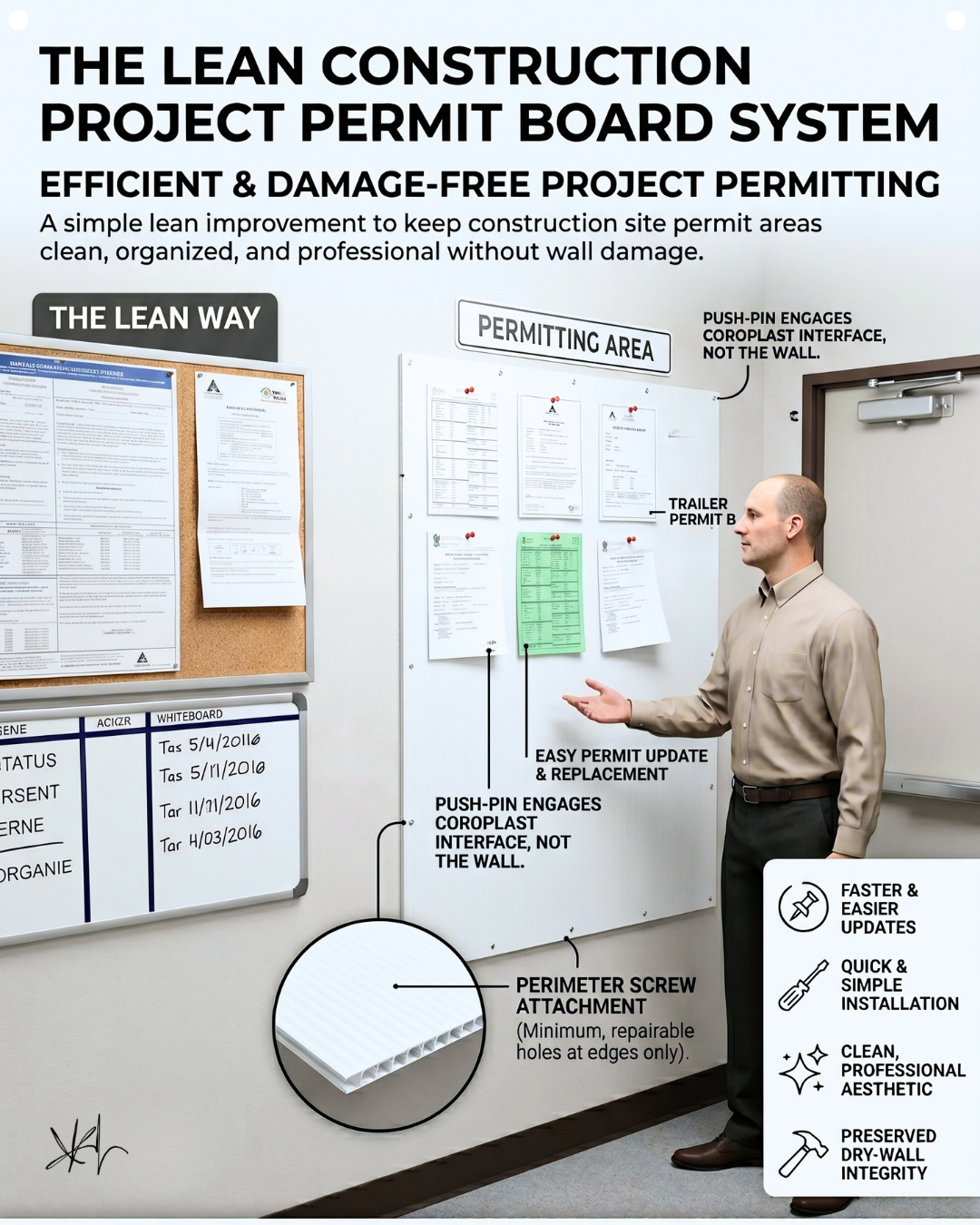
The Construction Craft BBQ

Read 21 min

The Construction Craft BBQ: Why Recognition Is a System, Not a Party

Nothing builds a team quite like good food, cold drinks, and a little friendly cornhole competition.

That’s true, and it’s also the wrong reason to host a crew event. Here’s the deal. If recognition only happens when someone decides to feel generous, it isn’t a system. It’s a mood. And moods don’t produce stable crews, predictable schedules, or projects where people actually show up on Monday ready to work. The Construction Craft BBQ isn’t a party that happens to take place on a jobsite. It’s a leadership tool, and the people who treat it that way get different results from the ones who don’t.

The Pain That Goes Unnamed

Walk any active project and ask yourself how often the crew hears something other than a problem. Think honestly about the answer.

In construction, the feedback loop is almost entirely negative. The pour was late. The layout was off. The punch list is long. The foreman got a call because something didn’t pass inspection. These are real problems that need real conversations and nobody is arguing otherwise. But when correction is the only communication people receive, they build a model of what leadership notices, and that model is: mistakes get seen, and good work disappears into the schedule.

A welder who hits every connection right, every day, for six months hears nothing. The week one connection gets flagged, they hear about it immediately. Over time, that asymmetry lands as a signal, even when nobody intends it as one. The signal is: you are invisible when things go well and visible only when things go wrong. That is a system communicating something about how the organization values its people, and the people receive it clearly whether management knows it’s being sent or not.

This is the pain that nobody logs. It doesn’t show up on a punch list. It doesn’t get reported in a safety meeting. It accumulates quietly in the form of turnover, disengagement, and the kind of crew that does enough to stay employed rather than the kind that takes real ownership of the work.

The Failure Pattern

The failure pattern here is familiar. We design systems for the work and assume the people will manage themselves.

We have a schedule for material delivery. We have a process for RFIs. We have a submittal log, an inspection protocol, a safety program with documented procedures and regular audits. The operations of the project get designed with real intention. Then someone asks about crew morale and the answer is a pause followed by “I try to say good morning.” That’s not a system. That’s a habit, and habits skip the day you’re stressed about the budget.

The same superintendent who would never let material delivery happen on gut feeling is running crew engagement entirely on intuition. When the project is going well, they’re in a good mood, the crew feels it, things stay loose and positive. When the schedule is tight, the mood changes, the conversations get shorter, and the recognition disappears entirely. That’s exactly when people most need to know that the organization sees them.

Morale doesn’t need a party. It needs a cadence. It needs a decision made upstream that recognition is a scheduled input, not a reaction to a good week.

They Didn’t Fail the System

When a crew isn’t engaged, when the energy is flat, when people are punching in and doing the minimum, when turnover is high and ownership is low, the diagnosis in this industry is usually about the workers. They don’t care. They’re not that crew. Hard to get good people anymore.

That diagnosis protects the system from having to change. The problem gets attributed to the people, and since you can’t fix people, nothing gets fixed.

Here’s what I’d ask instead. What does this project do to make people feel like their work is seen? How often does a craftsperson hear something other than a correction or a deadline? What has the project invested in letting the crew know they matter to the outcome? If the answer is “not much,” that’s a system gap, not a workforce gap. And system gaps can be closed.

The craftsperson who stopped caring used to care. Something in the environment taught them not to. It wasn’t a character failure. It was a rational adaptation to working in a place that stopped communicating their value.

What the BBQ Actually Builds

We pulled the whole crew away from the tools for a few hours of recognition, good food, and genuine connection. Prize giving, a main grill station, picnic tables, ice chests, cornhole, basketball, a stage for recognition, all built into a fenced perimeter that turned a parking lot into a community for a few hours.

What that event actually builds can’t be grilled or poured into a cup, but it is real and it is durable.

The first thing it builds is visibility. Recognition in front of peers is categorically different from recognition in a one-on-one or a foreman’s verbal comment at the end of a shift. When a craftsperson gets called out in front of their crew and hears appreciation acknowledged publicly, it communicates something the schedule can’t: your work was noticed, and the people around you know it was noticed. That’s not a small thing. It’s the kind of signal that carries through weeks of difficult work.

The second thing it builds is horizontal trust, the trust between crew members, between trades, between the people who have to coordinate their work every single day. Sitting at the same picnic table outside of a work context is not the same as working alongside someone. Problems get solved differently by people who have eaten together. Coordination happens faster, conflicts resolve quicker, and the social friction that costs real hours on a project starts to reduce. That’s not a theory about workplace culture. That’s what happens when people become more than their role to each other.

The third thing it builds is a signal about the kind of project this is. Projects develop reputations in trades communities faster than most GCs realize. The project that hosts a craft BBQ, calls people by name, and runs a recognition event is the project that gets calls when a skilled tradesperson is choosing where to put their labor. Over a long project, the ability to attract and retain good craftspeople is a scheduling variable, not just an HR concern.

Recognition as a Lean Tool

This is where the thinking gets important, because it’s where most operations-focused people either tune in or tune out.

Lean construction is about flow. Smooth, predictable, uninterrupted work. Takt planning is the method most commonly associated with that idea, and it works when the crews are stable, motivated, and operating with a shared sense of where the project is going. Takt doesn’t work well with high turnover. It doesn’t work well with disengaged crews. It doesn’t work well on projects where the trades feel like interchangeable inputs rather than skilled contributors to a shared outcome.

Morale is a flow input. That statement will sound soft to some people and obvious to others. The ones it sounds obvious to are usually running the better projects. When the crew is engaged, problems surface earlier, coordination happens more naturally, quality issues get caught at the source rather than at inspection, and the schedule benefits from dozens of small acts of ownership that never appear in a project report. When the crew is disengaged, the opposite is true, and no schedule update will fix it, because the schedule never was the problem.

Watch-Outs Before You Plan One

A few things that will determine whether a crew event actually lands or just runs up a food cost:

  • Recognition that isn’t specific rings hollow; call people out by name for actual work, not generic appreciation
  • If leadership only shows up to eat and leaves early, the crew notices and the signal goes the wrong direction
  • Frequency matters; a single annual event is better than nothing and far less effective than a consistent cadence
  • Don’t use the platform to deliver project updates or reminders about safety compliance; let it be what it is
  • Ask the crew what they’d want before you plan it, because the planning process is itself a form of respect

Why Families Are in the Equation

Every craftsperson on that site goes home to someone. A partner, a parent, a kid, a roommate. Someone is calibrating their relationship to this job partly based on how the person they care about comes through the door. When someone comes home energized, valued, and proud of where they’re working, that shows up at home. When they come home beaten down by a project that never sees them, that shows up at home too.

This is not a soft point about feelings. It is a point about sustainability. Construction is hard work. Long days, tight schedules, and weather that rarely cooperates. People can sustain that level of difficulty when they feel like the work is worth it and the organization sees them clearly. They cannot sustain it indefinitely when the return is only a paycheck. Turnover costs are visible. The cost of the disengaged worker who stayed is invisible and much larger.

Culture that respects the people doing the work is not a morale program separate from the schedule and the budget. It is the substrate on which everything else is built. If your project needs superintendent coaching, project support, or leadership development, Elevate Construction can help your field teams stabilize, schedule, and flow, and that work is grounded in the recognition that the people behind the project are the system, and systems that respect their people perform better. Jason Schroeder and the Elevate team bring that philosophy to every engagement, from Takt planning to leadership development to building the culture that makes the schedule achievable.

Go See Who You’re Missing

Here’s your challenge. This week, before you plan any event, go walk your project and identify the person whose work has been excellent and invisible. The one who shows up on time, does the work right, doesn’t create problems, and hasn’t heard anything from leadership in thirty days. Find that person. Say something specific and true about what you’ve seen.

That’s the smallest possible version of this. The BBQ is the larger version. Both matter. Neither one requires a budget approval or a planning committee. The crew that knows it is seen will outwork, outstay, and outperform the crew that doesn’t, and the difference lives entirely in decisions leaders make before the schedule gets tight.

  1. Edwards Deming said it plainly: “A bad system will beat a good person every time.” Your people are good. The recognition system is yours to build. Go build it.

On we go.

FAQ

Isn’t a crew BBQ just a morale booster that doesn’t change how the project runs?
It changes the project in ways that don’t show up in the budget but do show up in the schedule. Horizontal trust between crew members, willingness to flag problems early, and ownership of quality all improve in environments where people feel seen. Those behaviors are schedule variables, not cultural niceties, and they compound over a long project in ways that matter to the outcome.

How do you make recognition feel real instead of performative?
Specificity is everything. “Thanks for being here” lands differently than “On the north wall pour last Thursday, you caught that mix issue before the truck left and that mattered and I want everyone to know it.” The more specific the recognition, the more credibly it communicates that someone was actually paying attention to the work.

How often should something like this happen?
Often enough to establish a cadence. Once a quarter is a reasonable minimum on a multi-year project. The event itself matters less than the regularity. A crew that can anticipate recognition has a different relationship to the work than a crew waiting to see if management happens to feel generous that month.

If you want to learn more we have:

-Takt Virtual Training: (Click here)
-Check out our Youtube channel for more info: (Click here) 
-Listen to the Elevate Construction podcast: (Click here) 
-Check out our training programs and certifications: (Click here)
-The Takt Book: (Click here)

Discover Jason’s Expertise:

Meet Jason Schroeder, the driving force behind Elevate Construction IST. As the company’s owner and principal consultant, he’s dedicated to taking construction to new heights. With a wealth of industry experience, he’s crafted the Field Engineer Boot Camp and Superintendent Boot Camp – intensive training programs engineered to cultivate top-tier leaders capable of steering their teams towards success. Jason’s vision? To expand his training initiatives across the nation, empowering construction firms to soar to unprecedented levels of excellence.
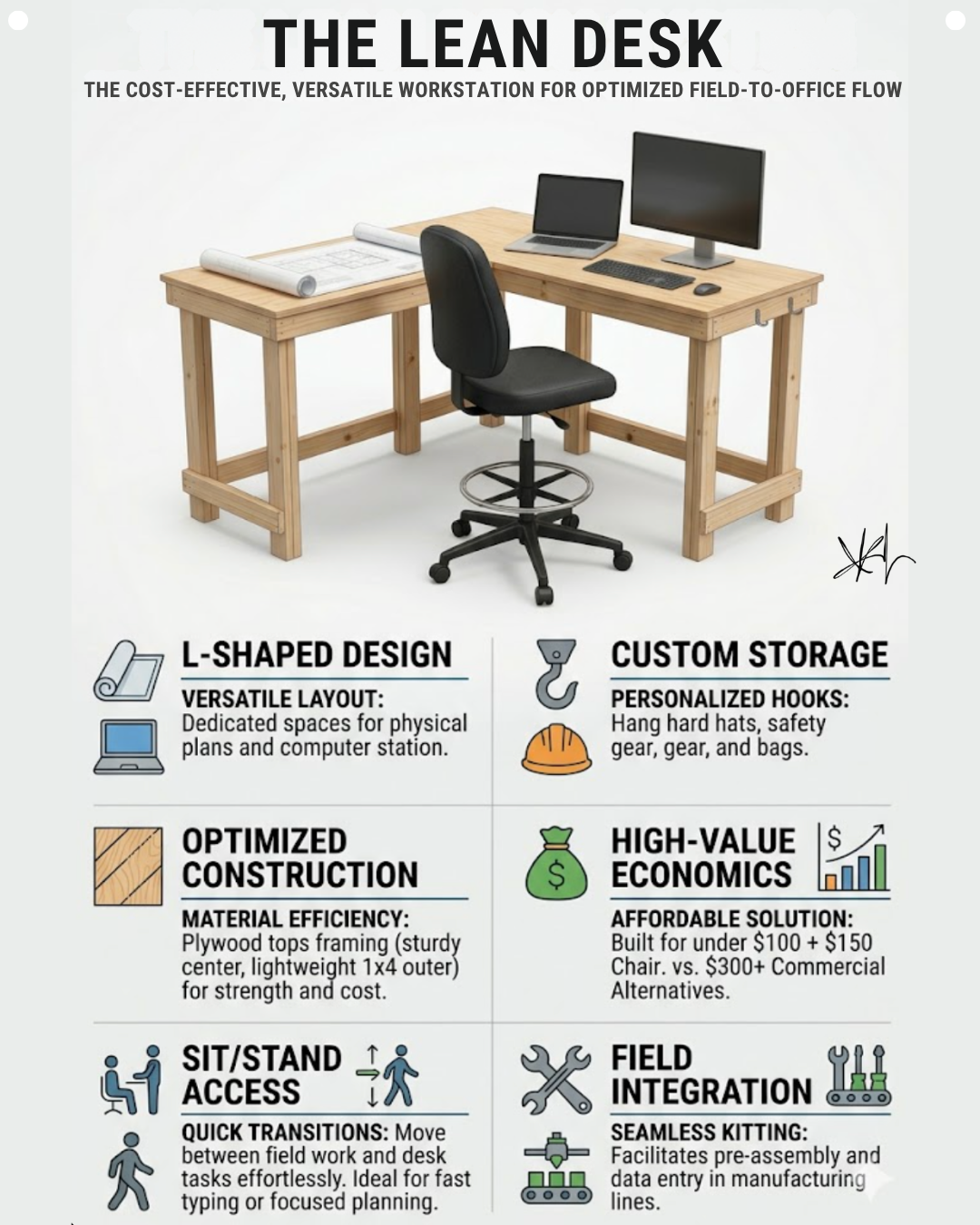
The Lean Construction Project Permit Board System

Read 21 min

The Permit Board Problem: What a $12 Fix Teaches About Lean Construction

The best lean improvements are usually the quiet ones. Nobody writes a case study about them. There’s no kickoff meeting, no rollout plan, no consultant in the room. Somebody just notices friction, fixes it, and the friction is gone.

Here’s the deal. On our project in Tucson, I needed a permitting area in the trailer. Hazmat signs, emergency response plans, blue stake tickets, project-specific permits all the documentation crews actually need to see, in one place they can find it. Straightforward requirement. And it fought me for weeks.

The Pain That Nobody Logs

Pinning anything into drywall is a pain. That sounds trivial until you’re doing it forty times. Push pins bend or won’t seat. You push harder, you punch through the paper facing, the pin sits crooked and the permit hangs at an angle. Screwing permits directly to the wall isn’t much better now you need a driver, you’re making a bigger hole, and the permit tears at the screw head the first time somebody bumps it.

And permits change. Constantly. That’s not a flaw in the process, that’s the process. A blue stake ticket has a life measured in days. An emergency response plan gets revised. A hazmat sign gets superseded. Every single change means another set of holes.

So a few months in, the wall looks like it lost a fight. Hundreds of holes, most of them ragged, scattered across a surface that’s supposed to read as professional. And when a crew walks in to check a permit, the first thing they see isn’t organization. It’s a mess.

The Failure Pattern Underneath

Here’s what’s actually going on, and it’s worth naming precisely because it repeats everywhere.

We treat the wall as free. It isn’t. Every hole is a small withdrawal from a shared resource the trailer’s condition, the demob budget, the visual standard of the space. Nobody accounts for those withdrawals because each one is nearly zero. Then at the end of the job, someone gets handed the bill in the form of patch and paint, or a landlord conversation, or a wall that just stays ugly for eighteen months.

That’s the pattern: friction gets absorbed by the person doing the work, and damage gets deferred to whoever is standing there at the end. Neither cost shows up in a system anyone is watching.

And notice what the pattern is not. It’s not that superintendents are careless with trailers. It’s not that crews don’t respect the space. Nobody wakes up wanting to put four hundred holes in drywall. They put four hundred holes in drywall because the environment gave them exactly one way to hang a piece of paper, and that way damages the environment. The behavior is a rational response to the setup.

They Didn’t Fail the System

I want to be direct about this because it’s the part people skip.

When a field team is working in a trailer that looks beat up, or a laydown yard that’s disorganized, or a gang box that nobody can find anything in the instinct in this industry is to say somebody isn’t holding a standard. Get after them. Do a walk, take pictures, send an email about professionalism.

That’s the wrong diagnosis nearly every time. The team didn’t fail the standard. The system never gave them a way to meet it. Nobody designed a permit interface, so they improvised with what was in front of them. Nobody designed a staging plan, so material landed wherever the truck could get to. Nobody built a kitting process, so tools ended up in a pile.

People meet standards when the environment makes meeting them the easy path. When meeting the standard requires fighting the environment forty times a day, the standard loses. Every time. That’s not a character finding, it’s a design finding.

The Fix Took Ten Minutes

A sheet of Coroplast, screwed into the wall at the perimeter only.

That’s it. That’s the whole intervention. But look at what it changes.

The push pins now engage the Coroplast, not the drywall. Coroplast is fluted plastic the pins seat cleanly, hold reliably, and pull out without tearing anything. Permits swap in and out in seconds. The drywall behind it never gets touched, because the only fasteners going into the wall are the handful of perimeter screws holding the sheet up. When we demob, there are a few repairable holes at the edges instead of hundreds scattered across the surface.

And it looks sharp. A small “Permitting Area” sign up top, permits arranged in a grid on a clean white field, and the whole space reads organized and professional. A crew walking in to check a blue stake ticket sees a system, not a bulletin board that lost control of itself.

Ten minutes of work. Materials cost less than lunch. The friction is permanently gone, and so is the deferred damage.

What Made It Work

The mechanism is worth understanding, because it generalizes. What the Coroplast did was insert a sacrificial interface between a high-change activity and a permanent surface.

That’s the whole idea. Permits change often. Drywall is permanent and expensive to repair. Putting a cheap, replaceable layer between them means the frequent activity happens against the cheap layer and the permanent surface stays untouched.

Once you see that pattern, you see it everywhere. Plywood over a finished floor in a work zone. A magnetic whiteboard sleeve over a printed Takt plan so it can be marked and wiped instead of reprinted. Protective film on a window that’s going to have a hundred stickers on it. Same logic every time: identify what changes often, identify what you can’t afford to damage, and put something disposable in between.

That’s not a hack. That’s a design principle. And it costs almost nothing to apply once you’re looking for it.

Signals You Have a Friction Problem Worth Fixing

Most of these small opportunities announce themselves if you’re paying attention. Watch for:

  • A task you do frequently that requires more force, tools, or patience than it should
  • Accumulating damage that nobody has decided is a problem yet
  • A space that looks worse than the standard you’d claim to hold, with no one obviously at fault
  • People developing workarounds tape, weights, propped-up things to make an environment work
  • A recurring small annoyance you’ve stopped noticing because you’ve adapted to it

That last one is the hardest to catch and usually the most valuable. Adaptation hides waste. You stop seeing the problem because you got good at absorbing it.

Why the Small Stuff Actually Matters

Somebody reading this is thinking: it’s a permit board. We have a schedule to hit.

Fair. Here’s the connection.

Flow is not built by one large intervention. Flow is built by removing a hundred small collisions between people and their environment. The permit board is one. The material laydown location is another. The distance from the gang box to the work face. The clarity of the Takt zone markings. The time it takes to find the current version of a drawing. Each of those is small. Together they are the difference between a crew that gets a productive day and a crew that spends two hours a day fighting the jobsite.

And when crews fight the jobsite, the schedule slips. When the schedule slips, someone works a Saturday. That Saturday is a family dinner, a kid’s game, a day off that got taken from somebody. The chain from a small friction to a real human cost is shorter than most people think.

There’s also a signal effect that’s harder to quantify but easy to feel. A trailer with a clean, well-organized permitting area tells every crew that walks through it: somebody is paying attention here. A wall full of holes tells them the opposite. Standards are contagious in both directions, and the environment communicates the standard before any human does.

Watch-Outs Before You Start Improving

If you’re going to go looking for these, a few things I’d keep in mind:

  • Fix the friction you actually experience, not the one that would look good in a photo
  • Keep the intervention cheap and reversible expensive fixes invite debate and delay
  • Don’t announce it as an initiative; just do it and let people notice
  • Solve for the person doing the task forty times, not for the person inspecting it once
  • Respect the space you’re borrowing, even when it’s temporary, because temporary is where most of the damage happens

The Mission Underneath a Sheet of Plastic

This is what Lean looks like most days. Not a massive initiative. Not a transformation program. Just noticing friction, fixing it, and respecting the space and the people working in it.

That respect part isn’t decorative. When you make someone’s frequent task easier, you’re telling them their time is worth designing for. When you keep a shared space intact and organized, you’re telling every person who uses it that they’re working somewhere that’s cared for. Dignity in construction is built out of exactly these small signals, accumulated daily. It’s not built in the all-hands meeting.

That’s also why this work is teachable rather than mysterious. Go look, find the catch, insert a cheap interface, move on. If your project needs superintendent coaching, project support, or leadership development, Elevate Construction can help your field teams stabilize, schedule, and flow and in practice that work starts with exactly this habit, applied a hundred times across a project until stability stops being an accident. It’s the same discipline that makes Takt planning work at scale, and Jason Schroeder teaches it the same way: observe first, then fix what you actually saw.

Your Challenge This Week

Find one. Just one.

Walk your trailer, your gang box, your laydown yard, your permitting wall, and find the single most annoying small thing you’ve stopped noticing. Not the biggest problem on your project. The most frequent one. Then fix it this week, cheaply, without asking permission for something that doesn’t require permission.

Edwards Deming said it as directly as it can be said: “It is not enough to do your best; you must know what to do, and then do your best.” Knowing what to do starts with going and looking. The looking is the skill. The fixing is usually ten minutes.

On we go.

Frequently Asked Questions

Isn’t this too small to count as a Lean improvement?
It’s exactly the right size. Lean isn’t a set of large programs, it’s a habit of removing waste where you find it. A ten-minute fix that eliminates a recurring friction and prevents accumulating damage is a textbook improvement. The industry’s mistake is assuming Lean has to arrive as an initiative with a budget attached.

Why Coroplast specifically instead of plywood or cork?
Coroplast is fluted plastic, so push pins seat into the channels and hold well without needing thickness or weight. It’s light enough to hang with a few perimeter screws, cheap, and it looks clean and white rather than industrial. Plywood works but is heavier and needs more fastening. Cork works but wears out and looks tired fast. The principle matters more than the material use what gives you a cheap sacrificial layer.

How do I convince my team to spend time on things like this?
Don’t ask, just do it, then let the result speak. Most of these fixes are under an hour and under fifty dollars, which is well inside the discretion of anyone running a trailer. Permission-seeking is what kills small improvements the approval process costs more than the fix.

If you want to learn more we have:

-Takt Virtual Training: (Click here)
-Check out our Youtube channel for more info: (Click here) 
-Listen to the Elevate Construction podcast: (Click here) 
-Check out our training programs and certifications: (Click here)
-The Takt Book: (Click here)

Discover Jason’s Expertise:

Meet Jason Schroeder, the driving force behind Elevate Construction IST. As the company’s owner and principal consultant, he’s dedicated to taking construction to new heights. With a wealth of industry experience, he’s crafted the Field Engineer Boot Camp and Superintendent Boot Camp – intensive training programs engineered to cultivate top-tier leaders capable of steering their teams towards success. Jason’s vision? To expand his training initiatives across the nation, empowering construction firms to soar to unprecedented levels of excellence.

THE LEAN DESK

Read 20 min

The Lean Desk: What Building Your Own Workstation Teaches You About Flow

Commercial desks start at $300. Mine cost less than that chair included.

Here’s the deal. I built a workstation from plywood and framing lumber, and it works better than anything I could have ordered. Not because I’m a better woodworker than the people who manufacture office furniture. I’m not. It works better because I built it around the work instead of building the work around it. That’s the whole story, and it’s a story that has almost nothing to do with desks.

The Pain Nobody Names

Walk into most field offices and look at what people are actually doing. Someone has a set of plans half-unrolled, weighted down with a coffee cup and a tape measure. Their laptop is shoved to the side at an angle, because the plans took the desk. Their hard hat is on the floor. Their site bag is under the chair, which means they kick it every time they stand up. And they stand up constantly, because half their job is out there and half of it is in here.

So they shuffle. Plans off, laptop over, type for four minutes, laptop back, plans out, find the detail, walk out to the field, come back, repeat. Twelve times a day. Nobody logs it. Nobody calls it waste. It just feels like Tuesday.

And when the RFI goes out late, or the daily report doesn’t get entered, or the look-ahead never gets updated, we don’t look at the desk. We look at the person. We say they’re disorganized. We say they need better time management. We say they need to be more detail-oriented.

The Failure Pattern

The pattern is this: we buy tools for a generic version of the work, then blame people when the real work doesn’t fit.

A commercial desk is designed for one mode of work sitting, typing, looking at a screen. That’s a legitimate design. It’s just not the job. The job is three modes: physical documents, digital documents, and field movement. A desk built for one of three modes will lose two-thirds of the time, and the person using it will absorb every one of those losses in small, invisible increments of friction.

This is the same failure pattern that shows up everywhere in construction, at every scale. We install a system designed for an average project, then ask the crew to bend around it. We hand a superintendent a schedule built in an office by someone who never walked the deck. We roll out software designed for a general contractor’s accounting department and tell the field to enter their data into it. Then we hold meetings about accountability.

The person isn’t the variable. The tool is. And the tool was selected by a system that never asked what the work actually requires.

They Didn’t Fail the System

I want to be direct about this, because it matters more than any of the practical stuff that follows. When a superintendent is drowning in shuffled paperwork and missed entries, that superintendent has not failed. The system failed them. They were handed a workstation that fights them, a schedule that lies to them, and a set of expectations that assumes none of that friction exists.

Same with the trades. When a crew has to walk 400 feet to a material drop, stage in a congested area, and work around three other crews in the same zone, and the work comes out slow that’s not a work ethic problem. That’s a flow problem, and flow is designed upstream by people who aren’t holding the tools. Blaming the person at the end of a broken system is the cheapest move in construction and the most common one.

So when I look at a cluttered field desk, I don’t see a disorganized person. I see a system that never designed the workstation.

What I Actually Built

The Lean Desk came out of watching my own friction. I move between physical plans, a computer station, and the field. Constantly. So I built for all three.

It’s L-shaped, which sounds like an aesthetic choice and isn’t. The L creates two dedicated zones one surface stays a plan table, one stays a computer station. Neither has to be cleared for the other. That single decision eliminated the shuffle entirely, because the shuffle only existed because two kinds of work were competing for one surface.

The construction is a plywood top over framing lumber: a 2×4 center frame for strength where the load is, 1×4 outer framing to keep it light and keep the cost down. Material where the work demands it, nothing where it doesn’t. That’s not carpentry philosophy. That’s just paying attention to where the load actually goes.

I added hooks for hard hats, safety gear, and site bags the things commercial desks pretend don’t exist. And I set the height for a drafting chair, so sit-to-stand transitions during long planning sessions are one motion instead of a whole reorganization. The surface area also doubles as a kitting and pre-assembly station, which is useful the moment you start thinking about manufacturing lines and prefabrication in the field.

Total: under $100 for the desk, $150 for the chair. Against $300-plus for a commercial alternative that would have done one-third of the job.

Signals Your Workstation Is Fighting the Work

Before you build anything, notice the friction. These are the symptoms I’d watch for in any field office:

  • You clear one type of work off the surface to make room for another type of work, more than twice a day
  • Your safety gear lives on the floor, a chair, or a windowsill instead of a designated place
  • You stay seated to avoid the hassle of standing up, even when standing would help you think
  • Plans get printed at a smaller scale than they should be, because the big set doesn’t fit anywhere
  • Data entry gets deferred to the end of the day or the end of the week, and then gets skipped

None of those are personal failings. Every one of them is a design gap you can close.

Why This Matters Beyond Furniture

Here’s why I’m writing about a desk instead of a schedule.

Friction compounds. A superintendent who loses twenty minutes a day to workstation shuffle doesn’t just lose twenty minutes they lose the mental continuity that makes good planning possible. The look-ahead gets thinner. The constraints don’t get logged. The trades show up to a zone that isn’t ready, and now the friction has left the office and landed on a crew of eight people. That crew loses a half-day. The half-day gets absorbed by pushing everyone downstream. And two months later, somebody is working a Saturday to make up time on a schedule that was never realistic.

That Saturday is somebody’s kid’s game. That’s the actual cost, and it started with a desk.

This is why Takt planning and flow thinking start with observation, not with software. You watch the work. You find where it catches. You redesign the environment so the work moves. It’s the same discipline whether you’re designing a workstation, a material laydown yard, or a Takt zone. The scale changes. The method doesn’t.

Before You Build: Watch-Outs

If you take a swing at building your own, a few things worth knowing:

  • Measure your actual work, not your imagined work count how many times you switch modes in a real day before you design zones
  • Don’t over-engineer the frame; put material where the load is and leave the rest light
  • Build for the gear you carry, not the gear a catalog assumes you carry
  • Match the height to the chair you already own, or budget for the chair as part of the build
  • Expect to modify it after two weeks of use, and don’t finish it so nicely that you’re afraid to

The Mission Underneath This

Every one of these decisions is about dignity. A person who has the right tool for the work can do the work well, and doing work well is where pride comes from. A person fighting their own workstation all day is being told, quietly and constantly, that their time doesn’t matter enough to design for. That message lands. It shows up as burnout, as turnover, as people leaving a trade they were good at.

Stable flow, predictable days, and tools that fit the work that’s not efficiency for its own sake. That’s how you build a project where people go home on time to families that are expecting them. That’s the whole point of Lean in construction, and everything else is a technique in service of it. If your project needs superintendent coaching, project support, or leadership development, Elevate Construction can help your field teams stabilize, schedule, and flow and it usually starts exactly here, with someone going out and honestly watching where the work catches.

Go Look at Your Own Friction

Here’s your challenge. This week, don’t fix anything. Just count. Count how many times you clear your desk to change modes. Count how many steps to your gear. Count the deferred data entry. Write the numbers down, because the numbers are what make the invisible visible, and you cannot improve a problem you haven’t seen.

Then build something. A desk, a laydown plan, a Takt zone, a kitting cart. Something small, something you can modify, something designed around the work as it actually happens instead of the work as somebody assumed it happens.

  1. Edwards Deming put it as plainly as it can be put: “A bad system will beat a good person every time.” Your people are good. Go fix the system around them.

On we go.

Frequently Asked Questions

Isn’t building your own desk a distraction from real project work?
It’s a two-hour build that removes friction from every workday after it. But the bigger value isn’t the desk it’s the practice of observing your own work closely enough to redesign it. That skill transfers directly to laydown areas, Takt zone design, and material flow. If you can see the waste in your own workstation, you can see it on the deck.

Why does the L-shape matter so much?
Because it eliminates competition for surface area. Physical plans and computer work are two different modes, and when they share one surface, every mode switch costs you a cleanup and a setup. Two dedicated zones means zero switching cost. That’s the same logic behind separating trades into distinct Takt zones instead of stacking them in the same space.

What if my company won’t approve a custom workstation?
Then start with what doesn’t need approval. Hooks for your gear. A dedicated plan surface, even a temporary one. Reorganizing what you already have so the two modes stop fighting. Most of the gain here comes from the zoning decision, not the lumber.

How does this connect to Takt planning and LeanTakt?
Takt planning is the discipline of designing space and time so work flows without collision. A workstation is the smallest possible version of that same problem two kinds of work, one space, a collision. Solve it at desk scale and the logic at project scale becomes obvious. Jason Schroeder and the team at Elevate Construction teach the larger version, but it starts with seeing the small one.

If you want to learn more we have:

-Takt Virtual Training: (Click here)
-Check out our Youtube channel for more info: (Click here) 
-Listen to the Elevate Construction podcast: (Click here) 
-Check out our training programs and certifications: (Click here)
-The Takt Book: (Click here)

Discover Jason’s Expertise:

Meet Jason Schroeder, the driving force behind Elevate Construction IST. As the company’s owner and principal consultant, he’s dedicated to taking construction to new heights. With a wealth of industry experience, he’s crafted the Field Engineer Boot Camp and Superintendent Boot Camp – intensive training programs engineered to cultivate top-tier leaders capable of steering their teams towards success. Jason’s vision? To expand his training initiatives across the nation, empowering construction firms to soar to unprecedented levels of excellence.

    Scam Alert

    Important Scam Alert: Fake Elevate Construction Job Emails

    We have been made aware that scammers are impersonating Kate Schroeder and Elevate Construction and advertising a fake Regional Sales Manager position.
    These emails are not from our team. Elevate Construction will never ask job applicants to download software or install an application to schedule an interview.
    Please do not click any links, download anything, or share personal information. Report the email as phishing and verify any job opportunity directly through our official website or social media channels.
    Please share this notice to help protect others.

    Related Books

    The First Planner System: The Project Planning System for Executives, Project Managers, and Superintendents in Pre-construction - Book 2
    Pull Planning For Builders: How to Pull Plan Right, Respect People, and Gain Time (The Art of the Builder)
    The Ten Improvements to Production Planning: What Lean Builders Can Do To Improve Short Interval Planning (The Art of the Builder)

    Related Books

    The First Planner System: The Project Planning System for Executives, Project Managers, and Superintendents in Pre-construction - Book 2
    Built to Fail: Why Construction Projects Take So Long, Cost Too Much, And How to Fix It

    Related Books

    The First Planner System: The Project Planning System for Executives, Project Managers, and Superintendents in Pre-construction - Book 2
    The 10 Myths of CPM: How The Critical Path Method Systematizes Disrespect for People
    Calumet "K"

    faq

    General Training Overview

    What construction leadership training programs does LeanTakt offer?
    LeanTakt offers Superintendent/PM Boot Camps, Virtual Takt Production System® Training, Onsite Takt Simulations, and Foreman & Field Engineer Training. Each program is tailored to different leadership levels in construction.
    Who should attend LeanTakt’s training programs?
    Superintendents, Project Managers, Foremen, Field Engineers, and trade partners who want to improve planning, communication, and execution on projects.
    How do these training programs improve project performance?
    They provide proven Lean and Takt systems that reduce chaos, improve reliability, strengthen collaboration, and accelerate project delivery.
    What makes LeanTakt’s training different from other construction courses?
    Our programs are hands-on, field-tested, and focused on practical application—not just classroom theory.
    Do I need prior Lean or takt planning experience to attend?
    No. Our programs cover foundational principles before moving into advanced applications.
    How quickly can I apply what I learn on real projects?
    Most participants begin applying new skills immediately, often the same week they complete the program.
    Are these trainings designed for both office and field leaders?
    Yes. We equip both project managers and superintendents with tools that connect field and office operations.
    What industries benefit most from LeanTakt training?
    Commercial, multifamily, residential, industrial, and infrastructure projects all benefit from flow-based planning.
    Do participants receive certificates after completing training?
    Yes. Every participant receives a LeanTakt Certificate of Completion.
    Is LeanTakt training recognized in the construction industry?
    Yes. Our programs are widely respected among leading GCs, subcontractors, and construction professionals.

    Superintendent / PM Boot Camp

    What is the Superintendent & Project Manager Boot Camp?
    It’s a 5-day immersive training for superintendents and PMs to master Lean leadership, takt planning, and project flow.
    How long does the Superintendent/PM Boot Camp last?
    Five full days of hands-on training.
    What topics are covered in the Boot Camp curriculum?
    Lean leadership, Takt Planning, logistics, daily planning, field-office communication, and team health.
    How does the Boot Camp improve leadership and scheduling skills?
    Yes. You’ll learn how to run day huddles, team meetings, worker huddles, and Lean coordination processes.
    Who is the Boot Camp best suited for?
    Construction leaders responsible for delivering projects, including Superintendents, PMs, and Field Leaders.
    What real-world challenges are simulated during the Boot Camp?
    Schedule breakdowns, trade conflicts, logistics issues, and communication gaps.
    Will I learn Takt Planning at the Boot Camp?
    Yes. Takt Planning is a core focus of the Boot Camp.
    How does this Boot Camp compare to traditional PM certification?
    It’s practical and execution-based rather than exam-based. You learn by doing, not just studying theory.
    Can my entire project team attend the Boot Camp together?
    Yes. Teams attending together often see the greatest results.
    What kind of real-world challenges do we simulate?
    Improved project flow, fewer delays, better team communication, and stronger leadership confidence.

    Takt Production System® Virtual Training

    What is the Virtual Takt Production System® Training?
    It’s an expert-led online program that teaches Lean construction teams how to implement takt planning.
    How does virtual takt training work?
    Delivered online via live sessions, interactive discussions, and digital tools.
    What are the benefits of online takt planning training?
    Convenience, global accessibility, real-time learning, and immediate application.
    Can I access the virtual training from anywhere?
    Yes. It’s fully web-based and accessible worldwide.
    Can I access the virtual training from anywhere?
    Yes. It’s fully web-based and accessible worldwide.
    What skills will I gain from the Virtual TPS® Training?
    Macro and micro Takt planning, weekly updates, flow management, and CPM integration.
    How long does the virtual training program take?
    The program is typically completed in multiple live sessions across several days.
    Can I watch recordings if I miss a session?
    Yes. Recordings are available to all participants.
    Do you offer group access or company licenses for the virtual training?
    Yes. Teams and companies can enroll together at discounted rates.
    How does the Virtual TPS® Training integrate with CPM tools?
    We show how to align Takt with CPM schedules like Primavera P6 or MS Project.

    Onsite Takt Simulation

    What is a Takt Simulation in construction training?
    It’s a live, interactive workshop that demonstrates takt planning on-site.
    How does the Takt Simulation workshop work?
    Teams participate in hands-on exercises to learn the flow and rhythm of a Takt-based project.
    Can I choose between a 1-day or 2-day Takt Simulation?
    Yes. We offer flexible formats to fit your team’s schedule and needs.
    Who should participate in the Takt Simulation workshop?
    Superintendents, PMs, site supervisors, contractors, and engineers.
    How does a Takt Simulation improve project planning?
    It shows teams how to structure zones, manage flow, and coordinate trades in real time.
    What will my team learn from the onsite simulation?
    How to build and maintain takt plans, manage buffers, and align trade partners.
    Is the simulation tailored to my specific project type?
    Yes. Scenarios can be customized to match your project.
    How do Takt Simulations improve trade partner coordination?
    They strengthen collaboration by making handoffs visible and predictable.
    What results can I expect from an onsite Takt Simulation?
    Improved schedule reliability, better trade collaboration, and reduced rework.
    How many people can join a Takt Simulation session?
    Group sizes are flexible, but typically 15–30 participants per session.

    Foreman & Field Engineer Training

    What is Foreman & Field Engineer Training?
    It’s an on-demand, practical program that equips foremen and engineers with leadership and planning skills.
    How does this training prepare emerging leaders?
    By teaching communication, crew management, and execution strategies.
    Is the training on-demand or scheduled?
    On-demand, tailored to your team’s timing and needs.
    What skills do foremen and engineers gain from this training?
    Planning, safety leadership, coordination, and communication.
    How does the training improve communication between field and office?
    It builds shared systems that align superintendents, engineers, and managers.
    Can the training be customized for my team’s needs?
    Yes. Programs are tailored for your project or company.
    What makes this program different from generic leadership courses?
    It’s construction-specific, field-tested, and focused on real project application.
    How do foremen and field engineers apply this training immediately?
    They can use new systems for planning, coordination, and daily crew management right away.
    Is the training suitable for small construction companies?
    Yes. Small and large teams alike benefit from building flow-based leadership skills.

    Testimonials

    Testimonials

    "The bootcamp I was apart of was amazing. Its was great while it was happening but also had a very profound long-term motivation that is still pushing me to do more, be more. It sounds a little strange to say that a construction bootcamp changed my life, but it has. It has opened my eyes to many possibilities on how a project can be successfully run. It’s also provided some very positive ideas on how people can and should be treated in construction.

    I am a hungry person by nature, so it doesn’t take a lot to get to participate. I loved the way it was not just about participating, it was also about doing it with conviction, passion, humility and if it wasn’t portrayed that way you had to do it again."

    "It's great to be a part of a company that has similar values to my own, especially regarding how we treat our trade partners. The idea of "you gotta make them feel worse to make them do better" has been preached at me for years. I struggled with this as you will not find a single psychology textbook stating these beliefs. In fact it is quite the opposite, and causing conflict is a recipe for disaster. I'm still honestly in shock I have found a company that has based its values on scientific facts based on human nature. That along with the Takt scheduling system makes everything even better. I am happy to be a part of a change that has been long overdue in our industry!"

    "Wicked team building, so valuable for the forehumans of the sub trades to know the how and why. Great tools and resources. Even though I am involved and use the tools every day, I feel like everything is fresh and at the forefront to use"

    "Jason and his team did an incredible job passing on the overall theory of what they do. After 3 days of running through the course I cannot see any holes in their concept. It works. it's proven to work and I am on board!"

    "Loved the pull planning, Takt planning, and logistic model planning. Well thought out and professional"

    "The Super/PM Boot Camp was an excellent experience that furthered my understanding of Lean Practices. The collaboration, group involvement, passion about real project site experiences, and POSITIVE ENERGY. There are no dull moments when you head into this training. Jason and Mr. Montero were always on point and available to help in the break outs sessions. Easily approachable to talk too during breaks and YES, it was fun. I recommend this training for any PM or Superintendent that wants to further their career."

    agenda

    Day 1

    Foundations & Macro Planning

    day2

    Norm Planning & Flow Optimization

    day3

    Advanced Tools & Comparisons

    day4

    Buffers, Controls & Finalization

    day5

    Control Systems & Presentations

    faq

    UNDERSTANDING THE TRAINING

    What is the Virtual Takt Production System® Training by LeanTakt?
    It’s an expert-led online program designed to teach construction professionals how to implement Takt Planning to create flow, eliminate chaos, and align teams across the project lifecycle.
    Who should take the LeanTakt virtual training?
    This training is ideal for Superintendents, Project Managers, Engineers, Schedulers, Trade Partners, and Lean Champions looking to improve planning and execution.
    What topics are covered in the online Takt Production System® course?
    The course covers macro and micro Takt planning, zone creation, buffers, weekly updates, flow management, trade coordination, and integration with CPM tools.
    What makes LeanTakt’s virtual training different from other Lean construction courses?
    Unlike theory-based courses, this training is hands-on, practical, field-tested, and includes live coaching tailored to your actual projects.
    Do I get a certificate after completing the online training?
    Yes. Upon successful completion, participants receive a LeanTakt Certificate of Completion, which validates your knowledge and readiness to implement Takt.

    VALUE AND RESULTS

    What are the benefits of Takt Production System® training for my team?
    It helps teams eliminate bottlenecks, improve planning reliability, align trades, and reduce the chaos typically seen in traditional construction schedules.
    How much time and money can I save with Takt Planning?
    Many projects using Takt see 15–30% reductions in time and cost due to better coordination, fewer delays, and increased team accountability.
    What’s the ROI of virtual Takt training for construction teams?
    The ROI comes from faster project delivery, reduced rework, improved communication, and better resource utilization — often 10x the investment.
    Will this training reduce project delays or rework?
    Yes. By visualizing flow and aligning trades, Takt Planning reduces miscommunication and late handoffs — major causes of delay and rework.
    How soon can I expect to see results on my projects?
    Most teams report seeing improvement in coordination and productivity within the first 2–4 weeks of implementation.

    PLANNING AND SCHEDULING TOPICS

    What is Takt Planning and how is it used in construction?
    Takt Planning is a Lean scheduling method that creates flow by aligning work with time and space, using rhythm-based planning to coordinate teams and reduce waste.
    What’s the difference between macro and micro Takt plans?
    Macro Takt plans focus on the overall project flow and phase durations, while micro Takt plans break down detailed weekly tasks by zone and crew.
    Will I learn how to build a complete Takt plan from scratch?
    Yes. The training teaches you how to build both macro and micro Takt plans tailored to your project, including workflows, buffers, and sequencing.
    How do I update and maintain a Takt schedule each week?
    You’ll learn how to conduct weekly updates using lookaheads, trade feedback, zone progress, and digital tools to maintain schedule reliability.
    Can I integrate Takt Planning with CPM or Primavera P6?
    Yes. The training includes guidance on aligning Takt plans with CPM logic, showing how both systems can work together effectively.
    Will I have access to the instructors during the training?
    Yes. You’ll have opportunities to ask questions, share challenges, and get real-time feedback from LeanTakt coaches.
    Can I ask questions specific to my current project?
    Absolutely. In fact, we encourage it — the training is designed to help you apply Takt to your active jobs.
    Is support available after the training ends?
    Yes. You can access follow-up support, coaching, and community forums to help reinforce implementation.
    Can your tools be customized to my project or team?
    Yes. We offer customizable templates and implementation options to fit different project types, teams, and tech stacks.
    When is the best time in a project lifecycle to take this training?
    Ideally before or during preconstruction, but teams have seen success implementing it mid-project as well.

    APPLICATION & TEAM ADOPTION

    What changes does my team need to adopt Takt Planning?
    Teams must shift from reactive scheduling to proactive, flow-based planning with clear commitments, reliable handoffs, and a visual management mindset.
    Do I need any prior Lean or scheduling experience?
    No prior Lean experience is required. The course is structured to take you from foundational principles to advanced application.
    How long does it take for teams to adapt to Takt Planning?
    Most teams adapt within 2–6 weeks, depending on project size and how fully the system is adopted across roles.
    Can this training work for smaller companies or projects?
    Absolutely. Takt is scalable and especially powerful for small teams seeking better structure and predictability.
    What role do trade partners play in using Takt successfully?
    Trade partners are key collaborators. They help shape realistic flow, manage buffers, and provide feedback during weekly updates.

    VIRTUAL FORMAT & ACCESSIBILITY

    Can I access the virtual training from anywhere?
    Yes. The training is fully accessible online, making it ideal for distributed teams across regions or countries.
    Is this training available internationally?
    Yes. LeanTakt trains teams around the world and supports global implementations.
    Can I watch recordings if I miss a session?
    Yes. All sessions are recorded and made available for later viewing through your training portal.
    Do you offer group access or company licenses?
    Yes. Teams can enroll together at discounted rates, and we offer licenses for enterprise rollouts.
    What technology or setup do I need to join the virtual training?
    A reliable internet connection, webcam, Miro, Spreadsheets, and access to Zoom.

    faq

    GENERAL FAQS

    What is the Superintendent / PM Boot Camp?
    It’s a hands-on leadership training for Superintendents and Project Managers in the construction industry focused on Lean systems, planning, and communication.
    Who is this Boot Camp for?
    Construction professionals including Superintendents, Project Managers, Field Engineers, and Foremen looking to improve planning, leadership, and project flow.
    What makes this construction boot camp different?
    Real-world project simulations, expert coaching, Lean principles, team-based learning, and post-camp support — all built for field leaders.
    Is this just a seminar or classroom training?
    No. It’s a hands-on, immersive experience. You’ll plan, simulate, collaborate, and get feedback — not sit through lectures.
    What is the focus of the training?
    Leadership, project planning, communication, Lean systems, and integrating office-field coordination.

    CURRICULUM & OUTCOMES

    What topics are covered in the Boot Camp?
    Takt planning, day planning, logistics, pre-construction, team health, communication systems, and more.
    What is Takt Planning and why is it taught?
    Takt is a Lean planning method that creates flow and removes chaos. It helps teams deliver projects on time with less stress.
    Will I learn how to lead field teams more effectively?
    Yes. This boot camp focuses on real leadership challenges and gives you systems and strategies to lead high-performing teams.
    Do you cover daily huddles and meeting systems?
    Yes. You’ll learn how to run day huddles, team meetings, worker huddles, and Lean coordination processes.
    What kind of real-world challenges do we simulate?
    You’ll work through real project schedules, logistical constraints, leadership decisions, and field-office communication breakdowns.

    LOGISTICS & FORMAT

    Is the training in-person or virtual?
    It’s 100% in-person to maximize learning, feedback, and team-based interaction.
    How long is the Boot Camp?
    It runs for 5 full days.
    Where is the Boot Camp held?
    Locations vary — typically hosted in a professional training center or project setting. Contact us for the next available city/date.
    Do you offer follow-up coaching after the Boot Camp?
    Yes. Post-camp support is included so you can apply what you’ve learned on your projects.
    Can I ask questions about my actual project?
    Absolutely. That’s encouraged — bring your current challenges.

    PRICING & VALUE

    How much does the Boot Camp cost?
    $5,000 per person.
    Are there any group discounts?
    Yes — get 10% off when 4 or more people from the same company attend.
    What’s the ROI for sending my team?
    Better planning = fewer delays, smoother coordination, and higher team morale — all of which boost productivity and reduce costs.
    Will I see results immediately?
    Most participants apply what they’ve learned as soon as they return to the jobsite — especially with follow-up support.
    Can this replace other leadership training?
    In many cases, yes. This Boot Camp is tailored to construction professionals, unlike generic leadership seminars.

    SEO-BASED / HIGH-INTENT SEARCH QUESTIONS

    What is the best leadership training for construction Superintendents?
    Our Boot Camp offers real-world, field-focused leadership training tailored for construction leaders.
    What’s included in a Superintendent Boot Camp?
    Takt planning, day planning, logistics, pre-construction systems, huddles, simulations, and more.
    Where can I find Lean construction training near me?
    Check our upcoming in-person sessions or request a private boot camp in your city.
    How can I improve field and office communication on a project?
    This Boot Camp teaches you tools and systems to connect field and office workflows seamlessly.
    Is there a training to help reduce chaos on construction sites?
    Yes — this program is built specifically to turn project chaos into flow through structured leadership.