Staging on a Fresh Concrete Deck

Read 22 min

Don’t Stage Everything on the Fresh Deck: Five Rules That Protect the Pour and the Crew

Picture this. A mild-reinforced concrete deck just got placed. The slab is still curing. The field engineer is standing at the edge, taking off their boots to walk out in socks, because they need to establish secondary control grid lines and working lines for walls and columns before the next wave of work starts. They have a window. Maybe thirty minutes, if they’re lucky.

Then the concrete crew shows up with everything. Column cages. Bundles of rebar. Form materials. Tools. Every bit of it lands on the deck because “we need it up there.” The field engineer watches the window close. Now the diagonals can’t get checked. The dimensions can’t get verified. The layout can’t get finished. And the deck they just poured is already buried in material before the next operation has even started.

This happens on jobsites every week. The people are good. The system is bad. And the consequences ripple all the way through the vertical work that follows.

What Actually Goes Wrong When We Stage Everything on the Deck

When the deck gets buried in material right after placement, three failures happen at once. Layout gets compromised, because the engineers can’t walk the surface or check control lines. Quality gets compromised, because rebar bundles and column cages damage the fresh surface and leave the deck trashed by the time the next trade arrives. And flow gets compromised, because every downstream crew inherits a surface they have to work around instead of work on.

The field engineers go home frustrated because they couldn’t do their job. The next trade shows up and has to navigate around material that shouldn’t be there. Rework starts quietly, and by the time anyone names it, the deck has already absorbed damage that will show up in punch lists months later. None of that is necessary. All of it is the byproduct of staging decisions that confuse movement with progress.

Why This Failure Pattern Keeps Repeating

Here’s the pattern. Somebody at some point decided that getting materials “up there” was the same thing as doing the work. It’s not. Staging is not progress. Staging is preparation, and bad staging is worse than no staging at all because it creates downstream damage that looks like someone else’s problem.

The concrete crew isn’t the villain in this story. They’re operating inside a system that rewards moving material and punishes nothing for burying the deck. The people are good. The learned behavior is the problem, and the fix is upstream of the crew. Somebody decided that dropping everything on the fresh deck was acceptable. Somebody decided that layout time didn’t matter enough to protect. Somebody decided that rebar bundles on fresh concrete were normal. Those decisions were never challenged, and now the pattern runs itself.

The system failed them; they didn’t fail the system. That framing matters. We don’t fix this by yelling at the crew. We fix this by naming the pattern, setting the rules, and designing the staging plan so the crew has a better path to follow. Respect for people is not soft. It’s a production strategy. And the strongest respect we show the concrete crew is giving them a staging sequence that actually sets them up to succeed.

A Field Story: The Bioscience Research Laboratory

Here’s a story I carry with me. On a bioscience research laboratory project, we hit this exact problem. Somebody on the team said, “I don’t want rebar all over the place.” The concrete crew pushed back. “Well, what are we going to do? We have to put it on this deck.” I remember looking at that situation and seeing a solved problem disguised as an unsolvable one.

The answer was simple once we said it out loud. Shake out that reinforcing at the shop in the same way it’s going to be unloaded on the deck. Drop the trailer at the hoisting area. While the tractor is going back for another load, unload just-in-time directly into the work. Then swap the trailers out. Yes, it costs one driver a little more time. One driver we honor, love, and respect for doing that extra work. But that one extra effort saves dozens of people downstream from walking over column cages and rebar bundles, saves the deck from getting trashed, and preserves a product the owner paid good money to build.

That story keeps showing up in different forms on different projects, because most staging problems look unsolvable until someone refuses to accept the default and asks, “What if we just didn’t put it all on the deck?”

Why This Matters to Schedule, Quality, and Every Crew Downstream

When a deck gets buried right after placement, the cost travels. Field engineers lose their layout window. Verification slips. Column and wall positions get checked against the next crew’s patience instead of against the actual drawings. Rebar damages the surface, and the finishes team inherits the repair. The form crew for the next deck works around material that’s in their way. Every one of those is a small cost, and they add up to a real schedule and quality hit that traces back to a thirty-minute decision that should have gone differently.

There are families behind all of it. Field engineers who stay late rechecking layout they should have finished in daylight. Foremen who go home burned out from fighting a surface they should have inherited clean. Workers who absorb the rework when the damage surfaces later. If the plan requires burnout to succeed, the plan is broken, not the people. The staging plan is one of the most leveraged places to get that right.

The Five Rules of Deck Staging

If I was a concrete foreman tomorrow, these five rules would live on the wall of my trailer and on every pre-task meeting sheet for deck construction. They’re not complicated. They’re just non-negotiable.

Rule one: give the field engineers their time. Before anything else goes on the deck, the engineers get their layout window uninterrupted, protected, honored. Control grid lines, diagonals, and working lines for walls and columns all get established and checked before staging begins. That window is not a nice-to-have. It is the foundation that every downstream operation is built on.

Rule two: do not damage the existing deck. The surface that was just placed is a product. Treat it like one. That means clean shoes, clean carts, and zero tolerance for dragging or dropping anything that scars or gouges the concrete. If the crew has to pause and think about whether something is going to hurt the deck, that pause is doing its job.

Rule three: do not start up there until you have proper layout. Version control matters. The crew does not start setting, forming, or laying out anything until the engineers have verified the control lines and released the work. Starting early on bad layout is not progress. It is expensive rework in disguise.

Rule four: only bring up what is needed, in lean amounts, in pre-kitted carts and tool assemblies. Specialized tools for standing a few columns. Small bundles for wall layout. Pre-kitted materials for the specific task in front of the crew. Not the whole day’s scope. Not the whole week’s scope. Just what this crew needs for this operation, right now.

Rule five: never, ever stage everything on the deck, especially reinforcing. Column cages and rebar bundles do not belong on a fresh surface. Drop the trailer at the hoisting area. Shake out at the shop. Unload just-in-time, directly into the work. Swap trailers as needed. Protect the deck, protect the next crew, and protect the schedule.

Before You Start, Clean Up the Pour

There’s one more piece of discipline that belongs in the same conversation. Before deck formwork for the next level starts, the columns from the pour below need to be pointed and patched. The cement runoff sometimes called pucky, the cream that vibrates out of the forms at the base needs to be cleaned up before it hardens and bonds to the deck permanently. None of that work gets easier the longer you wait. All of it gets harder, slower, and more expensive when the next operation is already running over the top of it.

The principle is simple. Don’t start until you’re ready to finish. That applies to the pour cleanup, it applies to the layout, and it applies to every staging decision that sits between one operation and the next. Plan it first, build it right, finish as you go.

The Patterns Strong Sites Get Right

When a site is running deck staging the right way, the markers are visible from the first morning:

  • The deck after placement is clean, protected, and walkable, with a clear layout window for the field engineers before any other staging begins.
  • Material drops happen at the hoisting area or at dedicated laydown points, not by default on the fresh deck surface.
  • Rebar and column cages arrive just-in-time, in lean quantities, staged on the trailer or at the hoist zone never broadcast across the deck.
  • Column bases and cement runoff from the pour below are pointed, patched, and cleaned before the next deck’s formwork starts.
  • Pre-task meetings cover the staging plan explicitly, including who protects the field engineer’s layout window and who owns the just-in-time material drops.

Those aren’t stretch goals. Those are the baseline for a site that respects the pour, respects the engineers, and respects the crews downstream.

Build the Staging Plan on Purpose

Most of this failure pattern disappears when the staging plan gets built the same way we build a pull plan collaboratively, visually, and on paper before the first truck arrives. Where will the material stage? What gets dropped at the trailer? What moves just-in-time? Who has the field engineer’s layout window, and when? How does the hoist cycle sync with the material deliveries so the deck never becomes the default parking lot for everything?

Those questions are cheap to answer at the table. They are expensive to answer in the middle of a pour, with a crew standing on the deck, a truck waiting at the gate, and a field engineer watching their window close. If your project needs superintendent coaching, project support, or leadership development, Elevate Construction can help your field teams stabilize, schedule, and flow including the upstream staging discipline that protects every pour and every crew that follows.

A Challenge for Builders

Walk your project this week and look at the last deck that got placed. How did staging land? Did the field engineers get their layout window? Is the surface clean, or is it still carrying damage from bundles and cages that should never have been there? Did the crew bring up what they needed, or did they bring up everything? If the answers are weak, the fix starts with the five rules and a staging plan that actually respects the pour.

As Jason says, “Plan it first, build it right, finish as you go.”

On we go.

Frequently Asked Questions

Why is staging everything on a fresh concrete deck a problem?

Because it compromises three things at once: layout, quality, and flow. Field engineers lose their window to check control lines, the fresh surface gets damaged by bundles and cages, and every downstream crew inherits a deck they have to work around instead of work on.

What’s the alternative to staging rebar on the deck?

Shake out the reinforcing at the shop in the sequence it will be used. Drop the trailer at the hoisting area. Unload just-in-time directly into the work while the tractor is fetching the next load. Swap trailers as needed. It costs one driver a little extra time and saves dozens of people downstream from walking over bundles and cages on a fresh surface.

What should happen before the next deck’s formwork begins?

Point and patch the columns from the pour below, and clean out the cement runoff the cream that vibrates out of the form base before it hardens onto the deck. None of that work gets easier with time. Finish the pour before starting the next operation, so the next crew inherits a clean, ready surface.

If you want to learn more we have:

-Takt Virtual Training: (Click here)
-Check out our Youtube channel for more info: (Click here) 
-Listen to the Elevate Construction podcast: (Click here) 
-Check out our training programs and certifications: (Click here)
-The Takt Book: (Click here)

Discover Jason’s Expertise:

Meet Jason Schroeder, the driving force behind Elevate Construction IST. As the company’s owner and principal consultant, he’s dedicated to taking construction to new heights. With a wealth of industry experience, he’s crafted the Field Engineer Boot Camp and Superintendent Boot Camp – intensive training programs engineered to cultivate top-tier leaders capable of steering their teams towards success. Jason’s vision? To expand his training initiatives across the nation, empowering construction firms to soar to unprecedented levels of excellence.
On we go

Get Out of the Swing Radius

Read 21 min

Get Out of the Swing Radius: Why “That’s How It’s Done” Is Killing People on Our Jobsites

There are conversations in construction that are hard to have, and this is one of them. A worker walks past heavy equipment. They step into the swing radius of a backhoe, or they pass the blade of a grader, or they drop into a trench while the excavator bucket is still moving. Nothing happens that day. Nothing happens the next week. And because nothing happens, somebody files it away as normal practice. Then one day, something does happen, and a family never recovers.

I’m going to be direct in this one. Get out of the swing radius. If you see somebody in it, get them out. If you see them in a ditch while the backhoe is working, get them out. If you see somebody walking near a running blade, stop it. And if anybody on the site tells you you’re overreacting, you’re not. That response is exactly the failure pattern, and it’s the reason we are still losing people to preventable equipment incidents.

The Pain Is Buried Inside a Statistic

Struck-by and caught-between equipment injuries are among the most common serious incidents in construction, and most of them are preventable. Industry sources like OSHA, BLS, and NIOSH track these as broader categories that include excavators, backhoes, loaders, graders, and trucks. The numbers sit at roughly 14,000 non-fatal struck-by injuries per year and around 150 deaths annually in that category. Every one of those numbers has a family behind it.

The swing radius of a backhoe is a known hazard. So is the blade of a grader. So is the arc of any piece of equipment in motion. These are not mysteries. They are printed in operator manuals. They are covered in every serious safety training program. And yet people keep ending up inside those radii every single day, because the industry has quietly decided that “that’s how it’s done” is acceptable. It is not acceptable. It never was.

The Failure Pattern: Normalized Proximity

Here’s how this happens. A worker walks through a swing radius once and nothing happens. A supervisor sees it and says nothing. Another worker does the same thing the next week. The team starts treating equipment proximity as a matter of experience and judgment rather than a matter of system design. Soon, walking under a raised bucket, cutting through the swing radius of a backhoe, or standing in a ditch while the excavator is digging becomes “just how we work.”

That is normalized proximity, and it is a system failure dressed up as culture. Nobody chose it on day one. It got built one unchallenged moment at a time, until the field believed that being close to working equipment was a sign of toughness or experience instead of a sign of leadership failure. The supervisors are not bad people. The operators are not bad people. The workers are not bad people. The system failed them; they didn’t fail the system. Somebody upstream accepted the first drift, and every drift since has been cheaper than challenging it. That is the real failure pattern, and it is fixable but only if we name it honestly.

A Story I Carry With Me

I’ll tell you why this matters to me personally. Years ago I worked for a company called Conco Construction. It was a good company, run by a good family, built by people who cared about each other and cared about their craft. My first boss there was the founder’s son. He was a real builder. Hard worker. Knew the trade. He was one of the people who helped shape how I think about the work.

The company was building a tilt-up behind their own office. Walls were up and braced. They were about to frame the roof. His dad was on the grader, leveling the parking lot. My boss walked out the door without looking left, without looking right. The grader was already coming. The tire caught him. The blade went over him. His dad didn’t see it until it was already over. By the time anyone got to him, there was nothing to be done.

I still have the image my dad described to me of the founder sitting on his bed with his head in his hands, a father who had just lost his son to a piece of his own equipment on his own jobsite. That family was never the same. Decades later, that grief is still there. I used to walk under raised buckets on that same site. I used to stand next to the grader while it was running. I used to treat proximity as experience. None of us knew what we were one bad moment away from.

Why This Matters More Than Schedule

Let me tie this to the families for a minute, because that’s what this is really about. Every worker on every site belongs to somebody. A kid expecting their parent home for dinner. A spouse waiting for a text at the end of the shift. A parent who will never stop worrying. Every single time a worker walks through a swing radius, we are rolling dice on somebody else’s entire life.

If the plan requires burnout to succeed, the plan is broken, not the people. The same logic applies to safety. If the plan requires proximity to working equipment to stay on schedule, the plan is broken, not the people. Respect for people is not soft. It is a production strategy, and in this context it is a survival strategy. The strongest way a leader shows up on a jobsite is by refusing to let the field drift into habits that will one day kill somebody on their watch.

The Standard: Swing Radius Plus a Clear Buffer

Here’s the standard, and it is not complicated. When a backhoe is operating with outriggers down and the boom fully extended, everybody on foot stays outside that full swing radius, plus a buffer. A clear rule of thumb is the full radius plus three to five feet. When a grader is running, nobody is on foot inside its path of travel or its blade arc. When an excavator is digging, nobody is in the ditch. When a loader is moving, nobody is in its travel path. When any piece of heavy equipment is in motion, the exclusion zone around it is a non-negotiable boundary.

This is not overreach. This is the minimum. The swing radius is the most basic spatial rule on a jobsite with heavy equipment, and it should be enforced the same way we enforce PPE, fall protection, or confined space entry. Clear boundary. Clear consequences. Clear authority for anyone on the team to stop work if someone crosses it.

Red Flags That Normalized Proximity Is Already on Your Site

Before the drift becomes damage, look honestly at your own jobsite for these warning signs:

  • Workers routinely walk through the swing radius of a backhoe or excavator without anyone redirecting them.
  • People stand or work in a trench while the excavator is still operating overhead.
  • Spotters are inconsistent, underused, or treated as optional when heavy equipment is moving near people on foot.
  • Exclusion zones around graders, loaders, and blades exist on paper but not on the ground no cones, no tape, no verbal enforcement.
  • Supervisors witness close calls and respond with “we got lucky” instead of a work stoppage and a system fix.

If more than one of these shows up, the culture has already drifted. That is the moment to hold the standard hard and rebuild the system around it.

Stop Work Is a Form of Respect

This is where zero tolerance as clarity, not cruelty, really matters. When you see somebody in the swing radius, you stop work. Not later. Right then. You get the person out. You signal the operator. You pause the activity and reset it. Then you ask, as a team, how the system allowed that moment to happen. Was the exclusion zone marked? Was the spotter in place? Was the communication clear? Was the work sequence designed so that nobody on foot ever needed to be near the machine while it was running?

Stopping work is not a punishment. It is a form of respect for every person on the site and every family connected to them. The best supers I have ever worked with had an instinct for this. They could feel when the distance was wrong, and they moved before their mouths caught up with their feet. That instinct is trainable. It starts with the willingness to stop the project for a moment so that the project doesn’t stop a life.

Build the System, Not Just the Rule

Posting the rule is not the same as building the system that enforces it. A strong site designs equipment interactions so that people on foot and equipment in motion are separated by plan, not by luck. Lay-down zones, traffic routes, spotter assignments, and work sequences are designed so that proximity events are rare by default. Pre-task meetings actually talk about the day’s equipment operations, where the exclusion zones will be, and who has authority to pause the work. Operators and spotters rehearse hand signals and radio protocols before the day starts, not after an incident.

Every one of those design choices reduces the number of moments where somebody has to rely on a split-second judgment to stay alive. We are building people who build things, and that starts with building sites that let people go home. If your project needs superintendent coaching, project support, or leadership development, Elevate Construction can help your field teams stabilize, schedule, and flow and embed the safety culture that makes every other system work.

A Challenge for Builders

Walk your own jobsite today. Watch the equipment operations for ten full minutes. Count how many times a person on foot enters the swing radius of a machine in motion. If that number is anything other than zero, the system has drifted, and it is your job to close the gap. Hold the line. Stop the work when you need to. Redesign the sequence so the proximity never has to happen in the first place. Somebody on your site has a family waiting for them tonight.

As Jason says, “Respect for people is not soft it’s a production strategy.” On a site with heavy equipment, it is also a survival strategy.

On we go.

Frequently Asked Questions

What is the swing radius and why is it so dangerous?

The swing radius is the full arc a piece of equipment covers when it rotates, like a backhoe turning to dump a load. It’s dangerous because the operator’s visibility is limited and the equipment can strike or pin a worker in less than a second. Treat it as a hard exclusion zone whenever the equipment is running.

How far should workers stay from operating heavy equipment?

For a backhoe with outriggers down and boom fully extended, stay outside the full swing radius plus a three-to-five-foot buffer. For graders, loaders, and excavators, keep people on foot out of the equipment’s path of travel and out of any trench while the machine is digging. Spotters and marked exclusion zones should enforce it.

Why do people say “that’s how it’s done” when leaders push back on proximity?

Because the industry has normalized drift over time. Repeated close calls without incident get interpreted as proof the habit is safe, instead of proof the workers were lucky. That framing is the failure pattern. The correct response is to hold the standard, redesign the system, and refuse to trade margin for someone else’s life.

If you want to learn more we have:

-Takt Virtual Training: (Click here)
-Check out our Youtube channel for more info: (Click here) 
-Listen to the Elevate Construction podcast: (Click here) 
-Check out our training programs and certifications: (Click here)
-The Takt Book: (Click here)

Discover Jason’s Expertise:

Meet Jason Schroeder, the driving force behind Elevate Construction IST. As the company’s owner and principal consultant, he’s dedicated to taking construction to new heights. With a wealth of industry experience, he’s crafted the Field Engineer Boot Camp and Superintendent Boot Camp – intensive training programs engineered to cultivate top-tier leaders capable of steering their teams towards success. Jason’s vision? To expand his training initiatives across the nation, empowering construction firms to soar to unprecedented levels of excellence.
On we go

It’s Only Your Way If It Works

Read 20 min

It’s Only Your Way If It Works: Why Weak Superintendents Lose Projects

There’s a phrase that shows up on every struggling jobsite, usually said with a shrug and a little bit of pride. “That’s just not how I do it. I have my own way.” And most of the time, when you look at the project, the way isn’t working. The site is messy. The schedule is slipping. Trades show up late, or not at all. Safety glasses sit on half the crew. Pre-task meetings are inconsistent. The super is fighting fires that should have been prevented upstream.

Here’s the deal. Your way is only valid if it actually works. If your methods produce clean, safe, organized, on-rhythm projects, you’ve earned the right to your own approach. If they don’t, “my way” isn’t a methodology. It’s an excuse to avoid learning the one that does.

When the Site Shows You What’s Really Happening

The pattern shows up on jobsites every week. Trades arrive out of sequence. Materials end up in the wrong zones. Logistics maps exist on paper but not in reality. The weekly plan bears no resemblance to the daily reality. Cleanup happens when someone finally notices. Safety standards drift. Foremen make calls with incomplete information because the super upstream of them isn’t holding the coordination tight enough to catch the gaps.

Underneath all of it, the crews pay the price. They fight the environment instead of installing the work. They improvise around missing materials, missing information, and missing standards. The schedule slips, rework climbs, and at the end of every shift, they go home a little more worn out than they should be.

How Supers Drift Into “My Way”

Here’s how supers drift into this seat. They inherit a project. They don’t fully buy into the systems the company teaches the Takt Production System, the First Planner System, the Last Planner System, zero tolerance, perfect cleanliness and organization. They decide to do it their way. A few months in, the site is chaotic. Trades won’t stack cleanly. Supply chains are tangled. Communication has broken down. And when anyone asks why, the answer is some version of, “That’s how I’ve always done it.”

The problem is that the measurement for whether your way works is not your comfort. The measurement is whether the project is clean, safe, organized, on schedule, and on budget, with trades flowing through zones in rhythm and supply chains delivering on time. If those outcomes aren’t happening, “my way” is not a preference. It’s a system failure wearing a personality.

Weak Isn’t a Character Flaw, It’s a Skill Gap

I want to be direct here because I respect the people who sit in that seat. A weak superintendent is not a bad person. A weak superintendent is someone who hasn’t yet been trained, mentored, or equipped to hold the standard the role demands. Those are two very different things, and the distinction matters.

The system failed them; they didn’t fail the system. Most supers drifted into weakness through a series of small concessions that nobody corrected. They were never shown what a truly clean, safe, organized, flowing site looks like. They were never trained in pull planning, Takt sequencing, or zone control. They were promoted into a seat without the tools the seat requires. Then, when the project started showing cracks, they reached for the only tool they had left personal preference and called it experience.

A Field Story That Shows the Shape

A new project mobilizes. The company standard says zones stay spotlessly clean at end of shift. The new super on the site thinks that’s overkill. They decide cleanliness will happen “when the trades have time.” Six weeks later, the project site looks like a warzone. Materials are buried under debris. Trip hazards are everywhere. Incident rates are climbing. The owner walks the site and is visibly uncomfortable. The schedule has slipped two weeks.

Someone asks the super what happened. The super says the trades won’t keep the site clean. That’s not a trade failure. That’s a superintendent failure. A strong super creates consequences, builds systems, sets the standard, and holds it. A weak super accepts the excuse and passes it up the chain. Same pattern with pre-task meetings. The super decides they’re “slowing things down” and cuts them. A month later, quality issues spike, rework eats the schedule, and the foremen are burned out from confusion. The same super blames the crews for the fallout. “My way” stopped working, and the blame pointed outward.

Why This Matters to Every Crew and Every Family

Weakness in the superintendent seat is not a theoretical problem. It costs crews their safety. It costs trades their schedules. It costs workers their confidence in leadership. And it costs families their dinner conversations when Dad or Mom comes home rattled because the site was out of control again.

If the plan requires burnout to succeed, the plan is broken, not the people. The superintendent is one of the most leveraged positions on any project for deciding whether burnout is the default or the exception. When supers hold the standard, trades come in on rhythm, handoffs are clean, and crews leave the site proud. When supers don’t, the cost lands everywhere downstream in schedule, in quality, in safety, in the quiet toll on the families connected to every worker on site. Respect for people is not soft. It’s a production strategy. And the strongest way a super respects the people on site is by holding the environment to a standard that protects them.

What a Superintendent Actually Owns

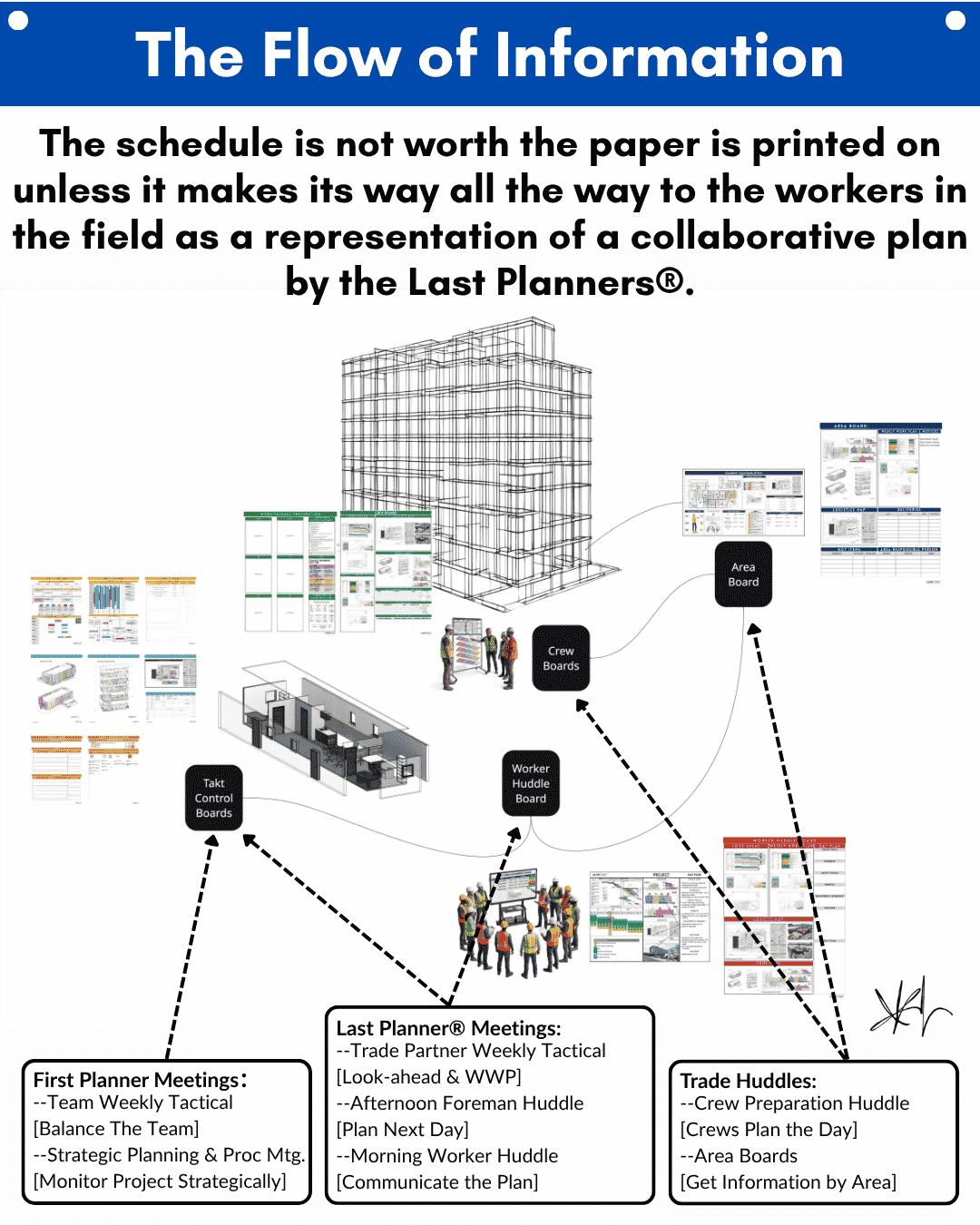
A superintendent owns the environment. Period. That means the site is perfectly clean, safe, and organized at all times. It means communication is clear from the team huddle to the crew huddle to the worker huddle. It means the team is running on Takt time with pull planning that actually matches the field. It means supply chains are delivering the right materials to the right zones at the right time. It means trades have the information, materials, and path they need to install work cleanly. It means the logistics systems are functioning, not just drawn.

If a super is not holding those standards, that is no superintendent at all. Those aren’t stretch goals. Those are the baseline. A site that drifts from any of them is a site with a leadership gap, and that gap always traces back to the same seat. The good news is every one of those standards is teachable. Nobody is born knowing how to run a clean, safe, organized, flowing site. It is a skill built through training, mentorship, and repetition.

Signs You’re Drifting Into “My Way” Territory

Before the drift becomes damage, look honestly for these signals on your own site:

  • The site is not clean at end of shift, and you’ve stopped noticing.
  • Trades show up inconsistently, and your first response is to blame them instead of checking what the system failed to provide.
  • Safety standards are inconsistent, and you’ve rationalized why.
  • Pre-task meetings get skipped or shortened, and quality issues are climbing quietly.
  • The weekly plan doesn’t match what actually happens on site, and the gap keeps widening.

If more than one is present, the system under you is drifting. That is the moment to reach for training, not for personal preference.

Zero Tolerance Is Clarity, Not Cruelty

Some supers hear “zero tolerance” and picture a harsh site full of yelling and punishment. That’s not what it means. Zero tolerance means the standard is clear, the standard is consistent, and the standard is enforced with dignity. A clean site is the standard. A safe site is the standard. An organized site is the standard. When the standard isn’t met, something changes not the people, but the system that allowed the gap.

The creativity of a strong super is in consequences and countermeasures, not in yelling. If trades won’t show up on time, the strong super redesigns the arrival logistics, the communication flow, and the coordination of handoffs until showing up on time is easier than not showing up. If materials keep ending up in the wrong place, the strong super redesigns the delivery path and the storage plan until the right path is obvious. That is the pattern. Hold the standard. Change the system until the standard is easy to meet. Never accept that the standard is optional.

Build the Skill on Purpose

The path out of weakness is not willpower. It’s training. Read the books. Sit next to supers who hold the standard. Learn the First Planner System, the Takt Production System, and the Last Planner System as actual disciplines, not as jargon. Build the muscle of organizational discipline. Practice zero tolerance as a form of clarity, not harshness. Accept that doing it your own way is only valid when your way produces the outcomes the project and the people deserve.

We are building people who build things. That includes building the superintendents who lead the builders. If your project needs superintendent coaching, project support, or leadership development, Elevate Construction can help your field teams stabilize, schedule, and flow. The skill is learnable. The path is known. The only question is whether the company and the individual are willing to walk it together.

What Strong Leadership Actually Looks Like

When the superintendent seat is held the right way, the markers are visible the moment you step on site:

  • The site is spotlessly clean at end of shift, every day, without heroics.
  • Trades arrive on time and in the right sequence because coordination and communication are doing the work.
  • The weekly plan and the daily reality match within tight tolerances.
  • Safety is assumed, visible, and consistent across every crew.
  • Foremen and workers leave proud at the end of the day, because the environment let them do their best work.

That is the baseline for a functional site. Anything less means the leadership gap is still open, and closing it is the most important work on the whole project.

A Challenge for Builders

Walk your own site this week and ask one honest question. If “my way” is how this project is running, is my way actually working? Look at cleanliness. Look at safety. Look at organization. Look at schedule and flow and supply chain. Look at how the crews feel when they leave the gate. If the outcomes are strong, own the win and keep learning. If the outcomes are weak, the fix isn’t more personal preference. The fix is a better skill set, better systems, and the humility to go get both.

As W. Edwards Deming said, “It is not enough to do your best; you must know what to do, and then do your best.”

On we go.

Frequently Asked Questions

What makes a superintendent “weak”?

A weak super isn’t a bad person. They’re someone whose site is chronically messy, unsafe, or out of rhythm because they haven’t been trained in the systems that produce the opposite. It’s a skill gap, not a character flaw, and it’s fixable with the right training and mentorship.

Why is “my way” only valid if it works?

Because the measurement is outcomes, not comfort. Clean, safe, organized, on-rhythm sites earn you the right to your approach. Chaos does not. When “my way” produces weak results, it stops being a methodology and starts being an excuse.

How does a weak superintendent actually get stronger?

Through training, mentorship, and deliberate practice. Learn the First Planner System, Takt Production System, and Last Planner System as disciplines. Work alongside supers who hold the standard. Practice zero tolerance as clarity, not cruelty.

If you want to learn more we have:

-Takt Virtual Training: (Click here)
-Check out our Youtube channel for more info: (Click here) 
-Listen to the Elevate Construction podcast: (Click here) 
-Check out our training programs and certifications: (Click here)
-The Takt Book: (Click here)

Discover Jason’s Expertise:

Meet Jason Schroeder, the driving force behind Elevate Construction IST. As the company’s owner and principal consultant, he’s dedicated to taking construction to new heights. With a wealth of industry experience, he’s crafted the Field Engineer Boot Camp and Superintendent Boot Camp – intensive training programs engineered to cultivate top-tier leaders capable of steering their teams towards success. Jason’s vision? To expand his training initiatives across the nation, empowering construction firms to soar to unprecedented levels of excellence.
On we go

Arrogant and Cocky PMs: The Project Killers

Read 21 min

When the PM Becomes the Bottleneck: Why Servant Project Managers Build Better Projects

Every project has a position that can either clear the path for the entire build or block it. That position is the project manager. When a PM operates as a servant and an enabler, trades get paid, contracts get written fairly, roadblocks disappear, and the lights stay green. When a PM operates as the boss, the gatekeeper, or the person who likes reminding everyone who holds the leverage, the whole project starts to bleed and the people who suffer first are the ones doing the actual work.

This is a hard conversation, and it’s worth having. The pattern I’m about to describe is hurting good projects, good owners, good trade partners, and good workers every single week in this industry. Most of it is fixable, and most of the fix is upstream of the PM themselves.

The Pain: When the PM Seat Becomes a Bottleneck

Walk any large project where things feel heavy, and you’ll find a familiar pattern. Trades aren’t getting paid on time. Contracts sit on desks for weeks. Procurement hasn’t kicked off for long-lead items that should have been ordered months ago. Supply chains are tangled because nobody upstream owns coordination. The superintendent is fighting fires the PM should have cleared. Foremen are making calls with incomplete information because the people upstream of them never pushed the information down.

Underneath all of it, trades are being bullied. Contract provisions get shoved down throats under pressure. Scope questions get answered with “that’s your risk.” Legitimate concerns get dismissed because the PM has decided the trade partner is the enemy, not the reason the project gets built at all.

This is what a bottleneck PM produces. Not bad plans. Not bad paperwork. A slow, steady erosion of trust across the whole production system, until the project can barely hold its own weight.

The Failure Pattern

Here’s how PMs drift into this seat. It doesn’t happen on day one. It happens gradually, through a series of small promotions and small reinforcements that nobody stops.

Somebody graduates from school. They enter the industry through contracts, computers, and legal language, not through the field. They get promoted for managing paperwork, not for enabling trades. They get a bigger title. They get handed more leverage. They work for a large general contractor that uses its weight in the market as a negotiating tool. And the longer they sit in that seat, the more they start believing that their personal convenience matters more than the service of others.

Arrogance enters when the PM stops seeing themselves as a servant and starts seeing themselves as the boss. Cockiness enters when they confuse the leverage of their employer with their own personal authority. Neither of those is who the person actually is. Neither is a character flaw. Both are learned behaviors produced by a system that rewards the wrong things at the wrong time.

Respect the Person, Fix the System

This is where most of this conversation goes wrong. The point is not that PMs are bad people. The point is that a system produces this behavior in people who, in other conditions, would be excellent servants of the project.

The person is good. The learned behavior is the problem. Power without mentorship, legal-first training instead of field-first training, and cultural permission to treat leverage as identity are the upstream causes. When we blame the individual, we feel better for a moment and nothing changes. When we fix the system that produced them, we get better PMs for the next twenty years.

The system failed them; they didn’t fail the system. That framing is not soft. It’s how we actually protect projects and protect people at the same time.

A Contract Story That Explains the Pattern

Here’s a real one. A PM on a recent project had a provision in their Master Subcontract Agreement stating that the general contractor owned all intellectual property before and after the trade partner’s involvement. A trade partner raised it. The PM responded, “We don’t modify contracts.”

Think about what just happened in that exchange. A trade partner with its own IP, its own methods, and its own hard-won field knowledge was being asked to sign away ownership of that knowledge as a condition of being allowed to bid. The PM, feeling empowered by their employer’s market weight, turned it into a take-it-or-leave-it.

That’s not negotiation. That’s not partnership. That’s leverage used as identity. And the cost lands everywhere: the trade partner bleeds risk, the project bleeds trust, the owner bleeds execution quality, and the industry bleeds the next generation of good trade partners who stop chasing work with that GC.

Contracts are not weapons. Contracts are how we align the team around a shared win. A PM who doesn’t understand that is not ready for the seat.

Why This Matters to Schedule, Quality, and Families

When the PM becomes a bottleneck, the downstream costs are measurable. Procurement starts late. Contracts get signed with unresolved risk baked in. Trades show up unprepared because nobody upstream cared enough to prepare them. Supply chains break under pressure that was created in the office, not in the field. The schedule slips, the budget slips, and the superintendent is left holding a project that was already compromised before the first zone got laid out.

Then there are the people. Every trade partner has a family. Every foreman has a family. Every worker has a family. When we bully trades into unfair terms and slow payments, families feel it. When we create an unsafe culture through arrogance at the top, families feel it. If the plan requires burnout to succeed, the plan is broken, not the people. Respect for people is not soft. It’s a production strategy, and the PM is one of the most leveraged positions in any project for getting that strategy right or wrong.

Signs a PM Has Drifted Into Bottleneck Mode

Before the damage compounds, watch for these signals on your project:

  • Trade partner payments are chronically late without a clean reason, and payment questions get treated as an annoyance.
  • Contract negotiations default to “we don’t modify” instead of “let’s find a fair path.”
  • Information flows one way, downward, and field questions get treated as interruptions.
  • The PM’s personal convenience shows up in scheduling decisions that cost other people time.
  • Trade partners are starting to price risk into their bids because they don’t trust the coordination.

Any one of those is a warning. Two or more is a pattern. A pattern means the system around the PM is reinforcing behavior that will eventually hurt the project, the owner, and the people doing the work.

What the PM Role Is Actually For

The PM is not the boss of the project. The PM is the enabler of the project.

The PM shapes the vision with the owner and translates it into a buildable plan. The PM builds the right team, kindly, with respect for the specialized knowledge every trade brings. The PM writes fair contracts and signs them on time. The PM pays people on time and to the contract. The PM provides the right information at the right time to the superintendent and the trade partners. The PM clears roadblocks so the field can stay in flow. The PM funds, resources, and staffs the project so the people doing the work aren’t fighting the environment. In lean language, the PM keeps the lights green.

A PM who does those things well is one of the most valuable positions on any project. A PM who does the opposite is a liability, worse than not having a PM at all. An owner would be better off selecting honest, humble multi-prime trade partners and integrators than hiring a GC with a bottleneck PM, because at least then the dysfunction isn’t baked into the coordination seat itself.

Building Servant PMs on Purpose

If we want better PMs, we have to build them on purpose. That starts with who we promote and why. It continues with how we train them, who we pair them with, and what we reward in the first two years of the seat.

Train PMs in the field, not just in the office. Put them next to superintendents and foremen who understand what a fair contract looks like from the installation side. Reward service, not leverage. Measure PM performance on trade partner satisfaction, on-time payment rates, and roadblock removal speed, not just on margin protection. Pair new PMs with mentors who see the role as a servant role. Build contract templates that assume partnership instead of adversarial defense.

If your project teams need help rebuilding the PM seat, from training to templates to leadership standards, that’s the kind of work we do every day. If your project needs superintendent coaching, project support, or leadership development, Elevate Construction can help your field teams stabilize, schedule, and flow.

The Deeper Work: Rebuilding the System Around the Seat

We are not going to fix bottleneck PMs by lecturing individuals. We are going to fix the pattern by rebuilding the system that produces them. That means CEOs stop letting legal departments fearmonger the contract process into something adversarial. That means companies promote based on servant behavior, not on aggression. That means we train the next generation of PMs to understand that their leverage is a responsibility, not a personality. It means we protect the good people who entered the seat wanting to serve, and give them the mentorship to stay that way when pressure arrives.

We are building people who build things. That includes building the leaders who lead the builders.

What a Servant PM Looks Like in Action

When PMs own the role the right way, the project looks different from day one. Watch for these markers:

  • Contracts are written on time, clearly, and with fair allocation of risk.
  • Procurement for long-lead items starts early, because the PM is tracking the Macro plan instead of reacting to the Norm plan.
  • Trade partners get paid on or before time, every time.
  • Information reaches the superintendent and the foremen before they ask for it.
  • Roadblocks get cleared before they become crises, because the PM is walking the job and asking what people need.

Those are not heroics. Those are the baseline. The PM seat exists to make all of that normal, every single week, on every single project.

A Challenge for Builders

Walk into your next PM seat, or look at the PMs on your current project, and ask one question. Is this person clearing the path, or creating the blockage? If they’re clearing the path, tell them you see it, and tell them why it matters. If they’re creating the blockage, the system around them needs to change before the person can. Go build PMs who serve. The projects, the trades, and the families behind them are all counting on that seat being filled by someone who sees it as a responsibility, not a throne.

As W. Edwards Deming reminded us, “A bad system will beat a good person every time.”

On we go.

Frequently Asked Questions

What is the main job of a project manager in construction?

The PM’s job is to enable the project. That means shaping the vision with the owner, building the right team, writing fair contracts, paying trades on time, providing the right information at the right time, and clearing roadblocks so the superintendent and the field can stay in flow.

Why do some project managers come across as arrogant or cocky?

It’s usually learned behavior, not character. PMs often enter the industry through contracts and legal language instead of through the field, then get promoted based on paperwork and leverage. Over time, that path can produce someone who confuses their employer’s market weight with personal authority.

How can a company develop better project managers?

Train PMs in the field alongside superintendents and foremen so they understand what a fair contract looks like from the installation side. Reward service behaviors like on-time payments, fair contracts, and roadblock removal, not just margin defense. Pair new PMs with mentors who model the servant role, and rebuild contract templates so they assume partnership instead of adversarial defense.

If you want to learn more we have:

-Takt Virtual Training: (Click here)
-Check out our Youtube channel for more info: (Click here) 
-Listen to the Elevate Construction podcast: (Click here) 
-Check out our training programs and certifications: (Click here)
-The Takt Book: (Click here)

Discover Jason’s Expertise:

Meet Jason Schroeder, the driving force behind Elevate Construction IST. As the company’s owner and principal consultant, he’s dedicated to taking construction to new heights. With a wealth of industry experience, he’s crafted the Field Engineer Boot Camp and Superintendent Boot Camp – intensive training programs engineered to cultivate top-tier leaders capable of steering their teams towards success. Jason’s vision? To expand his training initiatives across the nation, empowering construction firms to soar to unprecedented levels of excellence.
On we go

The Takt Production System – Part 19

Read 30 min

Are You Crash Landing or Control Landing?

Scheduled compression happens. Project falls behind. Now you have choice. Crash landing or controlled landing. Crash landing: scheduled compression not recognized early enough or ignored for so long that significant damage already incurred and unavoidable. Does not create learning environment. Rather creates caustic environment where flow ceases to exist and trust erodes as team members stop holding themselves and others accountable. Previously protected resources now spent in state of panic without consideration for value being purchased. Ultimately all those involved pay price personally and professionally without learning from expensive experience. Project completed but ends in Pyrrhic victory meaning it takes such heavy toll on victor that positive is outweighed by negative experience. Minimizes any true sense of achievement and damages long-term progress. Causes: project team starts to push, material inventory worker counts and costs are increased, project taken out of flow, team doesn’t reach out for help, project slides into firefighting and damage control mode, short-sighted decisions made causing more long-term problems, personal lives regarded as expendable or “this is how it has always been” is presented. Conversely, controlled landing: scheduled compression recognized early enough to engage and harness full company resources. Although still difficult, controlled approach creates learning environment that builds trust, accountability, preserves work-life balance while strategically planning financial expenditures to achieve best possible outcomes. Intentional realistic end date. Flow maintained as top priority even though some stakeholders may want to rush and push. Worker counts, material inventory levels, throughput of information kept consistent and steady. Coordinated path to finish with full cleanliness. Safety and quality awareness are priority. Planned resource expenditures for best possible outcomes. Thoughtful workflow based on rhythm.

Here’s what most teams miss. They think pushing harder recovers projects. Increase material inventory. Increase worker counts. Increase costs. Push activities through as fast as possible. Start working weekends. Extend hours. Add more crews. But that’s crash landing. Project team starts pushing taking project out of flow. Team doesn’t reach out for help sliding into firefighting and damage control mode. Short-sighted decisions made causing more long-term problems. Personal lives regarded as expendable. Caustic environment where flow ceases and trust erodes. Resources spent in panic without consideration for value purchased. Everyone pays price personally and professionally without learning. Pyrrhic victory where toll outweighs positive. But controlled landing recognizes compression early enough to engage full company resources. Hold to Takt system and philosophy. Pushing only extends end date. To recover project, must first focus on cleanliness, organization, safety, and flow. Make decisions in harmony with production laws. Focus on increasing system capacity, not pushing work through limited capacity system. Different approach. Different outcome.

The challenge is most teams never learned recovery options beyond pushing. They know add more people. Add more materials. Work longer hours. But they don’t know optimize sequences, shorten batch sizes, limit work in process, create Takt time buffer to better prepare work, separate and segment phases, adjust phase interdependence logic, increase system capacity, increase process capacity, remove bottlenecks, reduce variation. These options increase system capacity enabling recovery. Pushing decreases system capacity extending duration. KPIs that naturally obey production laws show this. Work in Process tracks work packages in progress. Percent Plan Complete tracks activities completed on time. Finish or Flow Ratio tracks work packages finished divided by Takt zones. Time Remaining Buffer Ratio shows if burning buffers slower rate than finishing actual value of work. Elementary Classroom Clarity measures whether third grade class can understand what’s happening on project. These KPIs work with production laws, not against them. But teams taught to push wonder why pushing makes things worse when the answer is pushing violates production laws destroying capacity.

Scrum: Doing Twice the Work in Half the Time

Scrum is a fantastic book that is eye-opening about the failures of waterfall scheduling in construction, and also provides the solution for accomplishing projects in half the time. Imagine a 4×4 board in an office with four columns that are each one foot wide. The first column’s name is Backlog, the second is Sprint Backlog, the third is titled In Progress, and the fourth is Complete.

A product owner identifies the activities that have to be completed. These activities are defined clearly according to the project conditions of satisfaction, and each activity has a number score indicating how many points are issued for that activity according to its impact and level of effort.

A Scrum team with a Scrum Master then pulls over activities from the Backlog, which with Takt is mostly populated with weekly work steps from the micro level of Takt planning, into the second column titled Sprint Backlog, in a planning meeting.

The Sprint is the week-long time duration in which these activities need to be completed. The Scrum team then autonomously meets every day to move the Sprint Backlog activities from left to right in the given time, in a fun, autonomous, and quick way. The goal is to move as many points to the right as possible, as the team works on activities in the Progress column and completes them in the Complete column.

After the Sprint, there is a Review and Retrospective to reflect and make improvements for the next Sprint. We have found this system to work well with Takt to either detail out a Backlog of items to be completed within the Takt wagon or for non-typical or complex areas.

Examples of this might be a complex lobby, the erection of a man and material hoist, the installation of medical equipment, MEP renovations and upgrades, or anything that is so complex it is best not forced into a timeline.

The Last Planner System: Integrates Perfectly Under Takt

Last Planner System is a planning, monitoring, and control system that follows lean construction principles, such as just-in-time delivery, value stream mapping, and pull planning. Specifically, the Last Planner System is a production planning and management system designed to produce predictable workflow and rapid learning in construction projects.

The Last Planner System brings together those who will execute the work, the project team, to collaboratively plan when and how work will be done through a series of conversational processes. It requires the team to collaboratively identify and remove constraints as a team and to promise delivery of each task.

The Last Planner System enables more reliable and predictable production in projects by doing the following:

  • Improving communication and reliability.
  • Fostering an environment of respect, trust, and collaboration.
  • Promoting early stakeholder engagement.
  • Improving visibility of the project plan.
  • Creating team buy-in.

KPIs for Takt: Naturally Obey Production Laws

These KPIs can be tracked throughout the project. As you track them, they also inherently drive project success by following Little’s Law, the Law of Bottlenecks, the Law of the Effective Variation, and Kingman’s Formula. We would rather you have KPIs that work with production laws than metrics that fight against them.

Work in Process (WIP): Total work packages in progress.

Percent Plan Complete (PPC): Percentage of planned activities completed on time.

Number of Handoffs Completed (NHC): Tracking handoffs between trades.

Finish or Flow Ratio (FFR): Work packages finished divided by Takt zones. Target: between 85% and 95%.

Materials Remaining Buffer Ratio (MRBR): Total number of work packages divided by Takt zones. Target: between 85% and 95%.

Time Remaining Buffer Ratio (TRBR): Current end buffer divided by original end buffer divided by remaining duration divided by original duration. Target: greater than 1.0. The percentage of remaining buffer should be greater than the percentage of remaining days. This shows if you are burning buffers at a slower rate than finishing the actual value of work.

Elementary Classroom Clarity (ECC): This is a measurement of whether a local third grade class can understand what is happening on your project site. The ideal target is over 80%.

We find Takt to be the only system and way to track and drive production based on these laws and theories studied in all industries and sectors.

True Resource Loading: Consistency Creates Flow

Each work package of your Takt plan should account for a number of resources that can be easily shown over time in a traditional histogram in Excel or other application. The histogram can coincide with the Takt time for ease and understanding.

During our Takt work package development, we plan and level the resources for the work package to eliminate variation between Takt trains or geographical locations within a phase of work. This limits variation and potential for defects and rework. When achieved, the outcome is a clean and steady flow of production on site.

The ideal state is that we have consistency in the number of workers, crews, materials, and information. If we experience interruptions or variation, we may need to look at recovery options.

Crash Landing vs. Controlled Landing

When a recovery plan is needed, there is always one decision to make: crash landing or control landing the project.

Crash Landing

When we choose crash landing, scheduled compression is not recognized early enough or is ignored for so long that significant damage has already been incurred and is unavoidable. The crash landing approach does not create a learning environment, but rather creates a caustic environment where flow ceases to exist and trust erodes as team members stop holding themselves and others accountable.

Previously protected resources are now spent in a state of panic without consideration for value being purchased. Ultimately, all those involved pay the price personally and professionally without learning from this expensive experience.

The project is completed but ends in a Pyrrhic victory, meaning that it takes such a heavy toll on the victor that the positive is outweighed by the negative experience. This minimizes any true sense of achievement and can damage long-term progress.

Causes for defeat include:

  • The project team starts to push.
  • Material inventory, worker counts and costs are increased.
  • The project is taken out of flow.
  • The team does not reach out for help.
  • The project slides into firefighting and damage control mode.
  • Short-sighted decisions are made causing more long-term problems.
  • Personal lives are regarded as expendable or the term “this is how it has always been” is presented.
  • Crash landing is a non-learning environment.
  • A lack of trust exists.

Controlled Landing

Controlled landing means that scheduled compression is recognized early enough to engage and harness full company resources. Although still difficult, the controlled approach creates a learning environment that builds trust, accountability, and preserves the work-life balance while strategically planning financial expenditures to achieve the best possible outcomes.

This ensures the plan has the following:

  • The project has an intentional, realistic end date.
  • Flow is maintained as the top priority even though some project stakeholders may want to rush and push.
  • Worker counts, material inventory levels, and the throughput of information is kept consistent and steady.
  • There is a coordinated path to the finish with full cleanliness.
  • Safety and quality awareness are a priority.
  • There exists planned resource expenditures for the best possible outcomes.
  • There is a thoughtful workflow based on a rhythm.

If you want to enter a controlled landing on a project, you will hold to your Takt system and philosophy. Pushing only extends the end date. To recover a project, you must first focus on cleanliness, organization, safety, and flow, and make decisions in harmony with the production laws.

In short, you must focus on increasing system capacity, not in pushing work through a limited capacity system.

Recovery Options: Increase System Capacity

You have the following options:

  • Optimize the sequences.
  • Shorten batch sizes.
  • Limit work in process.
  • Create a Takt time buffer to better prepare work.
  • Separate and segment phases.
  • Adjust phase interdependence logic.
  • Increase system capacity.
  • Increase process capacity.
  • Remove bottlenecks.
  • Reduce variation.

The System Failed You

Let’s be clear. When teams crash land instead of control land, it’s not entirely their fault. The system failed by teaching that pushing recovers projects when actually pushing violates production laws destroying capacity. Nobody showed recovery options beyond add more people, add more materials, work longer hours. Nobody explained optimize sequences, shorten batch sizes, limit work in process, create Takt time buffer, separate and segment phases, adjust phase interdependence logic, increase system capacity, increase process capacity, remove bottlenecks, reduce variation. These options increase system capacity enabling recovery. The system taught push when actually increasing system capacity recovers.

The system also failed by not teaching crash landing destroys while controlled landing recovers. If your project needs superintendent coaching, project support, or leadership development, Elevate Construction can help your field teams stabilize, schedule, and flow. Crash landing: compression not recognized early or ignored, caustic environment where flow ceases and trust erodes, resources spent in panic without consideration for value, everyone pays price personally and professionally without learning, Pyrrhic victory where toll outweighs positive. Controlled landing: compression recognized early to engage full company resources, learning environment building trust and accountability, flow maintained as top priority, worker counts and materials kept consistent, coordinated path to finish with cleanliness and safety. The system taught both approaches equal when actually one destroys and one recovers.

The system fails by not teaching KPIs should naturally obey production laws. Work in Process, Percent Plan Complete, Finish or Flow Ratio, Time Remaining Buffer Ratio, Elementary Classroom Clarity. These KPIs work with Little’s Law, Law of Bottlenecks, Law of Effective Variation, Kingman’s Formula. They inherently drive project success by following production laws. But teams using metrics fighting against production laws wonder why metrics don’t help when the answer is metrics must work with laws not against them.

The Challenge

Here’s your assignment. Stop crash landing. Start control landing.

Recognize scheduled compression early enough to engage and harness full company resources. Don’t ignore until significant damage already incurred. Create learning environment building trust, accountability, preserving work-life balance. Strategic financial expenditures for best possible outcomes. Not panic spending without consideration for value.

Maintain flow as top priority. Even though some stakeholders may want to rush and push, keep worker counts, material inventory levels, throughput of information consistent and steady. Don’t start pushing taking project out of flow. Don’t slide into firefighting and damage control mode. Coordinated path to finish with full cleanliness. Safety and quality awareness as priority. Thoughtful workflow based on rhythm.

Hold to Takt system and philosophy. Pushing only extends end date. To recover project, first focus on cleanliness, organization, safety, flow. Make decisions in harmony with production laws. Focus on increasing system capacity, not pushing work through limited capacity system.

Use recovery options increasing system capacity. Optimize sequences, shorten batch sizes, limit work in process, create Takt time buffer to better prepare work, separate and segment phases, adjust phase interdependence logic, increase system capacity, increase process capacity, remove bottlenecks, reduce variation. These increase capacity enabling recovery. Pushing decreases capacity extending duration.

Track KPIs naturally obeying production laws. Work in Process, Percent Plan Complete, Finish or Flow Ratio, Time Remaining Buffer Ratio (target >1.0 meaning burning buffers slower than finishing work), Elementary Classroom Clarity (target >80% meaning third grader understands plan). These work with Little’s Law, Law of Bottlenecks, Law of Effective Variation, Kingman’s Formula. Inherently drive project success by following production laws.

Level resources for work packages eliminating variation between Takt trains or geographical locations. Limits variation and potential for defects and rework. Outcome: clean and steady flow of production on site. Ideal state: consistency in number of workers, crews, materials, information.

Controlled landing creates learning environment. Crash landing creates caustic environment. One builds trust. Other erodes trust. One preserves work-life balance. Other regards personal lives as expendable. One plans resource expenditures for best outcomes. Other spends resources in panic. One ends in achievement. Other ends in Pyrrhic victory where toll outweighs positive.

Choose controlled landing. Increase system capacity. Follow production laws.

On we go.

FAQ

What’s the difference between crash landing and controlled landing?

Crash landing: compression not recognized early or ignored, caustic environment where flow ceases and trust erodes, resources spent in panic without consideration for value, everyone pays price personally and professionally without learning, Pyrrhic victory where toll outweighs positive. Controlled landing: compression recognized early to engage full company resources, learning environment building trust and accountability, flow maintained as top priority, coordinated path to finish, strategic financial expenditures.

How do you recover a project without crash landing?

Hold to Takt system and philosophy. Pushing only extends end date. First focus on cleanliness, organization, safety, flow. Make decisions in harmony with production laws. Focus on increasing system capacity, not pushing work through limited capacity system. Recovery options: optimize sequences, shorten batch sizes, limit work in process, create Takt time buffer, separate and segment phases, adjust interdependence logic, increase system/process capacity, remove bottlenecks, reduce variation.

What KPIs naturally obey production laws?

Work in Process, Percent Plan Complete, Finish or Flow Ratio (85-95% target), Time Remaining Buffer Ratio (>1.0 target meaning burning buffers slower than finishing work), Elementary Classroom Clarity (>80% target meaning third grader understands plan). These work with Little’s Law, Law of Bottlenecks, Law of Effective Variation, Kingman’s Formula. Inherently drive project success by following production laws.

How does Scrum integrate with Takt?

Scrum team pulls activities from Backlog (populated with weekly work steps from micro level Takt planning) into Sprint Backlog. Sprint is week-long duration. Team meets daily moving activities from In Progress to Complete. Goal: move as many points to Complete as possible. After Sprint: Review and Retrospective. Works well for complex areas: lobby, man and material hoist, medical equipment, MEP renovations, anything too complex to force into timeline.

What is Elementary Classroom Clarity?

Measurement of whether local third grade class can understand what’s happening on project site. Take third graders and ask how much of plan they understand or ask team to grade plan on percentage basis using same parameters. Ideal target: over 80%. Tests whether plan is simple and visual enough that anyone can understand it.

If you want to learn more we have:

-Takt Virtual Training: (Click here)
-Check out our Youtube channel for more info: (Click here) 
-Listen to the Elevate Construction podcast: (Click here) 
-Check out our training programs and certifications: (Click here)
-The Takt Book: (Click here)

Discover Jason’s Expertise:

Meet Jason Schroeder, the driving force behind Elevate Construction IST. As the company’s owner and principal consultant, he’s dedicated to taking construction to new heights. With a wealth of industry experience, he’s crafted the Field Engineer Boot Camp and Superintendent Boot Camp – intensive training programs engineered to cultivate top-tier leaders capable of steering their teams towards success. Jason’s vision? To expand his training initiatives across the nation, empowering construction firms to soar to unprecedented levels of excellence.
On we go

The Takt Production System – Part 18

Read 29 min

Are You Submitting Guesses or Collaboration?

You submit a proposal with CPM schedule. Hundreds of activities. Complex logic ties. Work breakdown structure. Critical path highlighted. Owner looks at it confused. Can’t understand it. Has to trust that single person without consulting them has been able to guess what they want perfectly. Here’s what you’re actually saying: we had one person detail this plan without the input of the team and are now asking you to trust that this single person without first consulting you has been able to guess what you want perfectly. That’s CPM proposal. Conversely, submitting a Takt plan conveys: our team has sketched out in the simplest and most engaging manner possible what we feel it will take to build this project and in this format we can quickly collaborate with you to better accomplish your needs. We were able to weigh in on this together as a team and were ready to win together by discussing this plan. Proposing with Takt plans is brilliant. It’s fast, collaborative, readily understood by owners with contextual explanations. Shows wisdom and experience of proposing builder. Most often majority of team understands Takt plan. Designer and CM can sit down using best knowledge to sketch what new options would do to affect schedule. This is precisely why Takt is so effective at schematic design stage. Fast, practical, relevant. Wonder how schedule updates can actually be real-time unless done using Takt planning. Additionally, saving countless days from redoing CPM schedule. More capacity for constructability reviews, coordination, integration, design pull planning, design scrum, cost estimation, target value design.

Here’s what most teams miss. They think detailed CPM schedule in proposal phase shows expertise. More activities means more thorough analysis. Complex logic demonstrates scheduling capability. But actually it shows opposite. Detailing large master schedule at conceptual design is not only waste of time, it’s useless, distracting, and irresponsible. Not possible to detail project with small activity durations or detailed logic without either design or planning elements developed unless you use system like Takt with historical production rates and process analysis. CPM schedule is single person’s guess disconnected from team and owner. Takt plan is team’s collaborative sketch ready for owner input. One shows arrogance. Other shows wisdom. One requires trust in single person. Other invites collaboration. Different messages. Different results.

The challenge is most teams never learned Takt is better at every phase. Proposal phase: Takt shows overall project approach of how general program spaces and building types can be built in local region becoming useful tool for collaborating directly with owners. Schematic design: Takt fast, nimble, real-time when design changing shapes, sizes, features, materials, configurations. Design development: Takt paired with logistics plan, zone maps, basis of schedule as most work-intensive part of plan development occurs. Construction documents: Takt finalized, included in prime agreement as exhibit, ready for Fresh Eyes and contract. Construction: Takt creates drumbeat for everything else on project. Every phase. Different purpose. Same system. But teams taught CPM is standard when actually Takt is better from proposal through closeout.

Takt in Proposal Phase: Show Wisdom, Not Guesses

Takt planning is implemented in the proposal phases of a project. This fast and collaborative method can be easily formatted and is readily understood by the owners or selection committee with some contextual explanations. Submitting a proposal with a Takt plan also shows the wisdom and experience of the proposing builder.

Detailing a large master schedule at conceptual design or schematic design is not only a waste of time, it is useless, distracting and irresponsible. It is not possible to detail a project with small activity durations or detailed logic without either the design or planning elements developed unless you use a system like Takt with historical production rates and a process analysis. A Takt plan is the best way.

It will show, according to experience, the overall project approach of how general program spaces and building types can be built in the local region. It becomes a useful tool for collaborating directly with the owners, allowing them to advance their interests and agenda.

Submitting a CPM schedule is like saying: we had one person detail this plan without the input of the team and are now asking you to trust that this single person without first consulting you has been able to guess what you want perfectly.

Conversely, submitting a Takt plan conveys: our team has sketched out in the simplest and most engaging manner possible what we feel it will take to build this project and in this format we can quickly collaborate with you to better accomplish your needs. We were able to weigh in on this together as a team and were ready to win together by discussing this plan.

Takt in Schematic Design: Fast, Nimble, Real-Time

Proposing with Takt plans is brilliant and it gets even easier when it provides real-time feedback to designers in concept and schematic design. Takt planning in schematic design is fast, nimble, and real-time.

When design is changing shapes, sizes, features, materials, and configurations, very few have the motivation or time to update a complex CPM network to provide any kind of useful data to the designers. In contrast, Takt is easy to use and many designers and stakeholders can quickly learn how to use and adjust the Takt plan themselves. Most often the majority of the team understands the Takt plan.

Using Takt makes it easier for the designer and the CM at risk, design build, or integrated partner to sit down and use their best knowledge to sketch out what new options and changes would do to affect the schedule. This is precisely why Takt is so effective at this stage of design. It is fast, practical, and relevant.

In fact, it is a wonder how schedule updates can actually be real-time unless they are done using Takt planning. Additionally, we are saving the countless days it would take to continue redoing a CPM schedule. Therefore, your scheduling department or builders will have more capacity to delight while the owner is in pre-construction.

This means more time for constructability reviews, coordination, integration, design pull planning, design scrum, cost estimation, and target value design management as you head into design development.

Takt in Design Development: Most Work-Intensive Development

In the design development phase, the Takt plan should be paired with the logistics plan, Takt zone maps, and basis of schedule. The most work-intensive part of the Takt plan development occurs here:

  • Finalize the project strategy.
  • Identify constraints: building, owner, weather, sequence.
  • Incorporate contract requirements, Division 1 specs, and other owner requirements into the plan.
  • Identify flow, sequence, and breakout areas of the project.
  • Perform a Takt analysis of major phases of the project: foundations, structure, exterior, interiors.
  • Perform a day-to-day geographical analysis for needed areas, especially for basements or tight sites.
  • Build your Takt plan.
  • Perform an analysis on bottleneck activities.
  • Consider using production rates from historical data.
  • Schedule and supporting systems: dry in, air on, MEP, etc.
  • Make procurement strategy.
  • Add procurement to the schedule and begin procurement meetings weekly.
  • Consider regional constraints such as weather, permitting, workforce capabilities.
  • Review plan with wider team to review safety and quality as a part of the schedule.
  • Detail out MEP, startup, commissioning, balancing, life safety testing, and fire protection testing.
  • Set up pull planning sessions to map out detail at the right times.
  • Get trade partner input and buy-in for the schedule when possible.
  • Agree on milestones with a wider team and owner.

Most of the plan is developed in this phase. It is best practiced to at least begin full-scale efforts at 50% design and development to prepare for the construction documents phase.

Takt in Construction Documents: Finalize and Baseline

In this phase, the builders and first planners are finalizing all aspects of the plan and ensuring all key parts of the plan are finalized. The common actions in this phase are:

  • Hold Fresh Eyes and risk meeting with the team.
  • Develop the roadblock removal system.
  • Establish baseline Takt plans with the owner.
  • Establish owner interface and management strategy.

The key for this stage is to be ready for the Fresh Eyes, contract, and NTP so that it is included in the prime agreement as an exhibit in any subcontracts. This will allow the team as much leverage as possible when running the project.

Running the Project with Takt: The Meeting System

The meeting system is designed to scale communication from the first planners through to and past the last planners to the workers. No plan is well supported unless there is a system to get it all the way to the people installing the work.

Really, Takt is the best first planner system, and the system used for last planners can be either Takt Control, Last Planner, or Scrum.

Morning Worker Huddle

The morning worker huddle encompasses the entire project site. For large projects, major divisions of workers by functional area huddle together every morning to form a social group with a project management team in an exchange of communication regarding expectations and needs.

Workers should leave the huddle with clarity and a greater understanding of how to succeed on site, how to be safe, and feeling connected to the overall plan.

Crew Preparation Huddle (15-25 Minutes)

The purpose for the crew preparation huddle is to prepare the crew for the work. This takes place right after the worker huddle on the floor, area, or building where that crew is working. This will be done with foreman for that crew and crew workers working without foreman. This is an opportunity for the foreman to line out workers in a remarkable way to execute the work.

Agenda includes:

  • Positive shout outs.
  • Safety training topic.
  • Standard work step documentation review.
  • Share two second lean improvements from the day before.
  • Walk area of work and plan for safety.
  • Fill out pre-task plans, orient, and sign.
  • 5S your work area.
  • Gather all tools and needed equipment to prevent treasure hunts.
  • Safe off work areas, go to work, and execute according to standard work steps.

The Integrated Production Control System

The Integrated Production Control System is a field project management approach that supports preparation, teaming, a good environment, and accountability.

It has the word integrated because it involves the entire team with total participation. It is not a command and control system from one or a few people. It has the word control in it because the on-site superintendents, field engineers, and foremen must control the site once the team has decided on the plan. It has the word production in it because the aim is to increase the productivity of workers as its ultimate goal.

Therefore, the Integrated Production Control System is a field project management approach that uses the genius of the team to control the increase of production on the project site.

The Integrated Production Control System presumes that the project team’s first priority is to create respect and stability for the workers, then from there they can continuously improve. A worker needs to know what he or she is building, how to install it, where to put it, the materials, the equipment, a clean environment, a safe environment. That system will work on any project in any area at any time.

The System Failed You

Let’s be clear. When teams submit detailed CPM schedules in proposal phase, it’s not entirely their fault. The system failed by teaching that more detail shows more expertise when actually detailing large master schedule at conceptual design is waste of time, useless, distracting, irresponsible. Nobody showed that not possible to detail project without design or planning elements developed unless using Takt with historical production rates and process analysis. Nobody explained that CPM schedule says single person’s guess when Takt plan says team’s collaborative sketch. The system taught detail shows expertise when actually collaboration shows wisdom.

The system also failed by not teaching Takt is fast, nimble, real-time during schematic design. If your project needs superintendent coaching, project support, or leadership development, Elevate Construction can help your field teams stabilize, schedule, and flow. When design changing shapes, sizes, features, materials, configurations, few have motivation to update complex CPM network. But Takt easy to use. Designers and stakeholders can quickly learn to adjust plan themselves. Designer and CM can sit down using best knowledge to sketch what new options would do to schedule. Schedule updates can be real-time. Saving countless days from redoing CPM. More capacity for constructability reviews, coordination, integration. The system taught CPM is standard when actually Takt is better at every design phase.

The system fails by not teaching meeting system scaling communication from first planners to workers. No plan well supported unless there’s system getting it all the way to people installing work. Morning worker huddle for entire project site. Workers leave with clarity understanding how to succeed, how to be safe, feeling connected to overall plan. Crew preparation huddle 15-25 minutes preparing crew for work, safety training, standard work steps, 5S work area. The system taught plan is enough when actually need meeting system scaling communication getting plan to workers.

The Challenge

Here’s your assignment. Stop submitting single person’s guesses. Start submitting team’s collaborative sketches.

Propose with Takt plans. Fast, collaborative method readily understood by owners with contextual explanations. Shows wisdom and experience of proposing builder. Shows overall project approach of how general program spaces can be built in local region. Becomes useful tool for collaborating directly with owners allowing them to advance their interests. Team sketched simplest engaging manner ready to collaborate versus single person detailed without team input asking to trust their guess.

Use Takt during schematic design. Fast, nimble, real-time when design changing. Easy to use. Designers and stakeholders can learn to adjust plan themselves. Makes easier for designer and CM to sit down using best knowledge to sketch what new options would do to schedule. Schedule updates can be real-time. Save countless days from redoing CPM. More capacity for constructability reviews, coordination, integration, design pull planning, design scrum, cost estimation, target value design.

Develop plan during design development. Pair Takt plan with logistics plan, zone maps, basis of schedule. Finalize strategy, identify constraints, incorporate requirements, identify flow and sequence, perform Takt analysis of major phases, build plan, perform bottleneck analysis, use historical production rates, add procurement with weekly meetings, consider regional constraints, get trade partner input and buy-in, agree on milestones. Most work-intensive part of development. Begin at 50% design development.

Finalize during construction documents. Hold Fresh Eyes and risk meeting. Develop roadblock removal system. Establish baseline Takt plans with owner. Ready for contract and NTP. Include in prime agreement as exhibit in subcontracts. Allows team maximum leverage when running project.

Implement meeting system scaling communication. Morning worker huddle for entire project site. Workers leave with clarity understanding how to succeed, how to be safe, feeling connected to overall plan. Crew preparation huddle 15-25 minutes preparing crew for work. Safety training, standard work steps, 5S work area, gather tools, fill out pre-task plans. Get plan all the way to workers installing work.

Create respect and stability for workers first priority. Worker needs to know: what building, how to install, where to put it, materials, equipment, clean environment, safe environment. Then continuously improve from that foundation.

From proposal through closeout, Takt is better. Use it.

On we go.

FAQ

Why is Takt better than CPM in proposal phase?

CPM says: one person detailed without team input, trust single person’s guess. Takt says: team sketched simplest engaging manner, ready to collaborate with owner. Takt fast, collaborative, readily understood. Shows wisdom and experience. Shows overall approach of how spaces can be built in local region. Becomes useful tool for collaborating directly with owners.

How does Takt work during schematic design?

Fast, nimble, real-time when design changing shapes, sizes, features, materials, configurations. Easy to use. Designers and stakeholders can learn to adjust plan themselves. Designer and CM can sit down using best knowledge to sketch what new options would do to schedule. Schedule updates can be real-time. Saves countless days from redoing CPM.

What happens during design development?

Most work-intensive part of Takt plan development. Pair with logistics plan, zone maps, basis of schedule. Finalize strategy, identify constraints, incorporate requirements, identify flow and sequence, perform Takt analysis of major phases, build plan, perform bottleneck analysis, add procurement with weekly meetings, get trade partner input and buy-in, agree on milestones. Begin at 50% design development.

What is the Integrated Production Control System?

Field project management approach supporting preparation, teaming, good environment, accountability. Integrated: involves entire team with total participation. Control: on-site superintendents, field engineers, foremen must control site. Production: aim is increase productivity of workers as ultimate goal. Uses genius of team to control increase of production on project site.

What’s the crew preparation huddle?

Fifteen to 25 minutes preparing crew for work after worker huddle. Agenda: positive shout outs, safety training topic, standard work step documentation review, share two second lean improvements, walk area and plan for safety, fill out pre-task plans, 5S work area, gather tools preventing treasure hunts, safe off work areas, execute according to standard work steps.


If you want to learn more we have:

-Takt Virtual Training: (Click here)
-Check out our Youtube channel for more info: (Click here) 
-Listen to the Elevate Construction podcast: (Click here) 
-Check out our training programs and certifications: (Click here)
-The Takt Book: (Click here)

Discover Jason’s Expertise:

Meet Jason Schroeder, the driving force behind Elevate Construction IST. As the company’s owner and principal consultant, he’s dedicated to taking construction to new heights. With a wealth of industry experience, he’s crafted the Field Engineer Boot Camp and Superintendent Boot Camp – intensive training programs engineered to cultivate top-tier leaders capable of steering their teams towards success. Jason’s vision? To expand his training initiatives across the nation, empowering construction firms to soar to unprecedented levels of excellence.
On we go

The Takt Production System – Part 17

Read 30 min

Are You Going to the Drawings or Going to the Software?

You want to create a Takt plan. You open the software. Input activities. Add logic ties. Build work breakdown structure. Calculate critical path. Wonder why it doesn’t create flow. Here’s the problem: you went straight to the software. Wrong order. There’s a big difference between builders who go straight to the software versus builders who go straight to the drawings. The latter method is the only way to put things in their proper order. One of the geniuses of Takt is that it gives our builders back the time they need to carry out the basics of a builder, which means studying the drawings each day, forward planning in the schedule, and reflecting daily. For this to happen, we need to create a Takt plan that is reliable and effective and starts in an artful and strategic way with the creation of a plan by a builder from the drawings. As the builder studies the design and gets a feel for the flow, the sequence, and the general strategic approach for the project with others, he or she will immediately see and identify flow. Builders can get a feel for the general flow of the project after digging into the drawings. Constraints like staging, material flow, material access, adjacent structures, hoisting, and project access will begin to form a picture of how the project will need to generally flow. Does construction begin from east to west or west to east? Does interior run from top down or bottom up? This general idea of how project will flow as builder visualizes construction will allow identification of preliminary Takt zones.

Here’s what most teams miss. They think scheduling is software activity. Input data. Click buttons. Generate schedule. But that’s backwards. Scheduling is builder activity. Study drawings. Visualize construction. Identify flow. Identify constraints. See sequence emerging from how work actually happens on site. Then translate that understanding into plan. Software is tool for capturing plan, not creating plan. Plan comes from builder studying drawings seeing how project will actually flow, not from software calculating critical path. Going to software first creates schedule disconnected from reality. Going to drawings first creates schedule grounded in how work actually happens. Different starting point. Different result. Only one works.

The challenge is most teams never learned to study drawings for flow. They learned to input activities into software. They learned work breakdown structures. They learned logic ties. They learned critical path method. But they never learned to look at drawings and see: staging will be here creating this constraint, material flow will come from this direction creating this sequence, hoisting will be here creating this access pattern, adjacent structures create this limitation. When you study drawings for flow, preliminary Takt zones emerge naturally. In Phoenix, 10,000 square feet for hospital interiors. Eventually reduced to 3,000 to 7,000 square feet as batch sizes reduce. In Tucson, same 10,000 square feet zone but different throughput and Takt time based on market capacity. The zones come from understanding work, not from inputting activities.

Identify Your Start and End Date: Don’t Overburden the System

Some projects come with a stipulated start and end date. Some projects’ start and end dates need to be identified through your efforts of creating a Takt plan. Either way, it is all a game of turning the dials of crew size, worker counts, duration, geographical area and strategy and not adjusting the need for high levels of safety, quality and respect.

It all amounts to data, whether you begin top down by identifying your start and end dates and work through the components of the plan or work from the bottom up and make a plan that specifies an end date from your analysis.

There is only one real parameter: do not overburden the system. If more crews are needed, make sure the market has them. If additional people are needed on crews, make sure trained professionals are available. If materials are needed at the expedited rate, make sure the supply chain can accommodate.

You can adjust any dial with resources as long as those resources are available.

Research Your Drawings: Go to Drawings First, Software Second

This step may seem like a given, but it needs to be said. One of the geniuses of Takt is that it gives our builders back the time they need to carry out the basics of a builder, which means studying the drawings each day, forward planning in the schedule and reflecting daily.

For this to happen, we need to create a Takt plan that is reliable and effective and starts in an artful and strategic way with the creation of a plan by a builder from the drawings.

There is a big difference between builders who go straight to the software versus builders who go straight to the drawings. The latter method is the only way to put things in their proper order.

As the builder studies the design and gets a feel for the flow, the sequence and the general strategic approach for the project with others, he or she will immediately see and identify flow. Builders can get a feel for the general flow of the project after digging into the drawings.

Constraints like staging, material flow, material access, adjacent structures, hoisting, and project access will begin to form a picture of how the project will need to generally flow. Does the construction begin from east to west or west to east? Does the interior run from top down or bottom up?

This general idea of how the project will flow as the builder visualizes construction will allow the identification of preliminary Takt zones.

Identify Preliminary Takt Zones: Break Work Into Repeatable Areas

Takt zones, sometimes known as geographical areas, production areas, or more appropriately as Takt areas, are the areas defined within the construction to identify work that will be scheduled for the Takt wagons within the Takt time.

In order to get portions of the work broken down to fit within a drumbeat, we have to break the work up into zones that can be completed according to that drumbeat. This is fairly easy to do, especially if the first planners know the general direction of the flow and how much area can be completed within the Takt time.

For instance, in Phoenix, Arizona, the best starting standard Takt zone for a hospital, laboratory, or other complex program space at the macro level is 10,000 square feet. Eventually zones are typically reduced to 3,000 to 7,000 square feet as batch sizes are reduced, but you must start with a representative size.

The analysis with Little’s Law needs to be done from that starting point, and Takt zones may need to be reduced in size depending on the analysis. In Phoenix, depending on the availability of workers, a construction team can typically produce 10,000 square feet of interior space every 5 or 7 days with a total process time within the Takt train of 7.5 to 9 months from beginning to end.

In Tucson, if the 10,000 square feet number is used for Takt zones, the throughput is 10,000 square feet of finished space every 10 days and the Takt time is 5 days.

Identify Preliminary Takt Time: The Drumbeat of the Project

The Takt time is the drum beat at which a finished project needs to be completed in order to meet customer demand. The concept is easy to understand and use. The time scale of your Takt plan will essentially be your Takt time.

These rates are usually every 3 days, 5 days, 7 days, or 10 days. The most common starting point of these is 5 because it represents a work beat and allows the Saturday of that week to become a buffer day.

Think of Takt time like the drum beat of a project. Let’s take a Takt time of 5 as an example. The drum will beat or work will progress to another area in step every 5 days. Some Takt wagons only need a week and some need more, but the work moves forward every 5 days.

If the mechanical trades need 3 weeks in an area, the drum beat will hit twice while they are there, but on drum beat number 3 they will be in a forward location. For Takt wagons that only need a week or one time scale, they will move into different areas every drum beat.

Little’s Law: Smaller Zones Allow for Faster Throughput

Here is where we need to remember Little’s Law where smaller Takt zones allow for faster throughput. For instance, if there are 5 floors with the same 5 step process and the team selects a Takt time of 5 days per trade per floor, the first floor will be completed in 25 days and the entire project in 45 days.

However, if we modify our Takt time to 1 day, the first floor will now finish in 9 days and the entire project in 29 days. That is 53% of the time of a 1 week Takt. Somewhere in between those extremes is the optimal throughput.

Pull Plan a Typical Sequence to Start

Now that we have a preliminary Takt zone size and Takt time, we can outline the sequence of one representative Takt zone. The team will collaboratively pull the sequence inside the first representative Takt zone by following these steps:

  • Ask trades to come prepared with their activities or sticky notes ahead of the meeting and to think about what each activity needs for them to begin.
  • When opening the meeting, establish the following: the timescale, the trade colors, the sticky note format, the parking lot, the rules of the meeting.
  • Begin building the sequence of the pull plan until there are no more predecessors or needed activities.
  • When the sequence is done, the team can work the plan forward to ensure it fits within the target duration and also to introduce parallelization of activities.

Create the Takt Sequence: Organize Into Wagons and Work Packages

A Takt sequence or Takt train is a sequence of Takt wagons. Each Takt wagon includes one or more work packages, and each work package contains multiple work steps.

By this point, stickies from the pull plan sequence have become either a Takt wagon, a work package, or a work step depending on the size and how it is packaged.

Jason and Spencer Rules of Thumb

Here are fifteen rules of thumb to keep in mind:

  • Remove roadblocks daily is the first priority.
  • It is usually better to have fairly equal sized Takt zones to start your Takt plan.
  • Sequences with long lead material procurement duration should not be first in the logistical sequence within the phase.
  • Complex areas should not be last in the sequence.
  • Deliveries are scheduled on time, arrive on time or they are turned away.
  • Correctly sized material inventory buffers for all materials are created and coordinated daily for just-in-time deliveries and scheduled deliveries.
  • No going faster or slower than the Takt, unless the team decides together and it is done as a part of the overall project flow.
  • Trades within work packages work weekends if they are not done.
  • Contractors control the Takt zones in which they are working.
  • Everyone has a copy of the Takt plan in the field.
  • Follow the Takt plan and pull contractors behind you at the right time.
  • Nothing, materials, trash or other items hits the floor.
  • Everything including racks and painted pallets is on wheels.
  • All access ways are clear at all times.
  • All workspaces are clean and organized with a place for everything and everything in its place.

The System Failed You

Let’s be clear. When teams go straight to software instead of drawings, it’s not entirely their fault. The system failed by teaching scheduling is software activity when actually scheduling is builder activity. Nobody showed that plan comes from builder studying drawings seeing flow, identifying constraints, visualizing how work actually happens on site. Nobody explained that software is tool for capturing plan, not creating plan. Going to software first creates schedule disconnected from reality. The system taught input activities when actually study drawings first.

The system also failed by not teaching how to identify preliminary Takt zones from drawings. If your project needs superintendent coaching, project support, or leadership development, Elevate Construction can help your field teams stabilize, schedule, and flow. As builder studies design getting feel for flow, constraints like staging, material flow, material access, adjacent structures, hoisting, project access begin forming picture of how project will flow. Does construction begin east to west or west to east? Does interior run top down or bottom up? This general idea allows identification of preliminary Takt zones. In Phoenix, 10,000 square feet for hospital interiors. In Tucson, same zone different throughput based on market capacity. The system taught zones are arbitrary when actually zones emerge from understanding work.

The system fails by not teaching the one real parameter: don’t overburden the system. If more crews needed, make sure market has them. If more people needed, make sure trained professionals available. If materials needed at expedited rate, make sure supply chain can accommodate. You can adjust any dial with resources as long as those resources are available. The system taught push schedule to meet end date when actually adjust dials within market capacity avoiding overburdening system.

The Challenge

Here’s your assignment. Stop going to software first. Start going to drawings first.

Research your drawings before opening software. Study design. Get feel for flow. Identify sequence. Identify general strategic approach. Immediately see and identify flow. Dig into drawings seeing constraints: staging, material flow, material access, adjacent structures, hoisting, project access. Form picture of how project will flow. Does construction begin east to west or west to east? Does interior run top down or bottom up? This visualization allows identification of preliminary Takt zones.

Identify preliminary Takt zones based on market capacity. Phoenix: 10,000 square feet for hospital interiors, eventually reduced to 3,000 to 7,000 square feet. Tucson: same zone, different throughput based on worker availability. Know general direction of flow and how much area can be completed within Takt time. Start with representative size. Analysis with Little’s Law done from that starting point. Zones may need to be reduced depending on analysis.

Identify preliminary Takt time as drumbeat. Usually every 3, 5, 7, or 10 days. Most common: 5 days representing work beat allowing Saturday to become buffer day. Drum will beat or work will progress to another area every Takt time. Think of it like drumbeat of project.

Remember Little’s Law. Smaller Takt zones allow for faster throughput. Five floors with 5-step process at 5-day Takt time: first floor completes in 25 days, entire project in 45 days. Modified to 1-day Takt time: first floor completes in 9 days, entire project in 29 days. That’s 53% of the time. Somewhere between extremes is optimal throughput.

Pull plan typical sequence collaboratively. Team pulls sequence inside first representative Takt zone. Trades come prepared with activities thinking about what each needs to begin. Establish timescale, trade colors, sticky note format, parking lot, rules. Build sequence until no more predecessors. Work plan forward ensuring fits within target duration introducing parallelization.

Follow the fifteen rules of thumb. Remove roadblocks daily as first priority. Equal sized zones to start. Long lead sequences not first. Complex areas not last. Deliveries on time or turned away. Material inventory buffers for JIT. No faster or slower than Takt unless team decides. Contractors control zones they’re working in. Everyone has copy of plan in field.

The difference: Takt is all downhill from here. CPM nightmare is just beginning. Start with drawings, not software.

On we go.


FAQ

Why go to drawings first instead of software?

Big difference between builders going straight to software versus straight to drawings. Latter method is only way to put things in proper order. As builder studies design getting feel for flow, sequence, general strategic approach, immediately see and identify flow. Constraints like staging, material flow, material access, adjacent structures, hoisting, project access form picture of how project will flow. Software is tool for capturing plan, not creating plan.

How do you identify preliminary Takt zones?

Study drawings visualizing how project will flow. In Phoenix: 10,000 square feet for hospital/lab interiors, eventually reduced to 3,000-7,000 square feet. In Tucson: same zone, different throughput based on market capacity. Break work into zones that can be completed according to drumbeat. Know general direction of flow and how much area can be completed within Takt time.

What is Takt time and how do you identify it?

Drum beat at which finished project needs to be completed to meet customer demand. Time scale of Takt plan is essentially Takt time. Usually every 3, 5, 7, or 10 days. Most common: 5 days representing work beat allowing Saturday to become buffer day. Work progresses to another area every Takt time like drumbeat of project.

How does Little’s Law affect Takt zones?

Smaller Takt zones allow for faster throughput. Five floors with 5-step process at 5-day Takt time: first floor 25 days, entire project 45 days. Modified to 1-day Takt time: first floor 9 days, entire project 29 days. That’s 53% of time of 1-week Takt. Somewhere between extremes is optimal throughput.

What’s the one real parameter when creating Takt plan?

Don’t overburden the system. If more crews needed, make sure market has them. If more people needed, make sure trained professionals available. If materials needed at expedited rate, make sure supply chain can accommodate. Can adjust any dial with resources as long as those resources are available.


If you want to learn more we have:

-Takt Virtual Training: (Click here)
-Check out our Youtube channel for more info: (Click here) 
-Listen to the Elevate Construction podcast: (Click here) 
-Check out our training programs and certifications: (Click here)
-The Takt Book: (Click here)

Discover Jason’s Expertise:

Meet Jason Schroeder, the driving force behind Elevate Construction IST. As the company’s owner and principal consultant, he’s dedicated to taking construction to new heights. With a wealth of industry experience, he’s crafted the Field Engineer Boot Camp and Superintendent Boot Camp – intensive training programs engineered to cultivate top-tier leaders capable of steering their teams towards success. Jason’s vision? To expand his training initiatives across the nation, empowering construction firms to soar to unprecedented levels of excellence.
On we go

The Takt Production System – Part 16

Read 27 min

Are You Following the 25 Steps or Guessing Your Way Through?

You want to create a Takt plan. But you don’t know where to start. So you guess. Open Excel. Draw some boxes. Color code phases. Call it Takt. And wonder why it doesn’t work. Here’s the problem: creating a Takt plan is not guessing. It’s a systematic process with 25 specific steps. Identify start and end date. Research drawings. Identify general flow based on known constraints. Identify preliminary Takt zones. Identify preliminary Takt time. Pull plan typical sequence to start. Create Takt sequence. Create Takt phase. Identify logistics flow. Optimize throughput with Little’s Law. Network phases together. Develop work steps. Trigger planning buffers in system. Add buffers. Create standard work. Identify bottlenecks. Verify with trade partners. Create logistics plans and drawings. Create Takt zone maps. Perform risk analysis. Create basis of schedule. Align procurement. Review in Fresh Eyes meetings. Create roadblock tracking maps. Track historical production. Add Takt point of no return. Twenty-five steps. Not guessing. Following systematic process building from macro level process analysis through norm level harmonization to micro level implementation. Each level has specific deliverables. Each step builds on previous steps. Skip steps and system fails. Follow all 25 and system works.

Here’s what most teams miss. They think Takt is visual schedule with colored boxes. So they create visual schedule with colored boxes and call it Takt. But that’s not Takt. That’s colored boxes. Takt has three levels of development. Macro level creates overall Takt plan identifying preliminary zones, preliminary time, preliminary sequences, Takt phases, logistical flow, optimized throughput, networked phases, critical milestones. Norm level harmonizes the plan with general leveling of resources, integrated buffers, refined work packages, identified standard space units, created and documented work steps, workable backlogs. Micro level makes work ready with detailed work packages, quality deliverables, standard work, Takt control meetings, Takt status meetings, Takt status board, continuous improvement cycle. Three levels. Not one. All three required. Skip norm level and you have zones and time without work steps making work ready. Skip micro level and you have plan without control system executing it. All three levels required for system to work.

The challenge is most teams want shortcut. They see Takt plan looking simple. Visual. One page. Color coded. So they think creating it is simple. Just draw boxes and fill in trades. But that simplicity is result of systematic 25-step process building through three levels of development. The one-page plan you see is iceberg tip. Below surface is macro level process analysis vetting overall duration from consideration of flow. Norm level harmonization leveling resources and creating work steps. Micro level implementation detailing work packages and establishing control meetings. Without systematic process building these levels, the one-page plan is just colored boxes without substance. Follow 25 steps through three levels or you’re guessing not planning.

The 25-Step Process of Creating a Takt Plan

One of the best ways to get into this system is to create your first Takt plan. Here is the process:

  • Identify your start and end date.
  • Research your drawings.
  • Identify the general flow of the project based on known constraints.
  • Identify preliminary Takt zones.
  • Identify preliminary Takt time.
  • Pull plan a typical sequence to start.
  • Create the Takt sequence.
  • Create the Takt phase.
  • Identify logistics flow.
  • Optimize the throughput with Little’s Law.
  • Network phases together.
  • Develop work steps.
  • Trigger planning buffers in the system.
  • Add buffers.
  • Create standard work.
  • Identify bottlenecks.
  • Verify with trade partners.
  • Create logistics plans and drawings.
  • Create Takt zone maps.
  • Perform a risk analysis.
  • Create a basis of schedule.
  • Align procurement.
  • Review in the Fresh Eyes meetings.
  • Create roadblock tracking maps.
  • Track historical production.
  • Add a Takt point of no return.

The Three Levels of Takt Plan Development

There are three levels of Takt plan development:

Macro Level: The Process Analysis

In the macro level, the overall Takt plan is created and the following steps are completed:

  • Preliminary Takt zones are identified.
  • A preliminary Takt time is identified.
  • Preliminary Takt sequences are created by phase.
  • Takt phases are created.
  • A logistical flow is identified as compared to constraints.
  • The throughput time is generally optimized.
  • Takt phases are networked together with interdependence ties.
  • Critical milestones are identified.

The goal for this level is to vet out an overall duration from a consideration of flow.

Norm Level: Takt Planning Harmonization

In the norm level, the Takt plan harmonization takes place. This means the following:

  • General leveling of resources occurs.
  • Buffers are integrated.
  • Work packages are refined.
  • Standard space units are identified and used in leveling between Takt zones.
  • Work steps are created for each work package, documented and leveled.
  • Workable backlogs are created for the Takt plan.

Micro Level: Implementation

This level of Takt planning is crucial to the system and cannot be omitted. In this step, the following steps occur:

  • Detailing of work packages occurs to make work ready.
  • Quality deliverables and standard work is created for work steps.
  • Takt control meetings begin and Takt status meetings begin.
  • The Takt status board is used for the daily Takt status meeting.
  • The continuous improvement cycle begins with the system.

Three Ways to Look at Takt Planning and Takt Control

There are three ways to look at Takt planning and Takt control:

Takt Planning and Takt Control (Preferred Method)

This is a total Takt management system. It entails the full use of the Takt plan, work steps and the Takt status boards. The entire project system is controlled by these three deliverables. This is the preferred method because this means you have achieved flow in all directions: workflow, logistical flow and process or trade flow.

Takt Planning and Integrated Control

This is a cross between Takt and currently short interval scheduling systems, but Takt drives all of them from the start in a one process flow using it to drive the Last Planner System from milestones and direct the Scrum sprints and control in other areas. Weekly work plans under the Last Planner or sprints under Scrum can be made from the standard work steps prepared by the Takt system in this approach.

Takt Phase Planning and Divided Control (Not Recommended)

This is a method where certain phases of the project are controlled by the Takt plan and Takt control and others may be controlled using Last Planner or Scrum entirely or as paired with CPM. This is not recommended but sometimes happens, especially when project teams are new to Takt and are in the experimentation phase with Takt planning. This causes the most amount of duplicate work and is not recommended as an overall system to any organization other than a stepping stone.

Software Options for Takt Planning

Takt planning is done well in Excel but can only reach its potential from an optimization standpoint in an application like Tacking or Timoti.

Excel

Excel will always be a very viable solution for Takt planning. It is easy to manipulate and use and it formats nicely. We typically recommend someone getting familiar with Takt using Excel because there is less friction with this approach.

Tacking

In our opinion, Tacking is a Takt time and production-based application based primarily around Takt time. When an approach is based on Takt time, the science and formulas are enabled in the system and calculations can be made to improve production. You will not go wrong using this application because it will force you to plan the proper way. Also, it forces the use of work packages and work steps. We highly recommend this application. This application is free.

Timoti

Timoti again in our opinion is a resource-based application that focuses less on Takt time, work packages, and work steps and more on resource constraints and how they play into the system. Timoti replicates the exact way we use Takt planning in North America and we recommend it to anyone wanting a system that more fully integrates with Last Planner and more metrics for overall scheduling reporting. This system has an affordable pricing model that is by project.

Others

There are other applications that support Takt planning but they are in development. It will be exciting to see them develop to their full potential. One caution though: Takt planning must meet the definition requirements, have the three critical components of rhythm, continuity, and consistency as well as follow the production laws. Be skeptical of any application that does not do this.

Last Planner-Based Applications

There are many LPS applications that are making room for Takt in their application but we would caution you not to lose the full effect of Takt by trying to adapt it to the application. Some are attempting to tack it on the end as a selling feature. Applications should adapt to the theory and concept of Takt planning first to be effective.

Best Practice for Creating Your First Takt Plan

One of the wonderful aspects of Takt is that it does not take a fancy software application to create one. You can use Excel or other free applications to automate the creation of Takt plans.

We still, as of mid-2021, find it a best practice to create your initial Takt plan in an Excel format. Adjust it through design and then transfer it into another application if desired during construction for management and control.

We would caution you to use only reliable, thoroughly tested technology that serves your people and process as explained in the 14 Principles of the Toyota Way. Excel is not only easy and thoroughly tested. Everyone can use it or already has access to it.

Before you sign up with an enterprise technology solution, be sure it does not slow you down by limiting access, visibility, and flexibility. That is why we recommend Tacking and Timoti in this book. They are thoroughly tested and adaptable.

The System Failed You

Let’s be clear. When teams create colored boxes and call it Takt, it’s not entirely their fault. The system failed by not teaching the 25-step systematic process. Nobody showed that creating Takt plan requires identifying start and end date, researching drawings, identifying flow, identifying zones, identifying time, pull planning sequence, creating sequence, creating phase, identifying logistics flow, optimizing throughput with Little’s Law, networking phases, developing work steps, triggering planning buffers, adding buffers, creating standard work, identifying bottlenecks, verifying with trade partners, creating logistics plans, creating zone maps, performing risk analysis, creating basis of schedule, aligning procurement, reviewing in Fresh Eyes meetings, creating roadblock tracking maps, tracking historical production, adding point of no return. Twenty-five steps. The system taught just draw boxes when actually systematic process creates functional plan.

The system also failed by not teaching the three levels of development. If your project needs superintendent coaching, project support, or leadership development, Elevate Construction can help your field teams stabilize, schedule, and flow. Macro level vets overall duration from consideration of flow identifying preliminary zones, time, sequences, phases, logistical flow, optimized throughput, networked phases, critical milestones. Norm level harmonizes plan with general leveling of resources, integrated buffers, refined work packages, identified standard space units, created work steps, workable backlogs. Micro level implements system detailing work packages to make ready, creating quality deliverables and standard work, beginning Takt control meetings and status meetings, using status board, starting continuous improvement cycle. All three levels required. The system taught Takt is one-page plan when actually one-page plan is result of three levels of systematic development.

The system fails by not teaching that applications should adapt to theory, not theory adapt to applications. Some Last Planner applications attempting to tack Takt on end as selling feature. But applications should adapt to theory and concept of Takt planning first to be effective. Must meet definition requirements, have three critical components of rhythm, continuity, and consistency, follow production laws. The system taught use whatever application when actually application must serve the theory not distort it.

The Challenge

Here’s your assignment. Stop guessing. Start following the systematic 25-step process through three levels of development.

Follow the 25 steps. Identify start and end date. Research drawings. Identify general flow based on known constraints. Identify preliminary Takt zones. Identify preliminary Takt time. Pull plan typical sequence. Create Takt sequence. Create Takt phase. Identify logistics flow. Optimize throughput with Little’s Law. Network phases together. Develop work steps. Continue through all 25 steps. Each step builds on previous steps. Skip steps and system fails.

Build through three levels of development. Macro level: vet overall duration from consideration of flow. Norm level: harmonize plan with leveling, buffers, work packages, work steps. Micro level: make work ready with detailed work packages, quality deliverables, standard work, control meetings, status meetings, status board, continuous improvement cycle. All three required.

Choose the right approach. Preferred: Takt planning and Takt control achieving flow in all directions using Takt plan, work steps, Takt status boards controlling entire project system. Alternative: Takt planning and integrated control driving Last Planner from milestones and directing Scrum sprints. Not recommended: divided control causing most duplicate work, stepping stone only.

Use reliable, thoroughly tested technology. Best practice: create initial Takt plan in Excel, adjust through design, transfer to application during construction if desired. Excel is easy, thoroughly tested, everyone can use it. Before signing up with enterprise solution, be sure it doesn’t slow you down by limiting access, visibility, flexibility. Tacking and Timoti are thoroughly tested and adaptable.

Ensure application serves theory. Takt planning must meet definition requirements, have three critical components (rhythm, continuity, consistency), follow production laws. Be skeptical of any application not doing this. Applications should adapt to theory and concept of Takt planning first, not tack it on end as selling feature.

The one-page Takt plan you see is iceberg tip. Below surface is systematic 25-step process building through three levels of development. Follow the process or you’re creating colored boxes, not Takt.

On we go.

FAQ

What are the 25 steps for creating a Takt plan?

Identify start/end date, research drawings, identify flow, identify preliminary zones, identify preliminary time, pull plan sequence, create sequence, create phase, identify logistics flow, optimize throughput with Little’s Law, network phases, develop work steps, trigger planning buffers, add buffers, create standard work, identify bottlenecks, verify with trade partners, create logistics plans, create zone maps, perform risk analysis, create basis of schedule, align procurement, review in Fresh Eyes meetings, create roadblock tracking maps, track historical production, add point of no return.

What are the three levels of Takt plan development?

Macro level (process analysis): vet overall duration from flow identifying preliminary zones, time, sequences, phases, logistical flow, optimized throughput, networked phases, critical milestones. Norm level (harmonization): level resources, integrate buffers, refine work packages, identify standard space units, create work steps, create backlogs. Micro level (implementation): detail work packages to make ready, create quality deliverables and standard work, begin control and status meetings, use status board, start continuous improvement.

What’s the difference between the three ways to look at Takt planning and control?

Takt planning and Takt control (preferred): total management system using Takt plan, work steps, status boards controlling entire project achieving flow in all directions. Takt planning and integrated control: Takt drives Last Planner from milestones and directs Scrum sprints. Takt phase planning and divided control (not recommended): certain phases controlled by Takt, others by Last Planner/Scrum, causes most duplicate work.

What software should I use for Takt planning?

Best practice: create initial plan in Excel (easy, thoroughly tested, everyone can use it), adjust through design, transfer to application during construction if desired. Tacking: Takt time and production-based, free, forces proper planning and work packages/steps. Timoti: resource-based, integrates with Last Planner, affordable pricing by project. Both thoroughly tested and adaptable.

Why can’t I just draw colored boxes and call it Takt?

One-page Takt plan is iceberg tip. Below surface is systematic 25-step process building through three levels of development. Macro level vets duration from flow. Norm level harmonizes with resources, buffers, work packages, work steps. Micro level implements with control meetings, status boards, continuous improvement. Without systematic process, colored boxes have no substance.

If you want to learn more we have:

-Takt Virtual Training: (Click here)
-Check out our Youtube channel for more info: (Click here) 
-Listen to the Elevate Construction podcast: (Click here) 
-Check out our training programs and certifications: (Click here)
-The Takt Book: (Click here)

Discover Jason’s Expertise:

Meet Jason Schroeder, the driving force behind Elevate Construction IST. As the company’s owner and principal consultant, he’s dedicated to taking construction to new heights. With a wealth of industry experience, he’s crafted the Field Engineer Boot Camp and Superintendent Boot Camp – intensive training programs engineered to cultivate top-tier leaders capable of steering their teams towards success. Jason’s vision? To expand his training initiatives across the nation, empowering construction firms to soar to unprecedented levels of excellence.

On we go

How To Do A Feasibility Study For A Construction Project

Read 21 min

How To Do A Feasibility Study: The Filter That Saves Projects Before They Start

Projects don’t fall apart because builders forgot how to build. They fall apart because somebody committed serious money before confirming the project could actually work. There’s a filter designed to catch that exposure before it costs anyone anything real. It’s called a feasibility study. And most teams either rush it, scope it down, or quietly skip past it because momentum feels like progress. When feasibility becomes a checkbox instead of a filter, the project starts bleeding before the first drawing ever gets stamped.

This is a builder’s guide to what a real feasibility study is, where it lives in the process, and why everyone in the chain developers, designers, GCs, trade partners, and owner’s reps needs to understand it. Even if you’re not running the study yourself, your project outcomes depend on whether someone upstream ran it seriously.

When Feasibility Becomes a Checkbox, Projects Bleed Late

Every builder I know has a story about a project that died late. Design was 70% through. GCs were in contract negotiations. Trade partners had cleared backlog to make room for it. Then something that should have been confirmed up front financing, zoning, soil, access, operational fit quietly didn’t work. The project collapsed under the weight of its own momentum. People got hurt. Families got hurt. Careers got bumped sideways.

The failure pattern is predictable. A feasibility study gets rushed, scoped down, or narrowed to “we think this will work.” The team moves into schematic design because the calendar demands it. Drawings start generating invoices. Permits start generating commitments. By the time a real risk surfaces, the project has too much skin in the game to stop cleanly.

This is not a design failure or a contractor failure. It’s a process failure upstream of everyone who gets blamed downstream. Projects start wrong; they don’t go wrong. Over 60% of project success is decided before notice to proceed. If the feasibility filter was soft, the project was already leaking before anyone poured concrete. The design team didn’t fail. The GC didn’t fail. The trades didn’t fail. The system skipped the upstream go/no-go, and the downstream team inherited a problem that was never going to close. The system failed them; they didn’t fail the system.

A Project That Died After Everyone Was Committed

Here’s the story that sticks with me. A developer wanted to build. The vision was real. The city wanted the development. Designers were excited. The authorities having jurisdiction were all aligned. Permits were issued. The GC was mobilizing.

The banks were not aligned. The numbers the deal was sitting on didn’t survive underwriting. The pro forma was optimistic in places that didn’t hold up. The loan didn’t close, and the project died after everyone had already committed months of effort and real dollars.

You can’t undo that. You can’t call designers back on spec time. You can’t refund the permits. The land sits there, still owned, still on the books, and the developer has to figure out what to do with it. The hard part is that most of that exposure could have been closed on paper. A tighter feasibility study one that actually pressure-tested financial feasibility against the specific site constraints would have either fixed the deal early or killed it before anybody bled for it.

Why Feasibility Protects Everyone Downstream

Every hour of feasibility work saves days in design, weeks in the field, and months of recovery when a project goes sideways. Schedule feasibility protects the crews who will eventually build the work. Financial feasibility protects the owner and the lender. Technical feasibility protects the designers and the trades. Operational feasibility protects the end user who will live with the building for thirty years.

And all of it protects the families connected to every single person in the chain. When a project dies late, somebody’s kid doesn’t get dinner at the table that night because Dad or Mom is rebuilding their career. Feasibility is where we start protecting those families. If the plan requires burnout to succeed, the plan is broken, not the people and the plan usually got broken at feasibility.

The Six Lenses of a Real Feasibility Study

A feasibility study answers three questions: can we build this, should we build this, and what will it take if we do? It lives right after concept design early enough that you can still walk away, late enough that you have something specific to pressure-test. Before schematic design. Before design development. Before construction drawings. Before serious money commits. Think of it as mapping your route to the airport before you leave. It doesn’t promise green lights at every intersection. It confirms the roads are open and the route is real. Six lenses need to get stress-tested, and every one of them has killed projects that passed the others.

Site feasibility comes first. Zoning and land use restrictions. Utility availability power, water, sewer. Soil conditions, grading, and environmental exposure. Access, traffic, and logistics. If you want a five-story building and the site only allows three, that’s not a design problem. That’s a site problem that redefines the entire pro forma. This lens ties directly into permitting and financial strategy.

Technical feasibility is next. Can the design actually get built? Are the structural systems constructable? Are the materials and trades actually available in this market? If you’re building on a remote site or in a difficult region, availability is a real constraint, and nobody will thank you for pretending it isn’t.

Financial feasibility is where most projects get killed, or should get killed. Rough order of magnitude cost. Return on investment. Funding sources. This is the lens that catches banks before they catch you. I’ve been on deals that went south because this lens wasn’t looked at deeply enough. Soft financials at feasibility are how you lose a project after a year of design work.

Schedule feasibility is the one most teams underrate. Can this project be built in a duration that matches the pro forma, with general conditions and general requirements that actually fit the budget? A great design on an impossible schedule is not a feasible project. It’s a commitment to burnout.

Legal and regulatory feasibility covers permits, code compliance, environmental regulations, easements, and entitlements. Regulatory surprises late in design are expensive, and they tend to cluster on sites that didn’t get stress-tested at feasibility.

Operational feasibility asks the last question. Will the finished building actually serve the end goal? A building that delivers on schedule and under budget but doesn’t do what the owner needed is still a failure. This is where you connect the physical project back to the business case that paid for it.

When a project clears all six lenses, you’re not guaranteeing success. You’re confirming the project has a path to win. That’s the whole point of the filter.

Red Flags That Feasibility Was Rushed

Before design commits hard, look for signals that the feasibility study was treated as a checkbox instead of a real filter:

  • The pro forma was built on one funding scenario and never stress-tested against the bank’s actual underwriting criteria.
  • Schedule feasibility was assumed from comparable projects instead of modeled against real site and market constraints.
  • Site constraints like soils, utilities, or access were deferred to schematic design rather than confirmed at feasibility.
  • Operational feasibility was skipped because “the owner knows what they want.”
  • Legal and regulatory risks were acknowledged but not owned nobody has specific names next to specific contingencies.

If any of these are present, feasibility is still open. Close them on paper before you have to close them in the field.

Iterate on Paper, Not in the Field

The whole point of a feasibility study is to iterate cheaply. Think Pixar: they iterate a movie eight or nine times as storyboards before production starts, because erasing a whiteboard costs nothing and erasing concrete costs everything. Feasibility is the whiteboard stage for your project.

This is also where the Macro plan starts to live. A rough Macro schedule even a single sheet built at feasibility confirms the overall duration is real. It lets you test the pro forma against an actual LeanTakt sequence of zones, handoffs, long-lead procurement, and buffer structure. Without a Macro plan at feasibility, financial feasibility is a guess, and schedule feasibility is a wish. The Norm plan comes later with trade input, but the Macro has to be grounded early or the entire progression is built on sand.

Where Builders Add Value Upstream

Feasibility is primarily a design team and developer activity, but general contractors, trade partners, and owner’s reps should be in the room especially for schedule and financial feasibility. That’s where builders add the most value and where the biggest gaps usually hide. A GC pressure-tests the schedule against real Takt sequencing. A trade partner flags technical and market constraints before they become submittal fights. An owner’s rep makes sure all six lenses actually get looked at, not just the comfortable ones.

If your project needs superintendent coaching, project support, or leadership development, Elevate Construction can help your field teams stabilize, schedule, and flow. Bringing discipline to the upstream stages is where we help teams close the window of doom before it opens on the field. Feasibility isn’t paperwork. It’s the first act of respect for the people who will eventually build the work, and for the families behind them.

Signs Your Feasibility Is Actually Real

Before you move into schematic design, confirm you’ve got the right evidence on each lens:

  • Site: independent confirmation of zoning, utilities, soils, access, and environmental constraints not assumptions.
  • Technical: the design intent is constructable with trades and materials available in this specific market.
  • Financial: the pro forma has been stress-tested against the lender’s actual underwriting, not a best-case scenario.
  • Schedule: a Macro-level Takt plan confirms the duration is achievable with realistic buffers.
  • Legal and regulatory: every permit, entitlement, and environmental risk has a specific owner with a specific contingency.
  • Operational: the end user has confirmed the building will serve the business case that paid for it.

All six. Every project. Before a single schematic sheet gets issued.

A Challenge for Builders

Walk your next project this week and ask where feasibility actually landed. Did all six lenses get pressure-tested? Does the Macro plan exist? Is the pro forma built on scenarios the bank will actually underwrite? Is every regulatory risk owned by a specific person with a specific contingency? If you can’t answer those cleanly, the project still has exposure that can be closed on paper right now.

The work of building people who build things starts upstream of the first drawing. It starts with the discipline to run the filter, respect the outcome, and iterate cheaply before the project becomes expensive to change. Plan it first, build it right, finish as you go.

As Taiichi Ohno reminded us, “Having no problems is the biggest problem of all.” Feasibility is where we go looking for problems on purpose, while problems are still cheap to find.

On we go.

Frequently Asked Questions

When does a feasibility study actually happen in the process?

After concept design and before schematic design, design development, and construction drawings. Early enough to walk away without major sunk cost, late enough that the project is specific enough to pressure-test against real constraints.

Who owns the feasibility study, the developer or the design team?

The developer owns it, and the design team usually leads it. GCs, trade partners, and owner’s reps should contribute on schedule, cost, and constructability. Feasibility is a team sport with a clear lead.

Can a project still fail after a solid feasibility study?

Yes, but not from knowable risks. A real feasibility study closes the risks that could have been seen up front. Execution then focuses on the unknowable risks instead of drowning in the knowable ones.

If you want to learn more we have:

-Takt Virtual Training: (Click here)
-Check out our Youtube channel for more info: (Click here) 
-Listen to the Elevate Construction podcast: (Click here) 
-Check out our training programs and certifications: (Click here)
-The Takt Book: (Click here)

Discover Jason’s Expertise:

Meet Jason Schroeder, the driving force behind Elevate Construction IST. As the company’s owner and principal consultant, he’s dedicated to taking construction to new heights. With a wealth of industry experience, he’s crafted the Field Engineer Boot Camp and Superintendent Boot Camp – intensive training programs engineered to cultivate top-tier leaders capable of steering their teams towards success. Jason’s vision? To expand his training initiatives across the nation, empowering construction firms to soar to unprecedented levels of excellence.

On we go

The Takt Production System – Part 15

Read 30 min

Are Workers Seeing 50% or 75% of the Plan?

Current industry practice using CPM: workers see almost nothing. They’re told what to do by foreman who at best attempt to follow uncollaborative dictated schedule and at worst follow their own plan and ignore requests by general contractor and their schedule. Results in environment like firefighting. People run around in different directions with false sense of urgency just to find communicated deadlines were either unnecessary or chronically too late anyway. Chaos, lack of direction, and siloed thinking accompanied by waste and variation cause project to fall behind. Teams start throwing workers, money, materials, and maybe some cats at project hoping to finish on time. It’s crazy and yet actually pretty standard in construction. Better industry practice using Last Planner and Scrum: workers might receive 50% of planned information through foreman. Huge improvement but relies on single point of failure. If foreman doesn’t communicate plan effectively, workers don’t see it. Best practice using Takt with Integrated Production Control System: workers see 75% of planned information through multiple paths. Morning worker huddle for entire project site. Crew preparation huddle with 10 to 25 minutes discussing pre-task plan, preparing work, 3Sing, eight wastes, training from work steps created in Takt work packages. Information sent all the way to workers through Takt work steps and huddles. Transfers of information take multiple paths and don’t rely on single point. Bottom line: workers can see plan and have input.

Here’s what most teams miss. They implement Last Planner and Scrum thinking they’ve solved the problem. And they have made huge improvement from CPM chaos. Phase planning with pull planning creates collaborative sequence instead of dictated plan from contractor made in silo. Make ready schedules allow team to foresee roadblocks and plan accurate dates. Weekly work plans coordinate activities ahead of time. Daily huddles discuss plans for day. Percent Plan Complete tracks tasks completed properly and on time. That’s all better than CPM firefighting. But it still relies on foreman as single point of failure for information transfer to workers. If foreman doesn’t communicate effectively, workers don’t see plan. And workers only receive 50% of planned information. But with Takt and Integrated Production Control System, information travels multiple paths. Morning worker huddle connects everyone to overall plan. Crew preparation huddle trains workers from work steps. Workers see 75% of planned information. No single points of failure.

The challenge is most teams think 50% is good enough when actually 75% is achievable. They settled for Last Planner improvement over CPM chaos without realizing Takt takes it further. They accept foreman as single point of failure without creating multiple paths for information transfer. They think daily huddles are enough without implementing afternoon format huddles giving foreman 16 hours to plan, morning worker huddles for entire project site, and crew preparation huddles training from work steps. The difference between 50% and 75% is workers truly seeing plan and having input instead of hoping foreman communicated effectively. That 25% gap is what separates good from best.

Good: Current Industry Practice Using CPM

Currently, in our industry, a master schedule is built using CPM, usually in the proposal phase and detailed to a point that it can be used for short intervals and sometimes day-to-day production. The schedules are built by superintendents or professional schedulers and are updated either weekly or monthly to track progress and identify red flags.

The schedule is usually built with a work breakdown structure, completely logic tied, and lastly, with a finish on or before constraint to force the calculation of total float throughout the system. The schedule is designed for production tracking with a large amount of detail and functions primarily to provide milestones.

Milestones are arguably the main focus of CPM scheduling in addition to the identification of the critical activities within a given month. Project teams use milestones to rally the team and track progress.

Look-ahead schedules are used by the project team to orient subcontractors and plan materials, crew sizes, information, and equipment. Subcontractors are typically given this plan as a directive from the general contractor without much collaboration and subs are expected by culture and by contract to obey the schedule and meet their dates.

Work is carried out without asking: what do workers see? The workers do not see any of this planning. They are told what to do by their foreman who at best attempt to follow the uncollaborative and dictated schedule and at worst follow their own plan and ignore the requests by the general contractor and their schedule.

This results in an environment that is like firefighting in the office. People run around in different directions with a false sense of urgency just to find that the communicated deadlines were either unnecessary or chronically too late anyway. The chaos, lack of direction, and siloed thinking is accompanied by waste and variation which caused the project to fall behind.

Before long, project teams start throwing workers, money, materials, and maybe also some cats, at the project in hopes to finish on time, which is the metaphorical equivalent of putting out a fire with $100 bills. It’s crazy and yet actually pretty standard in construction.

Better: Last Planner System and Scrum

Thankfully, the problems the construction industry has been facing have not gone unnoticed and many are committed to providing solutions to remedy the situation. Systems like Last Planner and Scrum are being adopted without mincing words about the failures of CPM and they are making a difference.

The master scheduling remains largely the same with the adjustment that these schedules should be created at a higher level of detail so Last Planner and Scrum techniques can take over at the right level of detail. The master schedule is still used by the first planners throughout pre-construction and during construction as a long-term planning tool, mainly to identify and track progress towards milestones.

Milestones take on a different role in the new system. They used to be compared to actual progress and three or six-week look-aheads, but now they form the constrained end date for phase planning efforts with pull planning techniques.

Phase planning is a process where the project team, under the direction of the project superintendent and project manager, anticipates key milestones that represent a phase of work. This planning is usually facilitated with a process called pull planning.

Pull planning is a lean process where trade partners with the project management team identify the proper sequence of work according to project needs and the needs of each individual contractor. The practitioners usually identify a milestone on the pull planning backdrop and each contractor after proper preparation and onboarding activities place tags or stickies on the wall in a format that identifies the point in the sequence, the duration, company name, crew size, and needed predecessors.

The teams create the sequence together through practices and rules that should provide a final sequence that is more realistic than a dictated plan from the contractor that may have been made in a silo.

Make ready schedules are short interval schedules which have been coordinated with on-site constraints, other activities, and the capacity of resources on their project site. It is usually the first schedule that the team uses to foresee roadblocks. Its main purpose is to allow all members of the team to plan accurate dates to which trades plan the delivery of people, equipment, materials, and information.

The weekly work plan is the plan for the next week where detail is pulled from the make ready schedules in addition to any new detail. Contractors detail out their activities ahead of time and arrive at the meeting prepared to coordinate their work for the next week so that everyone has the space, materials, time, and information needed to complete the work.

The project team huddles every day to discuss plans for the day, safety, and to coordinate logistics as the crews mobilize into key areas. The daily huddle is where on location and daily planning is done to carry out the weekly work plan.

The team’s success in doing this is tracked with what is called percent plan complete. Percent plan complete (PPC) is a percentage of tasks completed properly and on time as committed in the weekly work plan. The percentage is tracked daily, weekly, and monthly to show the team their progress in making real commitments and producing as a collaborative team.

Best: Takt Planning with Integrated Production Control System

The making ready of work will always be more effective than adapting in the moment on a project site. Roadblocks need to be tracked in a manner that everyone on the project site can see and remove them and observe progress daily.

A visual board is suggested as well as visual maps and floor plans with roadblocks shown where they will affect work. Even if roadblocks are bulleted, as long as they are visual, the system will work. Then the team, including the director, makes the removal of roadblocks their primary responsibility.

Weekly work planning can happen with tags, tasks, or stickies on the board or planning tool, but with Takt it is most effectively done directly within the Takt plan by following the work packages and the work steps within them. For standard, repeatable, and typical work it is helpful to simply prepare work based on the Takt wagons within the time scale.

For more complex work, Takt plans utilize the detail of a day-to-day format within the weekly work plan and can be shown on Takt cards, tags, stickies, dry erase markers on the board, or on your planning application.

Takt control, also known as managing at the place of work, has the goal of placing control at the place of value creation. Short cycle daily meetings on site are considered particularly important. The meetings are moderated by the superintendent and all other supers and foremen all responsible to take part.

The site is managed through Takt control boards. These boards are also standardized and serve as a medium for visualization to achieve transparency. The key to motivating employees to take part in the meetings is to integrate them in the problem-solving process.

The following key points are recorded on the Takt boards:

  • Number of workers per trade.
  • Rate of compliance with the Takt plan.
  • Defects in quality.
  • Safety figures.
  • Numbers of disruption.
  • Information on cleanliness and tidiness.

The artifacts that show this information are:

  • Takt plan.
  • Weekly work plan.
  • Takt zone map.
  • Logistics plan.
  • Day plan agenda.
  • Production tracker.

The Three Huddles Creating 75% Information Transfer

The afternoon format huddle increases the ability of foreman to plan and arrange supportive elements with roughly 16 hours in between the meeting and when the next day begins. Work is planned for the next day in detail so all leaders see together, know together, and act together.

The morning worker huddle encompasses the entire project site. For large projects, major divisions of workers by functional area huddle together every morning to form a social group with a project management team in an exchange of communication regarding expectations and needs. Workers should leave the huddle with clarity and a greater understanding of how to succeed on site, how to be safe, and feeling connected to the overall plan.

The crew preparation huddle is not new but it needs more support and standard implementation. In this huddle the foremen spend 10 to 25 minutes with the workers discussing the pre-task plan, preparing work, 3Sing, discussing the eight wastes, and doing general training from the work steps created in the Takt work packages.

These work steps can individually have checklists or feature of work boards as standard work. Every worker should leave with a pre-task plan for safety and quality and be able to work in the right environment with the materials, tools, space, information, equipment, and clear expectations to succeed in a stable environment.

This truly answers, in the right way, the question: what do workers see? In this system, the workers see as much of the plan as possible.

The System Failed You

Let’s be clear. When teams settle for 50% information transfer to workers, it’s not entirely their fault. The system failed by teaching that Last Planner solves the problem when actually it’s improvement over CPM but still relies on foreman as single point of failure. Nobody showed that if foreman doesn’t communicate plan effectively, workers don’t see it even with pull planning, make ready schedules, and weekly work plans. Nobody explained that Takt with Integrated Production Control System achieves 75% information transfer through multiple paths. The system taught Last Planner is best when actually Takt takes it further.

The system also failed by not teaching the three huddles creating 75% transfer. If your project needs superintendent coaching, project support, or leadership development, Elevate Construction can help your field teams stabilize, schedule, and flow. Afternoon format huddle gives foreman 16 hours to plan next day in detail. Morning worker huddle connects entire project site to overall plan creating clarity and understanding. Crew preparation huddle trains workers from work steps created in Takt work packages discussing pre-task plan, 3Sing, eight wastes. These three huddles send information to workers through multiple paths instead of relying on single point. The system taught daily huddles are enough when actually three types of huddles create comprehensive information transfer.

The system fails by not teaching that workers can see plan and have input. With CPM, workers see almost nothing told what to do by foreman. With Last Planner, workers might receive 50% through foreman. With Takt, workers see 75% through multiple paths and have input into problem-solving process. Every worker should leave crew preparation huddle with pre-task plan for safety and quality able to work in right environment with materials, tools, space, information, equipment, clear expectations. The system taught workers are told what to do when actually workers should see plan and contribute to it.

The Challenge

Here’s your assignment. Stop settling for 50% information transfer. Start implementing the three huddles achieving 75%.

Implement afternoon format huddles. Give foreman roughly 16 hours between meeting and when next day begins. Plan work for next day in detail so all leaders see together, know together, act together. Increases ability of foreman to plan and arrange supportive elements.

Implement morning worker huddles. Encompass entire project site. For large projects, major divisions by functional area huddle together every morning forming social group with project management team. Workers should leave with clarity and greater understanding of how to succeed on site, how to be safe, feeling connected to overall plan.

Implement crew preparation huddles. Foremen spend 10 to 25 minutes with workers discussing pre-task plan, preparing work, 3Sing, discussing eight wastes, doing general training from work steps created in Takt work packages. Every worker should leave with pre-task plan for safety and quality able to work in right environment.

Create multiple paths for information transfer. Don’t rely on foreman as single point of failure. Send information to workers through Takt work steps and huddles. If foreman doesn’t communicate effectively, workers still see plan through other paths.

Use Takt control boards. Record number of workers per trade, rate of compliance with Takt plan, defects in quality, safety figures, numbers of disruption, information on cleanliness and tidiness. Artifacts: Takt plan, weekly work plan, Takt zone map, logistics plan, day plan agenda, production tracker.

Make roadblock removal visible to entire team. Visual boards, maps, floor plans with roadblocks shown where they affect work. Team including director makes removal of roadblocks primary responsibility.

Answer the question: what do workers see? With Takt and Integrated Production Control System, workers see 75% of planned information. Workers can see plan and have input. That’s the difference between good, better, and best.

On we go.

FAQ

What’s the difference between Good, Better, and Best?

Good (CPM): workers see almost nothing, told what to do by foreman, chaos and firefighting. Better (Last Planner/Scrum): workers receive 50% of planned information through foreman, improvement but single point of failure. Best (Takt with Integrated Production Control): workers see 75% through multiple paths, no single points of failure.

What are the three huddles creating 75% information transfer?

Afternoon format huddle: gives foreman 16 hours to plan next day in detail. Morning worker huddle: entire project site connects to overall plan, workers leave with clarity and understanding. Crew preparation huddle: 10-25 minutes discussing pre-task plan, 3Sing, eight wastes, training from work steps created in Takt work packages.

Why is 75% better than 50%?

Last Planner achieves 50% information transfer but relies on foreman as single point of failure. If foreman doesn’t communicate effectively, workers don’t see plan. Takt achieves 75% through multiple paths. Information sent to workers through Takt work steps and huddles. Workers can see plan and have input.

What is Takt control?

Managing at place of work, placing control at place of value creation. Short cycle daily meetings on site moderated by superintendent. Site managed through Takt control boards recording worker counts, compliance rate, defects, safety figures, disruptions, cleanliness. Artifacts: Takt plan, weekly work plan, Takt zone map, logistics plan, day plan agenda, production tracker.

How does Takt eliminate single points of failure?

Last Planner relies on foreman to communicate plan to workers. If foreman fails, information doesn’t transfer. Takt sends information through multiple paths: work steps in Takt work packages, afternoon format huddle, morning worker huddle, crew preparation huddle. Even if one path fails, others still transfer information.


If you want to learn more we have:

-Takt Virtual Training: (Click here)
-Check out our Youtube channel for more info: (Click here) 
-Listen to the Elevate Construction podcast: (Click here) 
-Check out our training programs and certifications: (Click here)
-The Takt Book: (Click here)

Discover Jason’s Expertise:

Meet Jason Schroeder, the driving force behind Elevate Construction IST. As the company’s owner and principal consultant, he’s dedicated to taking construction to new heights. With a wealth of industry experience, he’s crafted the Field Engineer Boot Camp and Superintendent Boot Camp – intensive training programs engineered to cultivate top-tier leaders capable of steering their teams towards success. Jason’s vision? To expand his training initiatives across the nation, empowering construction firms to soar to unprecedented levels of excellence.

On we go

    faq

    General Training Overview

    What construction leadership training programs does LeanTakt offer?
    LeanTakt offers Superintendent/PM Boot Camps, Virtual Takt Production System® Training, Onsite Takt Simulations, and Foreman & Field Engineer Training. Each program is tailored to different leadership levels in construction.
    Who should attend LeanTakt’s training programs?
    Superintendents, Project Managers, Foremen, Field Engineers, and trade partners who want to improve planning, communication, and execution on projects.
    How do these training programs improve project performance?
    They provide proven Lean and Takt systems that reduce chaos, improve reliability, strengthen collaboration, and accelerate project delivery.
    What makes LeanTakt’s training different from other construction courses?
    Our programs are hands-on, field-tested, and focused on practical application—not just classroom theory.
    Do I need prior Lean or takt planning experience to attend?
    No. Our programs cover foundational principles before moving into advanced applications.
    How quickly can I apply what I learn on real projects?
    Most participants begin applying new skills immediately, often the same week they complete the program.
    Are these trainings designed for both office and field leaders?
    Yes. We equip both project managers and superintendents with tools that connect field and office operations.
    What industries benefit most from LeanTakt training?
    Commercial, multifamily, residential, industrial, and infrastructure projects all benefit from flow-based planning.
    Do participants receive certificates after completing training?
    Yes. Every participant receives a LeanTakt Certificate of Completion.
    Is LeanTakt training recognized in the construction industry?
    Yes. Our programs are widely respected among leading GCs, subcontractors, and construction professionals.

    Superintendent / PM Boot Camp

    What is the Superintendent & Project Manager Boot Camp?
    It’s a 5-day immersive training for superintendents and PMs to master Lean leadership, takt planning, and project flow.
    How long does the Superintendent/PM Boot Camp last?
    Five full days of hands-on training.
    What topics are covered in the Boot Camp curriculum?
    Lean leadership, Takt Planning, logistics, daily planning, field-office communication, and team health.
    How does the Boot Camp improve leadership and scheduling skills?
    Yes. You’ll learn how to run day huddles, team meetings, worker huddles, and Lean coordination processes.
    Who is the Boot Camp best suited for?
    Construction leaders responsible for delivering projects, including Superintendents, PMs, and Field Leaders.
    What real-world challenges are simulated during the Boot Camp?
    Schedule breakdowns, trade conflicts, logistics issues, and communication gaps.
    Will I learn Takt Planning at the Boot Camp?
    Yes. Takt Planning is a core focus of the Boot Camp.
    How does this Boot Camp compare to traditional PM certification?
    It’s practical and execution-based rather than exam-based. You learn by doing, not just studying theory.
    Can my entire project team attend the Boot Camp together?
    Yes. Teams attending together often see the greatest results.
    What kind of real-world challenges do we simulate?
    Improved project flow, fewer delays, better team communication, and stronger leadership confidence.

    Takt Production System® Virtual Training

    What is the Virtual Takt Production System® Training?
    It’s an expert-led online program that teaches Lean construction teams how to implement takt planning.
    How does virtual takt training work?
    Delivered online via live sessions, interactive discussions, and digital tools.
    What are the benefits of online takt planning training?
    Convenience, global accessibility, real-time learning, and immediate application.
    Can I access the virtual training from anywhere?
    Yes. It’s fully web-based and accessible worldwide.
    Can I access the virtual training from anywhere?
    Yes. It’s fully web-based and accessible worldwide.
    What skills will I gain from the Virtual TPS® Training?
    Macro and micro Takt planning, weekly updates, flow management, and CPM integration.
    How long does the virtual training program take?
    The program is typically completed in multiple live sessions across several days.
    Can I watch recordings if I miss a session?
    Yes. Recordings are available to all participants.
    Do you offer group access or company licenses for the virtual training?
    Yes. Teams and companies can enroll together at discounted rates.
    How does the Virtual TPS® Training integrate with CPM tools?
    We show how to align Takt with CPM schedules like Primavera P6 or MS Project.

    Onsite Takt Simulation

    What is a Takt Simulation in construction training?
    It’s a live, interactive workshop that demonstrates takt planning on-site.
    How does the Takt Simulation workshop work?
    Teams participate in hands-on exercises to learn the flow and rhythm of a Takt-based project.
    Can I choose between a 1-day or 2-day Takt Simulation?
    Yes. We offer flexible formats to fit your team’s schedule and needs.
    Who should participate in the Takt Simulation workshop?
    Superintendents, PMs, site supervisors, contractors, and engineers.
    How does a Takt Simulation improve project planning?
    It shows teams how to structure zones, manage flow, and coordinate trades in real time.
    What will my team learn from the onsite simulation?
    How to build and maintain takt plans, manage buffers, and align trade partners.
    Is the simulation tailored to my specific project type?
    Yes. Scenarios can be customized to match your project.
    How do Takt Simulations improve trade partner coordination?
    They strengthen collaboration by making handoffs visible and predictable.
    What results can I expect from an onsite Takt Simulation?
    Improved schedule reliability, better trade collaboration, and reduced rework.
    How many people can join a Takt Simulation session?
    Group sizes are flexible, but typically 15–30 participants per session.

    Foreman & Field Engineer Training

    What is Foreman & Field Engineer Training?
    It’s an on-demand, practical program that equips foremen and engineers with leadership and planning skills.
    How does this training prepare emerging leaders?
    By teaching communication, crew management, and execution strategies.
    Is the training on-demand or scheduled?
    On-demand, tailored to your team’s timing and needs.
    What skills do foremen and engineers gain from this training?
    Planning, safety leadership, coordination, and communication.
    How does the training improve communication between field and office?
    It builds shared systems that align superintendents, engineers, and managers.
    Can the training be customized for my team’s needs?
    Yes. Programs are tailored for your project or company.
    What makes this program different from generic leadership courses?
    It’s construction-specific, field-tested, and focused on real project application.
    How do foremen and field engineers apply this training immediately?
    They can use new systems for planning, coordination, and daily crew management right away.
    Is the training suitable for small construction companies?
    Yes. Small and large teams alike benefit from building flow-based leadership skills.

    Testimonials

    Testimonials

    "The bootcamp I was apart of was amazing. Its was great while it was happening but also had a very profound long-term motivation that is still pushing me to do more, be more. It sounds a little strange to say that a construction bootcamp changed my life, but it has. It has opened my eyes to many possibilities on how a project can be successfully run. It’s also provided some very positive ideas on how people can and should be treated in construction.

    I am a hungry person by nature, so it doesn’t take a lot to get to participate. I loved the way it was not just about participating, it was also about doing it with conviction, passion, humility and if it wasn’t portrayed that way you had to do it again."

    "It's great to be a part of a company that has similar values to my own, especially regarding how we treat our trade partners. The idea of "you gotta make them feel worse to make them do better" has been preached at me for years. I struggled with this as you will not find a single psychology textbook stating these beliefs. In fact it is quite the opposite, and causing conflict is a recipe for disaster. I'm still honestly in shock I have found a company that has based its values on scientific facts based on human nature. That along with the Takt scheduling system makes everything even better. I am happy to be a part of a change that has been long overdue in our industry!"

    "Wicked team building, so valuable for the forehumans of the sub trades to know the how and why. Great tools and resources. Even though I am involved and use the tools every day, I feel like everything is fresh and at the forefront to use"

    "Jason and his team did an incredible job passing on the overall theory of what they do. After 3 days of running through the course I cannot see any holes in their concept. It works. it's proven to work and I am on board!"

    "Loved the pull planning, Takt planning, and logistic model planning. Well thought out and professional"

    "The Super/PM Boot Camp was an excellent experience that furthered my understanding of Lean Practices. The collaboration, group involvement, passion about real project site experiences, and POSITIVE ENERGY. There are no dull moments when you head into this training. Jason and Mr. Montero were always on point and available to help in the break outs sessions. Easily approachable to talk too during breaks and YES, it was fun. I recommend this training for any PM or Superintendent that wants to further their career."

    agenda

    Day 1

    Foundations & Macro Planning

    day2

    Norm Planning & Flow Optimization

    day3

    Advanced Tools & Comparisons

    day4

    Buffers, Controls & Finalization

    day5

    Control Systems & Presentations

    faq

    UNDERSTANDING THE TRAINING

    What is the Virtual Takt Production System® Training by LeanTakt?
    It’s an expert-led online program designed to teach construction professionals how to implement Takt Planning to create flow, eliminate chaos, and align teams across the project lifecycle.
    Who should take the LeanTakt virtual training?
    This training is ideal for Superintendents, Project Managers, Engineers, Schedulers, Trade Partners, and Lean Champions looking to improve planning and execution.
    What topics are covered in the online Takt Production System® course?
    The course covers macro and micro Takt planning, zone creation, buffers, weekly updates, flow management, trade coordination, and integration with CPM tools.
    What makes LeanTakt’s virtual training different from other Lean construction courses?
    Unlike theory-based courses, this training is hands-on, practical, field-tested, and includes live coaching tailored to your actual projects.
    Do I get a certificate after completing the online training?
    Yes. Upon successful completion, participants receive a LeanTakt Certificate of Completion, which validates your knowledge and readiness to implement Takt.

    VALUE AND RESULTS

    What are the benefits of Takt Production System® training for my team?
    It helps teams eliminate bottlenecks, improve planning reliability, align trades, and reduce the chaos typically seen in traditional construction schedules.
    How much time and money can I save with Takt Planning?
    Many projects using Takt see 15–30% reductions in time and cost due to better coordination, fewer delays, and increased team accountability.
    What’s the ROI of virtual Takt training for construction teams?
    The ROI comes from faster project delivery, reduced rework, improved communication, and better resource utilization — often 10x the investment.
    Will this training reduce project delays or rework?
    Yes. By visualizing flow and aligning trades, Takt Planning reduces miscommunication and late handoffs — major causes of delay and rework.
    How soon can I expect to see results on my projects?
    Most teams report seeing improvement in coordination and productivity within the first 2–4 weeks of implementation.

    PLANNING AND SCHEDULING TOPICS

    What is Takt Planning and how is it used in construction?
    Takt Planning is a Lean scheduling method that creates flow by aligning work with time and space, using rhythm-based planning to coordinate teams and reduce waste.
    What’s the difference between macro and micro Takt plans?
    Macro Takt plans focus on the overall project flow and phase durations, while micro Takt plans break down detailed weekly tasks by zone and crew.
    Will I learn how to build a complete Takt plan from scratch?
    Yes. The training teaches you how to build both macro and micro Takt plans tailored to your project, including workflows, buffers, and sequencing.
    How do I update and maintain a Takt schedule each week?
    You’ll learn how to conduct weekly updates using lookaheads, trade feedback, zone progress, and digital tools to maintain schedule reliability.
    Can I integrate Takt Planning with CPM or Primavera P6?
    Yes. The training includes guidance on aligning Takt plans with CPM logic, showing how both systems can work together effectively.
    Will I have access to the instructors during the training?
    Yes. You’ll have opportunities to ask questions, share challenges, and get real-time feedback from LeanTakt coaches.
    Can I ask questions specific to my current project?
    Absolutely. In fact, we encourage it — the training is designed to help you apply Takt to your active jobs.
    Is support available after the training ends?
    Yes. You can access follow-up support, coaching, and community forums to help reinforce implementation.
    Can your tools be customized to my project or team?
    Yes. We offer customizable templates and implementation options to fit different project types, teams, and tech stacks.
    When is the best time in a project lifecycle to take this training?
    Ideally before or during preconstruction, but teams have seen success implementing it mid-project as well.

    APPLICATION & TEAM ADOPTION

    What changes does my team need to adopt Takt Planning?
    Teams must shift from reactive scheduling to proactive, flow-based planning with clear commitments, reliable handoffs, and a visual management mindset.
    Do I need any prior Lean or scheduling experience?
    No prior Lean experience is required. The course is structured to take you from foundational principles to advanced application.
    How long does it take for teams to adapt to Takt Planning?
    Most teams adapt within 2–6 weeks, depending on project size and how fully the system is adopted across roles.
    Can this training work for smaller companies or projects?
    Absolutely. Takt is scalable and especially powerful for small teams seeking better structure and predictability.
    What role do trade partners play in using Takt successfully?
    Trade partners are key collaborators. They help shape realistic flow, manage buffers, and provide feedback during weekly updates.

    VIRTUAL FORMAT & ACCESSIBILITY

    Can I access the virtual training from anywhere?
    Yes. The training is fully accessible online, making it ideal for distributed teams across regions or countries.
    Is this training available internationally?
    Yes. LeanTakt trains teams around the world and supports global implementations.
    Can I watch recordings if I miss a session?
    Yes. All sessions are recorded and made available for later viewing through your training portal.
    Do you offer group access or company licenses?
    Yes. Teams can enroll together at discounted rates, and we offer licenses for enterprise rollouts.
    What technology or setup do I need to join the virtual training?
    A reliable internet connection, webcam, Miro, Spreadsheets, and access to Zoom.

    faq

    GENERAL FAQS

    What is the Superintendent / PM Boot Camp?
    It’s a hands-on leadership training for Superintendents and Project Managers in the construction industry focused on Lean systems, planning, and communication.
    Who is this Boot Camp for?
    Construction professionals including Superintendents, Project Managers, Field Engineers, and Foremen looking to improve planning, leadership, and project flow.
    What makes this construction boot camp different?
    Real-world project simulations, expert coaching, Lean principles, team-based learning, and post-camp support — all built for field leaders.
    Is this just a seminar or classroom training?
    No. It’s a hands-on, immersive experience. You’ll plan, simulate, collaborate, and get feedback — not sit through lectures.
    What is the focus of the training?
    Leadership, project planning, communication, Lean systems, and integrating office-field coordination.

    CURRICULUM & OUTCOMES

    What topics are covered in the Boot Camp?
    Takt planning, day planning, logistics, pre-construction, team health, communication systems, and more.
    What is Takt Planning and why is it taught?
    Takt is a Lean planning method that creates flow and removes chaos. It helps teams deliver projects on time with less stress.
    Will I learn how to lead field teams more effectively?
    Yes. This boot camp focuses on real leadership challenges and gives you systems and strategies to lead high-performing teams.
    Do you cover daily huddles and meeting systems?
    Yes. You’ll learn how to run day huddles, team meetings, worker huddles, and Lean coordination processes.
    What kind of real-world challenges do we simulate?
    You’ll work through real project schedules, logistical constraints, leadership decisions, and field-office communication breakdowns.

    LOGISTICS & FORMAT

    Is the training in-person or virtual?
    It’s 100% in-person to maximize learning, feedback, and team-based interaction.
    How long is the Boot Camp?
    It runs for 5 full days.
    Where is the Boot Camp held?
    Locations vary — typically hosted in a professional training center or project setting. Contact us for the next available city/date.
    Do you offer follow-up coaching after the Boot Camp?
    Yes. Post-camp support is included so you can apply what you’ve learned on your projects.
    Can I ask questions about my actual project?
    Absolutely. That’s encouraged — bring your current challenges.

    PRICING & VALUE

    How much does the Boot Camp cost?
    $5,000 per person.
    Are there any group discounts?
    Yes — get 10% off when 4 or more people from the same company attend.
    What’s the ROI for sending my team?
    Better planning = fewer delays, smoother coordination, and higher team morale — all of which boost productivity and reduce costs.
    Will I see results immediately?
    Most participants apply what they’ve learned as soon as they return to the jobsite — especially with follow-up support.
    Can this replace other leadership training?
    In many cases, yes. This Boot Camp is tailored to construction professionals, unlike generic leadership seminars.

    SEO-BASED / HIGH-INTENT SEARCH QUESTIONS

    What is the best leadership training for construction Superintendents?
    Our Boot Camp offers real-world, field-focused leadership training tailored for construction leaders.
    What’s included in a Superintendent Boot Camp?
    Takt planning, day planning, logistics, pre-construction systems, huddles, simulations, and more.
    Where can I find Lean construction training near me?
    Check our upcoming in-person sessions or request a private boot camp in your city.
    How can I improve field and office communication on a project?
    This Boot Camp teaches you tools and systems to connect field and office workflows seamlessly.
    Is there a training to help reduce chaos on construction sites?
    Yes — this program is built specifically to turn project chaos into flow through structured leadership.

    agenda

    Day 1

    Agenda

    Outcomes

    Day 2

    Agenda

    Outcomes

    Day 3

    Agenda

    Outcomes

    Day 4

    Agenda

    Outcomes

    Day 5

    Agenda

    Outcomes