Why Lean Construction Works: The Real Value Proposition

Read 24 min

Why Lean Construction Works (The Real Value Proposition)

If you have heard a lot about Lean, and I hope you have, and you’re like, “Well, how does this benefit me?” Let me explain it to you. I’m so excited because there’s a huge benefit to you and trade partners and general contractors and to you personally and everybody in between. So let me go through these one by one right now.

The Most Important Benefit: Living a Remarkable Life

Actually, let me cover the most important one right now. The key benefit is you and me living a remarkable life. One. Second, being able to live a remarkable life with our loved ones and our family. Three, us being able to bless the lives of people everywhere we go.

Lean implemented properly for respect for people. Doing what’s best for our folks and our clients and respecting people along the way is the most beautiful way to live. And there’s so much opportunity here that we could bless more people in construction, in our day jobs, than we could do in any nonprofit or church organization or any other place in the world.

Literally, there are tens of thousands of people that we will meet and have a direct effect on in the span of 5 years. It’s absolutely incredible the impact that we can have.

What Really Matters: We Would Still Do It for Our People

But let me tell you from a benefit standpoint outside of the people aspect. Actually, I can shout him out. Scott Butler with High Street. He said, “If you take away all of the productivity gains, the schedule gains, how well our job sites look, the efficiency, everything else, we would still do it because of what it has meant for our people.”

That’s really a massive statement. But let’s get into some of the other benefits.

Gross Profit Increases: 20-25% for Trades, 0.5-1.5% for GCs

Let me just tell you, in construction, we’re seeing clients that have taken their gross profit targets for trade partners from 8 to 10% all the way to 20% and climbing, and 20–25% and more.

We have seen general contractors increase their gross profit on a project by a half a percent, which for a general contractor is big, all the way up to 1.5%.

We have seen projects start to finish not only on time but anywhere between 1 to 5% earlier, which sometimes amounts to anywhere between 2 to 6 weeks easy. We’re even seeing clients finish 2 months early.

We’re seeing the amount of productivity double, and literally we track them very intensely for construction projects.

Cost Per Square Foot Decreases: $248 Down to Under $200

And here’s a really one that we just saw. The cost per square foot price for certain types of buildings go from 248 and climbing all the way down to an achievable target of under $200 Canadian.

So like the benefits are real, but I don’t ever want to start with that because it’s the right thing to do no matter what.

Less Rework and More Reliable Schedules

Next, less rework. If you are doing it the Lean way, you will have less rework.

Four, more reliable schedules. You’ll at least be able to finish at least close to on time, if not on time, or like I said, we’re tracking 1 to 5% earlier with Takt Last Planner and the Kanban method.

Better Leveling for Labor: 85 Persons vs. 15 Persons

Five, better leveling for labor. We don’t have a lot of labor running around. There’s a huge labor shortage when it comes to training. There’s people, but there’s not training. And we don’t have the same amount of product delivery team members and craft workers that we used to have.

And so, if you take a traditional push project with CPM and compare that to a Takt Last Planner and Kanban method project, you’re looking at like, let’s just say, one crew of the electricians, 85 persons on this crew, 15, and this one’s on schedule.

Fewer Disputes: Fix the Root Cause, Don’t Prepare for Court

Six, fewer disputes. And this is a huge one because a lot of times folks will say, “Oh, I have to do CPM. I have to do CPM.” Which is the worst thing that’s ever happened in construction. And they’re like, “We have to do CPM so that we can fight this out in court.”

No, no, no, no, no. Let’s eliminate the root cause. The root cause of you having to go to court and not finishing on time is a bad system and CPM. Let’s fix that and start using Lean construction scheduling methods and actually build the project right so you have fewer disputes with Lean.

Higher Retention: People Are Dying to Work for Lean Companies

Number seven, higher retention. People want, in fact, I get asked all the time, this doesn’t sound like a lot, but it’s a lot for me, two or three times a week of like really great professionals that don’t have any problem keeping a job, that are very loyal to their company. They’re like, “Jason, if I could find a company doing this in real life, like the real way, I would move there.”

So if you’re like, “I can’t hire anybody in the industry because like literally they all have jobs.” Then go the Lean route and you will get good folks. They are dying to come work for a company like that.

Better Client Experience: “Feels Like Coming to Disneyland”

And lastly, better client experience. This has been proven over and over and over. I’ll leave you with a comment that the vice president of construction left us with at the bioscience research laboratory. He said, “This is the best project I’ve ever seen, and coming here feels like coming to Disneyland.”

Literally, your clients are going to love it. That doesn’t mean that you won’t get outbid by low bid and some kind of nasty contractor, but it does mean that you’ll have a better client experience. And who wants to do work for owners that want the lowest bid anyway? And who wants to be mediocre in the first place?

Lean will change everything for you.

Here are the benefits of Lean construction:

  • Live remarkable life, bless people everywhere, tens of thousands of direct impacts in 5 years – Key benefit is you and me living remarkable life. Being able to live remarkable life with our loved ones and our family. Us being able to bless lives of people everywhere we go. Lean implemented properly for respect for people. Doing what’s best for our folks and our clients and respecting people along the way is most beautiful way to live. So much opportunity that we could bless more people in construction, in our day jobs, than we could do in any nonprofit or church organization or any other place in world. Literally, there are tens of thousands of people that we will meet and have direct effect on in span of 5 years. Absolutely incredible impact that we can have.
  • Gross profit increases: trades 20-25%, GCs 0.5-1.5%, finish 1-5% earlier (2-6 weeks) – Seeing clients taken their gross profit targets for trade partners from 8 to 10% all way to 20% and climbing, and 20–25% and more. Seen general contractors increase their gross profit on project by half percent, which for general contractor is big, all way up to 1.5%. Seen projects start to finish not only on time but anywhere between 1 to 5% earlier, which sometimes amounts to anywhere between 2 to 6 weeks easy. Even seeing clients finish 2 months early. Seeing amount of productivity double, literally track them very intensely for construction projects.
  • Cost per square foot decreases: $248 down to under $200 Canadian – Cost per square foot price for certain types of buildings go from 248 and climbing all way down to achievable target of under $200 Canadian. Benefits are real, but don’t ever want to start with that because it’s right thing to do no matter what.
  • Less rework, more reliable schedules, better labor leveling: 85 persons vs. 15 persons – If doing it Lean way, will have less rework. More reliable schedules. At least be able to finish at least close to on time, if not on time, tracking 1 to 5% earlier with Takt Last Planner and Kanban method. Better leveling for labor. Don’t have lot of labor running around. If take traditional push project with CPM and compare to Takt Last Planner and Kanban method project, looking at one crew of electricians, 85 persons on this crew, 15, and this one’s on schedule.
  • Fewer disputes, higher retention, better client experience: “feels like Disneyland” – Lot of times folks say, “Have to do CPM so can fight this out in court.” No. Let’s eliminate root cause. Root cause of having to go to court and not finishing on time is bad system and CPM. Fix that and start using Lean construction scheduling methods and actually build project right so have fewer disputes. Higher retention: really great professionals dying to work for company doing this in real life. Better client experience: VP of construction at bioscience research laboratory said, “This is best project I’ve ever seen, and coming here feels like coming to Disneyland.” Clients going to love it.

If your project needs superintendent coaching, project support, or leadership development, Elevate Construction can help your field teams stabilize, schedule, and flow.

A Challenge for Construction Professionals

Here’s what I want you to do this week. Focus on the most important benefit first: living a remarkable life. Being able to live remarkable life with your loved ones and your family. Being able to bless lives of people everywhere you go.

Implement Lean properly for respect for people. Do what’s best for your folks and your clients and respect people along the way. This is most beautiful way to live. You could bless more people in construction, in your day job, than you could do in any nonprofit or church organization or any other place in world. Tens of thousands of people you will meet and have direct effect on in span of 5 years.

But also recognize the other benefits. Trade partners going from 8-10% gross profit to 20-25%. General contractors increasing gross profit by 0.5-1.5%. Projects finishing 1-5% earlier (2-6 weeks easy, some 2 months early). Productivity doubling. Cost per square foot going from $248 down to under $200 Canadian. Less rework if doing it Lean way. More reliable schedules, finishing close to on time or 1-5% earlier with Takt Last Planner and Kanban method. Better labor leveling: traditional push project with CPM might have 85 persons on crew, Takt Last Planner and Kanban method project has 15 and on schedule.

Fewer disputes. Root cause of going to court and not finishing on time is bad system and CPM. Fix that and start using Lean construction scheduling methods. Build project right. Higher retention. Really great professionals dying to work for company doing this in real life. If can’t hire anybody in industry because literally they all have jobs, go Lean route and will get good folks.

Better client experience. VP of construction: “This is best project I’ve ever seen, and coming here feels like coming to Disneyland.” Clients going to love it. As we say at Elevate, Lean construction benefits: live remarkable life, respect people, 20-25% gross profit for trades, 1-5% earlier finish, less rework, fewer disputes, higher retention.

On we go.

Frequently Asked Questions

What’s the most important benefit of Lean construction?

You and me living remarkable life. Being able to live remarkable life with our loved ones and our family. Us being able to bless lives of people everywhere we go. Lean implemented properly for respect for people. Most beautiful way to live. Could bless more people in construction than in any nonprofit or church organization. Tens of thousands of people direct effect on in 5 years.

How much can gross profit increase with Lean?

Seeing clients taken gross profit targets for trade partners from 8-10% all way to 20% and climbing, 20–25% and more. Seen general contractors increase gross profit on project by half percent all way up to 1.5%. Seen projects finish 1-5% earlier, 2-6 weeks easy, some 2 months early. Productivity double.

How does Lean construction reduce labor needs?

Better leveling for labor. Don’t have lot of labor running around. If take traditional push project with CPM and compare to Takt Last Planner and Kanban method project, looking at one crew of electricians, 85 persons on this crew, 15, and this one’s on schedule.

Why does Lean construction lead to fewer disputes?

Lot of times folks say, “Have to do CPM so can fight out in court.” No. Let’s eliminate root cause. Root cause of having to go to court and not finishing on time is bad system and CPM. Fix that and start using Lean construction scheduling methods and actually build project right so have fewer disputes.

How does Lean construction improve retention?

Really great professionals, two or three times week, saying, “Jason, if I could find company doing this in real life, like real way, I would move there.” If can’t hire anybody in industry because literally they all have jobs, go Lean route and will get good folks. They are dying to work for company like that.

If you want to learn more we have:

-Takt Virtual Training: (Click here)
-Check out our Youtube channel for more info: (Click here) 
-Listen to the Elevate Construction podcast: (Click here) 
-Check out our training programs and certifications: (Click here)
-The Takt Book: (Click here)

Discover Jason’s Expertise:

Meet Jason Schroeder, the driving force behind Elevate Construction IST. As the company’s owner and principal consultant, he’s dedicated to taking construction to new heights. With a wealth of industry experience, he’s crafted the Field Engineer Boot Camp and Superintendent Boot Camp – intensive training programs engineered to cultivate top-tier leaders capable of steering their teams towards success. Jason’s vision? To expand his training initiatives across the nation, empowering construction firms to soar to unprecedented levels of excellence.

On we go
Do You Offer Takt Planning Training for PMs, Superintendents, and Engineers?

Read 17 min

Do You Offer Takt Planning Training for PMs, Superintendents, and Engineers?

The short answer is yes. But the better answer is this: We don’t just offer training we build builders. Because Takt Planning isn’t a tool you install. It’s a system you live. And if your PMs, Superintendents, and Engineers aren’t aligned around flow, stability, and respect for people, then no schedule no matter how advanced will save the project.

Let me explain how we approach this.

Why Takt Training Matters (And Why Most Training Fails)

Most construction training today is fragmented. PMs learn contracts and cost control. Superintendents learn scheduling and logistics. Engineers learn documentation and coordination. But nobody is taught how to create flow as a team. That’s the gap. Takt Planning closes that gap by aligning the entire project team around rhythm, sequence, capacity, stability, and ultimately, flow.

But here’s the key: you can’t just teach Takt in theory. You have to experience it, simulate it, and apply it in the field. That’s exactly how we’ve structured our training.

LeanTakt Takt Production System Virtual Course: The Foundation

This is the foundation. Our LeanTakt Takt Production System® virtual course is where teams learn the why, what, and how behind Takt. We don’t just show people how to build a Takt plan we teach them how to think differently about construction. In this course, your team will learn how to break a project into zones and wagons, how to sequence work for trade flow instead of trade stacking, how to level production and eliminate chaos, how to create predictable repeatable operations, and how to connect Takt with Last Planner, pull planning, and field execution. This course is ideal for PMs who need control and visibility, Superintendents who need stability in the field, and Engineers who need clarity in execution. It creates a shared language across the entire team.

Takt Simulations: Where It Clicks

If the course is the foundation, simulations are the breakthrough. This is where people stop hearing about flow and start feeling it. In our simulations, teams experience what it feels like to work in chaos vs. flow, the impact of variability and overloading, the power of leveling and proper sequencing, and how small disruptions affect the entire system. And here’s what happens every time: The lightbulb goes on. Superintendents see how to protect the plan. PMs see how to support flow instead of disrupt it. Engineers see how their decisions affect production. You cannot replicate this with a PowerPoint. Simulations create belief and belief is what drives behavior change.

Super/PM Boot Camp: Where Leaders Are Built

This is where everything comes together. Our Superintendent/Project Manager Boot Camp is designed to transform how leaders run projects. Because here’s the truth “Takt Planning doesn’t fail because of bad math”. It fails because of inconsistent leadership. In Boot Camp, we train leaders to run daily huddles that actually matter, maintain zone control and trade flow, use visual systems to manage the project, identify and remove constraints early, and lead with stability, not reaction. We also focus heavily on field presence, communication rhythms, team alignment, and respect for people. This is where your leaders become builders of systems not just managers of problems.

What Makes Our Approach Different

We don’t just train individuals we align teams. We don’t just teach tools we build systems. And we don’t just talk about Lean we operationalize it in the field. Our approach combines Education (Virtual Course), Experience (Simulations), and Leadership Development (Boot Camp). So, your PMs, Superintendents, and Engineers don’t just understand Takt they can actually run a project with it.

Here’s our three-part training approach:

  • Virtual course: break into zones and wagons, sequence for trade flow, level production, connect with Last Planner – LeanTakt Takt Production System® virtual course is foundation. Where teams learn why, what, and how behind Takt. Don’t just show people how to build Takt plan teach them how to think differently about construction. Learn: break project into zones and wagons, sequence work for trade flow instead of trade stacking, level production and eliminate chaos, create predictable repeatable operations, connect Takt with Last Planner pull planning field execution. Ideal for PMs who need control and visibility, Superintendents who need stability in field, Engineers who need clarity in execution. Creates shared language across entire team.
  • Simulations: experience chaos vs. flow, see impact of variability, feel power of leveling – If course is foundation, simulations are breakthrough. Where people stop hearing about flow and start feeling it. Teams experience: what it feels like to work in chaos vs. flow, impact of variability and overloading, power of leveling and proper sequencing, how small disruptions affect entire system. What happens every time: lightbulb goes on. Superintendents see how to protect plan. PMs see how to support flow instead of disrupt it. Engineers see how their decisions affect production. Cannot replicate with PowerPoint. Simulations create belief and belief is what drives behavior change.
  • Boot Camp: run daily huddles, maintain zone control, use visual systems, lead with stability not reaction – Where everything comes together. Superintendent/Project Manager Boot Camp designed to transform how leaders run projects. Takt Planning doesn’t fail because of bad math. Fails because of inconsistent leadership. Train leaders to: run daily huddles that actually matter, maintain zone control and trade flow, use visual systems to manage project, identify and remove constraints early, lead with stability not reaction. Also focus heavily on: field presence, communication rhythms, team alignment, respect for people. Where leaders become builders of systems not just managers of problems.

If your project needs superintendent coaching, project support, or leadership development, Elevate Construction can help your field teams stabilize, schedule, and flow.

Final Thought: Create Flow, Not Chaos

If you’re asking whether we offer Takt Planning training, you’re already on the right track. But the real question is this: Do you want a team that manages chaos or a team that creates flow? Because once your people experience Takt the right way, they won’t go back. And neither will your projects.

A Challenge for Construction Teams

Here’s what I want you to do this week. Stop accepting fragmented training. PMs learning contracts and cost control. Superintendents learning scheduling and logistics. Engineers learning documentation and coordination. But nobody taught how to create flow as a team. That’s the gap. Close the gap with Takt Planning. Align entire project team around rhythm, sequence, capacity, stability, and ultimately, flow. Can’t just teach Takt in theory. Have to experience it, simulate it, and apply it in field.

Start with the virtual course. Learn why, what, and how behind Takt. Break project into zones and wagons. Sequence work for trade flow instead of trade stacking. Level production and eliminate chaos. Create predictable repeatable operations. Connect Takt with Last Planner, pull planning, field execution. Create shared language across entire team.

Experience simulations. Stop hearing about flow and start feeling it. Experience chaos vs. flow. Impact of variability and overloading. Power of leveling and proper sequencing. How small disruptions affect entire system. Lightbulb goes on. Superintendents see how to protect plan. PMs see how to support flow. Engineers see how decisions affect production. Simulations create belief and belief is what drives behavior change.

Complete Boot Camp. Transform how leaders run projects. Takt Planning doesn’t fail because of bad math. Fails because of inconsistent leadership. Run daily huddles that actually matter. Maintain zone control and trade flow. Use visual systems to manage project. Identify and remove constraints early. Lead with stability not reaction. Become builders of systems not just managers of problems.

Don’t just train individuals align teams. Don’t just teach tools build systems. Don’t just talk about Lean operationalize it in field. Combine Education (Virtual Course), Experience (Simulations), Leadership Development (Boot Camp). So, PMs, Superintendents, Engineers don’t just understand Takt they can actually run project with it. As we say at Elevate, Takt planning training builds builders not just trains. Virtual course foundation, simulations breakthrough, boot camp transforms leaders. Create flow not chaos.

On we go.

Frequently Asked Questions

Why does most construction training fail?

Most construction training fragmented. PMs learn contracts and cost control. Superintendents learn scheduling and logistics. Engineers learn documentation and coordination. But nobody taught how to create flow as team. That’s the gap. Can’t just teach Takt in theory. Have to experience it, simulate it, apply it in field.

What is the LeanTakt Takt Production System virtual course?

Foundation. Where teams learn why, what, and how behind Takt. Don’t just show how to build Takt plan teach how to think differently about construction. Break project into zones and wagons, sequence work for trade flow, level production, create predictable operations, connect Takt with Last Planner. Creates shared language across entire team.

Why are Takt simulations important?

If course is foundation, simulations are breakthrough. Where people stop hearing about flow and start feeling it. Experience chaos vs. flow, impact of variability, power of leveling. Lightbulb goes on. Superintendents see how to protect plan. PMs see how to support flow. Engineers see how decisions affect production. Cannot replicate with PowerPoint. Simulations create belief.

What happens in Super/PM Boot Camp?

Where everything comes together. Transform how leaders run projects. Takt Planning doesn’t fail because of bad math. Fails because of inconsistent leadership. Train leaders to: run daily huddles that actually matter, maintain zone control, use visual systems, remove constraints early, lead with stability not reaction. Become builders of systems not just managers of problems.

What makes Elevate’s training approach different?

Don’t just train individuals align teams. Don’t just teach tools build systems. Don’t just talk about Lean operationalize it in field. Combine Education (Virtual Course), Experience (Simulations), Leadership Development (Boot Camp). So PMs, Superintendents, Engineers don’t just understand Takt can actually run project with it.

If you want to learn more we have:

-Takt Virtual Training: (Click here)
-Check out our Youtube channel for more info: (Click here) 
-Listen to the Elevate Construction podcast: (Click here) 
-Check out our training programs and certifications: (Click here)
-The Takt Book: (Click here)

Discover Jason’s Expertise:

Meet Jason Schroeder, the driving force behind Elevate Construction IST. As the company’s owner and principal consultant, he’s dedicated to taking construction to new heights. With a wealth of industry experience, he’s crafted the Field Engineer Boot Camp and Superintendent Boot Camp – intensive training programs engineered to cultivate top-tier leaders capable of steering their teams towards success. Jason’s vision? To expand his training initiatives across the nation, empowering construction firms to soar to unprecedented levels of excellence.

On we go
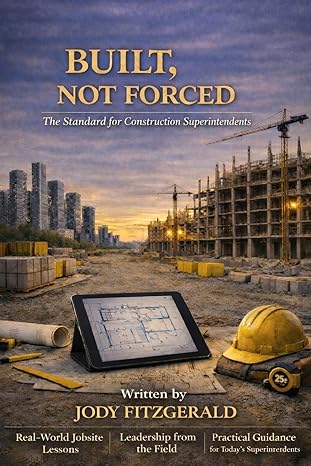
Built, Not Forced (The Standard for Construction Superintendents)

Read 17 min

Built, Not Forced by Jody Fitzgerald (The Standard for Construction Superintendents)

Built, Not Forced: The Standard for Construction Superintendents by Jody Fitzgerald is a leadership-focused field guide that challenges traditional construction management habits and replaces them with a more intentional, people-centered, and system-driven approach. The book argues that great projects are not pushed into completion through pressure, chaos, or constant firefighting they are built through preparation, trust, standards, and flow.

The Core Message: Shifting from Force to Structure

At its core, Built, Not Forced is about shifting from a reactive, force-driven mindset to a structured, proactive, and leadership-driven system. Fitzgerald emphasizes that many construction projects fail not because people are incompetent, but because systems are broken, expectations are unclear, and leadership is inconsistent.

The title itself captures the philosophy:

Forced = rushed schedules, constant pressure, confusion, rework, burnout

Built = planned work, stable flow, clear expectations, empowered teams

A superintendent’s role is to build the environment where success becomes the natural outcome, not something achieved through stress and last-minute effort.

From Chaos to Stability: Chaos Is Not Inevitable

The book strongly critiques the industry norm of chaos being accepted as “just how construction works.” Fitzgerald argues that chaos is not inevitable it is the result of poor planning, lack of standards, and weak leadership systems. Instead, the goal is stability: predictable workflows, reliable schedules, and clear communication. When stability is achieved, productivity increases and stress decreases.

Systems Over Heroics: If Your Project Relies on Heroes, Your System Is Broken

One of the most powerful ideas in the book is that projects should not rely on “heroic effort.” In many jobsites, success depends on last-minute problem solving, individuals working overtime to fix issues, and constant firefighting. Fitzgerald rejects this model and promotes systems thinking: standard processes for planning and execution, repeatable workflows, and clear roles and responsibilities. The idea is simple: If your project only works when people go above and beyond constantly, your system is broken.

The Superintendent as a Builder of Systems

The superintendent is not just managing work they are designing the system in which work happens. This includes creating structured schedules, establishing daily and weekly planning routines, ensuring trade partners are aligned, and removing constraints before work begins. The superintendent becomes a system architect, not just a problem solver.

Clarity Creates Performance: When People Know What to Do, They Perform Better

A major cause of inefficiency on jobsites is lack of clarity. Fitzgerald emphasizes clear scopes of work, defined expectations, transparent schedules, and visual planning tools. When people know exactly what to do, when to do it, and how it connects to others, they perform better with less supervision.

Flow Over Busyness: A Well-Flowing Jobsite Looks Calm, Not Chaotic

Similar to Lean principles, the book highlights that keeping people busy is not the goal keeping work flowing is. Problems with “busy work”: trades working out of sequence, congestion on site, and increased rework. Instead, superintendents should focus on proper sequencing, balanced workloads, and smooth handoffs between trades. A well-flowing jobsite looks calm, not chaotic.

Respect for Trade Partners: Collaborators, Not Subordinates

The book places strong emphasis on treating trade partners as collaborators, not subordinates. This includes involving them in planning, listening to their expertise, and providing what they need to succeed. When trades are respected, accountability increases, quality improves, and conflicts decrease.

Discipline and Standards: Consistent Standards, Not Occasional Effort

Fitzgerald introduces the idea that success comes from consistent standards, not occasional effort. This includes daily routines (walks, check-ins, planning sessions), clean and organized sites, structured meetings, and clear documentation. Discipline creates predictability, and predictability creates success.

Leadership Through Behavior: The Team Mirrors the Superintendent

Leadership is not defined by position it is defined by actions. Superintendents must show up prepared, stay calm under pressure, communicate clearly, and follow through on commitments. The team mirrors the behavior of the superintendent. If leadership is disorganized, the project will be too.

Here are the core values from Built, Not Forced:

  • Intentionality over reaction: planning replaces panic, preparation replaces reaction – Every action on jobsite should be intentional. Planning replaces panic, and preparation replaces reaction. Shift from reactive, force-driven mindset to structured, proactive, and leadership-driven system. Many construction projects fail not because people are incompetent, but because systems are broken, expectations are unclear, and leadership is inconsistent. Superintendent’s role is to build environment where success becomes natural outcome, not something achieved through stress and last-minute effort.
  • Systems thinking: success built on strong systems, not individual heroic effort – Projects should not rely on “heroic effort.” In many jobsites, success depends on last-minute problem solving, individuals working overtime to fix issues, constant firefighting. Fitzgerald rejects this model and promotes systems thinking: standard processes for planning and execution, repeatable workflows, clear roles and responsibilities. If your project only works when people go above and beyond constantly, your system is broken. Superintendent not just managing work designing system in which work happens.
  • Flow over busyness: proper sequencing, balanced workloads, smooth handoffs between trades – Keeping people busy is not goal keeping work flowing is. Problems with “busy work”: trades working out of sequence, congestion on site, increased rework. Instead, superintendents should focus on proper sequencing, balanced workloads, smooth handoffs between trades. Well-flowing jobsite looks calm, not chaotic. When stability achieved, productivity increases and stress decreases.
  • Clarity creates performance: clear scopes, defined expectations, visual planning tools – Major cause of inefficiency on jobsites is lack of clarity. Fitzgerald emphasizes clear scopes of work, defined expectations, transparent schedules, visual planning tools. When people know exactly what to do, when to do it, how it connects to others, they perform better with less supervision. Clear communication eliminates confusion. Everyone should understand plan and their role in it.
  • Respect for trade partners: involve in planning, listen to expertise, provide what they need – Strong emphasis on treating trade partners as collaborators, not subordinates. This includes involving them in planning, listening to their expertise, providing what they need to succeed. When trades are respected, accountability increases, quality improves, conflicts decrease. People perform best when they are respected, heard, and supported. Applies to every level of jobsite.

If your project needs superintendent coaching, project support, or leadership development, Elevate Construction can help your field teams stabilize, schedule, and flow.

Practical Takeaways from the Book

Some of the most actionable lessons from the book include: Plan work in detail before it reaches the field. Never allow crews to start without proper preparation. Use consistent planning rhythms (daily and weekly). Focus on removing constraints early. Keep the jobsite organized and clean. Build strong relationships with trade partners from day one. Avoid overloading the site with too many crews at once. Measure success by flow and predictability, not activity.

A Challenge for Superintendents

Here’s what I want you to do this week. Read Built, Not Forced by Jody Fitzgerald. Shift from reactive, force-driven mindset to structured, proactive, and leadership-driven system. Your role is to build environment where success becomes natural outcome, not something achieved through stress and last-minute effort.

Stop relying on heroic effort. If your project only works when people go above and beyond constantly, your system is broken. Promote systems thinking: standard processes for planning and execution, repeatable workflows, clear roles and responsibilities. You’re not just managing work you’re designing system in which work happens.

Focus on flow over busyness. Keeping people busy is not goal keeping work flowing is. Proper sequencing, balanced workloads, smooth handoffs between trades. Well-flowing jobsite looks calm, not chaotic. Create clarity. Clear scopes of work, defined expectations, transparent schedules, visual planning tools. When people know exactly what to do, when to do it, how it connects to others, they perform better with less supervision.

Treat trade partners as collaborators, not subordinates. Involve them in planning. Listen to their expertise. Provide what they need to succeed. When trades are respected, accountability increases, quality improves, conflicts decrease. Build discipline and standards. Daily routines (walks, check-ins, planning sessions). Clean and organized sites. Structured meetings. Clear documentation. Discipline creates predictability, and predictability creates success.

Remember: the team mirrors your behavior. Show up prepared. Stay calm under pressure. Communicate clearly. Follow through on commitments. If leadership is disorganized, the project will be too.

On we go.

Frequently Asked Questions

What is the main message of Built, Not Forced?

Great projects not pushed into completion through pressure, chaos, or constant firefighting built through preparation, trust, standards, and flow. Shift from reactive, force-driven mindset to structured, proactive, and leadership-driven system. Superintendent’s role is to build environment where success becomes natural outcome, not something achieved through stress and last-minute effort.

What does “systems over heroics” mean?

Projects should not rely on “heroic effort.” If your project only works when people go above and beyond constantly, your system is broken. Promote systems thinking: standard processes for planning and execution, repeatable workflows, clear roles and responsibilities. Superintendent not just managing work designing system in which work happens.

Why is flow more important than busyness?

Keeping people busy is not goal keeping work flowing is. Problems with “busy work”: trades working out of sequence, congestion on site, increased rework. Instead, focus on proper sequencing, balanced workloads, smooth handoffs between trades. Well-flowing jobsite looks calm, not chaotic.

How does clarity create performance?

Major cause of inefficiency is lack of clarity. Clear scopes of work, defined expectations, transparent schedules, visual planning tools. When people know exactly what to do, when to do it, how it connects to others, they perform better with less supervision.

How should superintendents treat trade partners?

As collaborators, not subordinates. Involve them in planning. Listen to their expertise. Provide what they need to succeed. When trades are respected, accountability increases, quality improves, conflicts decrease.

If you want to learn more we have:

-Takt Virtual Training: (Click here)
-Check out our Youtube channel for more info: (Click here) 
-Listen to the Elevate Construction podcast: (Click here) 
-Check out our training programs and certifications: (Click here)
-The Takt Book: (Click here)

Discover Jason’s Expertise:

Meet Jason Schroeder, the driving force behind Elevate Construction IST. As the company’s owner and principal consultant, he’s dedicated to taking construction to new heights. With a wealth of industry experience, he’s crafted the Field Engineer Boot Camp and Superintendent Boot Camp – intensive training programs engineered to cultivate top-tier leaders capable of steering their teams towards success. Jason’s vision? To expand his training initiatives across the nation, empowering construction firms to soar to unprecedented levels of excellence.

On we go
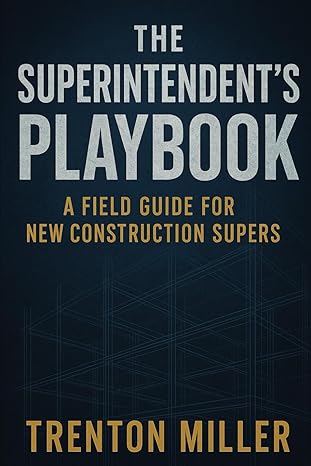
THE SUPERINTENDENT’S PLAYBOOK (A Field Guide for New Construction Supers)

Read 16 min

The Superintendent’s Playbook by Trenton Miller (A Field Guide for New Construction Supers)

At its core, the book reframes what it means to be a superintendent. It emphasizes that the role is not about control, authority, or being the “boss”, it’s about serving the project, enabling others, and creating an environment where work can flow efficiently and safely.

A superintendent is positioned as the central nervous system of the jobsite, connecting people, processes, and production. Success comes from clarity, preparation, communication, and respect for the people doing the work.

The Role of a Superintendent: Facilitator, Not Boss

Miller defines the superintendent as a facilitator of success. Instead of micromanaging, the superintendent’s job is to remove obstacles, coordinate trades, ensure work is ready before it starts, and maintain flow on the jobsite. This shift from control to enablement is one of the most important mindset changes for new supers.

Planning and Preparation: Most Problems Come from Poor Planning

A major emphasis is placed on preparation before execution. The book stresses that most jobsite problems come from poor planning, not poor performance. Key planning responsibilities include reviewing drawings thoroughly, identifying constraints early, ensuring materials, tools, and information are ready (often referred to as having a “full kit”), and creating realistic schedules that reflect actual field conditions. Good supers don’t react to problems they anticipate and prevent them.

Flow and Production Thinking: Keep Work Moving, Not Just People Busy

The book aligns closely with Lean construction principles, especially the idea of flow. Instead of focusing on keeping everyone busy, the goal is to keep work moving smoothly from one trade to the next, avoid bottlenecks, and maintain consistent progress. This requires clear sequencing, balanced workloads, and reliable handoffs between trades. A chaotic jobsite is usually a sign of broken flow.

Communication and Coordination: Miscommunication Causes Delays and Rework

Communication is presented as one of the superintendent’s most critical tools. Effective supers communicate expectations clearly, hold consistent meetings (daily huddles, coordination meetings), ensure everyone understands the plan, and listen actively to field crews. The book emphasizes that miscommunication is one of the biggest causes of delays, rework, and conflict.

Leadership and Culture: Influence and Trust, Not Authority

Leadership in the field is not about authority it’s about influence and trust. Miller highlights that great superintendents lead by example, stay calm under pressure, treat workers with respect, and build strong relationships with trade partners. Culture on a jobsite is shaped by the superintendent. A positive culture leads to better productivity, higher morale, and fewer safety incidents.

Safety as a Core Responsibility: Proactive, Not Reactive

Safety is not treated as a checklist or compliance task it’s a fundamental part of leadership. Key ideas include: safety is proactive, not reactive. Planning reduces risk. A clean, organized site is a safer site. Workers must feel comfortable speaking up. The superintendent sets the tone for safety through daily actions, not just policies.

Time Management: Focus on Planning, Coordinating, Supporting

Superintendents deal with constant pressure and competing priorities. The book teaches how to focus on high-impact activities, avoid getting lost in minor issues, and stay organized despite chaos. The best supers spend their time on planning ahead, coordinating work, and supporting crews. Not firefighting every small problem.

Problem-Solving and Adaptability: Stay Solution-Focused, Avoid Blame

Construction is unpredictable, and problems are inevitable. What matters is how they are handled. Effective superintendents stay solution-focused, avoid blame, involve the right people quickly, and learn from mistakes. Adaptability is key plans will change, and supers must adjust without losing control of the project.

Here are the core values from The Superintendent’s Playbook:

  • Service over authority: super serves team and project, builds trust and performance – Superintendent is there to serve team and project, not to dominate it. This mindset builds trust and improves performance across board. Role not about control, authority, or being “boss” about serving project, enabling others, creating environment where work can flow efficiently and safely. Superintendent positioned as central nervous system of jobsite, connecting people, processes, production. Success comes from clarity, preparation, communication, respect for people doing work.
  • Preparation over reaction: well-prepared jobsite runs smoother with fewer disruptions – Success comes from planning ahead, not reacting to problems after they occur. Well-prepared jobsite runs smoother and experiences fewer disruptions. Most jobsite problems come from poor planning, not poor performance. Key planning responsibilities: reviewing drawings thoroughly, identifying constraints early, ensuring materials tools information ready (having “full kit”), creating realistic schedules that reflect actual field conditions. Good supers don’t react to problems anticipate and prevent them.
  • Respect for people: every worker critical, treating with respect leads to better collaboration – Every worker on-site plays critical role. Treating people with respect leads to better collaboration, higher quality work, stronger relationships. Great superintendents lead by example, stay calm under pressure, treat workers with respect, build strong relationships with trade partners. Culture on jobsite shaped by superintendent. Positive culture leads to better productivity, higher morale, fewer safety incidents.
  • Clarity and communication: clear expectations eliminate confusion, miscommunication causes delays – Clear expectations eliminate confusion. Communication must be frequent, simple, direct. Without clarity, even skilled teams will struggle. Communication presented as one of superintendent’s most critical tools. Effective supers communicate expectations clearly, hold consistent meetings (daily huddles, coordination meetings), ensure everyone understands plan, listen actively to field crews. Miscommunication one of biggest causes of delays, rework, conflict.
  • Flow and efficiency: keep work moving smoothly, avoid bottlenecks, reliable handoffs – Book aligns closely with Lean construction principles, especially idea of flow. Instead of focusing on keeping everyone busy, goal is keep work moving smoothly from one trade to next, avoid bottlenecks, maintain consistent progress. Requires clear sequencing, balanced workloads, reliable handoffs between trades. Chaotic jobsite usually signs of broken flow. Keeping work moving smoothly more important than keeping people busy. Efficiency comes from proper sequencing, eliminating waste, reducing delays.

If your project needs superintendent coaching, project support, or leadership development, Elevate Construction can help your field teams stabilize, schedule, and flow.

Practical Takeaways from the Book

Some of the most actionable lessons from the book include: Always ensure crews have a full kit before starting work. Walk the site daily with intention, not just habit. Plan at least one step ahead of the work. Build strong relationships with trade partners early. Keep meetings short, focused, and consistent. Document issues clearly and communicate them early. Stay visible and accessible on the jobsite.

A Challenge for Superintendents

Here’s what I want you to do this week. Read The Superintendent’s Playbook by Trenton Miller. Embrace the shift from control to enablement. Your job is to remove obstacles, coordinate trades, ensure work is ready before it starts, and maintain flow on the jobsite. Focus on planning and preparation. Most jobsite problems come from poor planning, not poor performance. Review drawings thoroughly. Identify constraints early. Ensure materials, tools, and information are ready (have a “full kit”). Create realistic schedules that reflect actual field conditions. Don’t react to problems anticipate and prevent them.

Keep work moving smoothly from one trade to next. Avoid bottlenecks. Maintain consistent progress. Clear sequencing. Balanced workloads. Reliable handoffs between trades. Chaotic jobsite is sign of broken flow. Communicate expectations clearly. Hold consistent meetings. Ensure everyone understands plan. Listen actively to field crews. Miscommunication one of biggest causes of delays, rework, conflict. Lead by example. Stay calm under pressure. Treat workers with respect. Build strong relationships with trade partners. Culture on jobsite shaped by you. Positive culture leads to better productivity, higher morale, fewer safety incidents.

Make safety proactive, not reactive. Planning reduces risk. Clean, organized site is safer site. Workers must feel comfortable speaking up. You set tone for safety through daily actions, not just policies.

On we go.

Frequently Asked Questions

What is the main message of The Superintendent’s Playbook?

Role not about control, authority, or being “boss” about serving project, enabling others, creating environment where work can flow efficiently and safely. Superintendent positioned as central nervous system of jobsite, connecting people, processes, production. Success comes from clarity, preparation, communication, respect for people doing work.

What’s the superintendent’s job according to Trenton Miller?

Facilitator of success. Instead of micromanaging, job is to remove obstacles, coordinate trades, ensure work is ready before it starts, maintain flow on jobsite. Shift from control to enablement is one of most important mindset changes for new supers.

Where do most jobsite problems come from?

Most jobsite problems come from poor planning, not poor performance. Good supers don’t react to problems anticipate and prevent them. Key planning responsibilities: reviewing drawings thoroughly, identifying constraints early, ensuring materials tools information ready (having “full kit”), creating realistic schedules that reflect actual field conditions.

What does flow mean for superintendents?

Instead of focusing on keeping everyone busy, goal is keep work moving smoothly from one trade to next, avoid bottlenecks, maintain consistent progress. Requires clear sequencing, balanced workloads, reliable handoffs between trades. Chaotic jobsite usually sign of broken flow.

How should superintendents approach safety?

Safety not treated as checklist or compliance task fundamental part of leadership. Safety is proactive, not reactive. Planning reduces risk. Clean, organized site is safer site. Workers must feel comfortable speaking up. Superintendent sets tone for safety through daily actions, not just policies.

If you want to learn more we have:

-Takt Virtual Training: (Click here)
-Check out our Youtube channel for more info: (Click here) 
-Listen to the Elevate Construction podcast: (Click here) 
-Check out our training programs and certifications: (Click here)
-The Takt Book: (Click here)

Discover Jason’s Expertise:

Meet Jason Schroeder, the driving force behind Elevate Construction IST. As the company’s owner and principal consultant, he’s dedicated to taking construction to new heights. With a wealth of industry experience, he’s crafted the Field Engineer Boot Camp and Superintendent Boot Camp – intensive training programs engineered to cultivate top-tier leaders capable of steering their teams towards success. Jason’s vision? To expand his training initiatives across the nation, empowering construction firms to soar to unprecedented levels of excellence.

On we go
What Is Lean Construction? (Simple Overview for Builders)

Read 19 min

What Is Lean Construction? (Simple Overview for Builders)

I’m really excited about this topic because usually I talk about the pattern, which is actually correct. Which is it’s respect for people, stability and standardization. One piece progress or process flow flowing on Takt time, total participation with visual systems, and then quality and continuous improvement.

But what I’d like to do right now is actually cover an overview of what Lean is in construction and where it came from. So, I’m going to give you a couple of really cool points that I think you’re going to love.

Definition of Lean: Willingness to Learn and Implement Excellence

So, number one, Lean at least Jason’s definition can be about a lot of things, but it’s mainly about the willingness to learn about and implement excellence for the benefit of people and humanity. So, you could say Lean is about respect. You could say Lean is about people. Lean is about doing what’s right. Lean is about learning.

So that’s really the foundation. And it’s so important because there are so many folks and they’re great folks, but they’re talking about Lean and they completely forget about the people side of it, and we can’t do that. We’ve got to make sure we understand that it’s all about people.

Respect for People, Nature and Resources: The First Concept

Once we get that, and again, that’s why I have respect for people, nature and resources as the first concept in my Lean cores. There’s six of them. But then we get into some key concepts that really enable flow to the customer and flow of a quality product. But flow while we are respecting our own people and the client at the same time.

So, Lean really is in the context of this blog about flow.

Key Ways to Enable Flow: Build the Team First

One of the key ways that we enable flow is to build the team first and respect people. We really can’t flow from a production standpoint unless we flow intellectually, emotionally and with the team. So that’s why people always come first.

And second, we must make sure that we stabilize before we optimize. That means you’re going to want to see beautiful, clean, safe, and organized environments. You’re going to want to see standard work. You’re going to see rhythms for our meeting systems, standard deliverables, stability and standardization enable flow.

And then you can start to do a couple of key things, which I’ll mention briefly because I cover this in depth in other blogs.

One Piece Progress: Don’t Start Until Ready to Finish with Full Kit

When you’re working in one piece progress or process flow, that really means that you’re not going to start something until you’re ready to finish and that you have the capacity to do so. So, when we do something, we plan it, we do it and finish it. Plan, build, finish. And we don’t do the second thing until we’re done here and we have full kit.

Flowing on Takt Time: Go as Fast as Your Slowest Trade

The fourth key consideration within this flow concept is flowing together on a Takt time. Meaning that we’re on a rhythm. It doesn’t matter how fast one trade or your fastest trades are going or how fast the fastest thing is going. You’re only going to go as fast as your most limiting factor or your slowest trade or your most complex zones. We have to flow together.

Total Participation with Visual Systems: Can’t Participate Without Them

And the only way that we can do that is if we participate together with visual systems. You really can’t participate together without visual systems. And that then enables us to focus on quality and to continuously improve. And really that wheel 1, 2, 3, 4, 5, 6 can move in both directions however you want.

But we must make sure we start first with respect and stability.

Origin: Toyota, Japanese Culture, Sakichi Toyoda’s Looms

It originally comes from Toyota. You can actually trace this back to Japanese culture and you can trace it all the way back to Sakichi Toyoda with his looms and then the Toyota Motor Company. And actually, the culture throughout Japan, it has its roots there.

And they really focused. I mean, in Japanese culture, they’re focused on respect for people, first and foremost, and stability. And then they added two concepts. One was Jidoka, which is automation with human touch to focus on quality at the source. And then just-in-time where we really only do things just in time in a flow and bring materials and resources to build these products just in time, in a flow.

And we only produce just in time for the customer in a flow.

Benefits: Removes Chaos, Reduces Variability, Respects People

This concept of Lean prevents or removes or reduces chaos for trade partners. It reduces variability. It makes us all more money, but most importantly, it respects people. And I want you to remember, it’s a system, not a tool.

Here’s what Lean construction is:

  • Willingness to learn about and implement excellence for benefit of people and humanity – Lean can be about lot of things, but mainly about willingness to learn about and implement excellence for benefit of people and humanity. Could say Lean is about respect. Could say Lean is about people. Lean is about doing what’s right. Lean is about learning. That’s really foundation. So many folks talking about Lean and completely forget about people side of it, can’t do that. Got to make sure understand it’s all about people.
  • Respect for people, nature and resources: first concept before flow – That’s why have respect for people, nature and resources as first concept in my Lean cores. There’s six of them. Then get into key concepts that really enable flow to customer and flow of quality product. But flow while we are respecting our own people and client at same time. Lean really is about flow.
  • Build team first, stabilize before optimize: clean, safe, organized, standard work – One of key ways enable flow is to build team first and respect people. Really can’t flow from production standpoint unless we flow intellectually, emotionally and with team. That’s why people always come first. Second, must make sure stabilize before optimize. Want to see beautiful, clean, safe, organized environments. Want to see standard work. See rhythms for meeting systems, standard deliverables, stability and standardization enable flow.
  • One piece progress: don’t start until ready to finish with full kit, plan-build-finish – When working in one piece progress or process flow, really means not going to start something until ready to finish and have capacity to do so. When do something, plan it, do it and finish it. Plan, build, finish. Don’t do second thing until done here and have full kit.
  • Flow on takt time: go as fast as slowest trade, total participation with visual systems – Fourth key consideration within flow concept is flowing together on Takt time. Means on rhythm. Doesn’t matter how fast one trade or fastest trades going or how fast fastest thing going. Only going to go as fast as most limiting factor or slowest trade or most complex zones. Have to flow together. Only way can do that is if participate together with visual systems. Really can’t participate together without visual systems. Then enables to focus on quality and continuously improve.

If your project needs superintendent coaching, project support, or leadership development, Elevate Construction can help your field teams stabilize, schedule, and flow.

A Challenge for Construction Professionals

Here’s what I want you to do this week. If you have any opportunity to learn about Lean in manufacturing or construction, do it. It will change your life. Remember lean is mainly about willingness to learn about and implement excellence for benefit of people and humanity. It’s about respect. It’s about people. It’s about doing what’s right. It’s about learning. So many folks talking about Lean and completely forget about people side of it. Got to make sure understand it’s all about people.

Build team first and respect people. Really can’t flow from production standpoint unless flow intellectually, emotionally and with team. That’s why people always come first. Stabilize before optimize. Want to see beautiful, clean, safe, organized environments. Want to see standard work. Rhythms for meeting systems, standard deliverables, stability and standardization enable flow. Work in one piece progress. Don’t start something until ready to finish and have capacity to do so. Plan it, do it and finish it. Plan, build, finish. Don’t do second thing until done and have full kit.

Flow together on Takt time. On rhythm. Only gonna go as fast as most limiting factor or slowest trade or most complex zones. Have to flow together. Participate together with visual systems. Really can’t participate together without visual systems. Focus on quality and continuously improve. Remember: Lean prevents or removes or reduces chaos for trade partners. Reduces variability. Makes us all more money, but most importantly, respects people. It’s a system, not a tool. As we say at Elevate, Lean construction: willingness to learn and implement excellence for benefit of people. Flow enabled by respect, stability, Takt time, visual systems.

On we go.

Frequently Asked Questions

What is Lean construction?

Willingness to learn about and implement excellence for benefit of people and humanity. Could say Lean is about respect, about people, about doing what’s right, about learning. So many folks talking about Lean and completely forget about people side of it. Got to make sure understand it’s all about people.

Where did Lean construction come from?

Originally comes from Toyota. Can trace back to Japanese culture and trace all way back to Sakichi Toyoda with his looms and then Toyota Motor Company. Japanese culture focused on respect for people, first and foremost, and stability. Added Jidoka (automation with human touch to focus on quality at source) and just-in-time (only do things just in time in flow).

What are the key ways to enable flow?

Build team first and respect people. Can’t flow from production standpoint unless flow intellectually, emotionally and with team. Stabilize before optimize. Beautiful, clean, safe, organized environments. Standard work. Rhythms for meeting systems. One piece progress. Flow on Takt time. Total participation with visual systems.

What is one piece progress?

Not going to start something until ready to finish and have capacity to do so. Plan it, do it and finish it. Plan, build, finish. Don’t do second thing until done and have full kit.

What does flowing on Takt time mean?

Flowing together on Takt time. On rhythm. Doesn’t matter how fast one trade or fastest trades going. Only going to go as fast as most limiting factor or slowest trade or most complex zones. Have to flow together. Only way: participate together with visual systems.

If you want to learn more we have:

-Takt Virtual Training: (Click here)
-Check out our Youtube channel for more info: (Click here) 
-Listen to the Elevate Construction podcast: (Click here) 
-Check out our training programs and certifications: (Click here)
-The Takt Book: (Click here)

Discover Jason’s Expertise:

Meet Jason Schroeder, the driving force behind Elevate Construction IST. As the company’s owner and principal consultant, he’s dedicated to taking construction to new heights. With a wealth of industry experience, he’s crafted the Field Engineer Boot Camp and Superintendent Boot Camp – intensive training programs engineered to cultivate top-tier leaders capable of steering their teams towards success. Jason’s vision? To expand his training initiatives across the nation, empowering construction firms to soar to unprecedented levels of excellence.

On we go
Elevating Construction Takt Planning – Part ‪4

Read 40 min

The Team That Said Takt Does Not Work Because Riddled With Problems When Problems Were Always There Now We Can Do Something About Them

There is a team implementing Takt Planning for first time. Created Takt plan showing flow. Identified Takt zones. Established rhythm. Distributed plan to all foremen. Held trades accountable to dates. And immediately problems erupted. Coordination missing. RFIs stuck. Materials delayed. Information incomplete. Permits pending. Equipment unavailable. Trade stacking in zones. Sequence conflicts everywhere. So superintendent declared: this Takt system does not work. It is riddled with problems. Look at all these roadblocks. Look at this chaos. CPM never showed this many problems. Therefore Takt must be causing problems. We should go back to CPM where things were cleaner. And consultant stopped him. Said: Takt is only riddled with problems because it shows problems that were always there. Only difference is now we can do something about them. CPM hid these problems in complexity. Made you think you had clean schedule when you had chaotic reality. Roadblocks existed. You just could not see them until you crashed into them. Coordination was always missing. RFIs were always stuck. Materials were always delayed. Information was always incomplete. Permits were always pending. Equipment was always unavailable. Trades were always stacking. Sequences were always conflicting. But CPM let you adjust logic ties and hide negative float. Let you make well-hidden changes making problems disappear from view. Let you feel falsely content until evidence that team would not finish on time became irrefutable oftentimes too late. Takt forces hard conversations early. Shows reality within two to three days of accuracy. Makes impacts visible same day or week affecting rest of Takt train and corresponding throughput. And yes that is uncomfortable. Yes that creates tension. Yes that requires accountability trades are not used to. But this is good. Problems are not a problem. Thinking there are no problems is a problem. We all know every project has problems. Teams who identify them and remove them are most successful. Takt does good job bringing problems to surface because visually compels stability. Problems cause enduring roadblocks and delays. Work does not progress as planned and entire system immediately disrupted. In Takt system problems rise to surface easily because Takt is commitment-based system wherein unaccountable people crews’ trades and companies cannot flourish. Once people feel obligated to follow flow they will begin to find reasons why they cannot. Then you can help identify roadblocks. This is good as long as contractor can then meet commitment when project team removes roadblock. This action is similar to old Nintendo game called Duck Hunt. As ducks or roadblocks rise up we shoot them and remove them. This is game we play. Many new practitioners in Takt system will declare system does not work because riddled with problems. It is only riddled with problems because it shows problems that were always there. Only difference is now we can do something about them. And team understood. Kept implementing Takt. Problems kept surfacing. But now they removed them. Used roadblock maps. Held daily focus on clearing path. Made work ready instead of reacting to chaos. And project finished on time. Under budget. With remarkable stability. Not because Takt eliminated problems. But because Takt made problems visible so team could remove them before they destroyed flow. CPM hid problems. Takt shows problems. Hiding problems does not make them go away. Just makes you crash into them when too late to recover. Showing problems early gives you fighting chance to remove them before they impact work. That is why Takt works. Not in spite of showing problems. But because it shows problems.

Here is what happens when project teams confuse crash landing with controlled landing. Project falls four months behind schedule. Team recognizes compression needed. Has two choices. Option one: crash landing. Ignore compression too long. Significant damage already incurred and unavoidable. Does not create learning environment but rather creates caustic environment where flow ceases to exist and trust erodes as team members stop holding themselves and others accountable. Previously protected resources now spent in state of panic without consideration for value being purchased. Ultimately all involved pay price personally and professionally without learning from expensive experience. Project completed but ends in Pyrrhic victory meaning takes such heavy toll on victor that positive outweighed by negative experience. Minimizes any true sense of achievement and damages long-term progress. Team does not reach out for help. Project slides into firefighting and damage control mode. Short-sighted decisions made causing more long-term problems. Personal lives regarded as expendable or term “this is how it has always been” is present. Crash landing is non-learning environment. Lack of trust exists. Option two: controlled landing. Schedule compression recognized early enough to engage full company resources. Although still difficult controlled approach creates learning environment that builds trust accountability and preserves work-life balance while strategically planning financial expenditures. Project has intentional realistic end date. Coordinated path to finish with full cleanliness. Safety and quality awareness priority. Planned resource expenditures for best possible outcomes. Thoughtful workflow. And team holds to Takt system and philosophy. Because pushing only extends end date. Takt manpower analysis. Flow systems. Realistic dates optimizing flow within project duration. False choice is pushing to finish early or staying in flow to finish later. Real choice is between pushing finishing later being fooled or staying in flow finishing on time with shortest duration. Going faster will never come from pushing but going faster can come from turning dials. Crews’ crew sizes procurement prefabrication expediting costs information any other metric allowing project to be built within duration. Team chooses controlled landing. Implements Takt fully. Removes roadblocks systematically. Finishes on time. Learns from experience. Builds trust. Preserves personal lives. And succeeds not through panic but through flow. If your project needs superintendent coaching, project support, or leadership development, Elevate Construction can help your field teams stabilize, schedule, and flow.

The Clean and Steady Rally Cry

Clean and steady is call to action for entire project site especially when using Takt. If workers and crews can work in clean and steady environment they can work in flow. For project teams to realize full potential of system there needs to be common vocabulary common vision well-communicated goals and rally cry to galvanize actions of team. Clean and steady or limpio y constante. Why is this important? Goal of Takt system is not efficiency or production in silos. Goal is throughput of system efficiency of entire system success of entire project site. We are not clean just to be clean. We clean to find problems and see what we need to see. It brings problems to surface.

To accomplish this goal and focus we need to plan it first build it right and finish as you go. Instead of working in mad rush in CPM world that drives us as early as possible so we can fix everything we did not have time to build right first time better solution is to plan work first build it right within our durations and finish work as we go not waiting until later. Takt enables this because creates predictable rhythm that stimulates planning building and finishing. When schedule is chaotic no one knows when to plan it or has time to build it much less build it right. Conversely Takt enables team to make plan and stick to plan. Allows you to find and see roadblocks as first priority and to finish as you go as second.

All planning and design is predictable and in flow. If we are able to plan properly then we can build project correctly with right quality expectations. If people able to work in flow they know when next activity will begin and will have assurance they have time to finish their work. Chaos puts people in continual cycle of feeling they are behind and forces quick and shoddy work. Takt is ultimate finishing tool because all supportive elements are in place to enable success even iterative design.

The Meeting System That Scales Communication to Workers

Meeting system designed to scale communication from first planners through to and past last planners to workers. No plan is well supported unless there is system to get it all way to people installing work. Strategic Planning and Procurement Meeting: enact long-term strategic planning for project team to check manage update Takt plan prepare make-ready schedules from pull plans ensure procurement tracking to right dates. Manage delays and impacts. Update status of last week activities. Update Procurement Alignment. Analyze bottlenecks. Check Milestone Alignment. 3-12 week look-ahead review.

Trade Partner Weekly Tactical: plan for Takt production taking place next week. Very effective because Takt plan can be reviewed among team and focus can be on removal of roadblocks and roadblock maps in meeting. Key is to plan for next week by clearing path. Agenda includes positive shout outs. Lightning Round described in Patrick Lencioni’s Death by Meeting consisting of collection of bullet point agenda items obtained by going around room giving each person 30 seconds to make agenda additions. General Safety. Review Takt Plan. Review Last Week. Review Current Progress. Review Roadblock Maps reviewing all areas where work taking place next week focusing as team on removal of roadblocks. Review Key Milestones. Review Plus Delta.

Afternoon Foreman Huddle: plan next day with all last planners onsite. Make sure path to success for next day is 100% clear and represented visually for entire project. Positive shout outs. Lightning Round. Roadblock Review. How did we do yesterday and today? Discuss what winning looks like for tomorrow. Review Weekly Work Plan detailing every portion of tomorrow’s general plan for foreman and superintendents communicated visually. Safety focus for tomorrow. Logistics what is coming when where will it go. Inspections. Safety Observations. Permits. Weather. Plus Deltas.

Morning Worker Huddle: create social group with all workers on site win them over to project standards communicate plan for day particularly safety plan. Give Shout outs. Feedback requesting feedback from workers. Review plan for day in abbreviated format. Define Safety Focus for day. Review Safety Observation from previous day’s Reflection Walk. Owner Items. Cleanliness reiterating need for cleanliness and organization. Permits. Review deliveries and strategy. Review training for day. Weather. Huddles encouraging crew preparation huddles. Pretask Planning.

Crew Preparation Huddle: prepare crew for work. If first planners prepare Takt plan foreman or last planners prepare commitments on production level then workers carry out that plan and need to be prepared. Takes place right after worker huddle on floor area or building where that crew working. Opportunity for foreman to line out workers in remarkable way to execute work. 15-25 minutes. Positive Shout out. Safety Training Topic. Share two second lean improvements from day before. Walk area of work and plan for safety. Fill out PTPs. Orient and Sign Survey. 5S work area while foreman filling out PTPs: Sort Set in order Shine or sweep Standardize Sustain or self-discipline. Set up work area for success by eliminating eight wastes particularly Excess Inventory Wasted Transport Wasted Motion Treasure Hunts. Gather all tools and needed equipment to prevent treasure hunts. Safe Off Work Areas.

The 14 Elements of Integrated Control System

Integrated control system will be discussed briefly. Main point of system is that preparation teaming good environment and accountability are fertile ground for any scheduling system. When we plan it first build it right and finish as we go we get preparation team environment and accountable systems to do just that.

Preparation: 1. Intentional pre-construction efforts, day in pre-construction will save week in field hour in pre-construction well spent will save day in field. 2. Lean in contracts, all systems you plan to implement on project should be included in contracts key because it is what is right cannot surprise trade partners with systems they did not bid and plan for cannot expect to fully hold people accountable to systems unless contractually tied to it.

The team: 3. Win over workforce, every good system starts with building team as soon as team is together workers have to feel and actually be respected need remarkable bathrooms good lunchroom horizontal communication systems worker huddles clean and safe environment in addition to barbecues positive recognitions good parking smoking areas other basic needs creating sense of reciprocity allowing environment where everyone can buy in. 4. Build project management team, must have time to improve implement lean systems comes from training on personal organization implementing team balance and health through training and coverage systems team should reach out for help if needed but must be stability and capacity within team to be successful. 5. Orient people well, orientation of project workers and leaders key consideration everyone must be shown expectations given tools and information to succeed on project.

The environment: 6. Design remarkable interaction spaces, project runs well when everyone sees as group knows as group acts as group comes from interaction spaces such as gathering areas visual signage meeting rooms office areas huddle areas all designed well. 7. Create self-sustaining logistics systems, logistics onsite must be controlled to work optimally because production gained mostly through supply lines access to work ability to bring materials just in time scheduling coordination lay-down delivery hoisting of materials must be quick and support installation of work logistics supervisor with stable remarkable logistics systems needed to succeed. 8. Use meeting system to scale communication, team weekly tactical strategic planning and procurement meeting trade partner weekly tactical afternoon foreman huddle morning worker huddle crew preparation huddles key to scaling information all way to workers matters little how well first planners can plan unless last planners weigh in and workers understand plan as fully as possible. 9. Stabilized procurement and deliveries, procurement must be managed well and early on weekly basis with superintendent made to be predictable to have integrated control procurement must be one of main focuses of team.

Accountability: 10. An effective quality program, quality at its root is that foreman and workers understand what needs to be built and building it that way in verifiable environment when quality becomes visual easily understood and followed by workers main focus of project team meeting in point of release chart project team can implement quality in remarkable way instead of separate and forgotten process. 11. A daily issue correction system, issues need to be resolved on project site on daily basis use of texting systems or other technology that is addictive useful and fast can be used to identify issues and filter assignments quickly to people who will actually care for them daily corrections systems very effective when entire project team participates with trade foreman. 12. A roadblock removal system, primary focus of team should be identification and removal of roadblocks when systems such as this exist and PM Super and Executive all work daily to remove them then work is made ready and flow can continue throughout project. 13. Implement zero tolerance, no team will have operational control if they tolerate bad behavior law of thirds suggests one third of project will be bought in another third undecided remaining third will not be bought in by incentivizing good behavior and having positive culture on site most will transition to being bought in for those that will not there needs to be pay-to-play minimum standard elevating behavior and performance triggering removal of others who will not conform. 14. Grade contractors, one of best ways to be clear about expectations is to grade all contractors on site clear is kind unclear is unkind team performs best when everyone knows expectations and everyone held accountable to those standards visual grading of performance key in integrated control system cannot manage what cannot measure cannot be understated one of single best ways to elevate performance on project if you do not implement grading system you will not achieve results you want.

Signs Your Team Needs Takt Implementation

Watch for these patterns that signal you need Takt Planning with integrated control system:

  • Superintendent spends 60% of day managing chaotic CPM schedule instead of 5% with Takt leaving 55% gain focused on preparing work identifying roadblocks removing roadblocks enabling builders to be builders
  • Project team thinks problems mean system is broken when reality is Takt shows problems that were always there only difference is now team can do something about them before crashing into roadblocks
  • Trades resist accountability claiming new system costs more when reality is CPM hides costs in chaos of trade financial tracking and Takt shows reality requiring legitimate bidding
  • Workers do not see plan because information transfers stop at foreman level instead of scaling all way through morning worker huddles and crew preparation huddles achieving 75% visibility versus 50% with Last Planner alone
  • Team chooses crash landing instead of controlled landing spending previously protected resources in state of panic without consideration for value being purchased creating Pyrrhic victory
  • Procurement automated to CPM schedule that constantly changes interrupting supply chain bringing too much inventory to project too soon instead of weekly meetings checking against Takt plan and make-ready look-aheads

These are system problems not people problems. And system problems require system solutions. Takt Planning with integrated control system is that solution.

How to Build Takt Plans Practically

Building Takt plan starts with studying drawings not going straight to software. Big difference between builders who go straight to software versus builders who go straight to drawings. Latter method is only way to put things in proper order. As builder studies design and gets feel for flow sequence general strategic approach for project with others he or she will immediately see and identify Takt zones. Takt zones sometimes known as geographical areas or production areas are areas defined within building to identify work that will be scheduled for Takt wagon within Takt time. In order to get portions of work broken down to fit within drumbeat we have to break work up into zones that can be completed according to that drumbeat.

For instance in Phoenix Arizona best standard Takt zone for hospital laboratory or other complex program space is 10,000 square feet. In Phoenix depending on availability of manpower construction team can typically produce 10,000 square feet of interior space every 5 or 7 days with total process time within Takt train of 7.5 to 9 months from beginning to end. That means throughput is 10,000 square feet of interior space every 5 or 7 days. In Tucson if 10,000 square foot number used for Takt zones throughput is 10,000 of finished space every 10 days and Takt time is 5 days. Concrete usually follows same zones and exterior typically separated by exterior composition with relatively similar zones and geometric shapes.

Amount of Takt zones you have within overall duration of project or phase duration will help identify Takt time. Takt time is rate at which finished product needs to be completed in order to meet customer demand. Time scale of your Takt plan will essentially be your Takt time. These rates usually every 3 days 5 days 7 days or 10 days. Most common is 5 because represents work week and allows Saturday of that week to become contingency day. Think of Takt time like drumbeat of project.

The Challenge

Stop declaring Takt does not work because it shows problems. Start recognizing it shows problems that were always there so you can remove them before they destroy flow. Stop choosing crash landing spending resources in panic without learning. Start choosing controlled landing recognizing compression early engaging full company resources creating learning environment building trust. Stop hiding problems in CPM complexity thinking clean schedule means clean reality. Start surfacing problems with Takt so team can identify them early and remove them systematically. Stop limiting communication to foreman level achieving 50% worker visibility. Start scaling communication through meeting system achieving 75% worker comprehension through morning worker huddles and crew preparation huddles. Stop automating procurement to CPM schedule that constantly changes. Start managing procurement weekly with superintendent checking against Takt plan and make-ready look-aheads. Stop tolerating bad behavior letting unaccountable people flourish. Start implementing zero tolerance and contractor grading holding everyone accountable to clear expectations. Stop spending 60% of day managing chaotic schedule. Start spending 5% managing Takt plan and 55% preparing work identifying roadblocks and removing roadblocks enabling builders to be builders.

As the book teaches: clean and steady (limpio y constante). If workers and crews can work in clean and steady environment they can work in flow. Plan it first build it right finish as you go. Problems are not a problem. Thinking there are no problems is a problem. Duck Hunt analogy: as ducks or roadblocks rise up we shoot them and remove them. This is game we play. Many new practitioners in Takt system will declare system does not work because riddled with problems. It is only riddled with problems because it shows problems that were always there. Only difference is now we can do something about them. Flow is everything in construction. Absolutely everything when comes to effectiveness. If you do not have schedule with flow then you do not have anything. Takt planning is key. It has to be beginning of everything we do. On we go.

Frequently Asked Questions

What does clean and steady (limpio y constante) mean?

Clean and steady is rally cry for entire project site especially when using Takt, if workers and crews can work in clean and steady environment they can work in flow, we are not clean just to be clean but clean to find problems and see what we need to see bringing problems to surface.

Why does Takt seem riddled with problems when first implemented?

Many new practitioners declare Takt does not work because riddled with problems but it is only riddled with problems because it shows problems that were always there, only difference is now we can do something about them before crashing into roadblocks when too late to recover.

What is difference between crash landing and controlled landing?

Crash landing: schedule compression ignored too long, significant damage unavoidable, caustic environment where flow ceases and trust erodes, resources spent in panic, Pyrrhic victory. Controlled landing: compression recognized early, full company resources engaged, learning environment building trust, work-life balance preserved, strategic financial planning, holds to Takt system because pushing only extends end date.

What are the 14 elements of Integrated Control System?

Preparation: intentional pre-construction, lean in contracts. Team: win over workforce, build project management team, and orient people well. Environment: remarkable interaction spaces, self-sustaining logistics, meeting system scaling communication, stabilized procurement. Accountability: effective quality program, daily issue correction, roadblock removal system, zero tolerance, grade contractors.

How does meeting system scale communication to workers?

Strategic planning and procurement meeting (long-term planning), trade partner weekly tactical (next week planning), afternoon foreman huddle (next day planning), morning worker huddle (create social group communicate safety and plan), crew preparation huddle (prepare crew for work with PTPs and 5S)—scales information all way from first planners through last planners to workers achieving 75% comprehension versus 50% with Last Planner alone.

If you want to learn more we have:

-Takt Virtual Training: (Click here)
-Check out our Youtube channel for more info: (Click here) 
-Listen to the Elevate Construction podcast: (Click here) 
-Check out our training programs and certifications: (Click here)
-The Takt Book: (Click here)

Discover Jason’s Expertise:

Meet Jason Schroeder, the driving force behind Elevate Construction IST. As the company’s owner and principal consultant, he’s dedicated to taking construction to new heights. With a wealth of industry experience, he’s crafted the Field Engineer Boot Camp and Superintendent Boot Camp – intensive training programs engineered to cultivate top-tier leaders capable of steering their teams towards success. Jason’s vision? To expand his training initiatives across the nation, empowering construction firms to soar to unprecedented levels of excellence.

On we go
Elevating Construction Takt Planning – Part ‪3‬

Read 42 min

Construction Teams Think Going Faster Finishes Earlier When Navy SEALs Know Slow Is Smooth and Smooth Is Fast

There is a famous saying from United States Navy SEALs. Slow is smooth and smooth is fast. Means rushing takes longer than going at right rate. But construction teams do not believe this. They think decision is between going fast and finishing early versus going slow and finishing late. So they choose speed. CPM slams everything to left toward early start dates. Superintendents push trades to accelerate. Project managers demand crews work faster. Everyone believes if we just go faster we will finish earlier. And projects crash. Behind schedule. Over budget. Workers burned out. Families sacrificed. Quality suffering. Safety incidents rising. Because the decision is not between fast finishing early versus slow finishing late. Real decision is between going fast and failing versus going at right rhythm and having fighting chance to win. Real decision is between going fast and finishing late versus going at right rhythm and finishing on earliest possible date. Navy SEALs understand this. Rushing into building creates mistakes requiring rework taking longer than doing it right first time. Going too fast means you cannot see roadblocks in time to remove them so you crash into them repeatedly slowing entire system. Pushing resources beyond capacity creates chaos where communication breaks down and coordination fails. Fast creates variation. Variation creates waste. Waste destroys throughput. And destroyed throughput means late project regardless of how fast individuals worked. So repurpose Navy SEAL saying for construction: rhythm is smooth and smooth is fast. Point is rushing takes longer than going at right rate. Not between going fast finishing early versus going rhythm finishing later. Between going fast failing versus going rhythm winning. Between going fast finishing late versus going rhythm finishing earliest possible date. Rhythm is key. It is pace at which flow units or work is completed within project. And that rhythm is determined by capacity. Rate at which we complete buildings is not determined by randomly turning dials of manpower money and other resources. Rate at which we complete buildings is determined by capacity of local market and how much manpower is available. How many materials can be produced? How much money owner will pay for project? Each of these resources have capacity. Critical to understand that capacity and adjust Takt time and throughput to incorporate it into overall plan. Little merit to just making plan to fit stipulated end date when there is no capacity to do it. Takt works when we follow rhythm. Takt planning really only works when we get rhythm right and focus on that rhythm. CPM slams everything left. When builders build implement and manage with Takt, focus is on rhythm. Rhythm, stagger, throughput—nearly interchangeable terms—allow design to be done just in time, material approvals and permits to be leveled, load of team to be even throughout construction. Following rhythm also reduces likelihood of overburdening trade partners and crew resources. Flow is king and right rhythm enables that flow.

Here is what happens when project teams confuse speed with rhythm. Cancer center project. Eighty million dollars. Superintendent implements CPM schedule. Slams everything to left toward early start dates. Tells trades: we need to accelerate to finish early. Mechanical starts overhead rough-in before coordination complete. Plumbing brings out materials for entire floor before layout confirmed. Electrical pushes conduit runs without knowing final locations. Everyone going fast. Everyone working hard. And chaos erupts. Mechanical discovers conflicts requiring rework after installation. Plumbing has materials staged everywhere creating congestion and damage. Electrical installed conduit in wrong locations requiring demolition and reinstallation. Trades start stacking in areas. Work gets buried. Defects multiply. Rework increases. Communication breaks down because everyone too busy fixing mistakes to coordinate properly. Project falls behind despite everyone going faster than ever. Why? Because going fast created variation. Variation created waste. Waste destroyed throughput. And destroyed throughput meant late finish regardless of speed. Meanwhile research laboratory project. Same eighty million dollar size. Superintendent implements Takt Planning. Creates rhythm. Each 10,000 square foot zone flows at consistent two-week Takt time. Mechanical coordinates overhead before starting. Plumbing brings materials just-in-time for current zone only. Electrical follows rhythm installing conduit after coordination complete and layout verified. Everyone going at steady rhythm. Not rushing. Not slowing. Just consistent flow. And project finishes on time. Under budget. Zero crash landing. Why? Because rhythm created stability. Stability enabled coordination. Coordination prevented rework. Prevented rework preserved throughput. And preserved throughput meant earliest possible finish date. Not because people worked harder. Because they worked at right rhythm instead of wrong speed. If your project needs superintendent coaching, project support, or leadership development, Elevate Construction can help your field teams stabilize, schedule, and flow.

What Takt Planning Actually Is

Takt planning is detailed one page one piece flow schedule that focuses on throughput, bottlenecks, and ultimately creating flow. Accompanied by lean practices to be most efficient scheduling tool in industry for construction because inherently most effective at reducing waste. Takt is taken from German word meaning cycle time. Symbolizes need for responsible rhythm of work in certain production areas otherwise known as Takt zones as opposed to left justifying of activities to early start dates in CPM’s famous forward and backward paths. To builder Takt communicates need for flow.

Flow defined: as verb, of fluid gas or electricity move along or out steadily and continuously in current or stream. As noun, action or fact of moving along in steady continuous stream. When water flows it runs in relatively consistent and continuous stream down unobstructed path. When water does not flow usually due to twists turns obstacles changes in elevation or other hindrances. Additionally water flows when runs together in coordinated pattern with adequate space.

Water bottle demonstration: first jug tipped over pointed straight down allowing water to pour out without squeezing. Gurgling sound caused by friction of air and water fighting for space as jug empties in 11 seconds. Second jug turned over and bottle spun in circle creating spiral in water or flow vortex. As water spins center of vortex allows air to flow into bottle at same time as water flowing out. Only takes 5 seconds to empty second jug with flow vortex. Best flow developed by coordinating water in most optimized manner and creating space in center of vortex for air to rise. Forcing water through opening as fast as possible is not effective and causes splattering and turbulence. This is what happens in CPM by pushing construction activities through network of resources as fast and or as soon as possible like Early Start. Critical path erupts with roadblocks like air bubbles that interrupt flow and increase overall duration of project. Takt on other hand with its coordinated approach and space given for occurrence of roadblocks meaning air similar to flow vortex. When all parts working together to achieve flow water can move in steady stream while simultaneously allowing air to rise up through center of flow vortex. This beats other system every time because gives space and time for roadblocks to rise and be removed from flow of work.

The Train Analogy That Explains Takt Better Than River

Comparing flow of construction to water and river is problematic. Use train and railways instead to demonstrate practice of reducing waste. Land surveying: when railway is built path is determined by surveying terrain and finding path of least resistance. Therefore determining Takt time and throughput is like land surveying railway before construction. Design: overall design of Takt train is like printed Takt plan. Clearing path: important to fill in valleys and excavate hills before laying track. Leveling flow of work with trades by locking them into Takt time and plan is akin to clearing path. Railroad ties: railroad ties are foundation of train’s flow. Ties are what creates stability. Analogous to integrated control system—creating lean contracts, winning over workforce, implementing accountability systems, building team, creating team coverage, implementing team meeting cycle, creating safe clean organized project is foundation for stable Takt system. Rails: rails on tracks are what allow train to move quickly. This is prefabrication. If you have foundation system flow and team having prefabrication assemblies from coordination to largest extent possible is what makes Takt or train go fast. Cowcatcher: just like cowcatcher removes debris from track to clear path cowcatcher on project site is fanatical roadblock removal system using roadblock maps. Front engine: front engine is pre-planning team that prepares way and brings work into area on right start date. Freight cars or Takt wagons: wagons are resources that carry product forward. Work packages: work packages are scopes of work that resources carry out. Takt wagon covers: wagon covers keep any product from being left behind and symbolize effort to finish as we go in Takt system. Speed of train: speed of train is Takt time. Arrival sequence of trains to station: throughput of system. Mountains: mountains represent constraints. Roadblocks can be removed and constraints are things project needs to be built around.

Railroad is intentionally made. River is based on circumstances in moment. If you think about it most lean scheduling systems encourage reactionary planning in moment which is lot like floating on river you cannot control. Conversely creating railroad creating system of control is akin to Takt where we make our own destiny and control work. So do not build boats when you can build trains and railways. Should be noted that Takt has nothing to do with any dictation or old-time command and control systems. Takt is collaborative system where we predict as much of our future as possible and prepare for success instead of hoping for best in moment.

Why Flow Efficiency Beats Resource Efficiency

Focus on throughput not individual efficiency. Throughput through entire system is our focus not individual efficiencies for trades. Stated differently flow efficiency should be our focus not resource efficiency. Flow efficiency is efficiency of flow unit or work and resource efficiency is focus of resources being used at maximum capacity. Throughput defined as rate at which certain amount of material or items pass through system or process. More efficient that this material is as it passes through system and in this case building better our throughput.

Individual efficiency is concerned with production or utilization of individual resources or contractors which does not always help overall throughput. We need all contractors working at relatively same throughput and Takt time in order for there to be flow. If contractors working faster or slower than average it might seem helpful to that individual trade partner’s productivity but it interrupts overall throughput creates variation and increases inventory levels which increases defects. So in some instances we have to speed up certain resources and slow down others. This is called leveling out around bottlenecks.

Some may be very concerned about comment to slow down certain resources but consider what happens when after we have optimized and sped up all bottlenecks we continue to let faster trades continue to go fast. What happens? People are stacked in certain areas without flow without geographical control burying certain scopes and or installing too early which increases amount of defects and use of resources such as project management team’s time. This affects trades that really need help. Little merit to going faster than general Takt time within area of Takt zone or work package. Best practice is to first optimize bottlenecks or slower installations and then to even out flow rhythm throughput and Takt time of remaining work and therefore entire system.

One Piece Flow Beats Batching Every Time

One Piece Flow is concept centered around flow units progressing from inception to customer on shortest path possible. All parts working in unison accepting and passing work to next trade in line in sequence. Means we reduce amount of work in process and we finish one piece of work as we go and move work down line in smaller amounts as opposed to batching. Batching occurs when product work or assemblies are created in groups to increase efficiency of resources rather than flow. Batching work in construction looks like doing one scope of work throughout entire floor or entire building without respect to flow.

Envelope game demonstrates difference. Two contestants given 20 envelopes papers and stamps. First contestant told to fold all papers at once stuff papers at once lick them and seal them all at once and then stamp them at once. Second contestant told to fold stuff lick seal and stamp each of them one at a time. Each contestant starts at same time and asked to finish as fast as possible. Nerve-wracking to watch this game because batching contestant looks sure to win but with two minutes to spare One Piece Flow contestant finishes first. One Piece Flow is faster and always will be because it releases work on rhythm and allows work to flow. Batching system usually preferred because looks like it goes faster but that is simply because riddled with motion and transportation picking up envelopes putting them down over and over which is waste. With Takt systems or flow systems we finish as we go or follow concept of One Piece Flow which means work is delivered to customer in fastest way possible.

Signs You Need Rhythm Not Speed

Watch for these patterns that signal your team is confusing speed with rhythm:

  • CPM schedule slams everything to left toward early start dates creating false belief that going faster will finish project earlier when reality is speed creates chaos finishing projects late
  • Trades accelerate installation before coordination complete before layout verified before materials properly staged creating rework and defects taking longer than doing it right first time
  • Superintendents push crews beyond capacity creating variation where communication breaks down coordination fails and mistakes multiply destroying throughput regardless of individual speed
  • Project teams think they are behind so they need to go faster when real problem is lack of rhythm creating chaos preventing them from seeing and removing roadblocks in time
  • Resources working at different speeds creating inventory buildup in some areas and starvation in others instead of everyone flowing at same Takt time creating stability
  • Teams measure individual resource efficiency instead of flow efficiency celebrating trades that go fast without recognizing they are disrupting overall throughput and creating problems for everyone else

These are rhythm problems not speed problems. And rhythm problems require rhythm solutions. Takt Planning is that solution.

The Integrated Control System: Good Better Best

Current industry practice (good): master schedule built in CPM usually in proposal phase detailed to point it can be used for short intervals. Updated weekly or monthly to track progress identify red flags. Built with work breakdown structure completely logic tied with finish on or before constraint to force calculation of total float. Designed for production tracking and milestones. Milestones are main focus in addition to identification of critical activities within given month. Look-ahead schedules used by project team to orient subcontractors and plan materials manpower information equipment. Subs typically given this plan as directive from GC without much collaboration and expected by culture and contract to obey schedule and meet dates. Work carried out without asking: what do workers see? Workers do not see any of this planning. Told what to do by foreman who at best attempt to follow uncollaborative dictated schedule and at worst follow their own plan and ignore request of GC. Results in environment like firefighting. Chaos lack of direction siloed thinking accompanied by waste and variation causing project to fall behind. Teams start throwing manpower money materials at project in hopes to finish on time which is metaphorical equivalent of putting out fire with $100 bills.

Better practice with Last Planner: master schedule created at higher level of detail so Last Planner and Scrum techniques can take over at right level of detail. Milestones take on different role where they used to be compared to actual progress and three or six week look-ahead now form constrained end date for phase planning efforts with pull planning techniques. Phase planning is process where project team anticipates key milestones representing phase of work facilitated with pull planning. Pull planning is lean process where trade partners with project management team identify proper sequence of work. Create sequence together through practices and rules providing final sequence more realistic than dictated plan from GC made in silo. Make ready schedules coordinated with on-site constraints other activities capacity of resources. Main purpose to allow all members of team to plan accurate dates to which trades plan delivery of manpower equipment materials information. Weekly work plan is plan for next week where detail pulled from make ready schedules. Contractors detail out activities ahead of time arrive at meeting prepared to coordinate work so everyone has space materials time information needed to complete work. Trades leave with commitments to each other and single plan visually easy to understand well communicated coordinated daily in huddles. Daily huddle is where on-location and daily planning done to carry out weekly work plan. Success tracked with Percent Planned Complete showing team progress in making real commitments and producing as collaborative team. Teams that score under 80% historically have budget and overall schedule problems teams above 80% statistically do well. Although better still not getting as much information as possible to worker and primarily system based on milestones unrealistically planned in CPM setting up situation unattainable from start.

Best practice with Integrated Control System: process lovingly titled Integrated Control System intended to communicate need for project teams to collaborate plan lead as team control operationally stable environment in field. With CPM in old fashion this not possible because schedules created in silo. CPM with Last Planner or Scrum does not entirely work because first planner system CPM still done in silo even if that changes once Last Planner and Scrum take over. Only when we use collaborative tool like Takt with Last Planner and Scrum can entire system from beginning to end be fully team effort. Begin with Takt Planning. Takt Plan quickly created easy to see condensed enough for multiple people to interact with it effective as communication tool. Best tool for identifying proper overall project duration and can communicate problems with flow when schedule attempts to fit within stipulated end date or duration. Also very effective with showing how building should be broken up into work breakdown structure. Once Takt Plan created including all project phases per proper Takt time showing right throughput to meet end date then plan properly shows milestones. Phase planning done roughly same way currently advocated with few minor modifications—still plan up to appropriate milestones still do it together as team get commitments by consent done either by adding detail to Takt Plan in main higher-level format or on day-to-day Takt format as more detailed layout. Make ready schedules enable team to plan materials manpower information equipment to more accurate dates early enough to avoid variation. Removal of roadblocks should be main focus of effective collaborative team. Weekly work planning happens with tags tasks stickies on board or planning tool but with Takt can also happen directly within Takt plan. Day planning focuses group mind on end date next milestone key items that need discussed encompassing on-site interaction productivity location of all necessary resources. Goal is achieve highest percentage of planned comprehension from all workers on-site. Afternoon foreman huddle increases ability of foreman to plan and arrange supportive elements with roughly 16 hours between meeting and when next day begins. Morning worker huddle encompasses entire project site where major divisions of workers by functional area huddle together every morning to form social group with project management team. Workers leave huddle with clarity greater understanding of how to succeed on-site how to be safe feeling connected to overall plan. Crew preparation huddle where foreman spent 10 to 25 minutes with workers discussing pre-task plan preparing work 5S-ing discussing eight wastes doing general training. Every worker leaves with PTP for safety and quality able to work in right environment with materials tools space information equipment clear expectations to succeed in stable environment.

The Challenge

Stop believing decision is between going fast and finishing early versus going slow and finishing late. Start recognizing real decision is between going fast and failing versus going at right rhythm and having fighting chance to win. Stop slamming everything to left in CPM toward early start dates. Start implementing Takt Planning creating rhythm enabling flow. Stop measuring individual resource efficiency celebrating trades that go fast without considering impact on overall throughput. Start measuring flow efficiency ensuring all contractors work at relatively same Takt time creating stability. Stop batching work doing one scope throughout entire floor or building. Start implementing One Piece Flow finishing as you go moving work down line in smaller amounts with rhythm. Stop thinking you need to reduce resources to see roadblocks. Start stabilizing resources at right speed and quantities so roadblocks can be removed in timely fashion. Stop building boats to float reactively on river you cannot control. Start building trains and railways making your own destiny controlling work through collaborative system predicting future and preparing for success.

As Navy SEALs teach: slow is smooth and smooth is fast. Repurposed for construction: rhythm is smooth and smooth is fast. Point is rushing takes longer than going at right rate. Not between going fast finishing early versus going rhythm finishing later. Between going fast failing versus going rhythm winning. Between going fast finishing late versus going rhythm finishing earliest possible date. Rhythm is key. It is pace at which flow units or work completed within project. And that rhythm determined by capacity. Understand that capacity. Adjust Takt time and throughput to incorporate it into overall plan. Follow rhythm. Focus on rhythm. Create stability. Enable flow. And finish on earliest possible date not through speed but through rhythm. On we go.

Frequently Asked Questions

What is the difference between flow efficiency and resource efficiency?

Flow efficiency focuses on efficiency of flow unit or work moving through system (throughput). Resource efficiency focuses on resources being used at maximum capacity (individual contractor productivity). Flow efficiency should be focus because individual efficiency interrupts overall throughput when contractors work faster or slower than average Takt time.

Why does the water bottle vortex beat pouring straight down?

First jug poured straight down: gurgling sound from air and water fighting for space, empties in 11 seconds (push system like CPM). Second jug spun creating vortex: center allows air to flow into bottle at same time water flows out, empties in 5 seconds (flow system like Takt). Coordinated approach with space for roadblocks beats pushing through.

What is One Piece Flow and why does it beat batching?

One Piece Flow: flow units progress from inception to customer on shortest path, finishing one piece as you go, moving work down line in smaller amounts. Batching: creating product in groups to increase resource efficiency rather than flow (like doing one scope throughout entire floor). Envelope game proves One Piece Flow finishes faster despite batching looking faster because batching is riddled with motion and transportation waste.

Why use train analogy instead of river analogy for Takt?

Railroad is intentionally made, river is based on circumstances in moment. Most lean scheduling systems encourage reactionary planning in moment like floating on river you cannot control. Creating railroad creating system of control is akin to Takt where we make our own destiny and control work. Do not build boats when you can build trains and railways.

What is the Integrated Control System?

Collaborative tool using Takt with Last Planner and Scrum so entire system from beginning to end is team effort. Begin with Takt Planning showing overall duration and milestones. Phase planning to milestones. Make ready schedules enabling roadblock removal. Weekly work planning within Takt. Day planning with afternoon foreman huddle, morning worker huddle, and crew preparation huddle achieving highest percentage of planned comprehension from all workers.

If you want to learn more we have:

-Takt Virtual Training: (Click here)
-Check out our Youtube channel for more info: (Click here) 
-Listen to the Elevate Construction podcast: (Click here) 
-Check out our training programs and certifications: (Click here)
-The Takt Book: (Click here)

Discover Jason’s Expertise:

Meet Jason Schroeder, the driving force behind Elevate Construction IST. As the company’s owner and principal consultant, he’s dedicated to taking construction to new heights. With a wealth of industry experience, he’s crafted the Field Engineer Boot Camp and Superintendent Boot Camp – intensive training programs engineered to cultivate top-tier leaders capable of steering their teams towards success. Jason’s vision? To expand his training initiatives across the nation, empowering construction firms to soar to unprecedented levels of excellence.

On we go
Elevating Construction Takt Planning – Part ‪2

Read 40 min

The Plumbing Foreman Who Said Schedule Always Changes So I Cannot Commit While Superintendent Blamed People

There is a weekly work planning meeting at One Care Hospital. One hundred fifty million dollar project. Best team Evergreen Construction ever assembled. Brad the superintendent: driven, competent, 45 years old, knows it all. Paul the project manager: thirties, passionate for excellence. Energetic field engineers. Experienced project engineers. Hungry motivated leaders proven unstoppable on previous projects. And they gather for weekly work planning. Brad calls meeting to order. Asks for positive shout-outs. Twenty seconds of awkward silence. Finally Terrence the plumbing foreman speaks: well one good thing is our material showed up on time for once. Everyone laughs nervously. All aware of inconsistent deliveries. Brad moves to constraint board. Asks Terrence for his constraints. Terrence pulls off hard hat. Says: I hate to be so negative but my constraints were same as yesterday and nothing has changed. I still do not have coordination for building B, SOG area B, and I need RFI 43 and 44 back to continue in A. I entered my tags for today’s meeting but I cannot commit to any of them unless I get that information. Brad responds: well we really need you to commit during these meetings. If you are not the one that can commit, we need someone here who can. Terrence not backing down: like I said, give me the information I need and tell my office to give me materials and I can commit. It is not my responsibility to get you answers and procure your material. Is not your company in charge of both? Brad asks pointedly. Sure it is, Terrence says. But the schedule always changes. How do you expect them to get that to me when it is a moving target? And the mood deteriorates instantly. Trade leaders become visibly tense. Rest of meeting just going through motions waiting for it to end. People problems, Brad thinks afterward. The trades just do not get it. May be time to talk to their company bosses if it does not get better. When Olivia the director asks about tension, Brad says: there is not a lot of difference about this project than last one except this is phased design and twice as big. I implemented Last Planner just like we did on last one but it just is not working. The trades just do not get it. But consultant David later does water bottle demonstration. Two bottles. Brad pours his normally: 10 seconds. Juan swirls his creating vortex: 5 seconds. What happened? The air kept holding back water and slowed it down. Brad was trying to push it through all at once creating starts and stops. Juan created flow by spinning it. Water left room for air to come up by heading same direction. And David explains: when we get product heading in stable direction in flow and create pace or space for roadblocks to rise to surface, work can proceed unhindered. I do not think you have people problem here. I think this is problem with flow. The plans change. Those changes get pushed through. Then every roadblock slows down work and creates variation. You need to regulate pace of project, create stability, and then your problems will rise to surface faster and you can remove them before they impact work. What you need is Takt. You have masterfully implemented Last Planner and Scrum but those systems and more importantly your team cannot win this game when goal changes every day. That is why your trades cannot commit and meet dates or even enjoy the system. The supply chain is not stable and we are going too fast. Your scheduling system is broken and it needs immediate fix. And the team implements Takt Planning. Issues zero-dollar change orders contracting trades to plan. Within two weeks everyone following Takt plan. Procurement, crew flow, design, all scheduling set to follow Takt. Project finishes on time, under budget, with remarkable environment of health and stability. Not because people changed. But because flow fixed the system trades were trying to work within. Terrence was right. Schedule always changes. Moving target. And no amount of blaming people fixes broken system. Only flow fixes flow problems.

Here is what happens when directors stretch too thin across too many projects. Olivia youngest director at Evergreen Construction. Not because favored or lucky. Performance always spot-on. Rare ability to disarm volatile situations, connect with people deeper level, create calm. Fifth generation builder. Born to be builder. Destined for higher success. But currently overseeing eight projects concurrently. Presence stretched too thin to be effective. Becoming uncharacteristically stressed and uncertain. How can she maintain success on so many projects at once if not physically present? How can she train and mentor others to lead projects in way that replicates her stability? One project particularly concerning: One Care Hospital. Most important client Evergreen ever landed. Best team assembled. But only able to stay with team three months before new projects demanded attention. Authority transitioned from Olivia to Brad and Paul. Things began unravel. Undetectable at first. Drift toward instability became obvious as deadlines slipped. Team morale declined. Safety incidents began. Then insurance carrier safety inspection did not go well. Jeff the senior VP from One Care called. No more safety reports or no future opportunity for Evergreen to partner with One Care. Frustration. Team had all skills needed. Had training. Had past successes. Had implemented Last Planner and Scrum concepts. Contracts in place. Best trades selected. So what was problem? Olivia had all puzzle pieces laid out but could not fit them together. And she had to prepare for Encompass Medical proposal. One hundred eighty-five million dollar hospital twenty miles from One Care. Strategic win for company. Entire office working on it month. But felt incomplete. Olivia concerned issues plaguing One Care would show up with this hospital too. And morning of proposal, Juan the regional scheduling manager texts: so sorry, traffic is worst. Accident cleanup. Be there in less than 10. Setup supposed to happen in five minutes. Huddle time ticking away. Juan rushes in seven minutes before presentation. Team scrambles. No time to rally and refocus. Encompass Medical Selection Committee has to wait in hall. When they enter, tension palpable. Team not functioning as team. More like uncomfortable strangers thrown into room together. Could not overcome dismal first impression. Finished strong but parting thank-yous sounded like goodbyes and condolences. Team just knew they lost bid. And Juan says: I wish I had way to regulate speed of every car so traffic would not get congested and no one would get hurt. Olivia thinks: traffic, traffic jams, being late, speeding, distance, and space between. Familiar theme somehow. Cannot quite grasp it. Asks Juan to lunch. Need your insight. If your project needs superintendent coaching, project support, or leadership development, Elevate Construction can help your field teams stabilize, schedule, and flow.

The Water Bottle Demonstration That Proved Flow Beats Push

David the consultant does demonstration at Friday afternoon meeting. Needs two volunteers and someone keep time. Juan and Brad volunteer. Paul keeps time. Brad gets one water bottle. Juan gets another. Point of exercise: pour water into bucket fastest without squeezing bottle. Brad goes first turning bottle over with exaggerated flourish. Paul calls out: 10 seconds. Juan goes next. David tells him: gently swirl bottle around and create vortex inside like tornado. Is not that cheating, Juan asks. Well it is not really race. It is just demonstration of two techniques. Are you ready? Go. Paul calls out: 5 seconds. Laughter at Brad’s disappointed shrug. I never had chance. I am sitting down, Brad jokes. David asks: what happened? The air, it kept holding back water and slowed it down, Olivia says. Exactly. Think of it like this. The air is like roadblocks and water is product. Roadblocks kept starting and stopping work because you were trying to push it through all at once. So why did Juan go fast? When he spun it, it created vortex. Water left room for air to come up by heading in same direction. When we get product heading in stable direction in flow and create pace or space for roadblocks to rise to surface, work can proceed unhindered.

How that applies to this project, Juan asks. I know it has been tossed around but I do not think you have people problem here. I think this is problem with flow. To be candid with you, team is not headed in same direction. Plans change. Those changes get pushed through. Then every roadblock slows down work and creates variation. I think your problem is exactly what we talked about at our offsite. You need to regulate pace of project, create stability, and then your problems will rise to surface faster and you can remove them before they impact work. What you need is Takt. You have masterfully implemented Last Planner and Scrum with your medical teams but those systems and more importantly your team cannot win this game when goal changes every day. Design, procurement, schedule, and start of work all need to be leveled and stabilized and Takt is only way to do that. That is why your trades cannot commit and meet dates or even enjoy system. Supply chain is not stable and we are going too fast. Your scheduling system is broken and it needs immediate fix.

The Campfire Conversation About River of Waste

Team goes whitewater rafting for project kickoff celebration. Afterward gathered around campfire. David studying team dynamics. Clearly united group. Cohesion evident while rafting and throughout night activities. Team members adept at understanding each other’s roles, holding each other accountable, not taking offense when hard things said. Remarkable to watch. Olivia dismisses team. She Brad and David tighten circle around fire. Mood shifts. Brad says: biggest challenge we have is with our trades. They just are not buying into system we put into place. I am not used to insubordination. Olivia, do you remember that lean training we did? Remember that analogy of river of waste they showed us? They said lowering water level would help team see and remove roadblocks. But I have been thinking about it and I am not sure that is it. At One Care we are running with minimal resources and it does not help identify roadblocks. We are still riddled with problems and obstacles. And once we hit one, water level does not stay low. Our resources have to actually increase based on need to get past roadblocks. Then we do not have time to get rid of roadblock anyway because we did not see it in enough time. It is just like rafting today. You do not know you are heading towards rock until you are right on top of it because you cannot see it. And if you had any less water, river would be like stream and we could not raft in first place.

David says excitedly: that is great. Brad had hit on something important. Sorry to interrupt but I think I got it. I have always had hard time with that lean analogy too. It is not level of water that needs to be adjusted. It is stability and flow. Here is what I mean. Of course you do not want too much water meaning too much excess and wasted resources. But you do not improve team by reducing water level. You improve by adjusting flow and calming water. Brad, why could not you see rocks? Because we were going so fast that even when rock was protruding, it was covered by speed and force of water. Everything was too chaotic to see them and we could not prepare for rocks or avoid them. Exactly, says David. Even if water level was lower, you still would have been going too fast to navigate around rocks. But slowing speed of water and calming chaos would have allowed you to see them. You would have seen rocks if water was clear and calm right? For sure. I like that concept, says Brad. Olivia nods. I have always hated idea of lowering water level because that leads to slash-and-burn management which I think gives lean bad name. What we need is stability and to adjust flow. For me that solidifies why Takt systems work so well, David says.

The Train Analogy That Made Takt Click

David presents Takt plan Monday afternoon. Word Takt means rhythm. Indicates beat or rate of flow for something. Takt planning is essentially planning system that incorporates flow, stability, and certain amount of predictability. If you use this system for preparing work and setting milestones for Last Planner and Scrum teams, they will have targets they can hit and game they can win. This slide shows Takt plan for interiors of building. Each 10,000 square foot area broken out into sequences by Takt zone. Each of these designed to stagger which means area A starts first week of August. Area B starts third week of August and we hold dates. Hold dates. What does that mean, Brad interrupts. Well that means we do not move dates around unless team decides together that it can be done and needs to be done. We will never get anything finished like that, Brad replies sitting back in chair visibly disconnected. David presses on. When you move dates in schedule like this, trades begin bringing out too many materials and then we have excess of inventory. When we have got too much inventory, we spend so much time managing it that we do not get enough time to actually install work. Same concept applies to managing chaotic schedule. If we are always managing variation that comes from changing schedule, we are distracted from seeing and removing any roadblocks that occur. We have to have right pace and stability that comes from Takt in order to pre-plan and make work ready. To be blunt, CPM does not really work and it just pushes us into frenzied chaotic rush.

Olivia interrupts: this weekend I was playing trains with my daughter. I started tipping over trees and putting things on track in her way and she kept going through them. Do you know what she told me? She said the cow catcher. The cow catcher is triangular attachment at front of engine. It is used to clear path or clear track. David, your sequence looks lot like this train. Another thing is that trains start and stop on time and they arrive at station in certain rhythm. Do you think we could use train analogy instead of river? I love that, David says. Let’s turn it into train analogy. Each of these processes by 10,000 square feet are trains now. In fact let’s call them Takt trains. Each of scopes of work, let’s call those Takt freight cars or wagons. If Takt train is process, then front engine is preparation team making that area ready. Cow catcher at front is roadblock removal system. For this system to work, we have to clear tracks. Tracks are operations meaning foundation. Rails meaning thing that really makes Takt go fast are prefabrication. Leveling track in first place is key to keeping good pace. Roadblocks need to be removed ahead of train. Hills and valleys need to be leveled. If there are any mountains, these are constraints. These are things we just have to work around.

Speed of train is Takt time and rate at which trains arrive at next station is called throughput. Key is to get each car going at right speed in stable environment which means level track headed toward next station at consistent rate. If we do that it is not chaotic. If we keep system moving just like train yard then all of your short interval systems will work predictably. What I am proposing is that we create master project Takt plan that shows when every Takt zone will be completed in rhythm. This will unify everyone and get people working to same rhythm. Manpower, materials, information, and ultimately completion of design. If we can get everything working to same beat then all resources will be available for your Last Planner and Scrum systems. All day-to-day planning will be easy because those systems have predictable supply chains and things that they need. Like right now you plan well together but absence of resources always slows you down and interrupts your plans. No matter how well you do with Last Planner and Scrum you will not succeed until you have predictable supply chain. All those systems need is Takt to succeed.

Signs Your Project Has Flow Problem Not People Problem

Watch for these patterns that signal system is broken not people:

  • Trade foremen cannot commit to weekly work plans because schedule always changes creating moving target making procurement and coordination impossible despite foreman competence
  • Team implemented Last Planner and Scrum correctly but systems fail because master schedule keeps shifting destroying predictability those systems require to function
  • Weekly work planning meetings deteriorate into tension and going-through-motions because trades cannot get information materials and coordination they need when targets keep moving
  • Director stretched thin across eight projects because teams cannot self-sustain when scheduling chaos requires constant intervention and firefighting instead of stability enabling autonomy
  • Safety incidents rise and team morale declines not because people lack skills training or past successes but because instability creates chaos where accidents happen and spirits break
  • Superintendent blames trade partners for not buying in when real problem is CPM schedule pushing everything through creating starts and stops like water bottle without vortex

These are not people problems. These are flow problems. And blaming people for system failures destroys trust, wastes time, and guarantees continued failure regardless of talent or effort.

How Takt Planning Creates Predictable Supply Chains

Takt planning incorporates flow, stability, and predictability. Each 10,000 square foot area broken out into sequences by Takt zone designed to stagger. Area A starts first week. Area B starts two weeks later. Hold dates meaning do not move dates around unless team decides together it can be done and needs to be done. When you move dates in schedule like this, trades bring out too many materials creating excess inventory. When you have too much inventory you spend time managing it instead of installing work. Same concept applies to chaotic schedule. If always managing variation from changing schedule you are distracted from seeing and removing roadblocks. Must have right pace and stability from Takt in order to pre-plan and make work ready. Create master project Takt plan showing when every Takt zone will be completed in rhythm. This unifies everyone working to same rhythm. Manpower, materials, information, and completion of design. If everything works to same beat then all resources available for Last Planner and Scrum systems. Day-to-day planning becomes easy because those systems have predictable supply chains and things they need. Right now teams plan well together but absence of resources always slows down and interrupts plans. No matter how well you do with Last Planner and Scrum you will not succeed until you have predictable supply chain. All those systems need is Takt to succeed.

Implementation process: team immediately sets out to implement system. Brad and David work on overall Takt plan. Juan and Paul rally trades together preparing for zero-dollar change order contracting them to plan. Olivia convinces CEO Brian and reassures One Care that new system will resolve safety problems and concerns. Within two weeks everyone on project following Takt plan. Procurement, crew flow, design, all scheduling set to follow Takt plan. Brad follows through with commitments. Juan supports as needed. Paul keeps team on track and accountable. Despite Olivia stretched thin by other projects she able to stay connected because project self-sustaining and requires little of her time. Project finishes on time, under budget, with remarkable environment of health and stability. Projects like these always do when Takt implemented this way with high-performing team.

The Challenge

Stop blaming trade partners for not buying into systems when real problem is chaotic master schedule destroying predictability those systems require. Stop thinking you have people problem when you have flow problem. Start recognizing that Last Planner and Scrum cannot win game when goal changes every day. Start implementing Takt Planning to create stable predictable supply chains enabling short interval systems to function. Start holding dates unless team decides together changes can be made and need to be made. Start removing roadblocks ahead of Takt trains instead of pushing everything through at once creating starts and stops. Start understanding that schedule always changes is valid complaint not insubordination when you have not created stable foundation for commitment. Start creating master project Takt plan showing when every zone will be completed in rhythm unifying everyone working to same beat. And start trusting that when you fix flow problems, people problems disappear because they were never people problems in first place. They were system problems blamed on people.

As David taught through water bottle demonstration: the air is like roadblocks and water is product. Roadblocks kept starting and stopping work because you were trying to push it through all at once. But when you create vortex, water leaves room for air to come up by heading in same direction. When we get product heading in stable direction in flow and create pace or space for roadblocks to rise to surface, work can proceed unhindered. This is not people problem. This is flow problem. And flow problems require flow solutions. Takt Planning is that solution. Stop pushing. Start flowing. On we go.

Frequently Asked Questions

What is the water bottle demonstration teaching about flow versus push?

Two bottles poured into bucket: Brad pours normally (10 seconds) because air keeps holding back water creating starts and stops. Juan swirls creating vortex (5 seconds) because water leaves room for air to come up by heading same direction, demonstrating flow beats push every time.

Why could the plumbing foreman not commit during weekly work planning?

Terrence said “schedule always changes” creating moving target making it impossible for his office to provide materials and coordination on time, this was not insubordination or people problem but legitimate complaint about unstable system destroying predictability required for commitment.

How does Takt Planning create predictable supply chains?

Master project Takt plan shows when every zone will be completed in rhythm, unifying everyone working to same beat for manpower materials information and design completion, when everything works to same beat, resources become available making day-to-day planning easy for Last Planner and Scrum systems.

What does hold the dates mean in Takt Planning?

Do not move dates around unless team decides together it can be done and needs to be done, prevents trades from bringing out too many materials creating excess inventory and prevents managing variation from changing schedule distracting from roadblock removal.

How did the train analogy help explain Takt Planning?

Takt trains are processes by 10,000 square feet, freight cars are scopes of work, front engine is preparation team, cow catcher is roadblock removal system, tracks are operations, rails are prefabrication, speed is Takt time, arrival rate is throughput, trains arrive at stations in rhythm creating predictable system.

If you want to learn more we have:

-Takt Virtual Training: (Click here)
-Check out our Youtube channel for more info: (Click here) 
-Listen to the Elevate Construction podcast: (Click here) 
-Check out our training programs and certifications: (Click here)
-The Takt Book: (Click here)

Discover Jason’s Expertise:

Meet Jason Schroeder, the driving force behind Elevate Construction IST. As the company’s owner and principal consultant, he’s dedicated to taking construction to new heights. With a wealth of industry experience, he’s crafted the Field Engineer Boot Camp and Superintendent Boot Camp – intensive training programs engineered to cultivate top-tier leaders capable of steering their teams towards success. Jason’s vision? To expand his training initiatives across the nation, empowering construction firms to soar to unprecedented levels of excellence.

On we go
Elevating Construction Takt Planning – Part ‪1‬

Read 31 min

CPM Has Ruled Construction Since 1965 and Projects Finish Late With Crash Landings Every Time

There is a scheduling system that has governed construction for sixty years. Critical Path Method. Adopted by AGC in 1965 as industry standard. Still considered gold standard today. Used on nearly every project. Required in most contracts. Taught in universities. Certified by professional organizations. And it destroys projects. Causes crash landings. Creates chaos. Disrespects workers. Sacrifices families. Hides problems until too late. Because CPM is fundamentally broken. Not because schedulers are incompetent. Not because superintendents do not try. But because CPM itself incentivizes push over flow. Optimism over reality. Complexity over clarity. Deception over transparency. And the entire industry remains addicted to it. Why? Because better the devil you know than the angel you do not. Because CPM has made its way into contracts and legal standards and owner requirements. Because challenging it threatens positions, relevance, education, careers. So everyone keeps using it. Keep crashing projects. Keep burning out workers. Keep sacrificing families. Keep pretending detailed complexity equals solid planning. When the truth is: CPM is wild guess masquerading as science. CPM slams everything left to data date creating false sense of security. CPM hides flow problems in excessive detail nobody can read. CPM institutionalizes hiding problems through logic adjustments. CPM enables dragon sickness where superintendents hoard schedule knowledge instead of collaborating with teams. And CPM must be dethroned. Not eliminated necessarily. But subordinated. Governed. Held accountable by the one system that rules all others: Flow. Takt Planning. Because as Taichi Ono taught in manufacturing: flow where you can, pull where you must. And adapted to construction: flow where you can, pull where you cannot, push where you must. In that order. Always. Flow is king. Takt Planning is the one ring to rule them all. To govern CPM, Last Planner, Scrum, and all other systems. To bring respect back to workers. To preserve families. To finish projects on time. Without crash landings. Without burnout. Without chaos. This is why Elevating Construction Takt Planning exists. To dethrone CPM. To declare war on disrespect. To bring flow back to construction. And to save the one to five percent of workers whose lives are being destroyed by push systems that ignore human dignity.

Here is what happens when CPM rules unchecked. A project team creates first schedule draft. Uses smallest amount of detail. Plans for ideal conditions. Not tied to proper risks and constraints. Optimistic timeline emerges. Owner falls in love with end date. Confirmation bias settles into team psyche. They give away general conditions and schedule time to save face and please customer. Customer doomed to disappointment. Because CPM deceives about how long projects actually take. Slams everything to left. Promises to calculate float but rarely shows it on printed schedules. Creates false security. Then project starts. Reality hits. Optimistic schedule cannot hold. Problems emerge. But CPM hides them. Schedulers adjust logic ties. Make well-hidden changes. Negative float disappears from view. Team feels falsely content. Until evidence becomes irrefutable. Too late. No contingencies left. Crash landing inevitable. Push begins. Workers stay late. Families suffer. Someone says “this is just the way it is” when asked why they cannot come home. Burnout spreads. Quality drops. Safety incidents rise. Project finishes late anyway. Despite heroic efforts. Despite sacrificing people. Despite destroying families. And nobody blames CPM. They blame the superintendent. The trades. The owner changes. The weather. Anything except the system that incentivized this disaster from day one through optimistic timelines hiding flow problems until recovery became impossible.

The real pain is CPM masquerading as solid plan when it is actually detailed guessing. Many associate busyness and motion with productivity. Similarly they mistake excessive detail as indication of solid plan. But CPM master schedules are wild guesses. Not yet accurate production rates applying properly within local geographical and market conditions. Historical data with certain sequences exists but those sequences can be used intact and do not justify CPM as method. CPM shows detailed guessing. Nothing more. Yet because it looks complex, teams trust it. Believe in it. Build careers defending it. When the simple truth is: very few builders, even those creating their own schedules, can see overall plan from CPM printout. CPM experts argue filters, hammock activities, graphical schedule printouts solve this. But these solutions do not hold non-summarized data accountable to flow within context of whole plan. Bottom line: very few read CPM schedules and nobody can fully understand them without lot of detailed focused work. CPM is not practical or efficient. At best, quality safety and financials rely on skill thoughtfulness discipline and good fortune of person who entered information initially. Knowing plan in its entirety is crucial. Nobody can take CPM schedule, read it within reasonable timeframe, and see overall plan like you can with Takt. CPM is too complex to effectively read and manage. Yet it rules construction like tyrannical mother-in-law who shows up to help after baby is born. Sounds like blessing initially. Over time bosses everyone around. Badmouths you for every move. Disrupts family peace and stability. Remains in house only because damage sending her home seems harder than enduring her presence. If your project needs superintendent coaching, project support, or leadership development, Elevate Construction can help your field teams stabilize, schedule, and flow.

The Five Fatal Problems With CPM

Problem one: CPM is too optimistic. Does not easily show flow or geographical connections between WBS sections. Hard to read. Hides inefficiencies. Miscalculates how long projects take. When first schedule draft is made, it plans for ideal conditions without proper project risks and constraints. Owner bids optimistic schedule. Falls in love with end date. Confirmation bias settles in. Team gives away general conditions and schedule time. Enters eventual crash landing with no contingencies available. CPM deceives us about how long projects take.

Problem two: CPM makes us think plan is better and more complete than it really is. People wrongly associate busyness with productivity. Similarly they mistake excessive detail as indication of solid plan. But CPM is wild guess. Historical data exists for certain sequences but does not justify CPM as method in itself. CPM masquerades as good plan when all it actually shows is detailed guessing. Very few can see overall plan from CPM printout. Even with filters and graphical tools, these do not hold data accountable to flow within whole plan context.

Problem three: CPM hides the plan in complexity of its format. No one can fully understand CPM schedules without lot of detailed focused work. Not practical or efficient. Quality safety and financials rely on this plan. Knowing plan in entirety is crucial. But nobody can take CPM schedule, read it within reasonable timeframe, and see overall plan like you can with Takt. CPM is too complex to effectively read and manage.

Problem four: CPM has too much unchecked power. Legal considerations, analysis, and standards all based on CPM. Manipulated and used for pointless purposes. Industry addicted through sheer familiarity. Made its way into most contracts. Difficult to find owner who does not think it vital to success. Reigns supreme in construction which is exactly the authority leading to its unrighteous dominion. Concept of CPM is not necessarily bad when kept in its place. Problem is: it is not currently in its place. Must be dethroned as gold standard.

Problem five: CPM institutionalizes hiding problems. Professionals simply adjust logic ties and make well-hidden changes to make negative float disappear. When using Takt, practitioners might say: Takt does not work, I constantly see problems in this system and we are not tracking to finish on time. This is precisely because Takt is productivity paranoid system reflecting reality and bringing all problems to surface. True lean scheduling system shows what is actually going to happen. CPM hides things. Builders feel falsely content until evidence team will not finish on time is irrefutable, oftentimes too late. CPM also contributes to dragon sickness: non-transparent possessive siloed superintendents who hoard schedule like dragon hoards gold. Covet power and security from being only one who knows plan because not confident or competent enough to work with team and let team own plan together. CPM encourages this bad behavior and destroys collaboration.

Why This Book Was Written

Most construction projects do not finish on time. There is better way of running projects. Success of cost quality and safety is ultimately determined by execution of schedule. What are implications of improperly scheduled project? Disrespect for workers and families of everyone involved. Both unacceptable. If we want to bring respect back to workers and keep family time sacred, we need to bring flow back to construction to correct scheduling practices. Results are interconnected and dependent on one another. This book is call to respect people and resources, qualities too seldom seen in mad rush of current construction practices with outdated ineffective techniques. This book is intended to save lives, care for workers, train leaders, and preserve families.

Lean definition at Elevate Construction: respect for people and resources, stable environments, and continuous improvement. Takt Planning is strategic initiative in creating stable environment. How can anyone continuously improve in chaotic environment? How can stable environments be built with exclusion of deep abiding respect for people and resources? To bring this respect training and preservation back to construction, we have to get formula right for lean. Have to bring back stability which allows for respect and continuous improvement. Have to bring back flow. Takt does this.

The Three Dedications

To the uninterested: For those who make living off old systems, this book is dedicated to possibility we can eventually come together, stop worrying about own careers and paychecks, and turn focus to wonderful workers in our industry who make magic happen. If you can confidently promulgate old ways of push and pull in construction and still feel you are taking care of people, we will go to hell and back with you to collaborate and reach compromise.

To the opposers: For those who choose to oppose this work and values Elevate Construction seeks to foster, this book is dedicated to battle your existence has necessitated. To those who do not care about people, we want you out of construction. We want you gone. Your ineffective system of push is overburdening and in some cases destroying people and families. There are moral and ethical issues at heart of taking care of workers and our industry must change. To you, the one to five percent who do not care about people, we declare war on your disrespect, your selfishness, and your greed.

To those ready to elevate: This book is dedicated to you, your craft workers, leaders on your project site, and families whose lives will be positively impacted as you strive towards better way. To everyone who has felt pressure to stay late at work. To those who have told family member “this is just the way it is.” To all who have been rushed because project is behind. For all who see CPM schedule and think “that will not work.” And for those who use Last Planner and see amount of chaos on your project when paired with CPM, this book is for you. Come share our vision and learn how to gain back time needed to live remarkable life.

The Lord of the Rings Allegory: One Ring to Rule Them All

Last Planner, Scrum, CPM, Graphical Schedules, and many others ultimately work and fulfill their purpose when they are governed by one. That one is Flow. It is Takt Planning and use of Takt Time in scheduling. All our rings of power are ruled by one: the Ring of Flow. Construction ring verse: Three keys for builders under sky (study drawings, be in schedule, take reflection walks daily), seven roles in their collaborative halls (field engineer, project engineer, assistant superintendent, assistant project manager, project superintendent, project manager, project director or executive), nine meetings set to scale them, one king overall known as Flow. In land where respect reigns supreme, one to rule them all, one to find them, one to bring them all and in its might bind them. Over CPM, Last Planner and Scrum, Flow rules to bind them, in land where respect reigns supreme.

What wearers of original nineteen rings did not know: their powerful rings were gifted with ulterior motive and ruled by the one. One ring’s entire existence was to harness and control other rings and dominate will of other ring wearers. In construction, all our rings of power are ruled by one: Flow. Takt Planning. Use of Takt Time in scheduling. Standing order of maintaining flow where we can to guide team’s effort to create stability and govern all other systems. One ring to rule them all.

Flow Where You Can Pull Where You Cannot Push Where You Must

Taichi Ono, father of lean, said: flow where you can, pull where you must. Translated from manufacturing to construction: flow where you can, pull where you cannot, push where you must. Flow is king. Rules all and should be our first priority value and focus. In construction, when we cannot flow, we need to pull. And we all know situations that regardless of best efforts we have to push hard to get finished. In similar fashion and in this order, we must use Takt and Flow systems, then tools like Scrum and Last Planner, and then CPM only when we must. At times when last three are used, Takt will govern them all.

Industry currently benefits from Last Planner system. Typically in new approach: CPM schedules created identifying milestones, pull planning done to milestones with Last Planner, make ready plans detail target dates for manpower materials and information, weekly work plan becomes production control tool from which percent plan complete can be tracked as project team huddles to execute daily work. This is great step in right direction. But will not fully be supported until CPM stops leading as unruly master with its unrealistic end dates and poor preparation. Takt Planning has not yet taken hold in United States like it should. Needs to be empowered as main scheduling tool to either replace critical path method or at minimum hold it accountable and govern it.

The Challenge

Stop defending CPM because it protects your career, your education, your position, your relevance. Start recognizing flow must rule all other systems. Start using Takt Planning to govern CPM, Last Planner, Scrum, and all other scheduling approaches. Start bringing respect back to workers by creating stable environments through flow. Start preserving families by finishing projects on time without crash landings requiring late nights and burnout. Start dethroning CPM as gold standard and subordinating it under Takt’s governance. Not necessarily eliminating CPM. But keeping it in its rightful place. Under control and accountability of Takt. Like spouse who overprograms Saturday needs realistic partner bringing duo back into reality by planning what should be done within time allotted. Only way to have great Saturday is use common sense partner or pair them together. Never should optimistic unrealistic partner plan Saturday alone.

As the book dedication declares to the one to five percent who do not care about people: we want you out of construction. We want you gone. Your ineffective system of push is overburdening and in some cases destroying people and families. There are moral and ethical issues at heart of taking care of workers and our industry must change. To you who do not care about people, we declare war on your disrespect, your selfishness, and your greed. And to everyone ready to elevate: this is for you. For your craft workers. For leaders on your project site. For families whose lives will be positively impacted as you strive towards better way. Come share vision and learn how to gain back time needed to live remarkable life. Flow where you can. Pull where you cannot. Push where you must. In that order. Always. With Takt Planning as the one ring to rule them all. On we go.

Frequently Asked Questions

What are the five fatal problems with CPM scheduling?

One: too optimistic, does not show flow or geographical connections. Two: makes you think plan is better than it really is (detailed guessing). Three: hides plan in complexity nobody can read. Four: has too much unchecked power in contracts and legal standards. Five: institutionalizes hiding problems and enables dragon sickness.

What is dragon sickness in construction scheduling?

Dragon sickness is when superintendents hoard schedule knowledge like dragon hoards gold, coveting power and security from being only one who knows plan because not confident or competent enough to let team own plan together, CPM encourages this non-transparent possessive siloed behavior destroying collaboration.

Why was Elevating Construction Takt Planning written?

Most construction projects do not finish on time, there is better way, and success of cost quality and safety is determined by schedule execution. Book is call to respect people and resources, save lives, care for workers, train leaders, and preserve families by bringing flow back to construction.

What does “flow where you can pull where you cannot push where you must” mean?

Taichi Ono taught flow where you can, pull where you must in manufacturing. Translated to construction: use Takt and flow systems first, then tools like Scrum and Last Planner, then CPM only when you must—in that order, with Takt governing all other systems.

How does the Lord of the Rings allegory apply to construction scheduling?


Just as one ring ruled all other rings of power in Tolkien’s work, Flow (Takt Planning) must rule all other scheduling systems (CPM, Last Planner, Scrum) in construction, the one ring to rule them all, governing systems to create respect for people and stable environments.

If you want to learn more we have:

-Takt Virtual Training: (Click here)
-Check out our Youtube channel for more info: (Click here) 
-Listen to the Elevate Construction podcast: (Click here) 
-Check out our training programs and certifications: (Click here)
-The Takt Book: (Click here)

Discover Jason’s Expertise:

Meet Jason Schroeder, the driving force behind Elevate Construction IST. As the company’s owner and principal consultant, he’s dedicated to taking construction to new heights. With a wealth of industry experience, he’s crafted the Field Engineer Boot Camp and Superintendent Boot Camp – intensive training programs engineered to cultivate top-tier leaders capable of steering their teams towards success. Jason’s vision? To expand his training initiatives across the nation, empowering construction firms to soar to unprecedented levels of excellence.

On we go
Mega-project Questions – part ‪1‬

Read 26 min

The Project Team That Came to Work Scattered to Desks and Never Huddled Four Months Behind

There is a project in serious trouble. Four months behind schedule. No flow. Work piling up everywhere. Crews stumbling over each other. Roadblocks multiplying daily. And the project management team arrives every morning, walks past each other, goes straight to their desks, opens laptops, starts working. Alone. Isolated. Each person fighting their own fires. Superintendent dealing with trade coordination issues. Project engineer buried in RFIs. Assistant superintendent chasing permits. Project manager handling owner changes. Quality manager addressing punch list explosions. Safety manager responding to near-misses. All working hard. All skilled professionals. All committed. But never aligned. Never huddled. Never coordinated as team. So when the superintendent needs engineer help with an RFI blocking concrete pour, the engineer is already committed to structural coordination meeting. When project manager needs assistant superintendent input on schedule recovery, the assistant is already chasing inspections across town. When quality manager discovers mock-up issues requiring immediate design clarification, the team has no forum to address it collectively. Everyone busy. Everyone productive individually. But the team is not rowing in same direction. Not clearing path for field. Not removing roadblocks systematically. Just reacting independently to chaos. And the project stays four months behind. Getting worse daily. Until someone calls for help. Jason arrives. First thing he does? Starts morning team huddles. Fifteen minutes. Standing. Eight o’clock sharp. Everyone required. And within those huddles, they implement visual Scrum board for roadblock removal. Product backlog. Sprint backlog. In progress. Complete. Moving roadblocks from left to right daily. Team aligned. Heading same direction. Clearing path for field systematically instead of fighting fires individually. And the project recovers. Finishes with flow schedule. Not because people worked harder. But because they finally worked as coordinated team instead of collection of individuals.

Here is what happens when project management teams do not huddle daily. A hospital project has eight people on office team. All experienced. All capable. But they operate like independent contractors instead of integrated unit. Superintendent focuses on trade coordination. Never tells engineer about upcoming RFI needs. So engineer gets blindsided by urgent requests disrupting planned work. Project engineer focuses on submittals. Never tells assistant superintendent about long-lead equipment requiring early coordination. So assistant plans work assuming materials will arrive on time then gets surprised by delays. Assistant superintendent focuses on inspections and permits. Never tells project manager about building department issues creating schedule impacts. So project manager commits to owner milestones without knowing field constraints. Project manager focuses on owner communication. Never tells quality manager about design changes affecting mock-up requirements. So quality builds wrong mock-ups wasting time and money. Quality manager focuses on punch list. Never tells safety manager about confined space work creating safety requirements. So safety scrambles to provide training and equipment reactively instead of proactively. Safety manager focuses on incident prevention. Never tells superintendent about near-miss trends indicating systemic crew coordination problems. So superintendent misses early warning signs of future accidents. All working hard. All doing their jobs. But zero coordination. Zero alignment. Zero systematic roadblock removal. Just eight people fighting independent battles instead of winning war together. And the project suffers. Delays compound. Costs escalate. Trust erodes. Not because individuals failed. But because team never functioned as team. Never huddled. Never aligned. Never coordinated systematically to clear path for field.

The real pain is project teams not understanding that inventory and work in progress destroy cash flow and profitability. Here is throughput reality. Factory has six machines. Five machines produce four parts per hour. One machine produces two parts per hour. People say throughput is two parts per hour because that is the constraint. Wrong. Real throughput is 1.2 to 1.8 parts per hour. Why? Because material inventory builds up at the slow machine. Other machines slow down waiting for bottleneck to clear. Resources get overburdened managing inventory. Entire system grinds slower than constraint alone would predict. So you have three options. First option: add another two-parts-per-hour machine next to bottleneck. Now throughput is four parts per hour. Fastest solution. Second option: slow all machines to two parts per hour matching constraint. Now throughput is two parts per hour. No inventory buildup. No resource overburden. Second fastest solution. Third option: run all machines at maximum efficiency with mismatched speeds. Creates massive inventory. Overburdens resources. Throughput drops to 1.2-1.8 parts per hour. Slowest solution. Yet most teams choose third option. Push everyone to maximum individual efficiency. Create chaos. Destroy flow. Lose money. Same principle in construction. CPM scheduling pushes all trades to maximum efficiency without coordinating flow. Creates massive work in progress. Crews everywhere. Materials piling up. Communication channels exploding. Complexity overwhelming teams. And throughput collapses. Not because individuals are slow. But because uncoordinated maximum effort creates system-destroying inventory and chaos. If your project needs superintendent coaching, project support, or leadership development, Elevate Construction can help your field teams stabilize, schedule, and flow.

Why Inventory and Work in Progress Destroy Cash Flow

Business theory teaches critical lesson most construction professionals miss. Biggest difference between profits and operating cash is inventory. Profits are theoretical. Cash is fact. Company can claim profitability while having zero operating cash. How? Inventory. When inventory goes up, cash goes down. When accounts receivable goes up, cash goes down. When work in progress increases, operating cash decreases. Construction projects with CPM scheduling run massive work in progress. Crews everywhere simultaneously. Materials staged throughout site. Equipment scattered across zones. All representing cash tied up in unfinished work instead of flowing to bottom line. And businesses need operating cash. Not just investing cash. Not just financing cash. Operating cash. To pay bills. To service debt. To maintain operations. So projects running high work in progress are not just inefficient from flow perspective. Not just expensive from cost perspective. But devastating from cash flow perspective. Destroying companies’ ability to operate. To pay trades promptly. To invest in next project. To survive economic downturns. Meanwhile Takt planning creates flow. Limits work in progress to only what is needed for current production. Materials arrive just-in-time. Crews flow rhythmically zone to zone. Work gets completed and billed promptly. Cash flows. Operating cash stays healthy. Companies thrive. Not because Takt makes people work harder. But because Takt eliminates inventory waste destroying cash flow.

The Meeting System That Removes Roadblocks Systematically

Best practice meeting system creates perpetual cycle gathering and removing roadblocks. Starts with afternoon foreman huddle. Every trade partner turns in daily reports. Communicates permit needs for next day. Plans next day work. Creates visual day plan emailed to all workers or posted for QR code scanning. Best in class. Workers see tomorrow’s plan before leaving today. Know exactly what is happening. Where they are working. What they need. Foremen document roadblocks during huddle. Next morning starts with worker huddle. Five to fifteen minutes with all workers on site. Talk. Love them. Form social group. Connect. Teach. Most importantly: ask how they feel about things. What they need. What is in their way? What roadblocks they face. Write those down. Then crews go to crew preparation huddle with foremen. Fill out pretask plans for quality and safety. 5S their areas eliminating eight wastes. Prepare day. Stretch and flex. Lean training. Leave aligned. Now you have roadblocks gathered from two critical meetings: afternoon foreman huddle and morning worker huddle. Document on roadblock logs (good), visual maps with plexiglass (better), or visual maps in common area with Scrum board for major roadblock removal efforts (best). Then at 8 or 9 AM when office team arrives, team huddle happens. Fifteen minutes standing. Review roadblocks gathered from field. Assign ownership for removal. Act throughout day clearing path for field. Report progress at afternoon foreman huddle. Communicate in morning worker huddle. Roadblocks flow to team huddle. Perpetual cycle. Team aligned. Rowing same direction. Clearing path systematically instead of reactively.

How Scrum Boards Transform Team Huddles

Scrum works for any development work. Design. Coordination. Software. Training. Hiring programs. BIM coordination. Anything requiring creation instead of pure execution. And project management team work is development. RFI coordination. Change order processing. Buyout completion. Mock-up scheduling. Permit acquisition. Submittal tracking. All development work. So why not Scrum it? Create visual board with four columns: product backlog (all roadblocks and office tasks needing completion), sprint backlog (items committed for this week with priority scores), in progress (work currently happening), complete (finished items). During morning team huddle, team acts as Scrum development team. Product owner (superintendent or PM) sets priorities based on field needs. Scrum master (someone trained in Scrum, maybe senior engineer or coordinator) facilitates process. Development team (entire office team) moves items from left to right. Sprint planning at week start: pull highest priority items into sprint backlog. Daily standup during team huddle: move items from sprint backlog to in progress to complete. Sprint review at week end: assess progress with stakeholders. Sprint retrospective: team asks how to work faster and have more fun next week.

This gives visibility and collaboration morning huddles often lack. Instead of vague “working on RFIs today” updates, team sees specific RFI moving from sprint backlog to in progress with assigned owner. Instead of wondering whether change order got processed, team sees it move to complete column. Instead of roadblocks living on someone’s individual to-do list getting forgotten, roadblocks are visible to entire team with clear ownership and progress tracking. Trade schedules work in timescale (Takt plans, weekly work plans, day plans showing time left to right and zones top to bottom). But office coordination work does not fit timescales well. Fits Scrum perfectly. So use Takt for trade flow. Use Scrum for office development work. Both visual. Both systematic. Both creating alignment and removing chaos.

Signs Your Team Needs Daily Huddles with Scrum Boards

Watch for these patterns that signal your project management team is not coordinated or aligned:

  • Team members arrive to work, go straight to desks, start working individually without ever coordinating as group creating independent fire-fighting instead of systematic roadblock removal
  • Roadblocks live on individual to-do lists instead of visual team boards so nobody knows what others are working on or whether critical items are getting addressed
  • Office team gets surprised by field issues because foremen and workers have no systematic way to communicate roadblocks up to team that can remove them
  • RFIs change orders submittals permits and buyouts progress unpredictably because there is no visual system tracking them from backlog to completion with clear ownership
  • Team members commit to conflicting priorities or duplicate efforts because they never coordinate daily about who is doing what and why
  • Project stays chronically behind schedule despite everyone working hard because individuals are productive but team is not aligned rowing same direction

These are coordination failures not effort failures. People are working. Just not together. Daily team huddles with Scrum boards fix this by creating systematic alignment and visibility.

Why Olympic Teams Military Units and Sports Teams Always Huddle

Would Olympic team show up to training, scatter to different areas, never huddle as group? No. Would professional sports team arrive to stadium, go straight to individual drills, skip team meeting? No. Would military unit start mission without briefing together? No. Why? Because high-performance teams coordinate systematically. Align on objectives. Assign roles. Remove obstacles. Track progress. Adjust tactics. Together. Daily. Systematically. Not occasionally when crises force coordination. But daily because daily coordination prevents crises. Construction project management teams are high-performance teams. Or should be. But most skip daily coordination. Arrive. Scatter. Work individually. Fight fires alone. Never huddle. Never align. Never coordinate systematically. Then wonder why projects struggle despite talented individuals. Patrick Lencioni teaches: if you can get a group of people rowing in same direction, you can dominate in any industry, in any market, against any competitor at any time. Rowing in same direction requires daily coordination. Fifteen minutes. Standing. Team huddle. Scrum board. Moving roadblocks from left to right. Clearing path for field systematically. Not heroically. Not reactively. Systematically. Through coordination that high-performance teams use everywhere except construction. Until now.

The Challenge

Stop allowing your project management team to work as independent contractors. Start daily team huddles. Fifteen minutes. Standing. Eight or nine AM. Everyone required. No exceptions. Implement visual Scrum board with four columns: product backlog, sprint backlog, in progress, complete. Load it with roadblocks gathered from afternoon foreman huddles and morning worker huddles. Add office development work: RFIs, change orders, submittals, permits, buyouts, mock-ups, coordination issues. Use sprint planning at week start to pull priority items into sprint backlog. Use daily team huddle to move items from left to right with clear ownership. Use sprint review at week end to assess progress. Use sprint retrospective to improve process. Get Felipe Engineer’s Scrum training. Learn system properly. Implement it systematically. And watch your team transform from collection of busy individuals into coordinated unit clearing path for field and dominating your market.

As Patrick Lencioni teaches: if you can get a group of people rowing in same direction, you can dominate in any industry, in any market, against any competitor at any time. Daily team huddles with Scrum boards get people rowing same direction. Not through speeches or motivation. But through systematic coordination making alignment easy and chaos impossible. Fifteen minutes daily. Visual boards. Clear ownership. Progress tracking. That is how Olympic teams win. How military units succeed. How sports teams dominate. And how construction project management teams will finally start operating like high-performance units instead of disconnected individuals. Flow over busyness. Coordination over chaos. Systematic roadblock removal over heroic fire-fighting. On we go.

Frequently Asked Questions

What is the meeting system cycle for gathering and removing roadblocks?

Afternoon foreman huddle gathers roadblocks and creates next-day plan. Morning worker huddle gathers additional roadblocks from field. Team huddle at 8-9 AM assigns ownership for roadblock removal. Team acts throughout day. Progress reports back to afternoon foreman huddle. Cycle repeats daily.

How do you implement Scrum boards in morning team huddles?

Create visual board with four columns: product backlog, sprint backlog, in progress, complete. Load with roadblocks and office development work (RFIs, change orders, submittals, permits, buyouts). During daily team huddle, move items left to right with clear ownership using Scrum methodology.

Why does inventory and work in progress destroy cash flow?

Inventory reduces operating cash because cash is tied up in unfinished work instead of flowing to bottom line. When work in progress increases, operating cash decreases. Businesses need operating cash to pay bills, service debt, and maintain operations, high inventory destroys this regardless of theoretical profitability.

What is the throughput lesson from the factory machine example?

Six machines (five at 4 parts/hour, one at 2 parts/hour) running at maximum efficiency creates 1.2-1.8 parts/hour throughput, not 2, because inventory buildup and resource overburden slow entire system. Flow at constraint pace (2 parts/hour) is faster than uncoordinated maximum effort.

Why do high-performance teams always huddle daily?

Olympic teams, military units, and sports teams huddle daily to coordinate systematically, align on objectives, assign roles, remove obstacles, track progress, and adjust tactics together, preventing crises through daily coordination instead of reacting to crises caused by lack of coordination.

If you want to learn more we have:

-Takt Virtual Training: (Click here)
-Check out our Youtube channel for more info: (Click here) 
-Listen to the Elevate Construction podcast: (Click here) 
-Check out our training programs and certifications: (Click here)
-The Takt Book: (Click here)

Discover Jason’s Expertise:

Meet Jason Schroeder, the driving force behind Elevate Construction IST. As the company’s owner and principal consultant, he’s dedicated to taking construction to new heights. With a wealth of industry experience, he’s crafted the Field Engineer Boot Camp and Superintendent Boot Camp – intensive training programs engineered to cultivate top-tier leaders capable of steering their teams towards success. Jason’s vision? To expand his training initiatives across the nation, empowering construction firms to soar to unprecedented levels of excellence.

On we go
    faq

    General Training Overview

    What construction leadership training programs does LeanTakt offer?
    LeanTakt offers Superintendent/PM Boot Camps, Virtual Takt Production System® Training, Onsite Takt Simulations, and Foreman & Field Engineer Training. Each program is tailored to different leadership levels in construction.
    Who should attend LeanTakt’s training programs?
    Superintendents, Project Managers, Foremen, Field Engineers, and trade partners who want to improve planning, communication, and execution on projects.
    How do these training programs improve project performance?
    They provide proven Lean and Takt systems that reduce chaos, improve reliability, strengthen collaboration, and accelerate project delivery.
    What makes LeanTakt’s training different from other construction courses?
    Our programs are hands-on, field-tested, and focused on practical application—not just classroom theory.
    Do I need prior Lean or takt planning experience to attend?
    No. Our programs cover foundational principles before moving into advanced applications.
    How quickly can I apply what I learn on real projects?
    Most participants begin applying new skills immediately, often the same week they complete the program.
    Are these trainings designed for both office and field leaders?
    Yes. We equip both project managers and superintendents with tools that connect field and office operations.
    What industries benefit most from LeanTakt training?
    Commercial, multifamily, residential, industrial, and infrastructure projects all benefit from flow-based planning.
    Do participants receive certificates after completing training?
    Yes. Every participant receives a LeanTakt Certificate of Completion.
    Is LeanTakt training recognized in the construction industry?
    Yes. Our programs are widely respected among leading GCs, subcontractors, and construction professionals.

    Superintendent / PM Boot Camp

    What is the Superintendent & Project Manager Boot Camp?
    It’s a 5-day immersive training for superintendents and PMs to master Lean leadership, takt planning, and project flow.
    How long does the Superintendent/PM Boot Camp last?
    Five full days of hands-on training.
    What topics are covered in the Boot Camp curriculum?
    Lean leadership, Takt Planning, logistics, daily planning, field-office communication, and team health.
    How does the Boot Camp improve leadership and scheduling skills?
    Yes. You’ll learn how to run day huddles, team meetings, worker huddles, and Lean coordination processes.
    Who is the Boot Camp best suited for?
    Construction leaders responsible for delivering projects, including Superintendents, PMs, and Field Leaders.
    What real-world challenges are simulated during the Boot Camp?
    Schedule breakdowns, trade conflicts, logistics issues, and communication gaps.
    Will I learn Takt Planning at the Boot Camp?
    Yes. Takt Planning is a core focus of the Boot Camp.
    How does this Boot Camp compare to traditional PM certification?
    It’s practical and execution-based rather than exam-based. You learn by doing, not just studying theory.
    Can my entire project team attend the Boot Camp together?
    Yes. Teams attending together often see the greatest results.
    What kind of real-world challenges do we simulate?
    Improved project flow, fewer delays, better team communication, and stronger leadership confidence.

    Takt Production System® Virtual Training

    What is the Virtual Takt Production System® Training?
    It’s an expert-led online program that teaches Lean construction teams how to implement takt planning.
    How does virtual takt training work?
    Delivered online via live sessions, interactive discussions, and digital tools.
    What are the benefits of online takt planning training?
    Convenience, global accessibility, real-time learning, and immediate application.
    Can I access the virtual training from anywhere?
    Yes. It’s fully web-based and accessible worldwide.
    Can I access the virtual training from anywhere?
    Yes. It’s fully web-based and accessible worldwide.
    What skills will I gain from the Virtual TPS® Training?
    Macro and micro Takt planning, weekly updates, flow management, and CPM integration.
    How long does the virtual training program take?
    The program is typically completed in multiple live sessions across several days.
    Can I watch recordings if I miss a session?
    Yes. Recordings are available to all participants.
    Do you offer group access or company licenses for the virtual training?
    Yes. Teams and companies can enroll together at discounted rates.
    How does the Virtual TPS® Training integrate with CPM tools?
    We show how to align Takt with CPM schedules like Primavera P6 or MS Project.

    Onsite Takt Simulation

    What is a Takt Simulation in construction training?
    It’s a live, interactive workshop that demonstrates takt planning on-site.
    How does the Takt Simulation workshop work?
    Teams participate in hands-on exercises to learn the flow and rhythm of a Takt-based project.
    Can I choose between a 1-day or 2-day Takt Simulation?
    Yes. We offer flexible formats to fit your team’s schedule and needs.
    Who should participate in the Takt Simulation workshop?
    Superintendents, PMs, site supervisors, contractors, and engineers.
    How does a Takt Simulation improve project planning?
    It shows teams how to structure zones, manage flow, and coordinate trades in real time.
    What will my team learn from the onsite simulation?
    How to build and maintain takt plans, manage buffers, and align trade partners.
    Is the simulation tailored to my specific project type?
    Yes. Scenarios can be customized to match your project.
    How do Takt Simulations improve trade partner coordination?
    They strengthen collaboration by making handoffs visible and predictable.
    What results can I expect from an onsite Takt Simulation?
    Improved schedule reliability, better trade collaboration, and reduced rework.
    How many people can join a Takt Simulation session?
    Group sizes are flexible, but typically 15–30 participants per session.

    Foreman & Field Engineer Training

    What is Foreman & Field Engineer Training?
    It’s an on-demand, practical program that equips foremen and engineers with leadership and planning skills.
    How does this training prepare emerging leaders?
    By teaching communication, crew management, and execution strategies.
    Is the training on-demand or scheduled?
    On-demand, tailored to your team’s timing and needs.
    What skills do foremen and engineers gain from this training?
    Planning, safety leadership, coordination, and communication.
    How does the training improve communication between field and office?
    It builds shared systems that align superintendents, engineers, and managers.
    Can the training be customized for my team’s needs?
    Yes. Programs are tailored for your project or company.
    What makes this program different from generic leadership courses?
    It’s construction-specific, field-tested, and focused on real project application.
    How do foremen and field engineers apply this training immediately?
    They can use new systems for planning, coordination, and daily crew management right away.
    Is the training suitable for small construction companies?
    Yes. Small and large teams alike benefit from building flow-based leadership skills.

    Testimonials

    Testimonials

    "The bootcamp I was apart of was amazing. Its was great while it was happening but also had a very profound long-term motivation that is still pushing me to do more, be more. It sounds a little strange to say that a construction bootcamp changed my life, but it has. It has opened my eyes to many possibilities on how a project can be successfully run. It’s also provided some very positive ideas on how people can and should be treated in construction.

    I am a hungry person by nature, so it doesn’t take a lot to get to participate. I loved the way it was not just about participating, it was also about doing it with conviction, passion, humility and if it wasn’t portrayed that way you had to do it again."

    "It's great to be a part of a company that has similar values to my own, especially regarding how we treat our trade partners. The idea of "you gotta make them feel worse to make them do better" has been preached at me for years. I struggled with this as you will not find a single psychology textbook stating these beliefs. In fact it is quite the opposite, and causing conflict is a recipe for disaster. I'm still honestly in shock I have found a company that has based its values on scientific facts based on human nature. That along with the Takt scheduling system makes everything even better. I am happy to be a part of a change that has been long overdue in our industry!"

    "Wicked team building, so valuable for the forehumans of the sub trades to know the how and why. Great tools and resources. Even though I am involved and use the tools every day, I feel like everything is fresh and at the forefront to use"

    "Jason and his team did an incredible job passing on the overall theory of what they do. After 3 days of running through the course I cannot see any holes in their concept. It works. it's proven to work and I am on board!"

    "Loved the pull planning, Takt planning, and logistic model planning. Well thought out and professional"

    "The Super/PM Boot Camp was an excellent experience that furthered my understanding of Lean Practices. The collaboration, group involvement, passion about real project site experiences, and POSITIVE ENERGY. There are no dull moments when you head into this training. Jason and Mr. Montero were always on point and available to help in the break outs sessions. Easily approachable to talk too during breaks and YES, it was fun. I recommend this training for any PM or Superintendent that wants to further their career."

    agenda

    Day 1

    Foundations & Macro Planning

    day2

    Norm Planning & Flow Optimization

    day3

    Advanced Tools & Comparisons

    day4

    Buffers, Controls & Finalization

    day5

    Control Systems & Presentations

    faq

    UNDERSTANDING THE TRAINING

    What is the Virtual Takt Production System® Training by LeanTakt?
    It’s an expert-led online program designed to teach construction professionals how to implement Takt Planning to create flow, eliminate chaos, and align teams across the project lifecycle.
    Who should take the LeanTakt virtual training?
    This training is ideal for Superintendents, Project Managers, Engineers, Schedulers, Trade Partners, and Lean Champions looking to improve planning and execution.
    What topics are covered in the online Takt Production System® course?
    The course covers macro and micro Takt planning, zone creation, buffers, weekly updates, flow management, trade coordination, and integration with CPM tools.
    What makes LeanTakt’s virtual training different from other Lean construction courses?
    Unlike theory-based courses, this training is hands-on, practical, field-tested, and includes live coaching tailored to your actual projects.
    Do I get a certificate after completing the online training?
    Yes. Upon successful completion, participants receive a LeanTakt Certificate of Completion, which validates your knowledge and readiness to implement Takt.

    VALUE AND RESULTS

    What are the benefits of Takt Production System® training for my team?
    It helps teams eliminate bottlenecks, improve planning reliability, align trades, and reduce the chaos typically seen in traditional construction schedules.
    How much time and money can I save with Takt Planning?
    Many projects using Takt see 15–30% reductions in time and cost due to better coordination, fewer delays, and increased team accountability.
    What’s the ROI of virtual Takt training for construction teams?
    The ROI comes from faster project delivery, reduced rework, improved communication, and better resource utilization — often 10x the investment.
    Will this training reduce project delays or rework?
    Yes. By visualizing flow and aligning trades, Takt Planning reduces miscommunication and late handoffs — major causes of delay and rework.
    How soon can I expect to see results on my projects?
    Most teams report seeing improvement in coordination and productivity within the first 2–4 weeks of implementation.

    PLANNING AND SCHEDULING TOPICS

    What is Takt Planning and how is it used in construction?
    Takt Planning is a Lean scheduling method that creates flow by aligning work with time and space, using rhythm-based planning to coordinate teams and reduce waste.
    What’s the difference between macro and micro Takt plans?
    Macro Takt plans focus on the overall project flow and phase durations, while micro Takt plans break down detailed weekly tasks by zone and crew.
    Will I learn how to build a complete Takt plan from scratch?
    Yes. The training teaches you how to build both macro and micro Takt plans tailored to your project, including workflows, buffers, and sequencing.
    How do I update and maintain a Takt schedule each week?
    You’ll learn how to conduct weekly updates using lookaheads, trade feedback, zone progress, and digital tools to maintain schedule reliability.
    Can I integrate Takt Planning with CPM or Primavera P6?
    Yes. The training includes guidance on aligning Takt plans with CPM logic, showing how both systems can work together effectively.
    Will I have access to the instructors during the training?
    Yes. You’ll have opportunities to ask questions, share challenges, and get real-time feedback from LeanTakt coaches.
    Can I ask questions specific to my current project?
    Absolutely. In fact, we encourage it — the training is designed to help you apply Takt to your active jobs.
    Is support available after the training ends?
    Yes. You can access follow-up support, coaching, and community forums to help reinforce implementation.
    Can your tools be customized to my project or team?
    Yes. We offer customizable templates and implementation options to fit different project types, teams, and tech stacks.
    When is the best time in a project lifecycle to take this training?
    Ideally before or during preconstruction, but teams have seen success implementing it mid-project as well.

    APPLICATION & TEAM ADOPTION

    What changes does my team need to adopt Takt Planning?
    Teams must shift from reactive scheduling to proactive, flow-based planning with clear commitments, reliable handoffs, and a visual management mindset.
    Do I need any prior Lean or scheduling experience?
    No prior Lean experience is required. The course is structured to take you from foundational principles to advanced application.
    How long does it take for teams to adapt to Takt Planning?
    Most teams adapt within 2–6 weeks, depending on project size and how fully the system is adopted across roles.
    Can this training work for smaller companies or projects?
    Absolutely. Takt is scalable and especially powerful for small teams seeking better structure and predictability.
    What role do trade partners play in using Takt successfully?
    Trade partners are key collaborators. They help shape realistic flow, manage buffers, and provide feedback during weekly updates.

    VIRTUAL FORMAT & ACCESSIBILITY

    Can I access the virtual training from anywhere?
    Yes. The training is fully accessible online, making it ideal for distributed teams across regions or countries.
    Is this training available internationally?
    Yes. LeanTakt trains teams around the world and supports global implementations.
    Can I watch recordings if I miss a session?
    Yes. All sessions are recorded and made available for later viewing through your training portal.
    Do you offer group access or company licenses?
    Yes. Teams can enroll together at discounted rates, and we offer licenses for enterprise rollouts.
    What technology or setup do I need to join the virtual training?
    A reliable internet connection, webcam, Miro, Spreadsheets, and access to Zoom.

    faq

    GENERAL FAQS

    What is the Superintendent / PM Boot Camp?
    It’s a hands-on leadership training for Superintendents and Project Managers in the construction industry focused on Lean systems, planning, and communication.
    Who is this Boot Camp for?
    Construction professionals including Superintendents, Project Managers, Field Engineers, and Foremen looking to improve planning, leadership, and project flow.
    What makes this construction boot camp different?
    Real-world project simulations, expert coaching, Lean principles, team-based learning, and post-camp support — all built for field leaders.
    Is this just a seminar or classroom training?
    No. It’s a hands-on, immersive experience. You’ll plan, simulate, collaborate, and get feedback — not sit through lectures.
    What is the focus of the training?
    Leadership, project planning, communication, Lean systems, and integrating office-field coordination.

    CURRICULUM & OUTCOMES

    What topics are covered in the Boot Camp?
    Takt planning, day planning, logistics, pre-construction, team health, communication systems, and more.
    What is Takt Planning and why is it taught?
    Takt is a Lean planning method that creates flow and removes chaos. It helps teams deliver projects on time with less stress.
    Will I learn how to lead field teams more effectively?
    Yes. This boot camp focuses on real leadership challenges and gives you systems and strategies to lead high-performing teams.
    Do you cover daily huddles and meeting systems?
    Yes. You’ll learn how to run day huddles, team meetings, worker huddles, and Lean coordination processes.
    What kind of real-world challenges do we simulate?
    You’ll work through real project schedules, logistical constraints, leadership decisions, and field-office communication breakdowns.

    LOGISTICS & FORMAT

    Is the training in-person or virtual?
    It’s 100% in-person to maximize learning, feedback, and team-based interaction.
    How long is the Boot Camp?
    It runs for 5 full days.
    Where is the Boot Camp held?
    Locations vary — typically hosted in a professional training center or project setting. Contact us for the next available city/date.
    Do you offer follow-up coaching after the Boot Camp?
    Yes. Post-camp support is included so you can apply what you’ve learned on your projects.
    Can I ask questions about my actual project?
    Absolutely. That’s encouraged — bring your current challenges.

    PRICING & VALUE

    How much does the Boot Camp cost?
    $5,000 per person.
    Are there any group discounts?
    Yes — get 10% off when 4 or more people from the same company attend.
    What’s the ROI for sending my team?
    Better planning = fewer delays, smoother coordination, and higher team morale — all of which boost productivity and reduce costs.
    Will I see results immediately?
    Most participants apply what they’ve learned as soon as they return to the jobsite — especially with follow-up support.
    Can this replace other leadership training?
    In many cases, yes. This Boot Camp is tailored to construction professionals, unlike generic leadership seminars.

    SEO-BASED / HIGH-INTENT SEARCH QUESTIONS

    What is the best leadership training for construction Superintendents?
    Our Boot Camp offers real-world, field-focused leadership training tailored for construction leaders.
    What’s included in a Superintendent Boot Camp?
    Takt planning, day planning, logistics, pre-construction systems, huddles, simulations, and more.
    Where can I find Lean construction training near me?
    Check our upcoming in-person sessions or request a private boot camp in your city.
    How can I improve field and office communication on a project?
    This Boot Camp teaches you tools and systems to connect field and office workflows seamlessly.
    Is there a training to help reduce chaos on construction sites?
    Yes — this program is built specifically to turn project chaos into flow through structured leadership.

    agenda

    Day 1

    Agenda

    Outcomes

    Day 2

    Agenda

    Outcomes

    Day 3

    Agenda

    Outcomes

    Day 4

    Agenda

    Outcomes

    Day 5

    Agenda

    Outcomes