Fire Yourself!

Read 16 min

Is Staying at the Wrong Company the Most Selfish Thing You Can Do?

There is a person in almost every organization who has already decided to leave. They just have not left yet. They disagree with the direction. They undermine the culture. They drain the people around them and then blame the organization for being the problem. Jason Schroeder has a direct message for that person: fire yourself before someone has to do it for you.

The Concept That Started This Conversation

Jason was reading Keith Cunningham’s book “The Road Less Stupid” when this episode came together. The book introduced the term apostate, defined as a person who renounces a belief or principle they once held. Jason applied it directly to the workplace. If someone inside your organization publicly advocates against the culture, the direction, and the principles you have built, that person is an apostate. And an apostate who leaves with integrity deserves respect. An apostate who digs in and stays is a different problem entirely.

The tick analogy Jason used here is worth sitting with. Some people embed themselves in organizations the way a tick embeds in skin. They are painful to remove. They resist every effort to dislodge them. And just like a tick, they can transmit something damaging to the organism they are attached to. The longer they stay, the more costly the extraction becomes.

Why People Stay When They Should Go

The honest answer is usually security. Staying feels safer than leaving. The paycheck keeps coming. The routine holds. And the discomfort of staying, while real, is at least familiar. But Jason made this point directly: staying in a culture you do not believe in is not self-preservation. It is selfishness. You are consuming resources, occupying a seat, and corroding a culture that other people are trying to build, all in service of your own comfort.

He shared a personal story to ground this. Earlier in his career, Jason found himself inside an organization that consistently prioritized client demands over employee safety and wellbeing. He raised the issue. He named the direction he believed they should be heading. When it became clear the organization was not going to move, he did not dig in and fight. He left. He fired himself. Not in anger. Not with a crusade. He simply recognized that two things were true: his values were not going to change, and neither were theirs. Staying would have cost both parties more than leaving did.

The Fixed Mindset Problem

Jason introduced a second group in this episode that deserves equal attention. Not just the apostates, but the people who stay in organizations because they have confused their personal worth with their professional value. This is where the fixed mindset enters the conversation.

He connected this to Carol Dweck’s work on mindset and to a concept he encountered in the book “Smart Love” while raising his own children. There are two kinds of happiness. Primary happiness is the unconditional sense of worth that comes from within, from family, from faith, from identity. Secondary happiness is what you earn in the marketplace through contribution, mastery, and results. The problem Jason sees in the current workforce is that people have merged these two things. They have taken the love their parents gave them and the confidence it produced and applied it to professional settings where it does not yet apply.

He was careful to separate the two. Every person has inherent worth. That is not in question. But inherent worth is not the same as earned value. A person can be deeply loved, genuinely important to the people in their life, and still be providing very little value in the workplace. These two things can coexist. Pretending they cannot is where the fixed mindset takes hold.

Here are the fixed mindset patterns Jason described as warning signs:

  • Avoiding challenges rather than running toward them
  • Treating criticism as a personal attack rather than useful data
  • Believing that intelligence and talent are fixed rather than developed over time 
  • Seeking approval before acting rather than acting and learning from outcome
  • Viewing the success of others as a threat rather than evidence of what is possible

The growth mindset is the inverse of every one of those patterns. It treats challenges as training. It welcomes feedback. It understands that mastery takes years and that the work of becoming good at something is never finished.

Culture Is the System

Jason pulled a line from Cunningham’s book that reframes the entire conversation. Culture is not a value statement. It is a never-ending conversation about the rules of the game. The rules define how people act, how they communicate, and how they treat each other. If you know those rules and cannot commit to them, staying is a choice that costs everyone.

The above the line principles Jason cited are worth naming directly. See it, own it, solve it, do it. Become part of the solution. Respect others and their feelings. Act now. Ask what else you can do. Ask for coaching. Take personal ownership. Reject the average. Show people that you care. These are not aspirational values posted on a breakroom wall. They are behavioral commitments. Either you are living them or you are not. And if you are not, the honest move is to say so rather than silently corrode the culture around you.

There is no magic software or process that replaces this. Jason said it in this episode without hesitation: the only real magic bullet in construction is Takt planning for the schedule. Everything else comes down to grit, discipline, fundamentals, and training. If an organization is committed to that level of performance and you are not, both of you deserve to know it sooner rather than later.

Building people who build things requires that those people actually want to be built. If your project needs superintendent coaching, project support, or leadership development, Elevate Construction can help your field teams stabilize, schedule, and flow.

The Challenge

This episode carries a challenge for two different people. If you are the apostate or the fixed mindset employee, the honest question is whether staying is serving anyone, including you. If you are the leader, the question is whether you are having the clear and direct conversations that give people the chance to get on board or make a different choice. Both require courage. Neither is optional if you are serious about building something worth building.

“Culture is not a value statement. It is the never-ending conversation about the rules of the game.” Keith Cunningham

On we go.

FAQ

What is an apostate in a workplace context?

Jason borrowed the term from its original religious definition and applied it to organizations. In the workplace, an apostate is someone who no longer believes in the direction, values, or principles of the organization they work for but stays anyway and actively advocates against them. Jason’s position is that this person is causing damage every day they remain and would be better served, and would better serve others, by leaving and finding a place that genuinely fits who they are.

What is the difference between primary and secondary happiness?

Primary happiness is the unconditional sense of worth that comes from identity, faith, family, or a sense of self. It does not need to be earned. Secondary happiness is what you build in the marketplace through contribution, skill, and results. Jason’s point is that newer generations have sometimes confused the two, assuming that their innate worth as a person automatically translates to value in the workplace. It does not. Both matter. They just operate in different categories, and collapsing them together creates the fixed mindset.

How do you handle apostates as a leader?

Jason’s answer is direct: do not ignore them and do not tolerate indefinitely. Have the conversation clearly. Give people the chance to get on board or choose a different path. Companies like Zappos have even offered financial incentives for employees to leave if they are not a cultural fit, precisely because keeping a misaligned person is more expensive in the long run than the cost of helping them exit well. You get what you tolerate, and tolerating dissent without addressing it is a leadership choice with consequences.

Is this approach too harsh for the younger workforce?

Jason anticipated this question and answered it with nuance. He is not advocating for a return to shame-based leadership or the “not good enough” culture that damaged previous generations. He is saying that honesty about where someone stands is more respectful than pretending the fit is better than it is. Telling someone clearly what is expected, giving them the framework to meet it, and being direct when they cannot is not harsh. Letting someone sit in the wrong seat for years while everyone around them suffers is what is actually unkind.

If you want to learn more we have:

-Takt Virtual Training: (Click here)
-Check out our Youtube channel for more info: (Click here) 
-Listen to the Elevate Construction podcast: (Click here) 
-Check out our training programs and certifications: (Click here)
-The Takt Book: (Click here)

Discover Jason’s Expertise:

Meet Jason Schroeder, the driving force behind Elevate Construction IST. As the company’s owner and principal consultant, he’s dedicated to taking construction to new heights. With a wealth of industry experience, he’s crafted the Field Engineer Boot Camp and Superintendent Boot Camp – intensive training programs engineered to cultivate top-tier leaders capable of steering their teams towards success. Jason’s vision? To expand his training initiatives across the nation, empowering construction firms to soar to unprecedented levels of excellence.
On we go

Problem Solving! Stay Calm! Quality On…

Read 14 min

When Everything Goes Wrong on a 450-Million-Dollar Project, Do This First

There is a moment on every major project when something does not fit. The pieces that should line up simply do not. The pressure is immediate, the stakes are enormous, and everyone around you is waiting for an answer. What happens next determines everything. Jason Schroeder lived this moment over a Thanksgiving holiday on one of the most technically complex projects of his career, and the lesson he brought back from it applies to every problem on every job site.

The Project and the Problem

The Phoenix Sky Harbor Airport guideway project was a 450-million-dollar infrastructure build connecting Terminal 4 to the East Economy lot and the 44th Street station. The structure used precast columns and girders to form an elevated guideway where rubber-tire trains would run along a central guide rail. Ride quality depended on precision. Everything had to be exactly where the design said it needed to be.

Construction was well underway when the team identified that something was wrong. Sections of the guideway were not aligning correctly. Rather than push forward and move defects downstream, the general superintendent made the call to stop. No more work until the problem was understood. That decision, as uncomfortable as it was, is what made everything that followed possible.

Jason described what it felt like to be called in over the Thanksgiving holiday with his family in tow, knowing that a project of this scale was waiting on answers. There was pressure from every direction to move fast, get to conclusions, and get people back to work. He resisted that pressure every single day of the investigation. The refusal to skip steps is what separated this outcome from a disaster.

The Investigation

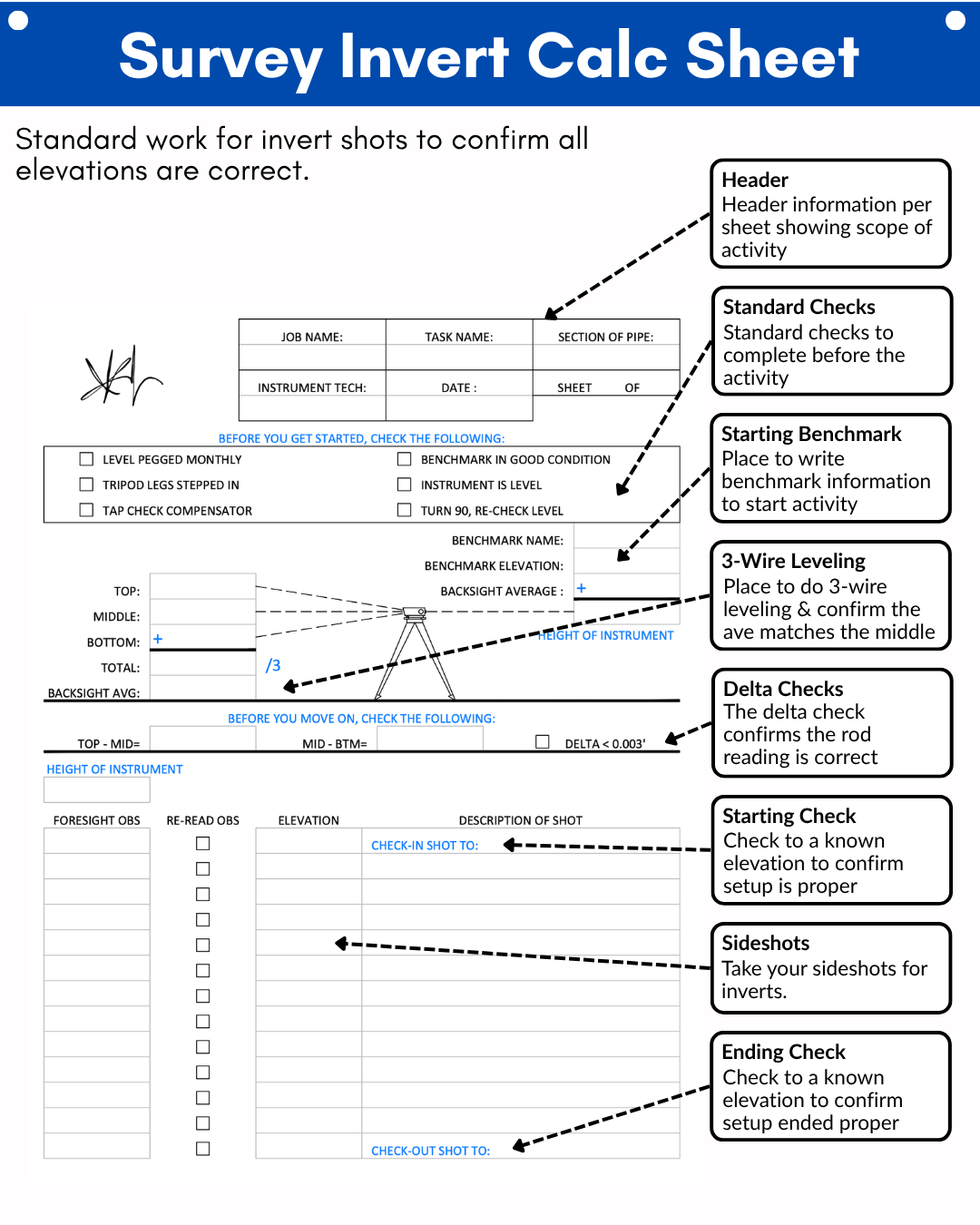
The first move was not to fix anything. It was to traverse the entire site network, running a full survey loop from Terminal 4 through the East Economy lot and the 44th Street station and tying everything together within acceptable accuracy. People questioned whether there was really time for this level of thoroughness. Jason’s answer was yes, every time, without exception.

Once the traverse was established, the team took thousands of side shots to map the actual location of every edge, curb, and stem wall along the guideway. All of that data was plotted in AutoCAD against the design centerline. When someone suggested skipping the verification step of repeating data entries back aloud, Jason held the line there too. The data had to be right before any conclusion could be trusted.

The root cause emerged from a whiteboard brainstorming session. One segment had been laid out using GPS rather than a total station. When the team tracked down the person responsible, they found he had falsified a coordinate geometry system without telling anyone, rotating the grid because things were not matching up. GPS localization does not skew with a rotated coordinate system. It centralizes on the offset and shifts everything by half the error. A five-inch falsification produced a two-and-a-half-inch bust in the field, cascading through every curve derived from that setup.

The Fix

Once the root cause was confirmed, the team built a solution designed to preserve as much finished work as possible. The 44th Street station was already built to a high standard and its location could be made to work. The answer was a custom modified spiral for one specific guideway segment, a fabricated guide rail section matched to the modification, and updated primary control coordinates issued to every contractor on the project.

By the time crews returned from the holiday break, the fix was ready. Updated coordinate files were in everyone’s hands. The modified segment was defined. The project moved forward. The only rework required was in the section where the falsified GPS setup had caused the bust. Everything else was preserved.

This outcome was only possible because the team slowed down when everything was screaming at them to speed up. That is the core lesson, and it applies to every job site regardless of scale or complexity.

What Problem Solving Actually Looks Like

Jason laid out an eight-step framework from this experience that holds across any type of construction problem. Step one is defining the problem clearly before touching anything. Step two is clarifying the scope of what is actually wrong. Step three is defining the desired outcome so the team is solving toward the same target. Step four is identifying the true root cause rather than fixing the first visible symptom. Step five is developing the action plan. Step six is executing it together. Step seven is evaluating the results. Step eight is continuously improving so the same problem does not return.

He was equally clear about how problem solving should be structured as a team activity. Appoint a leader first. Then gather input from everyone. Then build the plan together. Then communicate it before anyone executes. Problems in construction do not belong to individuals. They belong to the team. The best information about what went wrong is distributed across the people closest to the work, and a whiteboard session where everyone contributes is how root causes that no individual would find on their own actually surface.

Here are the patterns that show up when teams handle crises well:

  • They stop before they fix • They gather data before they guess
  •  They stay calm when the pressure is highest
  •  They appoint a leader and communicate the plan before executing
  • They evaluate results rather than assume the fix worked

The temptation when things go wrong is to move fast and look busy. A principle worth carrying: if you had an hour to solve a problem, spend fifty-five minutes defining it and five minutes solving it. The leaders who resist the pressure to react prematurely find the actual problem and fix it for good.

If your project needs superintendent coaching, project support, or leadership development, Elevate Construction can help your field teams stabilize, schedule, and flow.

The Challenge

The next time something does not fit on your project, resist the instinct to start fixing immediately. Gather your team. Appoint a leader. Collect the data before you reach for a solution. Stay calm even when the pressure is real, the holidays are coming, and a project worth hundreds of millions is waiting on you. The calm that feels like inaction is almost always what the situation actually needs.

“If I had six hours to chop down a tree, I would spend the first four hours sharpening the axe.” Abraham Lincoln

On we go.

FAQ

Why is defining the problem the most important step?

Because most tactical fixes address symptoms rather than root causes. Time spent truly defining the problem is the only reliable shortcut to a solution that actually holds.

Why does staying calm matter so much in a crisis?

Because panic leads to skipped steps, and skipped steps in a crisis amplify the original problem. Calm is not a personality trait here. It is a professional discipline.

What does it mean that problems belong to the team?

It means no one person should be isolated with a crisis and expected to solve it alone. The best information is always distributed across the people closest to the work.

How does this framework apply to smaller projects?

The scale changes but the steps do not. Define the problem, identify the root cause, build the fix as a team, and communicate the plan before executing. Every time.


If you want to learn more we have:

-Takt Virtual Training: (Click here)
-Check out our Youtube channel for more info: (Click here) 
-Listen to the Elevate Construction podcast: (Click here) 
-Check out our training programs and certifications: (Click here)
-The Takt Book: (Click here)

Discover Jason’s Expertise:

Meet Jason Schroeder, the driving force behind Elevate Construction IST. As the company’s owner and principal consultant, he’s dedicated to taking construction to new heights. With a wealth of industry experience, he’s crafted the Field Engineer Boot Camp and Superintendent Boot Camp – intensive training programs engineered to cultivate top-tier leaders capable of steering their teams towards success. Jason’s vision? To expand his training initiatives across the nation, empowering construction firms to soar to unprecedented levels of excellence.
On we go

Quality Control Is SIMPLE!

Read 15 min

Do Your Crews Actually Know What They Are Installing?

There is a simple question at the heart of every quality control conversation: does the crew know what to build, and are they building it? That is it. Everything else in quality management flows from those two questions. Jason Schroeder breaks this down in one of his most practical episodes yet, drawing on years of field experience to show how a simple three artifact system can replace the complexity that is failing most projects today.

Where This System Came From

Jason learned quality control at Hensel Phelps, one of the most disciplined builders in the industry. Their process, adapted from an Army Corps of Engineers framework, was systematic and regimented. The principle he took from it was straightforward: if people follow the process, the process works. Every time. The problem most organizations face is not that quality control is too complicated to execute. It is that the systems they have built are too complicated to scale. A 65-page manual that no one finishes reading is not a quality control system. It is a liability document sitting on a shelf.

The solution is to shrink the system down to what can actually be followed, understood, and used in the field by the people doing the work.

Three Artifacts, One System

Quality control at its foundation requires only three things. A trigger, a process, and an output. Jason frames these as three artifacts.

The first artifact is your team weekly tactical meeting with a quality agenda. This is where the system gets activated each week. Every scope of work that is approaching or in progress passes through a quality point of release chart during this meeting. Each scope moves through defined stages, and it cannot advance to the next stage until the previous one is verified. This keeps the entire project team accountable without requiring individual heroics.

The second artifact is the quality process itself. Jason organizes this around a principle he has used throughout his career: plan it first, build it right, finish as you go. In practice this means the process runs through six defined stages. Teaming and scope selection ensures the right contractor has the right scope. The pre-mobilization meeting introduces the contractor to the deliverables they will need before work starts. The pre-construction meeting collects those deliverables, reviews drawings and specifications, sets safety and quality expectations, and leaves the foreman fully prepared. The initial inspection confirms the crew is heading in the right direction from the very first installation. Follow-up inspections keep the work on track throughout the scope. And the rolling completion list closes out every item before the contractor demobilizes.

The third artifact is the feature of workboard. This is the most important output of the entire system and the one most often missing from project sites. It is a visual, single-page document that shows the crew exactly what a correct installation looks like, step by step.

What a Feature of Workboard Actually Contains

A feature of workboard is not a lengthy specification document. It is a visual installation guide designed to be used in the field by the people doing the work. On the left side are the key items for the installation: safety requirements, substrate acceptance criteria, installation methods, and the specific quality checkoff items that must be verified before the work is concealed or completed. In the middle and to the right are pictures showing what each stage of the installation should look like when done correctly.

The power of this document is that it puts the answer to “am I doing this right?” directly in the hands of the person doing the work. Before a ceiling gets closed, before a trench gets backfilled, before drywall gets covered, the crew checks the list. If every item is verified, the work can proceed. If it is not, the work stops until it is.

Here are the key questions every feature of workboard should answer for the crew doing the work:

  • Do we know what materials are required and have they been inspected on arrival?
  •  Have submittals been approved and are drawings on site?
  •  Do we know the installation sequence and what each step looks like?
  •  What are the specific checkoff items that must be verified before concealment?
  •  Has the substrate been accepted before we start?

A note worth carrying: if a crew does not have this document in front of them, they are guessing. And guessing on a construction project is how rework happens.

Connecting Quality to the Schedule

One of the most important points Jason made is that quality control does not operate in isolation from the schedule. In a well-run Takt plan, the schedule itself triggers the entry of each scope into the quality process. There is a buffer built in before any scope begins, and that buffer is what allows the pre-mobilization meeting and the pre-construction meeting to happen at the right time. If those meetings are skipped or compressed, the quality process collapses before the work even starts.

This is the connection most organizations miss. They treat quality control as a separate program that runs alongside the schedule. Jason builds it directly into the schedule so that the system runs automatically as the project flows forward. The team weekly tactical reviews which scopes are entering the system, which are in progress, and which need to be closed out. Thirty minutes of that meeting dedicated to this process keeps the entire quality system running without a separate quality manager chasing people down.

If your project needs superintendent coaching, project support, or leadership development, Elevate Construction can help your field teams stabilize, schedule, and flow.

The Challenge

If your crew is in the field right now without a feature of workboard, the first step is straightforward. Build one for the next scope entering the system and use it as the template for every scope that follows. If your team weekly tactical is not currently spending thirty minutes reviewing the quality point of release chart, add it to the agenda this week. Quality does not require complexity. It requires a trigger, a process, and a visual output that gives the crew what they need to build it right the first time.

“Quality is everyone’s responsibility.” W. Edwards Deming

On we go.

FAQ

Why is a 65-page quality manual a problem?

Because no one finishes reading it, and even if they do, they cannot use it in the field. Jason’s point is that a quality system has to be as accessible and usable as the tools the crew is already using. If the system cannot be understood quickly and applied visually, it will not be followed. The goal is a system that can scale across every scope on the project without requiring a specialist to interpret it every time.

What is a point of release chart?

It is a tracking tool used in the team weekly tactical to manage every scope of work through the quality process. Each scope enters the chart when the schedule triggers it and cannot advance to the next phase until the previous phase is completed and verified. The stages run from work order execution through pre-mobilization, pre-construction, initial inspection, follow-up inspections, and final closeout. It functions like a visual scoreboard for quality across the entire project.

How does quality control connect to Takt planning?

The schedule buffers built into a Takt plan are what create the space for quality meetings to happen at the right time. When a scope is three weeks from starting, the pre-construction meeting needs to happen. If the foreman has not reviewed the drawings and specifications by that point, the meeting gets cancelled and rescheduled with enough lead time to fix it. The Takt schedule makes this possible because it gives everyone visibility into what is coming and when. Without that visibility, quality meetings get compressed or skipped entirely.

What if a trade partner resists the pre-construction meeting process?

Jason’s answer to this is embedded in the system itself. The pre-mobilization meeting happens weeks before the pre-construction meeting and sets the expectation for what the contractor needs to bring. By the time the pre-construction meeting arrives, the deliverables are already requested and the contractor knows what is expected. Resistance usually comes from surprise. The system eliminates surprise by building in enough lead time that no contractor can reasonably claim they were not prepared.


If you want to learn more we have:

-Takt Virtual Training: (Click here)
-Check out our Youtube channel for more info: (Click here) 
-Listen to the Elevate Construction podcast: (Click here) 
-Check out our training programs and certifications: (Click here)
-The Takt Book: (Click here)

Discover Jason’s Expertise:

Meet Jason Schroeder, the driving force behind Elevate Construction IST. As the company’s owner and principal consultant, he’s dedicated to taking construction to new heights. With a wealth of industry experience, he’s crafted the Field Engineer Boot Camp and Superintendent Boot Camp – intensive training programs engineered to cultivate top-tier leaders capable of steering their teams towards success. Jason’s vision? To expand his training initiatives across the nation, empowering construction firms to soar to unprecedented levels of excellence.
On we go

Creating Balanced & Happy Projects, Group Discussion!

Read 16 min

Are You Running Your Project Well But Failing at Your Own?

There is a version of a superintendent who runs a clean, safe, organized project, hits every milestone, and never misses a beat. And there is also a version where that same person gets to Friday, hits the road, and has not truly rested in months. The project is winning. The person is not.

The Trap That Looks Like Dedication

The most committed people in construction are often the ones most at risk of running themselves empty. Schedules demand attention. Trade conflicts demand attention. Owners, safety, quality, and budget all demand attention. And somewhere in the middle of all of that, the family, the quiet weekends, the books, and the breathing all get pushed to the margins. Not because the superintendent does not care. Because nobody taught them how to protect those things while the project is running.

This is not a motivation problem. It is a systems problem. When the week is not planned, Sunday night fills with anxiety. When there is no time blocked for the family, the family gets whatever is left, and what is left is usually not much. The system never taught people how to carry a project and carry a life at the same time. So they carried the project and hoped the rest would work out.

The system failed them. They did not fail the system.

What the Field Actually Costs

Jason shared something honest in this episode. Eight months of trying to build a business while training others, with no reliable cash flow, eleven kids, and a schedule that left no margins had him feeling exactly like the burned out superintendents he coaches. He described it plainly: he was living the life of the adrenaline driven superintendent he always warned others about. What brought him back was the same thing he teaches on every project. Get stable. Plan the work. Protect the time.

One of the superintendents on the call put it this way: until you find that balance, you are failing your own project. You can run a flawless job site and still be losing at the only game that actually matters. The schedule you set for your family, your health, and your own mind deserves the same discipline you bring to the critical path.

The Mechanics of Creating Capacity

Balance for a superintendent does not happen by accident. It happens the same way a Takt plan happens: by design, by discipline, and by protecting the schedule once you set it. Todd described how mapping out the week, blocking time to pick up the kids, and getting it all on paper changed everything. Once it was written down, it was real. Once it was planned, it was protected.

Reed added another layer worth noting. He described the Sunday night anxiety that most superintendents know well, that creeping dread when Friday left things unresolved and Monday is coming in hot. His answer was simple: take a few minutes before leaving on Friday to plan the following week. That one habit changed the quality of every weekend. The mind lets go when the plan is already in place.

Here is what the superintendents on this call consistently pointed to as the habits that create real balance:

  • Map out the full week every Friday before leaving the job
  • Block family time on the schedule the same way you block OAC meetings
  • Get the heavy thinking out of your head and onto paper so it stops cycling
  • Find one person you trust to vent with at the end of the week and actually use them

A note worth carrying: the goal is not to work less. The goal is to work with intention so that when you stop, you actually stop. That is the difference between a superintendent who is burned out and one who is building something sustainable.

What a Remarkable Environment Does for Everyone

Jason shifted the conversation toward something equally important: the environment you create for the people on your project. Not just for yourself, but for every trade partner, foreman, and laborer who walks onto that job site. He described his own trailer. Orange lights in October. A picture wall with family photos. Candy and pumpkins on the conference table. A director of construction who walked in and said it felt like Disneyland. That was not an accident. That was a system.

The superintendents on the call shared their own versions of it. One built a deck on the trailer with a roof, lighting, and a microwave so workers had a comfortable place to take a real break. Then he started Friday trade appreciation lunches, cooking and serving the trades himself alongside his team. Within a few weeks, his field crews were organizing the lunches on their own, bringing food in and cooking as a way of returning the gratitude. That is what respect for people looks like in practice. The goodwill comes back.

Another superintendent ran a trade partner of the week recognition, presenting a shirt at every sub meeting to the crew that performed. It took a couple of weeks to build momentum. Then foremen were talking about it during the week. Then everyone was excited. One foreman told him it was the first time in forty years he had not been treated like an animal. Forty years. That is the weight of a system that never made space for dignity on the job site.

Connecting This to the Mission

Building people who build things is not a tagline. It is the job. When you take care of your own capacity and take care of the people around you, projects do not just run better. They feel better. The trades show up differently. The team shows up differently. The owner notices. The culture shifts. When a worker comes off the field into a clean, welcoming, respectful environment, they can do so much more. That environment is a production decision, not a decorating decision.

If your project needs superintendent coaching, project support, or leadership development, Elevate Construction can help your field teams stabilize, schedule, and flow.

The Challenge

Pick one thing from this episode and implement it before the end of this week. Plan your Friday. Block the family time. Build the deck on the trailer. Start the lunch. Give someone the shirt. You do not have to do everything at once. You just have to start somewhere and protect it once you do. A stable superintendent builds a stable project, and a stable project takes care of the people building it.

“The most important things cannot be measured.” W. Edwards Deming

On we go.

FAQ

Why does planning the week matter so much for balance?

Because an unplanned week does not just affect productivity. It affects every hour after the job ends. When the week is not organized, the mind stays on the project through the evening, through the weekend, and into Sunday night. When the week is planned before you leave on Friday, the mind has permission to let go. That is not a soft concept. That is how the brain works, and it is how the best superintendents protect their families and their own capacity.

Is caring for workers and trade partners really a production strategy?

Completely. Jason referenced military research showing that soldiers could march fifty percent longer when given a ten minute break every hour. The same principle holds on a job site. A worker who has a clean comfortable break area, a hot meal, and a foreman who treats them with dignity will outperform one who is grinding through everything in misery. The goodwill created by small acts of care comes back as engagement, effort, and loyalty. Respect for people is not soft. It is a production strategy.

What if I do not have the budget for lunches or recognition programs?

Most of the examples in this episode cost almost nothing. One superintendent used scrap metal funds to buy chips and salsa. Another borrowed a griddle. A shirt for the trade partner of the week is a minimal expense compared to the goodwill it generates. The point is not the budget. The point is the intention. When people feel seen and valued, they show up differently. That shift costs far less than most people think.

How do I maintain positivity when the project is falling apart?

You do not do it alone. Find one trusted person, a fellow superintendent, a mentor, or someone who understands the work, and use that relationship as a release valve at the end of each week. Jason and the superintendents on this call described weekly calls and end of week conversations that allowed them to vent, process, and come back clean. You cannot pour from an empty container. Protect the relationships that refill you.


If you want to learn more we have:

-Takt Virtual Training: (Click here)
-Check out our Youtube channel for more info: (Click here) 
-Listen to the Elevate Construction podcast: (Click here) 
-Check out our training programs and certifications: (Click here)
-The Takt Book: (Click here)

Discover Jason’s Expertise:

Meet Jason Schroeder, the driving force behind Elevate Construction IST. As the company’s owner and principal consultant, he’s dedicated to taking construction to new heights. With a wealth of industry experience, he’s crafted the Field Engineer Boot Camp and Superintendent Boot Camp – intensive training programs engineered to cultivate top-tier leaders capable of steering their teams towards success. Jason’s vision? To expand his training initiatives across the nation, empowering construction firms to soar to unprecedented levels of excellence.
On we go

There Is Hope, Feat. Jesse Hernandez

Read 17 min


What Does It Take to Stop Numbing and Start Living in the Trades?

There is a man who used to ride his bicycle to job sites because he had given away his right to drive. He would pedal from project to project, take whatever the crew had to say, and keep showing up anyway. No car. No excuses. Just a guy on a bike doing the work because the work mattered. That man is Jesse Hernandez and that kind of perseverance turned into one of the most compelling transformation stories in the construction industry today.

The Weight the Industry Never Talks About

Construction carries enormous weight. Schedules that do not forgive. Conflicts that compound daily. Pressure that never fully releases between the start of a project and the end of one. For generations, the unspoken answer to that weight has been simple: stop crying and go get the building built. The result of that answer, repeated across thousands of job sites and careers, is a workforce that copes in silence, often in ways that cost them everything they were working so hard to protect.

Nobody walks onto a job site one morning and decides to start destroying themselves. The pattern builds slowly. Unmet needs. Compounding pressure. No tools for managing what is happening internally. A culture that treats vulnerability as weakness and equates asking for help with losing ground. The system never gave people a framework for their own mental wellness. It demanded output and never once asked how people were holding up underneath all of it.

Jesse put it plainly: the system did not give people a way to deal with the stress, so they found their own way. Twenty years of it. The system failed them. They did not fail the system.

One Man’s Twenty Years

Jesse started as a plumbing apprentice and spent roughly twenty years coping with the pressures of construction through substance abuse. Multiple arrests. A criminal record longer than his resume, as he described it. Riding a bicycle to job sites after giving away his right to drive in the state of Texas. And through all of it, surrounded by a small number of professionals who exposed him to lean thinking and leadership development, something shifted. He stopped feeling trapped by the outcomes of his past. He realized that the same intensity that had been driving destruction could, when redirected, drive something entirely different. Same drive. Just pointed somewhere worth going.

Mental wellness in construction is not a soft topic. It is a schedule topic, a safety topic, and a families topic. When people on a crew are numbing out instead of showing up with full capacity, the schedule feels it. Quality feels it. The foreman running that crew feels it but does not know how to name it. And when we lose someone entirely, whether to addiction, to a preventable accident, or to suicide, we are not just losing a worker. We are losing a human being with a family counting on them to come home.

The Crazy Eight and the Exit Ramp

Jason introduced a framework in this conversation drawn from Tony Robbins: six human needs organized into two levels. The primal needs are certainty, significance, love and connection, and variety. The spiritual needs are growth and contribution. Most people in the trades spend their entire careers operating at the primal level, chasing certainty through a steady paycheck, seeking significance through status and toughness, and falling apart internally when those needs go unmet. Nobody designed it that way. It just became the default.

The problem is what happens when the primal needs are chronically unmet. People begin cycling between feeling sad and feeling angry. Jason described this as the crazy eight pattern, a loop the brain cannot sustain indefinitely. When it runs long enough, the brain looks for an exit. That exit is numbing. Substances, overworking, escapism, or in the worst cases, death by suicide. Jesse lived every version of this pattern and he named it in this episode without flinching, which is exactly what makes his story useful to the rest of the industry.

The way out is not willpower. It is a shift in focus. Jesse described the moment a mentor told him to get outside himself. Not as personal development advice. As a direct challenge. Stop making everything about your own significance and start doing something purely for someone else with no expectation of return. For Jesse, that started with his younger brother. No calculation. No strategy. Just service because it was needed. That one act cracked open something bigger than he could have scripted. A speaking panel in front of six hundred educators in Philadelphia. A podcast built entirely to elevate the image of careers in the trades. A career now centered on helping people in the field become the professionals and human beings they were always capable of being.

Watch for These on Your Crew

Here are the patterns worth paying attention to, in yourself or in the people around you:

  1. Withdrawal from conversations that used to be normal 
  2. Irritability that does not match the situation 
  3. Overworking as a way to avoid going home 
  4. A creeping belief that this is just how things are with no path forward visible

A note worth carrying: numbing is not a character flaw. It is a human response to unmet needs inside a system that offered no other outlet. Address the system before you judge the person.

Mark the Path and Stay Upright

Jason closed the episode with a story about mountain hikers marking a safe path across dangerous snowpack with sticks. The sticks were not significant because of how they looked. Some were mangled. Some were small. Some had clearly been through something. What made them significant was that they were standing upright and marking the way home for anyone who came after. That is what Jesse is doing now. It is what this episode is doing. And it is what every leader in construction has the opportunity to do when they choose honesty over image. You do not have to be perfect. You have to be standing and pointing forward.

Building a crew that can actually flow, stay healthy, and show up with full capacity is not a separate goal from building a great project. It is the same goal. Protecting families means protecting the people who build things. If your project needs superintendent coaching, project support, or leadership development, Elevate Construction can help your field teams stabilize, schedule, and flow.

The Challenge

Find one person on your crew who looks like they are carrying something too heavy. Ask them one honest question. Not as a manager. As a human being. And if you are the one carrying it right now, take Jesse’s story seriously. He rode a bicycle to job sites because he was determined to keep showing up. That kind of perseverance is where new chapters begin.

“The impediment to action advances action. What stands in the way becomes the way.” Marcus Aurelius

On we go.

FAQ

Is addiction in construction really that common?

More common than most people acknowledge out loud. The construction industry has one of the highest rates of substance use disorders of any sector in the economy. The combination of physical demands, irregular schedules, project pressure, and a culture that rewards toughness over transparency creates exactly the conditions Jesse described. This is not a fringe issue that affects a handful of crews. It sits in the middle of most job sites, most companies, and most careers in the trades.

What is the crazy eight cycle?

It is a pattern of cycling between sadness and anger when core human needs go unmet. The brain cannot sustain that loop indefinitely, so it looks for a way to numb. Jason described this using the Tony Robbins six human needs model. The cycle itself is common, predictable, and breakable once someone understands what is actually driving it beneath the surface.

How does shifting to contribution actually change anything?

It moves the internal question from what am I getting to what am I giving. Jesse described this not as a philosophy but as a lived experience. Once he began acting purely for others with no calculation of what he would receive in return, his influence expanded, his network grew, and his sense of purpose became sustainable on its own. Contribution feeds the spiritual level of human needs, and those needs have no ceiling.

What if someone on my crew is struggling and will not talk about it?

Start by changing the environment, not the person. A crew that sees its leaders being honest about struggle gives everyone else permission to be honest too. Jesse’s story works precisely because it is real. When leaders share their own experience, it gives people license to believe that their situation is not permanent. You do not have to run a wellness program. You have to be a person who stays upright and keeps showing up.

Where can someone reach Jesse Hernandez?

Jesse hosts the Learnings and Missteps podcast and is consistently active on LinkedIn. His website is learningsandmissteps.com. He is available for real conversations with people who are struggling or with leaders who want to better support someone on their crew.

If you want to learn more we have:

-Takt Virtual Training: (Click here)
-Check out our Youtube channel for more info: (Click here) 
-Listen to the Elevate Construction podcast: (Click here) 
-Check out our training programs and certifications: (Click here)
-The Takt Book: (Click here)

Discover Jason’s Expertise:

Meet Jason Schroeder, the driving force behind Elevate Construction IST. As the company’s owner and principal consultant, he’s dedicated to taking construction to new heights. With a wealth of industry experience, he’s crafted the Field Engineer Boot Camp and Superintendent Boot Camp – intensive training programs engineered to cultivate top-tier leaders capable of steering their teams towards success. Jason’s vision? To expand his training initiatives across the nation, empowering construction firms to soar to unprecedented levels of excellence.
On we go

The Respectful Parking Lot

Read 19 min

Your Project Speaks to Workers Before They Ever Clock In

Here’s the deal: the first impression a worker gets of your project happens in the parking lot. Not in the morning huddle. Not at the gate. Not when they pick up their badge and their sticker. It happens the moment they pull in, before they’ve spoken to a single person on the project team. And what they see in that first sixty seconds tells them something about the people running this job whether anyone thought about them before they arrived, whether the environment was designed with them in mind, or whether they were an afterthought that showed up on the mobilization checklist somewhere after temporary power and gate hardware.

Most parking lots on most construction projects tell the same story. Unmarked stalls that crowd up chaotically every morning. Fencing screen loose and flapping, or missing entirely on sections. No lighting for the electrician who arrives at 5:45 AM in winter. No clearly marked path from the parking area to the site entry. Workers parking as close to the site as they can because nobody designated a system. And the first thing they do every morning is navigate a space that feels like it wasn’t designed for humans.

That feeling doesn’t stay in the parking lot. It follows workers through the gate, down to the floor, and into the work. It sets a tone and the tone it sets is that this project wasn’t built for people.

What the Absence of Design Communicates

The parking lot is a Lean indicator in the same way that bathrooms are a Lean indicator. Jason Schroeder teaches that bathroom quality clean, well-maintained, adequate in number is the first signal of whether a project is truly Lean and truly respects the workers building it. If facilities aren’t good enough for the project management team’s grandmother, they aren’t good enough for workers. That same standard applies to the parking area. If you wouldn’t want your own mother walking through it alone at 6 AM in the dark, across unmarked pavement, looking for a bathroom while avoiding forklifts, it isn’t good enough for your workforce.

I was on a large commercial project years ago where the parking situation had been left completely undesigned. Workers drove in, found whatever space they could, and walked however they needed to walk to get to the gate. Within three weeks, there was a near-miss in the lot when a delivery truck came in through the same entrance workers were using on foot. Nobody had designed separate pathways. Nobody had thought about pedestrian and vehicle conflict in the one area of the site that sees the most traffic every single morning. By the time we redesigned the lot marked stalls, separated crosswalk, stop sign, lighting the trades had already formed an opinion about this project that took weeks of intentional effort to rebuild.

The system failed them. They didn’t fail the system.

What a Respectful Parking Lot Is Actually Built Around

The image in this post shows what a designed, intentional parking area looks like when it’s built with the same care applied to the rest of the project. Each element serves a specific function. Together, they communicate that someone thought about the worker’s experience before mobilization day.

Structured, well-marked stalls make parking easy and systematic matching the experience workers expect from any well-run public facility. When workers pull into a clearly delineated lot, they don’t have to make a decision about where to go. The decision was made for them. That small removal of friction at the start of the day is not trivial. It’s the first data point in their assessment of whether this project is organized and worth their best effort.

Secure fencing with screens properly attached on the inside is both a safety measure and a maintenance statement. Screen attached on the interior side cannot blow into traffic if it detaches a simple design decision that protects the public and eliminates the daily visual of ragged, sagging fence that signals a project nobody is maintaining. A clean, secured fence line says the standard here is upheld daily, not just at setup.

Great lighting changes the experience of the parking lot completely for the workers who arrive earliest and leave latest. The electrician who arrives at 5:45 AM should not feel unsafe walking to their vehicle in the dark. The pipefitter who works late to complete a zone handoff should not have to navigate an unlit parking area at the end of a ten-hour day. Lighting is inexpensive to run. Its absence is not neutral it communicates that the project team didn’t think about the full arc of a worker’s day.

Watch for these signals that the parking area has not been designed on your project:

  • No marked stalls, resulting in chaotic and variable parking conditions every morning
  • Fence screen loose, missing, or attached on the exterior where it can catch wind and blow into traffic
  • No lighting for early morning or late evening use
  • Workers and vehicles sharing the same entry point without a separated crosswalk or pedestrian path
  • No bathroom area at the lot workers must walk significant distance to find facilities upon arrival

The Safe Crosswalk and the Bathroom at the Gate

The safe crosswalk between the parking area and the site entry is not optional on any project with significant daily worker traffic. Marked walkways, stop signs, and protective barriers separate the pedestrian path from vehicle movement and make the conflict point visible and controlled before it becomes an incident. Every morning, dozens or hundreds of workers make that crossing. The cost of designing it thermoplastic markings, a stop sign, a few bollards is negligible. The cost of not designing it is a struck-by incident that was entirely predictable from the day the site was established.

The bathroom area at the lot is a small detail that carries significant dignity. The first thing a worker should be able to do when they arrive is use the facilities not walk across the site hunting for a porta-potty, not wait until they’ve found their foreman and gotten directions, not start the day with a basic human need unmet. Bathrooms at the parking area are available immediately, before orientation, before the morning huddle, before the gate. That availability says: we thought about your whole arrival, not just the production part of it.

Effective signage throughout the parking area rounds out the system. Workers should never have to guess where to go, what the requirements are, or how to navigate from the lot to the site entry. Clear, maintained signage at logical decision points means every worker including someone arriving for their first day on the project can orient and move without asking anyone for directions. Signage is the parking lot’s version of the visual area board: information at the place where people need it, without requiring a conversation to access it.

Why the Parking Lot Is a Leadership Statement

The culture of any organization is shaped by the worst behavior the leader is willing to tolerate. And the reverse is equally true: the highest standard the leader enforces becomes the project’s culture. A parking lot that is structured, lit, fenced, signed, and equipped with a safe crosswalk and accessible bathrooms communicates a leadership standard before a single supervisor speaks a single word to a single worker. It says: this project is organized. This project was designed before you arrived. You matter to the people running this job and the evidence is right here, in the parking lot, before you’ve even clocked in.

Jason Schroeder teaches that winning over the workforce means making sure workers have good bathrooms, a good lunch area, and are treated with respect communicated daily. The parking lot is where that daily communication begins. If your project needs superintendent coaching, project support, or leadership development, Elevate Construction can help your field teams stabilize, schedule, and flow. That stability begins before the gate in the space workers navigate every single morning.

Design the Parking Lot Like You Design the Zone

Here is the challenge. This week, walk the parking area for your current or upcoming project and look at it with fresh eyes. Ask whether a worker arriving for the first time would feel welcomed, safe, and cared for. Is there lighting? Are the stalls marked? Is there a clear crosswalk with a stop sign between the lot and the site entry? Is the fence secure and maintained? Is there a bathroom available within steps of where workers park? Is there signage that tells them exactly where to go?

If the honest answer to any of those questions is no fix it before the next shift. The parking lot is not where the project team goes. It’s where the workforce goes. Design it for them, not as an afterthought.

As Jason Schroeder teaches: “Respect for people is not soft it’s a production strategy.” It starts in the parking lot, every morning, before anyone picks up a tool.

On we go.

Frequently Asked Questions

Why should the parking lot be treated as part of the project design?

Because it’s the first environment workers experience every day before the huddle, before orientation, before the floor. A disorganized, unsafe, or poorly maintained lot sets a tone that affects morale, safety perception, and the discretionary effort workers bring to the project.

What makes a crosswalk “safe” in a construction parking context?

Thermoplastic or marked walkway lines, a stop sign that requires vehicles to halt before crossing, and protective barriers or bollards that physically separate the pedestrian path from vehicle traffic not just paint, which depends entirely on driver attention.

Why does bathroom placement at the lot matter?

The first thing a worker needs upon arrival should be immediately available. Having to walk across the project to find a porta-potty before the day even starts is a small indignity that compounds across the full project tenure and communicates that basic needs were not designed for.

How does parking lot design connect to workforce culture?

Workers form their initial impression of a project in the first moments of arrival. A structured, clean, lit, and accessible lot signals organizational care. That signal affects how workers engage with the project, participate in systems, and extend discretionary effort throughout the day.

What is the minimum standard for parking lot lighting on a construction project?

Sufficient illumination to allow workers to navigate safely to and from their vehicles during early morning mobilization and late-shift departure typically LED area lighting on poles at the lot perimeter, maintained throughout the project duration.

If you want to learn more we have:

-Takt Virtual Training: (Click here)
-Check out our Youtube channel for more info: (Click here) 
-Listen to the Elevate Construction podcast: (Click here) 
-Check out our training programs and certifications: (Click here)
-The Takt Book: (Click here)

Discover Jason’s Expertise:

Meet Jason Schroeder, the driving force behind Elevate Construction IST. As the company’s owner and principal consultant, he’s dedicated to taking construction to new heights. With a wealth of industry experience, he’s crafted the Field Engineer Boot Camp and Superintendent Boot Camp – intensive training programs engineered to cultivate top-tier leaders capable of steering their teams towards success. Jason’s vision? To expand his training initiatives across the nation, empowering construction firms to soar to unprecedented levels of excellence.
Toilet Paper Schedules

Read 25 min

Are You Using Your Schedule as Toilet Paper? Why Superintendents Must Own the Plan

Here is a scene that plays out on projects across this industry every single day. The project manager pulls up the schedule in a meeting and walks through it. The superintendent sits in the background, no computer open, occasionally nodding. The schedule is detailed, well-formatted, and completely disconnected from what the superintendent actually intends to do in the field. Nobody says this out loud. The meeting ends. The schedule goes back into a folder. The superintendent runs the project from a combination of memory, instinct, and conversations in the parking lot. And the schedule, the one the PM spent hours building, gets used for exactly nothing. That is toilet paper. Not because the people are failing. Because the process is broken and nobody has named it honestly enough to fix it.

The Problem Nobody Wants to Say

The current condition in construction scheduling is this: project managers create schedules and superintendents do not follow them. The PM knows the schedule. The superintendent does not own it. The procurement dates in the schedule may or may not match what the superintendent actually needs. The sequence may or may not reflect how the superintendent plans to build the work. The logic may or may not account for how the crew actually moves through the space. And because the superintendent did not build it, did not stress-test it, and does not feel responsible for it, it does not govern their decisions. Something that does not govern decisions is not a schedule. It is a document. And documents that nobody uses are toilet paper.

The Failure Pattern

The pattern is predictable and it compounds. The PM creates the schedule in preconstruction, often without meaningful input from the superintendent who will execute it. The schedule is published. The superintendent looks at it once, decides it does not match what they have in their head, and mentally sets it aside. From that point forward, the project is run from the superintendent’s memory. Coordination happens in hallway conversations. Procurement triggers happen when someone remembers to ask. The rhythm of submittals, long-lead items, inspections, and trade handoffs lives entirely inside one person’s head. When that superintendent is unavailable, sick, or replaced, the institutional knowledge walks out with them. The project loses continuity. And the schedule, still sitting in a folder somewhere, continues to be useless.

The System Failed, Not the People

This is not an indictment of superintendents as people. Most superintendents in this industry are skilled, experienced, and deeply committed to the work. The failure is a systems design problem. Somewhere along the way, the construction industry allowed a split to develop between the people who create the schedule and the people who are responsible for executing it. That split normalized a situation where the superintendent’s expertise is not required for the planning process and the PM’s schedule is not required for the field execution process. Both halves of that equation are wrong. Both are fixable. The fix starts with being honest about the current condition and what it costs.

The Story Behind the Concept

Jason Schroeder describes walking into project meetings with companies across the industry and seeing the same scene repeatedly: the PM showing a schedule, the superintendent not engaged with it, and the entire preconstruction effort producing a document rather than a shared plan. The procurement dates are misaligned with the superintendent’s actual intentions. The sequence was decided without field input. The schedule will not be maintained because the person responsible for maintaining it does not own it in any meaningful sense.

The uncomfortable truth that this episode names directly is that a superintendent who cannot schedule is not fully functioning as a superintendent. That is not a criticism of the person. It is a description of the role. A superintendent’s job is to see the future. To see the future, they need to have it visible in a form they can work from, update, and use to trigger action. That form is a schedule. If the schedule lives only in the PM’s software and not in the superintendent’s daily workflow, the superintendent is navigating a project the size of a building from memory and instinct alone. That is not leadership. That is guessing with authority.

What the Schedule Actually Does

The schedule is not a report. It is not a legal document produced for the owner’s benefit. It is the operational system the superintendent uses to perform their core functions. Understanding this changes how the schedule gets treated.

A superintendent who is in the schedule daily can see what is coming. They can look three weeks out and identify the procurement item that has not been confirmed, the inspection that has not been scheduled, the coordination between two trades that will create a conflict if it is not resolved now. That visibility is the difference between removing a roadblock before it stops the work and managing an emergency after it already has. Make-ready discipline, meaning the practice of confirming that all inputs are ready before a crew needs them, is only possible when the superintendent knows what is coming and when. The schedule is the tool that makes that visibility possible.

A superintendent who is in the schedule daily can communicate with precision. Instead of telling the electrical foreman that their zone is coming up soon, they can tell them the exact date the crew needs to be ready to move in, what preceding work needs to be complete, and what submittals still need approval. That specificity is what turns coordination meetings from status updates into action-triggering sessions. Vague direction produces vague results. Schedule-grounded direction produces commitments that people can actually plan around.

A superintendent who is in the schedule daily can align every other system on the project to a shared rhythm. Procurement follows the schedule. Long-lead submittals follow the schedule. Inspection requests follow the schedule. Trade handoffs follow the schedule. When the superintendent owns and updates the schedule, these systems align automatically because they are all calibrated to the same source of truth. When the superintendent does not own the schedule, each of those systems runs on a different rhythm and collisions are inevitable.

What to Look for on Your Project

Run through these questions honestly before the next project meeting:

  • Did the superintendent participate in building the schedule, or was it handed to them after the fact?
  • Is the superintendent in the schedule daily, using it to trigger action and communication?
  • Is the schedule updated weekly to reflect what has actually happened and what is actually coming?
  • Does the procurement log align with what the superintendent actually needs and when?
  • Is the schedule the basis for foreman huddle conversations, or is the huddle running from memory?
  • Can the superintendent open the schedule right now, without assistance, and walk someone through the next three weeks?

If most of those answers are no, the schedule is toilet paper. The fix is not a better schedule template. The fix is ownership.

The Role Clarity That Makes It Work

Jason lays out the role structure clearly, and it is worth stating directly. The senior superintendent’s job is to see the future, plan the work, and align all systems to a shared schedule-based rhythm. The assistant superintendent’s job is to execute the work on a short-interval basis, converting the plan into daily reality in the field. The foreman’s job is to build the daily plan in partnership with the Last Planner system and to train the crew in how to execute it safely and correctly. The worker’s job is to understand the plan and execute it with quality and professionalism. Each role depends on the one above it providing clear direction and the schedule is the medium through which the senior superintendent’s direction flows down through every level. When the superintendent does not own the schedule, that chain of direction breaks at the first link.

Technology is not an excuse. The argument that computers are hard or that learning scheduling software is too much to ask is not acceptable at this level of responsibility. Superintendents who made that argument did not apply it to learning to drive, to reading drawings, or to any of the other technical skills their role requires. Learning a scheduling tool is no different. It is a skill. It can be learned. It must be learned. Schroeder’s Law is simple: figure it out. Construction has no room for abdication at the level of the person responsible for the entire field operation.

Built for Superintendents Who Want to Lead

The reason this matters beyond operational efficiency is that superintendents who own their schedules lead differently. They are calmer because they can see what is coming. They are more credible because their direction is grounded in a visible plan rather than a feeling. They are more effective because every system on their project is aligned to a single rhythm they control. Their crews are more stable because the work is made ready before it is needed, not scrambled for after the fact. Their families benefit because a superintendent who is not perpetually firefighting goes home in a better frame of mind. That is what the schedule, owned and used daily, actually produces. If your project needs superintendent coaching, project support, or leadership development, Elevate Construction can help your field teams stabilize, schedule, and flow.

Get in the Schedule and Stay There

The challenge is not complicated. If you are a superintendent, open the schedule today. If you do not know how to build one, start learning now. If the schedule in your system does not match what is in your head, update it until it does. Print a copy. Mark it up. Use it in the field walk to trigger the questions that need to be asked and the actions that need to happen. If you are a project manager who has been creating schedules the superintendent does not use, stop solving that problem alone. Bring the superintendent into the process and do not accept a schedule that does not have their fingerprints on it. As W. Edwards Deming observed, it is not enough to do your best; you must know what to do and then do your best. The superintendent who knows the schedule knows what to do. Everything else follows from there.

On we go.

FAQ

Why must the superintendent create or co-create the schedule rather than just receive one from the PM?

Because ownership drives usage. A superintendent who helped build the schedule understands its logic, believes its sequence, and feels responsible for maintaining it. A superintendent who received the schedule from someone else has no reason to trust that it reflects the way the work will actually be built, and the evidence suggests they are right not to trust it, because the PM who built it did not have the superintendent’s field knowledge when they did. The schedule has to match what is in the superintendent’s head. The only way to guarantee that is to have the superintendent involved in putting it there.

What does it mean for a superintendent to be in the schedule every day?

It means the schedule is the first reference point of the day, not an occasional check-in. It means using it during the morning field walk to identify what upcoming work needs to be triggered, what coordination needs to be confirmed, and what procurement items need follow-up. It means using tools like screen-capture programs to send specific schedule-based questions to the team: is this material ordered, is this inspection scheduled, is this crew available. It means updating it when things change so that it stays current as a decision-making tool rather than drifting into a historical artifact that no longer reflects reality.

What happens to a project when the schedule is not owned by the superintendent?

The project runs from the superintendent’s memory, which means direction is inconsistent, coordination is reactive, and the preparation of work happens after it is already needed rather than before. Trade partners cannot plan reliably because commitments are not grounded in a shared timeline. Procurement misses its windows because nobody is monitoring the schedule-based triggers. Inspections get chased instead of scheduled. The superintendent becomes the bottleneck for every decision because all the relevant information lives in their head and cannot be accessed by anyone else. When the superintendent is unavailable, the project loses continuity. The cost is schedule slippage, rework, and the kind of daily firefighting that exhausts teams and produces poor outcomes.

What role should the project manager play in the schedule if the superintendent owns it?

The PM’s financial and contractual responsibilities require them to have a deep understanding of the schedule, but that does not mean the PM should be the primary author of the field execution plan. The most functional arrangement is one where the superintendent creates and maintains the production schedule and the PM aligns the financial, procurement, and contractual systems to it. Where preconstruction requires the PM to develop an initial schedule before the superintendent is engaged, that schedule should be reviewed, challenged, and revised with the superintendent before it is published. A schedule that the superintendent has not validated is a guess dressed up as a plan.

How does schedule ownership connect to the superintendent’s ability to create flow?

They are the same thing. Flow in construction means work moving steadily through zones without stopping, waiting, or stacking. That only happens when the work is made ready ahead of the crew, which requires visibility into what is coming, which requires a schedule the superintendent is using daily to identify and remove roadblocks. A superintendent who cannot see three weeks ahead cannot make work ready three weeks ahead. A superintendent who cannot make work ready cannot create flow. A superintendent who cannot create flow is managing chaos rather than preventing it. The schedule is the tool that converts the superintendent’s role from reactive to proactive, and that conversion is what makes flow possible.

If you want to learn more we have:

-Takt Virtual Training: (Click here)
-Check out our Youtube channel for more info: (Click here) 
-Listen to the Elevate Construction podcast: (Click here) 
-Check out our training programs and certifications: (Click here)
-The Takt Book: (Click here)

Discover Jason’s Expertise:

Meet Jason Schroeder, the driving force behind Elevate Construction IST. As the company’s owner and principal consultant, he’s dedicated to taking construction to new heights. With a wealth of industry experience, he’s crafted the Field Engineer Boot Camp and Superintendent Boot Camp – intensive training programs engineered to cultivate top-tier leaders capable of steering their teams towards success. Jason’s vision? To expand his training initiatives across the nation, empowering construction firms to soar to unprecedented levels of excellence.
On we go

Coaching – Professional Conduct – Implementation Series

Read 25 min

Are You Acting Professionally? The Standards Nobody Taught Us and Everyone Needs

There are two ways to learn about professional conduct. The first is from wisdom, meaning someone sits down with you and lays it out clearly before any damage is done. The second is from painful experience, meaning something happens that costs you a job, a reference, a reputation, or something worse. This podcast exists because the first path is available to everyone willing to pay attention, and the second path has ended more careers than any lack of technical skill ever has. If you are just starting out in construction management, this topic is for you. If you have been in the industry for decades, this is a useful audit. Either way, these are not complicated ideas. They are foundational ones that should have been covered much earlier.

The Problem That Shows Up in Interviews

Most people know, at some level, when they have a professional conduct problem. They can feel it in the gap between how they present themselves and how they have actually behaved. They can feel it in how hard they work to explain away certain parts of their employment history. They know which references are safe to give and which ones are not, and that knowledge tells a story.

The version of this that shows up most visibly is in the interview room. Jason Schroeder has conducted hundreds of interviews over the years and describes a particular pattern that becomes unmistakable after you have seen it enough times: the candidate who sounds like they are talking to their parole officer. Every answer is deflected. Every performance issue belongs to someone else. The coworker who did not like them. The boss who had it out for them from day one. The situation that was misunderstood. Answer after answer that does not land as honest and does not land as self-aware. That pattern is not a communication problem. It is a conduct problem that has accumulated over time, and by the interview stage, there is no way to undo it with better talking points.

The John Wayne film “The Cowboys” captures this in a scene that Jason comes back to repeatedly. A group of men apply to join a cattle drive, citing drives they have been on. Wayne’s character presses them, names one of the drives, and mentions that the man who ran it died months earlier, meaning the claim cannot be verified. When confronted, one of the men admits they just got out of jail and got the names from a reference book. Wayne tells them he cannot use them, not because of prison, but because of the lie. He says it plainly: he cannot stand a liar. That line is the whole point. Prison was not the disqualifier. Dishonesty was. And dishonesty in a professional context has the same effect: it closes doors that skill and experience could have opened.

The Failure Pattern

The failure pattern in professional conduct is almost always the same: someone never received clear instruction on what the standards were, developed habits in environments that tolerated the wrong behaviors, and then carried those habits into a professional setting where they created real consequences. A superintendent who grew up in a culture of casual harassment on the job site continues the behavior until something formally breaks. A project engineer who learned to talk about colleagues behind their backs without understanding the difference between gossip and legitimate performance management develops a reputation that precedes them. A field hire who never had anyone explain conflict of interest takes a vendor’s gift without recognizing the problem it creates. None of these people were trying to fail. They just never got the instruction they needed.

No One Gets a Pass on This

The empathy here is real. Jason grew up in an irreverent environment where these lines were not always drawn clearly by the adults around him. He learned most of this the hard way, from experiences he would not wish on anyone. That is exactly why this episode exists. These are things all parents should teach their children, and many do not. That does not make the consequences less real. The construction industry has real standards, real legal requirements, and real expectations of behavior, and the people who thrive in it long-term are the ones who internalize those standards genuinely, not just perform them when someone is watching.

What Professional Conduct Actually Requires

Confidentiality is the first and most overlooked standard. There is a meaningful difference between talking about a team member’s performance with someone who has authority and responsibility to help, which is appropriate and often necessary, and talking about a team member to someone who has no influence over the situation, which is gossip. That distinction matters because gossip erodes trust in organizations faster than almost anything else. The other dimension of confidentiality is intellectual property. Taking systems, documents, client information, or proprietary methods from one employer to another is a breach of ethical conduct, full stop. What was built at one company belongs to that company. This is not a technicality. It is a standard of integrity.

Drive and honest work is the second standard, and it is more specific than it sounds. It means putting in an honest day of effort for the pay and responsibility you accepted. It means not stealing time by disappearing during working hours. It means not taking resources that belong to the company without explicit permission. It means delivering at least as much value as you are receiving, and ideally more. The simple framing that Jason uses with teams is this: add value and create raving fans. That orientation, consistently applied, produces the kind of employment history that makes every future interview easy.

Communication standards are the third area, and they carry real legal weight in addition to cultural weight. Professional communication means no harassment, no inappropriate jokes, no comments about protected classes, no objectifying language directed at anyone, and no political content that creates division or discomfort in a professional environment. Construction has a culture that sometimes treats this casually, but that casualness does not protect anyone from the consequences. Jason describes a specific incident where a superintendent made an inappropriate comment to a female project engineer and then was genuinely surprised when it was reported. The behavior was reported because it was wrong, not because reporting it was socially complicated. Leaders who tolerate behavior like this because the person has been around a long time or is technically skilled are making a choice. The culture of a project is whatever behavior gets allowed to continue.

Know the Lines Before You Cross Them

Before the framework teaching continues, run through these as an honest self-audit:

  • Can you name anyone you have discussed with people who had no ability to help the situation? That is gossip. Stop.
  • Have you ever taken anything from an employer, including time, materials, or information, without explicit authorization? That is theft of resources. Stop.
  • Are there comments, jokes, or topics that come up in your professional environment that you would not say in front of the company’s HR director? That is the test. Apply it.
  • Have you ever accepted gifts, entertainment, or favors from vendors or trade partners involved in active bid or selection processes? That is a conflict of interest. Decline going forward.
  • Do you treat every team member the same way regardless of their protected class characteristics? The legal standard is not just avoiding discrimination; it is applying consistent treatment.

Ethical Behavior Is Not Negotiable

Ethical behavior means honesty, loyalty, integrity, and following the standards you agreed to when you took the job. That last part is important. Jason addresses safety non-compliance this way directly: a worker who disagrees with fall protection requirements does not have to agree with them. But they signed an orientation document saying they would follow the rules. Are they a person of their word? That reframe works because it shifts the conversation from compliance to character. Ethical behavior is not just about following rules you personally believe in. It is about having the integrity to keep commitments you voluntarily made.

The moral dimension of professional conduct is equally real and equally consequential. Sexual immorality, substance abuse affecting work performance, hate speech in any form, discrimination against any person or class, and unethical treatment of others: these are not separate from professional performance. They affect it directly. Jason can name, without difficulty, people whose careers ended because behavior in one of these categories surfaced and could not be separated from their professional record. The idea that work and personal conduct are entirely separate is comfortable but false. What happens in a person’s life shows up in how they lead, how they treat colleagues, and how they handle difficult situations.

What This Produces for the People Who Get It Right

When professional conduct is in order, something valuable becomes available: a career that can be navigated on merit rather than managed around history. References become assets rather than liabilities. Promotions become outcomes of demonstrated character rather than political negotiations. Interviews become conversations rather than performances. Every difficult situation on a project becomes something the leader can handle transparently rather than something they have to work around. The person who is above reproach in their professional conduct does not have to spend energy maintaining a story. They can spend that energy building something.

This is what Elevate Construction means when it talks about building people who build things. A person cannot lead a crew with integrity if they do not have integrity. They cannot protect their team members if they do not know where the lines are. They cannot create a culture of respect if they are not modeling it personally. If your project needs superintendent coaching, project support, or leadership development, Elevate Construction can help your field teams stabilize, schedule, and flow.

Start With an Honest Evaluation

The closing challenge is not complicated: do an honest evaluation. How is your verbal conduct? Are you telling the truth consistently? Are you keeping the promises you make? Are you treating people the way you want to be treated? Is there anything that, if it became known, would compromise your position, your references, or your reputation? If the answer to any of those reveals a gap, tomorrow is a real opportunity. As Abraham Lincoln observed, no man has a good enough memory to be a successful liar. The simplest professional development decision anyone can make is to eliminate the need for a good memory by telling the truth from the beginning.

On we go.

FAQ

What is the difference between gossip and legitimate professional communication?

The distinction is simple and important. If you are discussing a colleague’s performance or behavior with someone who has direct authority, responsibility, or ability to help with that situation, such as a supervisor, HR, or a mentor, that is legitimate professional communication. It serves a purpose and protects the person being discussed by routing the concern through the right channels. If you are discussing the same person with someone who has no ability to influence the situation, it is gossip. It serves no constructive purpose and damages trust in the team. The test is straightforward: does the person you are talking to have any meaningful ability to help? If not, the conversation should not happen.

Why does it matter how someone receives a comment, not just how it was intended?

Because the legal and professional standard for harassment and discrimination is not measured by the intent of the person speaking. It is measured by the impact on the person receiving it. A comment that the speaker meant as a joke is still harassment if the recipient experiences it as creating a hostile or uncomfortable environment. This is one of the most important concepts for leaders in construction to absorb, because the instinct to say “I didn’t mean it that way” is common and it does not provide protection. The question to ask before speaking is not whether you personally find something offensive. It is whether the person hearing it could reasonably experience it as unwelcome. If the answer is yes, the comment does not belong in a professional environment.

What qualifies as a conflict of interest in construction?

A conflict of interest exists when a personal benefit to you, whether financial, social, or otherwise, influences or appears to influence a professional decision you are responsible for making. Accepting gifts, hospitality, or favors from vendors or trade partners who are involved in an active bid or selection process is the clearest example. Even if your decision was genuinely unbiased, the appearance of bias damages the integrity of the process and your credibility within it. The standard is not just whether the conflict actually changed your decision. It is whether a reasonable observer would question whether it might have. When in doubt, disclose it and recuse yourself.

How does moral conduct outside of work affect professional performance?

More directly than most people are willing to admit. Substance abuse, dishonesty in personal relationships, patterns of behavior that involve deception or disrespect of others: these do not stay contained to private life. They show up in how a person handles stress, how they treat colleagues when nobody is watching, how they respond when they are caught in a mistake, and how they make decisions under pressure. Jason can name specific cases where personal conduct issues surfaced in ways that directly ended careers. The professional and the personal are not entirely separate systems. A leader who is trying to build a culture of integrity at work while maintaining a different standard in their personal life is carrying a contradiction that tends to resolve in the wrong direction.

What should a leader do when they witness a professional conduct violation on their project?

Address it directly, immediately, and through the appropriate channels. The appropriate channels depend on the severity: a minor communication issue may be handled in a direct conversation. A harassment incident involving a protected class requires immediate escalation to the company’s HR process. The mistake that Jason describes from his own experience was hesitating to report a situation that required reporting. The lesson he took from the consequence of that hesitation was clear: when something happens that crosses a clear line, report it. Not because it is comfortable or politically easy, but because the culture of the project is defined by whatever behavior leadership is willing to tolerate. A leader who sees something wrong and says nothing has, in that moment, endorsed it.

If you want to learn more we have:

-Takt Virtual Training: (Click here)
-Check out our Youtube channel for more info: (Click here) 
-Listen to the Elevate Construction podcast: (Click here) 
-Check out our training programs and certifications: (Click here)
-The Takt Book: (Click here)

Discover Jason’s Expertise:

Meet Jason Schroeder, the driving force behind Elevate Construction IST. As the company’s owner and principal consultant, he’s dedicated to taking construction to new heights. With a wealth of industry experience, he’s crafted the Field Engineer Boot Camp and Superintendent Boot Camp – intensive training programs engineered to cultivate top-tier leaders capable of steering their teams towards success. Jason’s vision? To expand his training initiatives across the nation, empowering construction firms to soar to unprecedented levels of excellence.
On we go

Orientation Is Not a Checkbox. It’s a Foundation.

Read 17 min

Orientation Is Not a Checkbox. It’s a Foundation.

Here’s the deal: most construction orientation programs accomplish one thing documenting that they happened. A worker sits in a room, watches a video, signs a sheet, gets a sticker for their hardhat, and walks onto the project. Whether they understood a single thing that was covered is nobody’s business. The liability question was answered. The gate was opened. The actual preparation of that worker for the hazards, systems, expectations, and culture of the project they just joined? That part is assumed.

That assumption is where projects get hurt. Not metaphorically literally. A worker who cannot describe the site’s emergency egress plan, who didn’t understand the PPE requirements because the video was in a language they don’t speak fluently, who never learned the project’s zero-tolerance safety expectations that worker is on the floor with incomplete information in an environment that is actively dangerous. The system checked a box. The worker paid the cost.

What Passes for Orientation on Most Projects

Walk through the onboarding process on a typical commercial project and you’ll find a version of the same sequence. A generic safety video often in English only. A stack of forms to sign. A hardhat sticker distributed at the door. Workers processed in batches at mobilization week and then individually as subs add workers throughout the project, with no consistent tracking of who received what. And somewhere in that process, the key question that determines whether orientation actually worked does this worker understand what they just learned? is never asked.

Jason Schroeder teaches the steps to a safe site clearly: standards common to the group, consequences established, orientation and training available, visual reminders present, accountability at all levels, and no unsafe behaviors tolerated. Orientation and training are third on that list but they are only meaningful if they reach the worker. A training that wasn’t comprehended is not a training. It’s documentation. And documentation does not protect anyone.

I remember on a large healthcare project watching a near-miss investigation that traced back to a worker who had been on site for two weeks and had no knowledge of the specific hazard that almost injured him. He had attended orientation. He had signed the paperwork. But the content was delivered in English to a worker whose primary language was Spanish, and the test if there was one required a signature, not a correct answer. The system recorded that he was oriented. The system had not actually oriented him. The system failed him. He didn’t fail the system.

What a Verified Orientation System Looks Like

The image in this post shows what a complete, designed orientation system looks like when it’s built to actually prepare workers rather than just document their presence.

The orientation begins with a bilingual video presentation English and Spanish covering PPE requirements, site safety standards, emergency procedures, project expectations, and Lean principles. Both language tracks are complete and professional, not a secondary version where the Spanish track is shorter or covers less. Every worker, regardless of primary language, receives the same quality of information. That is not a small detail. It is the difference between an orientation that reaches every worker and one that effectively excludes a significant portion of the workforce from its own protection.

After the video, every worker takes a comprehension test. The threshold is 80% or higher not a signature, not a scan of a QR code, not a box checked by someone in the room. A test with correct answers that must be achieved before access to the site is granted. This is the quality gate that transforms orientation from a formality into a verified foundation. If a worker doesn’t pass, they receive additional instruction and test again. The point is not to filter people out. It is to make sure every person on the project has actually understood what they were taught.

Watch for these signals that your site orientation is functioning as a checkbox rather than a foundation:

  • No comprehension verification workers sign and proceed regardless of retention
  • Orientation delivered only in English on a project where a significant portion of the workforce is Spanish-speaking
  • No consistent process for orienting workers who join after the initial mobilization wave
  • Visual aids and project-specific information absent from the orientation space
  • Workers unable to describe the emergency egress plan or site safety expectations during the first week on the floor

The Orientation Station: Making the System Visual and Organized

The orientation station shown in the post is where the system becomes physical. English tests and Spanish tests are organized and accessible in labeled folders. Worker information sheets in both languages are ready to distribute. Flash drives with the orientation video are on hand for individual delivery when needed. Lean cards and pens are available. Everything the orientation facilitator needs is at the station, organized, labeled, and replenishable.

The wall around the station extends the orientation environment beyond the video. Project contacts are posted. The quality board is visible. Lean principles are explained. The orientation schedule is displayed for the month so workers who are joining mid-project can see when the next session is and plan accordingly. The space communicates something before anyone sits down: this project is organized, this project is serious, and what you’re about to learn matters.

This is 5S applied to worker onboarding. Sort only what’s needed for the orientation process is at the station. Set in Order tests, info sheets, drives, and supplies each have a labeled home. Shine the space is clean and professional. Standardize the process is the same for every worker who passes through it. Sustain the station is restocked and maintained throughout the project. The discipline of 5S doesn’t stop at the gang box or the staging yard. It belongs in the orientation room too.

Why This Connects to the First Planner System

Jason Schroeder teaches that a lack of training becomes a constraint the most limiting factor in a team’s ability to produce. First planners can prevent this by providing adequate training and testing in orientation and onboarding to ensure crews are trained and not just warm bodies on a roster. That phrase not just warm bodies is the entire argument for verified comprehension. A worker who has been signed in but not actually prepared is a liability in three directions: to themselves, to the workers around them, and to the project’s safety record and culture.

The bilingual, verified orientation system resolves all three simultaneously. The worker who passes the 80% threshold and receives their access has demonstrated not just declared that they understand the environment they’re entering. That understanding is the foundation of every safety behavior, coordination decision, and cultural contribution they’ll make for the rest of the project. Everything downstream of orientation is better when orientation works.

If your project needs superintendent coaching, project support, or leadership development, Elevate Construction can help your field teams stabilize, schedule, and flow. Orientation is where that stability begins before the first worker steps through the gate into the active project.

Build the System That Actually Prepares Your People

Here is the challenge. Before your next phase of mobilization, evaluate your orientation process against one question: if a worker who attended your last orientation was asked to explain the emergency egress plan, the PPE requirements, and the site’s zero-tolerance policy in their primary language could they do it? If the answer is uncertain, the orientation process needs a redesign.

Add the bilingual video. Build a comprehension test with an 80% minimum. Set up the orientation station with organized, labeled materials in both languages. Post the project contacts, quality board, and Lean principles on the wall. Track who attended, when, and whether they passed. And for workers joining mid-project, run the same process a trade joining week eight deserves the same quality of preparation as trades who mobilized in week one.

Orientation should be a foundation, not a formality. Design it like the most important thing you do before anyone sets foot on the floor because it is.

As Jason Schroeder teaches: “Standards common to the group, consequences established, orientation and training available.” Build the orientation that makes all three possible.

On we go.

Frequently Asked Questions

Why is a bilingual orientation essential rather than optional?

Because a worker who cannot fully understand the orientation content in their primary language has not been oriented they’ve been documented. Both language tracks must be complete and equivalent, not a shortened secondary version.

What is the 80% comprehension threshold and why does it matter?

It’s the minimum score required on the post-video test before site access is granted. It ensures workers have actually retained the critical information rather than simply completing the motion of attending.

How should the orientation station be maintained throughout the project?

Like any 5S system restocked regularly, labeled clearly, and checked on a cadence to ensure tests, info sheets, and flash drives are current and available for workers joining at any project phase.

What happens if a worker doesn’t pass the comprehension test?

They receive additional instruction on the areas they missed and test again. The goal is preparation, not exclusion workers need the chance to actually understand what they’re being asked to learn.

How does this orientation system connect to onboarding workers who join mid-project?

The same process applies regardless of when a worker joins. The orientation schedule posted at the station shows upcoming sessions, and the station materials are always ready for individual sessions when new workers arrive outside of the scheduled group orientation.

If you want to learn more we have:

-Takt Virtual Training: (Click here)
-Check out our Youtube channel for more info: (Click here) 
-Listen to the Elevate Construction podcast: (Click here) 
-Check out our training programs and certifications: (Click here)
-The Takt Book: (Click here)

Discover Jason’s Expertise:

Meet Jason Schroeder, the driving force behind Elevate Construction IST. As the company’s owner and principal consultant, he’s dedicated to taking construction to new heights. With a wealth of industry experience, he’s crafted the Field Engineer Boot Camp and Superintendent Boot Camp – intensive training programs engineered to cultivate top-tier leaders capable of steering their teams towards success. Jason’s vision? To expand his training initiatives across the nation, empowering construction firms to soar to unprecedented levels of excellence.

Brainstorming the Entire System

Read 24 min

Are You Looking at All Parts of the System? The Friction Problem Nobody Is Solving

Here is a question worth sitting with before you read any further: when was the last time a training effort, a new system, or an improvement initiative on your project did not stick? Not because people were unwilling. Not because the concept was wrong. But because something in the surrounding environment made it harder than it needed to be, and eventually the effort ran out before the friction did. That is not a discipline problem. That is a system design problem. And it is one of the most consistent reasons that good ideas fail to produce lasting change in construction.

The Plan That Makes Perfect Sense and Still Does Not Work

Most improvement efforts in construction start with a reasonable goal and a logical plan. Implement Takt planning on the next project. Run weekly foreman huddles consistently. Get the site clean and keep it that way. Train the team on the new scheduling software. These are not bad ideas. The people who bring them to the table are not wrong about what is needed. What they are missing, almost every time, is an honest assessment of the friction that will resist the effort from the moment it starts. The goal is clear. The path to the goal is assumed to be straightforward. The friction in between is invisible until it stops the progress cold.

The Pattern That Keeps Repeating

The failure pattern is predictable. A leader commits to a change. They communicate it to the team. The first week goes reasonably well because novelty creates momentum. By week three, the surrounding conditions are working against the effort. The healthy food that was supposed to be in the kitchen was never ordered because nobody assigned that task to a specific person. The treadmill is in the garage with boxes stacked on it because nobody cleared the path. The foreman huddle keeps getting cut short because there is no defined location, no standard agenda, and no system to make it easy to run at the same time every morning. The new software is installed but nobody is using it because the training was a one-time event and the old spreadsheet is still sitting on the shared drive. The initiative fades. The leader tries something else. The cycle repeats.

This Is Not a Willpower Problem

It needs to be said plainly because the alternative explanation is damaging: when improvement efforts fail, the most common conclusion drawn is that the team lacked commitment or the leader lacked follow-through. That framing is wrong, and it is harmful. Self-control and willpower are exhaustible resources. When the environment surrounding a new behavior requires constant willpower to sustain, the behavior will eventually stop. Not because the person gave up. Because no system was ever designed to support what they were trying to do. The system failed them; they did not fail the system. The job of the leader is not to find more committed people. It is to design an environment where doing the right thing is the path of least resistance.

A Quick Stop by the Road That Said Everything

Jason Schroeder recorded this episode by the side of the road while waiting for a ride, fresh off a leadership session with a company where these exact ideas had been alive in the room. The weight loss analogy came to him directly from that conversation and from the one he had with Kevin Rice in the previous episode about the aggregation of marginal gains.

The scenario is simple. Someone wants to lose ten pounds. What does the advice sound like? Exercise. Eat healthy. Get enough sleep. Make a plan with real targets. Get an accountability partner. Five domains, all pointing at one goal. And here is what that conversation almost never includes: what does it take to reduce the friction in each of those five areas so that actually doing them becomes possible?

Eating healthy does not happen because someone decided to eat better. It happens when the kitchen has the right food already in it, when the menu is planned in advance, when the preparation is fast and the result tastes good enough that willpower does not have to carry the whole load. Exercise does not happen because someone wants to be in shape. It happens when the treadmill is in a useful location, when the schedule has a protected window for it, and when it is tied to something already chemically rewarding, like watching a show with a spouse. The accountability partner does not work because someone chose one. It works when the system between them is defined: what gets sent, how often, in what format, and what happens when the plan goes off track. Each domain has its own friction. Each friction point is a place where the effort can fail without anyone intending it to.

Why Friction Is a Production Problem

In construction, friction is not a personal inconvenience. It is a production cost. Every step that is harder than it needs to be consumes time, energy, and attention that could be going into value-adding work. A crew that has to search for materials before they can install is losing production time to a friction problem that should have been solved by a material staging system. A foreman who has to recreate the weekly work plan from scratch every Monday because there is no template is spending cognitive energy on administration that should be going into leading the crew. A superintendent who cannot pull up the schedule on a tablet in the field because the software was never properly configured is making decisions without the information they need because nobody reduced the friction in the technology adoption.

This is why 5S is not a housekeeping program. It is a friction reduction system. Sort means removing the things that create unnecessary decisions and obstacles. Set in Order means that every tool, material, and piece of information has a defined location that is easy to access. Shine means the environment is clean enough that problems are visible and nothing extra has to be worked around. Standardize means the team agrees on the friction-free method and uses it consistently. Sustain means the leader protects those friction-free conditions through reinforcement and regular audit. The goal of 5S is not a tidy jobsite. The goal is an environment where the right behavior is easy and the wrong behavior is obvious.

Look at the Whole System Before You Start

Here is the discipline that separates improvement efforts that stick from the ones that fade: before implementing anything, map every domain that the goal depends on, identify the friction in each domain, and reduce that friction before asking people to push through it with willpower.

Implementing a new scheduling tool requires more than a training session. It requires removing the old tool from the workflow, assigning someone to configure the new one properly, establishing a daily habit loop that makes opening it the default behavior, and building a support system for the people who will struggle with it in the first few weeks. Implementing a foreman huddle system requires a defined location, a standard agenda, a time that is protected from competing demands, and a clear expectation about what happens when the huddle gets skipped. Implementing Takt on a project requires preconstruction work, procurement alignment, zone definition, make-ready systems, and a steering meeting structure, all reduced to the point where running them is not a heroic effort but a routine one.

Before You Launch the Next Initiative, Answer These:

  • Have you identified every domain that contributes to the goal you are trying to achieve?
  • Have you looked honestly at the friction in each domain and addressed it before asking the team to push through it?
  • Is there a plan with real targets, and is that plan embedded in a system with reminders and checkpoints rather than relying on memory?
  • Does the accountability structure have a defined method: what gets reported, to whom, how often, and what triggers a course correction?
  • Have you removed the old system, the old spreadsheet, the old habit, so the new one does not have to compete with it?
  • Can the right behavior be done consistently without extraordinary willpower, or does it still depend on heroic effort every time?

Built for People Who Actually Have to Execute

This matters because the people in construction who are trying to implement better systems are real people with full days, competing demands, and limited bandwidth. They do not fail because they lack commitment. They fail because the systems designed to support their goals were never friction-proofed. The leader who understands this does not push harder when something is not working. They ask what is making it hard, remove that obstacle, and then ask again. That is make-ready discipline applied not just to the production plan but to every improvement effort the team is asked to carry. If your project needs superintendent coaching, project support, or leadership development, Elevate Construction can help your field teams stabilize, schedule, and flow.

Design for the Realistic Human, Not the Ideal One

The closing question from this episode is the right one to sit with: are you looking at all parts of the system? Not just the goal, not just the primary method, but every domain the goal depends on and every friction point within each of those domains. Design the environment for the realistic version of the people who have to use it, not the ideal version who never gets tired, never forgets, and never needs the path to be cleared for them. As W. Edwards Deming observed, a bad system will beat a good person every time. Design a good system and the good person inside every member of your team has a real chance.

On we go.

FAQ

Why do improvement initiatives in construction fail even when the goal is clear?

Because a clear goal does not automatically produce a clear path. Every goal depends on multiple domains working together, and each domain has its own friction that resists the effort. An initiative to run consistent foreman huddles fails not because the superintendent does not care about huddles, but because there is no defined location, no standard agenda, and no protected time slot. The friction in the surrounding environment eventually defeats the willpower required to push through it every day. The solution is not more commitment. It is friction reduction in every domain the goal depends on before asking people to sustain the effort.

What does reducing friction mean in practice on a construction project?

It means removing every unnecessary obstacle between the right behavior and the person being asked to do it. For material management, it means staging materials at point of use so crews do not search before they can install. For training, it means building the habit into the existing workflow rather than adding it as a separate event. For scheduling software adoption, it means removing the old tool from the shared drive so the new one does not have to compete with it. For daily inspections, it means having the checklist on the tablet already open rather than requiring someone to navigate to it each time. Every friction point addressed is one less reason for the improvement effort to stall.

How does this connect to the 5S lean framework?

5S is fundamentally a friction reduction system. Sort removes everything that creates unnecessary decisions and obstacles. Set in Order creates defined locations that make finding the right tool or information immediate rather than effortful. Shine creates visibility so that deviations from the standard are obvious rather than hidden in clutter. Standardize locks in the friction-free method so it does not have to be reinvented each time. Sustain protects those conditions through leadership reinforcement. The end result of a functioning 5S system is an environment where the right behavior is the easy behavior, which is the exact goal of friction reduction in any domain.

How do you identify all the domains a goal depends on before launching an initiative?

Start by naming the goal clearly and then asking: what has to be true for this to work? Work through the answer systematically. If the goal is consistent foreman huddles, the domains include location, timing, agenda, attendance accountability, and integration with the weekly work plan. If the goal is better field quality, the domains include standard work at the point of installation, foreman training protocols, inspection checkpoints, rework tracking, and root cause response. Map every domain, then walk through each one asking where the friction is. That process will surface the real obstacles before the initiative launches rather than after it stalls.

What is the relationship between accountability partners and system design?

An accountability partner is only as effective as the system built around them. Two people agreeing to hold each other accountable without defining how that accountability works, what gets reported, on what schedule, in what format, and what happens when something goes off track, is not a system. It is an intention. The friction is in the undefined method. Once the system is designed, the accountability partner becomes a genuine lever because both people know exactly what they are tracking, when to check in, and what a successful week looks like. The same principle applies to project teams: accountability is not a cultural stance. It is a designed mechanism with clear inputs and clear responses when the plan deviates.

If you want to learn more we have:

-Takt Virtual Training: (Click here)
-Check out our Youtube channel for more info: (Click here) 
-Listen to the Elevate Construction podcast: (Click here) 
-Check out our training programs and certifications: (Click here)
-The Takt Book: (Click here)

Discover Jason’s Expertise:

Meet Jason Schroeder, the driving force behind Elevate Construction IST. As the company’s owner and principal consultant, he’s dedicated to taking construction to new heights. With a wealth of industry experience, he’s crafted the Field Engineer Boot Camp and Superintendent Boot Camp – intensive training programs engineered to cultivate top-tier leaders capable of steering their teams towards success. Jason’s vision? To expand his training initiatives across the nation, empowering construction firms to soar to unprecedented levels of excellence.

On we go

    Related Books

    The First Planner System: The Project Planning System for Executives, Project Managers, and Superintendents in Pre-construction - Book 2
    Pull Planning For Builders: How to Pull Plan Right, Respect People, and Gain Time (The Art of the Builder)
    The Ten Improvements to Production Planning: What Lean Builders Can Do To Improve Short Interval Planning (The Art of the Builder)

    Related Books

    The First Planner System: The Project Planning System for Executives, Project Managers, and Superintendents in Pre-construction - Book 2
    Built to Fail: Why Construction Projects Take So Long, Cost Too Much, And How to Fix It

    Related Books

    The First Planner System: The Project Planning System for Executives, Project Managers, and Superintendents in Pre-construction - Book 2
    The 10 Myths of CPM: How The Critical Path Method Systematizes Disrespect for People
    Calumet "K"

    faq

    General Training Overview

    What construction leadership training programs does LeanTakt offer?
    LeanTakt offers Superintendent/PM Boot Camps, Virtual Takt Production System® Training, Onsite Takt Simulations, and Foreman & Field Engineer Training. Each program is tailored to different leadership levels in construction.
    Who should attend LeanTakt’s training programs?
    Superintendents, Project Managers, Foremen, Field Engineers, and trade partners who want to improve planning, communication, and execution on projects.
    How do these training programs improve project performance?
    They provide proven Lean and Takt systems that reduce chaos, improve reliability, strengthen collaboration, and accelerate project delivery.
    What makes LeanTakt’s training different from other construction courses?
    Our programs are hands-on, field-tested, and focused on practical application—not just classroom theory.
    Do I need prior Lean or takt planning experience to attend?
    No. Our programs cover foundational principles before moving into advanced applications.
    How quickly can I apply what I learn on real projects?
    Most participants begin applying new skills immediately, often the same week they complete the program.
    Are these trainings designed for both office and field leaders?
    Yes. We equip both project managers and superintendents with tools that connect field and office operations.
    What industries benefit most from LeanTakt training?
    Commercial, multifamily, residential, industrial, and infrastructure projects all benefit from flow-based planning.
    Do participants receive certificates after completing training?
    Yes. Every participant receives a LeanTakt Certificate of Completion.
    Is LeanTakt training recognized in the construction industry?
    Yes. Our programs are widely respected among leading GCs, subcontractors, and construction professionals.

    Superintendent / PM Boot Camp

    What is the Superintendent & Project Manager Boot Camp?
    It’s a 5-day immersive training for superintendents and PMs to master Lean leadership, takt planning, and project flow.
    How long does the Superintendent/PM Boot Camp last?
    Five full days of hands-on training.
    What topics are covered in the Boot Camp curriculum?
    Lean leadership, Takt Planning, logistics, daily planning, field-office communication, and team health.
    How does the Boot Camp improve leadership and scheduling skills?
    Yes. You’ll learn how to run day huddles, team meetings, worker huddles, and Lean coordination processes.
    Who is the Boot Camp best suited for?
    Construction leaders responsible for delivering projects, including Superintendents, PMs, and Field Leaders.
    What real-world challenges are simulated during the Boot Camp?
    Schedule breakdowns, trade conflicts, logistics issues, and communication gaps.
    Will I learn Takt Planning at the Boot Camp?
    Yes. Takt Planning is a core focus of the Boot Camp.
    How does this Boot Camp compare to traditional PM certification?
    It’s practical and execution-based rather than exam-based. You learn by doing, not just studying theory.
    Can my entire project team attend the Boot Camp together?
    Yes. Teams attending together often see the greatest results.
    What kind of real-world challenges do we simulate?
    Improved project flow, fewer delays, better team communication, and stronger leadership confidence.

    Takt Production System® Virtual Training

    What is the Virtual Takt Production System® Training?
    It’s an expert-led online program that teaches Lean construction teams how to implement takt planning.
    How does virtual takt training work?
    Delivered online via live sessions, interactive discussions, and digital tools.
    What are the benefits of online takt planning training?
    Convenience, global accessibility, real-time learning, and immediate application.
    Can I access the virtual training from anywhere?
    Yes. It’s fully web-based and accessible worldwide.
    Can I access the virtual training from anywhere?
    Yes. It’s fully web-based and accessible worldwide.
    What skills will I gain from the Virtual TPS® Training?
    Macro and micro Takt planning, weekly updates, flow management, and CPM integration.
    How long does the virtual training program take?
    The program is typically completed in multiple live sessions across several days.
    Can I watch recordings if I miss a session?
    Yes. Recordings are available to all participants.
    Do you offer group access or company licenses for the virtual training?
    Yes. Teams and companies can enroll together at discounted rates.
    How does the Virtual TPS® Training integrate with CPM tools?
    We show how to align Takt with CPM schedules like Primavera P6 or MS Project.

    Onsite Takt Simulation

    What is a Takt Simulation in construction training?
    It’s a live, interactive workshop that demonstrates takt planning on-site.
    How does the Takt Simulation workshop work?
    Teams participate in hands-on exercises to learn the flow and rhythm of a Takt-based project.
    Can I choose between a 1-day or 2-day Takt Simulation?
    Yes. We offer flexible formats to fit your team’s schedule and needs.
    Who should participate in the Takt Simulation workshop?
    Superintendents, PMs, site supervisors, contractors, and engineers.
    How does a Takt Simulation improve project planning?
    It shows teams how to structure zones, manage flow, and coordinate trades in real time.
    What will my team learn from the onsite simulation?
    How to build and maintain takt plans, manage buffers, and align trade partners.
    Is the simulation tailored to my specific project type?
    Yes. Scenarios can be customized to match your project.
    How do Takt Simulations improve trade partner coordination?
    They strengthen collaboration by making handoffs visible and predictable.
    What results can I expect from an onsite Takt Simulation?
    Improved schedule reliability, better trade collaboration, and reduced rework.
    How many people can join a Takt Simulation session?
    Group sizes are flexible, but typically 15–30 participants per session.

    Foreman & Field Engineer Training

    What is Foreman & Field Engineer Training?
    It’s an on-demand, practical program that equips foremen and engineers with leadership and planning skills.
    How does this training prepare emerging leaders?
    By teaching communication, crew management, and execution strategies.
    Is the training on-demand or scheduled?
    On-demand, tailored to your team’s timing and needs.
    What skills do foremen and engineers gain from this training?
    Planning, safety leadership, coordination, and communication.
    How does the training improve communication between field and office?
    It builds shared systems that align superintendents, engineers, and managers.
    Can the training be customized for my team’s needs?
    Yes. Programs are tailored for your project or company.
    What makes this program different from generic leadership courses?
    It’s construction-specific, field-tested, and focused on real project application.
    How do foremen and field engineers apply this training immediately?
    They can use new systems for planning, coordination, and daily crew management right away.
    Is the training suitable for small construction companies?
    Yes. Small and large teams alike benefit from building flow-based leadership skills.

    Testimonials

    Testimonials

    "The bootcamp I was apart of was amazing. Its was great while it was happening but also had a very profound long-term motivation that is still pushing me to do more, be more. It sounds a little strange to say that a construction bootcamp changed my life, but it has. It has opened my eyes to many possibilities on how a project can be successfully run. It’s also provided some very positive ideas on how people can and should be treated in construction.

    I am a hungry person by nature, so it doesn’t take a lot to get to participate. I loved the way it was not just about participating, it was also about doing it with conviction, passion, humility and if it wasn’t portrayed that way you had to do it again."

    "It's great to be a part of a company that has similar values to my own, especially regarding how we treat our trade partners. The idea of "you gotta make them feel worse to make them do better" has been preached at me for years. I struggled with this as you will not find a single psychology textbook stating these beliefs. In fact it is quite the opposite, and causing conflict is a recipe for disaster. I'm still honestly in shock I have found a company that has based its values on scientific facts based on human nature. That along with the Takt scheduling system makes everything even better. I am happy to be a part of a change that has been long overdue in our industry!"

    "Wicked team building, so valuable for the forehumans of the sub trades to know the how and why. Great tools and resources. Even though I am involved and use the tools every day, I feel like everything is fresh and at the forefront to use"

    "Jason and his team did an incredible job passing on the overall theory of what they do. After 3 days of running through the course I cannot see any holes in their concept. It works. it's proven to work and I am on board!"

    "Loved the pull planning, Takt planning, and logistic model planning. Well thought out and professional"

    "The Super/PM Boot Camp was an excellent experience that furthered my understanding of Lean Practices. The collaboration, group involvement, passion about real project site experiences, and POSITIVE ENERGY. There are no dull moments when you head into this training. Jason and Mr. Montero were always on point and available to help in the break outs sessions. Easily approachable to talk too during breaks and YES, it was fun. I recommend this training for any PM or Superintendent that wants to further their career."

    agenda

    Day 1

    Foundations & Macro Planning

    day2

    Norm Planning & Flow Optimization

    day3

    Advanced Tools & Comparisons

    day4

    Buffers, Controls & Finalization

    day5

    Control Systems & Presentations

    faq

    UNDERSTANDING THE TRAINING

    What is the Virtual Takt Production System® Training by LeanTakt?
    It’s an expert-led online program designed to teach construction professionals how to implement Takt Planning to create flow, eliminate chaos, and align teams across the project lifecycle.
    Who should take the LeanTakt virtual training?
    This training is ideal for Superintendents, Project Managers, Engineers, Schedulers, Trade Partners, and Lean Champions looking to improve planning and execution.
    What topics are covered in the online Takt Production System® course?
    The course covers macro and micro Takt planning, zone creation, buffers, weekly updates, flow management, trade coordination, and integration with CPM tools.
    What makes LeanTakt’s virtual training different from other Lean construction courses?
    Unlike theory-based courses, this training is hands-on, practical, field-tested, and includes live coaching tailored to your actual projects.
    Do I get a certificate after completing the online training?
    Yes. Upon successful completion, participants receive a LeanTakt Certificate of Completion, which validates your knowledge and readiness to implement Takt.

    VALUE AND RESULTS

    What are the benefits of Takt Production System® training for my team?
    It helps teams eliminate bottlenecks, improve planning reliability, align trades, and reduce the chaos typically seen in traditional construction schedules.
    How much time and money can I save with Takt Planning?
    Many projects using Takt see 15–30% reductions in time and cost due to better coordination, fewer delays, and increased team accountability.
    What’s the ROI of virtual Takt training for construction teams?
    The ROI comes from faster project delivery, reduced rework, improved communication, and better resource utilization — often 10x the investment.
    Will this training reduce project delays or rework?
    Yes. By visualizing flow and aligning trades, Takt Planning reduces miscommunication and late handoffs — major causes of delay and rework.
    How soon can I expect to see results on my projects?
    Most teams report seeing improvement in coordination and productivity within the first 2–4 weeks of implementation.

    PLANNING AND SCHEDULING TOPICS

    What is Takt Planning and how is it used in construction?
    Takt Planning is a Lean scheduling method that creates flow by aligning work with time and space, using rhythm-based planning to coordinate teams and reduce waste.
    What’s the difference between macro and micro Takt plans?
    Macro Takt plans focus on the overall project flow and phase durations, while micro Takt plans break down detailed weekly tasks by zone and crew.
    Will I learn how to build a complete Takt plan from scratch?
    Yes. The training teaches you how to build both macro and micro Takt plans tailored to your project, including workflows, buffers, and sequencing.
    How do I update and maintain a Takt schedule each week?
    You’ll learn how to conduct weekly updates using lookaheads, trade feedback, zone progress, and digital tools to maintain schedule reliability.
    Can I integrate Takt Planning with CPM or Primavera P6?
    Yes. The training includes guidance on aligning Takt plans with CPM logic, showing how both systems can work together effectively.
    Will I have access to the instructors during the training?
    Yes. You’ll have opportunities to ask questions, share challenges, and get real-time feedback from LeanTakt coaches.
    Can I ask questions specific to my current project?
    Absolutely. In fact, we encourage it — the training is designed to help you apply Takt to your active jobs.
    Is support available after the training ends?
    Yes. You can access follow-up support, coaching, and community forums to help reinforce implementation.
    Can your tools be customized to my project or team?
    Yes. We offer customizable templates and implementation options to fit different project types, teams, and tech stacks.
    When is the best time in a project lifecycle to take this training?
    Ideally before or during preconstruction, but teams have seen success implementing it mid-project as well.

    APPLICATION & TEAM ADOPTION

    What changes does my team need to adopt Takt Planning?
    Teams must shift from reactive scheduling to proactive, flow-based planning with clear commitments, reliable handoffs, and a visual management mindset.
    Do I need any prior Lean or scheduling experience?
    No prior Lean experience is required. The course is structured to take you from foundational principles to advanced application.
    How long does it take for teams to adapt to Takt Planning?
    Most teams adapt within 2–6 weeks, depending on project size and how fully the system is adopted across roles.
    Can this training work for smaller companies or projects?
    Absolutely. Takt is scalable and especially powerful for small teams seeking better structure and predictability.
    What role do trade partners play in using Takt successfully?
    Trade partners are key collaborators. They help shape realistic flow, manage buffers, and provide feedback during weekly updates.

    VIRTUAL FORMAT & ACCESSIBILITY

    Can I access the virtual training from anywhere?
    Yes. The training is fully accessible online, making it ideal for distributed teams across regions or countries.
    Is this training available internationally?
    Yes. LeanTakt trains teams around the world and supports global implementations.
    Can I watch recordings if I miss a session?
    Yes. All sessions are recorded and made available for later viewing through your training portal.
    Do you offer group access or company licenses?
    Yes. Teams can enroll together at discounted rates, and we offer licenses for enterprise rollouts.
    What technology or setup do I need to join the virtual training?
    A reliable internet connection, webcam, Miro, Spreadsheets, and access to Zoom.

    faq

    GENERAL FAQS

    What is the Superintendent / PM Boot Camp?
    It’s a hands-on leadership training for Superintendents and Project Managers in the construction industry focused on Lean systems, planning, and communication.
    Who is this Boot Camp for?
    Construction professionals including Superintendents, Project Managers, Field Engineers, and Foremen looking to improve planning, leadership, and project flow.
    What makes this construction boot camp different?
    Real-world project simulations, expert coaching, Lean principles, team-based learning, and post-camp support — all built for field leaders.
    Is this just a seminar or classroom training?
    No. It’s a hands-on, immersive experience. You’ll plan, simulate, collaborate, and get feedback — not sit through lectures.
    What is the focus of the training?
    Leadership, project planning, communication, Lean systems, and integrating office-field coordination.

    CURRICULUM & OUTCOMES

    What topics are covered in the Boot Camp?
    Takt planning, day planning, logistics, pre-construction, team health, communication systems, and more.
    What is Takt Planning and why is it taught?
    Takt is a Lean planning method that creates flow and removes chaos. It helps teams deliver projects on time with less stress.
    Will I learn how to lead field teams more effectively?
    Yes. This boot camp focuses on real leadership challenges and gives you systems and strategies to lead high-performing teams.
    Do you cover daily huddles and meeting systems?
    Yes. You’ll learn how to run day huddles, team meetings, worker huddles, and Lean coordination processes.
    What kind of real-world challenges do we simulate?
    You’ll work through real project schedules, logistical constraints, leadership decisions, and field-office communication breakdowns.

    LOGISTICS & FORMAT

    Is the training in-person or virtual?
    It’s 100% in-person to maximize learning, feedback, and team-based interaction.
    How long is the Boot Camp?
    It runs for 5 full days.
    Where is the Boot Camp held?
    Locations vary — typically hosted in a professional training center or project setting. Contact us for the next available city/date.
    Do you offer follow-up coaching after the Boot Camp?
    Yes. Post-camp support is included so you can apply what you’ve learned on your projects.
    Can I ask questions about my actual project?
    Absolutely. That’s encouraged — bring your current challenges.

    PRICING & VALUE

    How much does the Boot Camp cost?
    $5,000 per person.
    Are there any group discounts?
    Yes — get 10% off when 4 or more people from the same company attend.
    What’s the ROI for sending my team?
    Better planning = fewer delays, smoother coordination, and higher team morale — all of which boost productivity and reduce costs.
    Will I see results immediately?
    Most participants apply what they’ve learned as soon as they return to the jobsite — especially with follow-up support.
    Can this replace other leadership training?
    In many cases, yes. This Boot Camp is tailored to construction professionals, unlike generic leadership seminars.

    SEO-BASED / HIGH-INTENT SEARCH QUESTIONS

    What is the best leadership training for construction Superintendents?
    Our Boot Camp offers real-world, field-focused leadership training tailored for construction leaders.
    What’s included in a Superintendent Boot Camp?
    Takt planning, day planning, logistics, pre-construction systems, huddles, simulations, and more.
    Where can I find Lean construction training near me?
    Check our upcoming in-person sessions or request a private boot camp in your city.
    How can I improve field and office communication on a project?
    This Boot Camp teaches you tools and systems to connect field and office workflows seamlessly.
    Is there a training to help reduce chaos on construction sites?
    Yes — this program is built specifically to turn project chaos into flow through structured leadership.

    agenda

    Day 1

    Agenda

    Outcomes

    Day 2

    Agenda

    Outcomes

    Day 3

    Agenda

    Outcomes

    Day 4

    Agenda

    Outcomes

    Day 5

    Agenda

    Outcomes